
Tag: Sports

  • Why Humans are Obsessed with Sports & Why Marketers Maximise it


    By Bhuvi Gupta


    Bhuvi GuptaWell aware that I belong to the minority I have always been surprised by the widespread obsession around sports. Why do so many of us care about wins and losses, have heated debates around teams and players, stay up at odd hours (to catch up on international matches) for something that ultimately has no impact on our lives?


    Last week, I went down the rabbit hole to find out how science explains it. Turns out scientists are mystified too, But they’ve been working on it, and this ASAP Science video shares some logic, which adds up. Apparently, watching the team you support, win, leads to a spike in both testosterone and dopamine levels. Testosterone helps spike brainpower, awareness and muscle growth and Dopamine activates the pleasure centers in the brain, helping increasing memory and learning. Hence, we are biologically wired to watch Sports.


    These biological hormonal spikes are not limited to Sport but even to Politics. This explains the mystifying skyhigh TRPs during exit polls and 24/7 on counting day, even for state elections too far from your location to have any impact on your life.


    Marketers know that this works and that possibilities are endless. With the ubiquity of the mobile phone there are now a plethora of options for advertising across budgets. With easy access to content, India is also moving beyond cricket for advertising, product placement and brand ambassadors.


    Generating mass awareness at mega sporting events

    From a marketing POV, sports advertising works best for the ‘generating awareness’ peg of the marketing funnel. Every year, records are broken for advertising revenues earned during IPL in India, the Super Bowl in the US and other tournaments across the world. IPL and Super Bowl ads are recognised sub-genres. And marketers can use the various platforms available. These include in-stadium advertising, advertising on TV, and digital, second screen advertising, social media advertising and digital content platforms for post-match analyses. There is a well-oiled ecosystem that works to maximise eyeballs and using it well, while no cakewalk reaps dividends.


    Work + Play for B2B

    B2B companies have been using international sporting tournaments to create awareness at both B2B and B2C levels while building new business opportunities. Case in point, Indian IT companies in the last decade. In 2015, HCL officially partnered with Manchester United to innovate a unified fan experience. This partnership used technology to transform both the real-time stadium customer experience as well as the digital user experience. A ‘physical’ UnitedXperience Lab was also set up at Old Trafford Stadium.
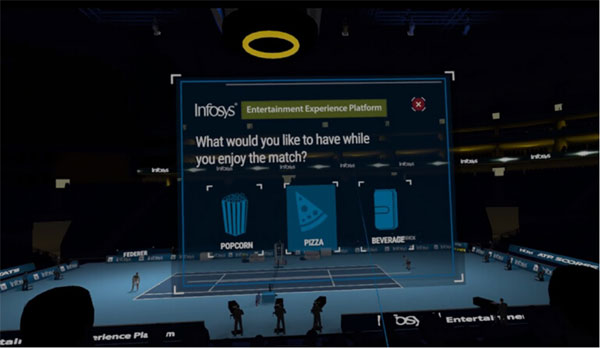


    In the same year, Infosys also executed a similar partnership with the Association of Tennis Professionals (ATP), the governing body of the men’s professional tennis circuits. They have been instrumental in supporting ATP’s development of key digital assets and infrastructure, including ATP PlayerZone, ATP Stats Leaderboards, ATP Second Screen, and the ATP app.


    Such partnerships help showcase the company’s skills while getting them eyeballs globally.


    Brand Ambassadorships

    The oldest trick in the book, but still so effective are vanilla brand ambassadors. The medal and match winners are role models for ordinary citizens. Their tough journeys to the pinnacle of sporting success occupy reams of media coverage and remembered. All players have clearly defined value systems and choosing an ambassador whose values align with the brand can work wonders to generate awareness and credibility. I like the way Indian brands are now gravitating towards Olympians, Badminton, Boxing and Weightlifting stars and looking forward to the advertising that Tokyo 2020 winners will bring in the wake of their wins. An international favourite is the world’s largest pasta company, Barilla’s long-term association with tennis legend, Roger Federer.  The brand releases one campaign about every one-and-a-half years that highlight quality, simplicity, and excellence which are values synonymous with Federer.
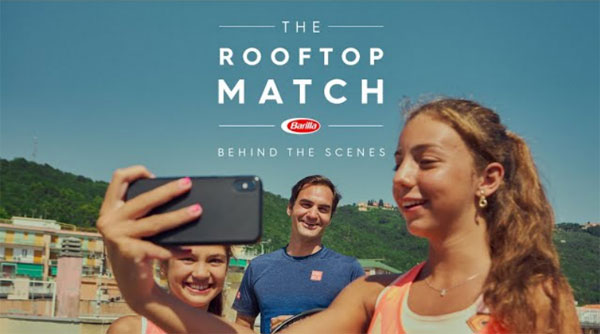
     

    Watch the 2020 Covid-19 campaign ‘The Rooftop Match’


    Sports are the best of reality TV and give all the thrills except those voyeuristic. The viewer gets unedited and unscripted emotion, drama and discord, fun and all the dopamine hits described before. There are underdogs and alphas, strategizing and wild cards and even fixing. Marketers need to expand their budgets beyond cricket in the long term and not just in the wake of wins. The urge to watch is biological and there is so much that can be done!

     

  • Kohli ousts Sehwag in Top 3 sports endorsers in 2012

    By Samidha Sharma


    The number of brands which associated with sports came down last year compared to 2011. However, international sports celebrities made a significant impact in this period, indicating the growing relevance of football and other global sports in India.


    Only 128 unique brands placed their bets on sportspersons last year compared to 140 in 2011 even as more non-Indian sports celebrities were visible across different media platforms, according to findings of a study shared exclusively. Despite fewer individual brands piggybacking on sports, more sports celebrities were seen in advertisements throughout last year, said a study conducted by Tenvic, a sports training and consulting firm co-founded by former Indian Test cricket captain Anil Kumble.


    “There could be seasonality attached to these numbers as 2011 was the year of the cricket world cup. But what is clearly a trend is the growing relevance of international sports celebrities in India. This is a result of the huge exposure to various football leagues and popularity of Formula One and golf. Today, global brands don’t need to customize their campaigns for Indians as these sportspersons are familiar names now here as well,” said Nitya Guruvayurappan, marketing head, Tenvic. In the brand endorsement space, football and Formula One will definitely get greater recognition, she said.


    The influx of non-Indian sportspersons increased from being around 25% of the total volume in 2009 to up to 40-45% of sportspersons used as endorsers in 2010 and 2011. With the 2012 Olympics, the proportion of Indian sportspersons has once again gone up as a percentage of the total, since sportspersons from several Olympic sports were signed up by brands.


    Still, cricket accounts for 45% of the entire sports endorsement market, followed by football at 17%, which is largely international in nature. What is interesting is that the cricketing endorser pool as a percentage of the total endorsers declined in 2011 as against 2009, despite it being the year of the cricket world cup. But most brands such as cola major PepsiCo which has been riding on sports largely cricket still bet on the sport. Homi Battiwalla, senior director, marketing, colas, juices and hydration, PepsiCo India, said, “Sports is a key communication platform for brands in our portfolio; whether it’s cricket for Pepsi and Lay’s or action sports for Mountain Dew. Specifically with cricket, the sheer popularity of the sport in India makes it an exciting property to reach out to our target audience, especially youth.”


    The Top 15 sports brand ambassadors in the 2009-2012 period make up for 50% of the total number of endorsement associations in this period, on a base of 140 sportspersons. This top 15 does not have any non-Indians. The top three endorsers, Dhoni, Sachin and Sehwag, have been consistent in the period 2009 to 2011, but last year Virat Kohli ousted Sehwag from the third position.


    Badminton star Sania Nehwal is the biggest non-cricket star having endorsed 10 brands followed by retired footballer Baiching Bhutia, who associated with nine brands in this period, said the Tenvic study which tracked the Indian sports celebrity market over the last four years.


    Source:The Economic Times

    Copyright © 2013, Bennett, Coleman & Co. Ltd. All Rights Reserved


  • Paritosh Joshi: Unbundling the Living Room

    By Paritosh Joshi


    An erstwhile colleague was talking about the proliferation of the second television set. In her assessment, as many as 10% of all C&S homes now have more than one TV. Listen close. 10% of ~100 million homes. That’s 10 million multi-TV homes in the country. From 1 TV for every 5 viewers, the equation has changed sharply, for these 10 million homes to 1 TV for every 2.5 viewers. Evidently there will be consequences. (And as you shall soon see, it is even better (or worse) than that).


    Whether you look at Hindi, English or any of the languages in which TV is offered in India, there is a common architecture that defines the structure of the market. Three pillars hold it up: big and hefty General Entertainment, massive Sports (shared across language barriers by offerings only in two languages) and wildly proliferating News with lots of fragile strands. Since Sports really has no local identity, focused as it is on the national obsession with Cricket, and News offers no heft, the defining feature of TV in every language is GEC. Dig a little deeper and the content logic of the GEC genre starts to become evident.


    GECs got blueprinted by the late 1990s. Indeed, you could argue that the basic template was in place even long before that, in the form of Doordarshan. Homes had one TV. Most people in the family, barring the housewife, would be away from the home for educational or employment reasons for several hours a day. The family would only start to congregate in the Living Room from about 6 p.m. as the members returned from wherever the day’s chores had taken them. By 8ish, there was a full house and smart programmers would be offering up delights that everyone would lap up without discomfort or embarrassment. The stereotypical picture of the Great Indian Family sharing and bonding before the Great Indian Entertainment TV Channel would now be complete. It was almost hard to discern where the khandan on TV ended and the parivaar in the Living Room began.


    Anyone who lived through the late 90s and early years of this millennium will recall vividly, as the stentorian authority of Amitabh Bachchan delivering his signature ‘Namaskar! Aadab! Sat Sri Akal’ echoed through domestic hallways in over a half of our country, he would have everyone jostling to find their favourite spot before the TV dabba. Once said spot was secured, it would be squatted on until the day’s K serials and such wrapped up.


    While all Hindi channels picked up the simple formula of family values and ‘rona dhona’ very quickly- thereby making them all look like reduced sized copies of the industry’s 500 pound gorilla, the regional players weren’t far behind. The model was perfected in Hindi and swiftly exported to markets in all regional languages.


    In the meanwhile, India was getting more prosperous as the economy saw half a decade of near double-digit economic expansion. At the same time, the telecommunications revolution was well and truly upon us. Call rates for mobile telephony fell in a frenzied race to the bottom. Handsets started developing capabilities far beyond the basic voice and text and shedding the boring monochrome screen for a jazzed up colour display. More onboard memory with scope of incrementing it further by more and more capacious SD cards, faster processors and rendering engines that took blur and dullness out of the mobile desktop screen enabled altogether new consumption possibilities on the tiny (but also growing fast) cellphone screens. Other screens were entering the repertoire. A second TV was seen as a mark of upward mobility. Desktop computers were becoming indispensable particularly in middle class homes with school- or college-going youngsters.


    Sources of AV content were growing far beyond C&S TV with young, urban consumers discovering the forbidden joys of ‘torrents’ that had reawakened, in a new morph, the only recently exorcised Napster. And there were so many alternatives on where the content, thus secured, could be consumed. The second TV would often come attached to a DVD player, or even a gaming console both of which did a commendable job of playing content. Even the little mobile device in the pocketwas rapidly becoming powerful enough to store and play not just songs and clips, but long form entertainment sourced from friend and stranger.


    The tyranny of the compulsory assembly before the glowing siren in the Living Room was being challenged by sundry interlopers big and small that were leading an uprising of person specific content.


    Oblivious to these tectonic changes in the landscape, programmers and channel heads, with their heads still stuck firmly up their <scatology deleted> outmoded notions of the ‘One big, happy family’ continued to design and programme General Entertainment. “Hey, you can have a car of any colour you want”, they incanted, “so long as it is black”. But who was listening? The young ‘uns had already found shiny, sleek, colourful new rides that they could scoot away in.


    p.s. for Programmers and Channel Heads: You may not have noticed it yet, honey, but someone just unbundled the Living Room.


    Paritosh Joshi was until recently CEO, Star CJ. He has been a marketer, a mediaperson and a key officebearer on industry bodies. He can reached via the comments board below or his Twitter handle @paritoshZero.


  • The Anchor: Anil Garg on 10 reasons why specialty channels are the need of the hour

    By Anil Garg


    The television landscape in India has seen a paradigm shift in the last few years.  From a plethora of channels offering General Entertainment, News including Business & Market News, Music, Movies, Kids, Sports and so on, one is seeing the emergence of newer specialized genres such as Infotainment, Food, “Classroom” Education, Science and Technology, Specialty Sports (e.g. Golf), Home Shopping and Travel.  There are dozens of reasons for this (be it advances in technologies, affordability, availability, changing lifestyles and such) here are TEN reasons why specialty content will not only survive but thrive in the coming years:


    1. Consumer Awareness and Demand

    India, like most other countries, is fast realising that audiences are increasingly discerning especially with multiple TV households in Tier I, II and even III cities across all SEC groups.  Look at how Discovery has diversified from a single channel to Discovery Science and Discovery Turbo; or for that matter NatGeo. Infotainment content is entertaining and educative. Today people increasingly want to learn and know more about the world they live in. For instance, one would never stop a child watching a clip on the “Blue pottery of Jaipur” as opposed to watching cartoons on a kid’s channel.


    2. The Nature of Specialized Content

    Specialised content such as a cookery show or a travel show does not need to be in a 30 minute format, so typical of traditional television. Specialised content can be “snacky”; a five minute show on the “Fishing Nets of Kerala” or “48 hours in Cairo” can ignite the angst and aspiration in the mind of viewers who have or would love to experience this. Such content can be informative, educative and yet entertaining. Also such content appeals across all age groups four-adult. Plus, it is non-controversial as in there is no rape or murder or such.


    3. Passion

    People who want specialized content are passionate about it. So are the viewers! Take for instance Food or Travel. Specialised content has to be produced by people serious about the domain. As more and more people choose to work in their field of interest, so will they choose to talk about it in more and more creative ways. Likewise, an ever increasing consumer base aware about the affordable availability of such content will tune into what they are passionate about.


    4. Forever Content

    Most specialized content is forever in that it does not age. A show on the Taj Mahal or the Pushkar Mela is timeless. Unlike most soaps, reality shows or sporting events, most infotainment content is ageless and can be watched again and again for generations. We still love to watch a clip on what Mumbai looked like in the 50’s even though it is black and white; this will be the case even fifty years hence!


    5. Technology including New Media

    Affordable technology makes it possible to offer thousands of channels to viewers.  Technology trends, be it the downward cost of increasingly powerful Cameras, inexpensive video editing Software, dramatically reducing Storage cost, affordable and increased Bandwidth, ever increasing Connectivity, Interactive and Mobile devices and increasing use of innovative Applications – all this makes it possible for a specialized channels to stream to their audiences, anytime, everywhere. As rich content moves from Beta tapes to digital video formats, from huge physical libraries to compact server scale storage in a box, growing a business around this new realisation that the concept of space has changed will help new age entrepreneurs build organisations and brand architectures with specialized content.


    6. Portable Content

    The very nature of specialised content is interesting. There is a growing need and demand for on the move infotainment and on demand infotainment (e.g. what to see and do inSingapore), as opposed to a two-three hour movie. As consumer attention spans get shorter, information they seek has to be at their finger tips “here and now”.  Thanks to technology, this is made possible. Specialised content is easy to port for on-demand viewing.


    7. Going Digital – Growth of Television and the Net

    As India moves to digitization with the possibility of a 500-1000 channels though fibre and cable to the home, multiple TV households, increased Internet bandwidth and technologies such as 3 and 4G for the masses, affordable yet powerful handheld devices, access to specialized content will be easier and affordable for consumers.  Also for aggregators and distributors of such content, it will be imperative to reach out to every single viewer with a rich and varied offering.


    8. Education

    As the Indian population comes to grips with evolving technologies, the nature of content, applications and their usage will explode. From ten years ago when not many people used an ATM machine or a cell phone, the scenario is changing rapidly and dramatically. As people learn how to use a phone for purposes other than talking, to using the net for purposes other than checking emails or making a railway booking, we will see people searching for informative content and entertainment.


    9. Targeted appeal

    For advertisers, sponsors and the like, specialized channels offer a focused, targeted audience. Also, technology is fast reducing the costs for reaching out to the customer and getting a better handle of behavioural and psychometric testing – e.g. social media and viral.


    10. Business Sense

    Businesses understand the reasons above.  Channels like a GEC, Movies, or Sports are very expensive to setup and operate; in India we have seen many such channels go down.  For the cost of a single show on a channel in these traditional genres, it is possible to setup and operate a specialized channel and also to make it profitable. Ten years ago not many people thought that a channel like Discovery made any business sense! Also, specialized infotainment channels have multiple revenue streams; the touch-points for consumers sourcing information of interest are multiple.  The same content can be sampled on TV, researched in print and enabled/fulfilled via the web as an example – all thanks to technology.


    In a nutshell, emerging technologies are playing a big role in bringing about this shift from traditional TV (latent viewing) to active TV (active viewing).  For instance in a specialized genre such as Travel, television can provide excellent programming backed up by a supporting interactive mechanism either through a website or an interactive mobile gadget which can create lead generation for travel booking, with applications that can provide ‘here and now’ information while at home or office or on the go. This increases the opportunity base and revenue potential for all possible trade partners – traditional travel operators, tourism boards, hotels and airlines, fleet operators and more – with the help of emerging new media technologies which help link up all possible interactions.


    As all trends point to specialized content, such content will become the trend!


    Anil Garg is Chairman & Managing Director, Explore Travel Channel