With apologies to none at all
By Vikas Mehta
 January 22, 2024, I guess, will become a watershed day in the Indian history. It was a culmination of a well-orchestrated movement led by the state and I think it may become a celebrated case study in marketing too. But my article today is not about the temple consecration or how it became a marketing case, lest I be accused of sacrilege, it is about how brands did or did not latch onto this moment marketing occasion. And as I live in Dehradun, close to the heartland of the temple movement, I shall look at it from this viewpoint.
I take back my words. This was not a moment marketing case. It could have been an opportunity to take the whole occasion as an opportunity and drive maybe even a long-term marketing campaign for a brand. But, unfortunately, that’s not what happened. Brands and companies by sheer shortsightedness turned it into just moment marketing.
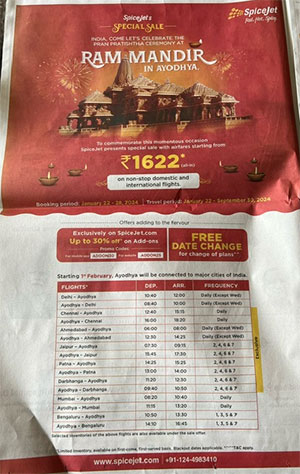
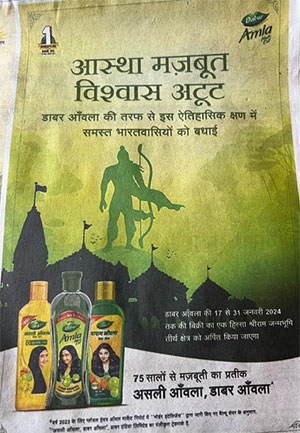
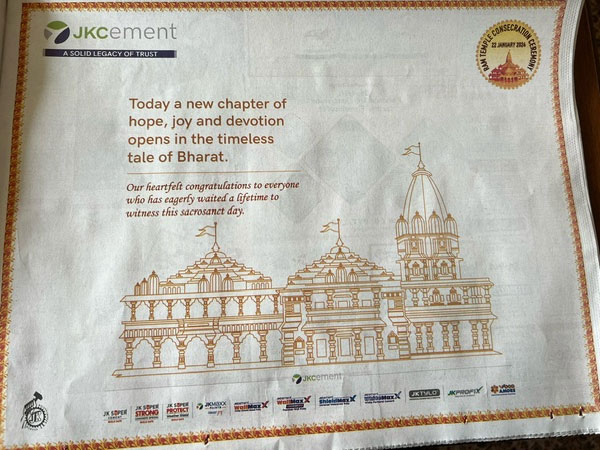
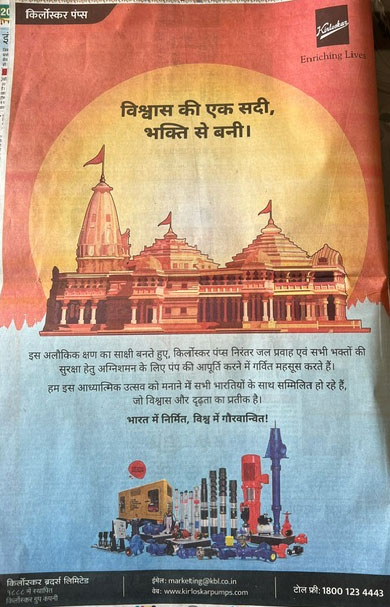
Ok, I take back this also. As the first thing that I noticed was that very few national level brands did anything at all. There were some lame or limp attempts at moment marketing by the likes of Kirloskar, Dabur Amla, Dabur Gulabari, JK Cements, SpiceJet and Amul. These were the only national brands that were visible to me. Dabur Gulabari was the one brand which used some brand properties and kept it strictly related to the temple. SpiceJet used the occasion to give some discounts and freebies along with the schedule of Ayodhya flights. But the rest were just about cautious congratulatory messages. As I said limping moment marketing.
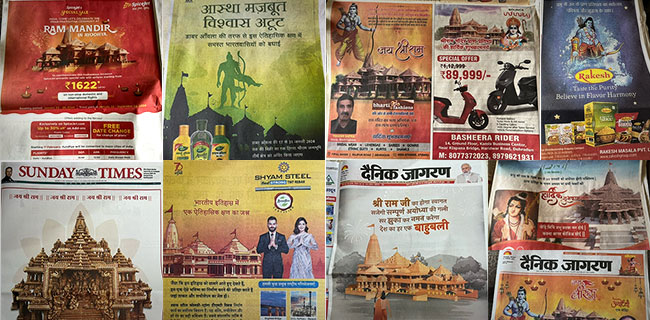
It was local brands that ruled the roost. On the day, Dainik Jagran had two newspapers. One was a regular newspaper with some news in between a plethora of local ads. Sadly, even these were forgettable. But what was interesting was one the diversity of categories. From food masalas to construction companies to personal product companies to local fashion brands to local politicians to two-wheeler dealers to local cooking oils to local dairy and sweets brands to local jewellers to local event management companies to pan masala to resorts to medical centres and even local grocery stores. Some educational institutes, hearing aid centres, and local construction material retailers and brands added to the confusion. In my estimate, the news was maybe 45% and the ads took up rest of the space.
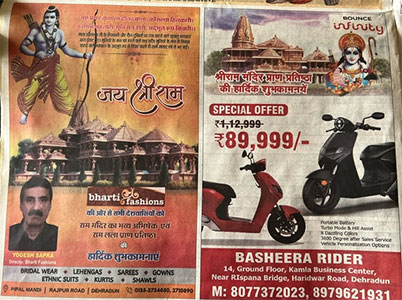
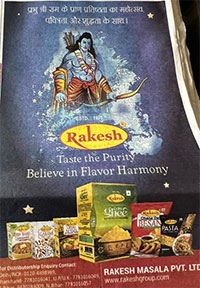
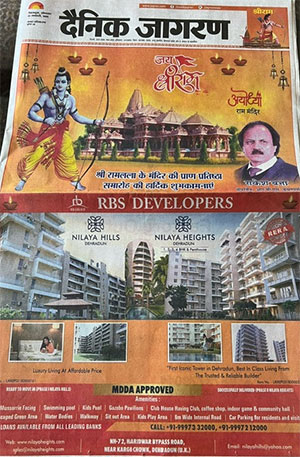
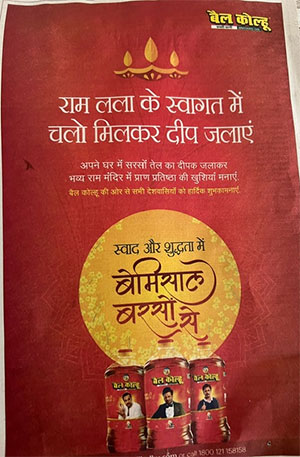
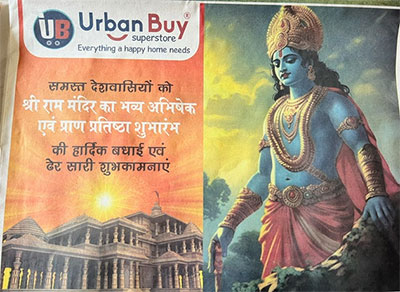
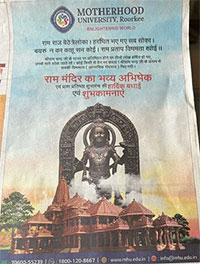
The second newspaper was full of various articles on the temple. Historic angle, legal angle, the development in the city of Ayodhya… all of this was highlighted. And this was also full of ads as well, though maybe the ratio (of ads to editorial content) was more equal.
A few weeks ago, a news portal had asked me to predict about what brands will do around the consecration ceremony. And my first instinctive reaction was that they will play it safe. Most brands will not do anything. Some will pay lip-service and a few who may have been involved with the construction of the temple may talk about their contribution. It looks I was correct in my initial thinking. Though I found it quite puzzling why brands which contributed to the building of the temple kept quiet. Initially I though JK Cement had contributed to the structure. But they did not mention it in their ad and I also read somewhere that no cement has been used in the construction. They too had just a congratulatory message.
Why did most brands stay away? Because religion being a divisive subject, brands did not want to seen to be taking sides. And MNC, global brands are worried about repercussions in other markets too. That’s the main reason which explains the total absence of multinational or foreign brands. They did not want to alienate certain sections of the society and the world. Therefore, the few national brands that did advertise were Indian origin brands and some like Kirloskar did play up its Indianness. So, nationalism was the message. But that still does not explain the absence of many brands who have almost positioned themselves on nationalism. Kajaria Tiles, for example.
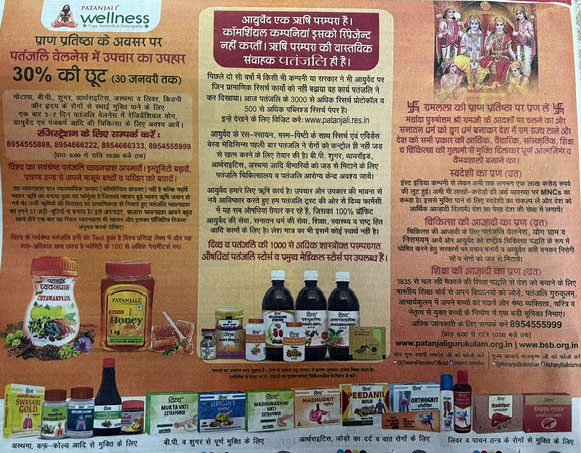
Patanjali was the other brand which has for long played the nationalism card. Surprisingly, they were very low key. One press ad which looked like a 3-in-1 did appear. It spoke about an offer. About Ayurveda. And then some resolutions to take on this auspicious occasion. The last point was just about nationalism, whereas in my mind it could have been about some healthy resolutions combining the occasion and Ayurveda.
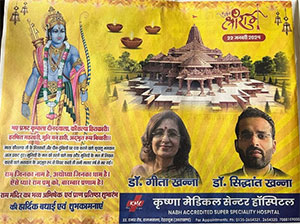
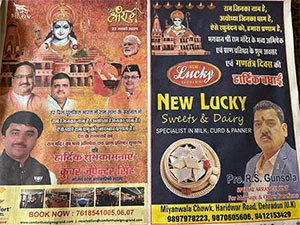
The local brands had nothing to lose. Most of the brands who advertised, hardly advertise. So, this was a one-off which they could afford. Interestingly, the messages were quite brazen. Many of the ads had big mugshots of the owners. For once, some two-wheeler dealers found an opportunity to put their mugshots along with the product photo. Ditto for real estate developers, medical centre owners, dairy and sweet centre owners, construction material dealers. It was an opportunity to show themselves as Ram Bhakts. And I think that was the most important point for them. Announcing to the society and their circle of acquaintances about their religious and I suspect, even political beliefs.
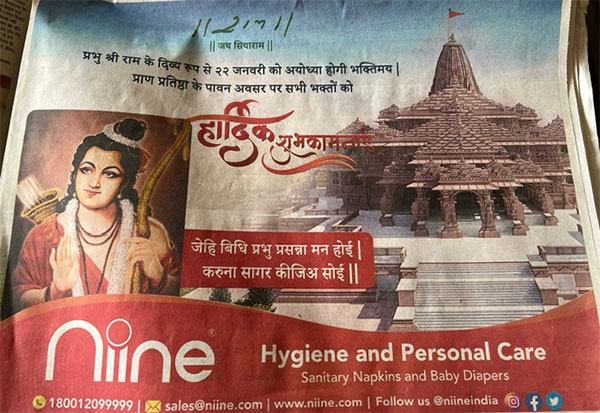
There was a local brand for sanitary napkins and diapers, which also advertised. Would any national or MNC brand have the guts to associate an ostensibly (unfairly labelled) unclean product with Mandir?
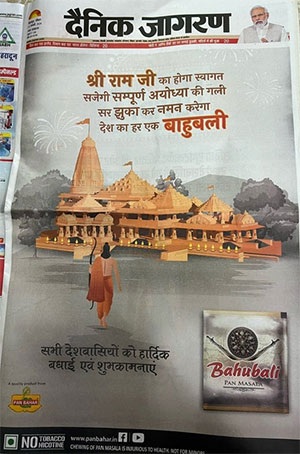
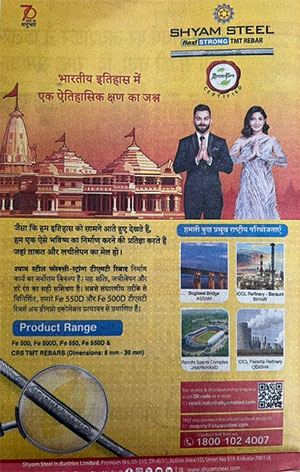
Take Bahubali Pan Masala, and the brand is not about a surrogate. It openly says masala in the headline, very cleverly almost like a rhyme and has incorporated its brand name in it. Ayodhya ki galli and Bahubali. Shyam Steel has a prominent photo of Virat Kohli and Anushka with hands folded juxtaposed with a shot of the temple.
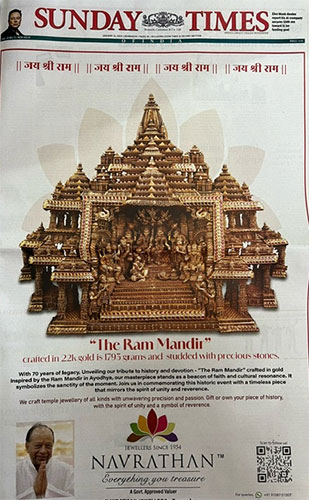
And then there was one jeweller, based out of Bengaluru who had a full-page ad selling a model of Ram Mandir made in 22k gold weighing 1795 grams, studded with precious stones. The brand spoke about its 70 years of legacy and also had a mug shot of its owner with folded hands. Want more information and want to order? A QR code was provided. Religion, commerce and technology… a heady mix.
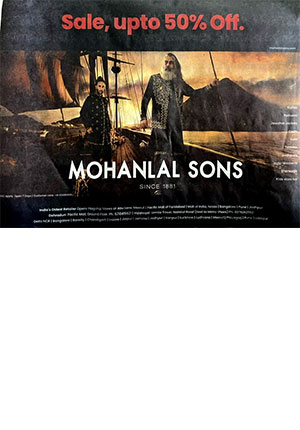
In all this hullabaloo, there was another twist in the story. Republic Day was just four days later. And this is the time when durables, online stores, supermarkets etc have sale offers. And the advertising for the same starts a week before. Some of them tried gamely on Jan 22 too. But they were drowned out in the cacophony of the mandir ads. In fact, I don’t see many more brands or offers coming our way around Jan 26 as brands know that consumers have spent money for the Ram Mandir event. Every society, every mohallah, every market had some ceremony or an event or even bhandaras (free food). And it was all organised on the back of donations. People spent on bhagwa (saffron)-coloured clothes, flags, lights, diyas and crackers. Everyone contributed something somewhere. So, I guess Republic Day sales will be muted.

Yes, I am being critical of brands. So, what more could they have done? For starters, they should not have looked at this as moment marketing. They should have seen this as maybe a property to associate with and organised activities around it. CSR? Offers and discounts to spur sales and not just to pay lip-service? And do it according to the category and brand values. Patanjali could have set up shop at the railway stations, airports and bus stations and given wellness or Ayurveda products at good reduced rates while offering a loyalty programme. And rather than dress up the crew as Ramayan characters and earn derision, Indigo could have offered substantial discounts to all senior citizens travelling during a time period. Maybe tie up with some old age homes and offer few free seats per flights. Haldiram could have organised free bhandaras….
The problem was that big national brands saw this as an aberration. A one-off. I think they have not realised that this day will be celebrated every year. Not just in a religious sense but also in a nationalistic and political sense. If the brands had looked at it through a long-term prism, they could have not only done more but also gained empathy and set the cash tills ringing. Let’s not forget that big brands including some MNC brands have thrived during Kumbh Melas. But this time they lost out on the big picture. The small brands did not see the big picture but they saw this as an opportunity to loosen the purse strings a bit and proudly proclaim their arrival.
Frankly, moment marketing became the Achilles Heel for brands.
Vikas Mehta is a Dehradun-based business strategist and educator. He writes on MxMIndia every other Monday, but sometimes on other days as well. His views here are personal.