We couldn’t have not asked a question on the issue, but we don’t know much yet. So we thought we would ask this light question… Here’s Dr Bhaskar Das with his response in the September 22 edition of Das ka Dum. Here goes…
If you wish to access the archives, please go to the Das Ka Dum tab on the website’s top navigation bar.
Q. So Zee and Sony Pictures India are looking at merging. What do you think should the new entity be called: See, Zony, Sony Zee or something else?
A.Your question reminds me of quote from the Bard of Avon: ”What’s in a Name? That which we call a Rose by any other Name would Smell as Sweet”. Let’s focus on Fundamentals and not on Incidentals. This reported merger seems really strategic and symbiotic. So, beyond any other thought, I feel it’s good for business for both organisations. And let’s celebrate that.
The Board of Directors of Zee Entertainment Enterprises Limited (ZEEL) held a meeting on September 21, 2021 and unanimously provided an in-principle approval for the merger between Sony Pictures Networks India (SPNI) & ZEEL.
Here’s the press release issued to MxMIndia and the stock exchanges:
The Board has evaluated not only on financial parameters, but also on the strategic value which the partner brings to the table. The Board concluded that the merger will be in the best interest of all the shareholders & stakeholders. The merger is in line with ZEEL’s strategy of achieving higher growth and profitability as a leading Media & Entertainment Company across South Asia. The Board has authorized the management of ZEEL to activate the required due diligence process.
The shareholders of SPNI, will hold a majority stake in the merged entity. The shareholders of SPNI will also infuse growth capital into SPNI as part of the merger such that SPNI has approximately USD 1.575 billion at closing, for use in pursuing other growth opportunities.
Basis the existing estimated equity values of ZEEL and SPNI, the indicative merger ratio would have been 61.25% in favour of ZEEL. However, with the proposed infusion of growth capital into SPNI, the resultant merger ratio is expected to result in 47.07% of the merged entity to be held by ZEEL shareholders and the balance 52.93% of the merged entity to be held by SPNI shareholders.
ZEEL and SPNI have entered into a non-binding term sheet to combine both companies’ linear networks, digital assets, production operations and program libraries. The term sheet provides an exclusive period of 90 days during which ZEEL and SPNI will conduct mutual diligence and finalize definitive agreement(s). The merged entity will be a publicly listed company in India.
As part of the transaction, Mr. Punit Goenka will continue to be the Managing Director and CEO of the merged entity. Further, certain non-compete arrangements will be agreed upon between the promoters of ZEEL and the promoters of SPNI. According to the term sheet, the promoter family is free to increase its shareholding from the current ~4% to up to 20%, in a manner that is in accordance with applicable law. Majority of the Board of Directors of the merged entity will be nominated by Sony Group.
It is anticipated that the final transaction would be subject to completion of customary due diligence and execution of definitive agreements and required corporate, regulatory and third- party approvals, including the votes of ZEEL’s shareholders.
ZEEL’s strong expertise in content creation and its deep consumer connect established over the last 3 decades, coupled with SPNI’s success across entertainment genres (including gaming and sports) will add significant value to the merged entity and its management team, thereby increasing shareholder value multifold.
Speaking on the development, Mr. R. Gopalan, Chairman, ZEE Entertainment Enterprises Ltd. said, “The Board of Directors at ZEEL have conducted a strategic review of the merger proposal between SPNI and ZEEL. As a Board that encompasses a blend of highly accomplished professionals having rich expertise across varied sectors, we always keep in mind the best interests of all the shareholders and ZEEL. We have unanimously provided an in-principle approval to the proposal and have advised the management to initiate the due diligence process.
ZEEL continues to chart a strong growth trajectory and the Board firmly believes that this merger will further benefit ZEEL. The value of the merged entity and the immense synergies drawn between both the conglomerates will not only boost business growth but will also enable shareholders to benefit from its future successes. As per legal and regulatory guidelines, at the required stage, the proposal will be presented to the esteemed shareholders of ZEEL for their approval.”
Under the guidance of the Board, the management of ZEEL, ably led by Mr. Punit Goenka, continues to steadily work towards achieving higher profitability in line with its set goals for the future. With this corporate development, the merged entity will result into an accelerated growth and a significant opportunity to create tremendous value for all its stakeholders.
Meanwhile, Sony Pictures Network has issued a communique:
Sony Pictures Networks India (SPNI) and Zee Entertainment Enterprises Ltd. (ZEEL) today announced that they have entered into an exclusive, non-binding Term Sheet to combine both companies’ linear networks, digital assets, production operations and program libraries. The non-binding Term Sheet provides an exclusive negotiation period of 90 days during which ZEEL and SPNI will conduct mutual diligence and negotiate definitive, binding agreements. The combined company would be a publicly listed company in India and be better positioned to lead the consumer transition from traditional pay TV into the digital future.
The merger of ZEEL and SPNI would bring together two leading Indian media network businesses, benefitting consumers throughout India across content genres, from film to sports. The combined company is expected to benefit all stakeholders given strong synergies between ZEEL and SPNI.
Under the terms of the non-binding Term Sheet, Sony Pictures Entertainment, the parent company of SPNI, would invest growth capital so that SPNI has a cash balance of approximately USD $1.575 billion at closing for use to enhance the combined company’s digital platforms across technology and content, ability to bid for broadcasting rights in the fast-growing sports landscape and pursue other growth opportunities. Sony Pictures Entertainment would hold a majority stake in the combined company. Current ZEEL Managing Director & CEO Punit Goenka is to lead the combined company. The combined company’s board of directors would include directors nominated by Sony Group and result in Sony Group having the right to nominate the majority of the board members.
It is anticipated that a final transaction would be subject to completion of customary due diligence, negotiation, and execution of definitive binding agreements, and required corporate, regulatory and third-party approvals, including ZEEL shareholder vote.
India has been under a full lockdown since March 24, 2020. After three subsequent extensions, a relatively unsuccessful Unlock 1.0 & 2.0 in June and July, spikes in positive cases are forcing many Indian cities to go under full lockdowns, again.
As the economy degrows, unemployment rises and sales decreases and every subsequent FY21 GDP forecast is worse than the previous one, the future seems bleak and unlikely to bounce back soon.
Basis a GroupM report released in June 2020, India’s GDP will contract by 3.7% and subsequently overall advertising spends will decline by more than 20% this year. This follows, as advertising in current scenarios is an after-thought, with most companies focused on reviving production and distribution. The drop in advertising has led to unprecedented job losses in the ad-dependent media industry, so much so that industry body International Advertising Association (IAA) has been running a campaign, ‘Let’s Advertise’ to spur advertising, since June 2020.
The campaign seems to have made some impact – brands in the Health & Hygiene categories or those that can pivot their messaging to sound Covid-wise have started advertising. However, this is a small portion of the market, and for the economy to revive, brands which can afford to, should, play a bigger role in recovery.
As Keynesian economics espouses, spending spurs consumption during times of economic downturns. If brands (which can) spend monies, this will spur demand, and the money will help the economy as a whole. In such pandemic times, the messaging of many brands is irrelevant, a great way to remain visible is by running Public Service Announcements (PSAs) campaigns.
While a decade ago, PSAs were issued by govt bodies, with the advent of social media, brands regularly run socially relevant campaigns because they help the brand earn respect and hence brand equity while also doing social good. Due to their affirming messages, PSAs also have higher than average trend-worthiness, i.e. audiences share these ads more because it helps them feel good about themselves to do something socially relevant.
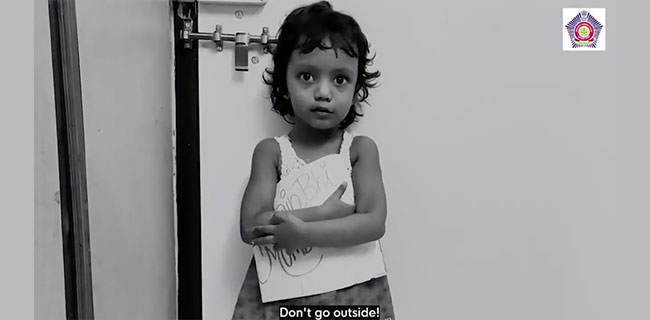
With the notable exception of Mumbai Police PSAs, most PSAs released by government bodies in India, are pedagogical spiels, which are not engaging, even when starring celebrities.
In March 2020, just as the lockdown was announced, the Maharashtra government released a pedagogical PSA on Covid-19 headlined by the biggest stars of Bollywood including Amitabh Bachchan, Ranveer Singh, Ayushmann Khurrana, Alia Bhatt, Akshay Kumar etc. A month later, Sony launched a PSA with a similar Bollywood lineup but a much better storyline. (The PSA can be viewed here – https://www.youtube.com/watch?v=OQk0VrL2I-w
Short film – ‘Family’, conceptualised and virtually directed by Prasoon Pandey for Sony Network starring celebs from across the country used storytelling creatively to communicate the importance of staying at home. It was telecast in April 2020. https://www.youtube.com/watch?v=ju7ku–S6F4
Hence, in Covid-stricken times, effective PSAs can help brands kill many birds with one stone – create brand equity, earn public goodwill, spur good behaviour, meet annual CSR target spends as mandated by Indian law and, most importantly, help the economy recover. Earned goodwill will also spur trials for those whose loyalties lie with competitors.
Budget-struck brands can collaborate with other brands; conduct digital-only campaigns to give the push to the economy to help its recovery.
As brands with diverse target audiences release PSAs, different strata of society will get targeted which will help in overall compliance. This is backed by research conducted by 2019 Nobel laureates in Economics, Abhijit Banerjee and Esther Duflo. In a paper released last month, they have shown that frequent celebrity messaging, in addition to the existent large-scale government messaging on Covid-19, can positively impact behaviour by nudging people to follow best practices. The research also shows that there are spillovers of good behaviour in the entire community even when a few are targeted.
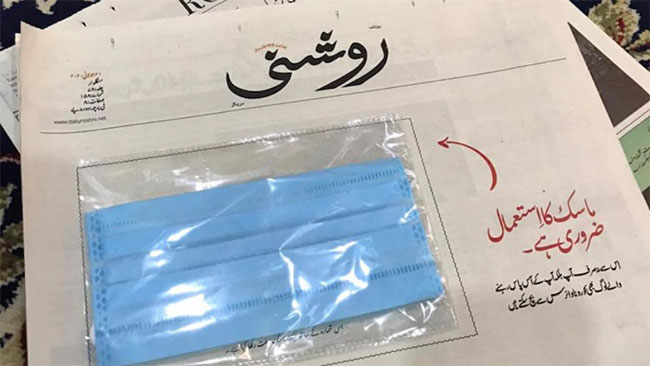
In a CSR initiative, waiting to be replicated by national dailies, Kashmir ‘s Urdu newspaper Roshni, affixed a mask on the front page of the paper on July 20 to drive home the message about mask usage. Kashmir was under complete lockdown from 22-27 July, due to a rise in Covid cases.
VIRALITY TO BEHAVIOURIAL CHANGE
The challenge even for good PSAs is translating virality to behavioural change. The ease of communication brought on by social media has made armchair activists of the majority of the population. However, while these activists enable knowledge-sharing with other people they don’t bother much with acting upon the gained knowledge before moving on to the next trending topic. Which is why, despite the dangers of inobedience, many who wear a face mask, style it as a chin-guard.
Hence, brands should be careful to create PSAs which are not just a retelling of facts, but facts communicated in way to appeal to their targeted audience, whether it is through high quality storytelling, a new ‘Hook Step’ or a ‘Challenge’ which is creative enough to warrant sharing. Basis the research by Banerjee and Duflo, leveraging brand ambassadors signed on for lavish multi-year contracts will also help to drive behavioural change. So brands, any takers?
Bhuvi Gupta is a marketer with over 10 years across industries, of which the last six have been in Media & Entertainment. She has been a part of many launch marketing campaigns – specifically at the Times of India group, Republic TV and the latest in marketing a Bollywood film. She will write on A&M (mostly marketing, but often on advertising too). Her views here are personal. She tweets at @bhuvigupta3
Brand Engagement is always relevant and more so during the lockdown. Brands are using different tricks for engaging with consumers. Some of them are relevant and impactful, few original and innovative. I believe if there is nothing to say, being silliest is a better option.
The car manufacturer shares tips on how to take care of the parked car. Banks deliver newspaper in your inbox. Antiseptic cream makes sanitisers. Porn site gives free access to premium content so that you stay at home! Soaps shouting about washing the virus and Apps are updating for smoother operations.
Brand engagement during lockdown is part of the strategic initiative in preparedness for the post-lockdown market. Naturally, every brand wants to be on the top of the consideration-set whenever markets open. So, they need to keep the brand connect alive through brand engagement. It is known that the brands engaging the consumers now are most likely to emerge as the front runner post-coved scene.
BRAND ENGAGEMENT
It was interesting to see Durex playing mindgames in its territory. The brand also suggested an innovative way to help out the audience like using it to cover the finger while pressing buttons in the lift.
On the other level, DOVE went ahead to celebrate the Beauty called Courage. It remains credible as the brand is operating within its pre-Covid coordinates defined by inner beauty.
Consider, ‘TAKE THE LOAD’ by Ariel, and it falls in place. The brand is continuously thinking of engaging consumer in different ways and situations. It is an attractive proposition, but I have a problem with it. The brand still addresses housework as a woman’s load. I will discuss this some other day.
Keeping the conversation going during such a crisis is a sensitive area. Some brands have learnt their lessons the hard way. The strategy and the message must remain incomplete internal and external sync. The brand can not have different visible standards or expectations across geographies, product lines and services, internal or external.
BRAND ENGAGEMENT – A TWO WAY STREET.
The brands must realise that ‘The consumer will treat you exactly the way you treat them during this period of crisis’. Remember, we live in an era of information democracy, and it is driving everyone crazy. Once the message is released in the public domain, you no longer are in control. If you are in the arena to commercially exploit the situation, your life will become miserable, sooner than later. At the same time, it is a beautiful space for brands with real purpose and empathy in engaging the audience.
BRAND ENGAGEMENT – PLAY WITH RELEVANCE.
During the crisis, sometimes it is best to remain silent. The well-informed consumer is aware of the situation. Brands are looking towards contactless delivery, but it still is no time for impact-less irrelevant engagement.
The consumer’s transactional deal is restricted to the brand delivering the best at a reasonable price. Or the brands are playfully engaging the consumer while sending a positive, relevant message of importance. Just like the various brands supported Social Distancing by playing around with their logo’s.
BRAND ENGAGEMENT – BE SIMPLE.
One of the compelling ways beyond talk play and intent is to act the intention. Let sharing of the news surrounding the Brand Act be amplification, instead of trying to send out a video in the social space. However, when brands move beyond transactional arena to show their soft touch treating consumers as part of the extended family, the equation shifts from being purely a stakeholder to an active partner. It required empathy, care, understanding and being sensitive to the ecosystem. The brand needs to understand the covert -overt needs and continuously re-defined expectations. It is a tough and risky territory to walk. The brands that see it as only a commercial leveraging opportunity, they fail to understand the double-edged dimensions and in effect do more wrong than the right to their image.
BRAND ENGAGEMENT – ACCEPTANCE COMES WITH RELEVANCE.
Such situations like coronavirus and the lockdown demands that the brands demonstrate care and empathy. However, there is an un-stated boundary between compassion and pity. The brand operating within the bandwidth of experience and tonality have higher chances to succeed.
Mumbai police use of citizen vigilance for Stay Home campaign makes sense. People relate to it, knowing that ultimately police can do that much only. They emerge as a partner- as a peer.
Nearer home, Surf team remains true to the thought Daag Aache Hai. And extends it with Daag Bhai Ghar par Rahenge. The brand extends engagement by sharing fun activities for home on Instagram.
Now, this was brilliant as it came well in the early phase when people were still thinking about how to manage work. It works for Sony It works as the scope remains restricted to helping the daily wage earners in the film and television industry. But what is the Kalyan Jewellers link?
When EMIRATES tells you to stay home and assures with positivity that we will fly soon, you like the approach and the tonality. They are, in fact, not making any new point.
https://youtu.be/IRoAQ3dmOUw
On the other side, when UBER uses a similar tone to thank you for not using them, it seems forced. It is the result of earlier experience and perception of the brand ethos, culture and expectations.
Vodafone used both their famous hugely loved mascots, the ZOOZOO and the PUG to deliver the message. The Pug communication still has something going for it, but the ZooZoo fails to impress.
ASIAN PAINTS keeps the tone of voice consistent in ‘Jab Ghar Mai Saab Ho Toh Ghar khilkhilata hai’, #stayhonestaysafe. It remains within known brand coordinates using a picture of everyday life. Similarly, TATA SKY talks about ‘Ghar Baite Kuch Seekhe’. It is an example of excellent connect with its known educative and activity-based channels.
BRAND ENGAGEMENT – CAN ALWAYS MOTIVATE.
And when there is nothing -nothing to say and the brand still wants to keep the conversation going. They fall back on positivity to keep people motivated, usually with a dose of singing and celebrities.
When you overstretch and try being arty like HUL. It snaps because of a hyper stretch. It fails to evoke similar emotions.
However, when Mahindra says,- Some wheels will keep moving, you relate to it. And the treatment makes you feel so much better.
BRAND ENGAGEMENT- AUDIENCE AWAIT ACTION.
Though travel is a bad word during the lockdown, I was looking forward to engaging relevant and sharply focussed communication from Samsonite. It had reoriented its coordinates when they made the earlier communications including the one during Kerala floods. It will be a waste of a marketing opportunity if Samsonite does not subtly engage the audience in this crisis.
……………………
BRAND ENGAGEMENT- LIGHTER MOMENTS.
On the side, the crisis also made room for some absurd but thoroughly enjoyable videos. The one that is my favourites features Shekhar Gupta and @HoeZaay. He tries explaining the concept of tomorrow in a Swami Nityanand style. Shekhar Gupta may not need new audiences – but this viral must have worked for him.
Even as the Hindi GEC category struggles to recover its lost glory inch by inch over the last year-and-a-half, there’s a special little story unfolding on the side. Sab TV (or Sony Sab, as it’s officially called) has grown almost 40 per cent in the last one year, to now emerge as the No. 2 Hindi GEC in the Pay TV segment in Urban HSM in the pre-KBC period. The channel has seen an upward surge in the months of July and August this year, overtaking more seasoned players like Zee TV and Colors, and competing well with the network flagship Sony Entertainment Television, which has big-ticket material like KBC on its side for 13 weeks now.
The channel is by far the No. 1 channel on TSV (time spent by viewer), being about 30 per cent ahead of the category leader Star Plus on this engagement measure week-on-week. Star Plus is the leader on viewership, because of its significant Reach advantage over Sab, symptomatic of the former’s wider appeal vis-à-vis the latter.
A deeper look at Sab’s viewership numbers can be fascinating. The channel’s Gujarat viewership is almost five times its UP viewership. The Mumbai to Delhi ratio is almost 2. Evidently, the channel manages to do much better in the Western markets, which have a higher proportion of Gujarati population in their viewer universe.
This, of course, is attributable to the flagship show Taarak Mehta Ka Ooltah Chashmah (TMKOC). Now on air for more than 11 years, TMKOC contributes a staggering 83 per cent to the channel’s viewership. 58 per cent of the channel’s programming time is allotted to the show, across various original, repeat and rerun airings.
The show has wallpaper-level presence on the channel. Sab benefits hugely from the non-prime time performance of TMKOC. Compared to Star Plus, which gets 51% of its viewership from the 7-11pm prime time, Sab gets only 30% of its viewership from it, thus relying heavily on the afternoon time band, where repeats of TMKOC do ratings that some of the big Hindi GEC shows will be happy to achieve in their original telecast in the prime time.
Yes, Sab is a one-show channel. It has struggled to find a second big hit anywhere close to TMKOC’s stature. And it’s been 11 years now. There is a reasonably-robust second line of shows, led by Aladdin currently. But the stature of TMKOC dwarfs everything else Sab puts out.
Breaking down the success of TMKOC is a matter of another detailed piece. But it can be briefly mentioned that the show goes well beyond being just another comedy show, and manages to integrate culture, values and family, eventually delivering a wholesome family entertainer, a genre which very few Hindi GEC shows can claim to have a foot in.
How long can TMKOC remain at its peak? A conservative answer would be ‘at least another 10 years’. Its protagonist Jethalal, played by Dilip Joshi, has been the most-popular Hindi GEC character in India for years now, as per Ormax Characters India Loves. Character bonding ensures longevity, and TMKOC has very strong legs on that count.
Sab went through an elaborate brand refresh (Hindi GEC’s category when-in-doubt activity) recently. The new proposition ‘Khushiyon Wali Feeling’ strikes the right chord, relying to SAB’s positivity and light-hearted charm as its differentiators in a melodramatic category.
But currently, all the branding is just scenery for a channel that runs on the towering presence of a giant. If there was a second TMKOC, and that’s easier said than done, Sab will be the biggest Hindi pay channel by some distance. If that happens, it will be some success story to tell!
Hill+Knowlton Strategies (H+K) has appointed Usha Thomas as Client Services Director. Based out of Mumbai, she will serve as a strategic advisor to H+K’s diverse portfolio of clients with a special emphasis on the agency’s Media and Entertainment (M&E) clients.  Thomas, a former journalist, has spent the last decade-odd with Zee and Star India.
Chetan Mahajan
Speaking on the appointment, Chetan Mahajan, President and CEO, H+K India said: “We have one of the largest portfolio of clients in the media and entertainment space. As preferred partners to large M&E conglomerates like Sony Entertainment Television and Times Network among others, our advisory expertise and execution capabilities are industry-leading. With Usha on board adding to our deep domain expertise, coupled with micro-vertical strategy, our ability to craft compelling domain-specific communications goes from strength to
Added Vivian Lines, Global Vice Chairman, Hill+Knowlton Strategies: “Media and Entertainment has been one of the fastest growing sectors in India, set to outpace Indian GDP and also outshine global M&E growth. The sector has been proactive in embracing new technology and digitization, thus opening up multiple avenues for integrated marketing communications to play a significant part in future growth. We are delighted to have Usha join us to lead even greater opportunities within this space, as well as bring her expertise to bear across our full client portfolio.â€
India’s Most Attractive Brands 2016, a study comparing the ‘attractiveness’ held in brands, has been released. TRA Research, a Comniscient Group company, has listed the brands that have successfully elicited the desire-based yearning in their audience. LG has taken the crown of India’s Most Attractive Brand in the just launched 2016 study. The South Korea-based Consumer Electronics giant has taken the 1st rank, moving up from 2nd place last year. Sony ranks 2nd, followed by the two-time reigning attractiveness champion from the previous reports, Samsung Mobiles which ranks 3rd this year. Honda makes an entrance at the 4th position also leading the Automobiles category. Samsung, in the Durables category leaped from rank 87 in 2015 to rank 5 this time round. The highest placed wholly-Indian conglomerate in this year’s listings, Bajaj, is India’s 6th Most Attractive brand.
The second Indian brand in the list, Mumbai-based Tata is ranked 7th, which has slipped three places since last year. Maruti Suzuki comes in at rank 8 and Airtel towers up nine ranks from ranking 18th last year, followed by Nokia at 10th position. Another Mumbai-based brand Godrej (All India rank 13), Dell (All India rank 15) and Hewlett Packard (All India rank 17) made an exit from the top 10 Most Attractive Brands listings this year. A total of four out of the top 20 Most Attractive Brands were based out of Mumbai. Other city-based brands that were listed include Angel Broking (All India rank 491) and Big FM (All India rank 715).
“LG’s progress in the report is admirable, having dethroned the two-time reigning personal-gadgetry brand Samsung Mobiles to be India’s Most Attractive Brand for 2016. The consumer electronics segment has always been high on Attractiveness—the magnetic pull that brands exert—evidenced by the fact that three out of the top 5 Most Attractive Brands for 2016 are from this segment. Tata’s ranked 7th this year has a dip of more than 20 per cent in Attractiveness Quotient as compared to the previous report.
Brand Attractiveness is an invisible, overwhelming pull that subtly but irresistibly draws audiences towards itself. In order to influence and inspire their consumers, brands have to mold their outgoing communications to constantly and proactively accentuate their brand appeal,†commented N. Chandramouli, CEO, TRA Research.
Among the 1000 brands 276 categories were listed. Some of the by Advertise” href=”#60137872″> important category leaders in Attractiveness are Colgate (FMCG), Amul (F&B), Bata (Personal Accessories), Raymond (Apparel) and Airtel (Telecom).
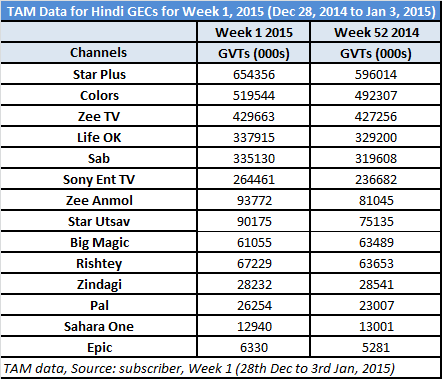
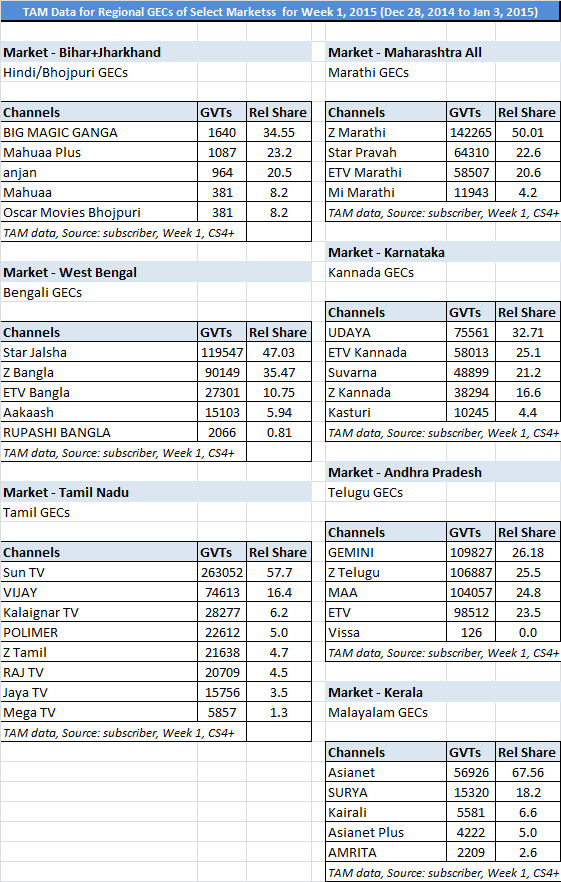
Hello. ​We bring you TAM ratings​​ for Week ​1 (Dec 28, 2014 to Jan 3, 2015) for Hindi and select Regional General Entertainment Channels in key India markets​.
In its second season, Sony Headphones has announced Project Resound campaign that highlights the many expressions of pure music. Taking the generation M of music lovers to the next level, the campaign sends out a clear message – that the many genre of music finds its truest expression in purity; and hence a need to hear sound the way it’s meant to be, on great quality headphones.
The campaign “Upgrade your ears” kicked off with Kailash Kher and Shreya Ghoshal in Season 1, where the two greats came together to create a love ballad that was aired in the first ever web concert, last year.
Season 2 saw four new generation artists creating musical masterpieces that unveiled the many faces of pure music.
Sonia Sundaram, Senior Creative Director, OgilvyOne Worldwide said, “Music can have any expression or language, but its etymology rests in one word – purity. The essence of world music today, echoes the pure ragas that India gave to the world centuries ago. You can change the face, not the essence.”
The Project Resound puts purity above everything else. This generation of music lovers are restless, free-spirited and fanatical in their choice of music. But they seem to be lacking the ability to distinguish between sound and noise.
Project Resound Season 2 has a good line-up of artists that bring in different flavours in their inimitable style. It rolled out with Tamil Street music with Benny Dayal and Nucleya, meandered into the haunting melodies of Sufi Electronica with Karsh Kale, moved into the earthy sand dunes of Rajasthani folk fusion and continues to upgrade sensibilities with head banging hard metal from Pentagram.
MAX & SIX, the official broadcasters of the Indian Premier League have announced their mega marketing campaign for the Pepsi IPL 2014 titled ‘Come On, Bulaava Aaya Hai’. The campaign is inspired from the fact that Pepsi IPL is the biggest cricketing extravaganza in the world.
The campaign kicks off with a series of four films set in diverse situations of different people’s life reaching a crescendo with three films and culminating into a final bulaava film. Be it a runaway bride drawn to the call of the IPL bugle, a son by the side of his ill mother or a priest struggling to free a woman possessed with a spirit, all films have the essence of the key nuance of IPL  ‘Bulaava’ prompting people to literally drop everything to watch Pepsi IPL.
The entire campaign is the brainchild of the creative agency Havas Worldwide and has been directed and filmed by noted ad film director Rajesh Saathi of Keroscene Films.
Neeraj Vyas, EVP and Business Head, MAX expressed, “In India, nothing supersedes the passion for cricket and during the IPL, that passion rises to an all-time crescendo. That is where we draw our latest campaign ‘Come On, Bulaava Aaya Hai’ emphasizing that irrespective of anything that takes place in your life, the calling for the IPL will always reign supreme. This enthralling campaign coupled with world class talent on display is sure to entertain our viewers through this edition of IPL.”
Vivek Rao, Executive Creative Director, Havas Worldwide said, “The campaign idea of ‘Come on, Bulaava Aaya Hai’ is played on a simple truth – no other property provides more action, more entertainment or more opportunity whether you’re a viewer or a player. So no matter what calling you have, it’s the call of the IPL that’s more irresistible. After last year’s campaign, we needed something that would entertain as well as move the IPL brand forward. This seemed instinctively right.”
Week 8 as per the TAM ratings brought good news for Sony. It’s viewership with 339 million, ahead of Sab and Life OK which were at at 326 and 318 million respectively.
Star Plus continued to be at #1 (this week: 688, Last week: 702) and Colors at #2 (this week: 502, last week: 504) and Zee (this week: 454, last week: 457). Sony was at 339 this week and was at #6 with 275 last week. Sab is 326 this week with 297 last week and Life OK was 328 last week with 318 this week. All figures in million.
As always these numbers are not sourced from TAM, but from a subscriber, who we trust.
It’s been in the work as per the grapevine. Multi-Screen Media Private Limited (MSM) has announced that Sneha Rajani, will assume the position of Deputy President and Head, MSM Motion Pictures. Nachiket Pantvaidya, who has recently joined the network, takes over as Senior. Executive VP & Business Head, Sony Entertainment Television (SET). Anooj Kapoor, will assume additional responsibilities as Senior Executive VP and Business Head, SAB, and also a new initiative in the Hindi entertainment space.
NP Singh
Said N P Singh, CEO, MSM on the announcement, “I am certain that Sneha, Nachiket and Anooj will revitalize and provide fresh perspective to their respective areas of responsibility. Each brings unique strengths to grow the business and we wish them the best in their new roles. I am confident that 2014 will be a year of innovation and growth for MSM.”
Ms Rajani, who has been Business Head, Sony Entertainment Television, will have end-to-end responsibility for MSM Motion Pictures and will chart the success and future of that business as a key force in movie production. She has been associated with MSM for over 15 years and has previously been Business Head, Max, which she launched and led for 10 years before assuming responsibility of the flagship GEC.
Mr Pantvaidya who was the Business Head of Star Plus and also held several roles in the Star India network, including being the Head of Star Pravah and MD of FOX Television Studios will now head SET. An IIM Ahmedabad alumnus, Nachiket has had stints with BBC and Disney in the past. He has also held several positions in MSM from 1996 to 2004.
Meanwhile, Mr Kapoor will With the success of SAB, Anooj has demonstrated capability for building differentiated audiences for the network. Anooj has been with MSM since 2007. Prior to joining MSM, Anooj worked with Colgate Palmolive as product manager, Lowe Lintas as Creative Director and also ran his own production advertising company. He has a Masters in English Literature and a MBA from SP Jain Institute of Management Studies.
 We couldn’t have not asked a question on the issue, but we don’t know much yet. So we thought we would ask this light question… Here’s Dr Bhaskar Das with his response in the September 22 edition of Das ka Dum. Here goes…
 India has been under a full lockdown since March 24, 2020. After three subsequent extensions, a relatively unsuccessful Unlock 1.0 & 2.0 in June and July, spikes in positive cases are forcing many Indian cities to go under full lockdowns, again.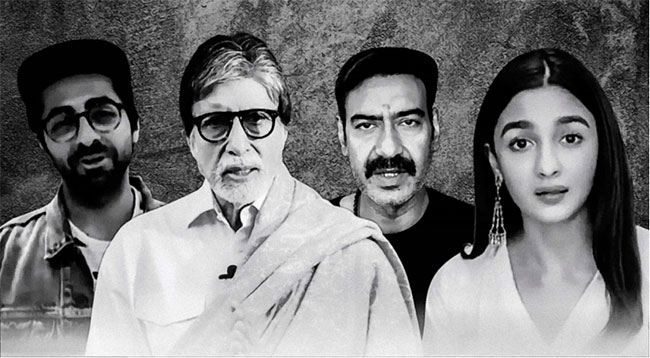
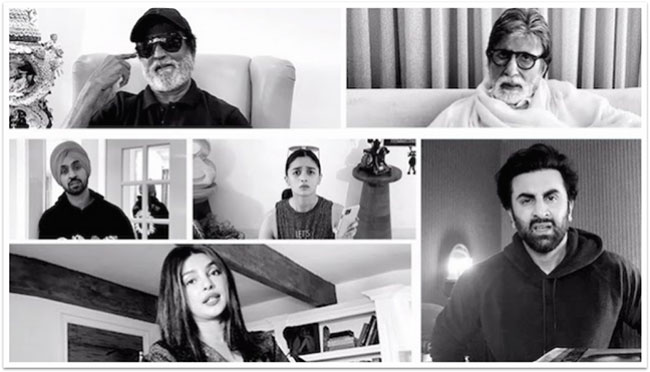
 Brand Engagement is always relevant and more so during the lockdown. Brands are using different tricks for engaging with consumers. Some of them are relevant and impactful, few original and innovative. I believe if there is nothing to say, being silliest is a better option.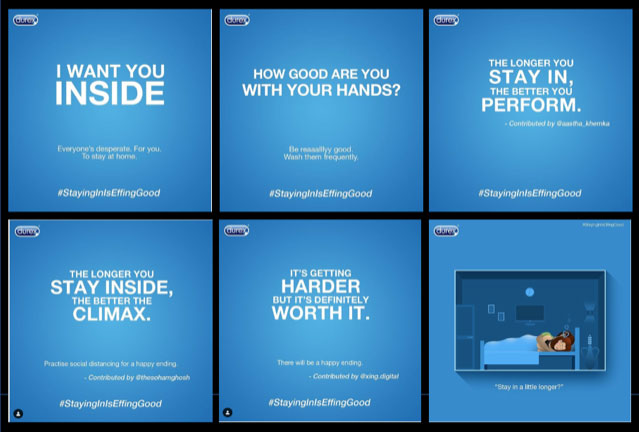

 Even as the Hindi GEC category struggles to recover its lost glory inch by inch over the last year-and-a-half, there’s a special little story unfolding on the side. Sab TV (or Sony Sab, as it’s officially called) has grown almost 40 per cent in the last one year, to now emerge as the No. 2 Hindi GEC in the Pay TV segment in Urban HSM in the pre-KBC period. The channel has seen an upward surge in the months of July and August this year, overtaking more seasoned players like Zee TV and Colors, and competing well with the network flagship Sony Entertainment Television, which has big-ticket material like KBC on its side for 13 weeks now.

 category leaders in Attractiveness are Colgate (FMCG), Amul (F&B), Bata (Personal Accessories), Raymond (Apparel) and Airtel (Telecom).