Tag: Sonal Dabral

  • DDB Mudra announces new ‘A’ team

    By A Correspondent


    Madhukar Kamath, Group CEO and MD DDB Mudra Group announced on February 23 that the restructuring of the Mudra Group is complete, and shared a slew of changes in responsibility of his ‘A’ team, pursuant to the Group’s integration with Omnicom and DDB Worldwide.


    The architecture & identity of the new DDB Mudra Group will be shared with the media at a press meet scheduled on February 28, in the presence of John Zeigler, Chairman & CEO – DDB Asia Pacific, India & Japan. The effective date for the change of identity and the roll-out will be March 1.


    With regard to his senior team, Mr Kamath announced the following:

    Rajiv Sabnis will be President – DDB Mudra Group and will report to him.  He will be responsible for building the DDB Mudra and Mudra brands in Mumbai and the Western Region. He will also be responsible for initiating integration projects and business for DDB MudraMax from the existing clients within DDB Mudra and Mudra.


    Ranji Cherian will be President – DDB Mudra Group and will also report to him. He will be responsible for building the DDB Mudra and Mudra brands in the South. He will be responsible for initiating integration projects and business for DDB MudraMax from the existing clients within DDB Mudra and Mudra in the South.


    Anurag Bansal will be Director Finance, DDB Mudra Group.   He will now function as deputy to the Group CFO, Dilip Upadhyaya.


    Sudarshan Banerjee, apart from his role as Head, Mudra Ahmedabad, will now also be Director – Business Development, DDB Mudra Group and will report to the Group Chief Operating Officer, Pratap Bose.


    After a successful stint in Mudra West, Arijit Ray (currently President – Mudra West) will now work with Mr Kamath on a new assignment in the DDB Mudra Group, possibly in the DDB Asia-Pacific network.


    “With these changes in place and with Mandeep Malhotra (Mandy) driving the Experiential, Retail and OOH Agenda, Aneil Deepak (Andee) leading the planning and creative function in DDB MudraMax as National Head – Ideas, N.P. Sathyamurthy driving the MudraMax media agenda, Venkat Mallik running RAPP and Tribal DDB, Soumitra Sen and his fast expanding DDB Health & Lifestyle practice, Ashish Mishra in Water, and Radha in Maatra, Vandana Das joining us as President – DDB Mudra Group in Delhi in mid March, Sonal Dabral coming on board as the Chairman & Chief Creative Officer, from  March 1, and Pratap working closely with me as the Group COO and  driving the entire New Business Agenda, I look forward to exciting days ahead,”  said Mr Kamath.


    DDB Mudra Group isIndia’s largest integrated marketing communications and services network. Its customized and collaborative approach helps its clients build valuable and enduring brands. The group’s capabilities span Advertising, Media, Digital & Data marketing, Experiential marketing (Promotions, Events, Rural), Trade marketing, Youth marketing, Localization & Pre-Media services and Brand Strategy & Design consultancy.


    With over 1,100 employees and 26 offices, offering direct contact across 1,75,000 villages, 4000 towns, 3500 schools and nearly 7 million students, the DDB Mudra Group was India’s most awarded agency network at Cannes, Spikes and Abbys among others in 2011.


  • DDB Mudra confirms Sonal Dabral entry as Chairman & CCO; will also be on global & regional creative councils

    By A Correspondent


    Madhukar Kamath, the Group CEO and MD of the DDB Mudra Group, has announced the appointment of Sonal Dabral as the Chairman and Chief Creative Officer of the DDB Mudra Group. On Mr Dabral’s appointment, Mr Kamath said, “Coming on the back of an excellent 2011, both in terms of business and recognition, the DDB Mudra Group is poised for explosive growth. As the most awarded Indian agency at Cannes, Spikes, Abbys etc, to name a few, we are thrilled to welcome a truly exceptional talent, an excellent creative leader and a wonderful person like Sonal to the DDB Mudra Group. His mandate will encompass the entire spectrum of agencies that work across what is certainly the most integrated marketing and communications services network in the country. Agencies like DDB Mudra, Mudra, DDB Mudra Max (OOH, Media, Experiential and Retail), Rapp, Tribal DDB, DDB Health & Lifestyle, Water, Maatra etc. which constitute the DDB Mudra Group will now have their creative teams reporting in to Sonal.”


    He added, “I am personally thrilled to welcome Sonal Dabral. I have known him for two decades now. We worked together in Delhi years ago, on the iconic ‘Humko Binnies Mangta’ campaign. He will partner me on the exciting agenda that we have ahead of us for the DDB Mudra Group. The legendary Bernbach legacy, the much admired creative business solutions of the DDB Worldwide network, the Social Creativity agenda, the entrepreneurial zeal and track record of building several successful national brands that Mudra brings to the table, the extensive and certainly unique multi-faceted offerings in the DDB Mudra Group will all form an excellent platform for Sonal.”


    Mr Dabral has over two exciting decades of experience on brands like Audi, Fiat, Tata Safari, Dove, Le Sancy, Unilever Foods, Ponds, Lakme, Panadol, Cadburys, Asian Paints, Fevicol, Virgin Mobile, Tata AIG, Prudential, GE, Nestle’s Maggi and Milo, DBS, Remy Martin, Colgate, Pizza Hut, Sony, Coca Cola and DHL.


    A graduate of the National School of Design (NID), Mr Dabral began his career in Lintas, Delhi. After a brief stint in Mudra Delhi, he went on to have an extremely successful stint at  Ogilvy Mumbai before moving to Kuala Lumpur to head Ogilvy in Malaysia and make it one of the top creative offices in the region. Next, as the Chairman and ECD of Ogilvy Singapore, he led the agency to become not just the hottest agency in the region and the No 1 creative office in the whole of Ogilvy Worldwide but also in the entire WPP global network. His last assignment was in a dual role, as the Regional Creative Head and Chairman-India of Bates operating out of Singapore and Mumbai.

    Apart from being a prolific winner in most of the Regional and International Award shows like Cannes, Clio, D & AD, One Show, LIA, Andy Awards, AdFest, Spikes etc., Sonal has served on most of the juries globally.

    Said Mr Kamath, “Apart from partnering me in India, Sonal Dabral has also been invited by Amir Kassei, the Global Chief Creative Officer of DDB WW, to serve on the Global Creative Council of DDB. In the Asia-Pacific region, he will Co-Chair the Regional Creative Council with Amir Kassei. With the vast array of clients, brands, services and offerings in the DDB Mudra Group, an exciting ‘Growth Agenda’, an unparalleled creative manifesto in the Bernbach legacy, I eagerly await Sonal’s arrival.”

  • Is all well at Bates?

    By Tuhina Anand


    It doesn’t require any insider to tell you this. Bates, ‘the changengage people’, has been going through too many changes and appears to have failed to engage its own people. Amidst the numerous rechristening from Bates Clarion, Bates Enterprise, Bates David Enterprise, Bates 141 to Bates Asia, the agency has seen losing many of its top talent especially in the last three years when the entire transition happened from Bates Enterprise to Bates David Enterprise and then to Bates 141.


    Bates Asia a,s it is known today, is part of the WPP network. The reason behind so many mergers that the agency has gone through was to create a large or mid-sized agency rather than having too many boutique-sized in the bouquet. However, among all these mergers, the agency has lost its focus says an insider who has been closely associated with the agency. He says that there are so many changes not just of top management but also of methods and philosophies hence leading to a lack of focus in the agency. He said, “The agency is not sticking to one story but has been moving ahead without any plan thus lacking any consistency.”


    Sometime in 2005, Bates India and Enterprise Nexus merged with Subhash Kamath was appointed as the CEO while Mohammed Khan, the founder of Enterprise Nexus took charge as the Executive Chairman. While the agency was still trying to adapt to these changes, another merger was announced. This was in 2007, when David, Ogilvy’s second agency that was headed by Josy Paul was merged with Bates Enterprise. Paul decided not to get into this new entity especially as David was his own baby probably not wanting to see his agency being sandwiched between Bates and Enterprise.


    However, Bates David Enterprise didn’t last long and in between one saw Bates acquiring Sercon which was essentially a BTL agency and the agency took on the new avatar of Bates 141. In all this, Subhash Kamath, the CEO moved out to BBH. During the period, there were many exits from the agency, including that of Alok Agrawal who was heading the Delhi branch, Ashok Vidyasagar, the Bangalore Branch head among others. Russell Barrett quit Bates where he was the ECD to join BBH. Not to forget, in the APAC region too there were movements, like in 2010, Edward Pank the MD of Bates 141 had quit. Jeffrey Yu, the Chairman of Bates141 quit and so did Digby Richards, the CEO of Bates 141 Asia Pacific. The reason for quitting of Yu was over ‘disagreement of the future direction of the agency network’. That’s when Tim Isaac, the current Chairman of Bates took over.


    There was management rejig in 2008 post Kamath’s exit with Sandeep Pathak being appointed the CEO, Manosh Mukherjee as the COO, Dheeraj Sinha, Chief Strategy Officer and amongst others significant being Sonal Dabral being appointed India Chairman and Regional Creative Director. Also Sagar Mahableshwarkar joined as the National Creative Director for Bates141 in 2010. So for a bit it seemed Bates141 had finally settled it at least with its top management in place. However, there was no buzz around the agency. The news of Colgate-Palmolive business being parked at Bates brought some cheer.


    It was only in October 2011, it was announced that Bates Asia will take its current avatar sans the 141 tag. However, with the recent development of Dabral moving out who had just started to be a visible representative of Bates Asia and then soon after news of Sandeep Pathak too quitting has led one to question if all is well at the agency? Senior people within the agency vouch that there is nothing wrong at the agency and its mere coincidence that two senior resources are moving out at the same time. But it is learnt that many at the agency also the senior management are already circulating their CVs and looking for greener pastures.


    But one does wonder whether all these mergers really did any good to the agency of paved way for this kind of instability. It definitely is a herculean task to merge two agencies what with staff, designation, accounts, office and different methodologies. And to think that Bates has been on this path since 2005 definitely gives a shaky image to the agency. Let’s just hope that Bates Asia has reached its final avatar and the agency will only grow from now as the worst has happened. However, as an aside, there is always the possibility of merging with big daddy Ogilvy!


  • It’s bye-bye time for Sandeep Pathak and Raj Kamble

    By A Correspondent


    It’s now confirmed. Both captains of the Bates ship are bidding goodbye to the agency. Although there’s no official communiqué from the agency, Sonal Dabral, India Chairman and Regional executive Director, Bates Asia and Sandeep Pathak, CEO, Bates Asia have put in their papers.


    While Mr Dabral is moving to DDB Mudra, Mr Pathak’s destination next is not known, refusing to comment on the issue. He has been with the agency since four years.


    Meanwhile, at BBH India, Raj Kamble who had replaced Priti Nair last year as Managing Partner, has also called it quits.  ECD Russell Barrett has been elevated to the post of Managing Partner. Kamble’s next port of call is unknown.


    In an official communiqué, Sir John Hegarty said:  ‘It’s always sad when great creative people leave you, but it’s greater satisfaction when you can promote an outstanding creative leader from within. Russell Barrett has created most of our best work and put BBH India on  the creative map. I believe with his creative leadership our Mumbai office will go from strength to strength.”


  • Tata AIG focuses on building strong foundation

    By Shubhangi Mehta


    Tata AIG Life Insurance Company Limited (Tata AIG Life) has released the first in its series of a new communication campaign envisaged by Bates, that restates the importance of indoctrinate strong values and foundations by parents amongst their children. The crux of the communication leverages a strong insight that when the foundations are right, the future is protected.


    Tata AIG Life has a long-term brand-building programme, which commenced in 2004 and is supported each year.


    Tata AIG always emphasises on creating a future by nurturing a strong foundation. Whether it’s the way Tata AIG life runs its business, the way it equips its employees or the way it looks at its customers, it makes sure that every relationship stands on solid foundations. For Tata AIG, when the Foundations are right, the Future is protected.


    Vikrant Ramachandra, Vice President, Brand Marketing, Tata AIG Life Insurance Company Limited said, “At Tata AIG Life, we have always believed in creating a future by nurturing a strong foundation. The principle that a strong foundation means a protected future is at the core of the new brand strategy. Our focus on Protection is reflected in the slew of products launched in the recent times, like Tata AIG Life Gyan Kosh, Tata AIG Life InvestAssure Maximizer and the new products about to be launched. The brand communication strategy will reflect this. One of the critical initiatives recently launched by Tata-AIG Life is the launch of the Premier agency. This will foster skills development with a view to creating a professional and productive agency force through mandatory and structured training targeted at ensuring they focus on the customer need.”


    There is a huge and latent need for financial instruments for long-term savings and protection in India. A Swiss Re report on ‘Mortality Protection Gap’ in Asia Pacific indicates a sizeable mortality protection gap in India. The gap which was to the tune of US $ 2045 billion in 2000 had more than tripled to US$ 6676 Billion in the year 2010. This is the third highest amongst countries in Asia Pacific after China and Japan. Tata AIG believes that right now India needs long-term savings and protection products and so their offerings will emphasize these two aspects driving alignment with customer’s needs.


    For their ongoing campaigns, Protection of Life and Health will form the backbone of the Marketing Program. Mass Media Advertising will be extensively supported by intensive Training Program for its Premier Agents at Tata AIG Life. Additionally, Ground Events like Healthy Living Program, which raise awareness on healthy living amongst school students, will make the strategy vivid.


    Its creative mandates are handled by Bates and media mandates by Madison.


    Vijay Sinha, Senior Vice President & Head of Marketing of Tata AIG Life said, “Our core competence is in the area of managing an individual’s financial risks by developing relevant, compelling and differentiated protection-centric products to meet this staggering Protection Gap in India. In line with our core competence, we at Tata AIG Life have always prominently echoed the need to create a sound and steady future by building and nurturing a strong financial foundation. This very principle is at the heart of our latest communication.”


    Commenting on the creative idea, Sonal Dabral, Regional Executive Creative Director & Chairman (India), Bates, said, “If we look at the world around us today, with its rampant consumerism, the thought of the fundamental values passed on to us by our parents getting eroded in the near future is quite scary. The ‘Thank you’ film is relevant in such times not only from a brand point of view but also from a social point of view. Inculcating the right values in our children in today’s fickle times is what will help our nation achieve her true potential. The idea of imparting the right fundamental values, along with the opportunity of engaging the consumers in a relevant manner is what is most exciting about this campaign.”

  • We’ve bn inconsistent in r work: Sonal Dabral


    By Anil Thakraney


    Sonal Dabral’s career has been nothing short of fantastic. In the nineties he partnered Piyush Pandey and together they turned around the fortunes of O&M. He later flew to Malaysia and then Singapore, and did ditto with O&M’s offices there. A few years ago he took on another challenge: To recreate the magic at Bates, where he is Regional Creative Director, Asia Pacific & Chairman for their Indian operations. While he has been over-seeing India, Sonal physically moved here only a few months ago. And though a few cartons still remain to be unpacked, the man is very clear about the way forward for his agency.


    In a rare, frank and a very insightful interview, the 49-year-old reveals his ideologies, his plans for India and his opinions on the ad industry. We also take a trip down his memorable career journey.


    What struck me most is how clued in Sonal is about the key challenges that face brands in contemporary times. I don’t always find that in Indian ad agency leaders.


    Q: There’s a buzz about you joining Mudra.
    No truth in it at all. But I can understand why the rumours must have started. Balki is the face of Lowe, Prasoon is the face of McCann and Piyush, of course, is the face of O&M. So for somebody of stature to walk into a big agency like Mudra… that just leaves me.


    Q: But if they approached you, you would talk to them?
    I won’t be interested. Lots of things to be done out here at Bates.


    Q: What motivated you to shift to India after all these years?
    When I joined Bates about three years ago, the agenda as the regional creative head was to improve the creative health of the agency through the right kind of hiring, inspiration and hands-on involvement. Bates, historically, has had some big clients and pockets of excellence with sporadic good stuff coming out. But overall the network’s creative health has not been good. My additional role is that of Chairman, Bates India, and it was the duality of the role that attracted me to this job. Which is to get back in touch with India and yet have a bigger role than what I was doing at O&M Singapore. So my first job was to ensure that we had the right kind of creative leadership in every place. Once that got done in the last three years, we started looking at India as a very important market for us. And India is a place where I can make a visible difference because of my equity out here, because of all the years I have spent here. And that’s why I decided to locate here.


    Q: Cut to the past. Why did you leave India in the first place? You were Piyush’s blue-eyed boy at O&M. Doing phenomenally well in the agency.
    In the latter part of the nineties, Neil French had taken over as the regional creative director for Asia. On his first trip to India he saw some print work I had done for Cadbury Perk and he was pretty impressed. He cancelled a lunch meet with Ranjan Kapur and Piyush Pandey and took me out for lunch instead! (Smiles.) And he asked that I move to O&M Malaysia. The agency was going down, and they desperately needed a creative head to come and build the place.


    Q: Am sure Piyush must have been upset with your decision to move.
    Neil spoke to Piyush and Ranjan about this. And they called me for a morning cup of tea on a Sunday. They said Neil sees this as a good opportunity for me. They said they wouldn’t like me to go, but wouldn’t stand in the way either. I thought about it for a long time because I was heading O&M Bombay which was 50 percent of the agency’s business, we were riding high. Anyway, I did a recce trip to Malaysia, and the O&M office turned out to be a small one, though they gave me a red carpet welcome. I came back and thought I would never join such a small place. Then they started writing to me, saying they wanted me out there. You know Anil, I believe in destiny, I believe things happen for a reason. Also, the charm of the unknown has always enticed and fascinated me. The discomfort of going to a new place, that too to a place that has nothing to offer, appealed to me. The same thing happened when I left Lintas to join Ogilvy in 1991. Ogilvy was nothing at that time and the only remarkable thing they had done was the ‘Mile Sur’ film.


    Q: But then you eventually left Ogilvy and joined Bates.
    Again, for the same reasons. Helping a place to shape up has always excited me. Maybe it’s to do with a big creative ego, though otherwise I don’t have an ego at all.


    Q: The key difference between working in an international market and working in India…
    In India we work a lot on the individual, friendship level. It’s like if I know Thakraney really well, and he is the agency and I am Unilever, then Thakraney and Dabral will work together and create a campaign. Things happen on a very personal level here. In the international markets… and you can call it professionalism or stuck-up-ness… there are still a lot of procedures and processes that get followed. I prefer a combination of the two methods. We are a very chaotic, free-for-all nation and at times that free-for-all-ness helps creativity. But it also brings with it a sense of indiscipline. And this affects the execution of work, that’s where we fall flat. Obviously, in the last 12 years, I have learnt something that’s different from India. And I am trying to get some systems in place in the way we work out here at Bates.


    Q: When you first came to Bates India, the good and the bad things you noticed…
    (Thinks carefully.) Creatively we have not been consistent. There is potential but the realisation is not happening. We need to correct that so that our number of hits increases.


    Q: The significant changes you’ve made in the last few months.
    I want to make this an agency of people who are not just creative but are intelligent, aware and knowledgeable creative people. True creativity needs you to be curious. The curiosity bit I want to feed as much as possible. Last weekend I invited a film chief from the National Institute of Design to conduct a film appreciation workshop. And it had nothing to do with advertising. Sometime later we’ll have another kind of workshop. Basically, I want to tell people that advertising is the only profession where you don’t learn things from the inside, it will all come from the outside.


    Q: What do you look for when you hire creative people?
    Besides obviously the work, I look for a certain amount of authenticity. It might be difficult to get that in a meeting, but you do get a sense of it. It’s very important for any creative person to let his or her guard down.


    Q: As a client, why should I choose Bates?
    We are the ‘change’ agency. It’s about making strategies that are based on the shifts that are happening within the product category or within the target audiences. And based on the cultural shifts that are happening within the society. We call that positioning ‘Change Engage’. It means a changed thinking which leads to work that has a two-way communication with the consumers. For example, you saw what happened during the Anna Hazare movement. It was about the power of people coming together really fast and having an opinion about something. Or for example what happened with the Kolaveri video. It’s the power of tech that consumers now have. This means advertising has to change in the way we approach things. We need to make an impact on a consumer for him to start conversing or debating about our brands. The other thing is we are an Asia-only network, so we are still small when compared to a JWT or an Ogilvy. So there’s a certain amount of nimbleness and spontaneity that we have. Also, on a personal front, the wealth of experience I bring with my Indian and global experience.


    Q: Why hasn’t Bates really taken off in India?
    It’s to do with the fast changes that have taken place. It’s been only about four years since it has emerged as Bates. Before that all the mergers were taking place. First it was Enterprise, then came David. Also there have been personnel changes. Subhash Kamath left for BBH, I have come now, Sandeep Pathak has taken over as CEO. It’s been going through a churn. It’s only now that we have begun to feel settled.


    Q: What’s all this about Smashing Pumpkins and Cabbage Curry?
    Smashing Pumpkins is something I coined for our annual creative conference. We would smash pumpkins at the event. Bates’s earlier colour was pumpkin yellow. And I said we need to be doing smashing work, so that’s how it got coined. Cabbage Curry Fridays I had started in Malaysia and Singapore. Every Friday we would have a chat session or a presentation which had to do with the culture of curiosity I was talking about earlier. I want to tell people that if you don’t have a passion beyond advertising, then your mind will become like a cabbage. (Laughs.)


    Q: What’s happening on your movie script?
    There are a couple of ideas in my head. I have started working on it but it’s been going very slowly. I have a story in mind that’s solid and substantial. It will not be a time-pass flick.


    Q: I last met you in the late nineties when you were a young, happy creative director. I have a feeling you have become a tough guy since.
    I have changed over the years to an extent which is required to run a place. But otherwise I am not as tough as I should be. Laughter to me is the biggest asset an ad agency can have.


    Q: I think in India you’ll have to kick ass at times.
    I totally agree with you.


    Q: Would it be right to call Piyush Pandey your mentor?
    He is one of the people. There would be others too like Neil French.


    Q: Do you at times feel you should never have left India? Bates is a small player, and had you stuck on, you could have been the captain of a very large ship.
    Not at all. I am extremely happy and I feel very lucky. That I did go and work in Malaysia and Singapore. The exposure that gave me towards communications, advertising, work, etc, couldn’t have happened in India. Also when I was abroad there were offers to head a large organisation here, and those offers won’t run away anywhere. I totally believe in destiny, I wasn’t meant to be here for those 12 years.


    Q: One creative chief of a large Indian agency you most admire.
    (Thinks for a long time.) I like the way Aggie (Agnello Dias) and Padhi (Santosh Padhi) have gone about their work. The way they have approached business, the kind of work they are doing. Their small size has not held them back. In terms of the large agency Chairmen, is there anyone I envy or admire? Well, no, not really.
  • The Anchor: Sonal Dabral on 6 ads that will always remain in his mind

    Liril with Karen Lunel:  I remember waiting eagerly to watch the ad in auditorium just before the beginning of a movie. The entire packaging of the ad makes it compelling and I think it was a unique leap that Mr Alyque Padamsee and Lintas had taken at that time. It was a commercial to sell a soap but done in an impactful manner. Kailash (Surendranath) had shot it tastefully so it was not vulgar even if you have a girl frolicking under a waterfall.
    Lifebuoy:  Lifebuoy hai jahan, tandrusti hai wahan. It was a simple ad but also a great idea. Such a wonderful and simple line captured the essence of the product. In advertising, it often happens that in search of a good idea we tend to make life too complicated for ourselves. We try too hard to be clever, ‘creative’ but we just have to remember that in advertising in the end it is just about selling a product, selling an attitude and a shift in behaviour and nothing beyond that. If we realize this then that’s where simplicity comes. Lifebuoy advertising was unpretentious, simple and did its job for many many years.

    The Freedom Run: This ad came at a time when I was just about to leave NID and it rebuilt my faith in advertising as a profession. At that point, I was at a crossroads whether to go into pure design, films or advertising. Suresh Mullick’s Freedom Run was not an ad but a film that brought pride when you watched it.  It was meant to bring pride and you could sense the passion with which it was made.  It is the truth that if you do something with passion, it generally turns out to be good.

    Cadbury’s girl dancing on the pitch: I had the wonderful opportunity to work in O&M and at one point  Piyush Pandey and I decided that we would turn around the agency one day and be the top agency in India, the region and possibly in the world. After tremendous hard work came the flagship campaign on Cadbury Dairy Milk which was the girl on the cricket field. I had worked on the ad along with Piyush and the team, and I think the ad was a milestone in Indian advertising and was somewhere even dubbed as ad of the century.

    Fevicol: The work on Fevicol has been landmark. The idea is great and has been well executed.

    Virgin Mobile: The work by Bates on Virgin Mobile is again pathbreaking and stretched the morals, if I can say, to a certain limit. Indian Panga League was daring, risky and pushed boundaries. It created a new lingo. Since I have worked on it, it might be selfish to say but it’s a personal favourite piece of work too. It was audacity to come out with 115 films and put on the web. Daring, risky and an amazing idea done amazingly well.

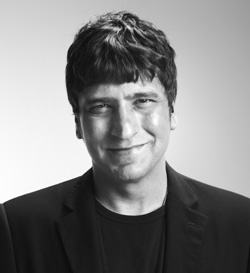
    Sonal Dabral is Chairman India and Regional Executive Creative Director, Bates Asia.

  • Video Report: The ‘AdAsian’ experience


    [youtube width=”320″ height=”250″]http://www.youtube.com/watch?v=iaNsKVHeQpI[/youtube]

    By Shruti Pushkarna


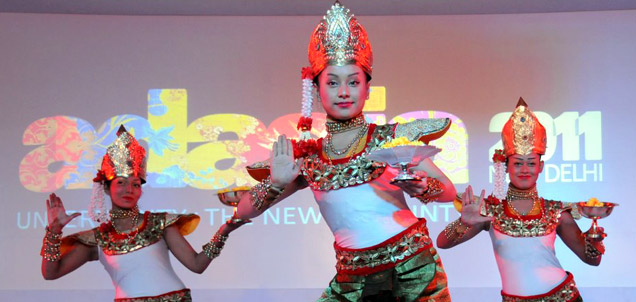
    Whether it was Swami Sukhabodhananda’s inspiring words of wisdom, Joseph Tripodi’s ‘engaging’ presentation or Will Sansom’s ‘Contagious’ ideas, there was something for everyone to take home from the AdAsia 2011 conference that concluded yesterday in New Delhi.


    Were expectations met? Did this AdAsia wash away the Jaipur 2003 memories? Did the Dilli chaat and the manganiyas charm the foreign delegates enough? Could it have been better? For answers to all of the above and more, MxM India caught up with some AdAsia veterans as well as first-timers on the last day of the congress.


    It was an experience to remember for quite a few, especially for the strong line-up of speakers. While first-timer Anita Nayyar, CEO-India & South Asia, Havas Media, was impressed with the creative line-up of speakers and topics, for Alok Agarwal, COO, Cheil Worldwide, India, some great content came from the non-advertising lot. He said, “…the presentations made by the non-advertising people were far fresher in their thinking…”

    Looking at the line-up, a few turned up at the congress in the hope of interacting with the industry icons. But the format of the sessions didn’t leave too much room for interaction. Coming from Pakistan, Mehwish Rafi, Chief Strategy Officer, Adcom Pvt Ltd, had a different picture in mind before she attended the sessions. But nevertheless, the sheer association with the ‘AdAsia family’ as she calls it, made it a great experience for all the 90 delegates from Pakistan.

    AdAsia loyalist, Raymond So, CEO, Mastershub, also came with huge expectations which he admitted were almost met but for the cultural experience. Recalling his grand Jaipur experience, he said, “…Jaipur had given me an excellent experience, the cultural exposure was great…and this time because of the hotel arrangement, it wasn’t as impressive as the previous AdAsia.”

    Sonal Dabral, Creative Head Asia & Chairman Bates 141 India, like most others was impressed with the content coming out of AdAsia 2011 but sharing his experience from Cannes, he gave some interesting feedback on how the content could have been showcased better. Stressing on the keyword of the trade, ‘advertising’, he said, “…I don’t think the separate seminars that happened were properly advertised… if we are in the business of building expectations, of teasing people, to creating desire about a product, I think that should have been done for each of the seminars.”

    For Chris Thomas, Chairman and CEO of BBDO in Asia, Middle East & Africa, the biggest takeaway from the conference was the vibrancy in the industry in Asia. Referring to the great work and conversations shared through the three-day congress, he said, “…there is absolutely a passion for the work, there is a sense of creativity and new techniques to be applied, and I think Asia is demonstrating its vibrancy and its importance on the world stage, and particularly in India.”

    Paresh Nath, Owner, Delhi Press, admitted to have had a great time at AdAsia 2011 as well. He said that the conversations were not just about advertising but about “communication” which happens to be an integral part of publishing.

  • Just Bates, now

    By Shubhangi Mehta

    WPP agency Bates 141 has dropped the ‘141’ from its name in its third rebranding employ. The agency is planning to adopt new attitude and corporate identity to underline its new agency model. With a new name and agency model, Bates now also has a new logo.

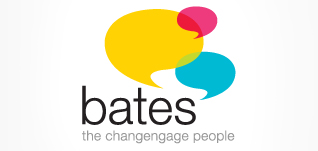
    The new logo features the Bates typeface in contemporary Helvetica and three speech balloons (in original Bates pumpkin, red and blue), replacing the former eye mnemonic.

    Bates has embarked on a new journey to become the changengage* people. Changengage* is the philosophy for the new Bates agency model.

    Changengage underscores a sea of change in the way the agency is structured to deliver better solutions to clients. It is a complete mindset and behavioural change.

    Dheeraj Sinha, Regional Planning Director, Bates, said, “All the previous rebrandings of Bates have happened due to acquisitions and mergers, Bates 141 was also a result of that. This time the rebranding is solely for the new prospective of a new world, the world is changing and so are we. Bates has not just been an advertising agency but we provide digital, rural marketing solutions as well, we will take this a step forward a continue our focus on new engagement-led strategy for the client where digital will definitely play a major role.”


    It may be recalled that the agency logo was refreshed in 2008 and represented Bates and 141 fully integrated as one company with one vision and an integration of their offering.


    The visual identity comprised repeating ‘eyes’ with one set facing the other direction, expressing Bates 141’s Change vision of ‘Change happens when you look at things differently.


    The name 141’s origins lie in the address of the division’s original London HQ, 141 Westbourne Terrace.


    Sonal Dabral, Regional Executive Creative Director and India Chairman, Bates, remarked, “In the new Bates we don’t think ATL and BTL, we think integrated and we believe all our ideas should lead to engagement for brands. We decided to drop 141 from the name Bates as 141 symbolizes our activation arm and therefore doesn’t find a place in our new agency model.The new logo has been designed by the Bates design team internally, mostly by the Kolkata and Mumbai teams. The added colours depict Bates as more vibrant, novel and youthful. The cluster of speech blurbs above the name is symbolic of vibrant conversations and debates we will aim to provoke through our work. The overlapping blurbs are also a subliminal reminder of tag clouds, the language of now and the future.”

    In terms of solutions, a large part of the agency’s revenue currently comes from engagement (eg, OOH, online, interactive, shopper marketing, activation, etc). Bates will continue to strengthen these pockets of expertise by enriching its talent mix with technologists, shopper marketing planners and designers to deliver more sparkling engagement solutions.
    It will also continue to bolster its cluster operating model (Greater China, India and Southeast Asia) which provide the means to leverage pockets of category and discipline expertise across markets/offices.
    Bates is a marketing communications network under the WPP Group.Located in 11 countries in Asia. They work with global and local brands including Accor, Café de Coral, Cheung Kong, Diageo, Disney, Fiat, Finnair, General Mills, HSBC, IDEA, Shanghai General Motors, Singapore Polytechnic, Unilever and Virgin Mobile.