Tag: social issues

  • Brands Navigating the Social Class Divide: Lessons in Sensitivity from Past Campaigns

    Photo source: Tweet by Neeraj Ghaywan (@ghaywan) at https://twitter.com/ghaywan/status/1666667224273403908?s=20


    By Hamsini Shivakumar & Prabhjot Singh Gambhir

     

    Hamsini Shivakumar
    Prabhjot Singh Gambhir

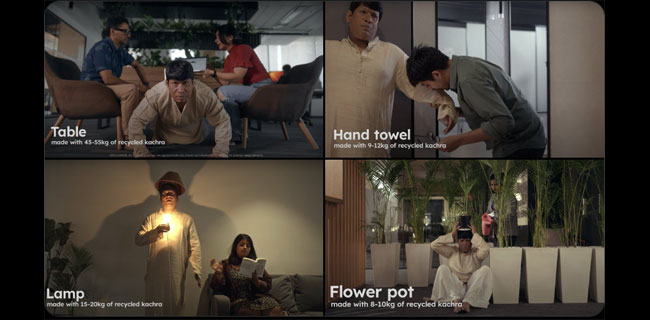
    Zomato’s recent campaign aimed to raise awareness about recycling waste on World Environment Day. However, the use of the character ‘Kachra’ from the movie Lagaan inadvertently reinforced stereotypes and perpetuates the devaluation of people from a specific class. Although the brand intended to employ wordplay in the video, the end-result appears culturally out of sync. The humour in the video appears to be mocking the already marginalised rather than challenging those in positions of power. The video received a lot of backlash on social media, which eventually led to Zomato deleting the video itself from all platforms.


    When faced with these social class divides, brands and their creative agencies are confronted with a unique challenge. Traditionally, marketing has approached class divisions as issues of affordability and accessibility for consumers. The solution typically involves offering products and services at various price points to cater to different segments of the market.


    Think of shampoo sachets, and phone recharges priced at Rs 10. Market segmentation based on affordability addresses the problem of access, ensuring that every consumer can afford and desire products within their price range, whether at the lower end or luxury segment of the market.


    However, addressing the social class divide as a brand in brand communication presents a distinct challenge, as it raises questions about portrayal and representation. It forces brands to examine their vantage point and ideological stance. If a brand aims to project itself as embracing progressive values, how should it navigate the complex issue of social class and class divides?


    This is particularly relevant when it comes to the portrayal of domestic help and their treatment in advertising, especially for brands selling household cleaning products and related items. How should they depict domestic help? Should they merely reflect reality as it is, or should they encourage consumers to adopt more progressive behaviours?


    To effectively navigate the intersection of brand communication and the social class divide, brands can draw valuable lessons from previous campaigns that approached similar subjects with sensitivity. Let’s take a look at some examples of how some brands have approached this issue in the past:


    Ghadi Detergent:


    In Indian popular culture, domestic help is often portrayed as solely responsible for the cleanliness and maintenance of households, perpetuating the notion that it is their sole duty while family members contribute little. Such stereotypes create a power imbalance between domestic help and the families they serve, with the latter holding all decision-making authority.


    Ghadi Detergent’s campaign, #SaareMaelDhoDaalo, deviates from this stereotype. Instead, it encourages individuals to recognise the importance of every task, no matter how small, and to treat domestic help with respect. The campaign depicts a young boy with a callous attitude towards the work performed by the house help. To rectify his behaviour, his mother decides to teach him a lesson by having him clean the house under the false pretence that the house help is on leave. In the end, he learns to appreciate the domestic help’s contribution and even pays him extra to celebrate the festivities.


    Women’s Day 2019 #YourSecondHome : An initiative by PregaNews


    Similarly, PregaNews launched its Women’s Day 2019 campaign, #YourSecondHome, which highlights the importance of domestic helpers and their contributions to households.

    The content begins with a woman scolding her domestic help and asking her not to perform her usual tasks. It appears that the domestic help’s job is at risk. However, as the narrative unfolds, we discover that the woman is actually reducing the workload of the domestic help due to her pregnancy and invites another domestic worker to assist. The campaign challenges initial perceptions by portraying the employer as caring and considerate, much like a family member would be.


    The messaging of the campaign promotes progressive ideals, advocating for empathy towards domestic workers and providing them with benefits such as maternity leave or reduced workload during pregnancy, similar to practices in the organised sector. The brand, PregaNews, seamlessly integrates into the narrative of the ad.


    Cadbury Dairy Milk – Driver


    The work features a boss driving his driver to his child’s school so that he could attend the parent-teacher meeting. While the content is only 45 seconds long, it is quite impactful. We immediately get to understand the dynamics between the employee and the employer and how this is a routine activity. We understand how his boss is being kind and patient towards him and goes out of his way to help him.


    The video shows how a small gesture of kindness towards one’s driver/staff can make a significant difference in their life. The brand integration of Cadbury Dairy Milk is also quite seamless, as it plays on the factor of the boss ‘being sweet’ and sweetness is associated with the chocolate in question.


    Oswal Refined Soyabean oil


    Oswal Refined Soyabean oil’s campaign portrays a positive image of domestic helpers by showcasing the relationship between the wife and her employee. While the husband is upset that the domestic help always leaves early to attend to her children, the wife, on the other hand, is accommodating as she knows that she works well and efficiently. One day, when the wife is out of the city, the maid bakes a cake for the husband and stays late at night just to celebrate his birthday so that he does not feel isolated on his special day.


    The video emphasises that domestic help is not just the staff of the house, but a part of the family, and employers should be accommodating to their requirements.


    However, while the ad’s story has a nice recall value, the brand takes a backseat here. The brand integration of Oswal is not quite as seamless because the story is not built around refined soybean oil. Even a slight mention of it in the narrative would’ve helped the brand integration.


    Facebook | More Together – Pooja Didi


    Facebook’s campaign, More Together – Pooja Didi, is a heart-warming portrayal of support staff. The content initiative can almost be categorised as a mini-short film, as it is about seven minutes long. It highlights the problem of unemployment during the pandemic and how the protagonist – Pooja, starts hiring people in large numbers to provide them with gainful employment solely out of her altruistic intentions.


    However, when she cannot pay the salaries and bills to the people she does business with, she is in a state of crisis. That is when the hired staff of her sweet shop utilises the power of social media to narrate the story of Pooja’s altruistic actions, which end up attracting customers to the shop, thus enabling her to pay all her bills.


    Conclusion

    All the brands seem to take the high power distance between employers and domestic help for granted as a given in Indian society and thus mirror existing realities. They don’t show the possibility of a different future for domestic help (except the Cadbury ad to some extent) in which they can be empowered and assertive of their rights vis-a-vis their employers.


    The convergence of brand communication and the social class divide poses both challenges and opportunities for brands. By being mindful of the implications of their messaging, brands can strive to create advertisements that promote empathy, understanding, and equality. Actively working to dismantle stereotypes and biases, brands can contribute to positive social change.


    Hamsini Shivakumar is a long-time culture-watcher, semiotician, brand consultant and co-founder of Leapfrog Strategy as well as Semiofest, the global unconference for applied semiotics. Prabhjot Singh Gambhir has done his Masters in Film Studies and is passionate about stand-up comedy. He has now turned his observant eye to cultural discourse and its intersection with brands. The views expressed here are their own.

     

  • Tata Tea’s Jaago Re site empowers people to make a diff

    By A Correspondent


    Tata Tea Jaago Re has announced the launch of its renewed website, www.jaagore.com, which provides information on a gamut of social issues, at the click of a button, to empower all Indians to act on issues relevant to every citizen. The new website reflects the company’s continued efforts to awaken individuals and inspire them to be the change that they wish to see around them.


    Commenting on the renewed portal, Vikram Grover, Vice President & Head Marketing – South Asia, Tata Global Beverages Limited said, “Tata Tea’s Jaago Re campaign has been an agent of social awakening. It has been ahead of the curve in bringing burning issues like corruption into national consciousness. Today we are entering a new phase in the life of jaagore.com – this phase is born out of a belief that information is the lifeblood of a democracy. Very often information and the tools of democracy are not understood well and therefore not utilized. While we at Tata Tea do realize the importance of awakening to issues that the nation is facing, we feel that it is equally important to have easy access to information in order to empower people to make a difference.” He further added, “With the new initiatives on our website we are looking at leveraging the strength of the online medium to take our campaign to the next level and to provide information to help citizens to act and make a difference.”


    Vineet Gupta, Managing Partner, 22feet said, “Jaago Re is one of the most recognized initiatives undertaken by any brand in this country. This year, the initiative takes another step forward towards awakening and empowering people by simplifying complex issues that affect our day to day lives. We, at 22feet are privileged to be the Digital partner for this initiative and look forward to delivering relevant content across all digital touch points.”


    Providing simplified information endorsed by topical experts, the portal allows young, tech savvy India an interface to navigate complex, time consuming steps and enables them to act and solve the issue. Starting with ‘Know Your Police’ in the first cycle; the portal will focus on new topics every quarter and touch upon various subjects such as steps to filing an RTI, registering to vote and women’s empowerment.


    About Jaago Re

    Tata Tea’s award winning Jaago Re campaigns have time and again awakened individuals and inspired them to be the change they wish to see around them. Making its debut in 2007, the campaign began with a television commercial (TVC) which showed a young man enquiring about the credentials and credibility of a local politician campaigning for votes before offering him a cup of tea. Striking a chord with the youth, the campaign launched a series of advertisements over the last four years that wove in the themes of awakening, enlightening and civic consciousness. For more information please visit our website www.jaagore.com


    About Tata Tea and Tata Global Beverages

    Tata Tea is a leading brand in India and is owned by Tata Global Beverages, a company whose brands have presence in over 40 countries. Tata Global Beverages has significant interests in tea, coffee and water and is the world’s second largest tea company. 250 million servings of its brands are consumed everyday around the world.  Tata Global Beverages’ annual turnover is US$1.4bn, it employs around 3,000 people across the world.  The company focuses on ‘good for you’ beverages and has a stable of innovative regional and global beverage brands, including: Tata Tea, Tetley, Himalayan natural mineral water, Tata Water Plus and Tata Gluco+, Good Earth tea, Grand Coffee and Eight O’clock coffee. For more information please visit www.tataglobalbeverages.com


  • MxM Mondays: Are general entertainment channels turning social activists?


    Television reflects society and social trends, and hence, a look at TV programmes over the years shows that channels have, from time to time, taken up social issues and woven stories around serious themes. From the era of Doordarshan to today, soaps like Hum Log, Rajni to Balika Vadhu, and reality shows like Satyamev Jayate, to name some, have tackled issues which need people’s attention. And recently, the trend has increased as many issues like female foeticide, surrogacy etc are being shown on primetime.

    So, does this mean that the general entertainment channels (GECs) have taken up the role of social activists or is it just another bid to garner more eyeballs? What role does a channel/broadcaster play while showing such issues? MxMIndia spoke to a few experts and industry people…


    Dr B Manjula, associate professor, School of Media and Cultural Studies, Tata InsISS:

    Intially when television was launched in the country, its main role was to educated and enlighten people. Doordarshan showcased not only documentaries but also shows dealing with social issues. With a high rate of illteracy in the country, television was seen as a great option to bring about a change. However, with privatisation and coming in of cable TV, things changed. Media became more of a business than a medium to bring about that change. Broadcasters now are more worried about ratings and gaining popularity among its audience. However, in the past few years, GECs are showcasing serials which have taken a bend towards social issues. But there are two things one needs to keep in mind:

     

    1. How aware are they of the issue itself? Many a times, shows /channels are not aware of issue but only touch it on a peripheral level. Proper and thorough research needs to be done so that not only can shows get an in-depth meaning into their storyline but also help in bringing about a change in people’s mindsets and important points aren’t lost in translation.


    2. What is channel more interested in – TRPs or change? Not only channels but many companies too aren’t clear about the two. Corporate social responsibility isn’t about just doing something once in a while but to bring about a change at grass-root level. There is a gap between an idea and what is practiced. An idea might be good but unless and until, it is shown properly, it will be lost. The bridge between the two needs to be filled.


    I feel that broadcasters shouldn’t forget that there is still a high rate of illiteracy (around 40%) in the country; hence, for them television is the ‘world’. Therefore, they need to be credible and responsible too instead of just focusing on money making.


    Ajay Bhalwankar, Content Head (Hindi GECs), Zee Entertainment:

    That’s been the trend even from the days of Doordarshan. Social issues like discrimination against skin colour, education of the girl child, female foeticide, remarriage, child abuse and surrogacy, etc., are common on primetime shows. They highlight a reality prevalent in society and it gets an instant connect with lakhs of viewers…


    We have always handled any social issue very sensitively and showcased the ‘Umeed’ aspect to edutain viewers on how to get rigid customs and views out of their minds and work towards a happier and progressive society. However, GECs do not want to be social activists but are definitely instrumental in spreading the message or creating awareness about a pertinent social cause. The primary purpose of any GEC is to entertain people. I would like to add that Zee TV has a multi-genre offering and is living up to its image of being a socially conscious channel. With path breaking shows like Hasne aur Hasane Ka Tonic Ladies Special, Agle Janam Mohe Bitiya Hi Kijo, Aapki Antara, Pavitra Rishta, Shree, Maayka, Punarvivaah, Phir Subah Hogi, Sa Re Ga Ma Pa and Dance India Dance, the channel has established icons such as Laali, Archana, Antara, Lakshmi, Aarti and Sugni who have entertained audiences at the same time addressed socially relevant issues like autism, child trafficking and remarriage to name a few. So, it won’t be wrong to say that, it has helped in educating the audience. It has also helped in changing perceptions. For instance, parents encouraged their kids to take up dance as a serious career option in India after watching ‘Dance India Dance.’ Punarvivaah, our primetime show on remarriage, has received tremendous positive feedback. Lakhs of people across the world have written into us sharing their stories and how they’ve changed their mindsets to allow their family and friends find happiness a second time around.


    Yes, we would all like our shows to have maximum eyeballs but there has to be honesty in showcasing any concept. And not all shows with social causes are successful… that the industry attempts such stories to entertain and edutain viewers in India is good! Change is slow and a constant around us…Our primary objective is to entertain and if in the process, awareness, positivity, happier families and relations are built, we are doubly pleased.


    Prashaant Bhatt, Weekday Programming Head – Colors:

    GECs are not taking up the role of social activitss, but just presenting shows that have a context and relevance. If by bringing socially relevant content, we are successful in initiating a social change, we consider our message delivered. Television, today, is more than a medium of entertainment; it’s a mouthpiece for the common man to put his views across. By introducing content that has a social impact, we are doing our bit in raising not only awareness but also extending a platform for discussion.


    As a channel, we believe in variety entertainment and offering an experience that is educative and enriching. With this added in our bouquet of programming, we are catering to the different entertainment options of the audiences. It does have an impact on the common man who watches these shows regularly. One case example being a Rajasthani girl named Lakshmi Sangara, who was married off to a much elderly man at a young age. She, aided by her lawyer, succeeded in getting a divorce from her husband after watching Balika Vadhu and realizing that child marriage is an offence. This is our success, if this is the result and the power of a show then we are not looking at chasing numbers but rather making a real difference. It is a challenge for the channel to portray such strong situations in a socially acceptable manner. For us, it is not just about portraying the issue, but being a General Entertainment Channel, we need to craft storylines that are appealing and accepted by the audiences. By using content to set the context for prevalent issues, we are making an attempt to bring about a change in society and the prevailing mindset. And living in a democratic country, it is highly essential to euphemize these issues and present them to the viewers to make their choices.


    Samir Khanna, EVP and Head, DDB MudraMax Media:

    We need to make the differentiation when we say that GECs are taking up the role of social activists; that is, break up GECs into two verticals: fictional and non-fictional shows. When we talk of fictional shows, there are issues in these serials that agitate the mind of the audience today with the everyday issues such as dowry, corruption, rape etc which are seamed into the storyline. Now because it agitates the mind of the audience, the viewer gets absorbed into the episode or the episodes of the fictional show. I don’t think, in the fictional shows, they are trying to be the activists. At the end of it all, the aim of fictional show is essentially to sell it to the advertising and marketing fraternity, and to grab eyeballs. Being an activist in a fictional show is difficult since the show follows the storyline with the characters into it. Usually, what they do is plug a sub-story into the show and then they carry it forward. The moment you try to talk too much about it, the show becomes preachy, which people wouldn’t like. It is all about eyeballs.

     

    But the moment you talk of non-fiction shows, like Satyamev Jayate, on the GECs, they not only talk but debate about societal issues and also try to come up with advice. There is this non-fictional weekend show, ‘Zindagi ki Haqeekat se Aamna Saamna’, wherein you have a courtroom set up and the show tries to come up solutions for the fighting family members. There are non-fictional shows that do come up with solutions and advice.


  • [PR Channel | By Invitation] CSR: More than PR, pursuing competitive advantage in the long run

    By Kavita Lakhani


    Governments can’t do enough – they need business to step in. Business can’t step in unless stakeholders see value. As tolerance for corporate malfeasance has dropped, expectations of good corporate behaviour have risen. There has been an increasingly louder voice from the public urging corporations and businesses to fulfill social responsibilities while making legitimate profit.


    As a result, authenticity and transparency have become vital for all companies. Adding a social dimension to the value proposition offers a new frontier in competitive positioning. If, corporations were to analyze their prospects for social responsibility using the same frameworks that guide their core business choices, they would discover that Corporate Social Responsibility (CSR) can be much more than a cost, a constraint, or a charitable deed – it can be a source of opportunity, innovation, and competitive advantage.


    Do the Right Thing

    One of the best ways to win hearts and minds is to do good. However CSR is about more than philanthropy – albeit that’s an important element. CSR is about being a responsible business. It’s about issues like good corporate governance, marketplace transparency, respect for staff, community involvement and reducing environmental impact. Corporates the world over have begun to take their corporate social responsibilities seriously. 64% of the Fortune 500 companies publish CSR reports as part of their annual reports, and 52% publish separate CSR reports. Many companies now include social and environmental commitments in their core mission statements. A growing number are also adopting ‘triple bottom line reporting’ in which social and environmental results are measured and reported next to financial results.


    In India, the Tatas and the Birlas have had a long and distinguished tradition in the area of CSR. As across the world, in India too, the culture of CSR is spreading for various reasons but probably not at the desired rapidity.


    Not just acceptable but desirable?

    In a survey conducted by Lowe Lintas (in association with MSN India and Cross Tab) earlier this year, an overwhelming 93% of respondents say businesses should bear responsibility towards society when making legitimate profit and 69% of respondents are ready to exert their influence through consumption habits and to pick products that are made by companies with agreeable CSR initiatives. Interestingly 56% respondents say that supporting brands that undertake socially responsible activities is as good as doing socially responsible activities themselves!


    Choosing which social issues to address

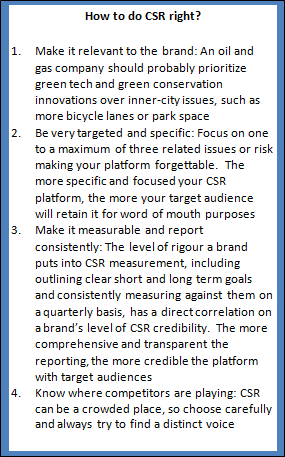
    Gandhiji said, “We must become the change we want to see in the world.” No business can solve all of society’s problems or bear the cost of doing so. Instead, each company must select issues that intersect with its particular business. Other social agendas are best left to those companies in other industries, NGOs, or government institutions that are better positioned to address them.

    There is nothing authentic about merely writing a cheque. The essential test that should guide CSR is not whether a cause is worthy but whether it presents an opportunity to create shared value – that is, a meaningful benefit for society that is also valuable to the business. Supporting a dance company may be a generic social issue for a utility like Tata Power but an important part of the competitive context f or a corporation like American Express, which depends on the high end entertainment, hospitality, and tourism cluster.

    While some may baulk at the idea of deriving commercial benefit out of a social responsibility exercise, the advantage is that when there is a business benefit to be gained through the exercise, the chances of the program continuing and getting larger increase. It’s understandable that the greater the business/image benefit to the brand, the greater the brand’s willingness to continue and even upscale the exercise.


    Don’t be shy. Share It!

    Our economy is increasingly characterized by easier access to information and speedier communication. And like never before, the general public is better informed and able to shape the success of multinational companies. Every day the world’s political and business leaders perform in front of voters, employees, shareholders and the general public. Every word is weighed, every deed dissected – in print, on air, online and in person. Public relations firms create campaigns that go beyond mere product and brand promotion to emphasize transparency, authenticity, good work, and ethical behaviour.

    We advise clients that the speed with which information is disseminated via the Internet can quickly influence a company’s reputation. And a company’s reputation is largely determined by its communication. It has been shown that it is in a company’s best interest to provide substantive information about its responsible initiatives while demonstrating efforts to address vulnerabilities and challenges. We help companies craft the message and carefully consider its tone, because this can considerably impact how the firm is perceived by its stakeholders.


    Indeed companies, in my view, should be up front about their commitment to CSR, about how they are measuring their efforts and how they are tracking against their commitments. Of course, there are risks. We live in a far more transparent world where companies need to be wary of sacrificing goodwill for short term publicity. But doing well by doing good, is not only accepted as good business practice, it’s becoming an imperative. That’s nothing to be embarrassed about.


    In summation, when looked at strategically, corporate social responsibility can become a source of tremendous social progress, as the business applies its considerable resources, expertise, and insights to activities that benefit society. Peter Drucker said it best. All successful businesses serve social goals. Profit is just an internal metric of how successfully you serve those social goals.


    Kavita Lakhani is President, LinOpinion Public Relations & Co-Chair, India, IPG Women’s Leadership Network