
Tag: Snapchat

  • To Copy or Not to Copy. That’s the Question


    By Bhuvi Gupta


    Bhuvi GuptaHave you ever used any of the short video apps that sprung up after the ban on Tik Tok?


    At first look, you couldn’t differentiate between the apps. They have similar if not outright identical user interfaces. The differences only start peeping in when the ‘satisfaction’ achieved after some scrolling doesn’t quite match up to what was achieved with TikTok due to their much-praised algorithm.


    While the apps did receive some flak for not investing into development, innovation, and design despite having the resources to, the logic, which I believed trumped, was user familiarity that accelerated migration.


    TakaTak is designed to be mistook for TikTok


    Feature Replication has become a common practice for digital products. Snapchat’s success with stories was very quickly replicated across all platforms as was TikTok’s short videos. Substack and Clubhouse are the the latest digital groundbreakers whose formats are being replicated by tech giants or already have been launched (Twitter’s Spaces)


    So should brands copy? Or innovate? I think the right answer is to copy, but  innovatively like Apple. Apple has never launched a product category. What it has done and brilliantly, is to innovate on user experience and design on what already existed. This is true for its vast product line, be it the personal computer, the iPod or even their latest success, Airpods.  This is the holy grail of imitation.


    Why Copy? The answer is Network Effects


    All social media networks have largely been governed by Metcalfe’s Law, which states that the value of a network is 2x that of the total users using it. Metcalfe’s Law governed the success of the telephones and explains the dominance and success of all digital social networks today. By replicating popular features into their pre-existing interfaces, digital networks try to make best use of their critical mass, which helps to stem migration to other platforms.  Also, great for creators which to take advantage of monetization and different audiences often come to the legacy imitator social network.


    The Art of Imitation


    Beware though; blind replication without paying attention to brand and objective will lead to deterioration and debacle. Something, which is happening with LinkedIn. LinkedIn has tried replicating Facebook’s newsfeed and Snapchat’s Stories but both have been done without much thought and adequate content moderation filters. As a result, LinkedIn has moved away from its primary objective of a robust professional network to somehow straddle a reality that is now part social. Stories on LinkedIn are another such misfire. Stories, which by their format, are fun and frivolous, do not fit with the brand ethos of a professional network that LinkedIn is.


    This is in contrast to Instagram, which copied Stories from Snap but modified them to suit their audience rather than replicate all features of Snap. As a result, Stories has now become a useful addition to Instagram, and more successful than the original.


    Apple, which understands its brand positioning and accordingly creates products in pre-existing categories, is also able to get away with charging a sizeable premium for copycat products.


    Copying today is essential for survival for social media networks. One is already seeing the mass migration of people from Facebook to other social networks. If it was not for products such as Groups and Messenger, the platform would have been long dead. Hence, all the Snapchat-inspired features and now a Substack copycat product have ensured that Facebook has not gone the Orkut way.  Hence, it is safe to say that the copycats in the digital world are here to stay. They will live long but prosper only if they copy smart!
     

  • Gen Z over-index for digital sports consumption


    By Our Staff

    According to MIDiA’s latest report, Sports audiences – The Gen-Z Opportunity, in Q4 2020 17% of 16-19-year-olds watched sports highlights on social media platforms, four times more than over-55-year-olds. This, notes the report, demonstrates both the growing generational divide in sports consumption and the monetisation opportunity that digital highlights now offer rights holders. It offers rights holders insight into how they can innovate and tweak their distribution strategies to provide the highest probability of penetrating this hard-to-reach audience

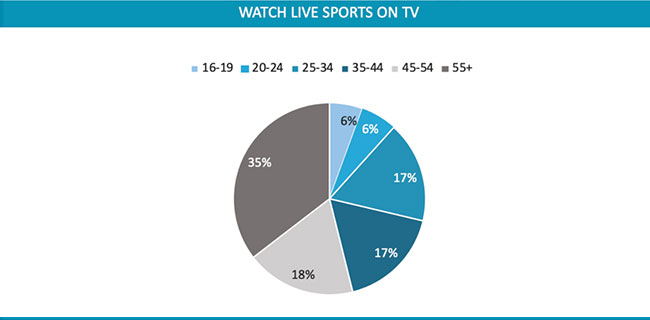
    According to the report, in the same quarter, 71% of traditional consumers of live sports on TV were over 35 years old, while 16-24 year olds were approximately 20 percentage points less likely to consume live sports on TV. This highlights the risk of rights holders underserving this digitally-geared audience and the importance of diversifying broadcast rights strategy. Engaging younger audiences is a way to future proof the product.


    Here’s some more from the report:

    Digital natives are more likely to consume non-live sports than older, traditional sports fans, which presents rights holders and broadcasters with untapped potential for monetisation by harnessing and actioning this insight.

    While the most valuable sports audience currently remains among pay-TV subscribers, planning for meaningful non-broadcast revenues through digital-native engagement is now crucial for pandemic mitigation, as well as addressing the needs of the underserved fans of the future. Catering to and developing a medium to connect with future fans in the Gen Z cohort and beyond, must become a strategic prerogative, to ensure long-term brand sustainability while simultaneously unearthing supplemental revenue streams.

    Crucial to this is understanding where sports fit in their media attention and diversifying broadcast strategy to reach them. For example, 16-19 year olds are over twice as likely as general consumers to watch gaming content, engage with Spotify, use Twitch, play multiplayer online games and consume video content on gaming consoles. 16-19 year olds report a significantly higher propensity for using TikTok (50%), Snapchat (67%) and Instagram (73%) than the consumer average.

    This highlights the opportunity for digital partnerships and generating organic engagement through official and affiliate accounts through which to deliver content. Understanding that 75% of this demographic engage with Netflix weekly compared to just 24% for Amazon Prime Video provides rights holders with ammunition for why they should opt for licensing original content to Netflix, should reaching Gen Z become a priority for its non-live video content strategists.

    Notes MIDiA in the report: “It is crucial to understand where sport fits into Gen Z’s attention ahead of striking distribution partnerships. Sports still has an opportunity to connect with the next-generation sports fan, allowing them to discover something they are able to personalise – but it will require adapting the current format to cater to this audience.”

  • Snap Inc. rolls out Spotlight

    By Our Staff

    Snap Inc.’s Spotlight, the new entertainment platform for user-generated content within Snapchat, is now live in India. Spotlight will facilitate the Snapchat community to express themselves and reach a large audience in a new way.

    Notes a communique: “Snap’s $1m a day programme will also be available in India, celebrating and rewarding the creativity of local Indian Snapchatters and offering a chance for creators to earn a share of a $1M USD daily fund. Snapchatters must be 16 or older, and where applicable, obtain parental consent to earn.”


  • Snapchat, DAN ink strategic partnership for India

    By A Correspondent


    Tarika Maini Soni

    Multimedia messaging app Snapchat has inked a strategic partnership with Dentsu Aegis Network (DAN) for India.  Under this partnership, DAN India will now also include Snapchat as one of its priority platforms to distribute adspends for its brands serviced across the network. This latest alliance is expected to fuel Snapchat’s growth in the region and further support advertisers who intend to reach out to and connect with Gen Z. Said Tarika Maini Soni, India, Head Commercial Strategy and Ad Monetization, Snap Inc: “We are excited about this partnership with Dentsu Aegis Network. This will definitely allow us to work with their exciting set of brands and create campaigns that will resonate with their target audience. We know that Gen Z actively engages with Augmented Reality campaigns on Snapchat and, through our deep knowledge of this audience, we are able to build highly creative, effective and measurable advertising solutions for our brand partners.”


    Anand Bhadkamkar
    Anand Bhadkamkar

    Added Anand Bhadkamkar, CEO, Dentsu Aegis Network India: “As our share of wallet grows in the digital space, we are thrilled to associate with Snapchat. The partnership is a great opportunity that will help our clients to engage with Gen Z in an immersive way from the comfort of their homes. Also, our strong presence and deep market relationships within India will help support Snapchat’s mission in the country.”


    So does this mean DAN will prefer Snapchat over Facebook and Twitter?


  • Snapchat study throws up friendship mantras of Indians

    By A Correspondent


    Snap Inc. released a global study of 10,000 people across Australia, France, Germany, India, Malaysia, Saudi Arabia, the UAE, the UK and the US to explore how culture, age, and technology shape preferences and attitudes around friendship. Ten experts on friendship from around the world contributed to the report to contextualise the data.


    “Snapchat’s commitment to enabling self expression and connecting real friends compelled us to explore the attitudes, values and perceptions that shape friendship across cultures and generations,” said Amy Moussavi, Snap Inc. head of consumer insights. “While friendship may be different across regions and age groups, it plays a universally central role in our happiness and we are committed to finding new ways to celebrate and elevate it through Snapchat.”


    In India, friendship is the most celebrated human relationship with a wealth of popular culture – from songs to movies – extolling its influence on our lives. The Friendship Report also provides an insight into how Indians think of and relate to their friends compared to the rest of the world.


    Also, Indians have on average six best friends. Only Saudi Arabians have more with 6.6, while the UK ranks the lowest with an average of only 2.6. Interestingly, not only do people in India have more friends overall, they also want more; with 45 per cent of respondents indicating they would like to expand their social circle.


  • Pepsi partners Snapchat to offer interactive AI experience

    By A Correspondent


    Social interactivity platform Snapchat has partnered Pepsi to create the an Interactive AR Lens in India. The lens is a part of Pepsi’s ‘Har Ghoonth Mein Swag’ summer campaign.


    Said Akshay Mathur, CRO Tyroo and Business Head Snapchat-Tyroo partnership: “Snapchat is a highly engaged platform and users spend 30 mins every day on the app creating and engaging with content. We are very excited for this launch with a high energy brand like Pepsi, setting the tone for the year.”


    Added Tarun Bhagat, Director – Marketing, Hydration and Cola, PepsiCo India: “Pepsi is a brand which has always resonated with the voice of today’s generation. As part of the ‘Har Ghoont Mein Swag’ campaign, the brand is activating those platforms which our consumers have the strongest affinity to. Snapchat allows our consumers to interact with the brand in the truest sense – it gives them a visual representation of ‘swag’ depending on the choices they make.”