Tag: Sky

  • What’s the future of Rupert Murdoch’s media empire?

    By Naomi Cahn and Reid Kress Weisbord

    Conservative media titan Rupert Murdoch is making news again – this time, with a secretive effort to change an irrevocable trust. That trust has important ownership interests in both Fox Corp. and News Corp., so it affects broadcast news as well as The Wall Street Journal and other publications.

    Under the current terms of the trust, upon Murdoch’s death, his four oldest children – Lachlan, James, Elisabeth and Prudence – will have “an equal voice” in determining the future of the news empire.

    But as The New York Times recently reported, the 93-year-old Murdoch has been trying to alter the trust to ensure his oldest son, Lachlan, stays in charge of his media properties. The legal dispute played out behind closed doors for months, and it might have stayed there if the Times hadn’t obtained a sealed court document shedding light on the conflict.

    Murdoch is calling his efforts to change the terms Project Harmony, reportedly out of the belief that doing so would head off any intrafamily wrangling.

    The effort to change the trust is so secretive that a spokesperson for the Nevada probate court where the proceedings are occurring stated that all information related to the case is confidential, based on a court order.

    As law professors who teach trusts and estates, we are intrigued by the publicity surrounding a somewhat obscure method for holding property. Trusts are private documents that don’t get filed in court unless there’s a dispute.


    All about trusts

    Trusts are an estate planning technique for giving away property. In our law classes on trusts and estates, we explain how they can be useful for minimising estate taxes, protecting assets, making charitable contributions, avoiding probate and, in certain circumstances, qualifying for government benefits.

    Unlike making an outright gift and transferring full ownership to someone else, the donor of a trust – called a “settlor” – transfers legal control of the gifted property into the trust.

    The people who hold the legal title to the property in the trust are called “trustees.” They manage the property and make decisions about how and when to distribute funds to the beneficiaries, who are the actual recipients of trust property.

    Trustees are fiduciaries, which means they are under strict legal requirements to manage the property in the sole interests of the beneficiaries. If the property in a trust includes shares in a business, then trustees have the power to exercise any voting rights for those shares.

    Trusts allow donors to prolong their control over their property by appointing trustees to carry out their objectives after they die or become incapacitated. Trusts are useful when giving away complex business interests that require extensive supervision and sophisticated decision-making, all of which can be administered by trustees according to the settlor’s preferences stated in the trust.


    The view from Nevada

    In Nevada, where the Murdoch case is playing out, a settlor can’t unilaterally change any trust’s terms unless the trust itself specifically reserves the right to do so. In other words, trusts are presumed to be irrevocable, or irreversible.

    But even when a trust is irrevocable, there are still ways to change its terms.

    In any state, including Nevada, irrevocable trusts can be altered by court order if the settlor and all beneficiaries agree to the modification. In some cases, trusts can also be modified without court approval through a process known as “trust decanting,” which can be performed by the trustee without the consent of settlors or beneficiaries.

    Nevada is unusually permissive in allowing settlors to maintain secrecy about the trust, even with respect to trust beneficiaries. In most states, trust beneficiaries have much broader rights to receive financial information about the trust.

    Nevada also explicitly protects confidentiality in trust proceedings by law, even without a court order. Indeed, having reviewed thousands of trust cases from courts around the country, we find Nevada to be especially protective of the donor’s interests. That may be one reason the Murdoch Family Trust is located there.


    The stakes of the dispute

    The Murdoch Family Trust holds a variety of types of property, including a family farm in Melbourne, Australia; the Murdoch art collection; and shares in Disney, News Corp. and Fox. The property in the trust is managed by a corporate trustee, Cruden Financial Services.

    The trust terms at the center of this dispute appear to stem from Murdoch’s 1999 divorce from his second wife, Anna. She negotiated an agreement to ensure that their three joint children – Lachlan, James and Elisabeth – along with Prudence, Murdoch’s daughter from an earlier marriage, would inherit News Corp.

    The trust document sets out what will happen to ownership of the media assets upon Murdoch’s death: His voting share will be transferred to the four oldest children. That could lead to a scenario in which the children are fighting over the future of the media assets. Fear of that outcome seems to have motivated Rupert Murdoch to seek this change to the trust.

    Although Lachlan is now the chair of News Corp. and executive chair and CEO of Fox Corporation, the children have already aired some of their disagreements over the political direction of the media companies. For example, James and his wife have criticized Fox’s move to the right. Murdoch may well see this as a threat to the company’s business model, which caters to a conservative audience.

    Even though Murdoch’s trust is irrevocable, it reportedly “contains a narrow provision allowing for changes done in good faith and with the sole purpose of benefiting all of its members.” Rupert Murdoch’s argument is that by taking away governance rights from James, Elisabeth and Prudence, Lachlan will be able to manage the family business more profitably, thereby increasing the value of trust assets for all beneficiaries.

    Because some of Murdoch’s children object to his proposed governance changes, Murdoch appears to be relying on the power he retained as settlor to modify the trust in good faith for the beneficiaries’ benefit.

    A court will decide later this year whether the changes really are in good faith; If so, then Murdoch will be able to change the trust as he would like so that Lachlan can continue to control the family business.

    The saga shows the ways that trusts can protect a family business. But when the next generation lacks a shared vision for the future of that business, even irrevocable trusts can’t ensure family harmony.The Conversation


    Naomi Cahn, Professor of Law, University of Virginia and Reid Kress Weisbord, Distinguished Professor of Law and Judge Norma Shapiro Scholar, Rutgers University – Newark. This article is republished from The Conversation under a Creative Commons license. Read the original article.
  • The Legacy of Rupert Murdoch


    By Bruce Drushel


    When businesspeople retire at an advanced age, it seldom makes headlines.

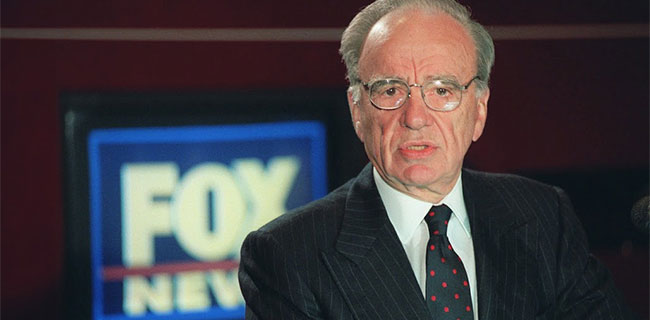
    But when 92-year-old Rupert Murdoch announced in September that he was stepping away from his multicontinent media empire and turning it over to his son Lachlan, it was breaking news that generated countless stories speculating about the futures of two of his most storied holdings, Fox and News Corp.

    As a scholar who studies media organizations and their political and economic influence, I see this level of attention as an indicator both of the significance of the companies Murdoch built and the way he used them to alter the media and political landscape.


    Murdoch the believer … or opportunist?

    Murdoch infused his print and television properties, first in his native Australia and later in the U.K. and the U.S., with a generally right-of-center slant.

    But his reputation as a promoter of conservative ideals was at odds with his past. While a student at Oxford University, Murdoch kept a bust of Lenin in his room and annoyed his father, Sir Keith Murdoch, with his socialist views.

    When his father died suddenly in 1952, Murdoch inherited a small newspaper in Adelaide and soon was using its profits to buy up suburban papers all over Australia, as well as licenses for television stations.

    His conquest of the U.K. began in 1969 with the purchase of a majority interest in News of the World, a major circulation Sunday tabloid. Eventually, he would add to it the daily tabloid The Sun and the redoubtable but financially struggling Times and Sunday Times.

    Through the 1970s, his politics moved to the right, culminating in his support – and The Sun’s much sought-after editorial endorsement – of Margaret Thatcher’s Conservative Party.

    Despite the conservative outlook of his publications, there always has been nagging speculation about the sincerity of Murdoch’s ideological beliefs – whether they were tightly held or simply manifestations of political opportunism and his ability to anticipate the popular mood. Murdoch’s The Sun backed the center-left Tony Blair when Conservative Party prime minister John Major fell out of favor in 1997.

    His successes in the U.K. provided him with the strategic template for his eventual entry into the more lucrative U.S. market: Buy undervalued sources of content creation and then use their profits, along with a combination of emerging technology and political influence, to expand their distribution.

    In the U.K., that meant the secretive construction of a high-tech automated printing facility that bypassed the labor unions. In the U.S., it might have contributed to a US$4.5 million book deal for House Speaker Newt Gingrich with Murdoch’s publishing house HarperCollins. It came as the media tycoon was facing questions about where the money for his U.S. television properties was coming from – questions, it was suggested by critics, that the speaker’s influence could help smooth over.


    Building an American empire

    Murdoch’s American empire started in 1976 when he purchased the tabloid the New York Post. There, borrowing from his experience in the U.K., he flipped the newspaper’s ideology from liberal to conservative and used splash headlines and prurient content to more than double its circulation.

    Also echoing a strategy he had employed in the U.K., he added the more respected Wall Street Journal to his holdings a number of years later, extending the reach of his influence from blue-collar to white-collar readers.

    Anticipating the uncertain future of the newspaper business, Murdoch expanded his empire to include television.

    He purchased the Twentieth Century Fox film and television studio in 1985 to provide both production facilities and a library of content. The following year, he bought the television station holdings of Metromedia to form the distribution nucleus of what would become the Fox television network.

    Doing so required a series of moves to meet Federal Communications Commission regulations. First, Murdoch would have to become a U.S. citizen. Second, Fox would have to limit its hours of broadcast in order to avoid meeting the official definition of a network and in so doing break FCC rules that at the time stated that a single company could not be both a network and a syndicator of programs.

    Third, he would have to sell the New York Post, since another rule prohibited common ownership of a daily newspaper and television station in the same city. The FCC would later allow him to repurchase the Post out of bankruptcy in 1993, rather than see the newspaper fold.


    The birth of Fox News

    Unable to secure licenses for terrestrial television stations in the U.K., Murdoch launched the Sky satellite service in 1989 as both a content provider and a distribution system. Among Sky’s channels was Sky News, the U.K.’s first 24-hour news channel. Once Sky News had become profitable, Murdoch announced he would bring his brand of 24-hour news to the U.S. By October 1996, Fox News Channel, led by former Republican Party strategist Roger Ailes, was on the air.

    While Fox News is now very much associated with a viewership that skews older, conservative and white, the Fox broadcast network’s path to success with audiences and advertisers was initially based in its appeal to underserved audiences among young adults and African Americans.

    Shows like “The Simpsons” and “Married … With Children” were seen as edgy in their representation of dysfunctional families. Meanwhile, “In Living Color,” “Roc,” “The Bernie Mac Show,” “Martin” and “Living Single” followed “The Cosby Show” playbook of focusing on Black authorship and autobiography to attract not just African Americans but audiences of all races and ethnicities.

    When Fox secured rights to the National Football League’s NFC games in 1993, the network began targeting more mainstream audiences as well. As he had done in the newspaper business, Murdoch established his foothold in a niche market he perceived as being underserved and ripe for exploitation before setting his sights elsewhere.


    A less-than-graceful exit

    Despite his reputation as a buccaneer who took huge risks in expanding his holdings, skirting regulations and delaying repayments of loans from financial institutions, Murdoch avoided major legal and business setbacks for most of his career.

    That only began to change in the mid-2000s.

    First there was Myspace. News Corp. bought what was then among the world’s most popular websites in 2005. But it soon went into decline, weighed down by failures to update its technology and features. Then, in 2011, a backlash from a scandal involving the hacking of cellphone accounts of a murdered teenage girl, British service personnel killed in action and a host of celebrities forced the closure of Murdoch’s first U.K. newspaper, the News of the World.

    More recently, News Corp. settled a lawsuit brought by the parents of the late Seth Rich, a Democratic National Committee staffer, after Fox News repeated right-wing conspiracy claims about the murdered man. It also reached a $787.5 million settlement with Dominion Voting Systems, which several Fox News hosts had accused of rigging the 2020 presidential election against Donald Trump. A similar defamation suit by Smartmatic is pending.

    For a man whose career was built on a shrewdness for reading the media landscape, such failures might well leave a bitter taste in retirement. But nonetheless, Murdoch will step down from his empire leaving mighty footprints.

    It remains to be seen how his son Lachlan will fill them – or if he also inherited his father’s instincts and will lay down tracks for the empire in a new and unexpected direction.The Conversation


    Bruce Drushel, Professor of Media, Journalism and Film, Miami University. This article is republished from The Conversation under a Creative Commons license. Read the original article.

     

  • Trust Deficit UnLtd

    Twitter logo reimagined by Rafiq Barak


    By Ranjona Banerji


    Ranjona BanerjiThe almost total collapse of the social media site Twitter reached one more landmark on July 1, when billionaire owner Elon Musk announced that he was limiting the number of posts that people could see to combat “data-scraping”.
    Immediately, the internet was in a roil. First of all, not everyone saw Musk’s tweet so they didn’t know why they were being restricted. Most assumed it was something to do with internet freedom and government. Then some explanations emerged, although with Twitter restricted not everyone saw the announcements!

    Musk’s target was not customers and subscribers, but AI companies who were helping themselves to Twitter’s data without permission. Thus “data-scraping”. Most people had no clue what that means. The internet being what it is, there was a clear division between those who explained that Musk was wrong and others who insisted he was right.

    https://www.reuters.com/technology/musk-says-twitter-applies-temprary-limit-address-data-scraping-system-2023-07-01/


    There is however a massive trust deficit between users and the new owner. Without offending those who will start huffing and puffing with rage, let me acknowledge that Twitter was not perfect under Jack Dorsey and his team. But as a long-time user, it is clear that we are worse off. The removal of verifications by Twitter itself means that it is hard to sift misinformation from facts. Taking payment for verification adds another layer of mistrust, since any fake news spreader can pay without any control. Musk has also declared that he is happiest with the alt right ideology and that means Twitter is susceptible to control by the most effect fake news spreaders and manipulators of all.

    Musk’s open admission that he has no option but to kowtow to dictators, fascists and any government which demands personal information adds an extra layer of danger for activists and dissenters.

    The problem for users is that many have spent years building networks on Twitter. It is extremely useful for gathering and sharing information with credible sources. It is also useful for engaging with a variety of people who you would not have access to. Unlike other social media sites, Twitter was the ideal place for journalists to connect with each other and potential sources.

    A few years ago, pre-Musk, many Indian Twitter user switched to Mastodon. But although the experience was friendly, it did not have either the scope or reach of Twitter. It was more like Facebook, where you chatted within a created community. And because big news sites did not join, it was not useful.

    Dorsey announced Blue Sky, Mark Zuckerberg has announced Threads. These are possible alternatives, when they arrive. But it will require existing Twitter users to remake their networks, which is tedious and inconvenient.

    The fact is that we cannot work without social media and the internet any more. And thus in a sense, we are trapped. Hostile governments, capricious owners, devious fraudsters notwithstanding, the internet has become indispensable. Even the spectre of AI looming over us, with its own demons and magic, will not stop us from becoming more digital.

    For Musk as for traditional media, the problem seems to be money and effective ways of monetisation in the age of digital information. We will pay for entertainment streaming services but we won’t pay for streams of credible information.

    Musk might reach Mars before he can figure that one out!

    The rest of us might well have flown into a blue sky hanging on a thread by then…


    Ranjona Banerji is a senior journalist and commentator. She writes on MxMIndia on Tuesdays and Fridays. Her views here are personal.


  • Star India is now part of 21st Century Fox

    By A Correspondent


    The Rupert Murdoch-owned News Corporation has been demerged. News Corp will now have publishing firms like The Wall Street Journal and Harper Collins and education firm Amplify, while 21st Century Fox will have Star, Twentieth Century Fox, Fox, Sky, National Geographic, Fox News, Fox Sports and FX.

     

    The old News Corporation announced yesterday that it has completed the previously announced separation of its business into two independent publicly-traded companies.


    21st Century Fox’s assets will span a global portfolio of cable and broadcasting properties, including Fox, FX, Fox News Channel, Fox Sports Network, National Geographic Channels, Star, Fox Pan American Sports, as well as film studio Twentieth Century Fox Film and television production studios Twentieth Century Fox Television and Shine Group. The Company’s assets also include leading pay-tv businesses Sky Deutschland, Sky Italia and its equity interests in BSkyB and Tata Sky.


    “21st Century Fox launches as a unique force bringing news and entertainment to more than a billion customers every day in over 100 languages,” said Rupert Murdoch, Chairman and CEO of 21st Century Fox. “Our success will continue to be rooted in a deep belief in originality and a commitment to empowering creative minds and entrepreneurs around the world. Our management teams are the best in the business and we will drive growth and shareholder value by expanding our existing assets and brands, while embracing new opportunities and technology.”


    While Mr Murdoch will be Chairman and CEO, son James Murdoch isDeputy Chief Operating Officer, Chairman and CEO, International. Chase Carey is President & Chief Operating Officer of the company.


    Meanwhile, the new News Corp will be a global network brands in news and information services, sports programming in Australia, digital real estate services, book publishing, digital education, and pay-TV distribution in Australia. News Corp’s global portfolio includes Amplify, The Australian, The Courier Mail, Dow Jones, Fox Sports Australia, Foxtel, HarperCollins, Herald Sun, The New York Post, News America Marketing, REA, The Sun, The Sunday Telegraph, The Sunday Times of London, The Times of London and The Wall Street Journal. Bedi Ajay Singh is Chief Financial Officer of News Corp.


    Robert Thomson, Chief Executive of News Corp, said, “We are continuing a proud tradition and fashioning a prosperous future in the new News Corp. We have a valuable collection of complementary companies and our task is to make the new News more than the sum of these distinguished parts. We have a robust balance sheet and a team of creative, energetic and passionate employees who are determined to make the company a resounding success and to make a positive difference in their communities.”


    “The new publishing company will be a test for investors and their appetite for print assets,” noted a Reuters report, adding: “While the company also has pay-TV assets and an equity stake in a real estate classified site in Australia, it is coming out as a separately traded company during a challenging times for newspapers. Advertisers are choosing to put their dollars elsewhere, especially in digital products. Although News Corp, like other publishers, is a player in the virtual work, advertising in digital media commands lower prices than traditional print publications.”


    According to a report in The Guardian, London by Lisa O’Caroll, “The demerger is the culmination of a two-year campaign to “detoxify” the News Corp brand that started in the summer of 2011 with the abrupt closure of the News of the World and finished with the announcement in the last week that News International’s brand in London would be axed and the company rebranded News UK.”


  • UTV Stars enters UK as UMP Stars

    By A Correspondent


    Following a successful launch in India and the Middle East, UTV STARS now enters the UK market as UMP STARS. Premiering as a free-to-air channel on Sky, UMP STARS is a specialty entertainment channel dedicated exclusively to Bollywood.


    Commenting on the expansion in UK, MK Anand, Managing Director- Media Networks, Disney UTV said: “We are pleased to launch UMP STARS in the UK which will complement the presence of our flagship Hindi Movies channel UMP Movies in the region. UK has a large South Asian diaspora and Bollywood fanbase. With the launch on UMP STARS, the TV viewers will now be able to enjoy rich and vibrant Bollywood content. We are proud to extend our media sales association with Sky Media and look forward to another grand entry into the region after the successful launch of UMP Movies in December 2011.”


    Advertising representation for the channel in the UK will be handled by Sky Media. Richard Hawking – Operations Director commented: “We’re thrilled to be adding another UMP channel to our portfolio. Following the success of UMP Movies, UMP Stars strengthens and broadens our Asian offering to advertisers while delivering fantastic Bollywood content to Sky’s customers.”


    Kamlesh Patel, CEO, TVMedia3.com who exclusively distributes Disney UTV Channels in UK and Europe and sealed the deal between Sky and Disney UTV said: “TVMedia3 is delighted to bring UMP Stars to mainstream UK audiences on the huge success of UMP Movies earlier this year. TVMedia3 looks forward to building and delivering this unique content with the team at Disney UTV to audiences across the world”.


    The Broadcasting arm of Disney UTV made inroads into the UK market with the launch of UMP Movies on 12th December 2011. With the launch of UMP STARS, the company further strengthens its foothold in the region.


  • Peter Mukerjea: Rupert & Son

    By Peter Mukerjea


    So, it’s finally happened that James, or JRM as he is known within the company, has stepped down. I’d said that he should (see Firstpost.com article) and for whatever it’s worth, I’m glad that he has.


    Enough has been written and no doubt more will be written about the rights and wrongs of the people involved in the entire phone hacking case and we will never know who will finally go to jail for the crimes that are alleged to have been committed.


    But that would be looking back and surely it’s much more fun looking forward and trying to gauge what’s about to happen next. If Rupert is true to his word, JRM will now be spending more time on international operations and on the TV business at large . Now that leads me to suggest that he should for Newscorp’s sake spend at least 75% of his time in India looking at new business opportunities that exist in the country. STAR experienced it’s highest ever growth in it’s business under JRM’s watch when he was the CEO in Asia. That’s not a coincidence, I can assure you. Conversely, STAR experienced it’s lowest growth when JRM left the Asia region and handed it over to pixies in Hong Kong who had no clue about India. For example, the lady who was given the baton by JRM had never visited India ever in her life. Strange decision, it has to be said.


    JRM, on the other hand, was a respected executive and was seen as a path-breaking scion of his father. And the fact that not everyone loved him was simply par for the course and to be expected. He was effective in reshaping STAR’s fortunes and turning a loss making company into a profitable one.


    Incidentally I continue to believe that none of the new channels that popped up in 2007/8 would have happened if Rupert had not taken his eye off Asia but he moved JRM to London to run SKY and with that opened up the gates for newcomers. Some channels failed to make the grade – 9X & Imagine for example, and others did well – Colors & 9XM for instance, but none of these should ever have been allowed to get started given the complete dominance that STAR had on the market. And all the people that went to run these channels, including myself , were almost all from STAR.


    Since then STAR has held up well, although after a wobbly start. Credit for which should be given wholly to JRM for giving autonomy to the current leadership in managing their business and most importantly cutting them loose from the Hong Kong intermediary, which was rightly cut to size.


    JRM’s big opportunity is now to push ahead with developing a range of new TV and other media products for the India market and enable it to grow speedily to create a very clear leadership position with plenty of blue sky space between the No1 and the rest. And only he can make that happen by physically being there and making the big decisions which would otherwise be lost in power point presentations between numerous layers of management.


    This would in turn spur ZEE and Sony and MTV and the rest to do the same and compete with each other and with the pace that STAR would have set for them. This will then collectively turbo-charge and accelerate the industry as a whole and taking full advantage of the economic growth that the country is experiencing. The next 10 years for the media business in India will be huge and despite the slowdown in the global economy the pace of growth will be better than almost anywhere else in the world.


    JRM once said “let’s make the best use of a crisis” or words to that effect and I think this is a crisis that has presented itself for just that opportunity. He has moved to New York from London but may be he should have a home in Mumbai too and really shake up the market. There’s tons to do with a very exciting future for a 40-year-old – like JRM, which regular or even above average executives will simply not be able to take full advantage of. They can at best take limited risk, if at all – but JRM can and he should.


    Will he or won’t he? Or will he slip in and out of the country quietly, once very few months and leave the big opportunity to the pixies once again? If he ends up doing that he will have missed a great opportunity to grow the business and also to get himself back up and be recognised as being one of the best TV executives in the world. After all, he is the son of Rupert.


    Although it started as a fortnightly column, Peter Mukerjea’s Media Mullings will now appear regularly on MxMIndia, but with no definite frequency.


  • UTV Movies India to launch in UK

    By A Correspondent


    UTV Movies India is set to launch on December 12 in the UK. Premiering on the Sky platform, the Hindi language movie channel, which will also carry English subtitles, draws on the universal passion for Bollywood.


    The channel upholds the promise of ‘Jeeyo Bollywood’ – living the Bollywood dream, giving viewers a direct experience of the spirit of Bollywood. The channel has a library of more than 400 titles.


    Advertising representation for the channel in the UK will be handled by Sky Media. Richard Hawking – Operations Director commented, “It’s a fantastic opportunity for us to add UTV Movies India to our portfolio of channels; it adds a new dimension to our offering for advertisers and great content for a growing and important audience.”


    Commenting on the expansion in UK, MK Anand, CEO – Broadcasting, UTV said, “With the launch of UTV Movies India in the UK we further expand our international footprint. The UK is a vital market for us as it has a large South Asian diaspora who are avid Bollywood movie lovers. We are proud to be associated with the UK’s largest media sales house – Sky Media, which comes with extensive media prowess in the region. We look forward to a successful entry into the region.”


    Kamlesh Patel, CEO, TVMedia3.com who concluded the deal between Sky and UTV said, “UK television viewers will be able to enjoy a rich and vibrant Bollywood movie experience that will appeal to mainstream television audiences. Bollywood movies are massively popular in the UK and with UTV Movies India we hope that this popularity increases further. It has been a real pleasure working with the teams at Sky Media and UTV Movies India.”


    Along with the United Kingdom, UTV Movies International is now also available in Canada on Rogers Digital Cable TV. With this development, UTV Movies’ international footprint now encompasses the United States, Australia, New Zealand, Malaysia, Sri Lanka, Nepal, the United Arab Emirates, East Africa, the United Kingdom and Canada.