Tag: sir martin sorrell

  • MarTech & TV dominate sessions at Zee Melt 2018


    The fourth edition of Zee Melt 2018, the two-day conference on advertising, marketing, media and technology, conducted by Kyoorius was held in Mumbai on May 30 and 31. Along with the conference, there was an exhibition area which saw displays and experiential zones set up by Google, Surewaves, WION, National Geographic.


    Here are highlights of the two-day event:

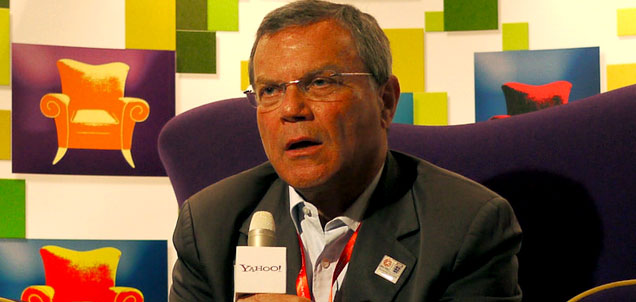
    :: A live televised chat with Sir Martin Sorrell. The chat with senior journalist Anant Rangaswamion CNBC-TV18 assumed importance given that Sorrell had unveiled plans for his new venture

    :: Speaker sessions by Tom Fishburne, AnindyaGhose, Mark Shayler, Fernando Machado, Global CMO, Burger King; Tom Goodwin, EVP, Head of Innovation, Zenith Media; Ana Milicevic, Principal, Sparrow Digital Holdings; Babita Baruah, Managing Partner, GTB India and others

    :: “How Return Path Data Will Turbo-Boost Television Audience Measurement Globally” –Keynote by Ricardo Gomez-Insausti, Vice-President (Research), Numeris

    :: &Prive – A panel discussion featuring SonalDabral and Ashwini IyerTewari and a screening of “The Post”

    :: A panel discussion by Zee and Indian Market Research Bureau on TV: The Business Propeller

    :: A session by Jasper Donat, CEO, Branded & Producer, YouTube Fanfest was followed by a meet-and-greet with Bhuvan Bam, YouTuber, Singer & Songwriter

    :: Day 2 concluded with a Keynote session by James Southern, Managing Partner at Front Row Advisory. He addressed the audience on the topic, “The Next Seismic Shifts In Television”.The session was followed by a panel discussion hosted by SureWaves moderated by Paritosh Joshi (Principal, Provocateur Advisory) featuring Punit Misra (CEO, Zee Entertainment Enterprises Ltd), Shashi Sinha (CEO, IPG Mediabrands), Partho Dasgupta (CEO, BARC).


    And these are highlights of what some of the speakers said (for details on the Martin Sorrell session, please visit http://www.mxmindia.com/2018/05/return-of-the-sorrell/):


    Fernando Machado, Global CMO, Burger King:Creativity helps you thrive the business and grow your brand. You should start one campaign at a time. Understand the business and see what ticks people. There are certain brands that strike a chord with the consumers and Burger King is one of them. People ask, what if it didn’t work? They always have this fear. These 5 things helps coping with the fear:

    :: Need to understand the brand- it is about not doing random stuff. You need to understand the positioning. The positioning and personality of the brand should match

    :: Create a great brief– Challenge your client with a one line brief

    :: Let the idea grow- Trust on certainty

    :: The biggest risk is not taking any risk- We are afraid all the time. But the thing is if I am not afraid, probably I won’t do it

    :: One Team- Marketing, agency and everyone else together should be one team.  Fight with everyone, together


    Tom Goodwin, EVP, Head of Innovation, Zenith Media: Speaking about the power of digital transformation, he mentioned three key aspects to be taken care of:

    :: Understand people- People go to the internet consciously and get off it only to be reminded to go again. Brands still think of it as a pattern. But the consumer is obsessed with the idea like it is a behaviour. It is not helpful. It is a hybrid world that transcends it. People are disappointed if they don’t get the same experience as any other brand.

    :: Apply technology at the core- Consumers are inclined towards everything that has a quick turnaround. Brands are realising this pattern and providing quick, cheap and hassle free service without understanding that this remains as the outer most layer without deeper existential question. Younger brands are utilising contemporary technology and it is incredible to see how much value they have created.

    :: Rethink everything- The key is to think without expectations. The greatest threat to incumbent business is to not know too little or being naive, it is about having too much knowledge.


    Ana Milicevic, Principal, Sparrow Digital Holdings: “The advertising industry is stuck in between the technology change. As an industry and as professionals it is important that we are constantly changing and are not being outdated. There has to be a balance between speaking to the audiences and amplifying annoyance. Future without advertising is far-fetched. Hence, we need to focus on today’s advertising trends and that is story-telling. Every interaction the brand has with consumers, it becomes advertising. It is imperative to stay relevant or risk getting skipped.”


    Nelson Rodriguez, Global Director of Industry Strategy, Akamai:“Digital advertising still has a lot of noise. India has the highest ad-block user across the world, although ironically, India is an ad driven market. There are three innovations happening today in transforming relationship with audiences in this market.

    :: Relevance- Every industry that goes through change has an opportunity to build on that change by being relevant

    :: Value- Customer should have the power of consuming content. That is where optimisation can enter

    :: Choice- With micro-transactions in boom, customers can be charged according to the amount of content they want to consume


    Babita Baruah, Managing Partner, GTB India:“This topic means a lot to my heart. I thought a lot about how to have more women. Not in terms of number, but in terms of decision making roles and how we can keep this journey going. Melt and of course any forum where you have the industry coming together is good to start off this kind of conversations to get points of views. I think it is important for women to share their personal journey. Because there is a lot of learning from what someone has gone through. And a narrative or story telling is always a good way to connect.”


    Patrick De Pauw, CEO, Social Seeder:“There is so much clutter when it comes to brands today where all are shouting for attention in some way or the other. But to get visible I believe there are 2 things a brand should swear to follow and that is – stay relevant and do something so unique that it helps you gain recognition between this mainstream clutter. There is paid media and owned media today but earned media is the word of mouth which works in favour of your brand creating a high decibel impact. An ambassador (on a voluntary basis) is an internal or an external person that is more than integral to spread a word about your organisation. But being an ambassador starts with you.”


    Tom Fishburne, Founder, Marketoonist:Technology can’t save boring marketing. We need to stay focused on our marketing strategies and not get excited when you see new things. We need to know who we are creating our marketing for and what is our marketing campaign. I have never been this excited in my life, it was amazing to be here. I have never seen such an entrepreneurial environment. It is great to see what people can do to sell your small enterprises. On my first trip to India I loved to discover the campaign by Amul. In 52 years they have campaigned amazingly and their idea of serial story-telling is something worth taking note of. They have campaigned everywhere from Bollywood to hoardings to newspaper ads. I am always excited to know what incidence their next campaign will be based on.”


    Anindya Ghose, NYU Stern School of Business: “Crowdedness is one thing which works best in the case of AI, as when people are alone in a crowd, phone is their best escape. Over a period of time, we have witnessed brands identifying known as well as unknown needs of consumer’s basis which they are ready to invest heavily in mobile data metrics. Addressing to the unknown needs is what will give the brand an upper hand to serve better. This metric eventually helps in measuring the ROI on the capital spent.”


    Guneet Singh, Head – Marketing Solutions, Google India & SEA: “The big piece of work we do is on video and the reason is 80% of consumers are on mobile. The phone is a very intimate space, as it is 12 inches away, but your TV screen is 6-7 feet away which is not an intimate space. The average attention span in Mobile is 7-9 seconds; if you don’t change the arc in this time span, one skips the video. That’s how you look at the story arc in digital. In digital you know the exact persona of the person watching something. It is important for you to build content for the right audience. We’ve recently made 2300 videos all running in the same date to distinctive audience.”


    Mark Shayler, Director Ape:“Every single action has a reaction and every single movement has an angle. We are all millennial. People like tactility; if you are making a digital campaign make it real, make it human. We can’t lie anymore because the internet is everywhere and the truth will eventually come out. It’s high time that you innovate the new way. Define a purpose, as purpose makes you stronger, being good is new cool and Kindness is competitive.”


    Sakshi Choudhary, Creative Controller, Ogilvy India: “Women spend twice the time as men, they are playing more games, and they are also on social media. 74% purchasing decisions are made by women and in cities it goes up to 90%. 70% women are buying houses in top 8 cities of India and 40% overnight solo trips are made by women…. Honda has realised that the scooter market is overtaking the motorcycle market in rural India and therefore they launched Honda Cliq targeted only at rural Indian women. Alcohol consumption among women has been increasing; Bacardi has been making the best of it as their sessions are more focused at women. Hotstar has realised that their video consumption is 3 times more by women compared to men.”


    Erica Ng – Senior Editor Asia Pacific Insight – WGSN: “The world is getting future ready and so are our brands. The brands of tomorrow are using the 4 E’s – Engagement, Exclusivity, Experience and Emotion. While today’s traditional spaces are extremely crowded, it becomes a larger deal for the brands of tomorrow to get more creative in their thinking. The brands of tomorrow are engineering vitality, as they aren’t using space to advertise but instead growing their presence on digital. They are using psychographics to understand the consumer needs. Today people don’t buy products, they buy people!”


  • Is Arun Nanda buying WPP stake in Rediffusion?


    By A Correspondent


    Is Diwan Arun Nanda buying WPP’s 26.7 per cent stake in Rediffusion Y&R? According to (reasonably reliable) sources, advanced levels discussions are on for the buyback of the Y&R and Dentsu stakes in Rediffusion Y&R. Together, the two global majors own 40 per cent of the 45-year-old Rediffusion Y&R. Or what’s officially called Rediffusion Dentsu Young & Rubicam Private Limited.


    It may be remembered that until recently it was WPP that was keen on buying out the 60% owned by Nanda and Ajit Balakrishnan. But that was the WPP run by Sir Martin Sorrell. Now Nanda is reportedly keen on buying the WPP stake. And not just that, the Dentsu stake too.


    Not many think it’s a wise move as this will allow Y&R to enter the country on its own and pose fresh competition in what is clearly a tough market for creative advertising agencies.


    While Rediffusion recently bagged the prestigious State Bank of India mandate, the creative advertising business overall has been under a cloud over the last year-and-a-half. Even some of the bigger named agencies, including those from the WPP group, have been facing a squeeze on earnings.


    According to our sources, post the buyback of the shares, a merger of Rediffusion, the agency, and Rediff.com, the general interest internet-based portal, is also being mulled.


    While our sources do not reveal the deal size, and whether it’s in line with the estimates of a Rs 100 cr valuation for the 60 per cent stake owned by Arun Nanda and Ajit Balakrishnan of a few years back, given the changed business scenario, the 40 per cent equity could well be valued at a low Rs 20 crore.


    Part of the current Rediffusion Y&R fold is the Made-in-1946 agency Everest Brand Solutions, Rediffusion-Wunderman, Sudler& Hennessey and the PR wing.


    As per the Rediffusion Y&R website, the story goes that “one evening in 1973, three leading stalwarts of advertising came together to discuss the state of creativity in advertising. They wanted to do something about the mediocrity, the contentment with the status quo, the inertia that seemed to pervade agencies and people. The three people, Diwan Arun Nanda, Ajit Balakrishnan and Mohammed Khan, came up with a gameplan – to start their own advertising agency, Rediffusion. An agency that would be passionate and bold; an agency that would take ownership of clients and their work to new heights; an agency that would create fearless, category-busting work.


    That was a different era. Forty-five years ago. The rules of the game have changed dramatically. The dramatis personae of the advertising business have changed. Will it be achche din yet again for the two Big As of the Media business – Arun and Ajit. Time will tell.


  • The Empire Expectantly Waits…


    By Prabhakar Mundkur


    They are enormously big shoes to fill.  As WPP looks for a successor, one can’t help but speculate on what it will take to step into Sir Martin’s shoes.
     

    WPP is much larger than we can imagine.  It has 405 ad agencies, PR firms, marketing and media buying agencies that include JWT, Ogilvy, Y&R, Grey, GroupM and Kantar.  With over 200,000 people in the group, it is no mean feat to manage this behemoth.


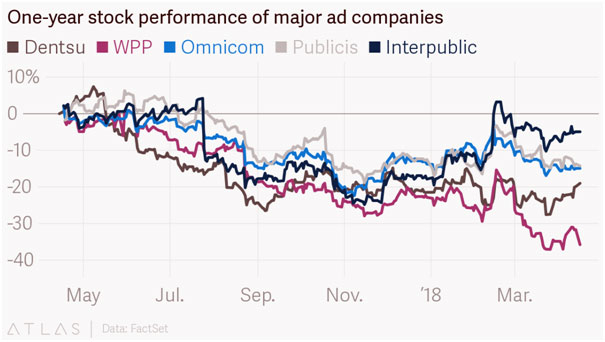
    WPP is not at its best at this juncture in its history.  Its stock has seen a 35% decline from its high in 2015. It also seems to be declining faster than the other communication groups.


    The search for a successor has been on for the last eight years ever since WPP shareholders put pressure on knowing what would happen to WPP post-Sorrell.  One can only imagine that no candidate came close to be considered as a replacement for Sorrell.


    So what do we expect the ideal candidate would be?


    Commentator on the Global Economy

    Sir Martin has been a commentator on the global economy.  He constantly appeared in the press with his views on it.  He has also had a great perspective of the various regions.  He could talk as competently about Asia and he could about Europe or the US.  He related global events to the world economy.  For example, he had an opinion on how Donald Trump or Brexit would affect the world economy. At Davos this year he held his own on globalisation, capitalism and the ‘America first’ policy.He also had a comment on India and Prime Minister Narendra Modi at the same forum when he said “India has been extremely successful, he’s been extremely successful in changing Brand India, and in changing the actual performance of the Indian economy, but the question is, how does he continue to maintain the progress that he’s initiated? He has elections coming up in 2019, so hopefully, he will get another term, and take Brand India to another level.”


    Believer in Ideas

    Sir Martin was the quintessential entrepreneur. He knew how to start something small and make it big and this is exactly what he did with WPP since he first founded it in 1985.  He was a deal-maker. And master negotiator.  For people who thought he was just a bean counter, in an interview with the Daily Mail in 2014 he is known to have said that ideas are more important than making money.  At other times, he spoke of ambidexterity and that great leaders needed judgment, creativity, intuition and imagination.


    And Sir Martin did have ideas.  Almost all of his acquisitions were based on creating value for this company. His latest bug was “horizontality”. More than aware that the companies within the group were functioning in individual silos, Sir Martin was championing his idea of “horizontality” which he defined as  ‘connected know-how’: a way of working that unites people with diverse skills to deliver seamless solutions for clients”.


    Networker

    Sir Martin was a master networker.  This is what made him successful with WPP clients whom he met regularly all over the world.  Sir Martin was also charming when he wanted to be, and a great conversationalist.  Because he was interested in a wide variety of subjects he could quickly connect with most people.  I remember once introducing him to the Chairman of a company and my five-second brief to him was that the client was ex-MIT and an entrepreneur.  A few minutes later Sir Martin was engaging with the client and speaking about MIT and how he had just visited Boston a few months ago.


    Quick and Decisive

    Sir Martin was famously known for responding to his email on the fly.  Considering the size of WPP, everyone was assured of an immediate response to a query or approval from Sir Martin. Some people would joke about it and say that he perhaps had some people who could respond to the  routine emails and text messages.  He once said  “an imperfect decision on Monday is better than the 100% perfect decision on Friday”.


    The Will to Win

    Sir Martin liked winning and he made it a habit and always gave it all he had.  In a LinkedIn article in 2015 called “ 7 qualities What Will Get You Hired “  he said “ I often plagiarise Bill Shankly, the legendary manager of Liverpool Football Club, who famously said: “Some people think football is a matter of life and death; I can assure them it is much more serious than that.” That’s how I feel about WPP.  He reiterated this feeling in his farewell note to WPP employees a few days ago he said “As a Founder, I can say that WPP is not just a matter of life or death, it was, is and will be more important than that.”


    Industry observers are busy making predictions about whether the successor will be internal or external. Management theory tells us that if someone is 60% ready for the job, promote him and he will grow on the job.


    The problem here is that one can’t see anyone internal or external who is 60% ready to take on Sir Martin’s job. Or at least they don’t seem to be on the horizon as yet.


  • Mathman Sorrell quits WPP equation


    By Prabhakar Mundkur


    When Martin Sorrell made a hostile bid for J Walter Thompson (JWT) in 1987, nobody could believe that an ad agency could be the victim of a takeover.  Largely because agencies were held together by loyal clients who could object to new owners if they thought them inappropriate.  JWT at the time was doing badly in financial terms with gross margins of less than 5%, which were perhaps the most embarrassing agency margins in New York.


    Sorrel at the time was confronting a company several times WPP’s size.  Besides while he had been finance chief of Saatchi and Saatchi, a job he quit in 1984, Sorrell had no previous experience of running a firm as large as JWT.  To his credit, the financial turnaround at JWT was quick and methodical.  But we saw some of our favourite people leave the agency, particularly the planners and other intellectuals.  But Sorrell felt that the thinning of the management ranks would do JWT good, and perhaps it did.  In many ways though, it also destroyed the soul of the company as the ‘thinking’ agency.   Who would have thought that this was the beginning of the takeover spree by Sorrell.  Ogilvy was next, although it was rumoured that he may have paid too much for Ogilvy and that it would be his downfall.


    Compared to the $566 million that Sorrell paid for JWT in 1987, Ogilvy was acquired at $864 million in 1989.  Although perhaps a little smaller than JWT, Ogilvy was the agency with a better creative reputation thanks to David Ogilvy, its founder.  With two of the best ad agencies under his belt there was no stopping Sorrell.


    While he was responsible for making the advertising industry more profitable, he might have destroyed the spirit of the industry forever.  The entry of bean counters into the advertising business was not well received those days.  David Ogilvy called him an “odious little shit” who had “never written an advertisement in his life.”  But to Sorrell’s credit, he learnt about the advertising business quite quickly.  When I heard him speak in the ’90s, it was difficult to imagine that Sorrell was a finance man.  He seemed to have grasped the essentials of the advertising business, and was making good sense to clients.


    But internally people at his agencies found him autocratic and dominating.  He took all the decisions leaving none for others.  Not always pleasant, I remember once before presenting to him he told me “your neck is next on the chopping block”.  If this was British humour, I may have missed it.  It certainly wasn’t a pleasant way to start your presentation.


    In his 31 years since he first pitched for JWT, Sorrell has of course transformed the advertising business.  More WPP revenue comes from media, research and data than from the traditional ad agency business something that he was proud of and referred to as the transformation of Madison Avenue from “madmen to mathmen”.  Something that might be real but which has also taken the romance out of the advertising profession.  But to his credit who would have thought that the British could have led an assault on Madison Avenue.  He was not a likeable guy but one has to salute his achievements.


    With Sorrell leaving, speculation must be rife on who will take over.  In my mind the biggest question is whether the successor be a mathman or a madman.  That might make all the difference to how this industry goes into the future.


    Sorrell leaving might be a good lesson for Indian CEOs.  The mighty should step down before they have to.

  • Mindshare, MediaCom Mumbai in Gunn’s World Top 10 for media excellence


    Gunn Report, the global index of excellence in advertising, has released the results of the 2018 Gunn Media 100, a global ranking of the world’s most awarded and applauded campaigns and companies based on their performance in media competitions around the world.

    Gunn Report, now part of WARC, tracks the winners’ lists of close to 30 of the most important global, regional and national media awards shows to compile Gunn Media 100 – a list of the 100 best campaigns for creativity and innovation in media, along with the best-performing agencies, networks, holding companies, brands, advertisers and countries.

    The highest-ranked campaign in the Gunn Media 100 is McDonald’s ‘Capacity Based McDelivery’ by OMD Singapore. To maintain competitive advantages, McDonald’s promoted its delivery service McDelivery in Singapore in partnership with Google. By integrating McDonald’s first-party data with Google’s hyper-local targeting, they maximised media cost efficiency and managed consumer expectations of delivery time through tailored messages, mapping real-time restaurant data against paid search spends via a live API.

    Said Stephen Li, CEO of OMD APAC: “To have our work for McDonald’s recognised as best of the best globally, is testament to our unwavering commitment and relentless focus on helping our clients’ leading brands continue to cut-through with data-driven creativity. This recognition motivates us to continue our drive in helping brands make better decisions, faster. The ‘Capacity Based McDelivery’ campaign is the perfect example of this in practice, leveraging real-time data to generate fresh growth for a market-leading brand in a highly competitive category. I could not be more proud of this achievement, and all the other great work coming out of OMD Singapore. It only inspires us to continue raising the bar even further still for our clients.”

    In second place is ‘Hungerithm’ by MediaCom Melbourne / Clemenger BBDO, which saw confectionary brand Snickers partner with 7-Eleven stores in Australia to drive sales and increase category share. Snickers says the internet gets angry when it’s hungry. The brand launched ‘Hungerithm’, an algorithm that analysed 14,000 social posts a day and adjusted the price of the chocolate bar accordingly.The angrier the Internet got, the cheaper Snickers became.

    Ranked third is ‘Reword’ for Headspace by Leo Burnett Melbourne / Starcom Melbourne. The Australian youth mental health foundation, successfully tackled cyber bullying by putting in place a social media rewording tool that analyses what users type and uses a red line to strike through abusive phrases.

    Three themes have emerged from the world’s top campaigns for media excellence:

    :: Data is driving fresh media thinking. The top campaign is built around smart use of data. This is a recurring theme in the rankings, as brands look to harness multiple data sources to deliver competitive advantage.

    :: An event-led strategy helps brands stand out. As brands struggle to be heard in a fragmented media landscape, there is a growing focus on ‘events’ such as Super Bowl, US Presidential debates, and Olympics, that can draw a crowd and interest from the press.

    :: Partnerships are central to youth-focused media strategy. Partnerships with organisations or individuals that bring their own reach are now a key element of media strategy, particularly for brands targeting younger demographics.


    MediaCom London claims first place in the Gunn Media 100 agency rankings with four campaigns ranked in the top 100: ‘Best Day Of My Life’ for Shell (#6), ‘Singing Our Way To The Top Of The Box Office’ for Universal Pictures’ Sing (#22), ‘Missing Type’ for NHS Blood & Transplant (#30) and ‘Dark To Light’ for Gucci Guilty (#77=).

    PHD New York is in second place also with four campaigns in the top 100. Their highest ranked campaign (#13) is ‘The Debate Headache’ for GlaxoSmithKline’s Excedrin. Mindshare Mumbai is ranked third with three campaigns making the cut.

    MediaCom is the top-ranked network with eight agencies from around the world – Auckland, Bogota, Dusseldorf, London, Mumbai, Melbourne, Mexico City, New York – contributing to the network’s poll position. PHD Worldwide is in second place and OMD Worldwide, third.

    For the first time Gunn Media 100 has included a ranking of holding companies. WPP tops the leader board, with three of its networks – MediaCom, Mindshare Worldwide and Wavemaker – ranked in the top 10. Omnicom Group and Interpublic Group follow.

    Stephen Allan, Worldwide CEO and Chairman of MediaCom, said: “This is an outstanding achievement, of which I am extremely proud. Every single person throughout the MediaCom network has contributed to our success and has truly embraced our philosophy of Systems Thinking to great effect.

    “I am, of course, delighted that MediaCom UK has also been recognised within the Gunn Media 100 as the top individual agency, which is incredibly well deserved. But none of this would have been possible without our fantastic clients, agency partners and media owners who have collaborated with us to create globally-celebrated campaigns. We are proud to have contributed towards WPP’s achievement of being named the top Holding Company within the same report.”

    CEO of WPP, said: “WPP’s core purpose is to deliver growth for our clients so we are delighted to receive this recognition of our effectiveness in doing so. And congratulations to MediaCom who, as network and agency of the year, have helped us achieve a hat-trick of awards.”

    Nike takes first position as the top brand with four campaigns featured in the top 100, all from the US. McDonald’s is in second place, followed by Snickers and Dove.

    Unilever tops the Advertiser’s ranking by a significant margin. Procter & Gamble is in second place. Both advertisers have six brands featured in the top 100 campaigns. Mars takes third place with five campaigns in the top 100.

    The US dominates the rankings with 30 campaigns in the top 100, 12 of which feature in the top 20. UK is second with 11 campaigns. Australia and India follow. In total, 24 countries are represented.

    The most highly ranked campaigns and companies in Gunn Media 100 are:

    The world’s top 10 campaigns for media excellence

    Rank Campaign title Brand Agency Points
    1

    Capacity Based McDelivery

    McDonald’s OMD Singapore 136.1
    2 Hungerithm Snickers

    MediaCom Melbourne / Clemenger BBDO Melbourne

    131.2


    3 Reword Headspace  Leo Burnett Melbourne / Starcom Melbourne 129.1


    4 Bachelor Of Shaving Gillette MediaCom Mumbai 122.5
    5 Bradshaw Stain Tide Saatchi & Saatchi New York / Hearts & Science New York 106.1


    6 Best Day Of My Life Shell MediaCom London 105.4
    7= Sport Chek – The Fastest Olympic Campaign! Sport Chek Touché PHD! Montreal


    101.3


    7= Bully Ads Canadian Safe School Network Touché PHD! Toronto


    101.3


    9 Yasmin’s Sex-Ed Revolution Yasmin PHD Shanghai 96.7
    10 Like My Addiction Addict’Aide BETC Paris 87.2


    The world’s top 10 best agencies for media excellence

    Rank Agency Location Points
    1 MediaCom London, UK 317.2
    2 PHD New York, USA 249
    3 Mindshare Mumbai, India 235
    4 PHD Shanghai, China 211.4
    5 Mindshare Shanghai, China 197.4
    6 Clemenger BBDO Melbourne, Australia 184
    7 MediaCom Mumbai, India 174.9
    8 Mediaplus Munich, Germany 171.4
    9 Touché PHD! Montreal, Canada 171.3
    10 Starcom Chicago, USA 169.4


    The world’s top 10 agency networks for media excellence

    Rank Agency Network Holding Company Points
    1 MediaCom WPP 1360.6
    2 PHD Worldwide Omnicom Group 1199.5
    3 OMD Worldwide Omnicom Group 1140.8
    4 Mindshare Worldwide WPP 890.2
    5 Starcom PublicisGroupe 761.1
    6 Universal McCann Interpublic Group 731.1
    7 BBDO Worldwide Omnicom Group 546
    8 Wavemaker WPP 526.8
    9 Dentsu Aegis Network Dentsu 482.2
    10 McCann Worldgroup Interpublic Group 447.1


    The world’s top 10 holding companies for media excellence

    Rank Holding Company Points
    1 WPP 3565.4
    2 Omnicom Group 3326.7
    3 Interpublic Group 2131.7
    4 PublicisGroupe 1597.3
    5 Dentsu 540.1
    6 Havas 442
    7 MDC Partners 88.6
    8 Hakuhodo DY Holdings 65.1
    9 Publicis Group 41.4
    10 Accenture 17.1


    The world’s top 10 brands for media excellence

    Rank Brand Sector Points
    1 Nike Clothing & Accessories 297.5
    2 McDonald’s Retail 263.7
    3 Snickers Food 227.9
    4 Dove Toiletries & Cosmetics 204.5
    5 Netflix Media & Publishing 194.5
    6 Shell Business & Industrial 180.8
    7 Samsung Technology & Electronics 136.1
    8 Headspace Non-profit, public sector & education 129.1
    9 Gillette Toiletries & Cosmetics 122.5
    10 US Army Non-profit, public sector & education 107.3


    The world’s top 10 advertisers for media excellence

    Rank Advertiser Points
    1 Unilever 942.7
    2 Procter & Gamble 517.6
    3 Mars 392.8
    4 Nike 283.3
    5 McDonald’s 263.7
    6 PepsiCo 251.4
    7 Anheuser-Busch InBev 217.1
    8 Nestlé 195.7
    9 Netflix 194.5
    10 Royal Dutch Shell 186.5


    The world’s top 10 countries for media excellence

    Rank Country Points
    1 USA 2841.9
    2 UK 1427.5
    3 Australia 871.6
    4 India 854.8
    5 United Arab Emirates 748
    6 Canada 684.1
    7 China 656.8
    8 Singapore 363.2
    9 Brazil 345.3
    10 Germany 337


    Commenting on the results of Gunn Media 100, Emma Wilkie, managing director of Gunn Report, said: “Hot on the heels of the recently published Gunn 100 ranking for creative excellence and the WARC 100 index for effectiveness, the newly launched Gunn Media 100 benchmarks media creativity and innovation as well as highlighting media trends based on an independent global analysis.


    “We’re seeing that the smart use of data, event-led strategies and partnerships that provide new consumer reach are the main themes currently driving the media industry forward offering new and exciting opportunities in the market place.”


    The full Gunn Media 100 rankings – including the world’s top 100 campaigns for media excellence, top 50 agencies, networks, brands, advertisers, countries and top holding companies as well as commentaries, the work and credits – are available by subscription on www.warc.com/gunnreport.


  • Can IT consulting majors gobble up communication giants?


    By Prabhakar Mundkur


    Prabhakar Mundkur

    Steve Jobs is once known to have said, “We do no market research. We don’t hire consultants”.


    So obviously Steve Jobs didn’t have much faith in either but for some time now marketing trade magazines have been publishing articles on what might be described as a face off between the consultancy firms and the communication groups like WPP and Publicis.


    The latest salvo came from WPP’s third quarter earnings report where WPP dismissed the threat from management consultants as “overhyped”. Analysts may tend to have agreed.


    And yet just last month, Jerome Bodin, an analyst at Natixis shocked the communication group community by saying that WPP and Publicis were potential take over targets. He seemed to suggest that consultancy or IT services companies like Accenture or Capegemini could be shopping.


    Bodin said that WPP and Publicis were potential take over targets and that Accenture could be a possible buyer. “Amid strong pressure on advertising agencies’ business models, a consolidation deal is a credible scenario,” Jerome Bodin, an analyst at Natixis, wrote in his research report. Bodin said a merger was one possibility, but more likely were acquisitions by a consultancy or IT services company like Accenture or Capgemini. Brian Whipple an ex-ad agency executive from Accenture Interactive said, “We don’t believe brands are built from advertising anymore. “They are built from an amalgamation of customer experiences, so that is what we are focused on.” That statement unveiled the possible threat on the horizon for communication groups. Cognizants buy out of Zone Digital in the UK just two weeks ago perhaps was a good example of what Bodin might have been alluding to.


    In their third quarter earnings report this year WPP accused AdAge of carrying “wildly inaccurate” estimates of the consultancies’ digital marketing revenue in comparison with the industry’s agencies or holding companies. (Earlier Ad Age had reported that four consultancies have already cracked Ad Age’s ranking of the 10 largest agency companies in the world.)

    “Where the consultancies may have made some inroads is their focus not so much on the digital area, but more importantly on client concerns about cost,” WPP said.

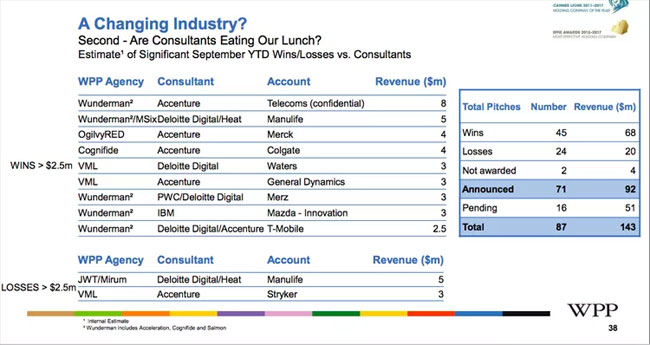
    So WPP seems to have gone to great lengths to justify that the consultants were indeed no threat to WPP. They seem to have won more pitches and the more important ones in terms of size.


    Do services of the communication group and the consultancies really overlap?

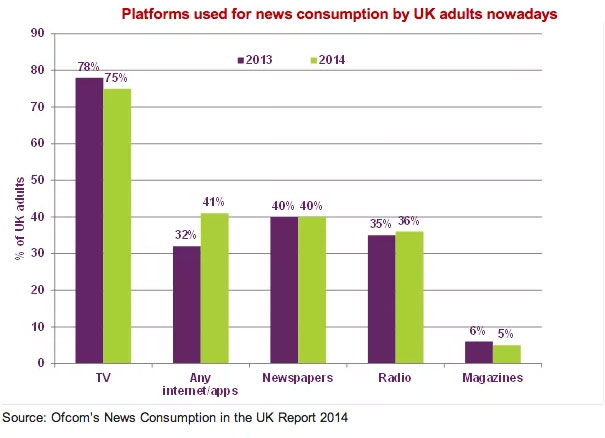
    If one looks at it objectively there is no real overlap. Communication groups have mostly focussed on communication and creativity and the consultancies have been focussing on business expertise and advice to clients. This has often been alluded to as the consultancies being more left brained and the communication groups being more right brained. Why then this furore over the consultancy and the communication group face off? One of the reasons perhaps that there is some degree of overlap is the new field of ‘digital’ that has attracted both the consultancy and the communication groups, which considered it a natural extension of their earlier services since main media like TV and print have been slowly down and giving in to digital media, that is in some countries taking over a lion’s share of the market. For example, when it comes to news, digital media because of the penetration of phones and tablets and computers has been catching up with TV and newspapers in developed countries like the UK and others.

    Ofcom’s report in 2014 for the UK first showed a trend that would soon catch up in other countries as well.


    Andy Main, Chief Executive of Deloitte Digital which is entering India says ” We are transformation partners for our clients, while an advertising agency is a communication partner offering only creative solutions and talking only to marketers. Through our work, we try to impact the business of a company by bringing a change in its balance sheet quickly. I don’t think a television ad has ever transformed a business. We can work with the brand’s chief executives, supply chain, sales, finance and even human resource managers.


    Deloitte Digital brings capabilities like digital technology, experience design and linkage to back office systems. We can manage the company’s data leveraging new-age technologies like artificial learning and cognitive technology apart from connecting with the brand’s consumers through advertising”.


    So there is no doubt that the consultancy groups are taking the high ground with clients by claiming to be transformation partners for clients. Once upon a time, agencies also claimed to be transformation and business partners for clients, but it might be something the communication group has forgotten along the way. After all who would deny that Bill Bernbach transformed the Volkswagen business in the United States with the launch of the VW Beetle. Or deny that Ogilvy transformed the business for Rolls Royce and many others?


    Unfortunately that may no longer be true. Declining margins in the advertising business, have forced agencies to do just that much and no more. They have also enveloped themselves into the comfortable cocoon of ‘creativity’, thereby limiting their transformational abilities.


    Sometime ago Sir Martin Sorrell posed a rather rhetorical question when he said that consultancies can’t buy culture. He added that one is a science and the other is an art. I agree with that. But communication groups have not been happy with art and all the recent additions to their portfolios have been in the area of science. In fact, WPP boasts that less than a fifth of their revenues come from mainline advertising. The rest is data, media, research and digital which probably falls under ‘science’. So it is justified perhaps that the time has come for the consultancies to chase art as well.


    On the question of buying culture, my piano teacher used to say that it is easy to buy culture. She once pointed out that the easiest way to buy culture for the nouveau riche was to buy a piano and study classical music!


    Veteran adperson Prabhakar Mundkur now blogs at prabhakarmundkur.com. This comment first appeared here


  • Lindsay Pattison is now Chief Transformation Officer, GroupM. Will stay as Maxus Global CEO

    By A Correspondent


    Lindsay Pattison

    GroupM has announced the appointment of Lindsay Pattison as Chief Transformation Officer (CTO). She will lead change initiatives across GroupM and its agencies, and with other WPP companies will create tailored and flexible models that serve clients better in the extremely competitive business environment. She will continue as CEO of GroupM agency Maxus and will perform both roles.


    According to a communique, Pattison will lead a number of change programmes to support group and agency structures, talent and leadership development, culture and diversity, as well as WPP’s horizontality strategy. She remains a member of GroupM’s global executive committee, reporting to Kelly Clark, Global CEO of GroupM.


    “Clients need us to think differently and work smarter,” said Clark. “Lindsay will help us deliver on those challenges. I’ve worked with her for many years. She’s a force, and holds the respect of clients and colleagues. She will make a huge impact with her smarts, energy and warmth.”


    Sir Martin Sorrell

    Said WPP CEO Sir Martin Sorrell: “GroupM and its agencies are key to WPP’s horizontality strategy. Lindsay will play a crucial role in accelerating our delivery of new and innovative service structures for clients.”


    “When we look at the broader business context, the transformation we are experiencing is profound,” Pattison said, adding: “The WEF calls it the ‘fourth industrial revolution,’ a technological revolution and one that requires two key skills to succeed: collaboration and agility. New thinking is required across the board, and I’m delighted to take on this new transformation role.” It may be recalled that Pattison was named Global CEO of Maxus in October 2014.


  • Indrani Sen: Will Ekam provide the missing links in digital measurement?

    By Indrani Sen


    Digital media measurement has been breeding a sense of dissatisfaction among global marketers.  Recently, Procter & Gamble chief brand officer Marc Pritchard, was quoted in media that he was tired of waiting for digital platforms to get their measurement act together http://www.thedrum.com/opinion/2017/03/28/why-marketers-should-follow-coca-cola-and-pgs-lead-overhyped-digital. Pritchard complained about the inadequate viewability data from Facebook, Snapchat, Google, and others who are reaping the benefits of the advertising spends in digital media by all leading brands. The article also referred to Marcos de Quinto, Coca-Cola’s global chief marketing officer, who a few months back criticized his company’s history of digital spending, and stated that TV advertising is still the best investment for brands.


    Jeri Smith, chief executive of Communicus, wrote in the above article “So far, only de Quinto has opened up his brand’s books to show evidence of effectiveness. Stating that “TV still offers the best ROI across media channels,” he revealed that Coca-Cola has reaped a return on TV investment of $2.13 for every dollar spent. Their return on digital? Only $1.26 per dollar spent.”


    In August 2016, Sir Martin Sorrel had cited the example of Procter & Gamble planning to cut investment in digital ad spends while predicting that the digital ad spend to slow over the next few years https://www.marketingweek.com/2016/08/24/sir-martin-sorrell-brands-are-starting-to-question-if-they-have-over-invested-in-digital/. All these comments make one wonder if digital media is really overhyped and why the digital industry is unable to get the their measurement act together.


    Digital media haveplenty of measurable metrics and other analytical data available in real-time, but a comprehensive measurement of these data across different digital platforms is lacking. The metrics are generally categorised into three groups, according to the flow of any digital marketing campaign from traffic generation to conversion to revenue. Overall site traffic, traffic sources, click through rate, cost per click are typically the traffic metrics which progresses to conversion metrics like conversion rate, cost per lead, average page views per visit, average cost per page view, average time on site, bounce rate, rate of return visitors, etc., followed by calculations of return on investment and cost to acquire a customer. With all these metrics being flaunted by the digital media and organizations like comScoreproviding measurement for cross platform audiences in digital media, why are the global advertisers complaining about the lack of measurement?


    Last year, when BARC announced their plan for measuring digital viewership and going beyond audience measurement of broadcast media, it also claimed that BARC will be the first to provide a TV+ Digital viewership measurement service across the globe. The press release issued data “BARC India to Solve the Digital Puzzle with its “EKAM” range of products” announces certain unique offerings in digital measurement. Ekam range of products needs to be studied in greater details through interactions with representatives of BARC to understand their full implications. We will have to wait for another 18-20 months for the reports to roll out before we can sample the results and proclaim it as “EkamevaAdvitiyam” of digital measurement.


    The irony is that better tools and techniques of measurement of digital media may not be able to improve on the ROI as the consumer becomes more and more elusive. In the digital age, we are getting bombarded by consumer-led demassification of media which is shrinking the value of the advertising budget. The return on media investment is bound to fall in future with proliferation of media types and vehicles in spite of best efforts through programmatic media planning and buying.


    Indrani Sen is an advertising and media services veteran and now an academic. The views expressed here are her own


  • ISDI WPP School of Communication launched in Mumbai

    By A Correspondent


    WPP and the Indian School of Design and Innovation (ISDI), a fast-growing recognized leader in arts and design vocational education, jointly announced the establishment of the ISDI WPP School of Communication.


    Located on ISDI’s state of the art campus in the heart of India’s business capital, Mumbai, the ISDI WPP School of Communication marks WPP’s first foray into the Indian education sector. The partnership will help create India’s first professional three-year undergraduate diploma program in communication based on a unique work-study model that will bring together a strong academic and creative curriculum combined with practical application.


    The admissions process is currently underway through an online application form. The school recently hosted its first Accepted Students day where students and their parents had an opportunity to interact with the leadership team and faculty. The inaugural batch will commence in August 2015 with the first cohort of 60students.


    The ISDI WPP School of Communication is WPP’s second education initiative globally. In 2011, WPP in partnership with the Shanghai Arts and Design Academy established the WPP School of Marketing and Communications in China. The program has just successfully completed its fourth year with 220 students enrolled.


    WPP and WPP companies, which are globally recognized for their in-house training and development programs, have worked closely with ISDI to develop the School’s curriculum and hire full-time faculty. Radha Kapoor, Founder & Director, ISDI, will lead the School’s board of directors. Additionally, senior staff from WPP companies will serve as part-time faculty and act as mentors. Internship and training opportunities will also be provided to students. An Executive Council has also been set up to oversee the smooth functioning of the 3-year program. ISDI is represented by Dr. Indu Shahani, Dean HR College, Radha Kapoor & Siddharth Shahani, Directors, ISDI; and WPP India by Ranjan Kapur, Country Manager, Paul Mower, Country Finance Director and Madhukar Sabnavis, Vice Chairman & Country Head of Discovery & Planning, Ogilvy & Mather.


    While the list of visiting faculty will be marked by celebrated names such as Piyush Pandey, Executive Chairman and National Creative Director at Ogilvy & Mather, and Roshan Abbas, Managing Director at Encompass Events, the program directors will include the likes of Madhukar Sabnavis, and CVL Srinivas, CEO at GroupM for South Asia, among others.


    Commenting on the partnership, WPP CEO Sir Martin Sorrell said, “Amid strong growth in the wider economy and, more specifically, in our sector, India is facing a pronounced talent shortage, one that is expected to become even more acute in the future.” He added, “As the leading communications group in India and the world, WPP is committed to helping India to further develop the already high level of creative and professional talent in this sector.”


    Speaking on the supply-demand gap for fresh talent in the industry, Ranjan Kapur, Country Manager – India at WPP, said, “We employ approximately 15,000 people (including associates) and on an average, we need 3,000 new recruits every year, including replacements and first timers and this school is just a small beginning. We hope to expand this to be able to cover a significantly large part of our requirements and turnout 400-500 young men and women every year from our school. Our first batch of 60 students is just the beginning.”


    The School will offer students a three-year undergraduate program, wherein, the first year comprises of basic marketing and communication subjects and the second and third year offers students four major specialisations to choose from- Advertising and Communications, Media, Activation and Digital Marketing and Public Relations. WPP Lectures will run from Monday to Saturday, in the afternoons. Throughout the three years, students will be taught and mentored by top professionals from WPP and the industry, will work on live projects, build a portfolio, develop practical work skills, and have the opportunity to intern with WPP companies and get international exposure through student exchange and study abroad programs.


  • GroupM makes ESP standalone agency brand, Mumbai to be ESP Properties hub

    By A Correspondent


    Media agency major GroupM has announced the expanding of its sports and entertainment offering under a new global agency brand, ESP.


    ESP will be made up of two separate businesses: ESP Properties and ESP Brands. Both businesses will be part of WPP’s media investment management company GroupM, but remain independent of its media-buying operations.


    According to a communiqué, ESP Properties will be GroupM’s first company dedicated to serving rightsholders from the worlds of sports and entertainment, including federations, leagues, events, teams, publishers and venues. “It will offer a thorough assessment of their commercial programs, and advise how to grow the revenue they generate through a full range of services across data, digital and content development. It will also offer global partnership sales on behalf of rightsholders, both to existing WPP brand clients and beyond.”


    ESP Properties will be formed through new hires, the integration of existing GroupM business units including leading sponsorship agency IEG, and the acquisition of data-driven sports marketing agency Two Circles. It will collaborate with specialists from the WPP network to deliver a full range of marketing services. It will also work with GroupM Entertainment on new programming concepts and, where mutually beneficial, provide direct finance for new projects.


    ESP Properties will launch with over 150 staff in hubs across New York, Chicago, London, Singapore and Mumbai, plus additional teams in Los Angeles, Sao Paulo and Dubai amongst others. It launches with a roster of globally recognised clients including the All Blacks, Cleveland Cavaliers, Valencia CF, England and Wales Cricket Board, Pele, and City Football Group.


    Said Sir Martin Sorrell, CEO of WPP, in a statement: “There is significant and growing demand on the part of clients to invest more in content and sports but few in our industry have had a serious response to this. Our new ESP Properties will bring creative power and commercial insight to rightsholders for the first time, providing unmatched opportunities to better tailor their offerings to the needs of today’s brand sponsors. ESP will also work hand in hand with our recent investment in Bruin Sports to provide our clients with access to many high-value media and sponsorship opportunities.”


    GroupM is also expanding its support for brands to plan, negotiate and activate sports and entertainment partnerships by growing the specialist teams in its individual media agencies. These specialist teams will be underpinned in key regions by the second business within ESP, ESP Brands. ESP Brands will be an evolution of the former partnerships consultancy GroupM ESP.


    Dominic Proctor, Chairman of ESP and President of GroupM Global, added: “The global launch of ESP Properties brings leading commercial and creative capabilities to some of the world’s most celebrated names across sports and entertainment. Sport is a driving force in media and we want to serve the market better by assisting rightsholders in optimizing their properties and creating more winning partnerships with leading brands. At the same time we will ensure we work more efficiently on behalf of brands by providing even more resources for the specialist sports and entertainment practices that are embedded in our GroupM agencies, underpinned by a central team in key regions, ESP Brands.”


    The new ESP Properties will be led by John Kristick, Global CEO of GroupM ESP since 2011. Kristick is a senior sports marketing executive with nearly two decades of international experience, including being appointed Managing Director for the USA Bid Committee to host the 2022 FIFA World Cup, and previously working for more than ten years in Europe serving as an Executive Director for Infront Sports & Media from its inception. The business will be led regionally by Jonathan Hill (EMEA), Laren Ukman (North America) and JinWei Toh (APAC). ESP Brands will be managed regionally in North America by Bryce Townsend and through the individual GroupM agencies in other regions.


    John Kristick, CEO of ESP Properties, said:  “ESP Properties’ offering is truly unique in meeting the changing needs of the world’s leading federations, events, leagues, teams and other rightsholders. We have brought together a range of experts from across GroupM, such as IEG with over three decades of experience in sponsorship consulting, and our new partners Two Circles who have been leading the way in data-driven sports marketing. By combining this strategic expertise with unmatched understanding of how to navigate potential brand partnerships, we can uncover new revenue opportunities for rightsholders worldwide.”


    The launch is part of WPP’s commitment to content, demonstrated by its investments in MediaPro, VICE, Indigenous Media, FullScreen, MRC, and, most recently, Bruin Sports Capital.


    Said George Pyne, founder of Bruin Sports Capital:  “ESP Properties provides rightsholders around the world with a very powerful combination of strategic services and sales expertise. The ability to access the group’s unmatched global resources and corporate client base will be very helpful as we create value for the relevant businesses Bruin operates. We also anticipate collaborating with ESP Properties to jointly deploy capital and create new businesses as opportunities arise.”


  • Somewhat Seriously: Martin beats Arnab 7-4 in Shadow Boxing


    By Sanjeev Kotnala


    Thank you IAA for making it possible. One can see why the IAA India Chapter won the most active IAA Chapter award recently.


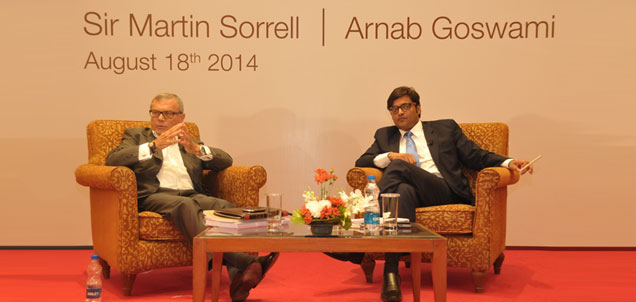
    Sir Martin Sorrell (SMS) gave a basic course in TACKLING Arnab Goswami (AG). From the world GO, SMS opened with Cricket stating that it seems MSD seems to be a captain with fixed thinking. Then he fired His question. How have the elections been for you? An open-ended conversation that followed with: why was there a gap between the Rahul and Modi interviews?  It forced AG to go in a detailed explanation. It was half-way through his comment that AG realized it was he who was supposed to be asking the questions.


    The election discussion closed with SMS probing. When the Congress says the media is to blame for their debacle, were they referring to media as media or you? AG in self-congratulating mode pointed out the Rahul English media exposure was limited to Times Now.


    I wish that Indian politicians should not watch this show when it’s telecast or is on Youtube. They may learn how a tactfully well-prepared person, with smile and humour can enjoy the discussion. How to be precise in your answer, not allow AG to corner you or allow him to put words in your mouth. SMS seem to have taken the advice in yesterday’s post.


    AG started with -‘I am honoured to be interviewing you and I have great regards… ‘ Was turned by SMS into a class for politely being rude. SMS said ‘you can be sure it’s going to be tough one and dam sure if the guy says ‘Personally I have nothing against you’.


    AG – there is respect in your well-preparedness and being very focused in your approach and questions. You as always were well-prepared with your data, quote and historical references. But today, you did meet someone who betters in it.


    SMS ON MEDIA: There is a mismatch between, the amount of time the consumer devotes or by the way the consumer consumes media and the investment (read advertising revenues) by agencies and client in it. Pointed out that this will find its balance. Fragmented media is a challenge and it will get more challenging with time.


    SMS ON TAM:  AG half-volley  ‘Your comment on TAM’ was met with a nice cover drive ‘Nice Company’.  Keeping the Indian scenario out of discussion, SMS pointed out that in most  (I did hear him say all) of the companies there is only one TV audience measurement currency. Can there be 1-2 or 3 measurement currencies is something that the market will decide.  AG doosara on does TAM (read SMS) need to wait for government directive for enhancing TV Meter numbers was hit hard. SMS pointed out that additional meters means additional cost and it must be shared by the agencies, client and the channels must share the burden.  Reiterating that WPP is committed to provide the most accurate measurement, he made a point that it’s not meters alone but a willingness to shift measurement process with change in consumer habits is required. Giving an example he cited the use of C+3 and C+7 meters that track not only on-air but deferred viewing.


    SMS ON INDIA AND CHANGES: The Independence Week made AG continuously probe SMS outside the off-stump. Is India at the Vortex of change? Can India- made media be global?  SMS showed a straight bat. He was optimistic that the new strong leadership in government is coupled with strong commercial leadership, then India which has been in the wrong side of the history for so long would definitely see a change.  And that it is advisable for the businesses to first exhaust the local opportunities before looking out.


    SMS ON FURTHER INVESTMENT BUYOUTS IN INDIA: He rattled off that WWP business in India is about 499 Million. And growing @ 10%. Talking to Sam (Balsara), he said: ‘If there is a business opportunity that is 50 million worth, he would consider it and is willing to write a blank cheque.” SMS thinks that his competitors in recent past have made some ill-advised low-leveraged investments and that is starting to reflect in their figures.


    SAM AND SMS: Sam raised a probing question that in the Indian situation where TV and Print (the legacy media) dominants. The foreigners (like you) come and talk just digital-digital. Are you not missing the bus?  In SMS’s view: “This is true as of now but all businesses have to look future-ready. I am not sure when the tipping point will come and change the dynamics. But it will come surely, with the speed of change speeding up’.


    SMS ON THREAT.  The biggest threat is not competition but Complacency, Arrogance, Satisfaction and lack of energy. He said he is a disruption freak. All his life the growth has come from disruption.


    SMS ON BALANCE. He referred to his divorce as an example. His lawyers had two possible solution and they asked: what was more important – business or family.  Not surprising, the answer is both.  This was when AG tried creating a 2×2 matrix between King and God on one side and Data and Analysis on another. SMS went to the extent of drilling the point home in more ways then one. As per him, creative and data, science and art, gut feel and analysis are such a pair where balance is more important.  Balance is not something that’s 50-50, but the right mix. Whenever the pendulum would swing to one side creating a biased skew: correction will be needed.


    MY SPECIAL:  (1) SAM, can we raise the same question on legacy v/s new media for all the discussion that happens in Indian forums? And many such places you are one of the guiding force? (2) I am surprised at the limited attendance to the event. At any stage, there were not more than 120 people in hall set for 150-plus. IAA could start planned invitation push (even paid) public beyond their members for such an event.  (3) Liked SMS referring to AG as a fly buzzing. (2) Liked AG comparing SMS to a Smart Politician and we would know where that feeling was coming from.


    Disclaimer: The above personal interpretation of the discussion.


    Aside: In a fraternity meet like this, with most being media or IAA invitees or senior people- this long introduction of SMS and AG- was that required?  I personally felt it went too long.


    Sanjeev Kotnala is Head Catalyst, P1P2Solutions. The views expressed here are his own


  • IAA Conversations to feature Sir Martin Sorrell and Arnab Goswami

    By A Correspondent


    WPP CEO Sir Martin Sorrell and Times Now Editor-in-Chief Arnab Goswami will be engaged in a lively discussion on Monday, August 18 as part of the ‘IAA Conversations’ series of the Indian Chapter of the International Advertising Association. The event will be held at the ITC Grand Central Hotel in Parel, Mumbai from 3.30 pm to 5 pm.


    Srinivasan K Swamy

    “We find the IAA Conversations offering an excellent opportunity to engage two well-known media professionals in a meaningful dialogue on wide-ranging professional and personal topics. Sir Martin Sorrell, is one of the most important powerful media professionals in the world and our own Arnab Goswami is one of the most popular faces of news television in the country,” said Srinivasan K Swamy, President, IAA India Chapter & Vice President-Development, Asia Pacific.


    Bhaskar Das

    Dr. Bhaskar Das, Chairperson of the event said, “Both Sir Martin Sorrell and Arnab Goswami are great to listen to. And now when they sit together at the IAA Conversations, we are sure to not just have a lively session but also see some interesting insights coming up. People who follow ‘Frankly Speaking with Arnab’ will see a similar program but in a live format. An open-to-audience Q&A will follow the discussion.”