Tag: sign language

  • 5 Tips, 5 Books & 5 Movies that can Help Us Mainstream Deaf Individuals


    By Shruti Pushkarna


    Shruti PushkarnaHow many of you have watched the Academy Award winning movie CODA? A film that won the Best Picture, Best Supporting Actor and Best Adapted Screenplay at the 94th Oscars.


    CODA (or Child of Deaf Adults) features deaf actors Marlee Matlin and Frank Kotsur portraying their disability on screen. The film centres around Ruby Rossi, the only hearing character in this family drama.


    What really stood out for me in this fictional representation of a complex issue, is its ending. When their seventeen-year-old daughter (Ruby) decides to follow her passion and leaves for college to pursue music, the deaf family is left to fend for themselves. But throughout the movie, the filmmaker never puts the onus of inclusion on the disabled, and same is true of the conclusion. Their surrounding community, which is the (hearing) fishing community figures out ways of communicating and transacting with the Rossi family.


    September is observed as the Deaf Awareness Month and this year the theme is ‘Building Inclusive Communities for All’, where deaf people feel connected to their community as well to those without a hearing impairment.


    Officially, India has only 250 certified sign language interpreters for a deaf population of ranging between 1.8 and 7 million.


    With an estimated count of 700 million people (globally) to experience hearing loss by 2050, it’s time we learn ways of including deaf individuals in mainstream conversations. And what better time to start than the Deaf Awareness month!


    The obvious question to ask is how can we include deaf individuals in day-to-day activities, at work or even in social settings?


    Here are five easy tips.


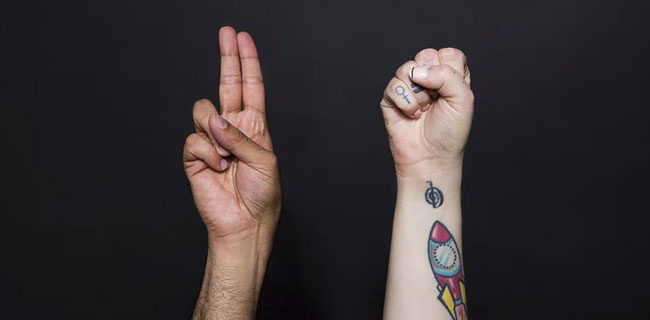
    1. Learn basic sign language to initiate communication with a community severely dependent on visual cues. In 2017, the United Nations officially recognised September 23 as the International Day of Sign Languages. The aim was to raise awareness about the importance of sign languages as a means of communication and as a fundamental human right of deaf individuals.

    2. Speak clearly without overemphasising or speaking too loudly or slowly, remaining natural in your delivery.

    3. It always helps to communicate in quiet environments because noisy backgrounds can make it harder for the deaf (and hard of hearing) to focus on what is being said.

    4. Always face the person you are communicating with while speaking or signing. Deaf individuals rely on gestures, facial expressions, and lip movements to communicate effectively.

    5. Use visual aids like whiteboard, notepad or smartphone apps makes it easier to engage with the deaf especially if it involves information exchange.


    In case you are curious about life with hearing impairment, here are five books that focus on the theme of inclusion using deaf characters.


    1. El Deafo– This is a graphic novel based on the childhood experiences of American author, Cece Bell. It’s a heartwarming and humorous tale of a young girl navigating the world with her hearing aid, recounting her challenges and triumphs.

    2. You’re Welcome, Universe– This book by Whitney Gardner features an Indian teenage deaf girl who gets expelled from her school for spraying graffiti on the wall. In her new school, she tries to find new friends and embarks on a journey of self-discovery.

    3. Wonderstruck– This is an illustrated novel by Brian Selznick which follows the story of Ben, a deaf boy traveling to New York in 1977, and Rose, a deaf girl traveling to New York in 1927. The two stories overlap around the themes of connection and belonging.

    4. Deaf Like Me– This novel by Thomas S Pradley and James P Pradley, is based on a true story. It recounts the journey of a hearing family raising a Deaf child. It delves into the challenges they face and their efforts to support their child’s communication and inclusion.

    5. Deafening– This is a novel by Frances Itani, set during/before World War I, which tells the story of a young woman who becomes deaf due to a bout of scarlet fever.

    And in case you are someone who prefers movies to books, here are five cinematic recommendations with diverse portrayals, exploring themes of deaf culture and inclusion.


    1. Sound of Metal (2019)- Directed by Darius Marder, this film tells the story of a heavy metal drummer who begins to lose his hearing and must adapt to a new way of life within the Deaf community.

    2. Iqbal (2005)- Directed by Nagesh Kukunoor, Iqbal is centred around a Deaf and mute aspiring cricketer. The film highlights his determination to overcome obstacles and pursue his dream of playing cricket at the national level.

    3. The Shape of Water (2017)- Directed by Guillermo del Toro, this fantasy drama features a mute, non-verbal female lead who communicates using sign language. The film explores the power of communication beyond words and the connection between the characters.

    4. Children of a Lesser God (1986)- Directed by Randa Haines, this film revolves around the romantic relationship between a hearing teacher and a Deaf custodian at a school for the Deaf. It explores issues related to communication, love, and societal expectations.

    5. Soundtrack (2011)- Directed by Neerav Ghosh, this film is loosely based on the life of musician and composer Suman Sridhar. The film features a DJ who loses his hearing but continues to create music. It explores his journey of adaptation and resilience.


    Change is not easy to come. Especially not in a country as diverse and complex as ours. It’s true that it takes more than one to transform and build an accessible world. But it’s the action of one that translates into a collective movement for change.


    Can you commit to learn to sign at least one word this September?


    Wondering why MxMIndia publishes a disability advocacy column? Well, we strongly feel that the media can dramatically transform the world of persons with disabilities. This series attempts to help bring forth issues that the media must champion to create a truly inclusive and accessible India. Writing  this column is Shruti Pushkarna, a former journalist and  now a disability inclusion advocate based in New Delhi. Her views here are personal. To access the archives of her 75-plus columns, please visit: https://www.mxmindia.com/category/ columns/shruti-pushkarna/


    If you have a view on the issues raise or would like to align with MxMIndia on this cause, write to us at editor [at] mxmindia.com.


  • 5 Tips, 5 Books & 5 Movies that can Help Us Mainstream Deaf Individuals


    This article has been updated at https://www.mxmindia.com/columns/5-tips-5-books-5-movies-that-can-help-us-mainstream-deaf-individuals/

    By Shruti Pushkarna


    Shruti PushkarnaHow many of you have watched the Academy Award winning movie CODA? A film that won the Best Picture, Best Supporting Actor and Best Adapted Screenplay at the 94th Oscars.


    CODA (or Child of Deaf Adults) features deaf actors Marlee Matlin and Frank Kotsur portraying their disability on screen. The film centres around Ruby Rossi, the only hearing character in this family drama.


    What really stood out for me in this fictional representation of a complex issue, is its ending. When their seventeen-year-old daughter (Ruby) decides to follow her passion and leaves for college to pursue music, the deaf family is left to fend for themselves. But throughout the movie, the filmmaker never puts the onus of inclusion on the disabled, and same is true of the conclusion. Their surrounding community, which is the (hearing) fishing community figures out ways of communicating and transacting with the Rossi family.


    September is observed as the Deaf Awareness Month and this year the theme is ‘Building Inclusive Communities for All’, where deaf people feel connected to their community as well to those without a hearing impairment.


    Officially, India has only 250 certified sign language interpreters for a deaf population of ranging between 1.8 and 7 million.


    With an estimated count of 700 million people (globally) to experience hearing loss by 2050, it’s time we learn ways of including deaf individuals in mainstream conversations. And what better time to start than the Deaf Awareness month!


    The obvious question to ask is how can we include deaf individuals in day-to-day activities, at work or even in social settings?


    Here are five easy tips.


    1. Learn basic sign language to initiate communication with a community severely dependent on visual cues. In 2017, the United Nations officially recognised September 23 as the International Day of Sign Languages. The aim was to raise awareness about the importance of sign languages as a means of communication and as a fundamental human right of deaf individuals.

    2. Speak clearly without overemphasising or speaking too loudly or slowly, remaining natural in your delivery.

    3. It always helps to communicate in quiet environments because noisy backgrounds can make it harder for the deaf (and hard of hearing) to focus on what is being said.

    4. Always face the person you are communicating with while speaking or signing. Deaf individuals rely on gestures, facial expressions, and lip movements to communicate effectively.

    5. Use visual aids like whiteboard, notepad or smartphone apps makes it easier to engage with the deaf especially if it involves information exchange.


    In case you are curious about life with hearing impairment, here are five books that focus on the theme of inclusion using deaf characters.


    1. El Deafo– This is a graphic novel based on the childhood experiences of American author, Cece Bell. It’s a heartwarming and humorous tale of a young girl navigating the world with her hearing aid, recounting her challenges and triumphs.

    2. You’re Welcome, Universe– This book by Whitney Gardner features an Indian teenage deaf girl who gets expelled from her school for spraying graffiti on the wall. In her new school, she tries to find new friends and embarks on a journey of self-discovery.

    3. Wonderstruck– This is an illustrated novel by Brian Selznick which follows the story of Ben, a deaf boy traveling to New York in 1977, and Rose, a deaf girl traveling to New York in 1927. The two stories overlap around the themes of connection and belonging.

    4. Deaf Like Me– This novel by Thomas S Pradley and James P Pradley, is based on a true story. It recounts the journey of a hearing family raising a Deaf child. It delves into the challenges they face and their efforts to support their child’s communication and inclusion.

    5. Deafening– This is a novel by Frances Itani, set during/before World War I, which tells the story of a young woman who becomes deaf due to a bout of scarlet fever.

    And in case you are someone who prefers movies to books, here are five cinematic recommendations with diverse portrayals, exploring themes of deaf culture and inclusion.


    1. Sound of Metal (2019)- Directed by Darius Marder, this film tells the story of a heavy metal drummer who begins to lose his hearing and must adapt to a new way of life within the Deaf community.

    2. Iqbal (2005)- Directed by Nagesh Kukunoor, Iqbal is centred around a Deaf and mute aspiring cricketer. The film highlights his determination to overcome obstacles and pursue his dream of playing cricket at the national level.

    3. The Shape of Water (2017)- Directed by Guillermo del Toro, this fantasy drama features a mute, non-verbal female lead who communicates using sign language. The film explores the power of communication beyond words and the connection between the characters.

    4. Children of a Lesser God (1986)- Directed by Randa Haines, this film revolves around the romantic relationship between a hearing teacher and a Deaf custodian at a school for the Deaf. It explores issues related to communication, love, and societal expectations.

    5. Soundtrack (2011)- Directed by Neerav Ghosh, this film is loosely based on the life of musician and composer Suman Sridhar. The film features a DJ who loses his hearing but continues to create music. It explores his journey of adaptation and resilience.


    Change is not easy to come. Especially not in a country as diverse and complex as ours. It’s true that it takes more than one to transform and build an accessible world. But it’s the action of one that translates into a collective movement for change.


    Can you commit to learn to sign at least one word this September?


    Wondering why MxMIndia publishes a disability advocacy column? Well, we strongly feel that the media can dramatically transform the world of persons with disabilities. This series attempts to help bring forth issues that the media must champion to create a truly inclusive and accessible India. Writing  this column is Shruti Pushkarna, a former journalist and  now a disability inclusion advocate based in New Delhi. Her views here are personal. To access the archives of her 75-plus columns, please visit: https://www.mxmindia.com/category/ columns/shruti-pushkarna/


    If you have a view on the issues raise or would like to align with MxMIndia on this cause, write to us at editor [at] mxmindia.com.


    An earlier version of this article had misspelt Movies in the main headline as Bovies. It has been corrected. Our apologies – Ed


  • Are businesses missing out on opportunities to sensitise & include?

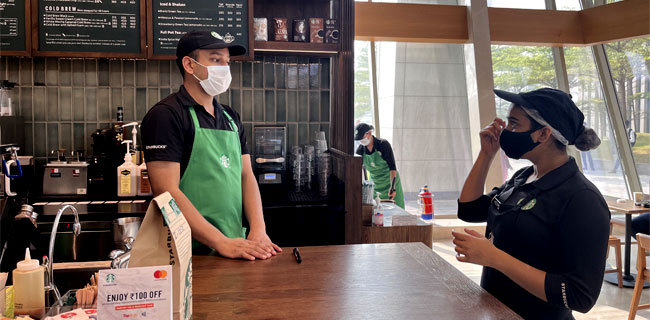
    Starbucks outlet at Noida Sector 16B where the baristas use sign language
    Starbucks outlet at Noida Sector 16B where the baristas use sign language Photograph: Shruti Pushkarna


    By Shruti Pushkarna


    Shruti PushkarnaThis week started with waking up to the news of Morbi bridge collapse and the death toll crossing 130. Since 2020, health, education, employment, entertainment and almost every aspect of our lives have been reeling under the aftermath of Covid 19. News reports and social conversations revolve around natural or manmade disasters, rape and murder, fiscal scams and political horse trading.


    Radicalisation and inflation are on the rise. Cars, petrol, houses, food, everything costs more. There are no jobs.  Businesses are struggling. We are taxed for everything, including hospital room rent.


    In short, an average Indian is grappling with a gazillion problems on a daily basis. If your own issues don’t depress you enough, there is communal hyperbole to push you towards hopelessness.


    A simple ask for empathy seems unreasonable against this ubiquitous backdrop of societal grief. At a time, when the daily commute to work and back is an exercise in aggression due to bad roads, bad driving and bad traffic, how can anyone retain their sensitivity towards another human being?


    Thousands of people in urban and rural parts of the country can’t think beyond arranging two square meals a day. No wonder politicians and corporate giants get away with dirty ploys and false promises, because who is keeping track anyway?


    Fighting for inclusion and access for persons with disabilities sometimes seems secondary in this context. Especially if a large part of advocacy involves calling out the gaps and faults. At times, it helps to apply a two-pronged approach to the same problem. Where shrill activism fails, positive reinforcement does the trick.


    On that optimistic note, let me refrain from citing unmet targets and implementation loopholes pertaining to the country’s disabled population in today’s piece. Instead I want to share two encouraging encounters which deserve propagation.


    Due to temporary confinement following a knee injury, my movements inside and outside the house were possible only with the aid of a wheelchair. Desirous of watching a movie in the cinema hall, I booked a seat in PVR Director’s Cut at Ambience Mall, Delhi. I assumed there would be wheelchair access to the last row of seats I booked. But when I reached the assigned auditorium, the staff enquired if I could stand up and walk at all. Used to taking my mother (in her wheelchair) around inaccessible spaces, I was ready to slip into my activist avatar, demanding access. Just then the extremely polite personnel brought out a motorised wheelchair and helped me shift out of mine.


    Before anyone else entered the hall, I was escorted up the several set of stairs, seated secured with a seatbelt. It took the wheelchair operator around ten to fifteen minutes to transport me to my seat. He did that with patience and grace. I was mightily impressed. Of course, similar treatment was meted out at the time of exiting the hall. In addition, as my husband escorted me to the accessible washroom, the PVR staff jumped up to help, ensuring the facility was clean.


    My inability to walk didn’t hamper my entertainment experience, thanks to the trained and empathetic staff. There are definitely solutions available to accommodate and include, even in physical spaces that are built discarding the principles of universal design.


    I also noticed fellow movie-goers observe how a young person with an impairment was out and about, enjoying a fun evening like anyone else. If there were people speculating why did I venture out at all, I’m certain there were an equal number wondering, why not!


    Subtle sensitisation supersedes stereotypes.


    A few days ago, when I went down to a newly opened Starbucks to fetch myself my morning dose of caffeine, I was in for a pleasant surprise. I noticed the baristas at work were quietly focused on their jobs except they exchanged a few signs with each other as orders were passed on.


    Curious, I asked the cashier if they were hearing impaired. Her response was affirmative. All the seven baristas were hearing and speech impaired and their two managers were fluent in sign language. The cashier proudly shared that she was pursuing an advanced course in Indian Sign Language to further bridge the communication gap.


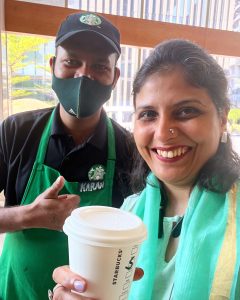
    With a barista at the Starbucks outlet
    With a barista at the Starbucks outlet

    As I collected my cup of coffee, I remembered to sign ‘Thank You’ to the cheerful server. I also signed to check if I could take a picture with him. He obliged, acknowledging my honest attempt to communicate in an inclusive language.


    This Starbucks is located on the ground floor of a commercial building that houses several private offices and a co-working space, in Noida Sector 16B. High influx of professionals provides an unmissable opportunity for sensitisation. Hiring persons with disabilities in a mainstream job helps counter misconceptions along with restoring agency and dignity.


    These two recent incidents speak of the power of change that is possible with certain additions and adjustments to a limited (and rigid) idea of normal. Publicising and broadcasting such acts of inclusion can whip up support for the excluded (disabled, elderly, severely ill) sections of the population. Practical demonstrations also help individuals and institutions realise that incorporating accessibility is not unfathomable.


    Here’s hoping that several such reports feature on the ‘good news’ sections of mainstream media.


    So why are we publishing this column on an A&M site? Well, we strongly feel that the media can dramatically transform the world of persons with disabilities. And this series can help bring forth issues that the media must champion to create a truly inclusive and accessible India. To write this column, we invited Shruti Pushkarna, a former journalist who now works as Director, EnAble India where she heads North India operations as well as media and communications outreach. Shruti writes for MxMIndia every other Thursday. Her views here are personal. To access the archives of all her 60-plus columns, please visit: https://www.mxmindia.com/category/columns/shruti-pushkarna/