By Tuhina Anand
In advertising it is about finding an emotional connect. If you have managed to do so, you hit a home run. Hence it’s no surprise that one finds many advertisements today that rely on a narrative style which is sometimes no less than poetry, and instantly strikes a chord with the viewers. The focal point is that the words should express the emotions and bring out both the joys and the trials and tribulations.
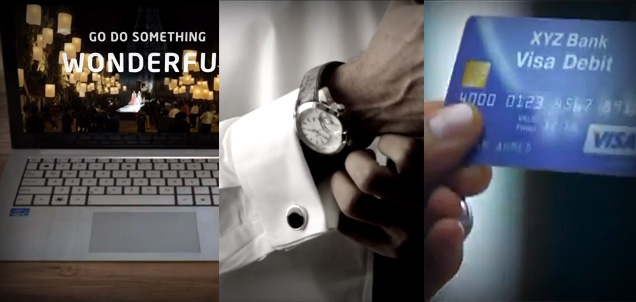
Take for example the recent Visa Debit campaign. It has the best talent from the industry that has worked to craft the concept and the result is a fabulous example that blends a narrative style with human aspirations thus bringing out what Visa can do for a common man. End result – a narrative that resonates with common man and an ad that aligns well with the brand and its offering.
VISA DEBIT
| [youtube width=”400″ height=”220″]http://www.youtube.com/watch?v=T44lW5FIq2g[/youtube] |
Shubhranshu Singh, Marketing Director, Visa, said, “The TV commercial that launched our ‘Dream to Advance’ campaign was visualized to deliver the core message that Visa Debit empowers people to achieve their dreams no matter where they reside. The integral human truth about an aspiration to achieve was brought alive in an authentically Indian setting. The narrative written by Gulzar engages and connects not only from an emotive point of view but also from the message delivery perspective. The music by Shantanu Moitra amplifies the beauty of the quest set against the majestic canvas of Kashmir’s landscape. Directed by Amit Sharma of Chrome Pictures, our latest TVC has ensured that the end result is a seamless blend of creativity and brand positioning.”
Intel has launched its campaign on the theme – go do something wonderful. The campaign uses a narrative style similar to Visa. It talks about Intel helping in realizing dreams, and the powerful narrative only makes it more convincing.
INTEL
| [youtube width=”400″ height=”220″]http://www.youtube.com/watch?v=M0QJc_rPYY0[/youtube] |
Sandeep Aurora, Director of Marketing, Intel South Asia, said, “Today’s youth are optimistic about what the future holds, but there is an underlying anxiety about tomorrow. Things around them are changing so fast that they know there are opportunities out there, but they don’t always know how to grab hold of them. The new Intel campaign maximizes relevance to this audience by showing stories that don’t focus on the technology that Intel makes, but what that technology makes possible. Based on the famous quote from Intel co-founder Robert Noyce, the ‘Go do something wonderful’ campaign the narrative aims at shining the spotlight on the partnership between consumers and PCs with Intel inside – that personal passion , big ideas and creativity can come alive when they meet a Intel Powered PC.”
Then there is the recent ad for Xylys that uses the voice of Farhan Akhtar, who has also been featured in the ads.
XYLYS
| [youtube width=”400″ height=”220″]http://www.youtube.com/watch?v=9DEbak91UeQ[/youtube] |
Giving his take on the narrative style of the ads, Harish Bijoor, brand expert & CEO, Harish Bijoor Consults Inc, said, “These ads are aspirational, hope-filled and hope-fuelling pieces of advertising that find their way into our advertising culture when times are tough. When the times are tough, one needs positive strokes. These pieces attempt these positive strokes. To an extent I would call them “economopause advertising”! When the economy hits its andropause moment, it needs advertising such as this.”
After taking a look at these ads, Rahul Jauhari, National Creative Director, Everest Brand Solutions, opined, “This narrative style is tried and tested. Yes, it works. Given the right choice of voice and rendition, it can add magic to a film. It can raise the level of a film. Of the three, the narrative in the Intel and Visa one suit the film. The Visa narrative adds charm to the story. The one in Xylys? I think Farhan’s voice lets it down. Yes it’s his voice since he is in the film. But his voice, per se, is not a great one for narratives, and falls flat for me.”
Opinions will vary but there is no denying that the narrative style definitely packs a punch.