Tag: Shubha George

  • Red Fuse promotes Shubha George as MD – Asia

    By A Correspondent


    Shubha George

    Red Fuse Communications recently announced the promotion of Shubha George to the role of Managing Director – Asia & CEO – India with immediate effect. In her new role, Shubha will lead the development of integrated marketing communications for Colgate-Palmolive across Asia. She will continue to be based out of Mumbai as also continuing to report in to New York based, Stephen Forcione – Global CEO, Red Fuse Communications.


    Shubha’s new remit will be in addition to her current role of CEO India, Red Fuse Communications; a role she assumed in 2013. Under her leadership the Red Fuse Mumbai team is skillfully managed, integrating all the WPP resources and diverse talent, ensuring brand Colgate in India continues to have a record market share. Prior to joining Red Fuse, Shubha was the CEO at MEC India, where she started working on the Colgate-Palmolive business. During her MEC career, the team at MEC India delivered outstanding results on the business, with award winning work including best creative use of media at the Global Festival of Media in 2012 and multiple awards in India’s media awards across TV, Print & Digital. Shubha also led the development of digital, sports marketing and content partnerships for the agency.


    Expressing her delight on her new role, Shubha George, Managing Director – Asia & CEO – India, Red Fuse Communications said, “Working with Colgate-Palmolive and the Red Fuse teams at both Mumbai and Hong Kong has been a truly rewarding experience; and with my new responsibilities, I look forward excitedly to contribute to Colgate-Palmolive’s success in the region by efficiently and creatively cross – pollinating ideas and processes across and between, people and offices.”


    Before joining Red Fuse, Shubha’s career spanned across Ogilvy, JWT, Mindshare and MEC. With several extraordinary milestones in her career, Shubha has featured in India’s Top 50 Most Influential Women in Media and Marketing, now for four consecutive years.


  • Red Fuse delivers ‘Visible White Selfie’ for Colgate

    By a correspondent


    Red Fuse Communications, WPP’s full-service integrated global agency has designed and implemented an engaging digital campaign for Colgate Visible White. Through this campaign, very aptly titled ‘Visibly White Selfie’, it aims at communicating that white teeth can enhance one’s smile and hence one’s selfie.

    Shubha George

    Shubha George, CEO, Red Fuse Communications, said “We realized that consumers spend a great deal of time on their looks but not on their teeth. Often a beautiful picture with a charming smile is marred by discolored teeth. We wanted to communicate that it is important to make sure that one’s teeth also look their best to complete the beauty regimen.”


    To build awareness around health and beauty, the agency known for providing customized and innovative solutions, designed the Visible White Selfie campaign. Through this campaign the agency will engage with audiences on digital platforms to emphasize how Colgate Visible White enhances their Selfie, by making their teeth one shade whiter in just 1 week.


    The campaign will pose the question Your selfie is incomplete without a picture perfect smile. Are you ready for your best Selfie?” In response to this question, users are encouraged to click selfies and upload their best pictures on Colgate India’s Facebook page or through the mobile app. The perfect selfie uploaded will be autographed by Sonam Kapoor.


    Users can then enhance their smile and whiten their teeth with Colgate Visible White regimen.


    The campaign will conclude on 30th June, 2014.


  • MEC India wins at 2013 Effective Mobile Marketing Awards

    By A Correspondent


    MEC India has bagged an award for the ‘Most Effective Location-based Service/Campaign’ at the recently concluded 2013 Effective Mobile Marketing Awards ceremony held in London. MEC India received the award for one of its campaign designed for Colgate at Kumbh Mela. The firm has now become the only Indian agency to win this prestigious award.


    Centered around the Maha Kumbh Mela held in Allahabad, Uttar Pradesh, the campaign was aimed at connecting with audiences at thef estival, that is one of the world’s largest religious gatheringswitnessing over 80 million people in attendance this year. MEC India partnered Red Fuse Communications, WPP’s full-service integrated global agency working on Colgate-Palmolive brands globally.


    Shubha George

    Speaking on the occasion, Shubha George, CEO, Red Fuse Communications said, “We feel honoured to be recognised on a renowned global platform like the 2013 Effective Mobile Marketing Awards. Executing and implementing the campaign was a challenging task for the team, especially for a mammoth project of the scale of the Maha Kumbh Mela. The prime objective at the Maha Mela was to attract and engage consumers in a highly competitive environment, which inspired us to think beyond traditional methods.The award encourages us to push further boundaries in the future.”


    The mobile phone was selected as the medium to connect with the large audiences at the Maha Kumbh Mela. “This was the very first time in India that a brand had used location-based voice communication to convey the desired message and generate direct response from the audience,” said Ms George.


  • Games on, but GECs not worried


    By Meghna Sharma


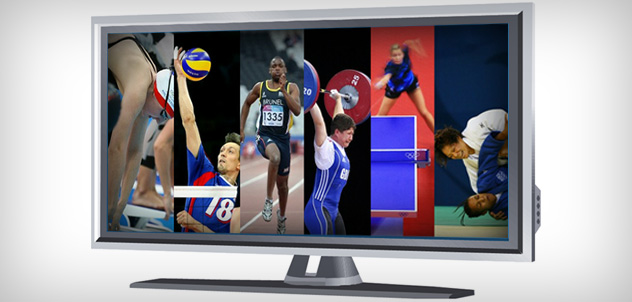
    The UEFA Euro Cup has made the Europeans forget all about the economic crisis; London, along with the whole world, is eagerly waiting for the world’s biggest sporting event – the Olympics – to begin. The world is buzzed about the various sporting events coming up in the next few months.


    Sports, around the globe, generate a major interest and channels – sports or otherwise – fight each other out for viewership and advertisements, and brands try to out-do each other through advertisements and activations to leave a mark on the public’s mind.


    The last event of such a stature in India was the recently concluded IPL which saw the entertainment channels fighting for eyeballs. With the next three-four months choc-o-bloc with sporting events, MxMIndia takes a look at how channels in the country are gearing up.


    Event Period Channel
    UEFA Euro Cup June 8- July 1 Neo Prime
    Wimbledon June 25-July 8 Star Sports
    India-SL series July 22- Aug 7 Ten Cricket
    Olympics July 27-Aug 12 DD/ESPN or Star Sports

    Time to worry?

    According to the media planners, for GECs and other channels, there is nothing to worry about. “Non-cricket fare is still appealing to a small niche segment and hence, its popularity is not reflected in ratings. India in the months of Jul-Aug has always been a moderate performer and not as high profile as some others and so this will also not have a major impact,” feels Shubha George, COO -South Asia, MEC.

     

    Suresh Balakrishnan

    And she is not alone. Suresh Balakrishnan, CEO, Brand Programming Network, agreed with her and added that though cricket is more than a sport in India, even IPL, which has both cricket as well as entertainment and was telecast at primetime, hasn’t been able to affect channels, especially the GECs in the recent past. “Lately, IPL has been able to get a rating of 2-3 which has hardly affected any GECs, so I’m sure other sports won’t matter to them at all. However, there is no denying the fact that viewership for other sports is increasing in the country. And major events might be able to at least reach the ratings which cricket gets, in the coming years.”


    Mr Balakrishnan, however, feels that sports channels don’t have much to worry about as there are many male-focussed brands which help them generate enough ad revenue. “Having said that, I also feel that channels showing sports other than cricket know that recovering money isn’t an easy task,” he added.


    The television behaviour showcases the interest of the masses which obviously tilts towards popular entertainment channels. However, most media planners agree that sports viewership is growing in the country and soon things might change but until then channels will have to make do with what they have/get.

     

    Amin Lakhani

    Amin Lakhani, principal partner, Mindshare said: “All leading newspapers and news channels have special coverage of important events, take Euro Cup for instance, but how much of it is being converted into viewership or readership? Even then, that hasn’t deferred them from covering the events because they know that, though tiny, there is a loyal following. Even brands are doing activations for sports which are gaining popularity in other sectors apart from Sec A&B – Pepsi is doing activations for football.”


    Business as usual

    Akash Chawla

    Entertainment channels continue to enjoy the largest share in the viewership pie. Although, they continue to compete with each other, when it comes to other genres, nothing has been able to write them off.


    Akash Chawla, Zee Entertainment Enterprise (ZEEL) marketing head – national channels, said: “Just like IPL, we are ready to combat any other sporting event. Our programming strategy does not depend on these events.”


    “For us, it will be business as usual. The channel is backed with strong and fresh content for its viewers, irrespective of the programming on competing genres,” said Hemal Jhaveri, general manager, Movies Ok.

     

    Hemal Jhaveri

    Other genres which focus on the same target audience as the sports channels are youth and news. But many in these genres believe that such sporting events don’t affect their viewership. Nikhil Gandhi, executive director, youth channels, media networks, Disney UTV claimed that most of the sporting events attract a majority viewership of urban youth, whereas they, as channels, focus on the HSM belt which includes 62 cities. Hence, such sporting events won’t affect their viewership.


    A broadcast veteran from a Delhi-based news channel too felt that news channels give enough coverage to the various sporting events, so there is no question that the events might eat into their viewership pie. He said that though both cater to the same TG, they are different genres and people might shift between the two, if needed.


    Nikhil Gandhi

    On the other hand, Neo Prime, the sports channel which is currently telecasting UEFA Euro Cup 2012, is aware of the competition within and between other genres and risk involved, but is still optimistic. “Sports is still a male-dominated genre, whereas other genres (read GECs) enjoy female viewership. But during big events, there are chances of a shift in the remote control. Sports do get eyeballs. And as for the advertisements, the brands which advertise on sports channels are different from the ones in GECs or other channels. Hence, nothing overlaps each other,” said Prasana Krishnan, COO, Neo Sports Broadcast.

     

    Prasana Krishnan

    Hopefully, as said by various media personalities, sports other than cricket in the coming years will be able to generate same interest among Indian citizens across sections and help sports channel to boom and enter the main TRP race as well.


     Imaging: Rafiq, Pictures courtesy: London2012.com



  • Woman power at MxMIndia’s roundtable for Big CBS Love

    By A Correspondent


    Much has being spoken about how the media-advertising industry being one of the few industries in India that has seen many women professionals coming to the fore and showing the way to the younger and the aspiring lot to stand their ground for excellence, despite myriad challenges.


    To celebrate the spirit of women in the advertising-media domain, MxM India conceptualised a roundtable conference for Big CBS Love, in a half-hour show that was aired on Bloomberg-UTV on March 8, 2012.


    Eminent women professionals such as Punitha Arumugam, CEO, Madison Media, Anita Nayyar, CEO, MPG India, Shubha George, COO, MEC South Asia, Anisha Motwani, Director and Chief Marketing Officer, Max New York Life Insurance shared their views on the role of women in the industry.


    Ms Arumugam pointed out that advertising attracted a lot of women as against other industries, while Ms Nayyar and Shubha George referred to how Roda Mehta played an inspiring role. Ms Motwani, who started out in advertising, then joined the automobile industry and moved from there to insurance, remarked how women even today can’t ignore their responsibilities towards their families. Ms Motwani, who had taken a sabbatical after marriage for two years, said working women need to believe in themselves, their ability and not give up.


    On reasons why women have done so well in advertising and media, Ms Nayyar said: “Over the years, it is evident that when it comes to client relations and numbers – women have done very well. And since advertising has a casual sort of environment, it gives that extra advantage and scope for women to double up as a key member at home and the workplace.”


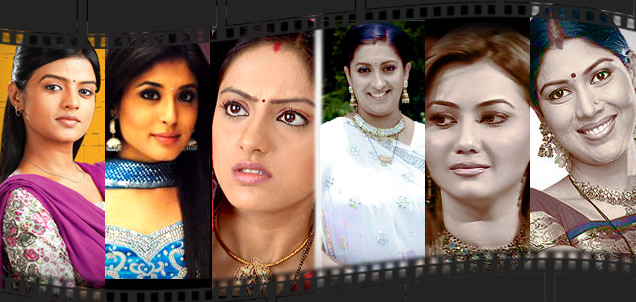
  • Is the serial woman tellying it like it is?


    By Ritu Midha


    About a decade ago, we saw the emergence of Tulsi, Parvati and Kussum. Strong protagonists – but all of them set in more or less the same socio-cultural setting, grounded in traditions but fighting against the evil (another woman in most cases) trying to tear their families apart.


    Cut to the present-day GEC. The protagonist is stronger, and differentiated. She is no longer just about pacifying the mother-in-law, and mothering her growing-up children. She is aware, educated, has a mind of her own, and she speaks it too. She has the spunk, and many a time, she takes the lead in decision-making. To put it simply, she does not wait for someone to save her, she is fully capable of doing the saving. And in between all this, she has a heart too, and dotes on her family.


    There is a Pratigya fighting against the issues in her own house – a decision maker in Allahabad; there are working or aspiring-to-work women in quite a few soaps – among them Kuch Toh Log Kahenge set in Lucknow and Afsar Bitiya with a Bihar backdrop. There also is a Hitler Didi, where the protagonist, living in Delhi, is the master of the house, and of course Balika Vadhu and Diya Aur Baati Hum (both set in Rajasthan), which propagate women’s empowerment in the rural and semi-urban areas.


    Is it an accurate reflection of the real Indian woman, or are these shows akin to the funhouse mirrors that exaggerate certain parts of our collective reality? Even if it does exaggerate the social consciousness, it definitely provides an example for those women whose staple diet of entertainment is still the Hindi GEC.


    States Anamika Mehta, COO, Lodestar Universal: “Undoubtedly media, at an overall level, influences society and television has a huge role to play in that sense. While at some level, some shows and protagonists do play a role in sounding a wake-up call or instilling confidence, courage, and independence of thought, they thereby create followers or loyalists. However it’s more of media mirroring society on television essentially – witnessed for instance in the shift from ‘saas bahu’ soaps to the current lot.”


    While the woman protagonists are bolder and more intelligent now, the socio-cultural cauldron from which they emerge varies from show to show. The reason, of course, is increase in purchasing power of women across middle India – Madhya Pradesh, not a favourite setting for television serials till some time ago, suddenly finds itself as the backdrop for a number of soaps. Is the appeal of these shows universal or does it appeal to audiences in a particular geography? States Nandini Dias: “The traditional shows like Uttaran and Balika Vadhu do find better resonance in smaller towns while the talk shows like Oprah Winfrey or Barkha Dutt show a skew towards metros. The shows which do well across all towns are usually love stories like Kuch Toh Log Kahenge.”


    However, Shubha George, COO, MEC, South Asia, believes that in case the objective is to target a specific audience profile, a lot more needs to be done in this direction. She states: “Indian TV shows are fairly homogeneous and cater to a pan-India audience in most instances. I cannot think of any particular example that is more popular in metros because of a bolder woman character. Rather, this is a concept which is yet to be experimented on by Indian TV shows for mass audiences.”


    Many of these shows depict subjects like second marriages, domestic violence and other women-centric issues, but do they manage to send a message across to society? As per Anamika Mehta: “Frankly it’s little to do with evoking social consciousness and more to do with experimentation with new audiences, new generation, different content and eventually eyeballs. While many of these shows initially kicked off with a social idea and an attempt to rouse audiences, eventually, given the eyeball battle, they turn more into trials and tribulations of a woman with plot twists and turns.”


    There is a conscious attempt at creating a protagonist who wants to change the world, who would capture the attention and imagination of young women. Are these shows with the new realistic woman favoured by certain brands – or it is only TRPs that matter in the end? States Ms Dias: “Media planning is called a science and an art for exactly these reasons. Media planners do look at data , quantitative parameters. But finally when they take decisions they need to predict the future of how a show will do in the future. So the qualitative factors need to be considered too. In fact with the number of brand integrations that are done, it is detrimental to a brand if they do these brand integrations without understanding the content and relevance of the show.”


    Ms Mehta too states that brands do look at the content of the show, however, many times the storyline changes in chase of TRPs. She says, “Only if the brand’s personality is in sync with the show do they look at doing show exclusive deals. Very often the shows digress/change/derail chasing eye balls which often could defeat the rationale for association.”


    On India’s wide-ranging social canvas, there are many Indias, and the psychographics change not only from New Delhi to Basti, but also from Defence Colony to Rohini. It is not easy to depict the myriad colours of the Indian woman. However, the effort is being made towards being progressive, covering a broader spectrum, and bringing to the fore social issues that women in particular face. Does it matter that it is for the sake of eyeballs, or to get more advertisers on board, if the issues are addressed in the end?


    INDEX
    Success mantras from media captains
    All work and some play
    Riding the creative crest
    Holding up the managerial sky
    Celebrating the difference
    Managing Middle India’s Golden Lady
    Wooing vibrant India’s Wonder Woman
    Rural women – how strong is their ‘spending say’?
    Is the serial woman tellying it like it is?