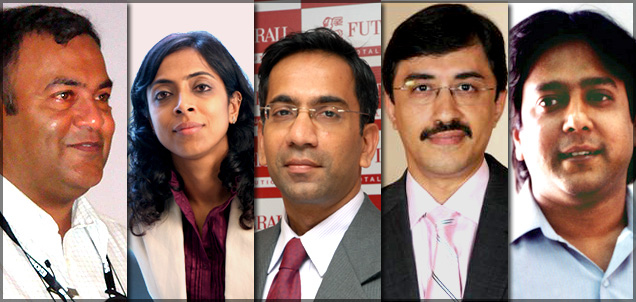
Tag: Sheran Mehra

  • DBS Bank extends partnership with Rising Pune Supergiant for IPL 2017

    By A Correspondent


    DBS Bank Limited (DBS) has announced its partnership with the Indian Premier League cricket team Rising Pune Supergiant for the second consecutive year. Under the arrangement, DBS Bank will be the Associate Sponsor of the Pune-based team which is led by Australian captain Steve Smith and coached by former New Zealand captain Stephen Fleming.


    Speaking on the occasion, Sheran Mehra, Group Strategic Marketing & Communications, DBS India said: “Rising Pune Supergiant is a newly revamped team this year and certainly the dark horse of the 10th edition of IPL. As a brand, we see real value in continuing to partner with Rising Pune Supergiant and being present on a platform like IPL helps us to resonate with customers and build affinity through unique and joyful experiences.”


    Said Raghu Iyer, CEO, Rising Pune Supergiant, “We are delighted to have DBS Bank on board this year too as an Associate Sponsor. Their support and trust in the franchise is extremely motivating as we hope to be a force in IPL 2017, similar to how DBS Bank has been a disrupting force in India’s digital banking journey.”


  • DBS Bank unveils multiple videos on YouTube

    By A Correspondent


    DBS has collaborated with José Covaco, an internet celebrity, for a series of 20 intriguing and funny videos as part of their campaign #LiveMoreBankLess. The video series, a first of its kind within the BFSI sector, is a part of DBS Bank’s association with the movie ‘Sachin: A Billion Dreams’ digital campaign.


    The videos, conceptualised by WATConsult have a witty take on popular topics like Bollywood, daily soaps, sports and technology.  Speaking on the campaign, Sheran Mehra, Head – Group Strategic Marketing and Corporate Communications, DBS Bank said, “Over the last couple of years, we have strived to break clutter and communicate our messages in an unconventional way. Content is the most trending word in marketing. Whilst everyone is speaking about content, the most important aspect is ‘being relevant’. Therefore being a part of a person’s day to day consumption of content is where the opportunity lies. Contextual pre-roll videos on trending topics infused with brand and product messaging has helped us present content in an interesting way. We are extremely pleased by the initial traction these videos have generated for us.”


    Added Rajiv Dingra, Founder and CEO, WATConsult: “With comedy being the most watched genre online, we conceptualized an exciting video series for this campaign with Jose. Contextually targeted media buying helped elevate the experience of these videos that infuse trending topics and banking features in a light-hearted manner.”


  • BTL Baatein: Sheran Mehra, DBS Bank… Powered by VISCOMM

    Armed with an experience of over 18 years, Sheran Mehra has spearheaded marketing & communications teams across sectors and has successfully launched and positioned global brands. Sheran Mehra is Head, Group Strategic Marketing & Communications at DBS Bank in India. She has been credited for leading several disruptive and clutter breaking award winning campaigns like Chilli Paneer, Portraits of Purpose (PoP) and Action against Cyber Thefts (ACT). We present to you the ‘BTL Baatein’ of the week which is powered by VISCOMM with Santosh Jangid speaking to Sheran Mehra about Below The Line (BTL) advertising for Banking sector and the balance between ATL (Above The Line) and BTL


    In the financial sector, banks specifically, how would you say have marketers adopted the concept of experiential marketing to its actual potential?

    Experiential marketing is not new in banking. It’s been on for a while be it for a credit cards or home loans you see a lot of these products using experiential marketing. Many banks have been doing it for a long time. In smaller pockets when you have to reach people then thats the best way you can build connect with the consumers. We call it the neighbourhood marketing or community marketing but now it has taken different forms and shapes. It has gone to malls, multiplexes and societies. It has been there for a long time but this is not something that is new.


    What do you use as a measure for judging the success of experiential marketing?

    It depends on what level you are doing. If you are actually amplifying it on digital as well because one leg is that you do an offline and bring it to online. Thats what many brands also do, online to offline or offline to online. So you initiate an idea offline and take it online or the other way round. So depending on what we are doing, then we measure it accordingly. It could be the number of leads, the conversions that you get from there, the interaction that you measure on digital, the engagement that you build, it also has an impact on the brand’s health course that you measure and the word of mouth will also happen. These are the measures that we look at and depending on what is the objective of the particular activity that we are doing.


    How important is BTL activity to your overall marketing plan? And overall in the banking sector?

    It is an integral part because a lot of times especially for the HNI segment and even for B2B spaces you need to build that connect with consumers. It may not happen in a very large scale but in smaller forms for HNI customer it is important to build that connect. To that extent it is an important part of the marketing mix. But depends on what level you are doing and what scale do you want to take it to.


    We have seen the recent Sachin campaign being very visible on the ground as well? Tell us more on that.

    It was a mix that we did as a part of our campaign. While there was something happening online, we had to have that surround on ground as well because if you see that surround on ground, it is again a reminder medium for people. You see it online and then you see it offline or vice versa. It helps in brand recall and in consideration set as well because when you’ve seen it you build familiarity with the brand. We did a couple of things when we launched the campaign. We were riding on IPL and we had signed up with Pune team. We did a lot of stuff on ground in Pune. We did go to malls, we did go to multiplexes and we leveraged Sachin there. The moment you see any activity around Sachin it helps pull the crowd. So you have something to start conversation with and the you build on it with the kind of activation that you are doing, be it at the stadium or mall, multiplexes or societies. The whole proposition is around, Live More, Bank Less. This is about how you live more and that is actually how we took it forward and embedded it in the activities that we were doing. If it is around shopping than you would have it in malls, when we were doing cricket then it was messaging around cricket.


    Can you give a broad idea of your spends pie of ATL v/s BTL?

    We look at a mix of 70-30 in the whole plan but really depends on at that point in time what is the activity that we are doing. So BTL is 70% and ATL is 30%


    Can you also specify the range of activities that you undertake as part of the below-the-line advertising and promotion?\

    We are present in 12 markets, four metros in Pune, Bangalore and other smaller cities. So for brands like us, it is very important to build connect in smaller cities and also in the cities we are present in. We had done a mix at key malls, multiplexes and because we had tied up with the Pune team we were actually looked at stadium. Wherever the team was travelling, if the team was travelling to Bangalore then we would do an event with them in Bangalore. So wherever we had our footprint, branches we did a BTL activity there.


    Do you prefer to do this through BTL agencies directly or via your existing creative/media agency?

    We mostly do it with an BTL agency, we do have support from creative agencies because this is something that happens almost every week. We go to corporates as well. Those guys are the best equipped to understand this space very well. So you have to find someone who are more nimble and who have the local city knowledge and also have that network.


    In terms of generating results esp from consumers and in B2B, do you find BTL a more sureshot avenue than ATL?

    In the B2B space, yes I would say that especially for SMEs where you have to build a stronger connect, then a one to one interaction helps than doing a one to many. While we will do one to many, it is also important that you follow up with a one on one. There is a limitation of what you can do one to one so it has to be a combination. In B2B the conversions take a little longer, a personal connect does help.


    While sales and salience are good indicators of its success, what are the attributes you look at to measure the success of a BTL campaign?

    Depends on what the activity is. If it is alone on ground then you will look at the number of people you’ve touched, then if you take it online or you take it offline. If you take it online it will be the number of interactions, responses that you get, the feedback that you get, the interactions, engagement that you get. On field it will be the number of walk-in and the conversions that happened.


    There are many organisations that often do new launches almost entirely on BTL aided with an outdoor and/or digital blitz? Your view on this. Given rising media costs, do you see BTL managing on its own, without ATL?

    All these mediums complement each other. So it’s not about you doing ATL and not doing BTL, you do digital and not do BTL and ATL. Sometimes the ATL works better, sometimes the BTL works better. For brands like us, which have limited network, BTL works brilliantly for us. At various times that you need ATL, then you will do that push. We are present in 12 cities, we have 1 branch per city so we don’t need a national publish but need to secure yourself in the cities that you are present, then BTL works well. But the moment you have a national footprint, like we did for DigiBank, while we are present in only 12 cities that product can be bought by anyone since its available on the app store. However for brands like us who have limited network, BTL and out of home works brilliantly but if you need more eyeballs, then ATL complements.


  • Sheran Mehra quits Dhanlaxmi, joins Mahindra Holidays

    By Shubhangi Mehta


    Sheran Mehra who was SVP & Head, Marketing, Dhanlaxmi Bank will now be Head-Marketing, Mahindra Holidays. Industry sources close to the development have confirmed the news to MxMIndia.


    Sheran Mehra is a marketing and advertising professional with strong brand management credentials. She began her career in 1998 in advertising with a stint at SSC& B, Lintas and Ogilvy, handling several large brands across categories including HLL’s Huggies, Kotex, ICICI Direct, Amex and Pfizer. At Ogilvy, she was part of the account management team that was rated as the best by Kimberly Clark Lever Ltd (KCLL) in the Asia Pacific region. She has also won the prestigious Effies award for Huggies.


    Later, she moved to HSBC, where she managed their brand portfolio in India. Mehra had launched the popular brand campaign ‘Different People, Different Views’ and was part of the team that won the Best Brand Activation Award at the HSBC Annual Asia Pacific Regional Awards.


    She moved to a bigger challenge of launching UK’s biggest bank in India – ‘Barclays’. As Head of Marketing at Barclays, Mehra was responsible for devising and implementing marketing and corporate communications strategy for the bank. True to Barclays essence of ‘inventive spirit’, the launch of brand ‘Barclays’ and its products and services, including the first ever mobile banking service – Hello Money – were consistently innovation driven.


  • From agency maverick to ‘khadoos’ client…


    By Shubhangi Mehta


    Switching jobs is an avenue for growth. But how does it work when the switch is drastic – such as going from an agency which creates a communication for a brand, to becoming a part of that brand? With increasing numbers of agency heads moving towards the client side, it looks like a trend.


    A mix of work and pleasure is what agency life promises an individual. With that also follows a pattern of sleepless nights, tight deadlines and the pressure to impress the client. What happens when one moves to the client side? How does life change, and do the switchers miss the agency days?


    We have an ample amount of such examples already in front of us. Rahul Kansal, Sunil Lulla, Ajay Kakar, Abraham Alapatt and Sheran Mehra are some such examples.


    Kamal Basu, Head of Marketing, Skoda, who was working with Saatchi & Saatchi is the most recent example of such a move.


    On his new role, Mr Basu said, “Moving to the client side is all about trying something new for me. I personally feel that advertising agency and brands work very closely and cannot do without each other hence the changeover is fairly easy as compared to moving from an agency into banking. For me right now, the most important thing is to have the mindset of a student eager to learn new aspects of the business.”


    Ajay Kakar, CMO – Financial Services, Aditya Birla Group who has worked in a creative agency environment as well, said, “The grass is always greener on the other side. Having been on both sides of the table, at the agency and client ends, I can now relate and empathize with this sentiment. Throughout my 14+ years experience at the agency side I shared the sentiment of every colleague, ie, ‘Hum kaam karte hain, while clients aish karte hain’. And during my more recent six-odd years at the client end, I can’t deny having heard or felt the sentiment, ‘Yeh agency waale kya jaane, what pressure we face’!”


    On the agency side, one is usually thought to be a lot more casual about ideation, creative, deliverables etc and the perspective is that it changes completely when one becomes a client.


    Rahul Kansal, CMO, Bennett, Coleman and Co, said, “I moved to the client’s end nine years ago. I had experienced agency life for approximately 20 years and was itching to implement my own ideas rather than just being an advisor. Though the two lives or work culture cannot be compared, yet as a client there is an ownership of the brand which leads to a personal connect.”


    Certainly an agency person enjoys agency life. But an invitation to partner a client is a thrilling mandate which might be quite enticing.


    Abraham Alapatt said, “After 10 years in the agency business, I was keen to grow into a more complete ‘marketing’ professional (as opposed to remaining a pure advertising man) and when I was offered my first head of Marketing role in 2005 with Reliance Mutual Fund, I took it most eagerly.”


    For those in the agency, the universe tends to revolve around advertising and agency imperatives. But as a as a marketer, one comes to understand that advertising and the agency are key cogs in a very large wheel.


    Sheran Mehra, Head of Marketing and Corporate Communications at Dhanlaxmi Bank, said, “I had planned my career in such a way that I wanted to move to the client side after working with an agency, since I wanted to play a larger part than just being an advisor for the brand. The agency setup is more informal, and more like a family. Not that here it isn’t like family, but it’s more formal, more of a corporate environment.”


    Alapatt further explains, “In terms of effort and pressure, being on the client side is as challenging and difficult, because the line of responsibility and accountability, especially when it comes to ROI, budget accountability etc, is a lot more definitive. If earlier at the agency, I spoke to my clients every morning and then planned my day’s priorities before catching up with my team and then breaking up jobs to meet expectations – now as a client I have to plan my day ahead (based on current business and leadership priorities) and then along with my team, chart out tasks/timelines/deliverables. I also have a lot more information available to help prepare an annual plan, review it regularly, and then make more meaningful contributions to overall marketing and business strategy then when I was on the agency side. Overall it is a lot more organised, planned, systematic, and accountable.”


    A client initiates a brief. And his job is not complete till long after the agency hands over its input and output.


    The most obvious change after moving to the client side is that one can now plan a day or a schedule and prioritize a lot more, and there are far fewer firefighting situations than when working with an agency. This is probably because ad agency teams (who work with multiple clients) need to constantly re-align their priorities in line with their clients’ changing needs.


    Mr Kakar further adds, “Today I feel like the ‘complete man’, because I now have a realistic perspective from both ends. Having been on the agency side I believe that I can be more sensitive to the agency’s needs and constraints. But on the other hand, I am more demanding on what I know is possible. But life in an agency is what I miss… the masti and the laughter in the corridors, the camaraderie, the training sessions, et al.


    “As a client we can say that one is responsible for one’s team delivery (besides your own KPIs). These are directly linked to the company’s overall performance targets and plans, and every idea, plan, activity, campaign needs to be very clearly defined and measurable as one is accountable for every rupee spent to the CEO and the board of directors.”


    Most of the people who have made a move have stuck to the client side, which seems to indicate that working as a client is more enthralling.


    “I am not sure I yet have an answer to which part I enjoy playing more. But I do believe that the agency and client are two sides of the same coin. A marketer’s success depends on his agency partner, just as an agency’s existence depends on its clients. And only when both of them come together in harmony, is there real value in the form of fun, fame and fortune, adds Mr Kakar.


    While Mr Alapatt muses, “Looking back, I am glad I made the shift for the growth, learning and opportunities it has afforded me. But I can confidently say that the first 10 years of grounding/experience that I enjoyed with ad agencies like Ogilvy and the exposure to multiple clients/categories has been invaluable to my growth, both personally and professionally.”


    The big picture seems to be that the transition from one side to another is a natural evolution and part of the growth process. And this part of the journey as a client can be said to mature one as a person and marketing professional.