Tag: Shekhar Gupta

  • Deliberate blindfolding on relentless rise of fascism?


    By Ranjona Banerji


    Ranjona BanerjiWhat does it mean when India’s most senior journalists are unable to distinguish between political finagling, however reprehensible, and the relentless rise of fascism?

    Cognitive dissonance?

    Loss of critical faculties?

    Deliberate blindfolding?

    Genuine belief that Fascism is what we need.

    All of the above?

    Shekhar Gupta’s amazing take on Mohammed Zubair’s arrest for exposing BJP hatespeak, for exposing fake news, for instance? What does one make of that? Gupta has a long and illustrious career in journalism. He has been defence correspondent for India Today magazine when it genuinely did set the “gold standard” of journalism. He has been editor of The Indian Express. He is now editor-owner of The Print, a digital news platform which hires several excellent journalists and does some good work.

    But Gupta is unable to accept what is happening around us.

    He goes back to some earlier time to find justification – as they all do.

    He comes up with fantastic arguments to justify Zubair’s detention: if Zubair had not exposed fake news then no one would have known about the lies and abuse and then the world would not have chastised India and then India would not have hit back at Zubair.

    Or maybe, this is not so fantastic after all.

    Maybe this is what Gupta and his ilk really believe.

    That the basic job of the journalist is to accept what is put before him or her, ask no questions and quietly go about the basic job of regurgitating government press releases.

    And whistleblowers must pay the price.

    As an aside: Gupta’s argument also suggests that no one watches the TV channel Times Now, where Sharma made her comments! Because no one would have got upset if Zubair and Alt News had not put the clips of Sharma’s abuse of the Prophet Mohammed on Twitter.

    Now here’s one to upset the righteous!

    Gupta’s argument also gets worse. He goes into some convoluted Hindu-Muslim thinking. If Zubair is upset with Sharma for her abuse of the Prophet then he should not be upset when Hindu priests call for genocide of Muslims. Or something strange like that.

    The upshot is that the Hindu in Gupta is upset by Zubair, the Muslim.

    Please don’t say that I’m being unfair.

    In all the wiggles and twists and turns, that’s what emerges.

    Which is just about what the current dispensation, the Hindutva brigade and the Hindu supremacists also believe. They are generally upset by Muslims, Christians, Dalits, women, liberals, thinkers, writers, artists, activists, NGOs and whoever else they come up with. Did not Gupta himself write something derogatory about “wine and cheese liberals”, to justify Prime Minister Narendra Modi’s comments about the “Khan Market gang”?

    I was going to add “journalists” to that list. But the universe of journalists who oppose the government and stand up for each other is shrinking by the second.

    One could also live in a balloon like respected columnist Tavleen Singh does. Singh also has a long and illustrious career in journalism. She did some amazing investigative work and was an inspiration to women journalists.

    Yet she is today, in her Indian Express columns, unable to accept or consider or admit, yes that’s the word I was looking for, admit, that the BJP-RSS led by Prime Minister Modi has unleashed militant Hindutva and all its horrors on India over the last eight years.

    She starts to say it, and then pulls back. She says it, and then blames some earlier Congress government. She goes off on a tangential rant about Sonia Gandhi.

    I have named these two as examples because I admired them once, and also because of their reach and fame.

    There are many others.

    Who disappoint when they dissemble.

    All of them have failed in the basic tenet:

    Ask questions to those in power.

    Now that’s a joke!


    Ranjona Banerji is a senior journalist and commentator. She writes on MxMIndia on Tuesdays and Fridays. Her views here are personal

     

  • Laadli Media Awards to be held in Mumbai on October 12

    By A Correspondent


    The annual South Asia Laadli Media & Advertising Awards for Gender Sensitivity 2017, spearheaded by Population First, will see 33 Awards being presented in different categories to media professionals who have displayed exemplary sensitivity in reporting on gender issues.


    The awards will be held on Friday, Oct 12, 2018 at 6.30pm in Mumbai. Said Dr AL Sharada, Director, Population First: “From a mere 100 entries in 2007 to more than 1700 entries in 2018, Laadli Media Awards have come a long way in acknowledging the media’s contribution in women empowerment and gender issues. The increasing volume of discussion in public domain on gender issues is an indication that we are witnessing the beginnings of change”.


    Veteran Indian journalist Shekhar Gupta will be Chief Guest this year.


    The highlight this year is the Laadli of the Century award which will be presented to Madam Coomi Wadia, the veteran and famous woman Choir Conductor of India. Also, the Woman behind the Screen Award will be posthumously awarded to Late Kalpana Lajmi for her contribution to Indian Cinema and for her courage to make meaningful women-oriented films. The Lifetime Achievement Award will be given to Dr. Prabha Atre, renowned Indian Classical Vocalist from Kirana Gharana for her contributions to the field of music. The award for Consistent Reporting on Films from a Gender Perspective would be presented to Shoma Chatterji. Famous Indian Singer Joi Barua will be performing at the event that celebrates a gender sensitive media.

  • Shekhar Gupta to deliver the AAAI-Subhas Ghosal Memorial Lecture 2015

    By A Correspondent


    The Advertising Agencies Association of India (AAAI) announced that the renowned journalist Shekhar Gupta will speak on ‘Changing Role of Media in Today’s India’ at the AAAI-Subhas Ghosal Memorial Lecture 2015 on 9th October at ITC Grand Central, Parel, Mumbai.


    This is the first of the newly created AAAI-Subhas Ghosal Memorial Lecture Series wherein notable personalities from the field of media and advertising will be invited to share their views on various topics of interest to the advertising, media and marketing fraternity.


    In the past, Subhas Ghosal Foundation had occasionally organized a Memorial Lecture on its own and past speakers included Dr. Prannoy Roy, Javed Akhtar, Dr Gurcharan Das, Shyam Benegal amongst others.


    Recently, the Foundation partnered with AAAI to create the AAAI-Subhas Ghosal Memorial Lecture. On the tie up, President of AAAI Dr Ambi M G Parameswaran said, “We at AAAI are constantly examining how the Association can play a more meaningful role in changing and shaping public opinion about advertising, media and marketing. The partnership with Subhas Ghosal Foundation gives us a great platform to invite thought leaders from various domains to share their perspectives on the changing discourse on media, advertising and society. Through this effort we will also remember one of the visionaries of Indian advertising.”


    Shekhar Gupta is chairperson of Mediascape. Mediascape is an exciting new start-up in Indian news media, and is currently under development. He is a prolific columnist, with his highly influential columns translated into Hindi, Telugu, Kannada, Gujarati and Marathi. He is a senior prime-time anchor at NDTV. Over the past two decades, Shekhar’s weekly column, National Interest, has been regarded as the sharpest, most perceptive analysis of current events as they unfold. His columns were recently collected in the bestselling book, Anticipating India. Currently, National Interest appears in Business Standard every Saturday. He also writes a fortnightly column for India’s leading Hindi newspaper, DainikBhaskar.  Shekhar hosts “Walk the Talk” on NDTV 24×7 every week. A collection of his news-making interviews will be published soon. He has now started a second weekly show in Hindi, “Chalet Chalte”, telecast on NDTV India.


  • Modi in the Media


    By Ranjona Banerji


    100 days is now a media mantra when it comes to anything at all. Should one go as far to say that this has something to do with the title of a book written by Gabriel Garcia Marquez? Probably not. So we have to assess 100 days of the Narendra Modi government at the Centre. Not three months (which would be around 90 days) and not 200 days but perhaps we’ll re-assess the government at 365 days and call it one year?

    I put “100 days Modi government” into Google and got stories headlined around that theme, in order, from IBNLive, DNA, Indian Express, LiveMint, India Today, Hindustan Times, NDTV, Zee News, Times of India and Economic Times. So much for originality…

    Having decided to play “follow the leader” on the 100 days theme however it has to be admitted that all media outlets did not take the same line. Some gushed, some focused on the misses, some talked about hits and misses both, some spoke to the Opposition.

    The biggest takeaway from all this seems to be that Modi has made his ministers accountable. According to a fascinating story carried in Niticentral, a rightwing website, this has been achieved by spying on his own ministers.  http://www.niticentral.com/2014/08/25/narendra-modi-enforces-tough-discipline-among-ministers-236467.html.

    So the100 days theme runs like this: Modi has cut through plenty of slack, he has improved systems by making sure his own ministers work, he has travelled to many countries, he has not spoken enough, he has not made good on several other promises, some of the benefits accrued to his government come from UPA policies, he has renamed certain existing schemes, he has made an Independence Day speech, he has fed fish in Japan, he has stopped his party people from talking too much, he has stopped his ministers from speaking almost completely, he has got rid of several governors, he has sidelined the old-timers in the BJP, he has made his right-hand man Amit Shah party president…

    How much of this is remarkable and how much is pedestrian perhaps lies in the eyes of the believer. As TV news tries to jump from issue to manufactured outrage and print sprints to keep pace, we see a fractured image. There is a larger-than-life Modi in carefully posed pictures in foreign lands, we have a Modi who promises security for women and toilets for all, we have a Modi who says everyone must have a bank account.

    We have a BJP which launches a campaign in Uttar Pradesh claiming that hordes of Muslim men are conspiring to make Hindu women fall in love with them to convert them to Islam and thus increase the number of Muslims in the nation. We have BJP-run state governments and the Union HRD ministry trying to manipulate history. We have local BJP units and BJP allies pushing for India as a “Hindu” state. We have the RSS jumping in and claiming credit for Modi’s victory.

    And we have a media which is unable to put all these refracted elements together. So Gaurav Sawant of Headlines Today and a reporter from CNN-IBN got to Japan and behaved like no one has ever been to Japan before. They make ridiculously banal comments about Japanese trains, they comment on cleanliness. They say: “Look at these Japanese people sitting silently on a train.” “When will India ever have such clean stations?”

    What is this? A delegation of idiots goes to Japan? Where is Mark Twain when you need him? The tenuous connection is the promise of a bullet train in India made by Modi. The obsequious brainlessness of some TV journalists and presumably their editors will be part of an ignominious chapter in the history of Indian journalism.

    P S:

    Meanwhile, scroll.in tells us that Shekhar Gupta is no longer vice-chairman of the India Today group. He is now an “advisor”. This is a mere two months after he took over, having ended a long stint at The Indian Express.

    What gives at India Today? Is it family matters or recalcitrant employees? MJ Akbar didn’t last too long, Siddharth Vardarajan didn’t get further than signing a contract and Gupta is out in two months…

    http://scroll.in/article/shekhar-guptas-return-to-india-today-group-ends-in-two-months-to-take-advisory-position/?id=677005


  • Shekhar Gupta to join India Today as Vice Chairman and Editor-in-Chief

    By A Correspondent


    It’s now official. Shekhar Gupta, who announced his exit from the Indian Express group with effect from June 15, returns to the India Today Group as Vice Chairman and Editor-in-Chief of all news, business publications and news TV, digital brands


    Announcing the appointment today, ITG Chairman Aroon Purie said: “This is a homecoming for Shekhar. He joined India Today in 1983 and was here for 12 eventful years during which he was an outstanding journalist. Shekhar is by far the best reporters’ editor in Indian journalism today. Because of his fierce independence and integrity, he attracts and inspires the finest talent, and I look forward to him bringing an entire ecosystem of excellence on editorial as well as corporate platforms.”


    Mr Gupta will also, in association with Mr Purie, launch a series of unique new editorial products that will showcase, 24 by 7, the finest in investigative reporting and interpretative commentary.


    “At a personal level, our friendship has grown as we have bounced ideas off each other about the rapid changes in our business,” said Mr Purie. “So Shekhar’s return is a moment of deep satisfaction and vindication of my belief, our shared belief, in the power of good journalism to help make sense of the noise rather than to add to it. Shekhar has also promised to liberate me from day-to-day operations so that I can work to guide the Group into a future of great promise, growth and excitement.”


    “It’s a privilege to have the opportunity,” said Mr Gupta, “to return to the India Today Group to work with Aroon and his fine teams and nurture the most trusted news brands. ITG, with its commitment to excellence and credibility, is best placed to meet the biggest challenge in our business today: to earn the trust and respect of our readers and viewers.”


    Mr Gupta will report to Mnr Purie and will be responsible for the editorial quality of all news and business brands. He will work closely with Ashish Bagga, Group CEO, and enable him to effectively grow readership and viewership profitably.


  • How ‘Fake Jhunjhunwala’ writer Aditya Magal impressed the ‘real’ Jhunjhunwala

    By Sruthijith KK


    On Tuesday, 26-year-old Aditya Magal nervously walked into the Nariman Point offices of billionaire investor Rakesh Jhunjhunwala. Most people who looked up from their terminals didn’t glance a second time, possibly concluding that the boy-faced youngster must be an internship-seeker at Rare Enterprises. But Jhunjhunwala himself took a keen interest in Magal, seating him in his private office, enquiring about his background, his family, his stylish haircut and his girlfriends.


    As word about the young visitor spread, Jhunjhunwala’s colleagues – hardnosed traders and analysts – streamed into his office to meet Magal. They shook hands with him. Everyone smiled. Some said they were fans. Magal’s stock was on the rise. The encounter, facilitated by ET, saw uproarious moments.


    For four-and-a-half years, unknown to everyone, Magal has been Fake Jhunjhunwala, the anonymous writer behind ‘The Secret Journal of Rakesh Jhunjhunwala’, a popular parody blog that tore into people in the news – politicians, actors, journalists, other stock market players, anyone – with biting sarcasm.


    He caricatured the identity of Jhunjhunwala, an opinionated ace stock picker with interesting quirks, into a loud, wildly entertaining character who spared none. His blog gets 30,000 unique visitors a month.


    Magal’s Twitter account is followed by more than 45,000. Even his online fan club has 2,500 followers on Twitter. Well-known people on Twitter, such as Gul Panag and Pritish Nandy, are amused by his writing.


    Not everyone’s amused though. Like some journalists, who were mercilessly taken down by the Fake Jhunjhunwala, who then called the real Jhunjhunwala to complain. “I told them I don’t write it,” the real Jhunjhunwala said. “Then they wanted to know who wrote it. Arrey, how do I know?”


    Kingfisher boss Vijay Mallya once told Jhunjhunwala that he liked to start his day by reading his tweets. “The first time I didn’t say anything. Then, another time he again said, ‘Rakeshbhai, you are very funny, what all you keep tweeting?’ Then I told him I don’t write it,” Jhunjhunwala said.


    In his column in The Indian Express, editor-in-chief Shekhar Gupta mistakenly attributed Fake Jhunjhunwala’s tweet to the real Jhunjhunwala, to illustrate the prejudices and dominance of the “upper caste, creamy layer of our society”. The newspaper later apologised.


    Magal carries clear disclaimers on both his Twitter bio and his blog. And as long as he does that, Jhunjhunwala says, he has no problems with what he writes. “Who am I? You have a right to express yourself. And you are saying you are not me. Then what is the problem?” In a country where people compete to take offence, Magal picked the right man to parody.


    As it happened, Magal didn’t pick Jhunjhunwala. The blog was started in 2008 by Mark Fidelman, an American who then worked in Indian real estate. Inspired by the success of the Fake Steve Jobs blog, Fidelman created the blog as a platform to vent his frustrations with India after his business here suffered. After three months, Fidelman told Magal, who he knew through a business association, about the blog, and asked him to take over. Magal says he started laughing.


    “I have been following Rakesh sir since the time I was 20 or so. I was following a number of investors and gradually, what Rakesh sir said started making the most sense for me.” Magal dabbled in the stock markets and like countless retail investors before him, was taken in by Jhunjhunwala’s knowledge and his uncanny ability to make the right bets.


    If he was a follower before, writing the blog for four years turned Magal into something of a devotee. He has read and watched nearly every interview the investor has given. He knows everything there is to know about Jhunjhunwala, from the year his sister got married to the architect of his Lonavala home. From the brands of cigarettes and whiskeys he prefers to the Mercedes S Class he drives. “Why, I also have a Bentley,” Jhunjhunwala helped along, amused by Magal’s grasp of J-trivia. But Magal knows not just trivia about Jhunjhunwala. He also knows his investment portfolio closely.


    But Magal’s natural funny side is more often on display. At lunch with this correspondent, he recited a poem: “Jhunjhunwala goes to Lonavala to live in a house by Killawala.” Nitin Killawala is the architect. In Jhunjhunwala’s office, as his colleagues gathered around to meet the famous blogger, Magal parodied Jhunjhunwala’s TV appearances. His habit of talking up the India story, the peculiar way in which he says ‘humongous’. Everyone laughed.


    When Jhunjhunwala lit another cigarette, Magal told him that he should cut down on his smoking. “What is this sir? Earlier in interviews you used to say you smoked 10-15 cigarettes. Now you say 20-25. And you have stopped doing yoga.” Jhunjhunwala demonstrated some yoga-style breathing for him.


    The atmosphere was warm and convivial. When Magal sought permission to click some pictures of his office, Jhunjhunwala readily agreed. “Please, please, do. Click whatever you want Aditya, we are simple people.”


    Jhunjhunwala found Magal so funny that he saved his number as ‘Aditya Joker’ on his phone. “You are a natural joker. You have a talent for humour,” he said.


    Niraj Dalal, who works with Jhunjhunwala, said he was relieved to meet Magal. “People used to suspect it’s me!” Jhunjhunwala said he also thought the writer was someone who knew him closely or worked with him. “There were things only seven or eight of us would know and that would be on the blog. That used to unnerve us,” Dalal said.


    Jhunjhunwala asked Magal what he wanted to do in life. “Write books and help people. The moment I have a plot ready in my head, I’ll drop everything and write a book,” he said.


    Jhunjhunwala wished him the best. Magal invited Jhunjhunwala to visit his Bangalore home sometime. “Surely. Will you invite me for your wedding?” Certainly, Magal said. “Will you come in a helicopter, sir?”


    Magal told Jhunjhunwala that he would love to write his autobiography if he ever considered writing one. The investor was hesitant. “Why should we self-glorify? Let’s see when it comes to that.”


    Magal gifted him two Ganesha idols, which Jhunjhunwala is known to collect. He asked a colleague to place the brass idol alongside dozens of idols on a shelf in his office. The other one, a sandalwood idol, he placed right in front of him, along the five monitors on his desk that he uses to watch the movements of his empire of wealth.


    Before Magal left, Jhunjhunwala asked him if there was anything he could do to help. “I’d be foolish not to ask you for investment advice. But then I’m not a pretty girl and you are not tipsy,” Magal said, referring to a wisecrack Jhunjhunwala made during an interview regarding his rule about stock tips. Jhunjhunwala made an exception, and gave him a stock tip. “Buy.”


    As he rode the elevator down and got into the waiting cab, Magal was overjoyed. When he walked in, he didn’t know what to expect. “I can now cross off one item on my bucket list,” he said.


    Source: The Economic Times
    Copyright © 2012, Bennett, Coleman & Co. Ltd. All Rights Reserved


  • Apology + Rs 500cr: Is Indian Express right in sending Open a legal notice?


    By Pradyuman Maheshwari and Shruti Pushkarna


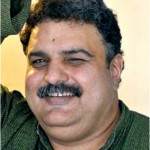
    Shekhar Gupta

    It was the most read story on MxMIndia yesterday. As the news of the legal notice served by a lawyer representing Indian Express, Shekhar Gupta and three others filtered in, there were heated discussions in newsrooms on whether the Express and its legal eagles were right in serving a legal notice to Vinod Mehta, Open and its senior staffers.


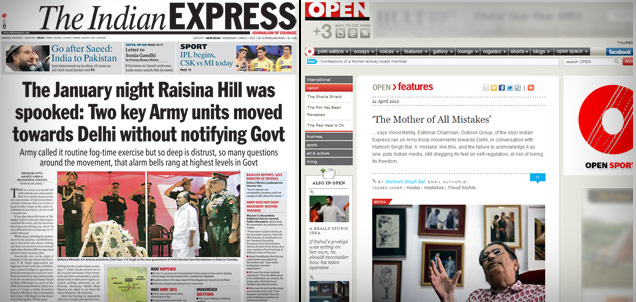
    First some background. On April 4, The Indian Express carried a story by editor-in-chief Shekhar Gupta with Ritu Sarin and Pranab Dhal Samanta on two key army units moving towards New Delhi without informing the government. Ajmer Singh contributed to the report.


    Vital Links
    The Indian Express report (April 4, epaper)
    The Open interview (April 21)
    The ‘notice’ (May 15, note: source unverified and unknown)

    There was outrage and denials issued by all and sundry in the government and armed forces. However, save the outbursts, it wasn’t proven that the Express story was incorrect.


    Meanwhile, ever since the report appeared, The Indian Express – while still respected as a no-nonsense, credible newspaper – was the butt of ridicule by commentators and on social networks. Those in print may have been a lot more gentle, but a few television discussions were indeed scathing.


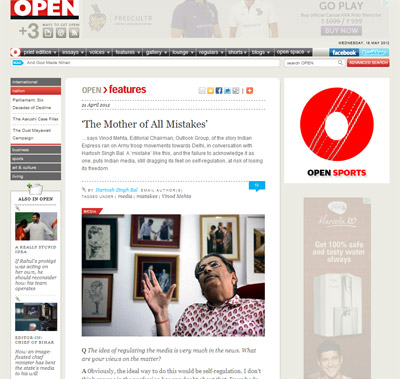
    And then came this interview with Outlook’s editorial adviser (and former editor-in-chief) Vinod Mehta in newsmag Open on the issue. The headline of the interview said it all: The Mother of All Mistakes (issue dated April 21, 2012). In his inimitable style, Mr Mehta suggested that Mr Gupta was taken in by a story that was planted on the Express.


    While a magazine has a limited readership, since the article was freely available on the internet and it carried a very pointed allegation by one high profile editor on another, the interview viralled in the media fraternity a great deal.


    This legal notice by a lawyer representing The Indian Express and the four writers of the story – Shekhar Gupta, Ritu Sarin, Pranab Dhal Samanta and Ajmer Singh – came less than a month of the publication of the interview.


    One would’ve let the notice be, but its contents make for interesting reading. So while Mr Mehta may be suggesting in the interview (and he also said  amidst some cheer at the Press Club Bombay awards recently) that he quit the Independent owning moral responsibility of an incorrect story, the notice points out that in his memoirs (Lucknow Boy), he projects that he was compelled to do so. “Till now, I am unsure why I had to quit.”


    The notice asks for an apology and pulling the story off Open’s internet edition openthemagazine.com. At the time of filing this report, Open hasn’t done either and two senior staffers told MxMIndia that the magazine does not intend to do either.


    The notice also demands damages of Rs 100 crore each to the lawyer’s clients. That’s five of them – the Indian Express, Shekhar Gupta, Ritu Sarin, Pranab Dhal Samanta and Ajmer Singh. The Rs 500 crore damages have to be paid regardless of the apology.


    MxMIndia asked a few senior editors for their views on the issue. While many of them did not want to be drawn into the controversy, there were a few who told us that they didn’t know enough of the matter to be able to comment.


    Our questions were: Is the media too sensitive to criticism? Just as the Express, Shekhar Gupta & Co sent a legal notice to Open and Vinod Mehta, can governments, politicians, businesspersons and even film-makers who are critiqued by the media also send notices and ask for crores as damages?


    Here are reactions from four veteran commentators:

    Dileep Padgaonkar

    Dileep Padgaonkar, former editor-in-chief, The Times of India:

    Of course it is… the media is sensitive to criticism. The media thinks it is fit to criticise everyone but the minute everyone points a finger at the media, the media bristles. I think media should take criticism directed against it in its stride, this is part and parcel of democracy. And I don’t think one should be too prickly in these matters unless of course there is a clear case of personal attack, defamation… in that case legal course is available but otherwise one should ignore these things and go on.


    As it is, the censorship of cartoons was a dismal warning of the sensitivity of the political establishment. Now if media is going to go at another section of media, there is going to be a free-for-all and the big casualty out here would be good, decent, honest journalism.


    Sevanti Ninan

    Sevanti Ninan, editor, The Hoot, columnist and media-watcher:

    Criticism is not an accurate word for what Vinod Mehta called The Indian Express story. He essentially said it was a planted story and it was a huge mistake to carry it. Considering that the first byline on the story was that of the chief editor, that is quite statement to make. You are saying the chief editor and his colleague are susceptible to plants, thereby seriously questioning their credibility. So I guess the Express could hardly ignore it. IE did come in for a lot of criticism on the import of the story and the display given, including a critical editorial in the Hindu but nothing quite as damning as Mehta’s statements.


    This is the 3rd 100 crore notice involving the media over the past year, in any case. So it is becoming more common.


    Paranjoy Guha Thakurta

    Paranjoy Guha Thakurta, independent journalist and commentator:

    I think The Indian Express has over reacted. I think it’s gone a little over the top. They may disagree with what Vinod Mehta has said… my personal view is that it’s a point of view which obviously the Express doesn’t agree with but I don’t think that what Mr Mehta has said can be construed to be criminally defamatory. And the kind of damages sought are excessive. They are as excessive as the damages that Justice Sawant has sought from Times Now and what Times Now has sought from TheHoot. I mean these are ridiculous sums of money.


    I think we’ve become an extremely intolerant society. I think people talk about freedom of expression being a fundamental right but I don’t think people are really believing in Article 19(1)A of the Constitution of India. Like so many sections of Indian society, including our political leadership which is very upset about these political cartoons that have appeared in textbooks, I think even sections of the media are becoming extremely intolerant of criticism. If you are in a democracy, you have to give the right to everybody to disagree with you.


    Sucheta Dalal

    Sucheta Dalal, senior journalist and commentator, consulting editor, Moneylife:

    Well, not the media, but The Indian Express is too sensitive to critcism… It’s an interesting thing, it’s the first time it is happening and we should see where this goes, whether they follow through by actually filing a case. It’s the first time that somebody in the media is suing another person in the media, we need to look at how it goes… as I said everybody else is sensitive, everybody else does send defamation notices but I don’t know how many of those notices actually get converted into legal action. So we have to wait and watch.


    Otherwise the notice is also a way of making a point, it’s a way of putting pressure. It’s not just Vinod Mehta, if he looks at what was said about that story on the social media, then there are a lot more people that they would probably need to sue. So maybe he is making a case out of Vinod Mehta and Open magazine, we need to see whether they follow through. I would say that the test is not in the legal notice, the test is in seeing whether they are actually going to follow through, stand in court and argue it out.


  • More Mediaah!: Indian Express, Shekhar Gupta & Co send notice to Open, Vinod Mehta. Demand Rs 500 cr as damages

    By Pradyuman Maheshwari


    The Indian Express group and four of its senior journalists (including editor-in-chief Shekhar Gupta) have sent a legal notice to Open magazine, its editor and other professionals. And above all to Vinod Mehta. The reason: in an interview to Open, Outlook’s Vinod Mehta rubbished the Express expose of a coup-like situation in the Capital.


    The Express is also upset with the publication of reactions that the interview elicited.


    I strongly recommend a read of the legal notice (currently posted in a blog that seems to have been created for the purpose — http://nobodyisusingthedword.wordpress.com/2012/05/15/indian-express- shekhar-gupta-threatens-to-sue-vinod-mehta-hartosh-singh-bal-open-magazine-c-repor/ .  Please don’t miss Pages 6 and 7, where the notice highlights a contradiction in Mehta’s statement on how he quit The Independent in the interview (as also made in a speech at the Press Club Bombay awards recently) and his book Lucknow Boy.


    The lawyer has asked for an apology, removal of the interview from the site and Rs 100 crore each for her clients. Note the money must be remitted even after the publication of the apology.

     

    Mediaah! view: I think the Express should’ve just let the interview be (link: http://www.openthemagazine.com/ article/nation/the-mother-of-all-mistakes). I don’t think the interview is damning the reputation of the Express or its editor-in-chief. And even if there is a belief that Vinod Mehta ought not to have said what he did and Open shouldn’t have published it especially since the coup story hasn’t been proven to be wrong, initiating a legal procedure is perhaps a bit much.


    Moreover, though it has established itself as an independent, gutsy publication, Open isn’t mass-circulated as, say, The Times of India. I must confess that even though I had been told about the interview, I read it only yesterday, after I heard of the notice. There is sure to be a fair bit of buzz in the social networks.


    I spoke to a senior member of the Open team who said the company lawyer was planning to respond to the notice and the magazine has no plans to pull the story off the Web.


    Final words: It’s imperative that while the media subjects everyone to criticism, it must be willing to take the heat whenever it’s subjected to it. Now, let’s hope Mediaah! doesn’t get a legal notice for writing all of this 🙂


    Buzz me if you have a story to tell. Confidentiality assured. There are various ways you can reach me:

    pradyumanm[at]mxmindia.com, BBM 23050B5D, Gtalk pradyumanm@gmail.com, Twitter @pmahesh and of course the mobile: 98338 76278.


    Disclaimer: Although he is CEO and Editor-in-Chief of this site, Pradyuman Maheshwari’s views in Mediaah! are not necessarily those of the rest of the team and MxMIndia.com.


  • Glory Be, Shekhar Gupta dared to criticise the Indian Army!

    By Ranjona Banerji


    The one way to annoy the journalistic community (I’m being generous and including TV-wallahs in this) is to write something uncomplimentary about the armed forces. As Shekhar Gupta, editor-in-chief of Indian Express, has discovered, ever since he wrote a front page story about inexplicable troop movements towards New Delhi on January 16.


    The story suggested that some in the government were worried about the army chief’s intentions especially since that was the day that VK Singh moved the Supreme Court over his age issue. There were questions raised about why the two divisions were abruptly sent back on ministry of defence instructions and why several protocols about moving towards the national capital had not been followed.


    Outrage and condemnation burst out across the media. What, the Indian armed forces, the most glorious institution in the world had been accused of maybe, perhaps attempting a coup or at best acting in a suspicious manner or at the least not following the rules? Impossible. For 7 lakh years (I’m using the BJP’s Saraswati civilisation timeline here because jingoism always reminds me of the right wing) the Indian armed forces have been perfect, never set a foot wrong.


    And now, to be accused of this, blah blah blah. I wonder what today’s media would have done to Emperor Ashoka when he decided to abjure violence after the Kalinga war. Can you imagine Ashoka being raked over the coals by Arnab Goswami, for daring to suggest that there had been too much bloodshed thanks to his soldiers?


    Anyway, Gupta has now become the whipping boy of the media. In Mumbai, there’s a term for this media anger: “khunnas”. Hmmm, that is, a teeny bit of jealousy that no one else had interpreted the facts quite like that. But there’s also all that patriotic anger – when it comes to the armed forces, objectivity flies out the window. Meanwhile gossip is flying around – Gupta is a Congress stooge, he is not in the VK Singh camp, he wanted to make hay out of an old story, he never thought it would boomerang like this and so on.


    Goswami on Times Now told us over and over again that some journalists with an “over-active imagination” had concocted this story. (Something TV can never be accused of possessing, oh no!) Several retired generals with large moustaches bristled with anger (how come we have so many of them, retired generals I mean, not moustaches?).


    Newspapers wrote editorials against the Express story. Some pointed out that half the information had first appeared on rediff.com. Others said that the conclusions were a bit far-fetched. Not a single journalist bothered to investigate the two questions raised: one, if the troop movement was innocent, why did the divisions turn back and two, why were the protocols not followed and tangentially, is VK Singh as angelic as he is being made out to be?


    Whatever it is, Gupta has learned one lesson. You can question God, you can tear down old and revered institutions and you can gossip about anyone you please but you cannot, cannot, cannot ever say anything negative about the Indian armed forces. Be warned, because otherwise, the wrath of Indian TV will fall on your head. Add all the anchors together and that’s quite a heavy burden to bear.


  • [MJR] The night of January 16 strikes again!

    By Ranjona Banerji


    It seems to be a strange rule these days that no matter what happens, the Indian army has to upstage it in the news stakes. The Indian Express, with its story about army deployments towards New Delhi which “spooked’ the Government of India stole the focus away from the US’s $10 million bounty on Pakistan’s Hafiz Saeed.


    The newspaper has truly put the cat among the pigeons with its dramatically written story which implies that even if there wasn’t a coup attempt by the army, the government was definitely shaken.


    The timing of the movements of these two divisions, one airborne, towards the capital was also seen as suspect – January 16, the day the army chief filed his case in the Supreme Court over his age issue. According to the Express report, standard operating procedures about troop movements had not been followed.


    TV debates obviously went ballistic. But for all the bombast, the participants were skewed in favour of the army with lots of moustachioed gents pointed out how such a thing could never happen. Other participants – usually journalists – said that the Express story was not a surprise and that a website had come out with the facts in January itself. I did not manage to see Shekhar Gupta, editor of Indian Express on TV, but he was quoted by one of the channels as saying that once they got the story they could not suppress it from the people.


    This is from the Express website: “The Indian Express’ report ‘The January night Raisina Hill was spooked: Two key Army units moved towards Delhi without notifying Govt’ has, as expected, prompted widespread reaction.


    “The report is a meticulous reconstruction and a very sober interpretation of the movement of two key Army units towards New Delhi on the night of January 16-17. Investigated over six weeks and written by Editor-in-Chief Shekhar Gupta; Chief of Investigative Bureau Ritu Sarin and Deputy Editor and Chief of the National Bureau Pranab Dhal Samanta (with help from Assistant Editor in the Investigative Bureau Ajmer Singh), the report draws on highly credible sources.”


    “They have chosen to be anonymous and the newspaper is committed to protecting their identity. The Indian Express’ sent a detailed questionnaire to the Army and the Ministry of Defence and accurately reported their responses in the report. These responses were reiterated by them on Wednesday.” The note ends with: “And in the tradition of its commitment to journalism of courage and the readers’ right to know, it will continue its investigation into the events of January 16-17 and the questions these raise.”


    TV debates are often circumscribed by the need for bluster and “patriotism” of the sort that is worn on your sleeve is very common. Not a single panellist on Wednesday night could offer an explanation or even consider why a reputed newspaper would carry such a story without any proof. It is easy to understand that print journalists would be jealous of a scoop – though at a senior level you are expected to rise above that.


    It is also possible that “patriotism” even in the media means you have to draw a line somewhere about how much you can embarrass important institutions.


    I wonder. Jingoism which masquerades as love for your country is dangerous in any form. The job of the media is to ask uncomfortable questions. I find it very interesting that so many in the media are unable to ask the armed forces difficult questions.


    Members of governments and political parties are quizzed every night on TV. Why should anyone else be exempt?


    It seems apparent that there is a deep division between the army and the government. It is equally apparent that there are schisms within the army itself and different camps are batting for different generals. All this needs to be examined and exposed.


    There can be little doubt that the Indian Express has pushed a few boundaries and a few buttons here. TV is incapable of showing the depth to deal with this story. Let’s see how far print can take it.


  • [MxM Journalism Review] Why must TV news depend on print eds for analyses

    By Ranjona Banerji


    Where would TV journalists be without their colleagues in print? (I thought I’d say cousins but then that would make me related to TVwallahs too so…) Every time there’s some big issue to discuss (which in TV land is every day), out come a whole array of print seniors (and sometimes not so seniors).


    During the election coverage on Tuesday we had Shekhar Gupta, Vinod Mehta, Neerja Chowdhury, Manini Chatterjee, Siddharth Vardarajan, Vandita Mishra, Hartosh Singh Bal… and many more worthies.


    I’m thrilled for my friends and colleagues in print who I see on TV all the while at other times – Ayaz Memon, Sidharth Bhatia, Anil Dharker, Arati Jerath… At any time you are likely to see Dileep Padgaonkar, Bachi Karkaria, Tavleen Singh giving their considered opinion on this and that. The list is endless and I apologise to anyone I have left out. I don’t mean it. But it makes me wonder about our esteemed TV anchors and editors. Do they trust their own judgement so little that they cannot carry a programme by themselves? Have they not managed to hone their opinion creating abilities? And if that’s true, what have they been doing for all these years in TV?


    TV wallahs often feel that print journalists are too critical of them. But when they do nothing to change those perceptions and instead feed them by calling print journalists as experts all the while? How often do you see print journalists on BBC and CNN?
    My advice to TV wallahs is: have a little faith in yourselves.


    Having said that, I then remember the columns which Rajdeep Sardesai, Sagorika Ghosh and Barkha Dutt write for Hindustan Times (since few other print publications condescend to give them a platform and rightly so) and I really wonder at myself!


  • Ramnath Goenka Awards presented, heated debate on journalists’ intellect ensues

    By Akash Raha


    The Ramnath Goenka Memorial Foundation hosted The Ramnath Goenka Excellence in Journalism Awards, one of the most prestigious awards that acknowledge excellence in all forms of journalism, print and broadcast, in all languages on January 16 in New Delhi.


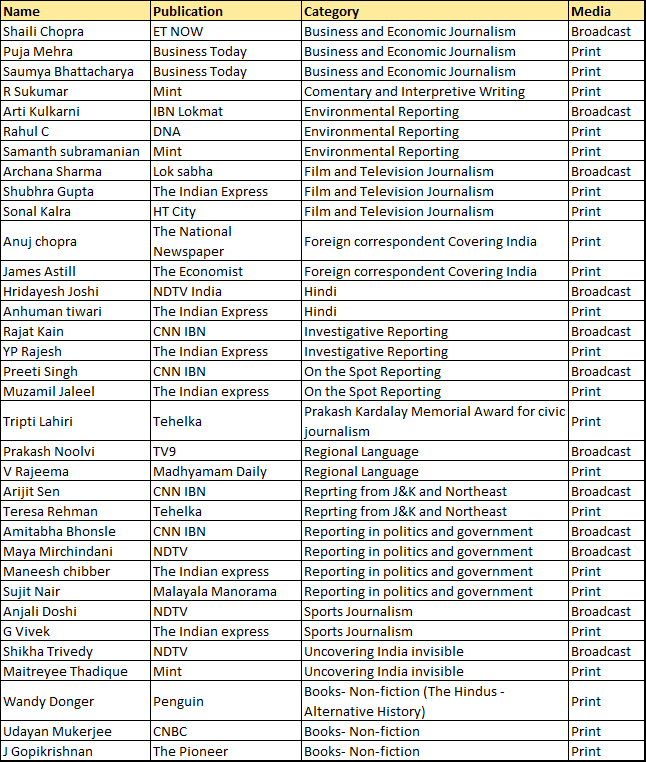
    The awardees for the year 2012 are as follows.


    Like every year, the award ceremony was followed by a panel discussion. This year, the subject based on the Press Council of India chairman Justice Markandey Katju’s observation: “The majority of media people are of poor intellectual level.”


    Justice Markandey Katju was present during the award ceremony and the discussion that followed. There were several politicians, journalists and academicians present, amongst the audience and the panel, who spoke on the topic and ensured that the discussion and debate was at a fever pitch with their war of words.


    Speaking on the issue, panelist Mr Digvijay Singh of Congress party said that there are black sheep in all works of life and the same holds true for the media as well, but to generalize and say that all of them have low intellectual level would be wrong. However, fellow politician and panel member Mr Sharad Yadav of JDU said that times have changed and with that the standards of journalism have fallen too, illustrating his argument by pointing towards the TV channels, who “invest too much in irrelevant news”. He also pointed at the issue of paid news which has tarnished the image of journalists and media houses alike. He said that the proliferation of media has caused the standards of news to fall.


    Furthermore, he said: “the media industry has to be accountable… If the Prime Minister of India is accountable for his deeds, so shall be the media.”


    Some panel members also raised the question whether it was important for journalists to be intellectually strong. According to some, journalism is of two kinds, hard news and opinion – and in the former, one does not need intellect, only moral integrity. LK Advani, who was the part of the audience said: “I don’t think that journalism has failed the democracy. However, there have been a few shortcomings off late. Yet, I will not say that they have low intellectual levels.”


    Digvijay Singh stated that intellect is required in the whole profession of journalism, be it opinion or reporting. However, he added that with the kind of expansion media has seen lately, it is possible that the training of young and budding journalists remains incomplete. He also advocated for accountability and self regulation in media.


    Union HRD minister Kapil Sibal agreed with Sibal: “Putting out information as soon as possible has become the need of the hour for those in visual media. At such times, news which needs to be evaluated is often not evaluated and is broadcasted without any checks. It is not the fault of the journalist, but that of the medium itself.”


    Pratap Bhanu Mehta, an academician, and a member of the panel said that when a state dictates terms as to what is to be broadcasted or not, it creates insecurity. He made his point when he censured Katju’s stand on Dev Anand’s demise, when he said that the news should not have been on the front page of all newspapers.


    Senior journalist and columnist Tavleen Singh engaged in a war of words with Katju when she questioned the credentials of judiciary. Katju evaded the question by asking her to “please confine yourself to the topic at hand… there will be other days for discussion on the judiciary,” but she persisted with her attacks on Katju and his authoritarian comments on media. She went on to say that PCI has to be more active in the future to regulate media, as judiciary is too incompetent to do so.


    Senior journalist Nalini Singh thought it important that journalists and media houses, especially the visual media, should introspect as to what kind of news stories they are doing. She said that usually only 5-6 big stories are followed on and so many news stories are ignored every day. Udayan Mukherjee of CNBC agreed: “A lot of our media are not up to the mark… and I don’t feel resentful of the idea that there is something wrong with the media.”


    When Shekhar Gupta of The Indian Express group was asked how he feels about visual media and the pace at which news is disseminated today he said: “Everybody with a camera is not a journalist, he is only a transmitter of raw unchecked data.” Editorial intimidation is very important and one has to ensure that the news published is factual, in public interest and of public interest.”


    The panel discussion was brought to an end by Mr Katju where he congratulated all the awardees.