Tag: Shashi Tharoor

  • ABP Network to host first-ever summit

    By Our Staff


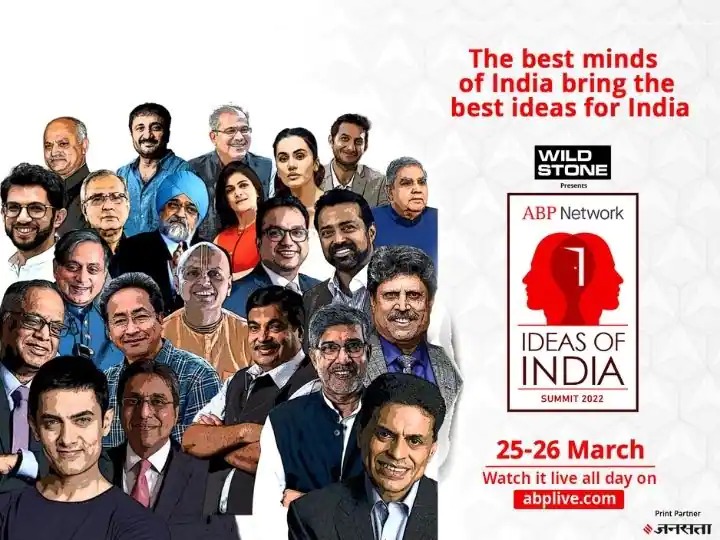
    ABP Network  is hosting its first-ever summit ‘Ideas of India’, bringing together the brightest brains from diverse sectors to discuss India’s 75-year journey, its present status, and the way ahead. The two-day event will take place at the Grand Hyatt, Mumbai, today and tomorrow (March 25-)26.


    The speakers include Nobel Peace Laureate Kailash Satyarthi, Union Minister Nitin Gadkari, Shiv Sena leader and Maharashtra Cabinet Minister Aaditya Thackeray, Congress MP Shashi Tharoor and West Bengal Governor Jagdeep Dhankhar among others.


    Said Avinash Pandey, ABP Network CEO: “The inaugural edition of ABP Network’s Ideas of India is going to be a momentous event. This is not merely an event of importance for our network but will be the most elaborate and diverse platform to discuss India’s journey of 75 years as an independent nation, our present challenges, and future opportunities as we grow as a nation in the changing world order. I am personally eager to know the ideas of the brightest and most successful Indians of our age across sectors. This is another path-finding initiative in a series of steps where we have revolutionised the coverage of news and current affairs to capture the thoughts and imagination of our beloved viewers. This forum will be developed into a significant annual event where we will explore India’s ideas and what it means to be an Indian in various aspects of life.”


  • Das ka Dum with Dr Bhaskar Das: If you and Shashi Tharoor are in the same room, who would use tougher words with each other?

    Bhaskar Das

    We hope you had a good Diwali weekend. We are back with a new (short) week of questions for Dr Bhaskar Das as part of the Das ka Dum series. Our response to his response today: “Holy Cow, whattan answer!”

     If you wish to access the archives, please go to the Das Ka Dum tab on the website’s top navigation bar.


    Q. Wonder if you and Shashi Tharoor in the same room, who would use tougher words with each other? My view is that on words, he may beat you, but on the turn of phrase, you can win hands down. Comment


    A. You are extra generous. I am no match for his flowery style of articulation. Needless to say. I am simultaneously  flummoxed and embarrassed by your epithet. Sometime no comment is the best comment. At least I can’t be sued.

  • Ranjona Banerji: Did Sunanda Pushkar story merit top billing?

    By Ranjona Banerji


    The last few days saw the news cycle consumed by Sunanda Pushkar, Shashi Tharoor and Mehr Taraar with allegations of affairs and unhappiness. There was a tragic culmination to the story with the suspected suicide of Pushkar. But how important was this story, that newspapers and news channels gave it top billing?


    Sunanda Pushkar was the wife of junior minister Shashi Tharoor. The world (other than the cocktail circuit of Dubai and perhaps New Delhi) knew of her because of the controversy of the Kochi IPL team, where both she and Tharoor had some involvement. It was IPL commissioner Lalit Modi who revealed details of the Kochi team through his Twitter account. Tharoor had to resign as minister, Pushkar removed herself from the Kochi team and the rest of us became familiar with the term “sweat equity”. Tharoor married Pushkar and then both became the darlings of the Delhi cocktail party crowd.


    So far, there is no indication of how important either Tharoor or Pushkar are to the national narrative. When Pushkar started tweeting last week from her husband’s phenomenally popular Twitter account, it was all about how some Pakistani female journalist was stalking her husband. The journalist in question, Taraar, denied allegations, Tharoor said his account had been hacked, Pushkar said it wasn’t hacked and that she had been tweeting. She made elliptical allusions to an affair and then to how she had been made the scapegoat in the IPL controversy. All this was played out on social media and to a salacious mainstream media.


    Still, nothing of national interest is visible here except a gossipy prying into other people’s lives. It is true that Pushkar made it all public but that has no bearing on the importance of the material. Then Pushkar is found dead by her husband in a Delhi hotel room and that ends all other news. Apparently, top news anchors even stopped the nightly debates when they got the news on the cellphones.


    When Princess Diana died in a car crash in Paris in 1997, The New York Times famously decided not to make it the top story of the day. By any reckoning, Diana was more famous than Pushkar. As obituaries of the poor woman appeared in newspapers across India, most people had nothing more to say than Pushkar was warm, vivacious, a good cook and lit up parties when she entered them. Others mentioned that she was a bit of a social climber and old school friends popped up to tell us that she was a shy, withdrawn girl who wanted to shrug off her small town origins.


    The significance of the front-page leads and top billing on news channels is still unclear. The Delhi government with India’s new hope Arvind Kejriwal is involved in all kinds of bizarre tactics. Rahul Gandhi and the Congress are making valiant efforts to get back into the conversation. Narendra Modi is smarting from Kejriwal’s popularity while trying to save the country. And enough other sundry horrors happening all over the country and world to keep journalists occupied. So why did this story get so much importance?


    Here’s a theory: Delhi’s journalists knew Pushkar and Tharoor socially and therefore felt a personal loss with her death. They also felt some guilt at the way the affair allegations were played out in the media. The decision to make Pushkar top news was therefore a personal one, where the reader or viewer was forgotten. There is no justification at all for making this story more important than any other, even with the understanding that every such decision is a judgment call that can be contested.


    Even with Shashi Tharoor being a minister, this story was overplayed. The only takeaway is that everybody in India who takes part in the English media knows more about Sunanda Pushkar in her death than before. C’est la vie?


  • Vijay Mukhi: Are Narendra Modi’s Twitter followers fake? And what about Shashi Tharoor’s?

    By Vijay Mukhi


    The best job on the planet is being a columnist on Politics and Technology, because no one in this space  talks sense or hard facts and numbers. Breaking news everyday is about Narendra Modi’s Twitter followers being fake, but no one is offering any credible evidence on either side of the debate, fake or real. So, before I throw my hat in the ring and get egg all over me (which is all in days work for me) let me tell you that I believe in the maxim Trust but Verify so before you cast the first stone, please download all the data that I have gathered from Twitter from my website www.vijaymukhis.com. We are also comparing only Narendra Modi and Shashi Tharoor as the other politicians are pygmies on Twitter compared to these two giants.


    Modi, today,  has 19,34,170 followers on Twitter compared to Tharoor who has  18,42,046,  a lead of just under a lakh. Modi and Tharoor share  447,920 followers in common which is around 25% of their followers , Modi and Kiran Bedi share 408,401 followers and Modi also shares 2,98,005 followers with Arvind Kejriwal. Thus, we can safely conclude that there are about 4 lakh people on Twitter who just like following politicians from India — why, we have no answer. This leaves Modi with a maximum of 15 lakh fake followers as fake followers would not share politicians from different groupings.


    How do we define a fake follower? Simple answer, someone who does not tweet. Modi has 6,77,296 followers who have never ever tweeted. Now imagine, why would someone join Twitter and not tweet at all! This is very extremely damning and conclusive evidence, we need no judge or jury to convict that these have to be fake followers. Thus if 35% of Modi followers have to be fake, what more evidence do you need! But, do not open the bubbly to celebrate, Tharoor has only 5,23,843 followers who also have never ever tweeted , which make up 28% of his followers. Can we thus draw a line in sand that says that if up to 28% of your followers have never ever tweeted then it is okay but any percentage above that makes these followers a fake? A more charitable explanation is that there is a silent (in terms on not liking the sound of a keyboard) majority out there on Twitter who do not tweet at all, but simply read tweets. If you take a step further, 12% of Modi and Tharoor’s followers tweeted only once and 7% only tweeted twice. A simply addition tells us that over 46% of Tharoor’s followers and 54% of Modi’s followers do not like to tweet or cannot tweet for various reasons. We need to accept that not everyone likes putting pen to paper even though we have to write less than 140 characters.


    The best evidence of popularity or influence on Twitter is how many people follow you. About 4,85,077 or 25% or a quarter of Mod’s followers have 0 people following them. Aha, this nails Modi finally and this is enough  proof that these followers are fake! The obvious answer is that if you do not tweet then obviously no one will follow you and for Tharoor the number is 2,61,883 or 14%. The percentage of the number of followers who have only 1 or 2 followers following their tweets, sort of remains the same. Thus like sending tweets , we have a whole community of users on Twitter who are so important that nobody follows what they do. Twitter Orphans can well be a new addition to the English language, what say?
    The obvious conclusion is that about half your followers would be inert or inactive or to use the TV analogy, coach potatoes who would surf from politician to politician.

    One sureshot way of finding out whether your followers are fake is to look at how many followers did you add every day of the year. During the month of July 2013, Modi added on a average around 5000 followers per month and Dr Tharoor about a 1000. For May and June, these numbers were also similar. The only conclusion we can draw here is that Modi’s team is very smart, had they added 50,000 followers on one day, they could be caught in the deserts of Rajasthan. But what if I paid an agency (millions on the web that do this for a small fee) to increase Modi’s followers count by a lakh on a certain day, the media would go ballistic and say that Modi was caught with his hand in the desert sand.


    I agree we are getting nowhere. So let’s look at another metric. When did  your Twitter followers create their account on Twitter or an ageing analysis. A whopping 1,02,385 of Modi followers were born on Twitter in April 2013, 94,874 in June 2013 or better still 502, 918 of his followers are under 180 days old on Twitter or created in the year 2103. For Tharoor, this number for 2013 is only 171,459. For 2012, the equivalent numbers are 595,656 for Modi and for Tharoor 360,540. A non-convincing explanation is that India is the youngest country in the world population wise and therefore all of your followers must represent this trend of being young. More than half of Modi’s followers have joined Twitter nearly a million , in the last 18 months only ,maybe just for him. This is why Twitter should give Modi an award for bringing so many people to Twitter!


    Where Tharoor leaves Modi biting the dust is when it when to the quality of followers, and that also by a factor of 2. We simply added up all the followers of people who follow Tharoor and the number was an astonishing 27,89,94,347 and for Modi it was half that at 10,87,44,125. We have not removed duplicate followers from this list. So theoretically when Tharoor tweets and if all his followers retweet his tweet around 27 crore people would see that tweet. Tharoor followers have tweeted over  52,26,34,885 times but Modi’s followers being newer and weaker are half that at 27,57,99,883. On a average, a Tharoor follower has 150 followers who tweets 282 times and a Modi follower would have only 56 followers and tweets much less at 143. Thus an average Tharoor follower would beat a Modi follower in a virtual fist fight as Tharoor has a long and khandhani history on Twitter.  Maybe and we have no evidence for saying this, but a Modi follower may have more pets (aka puppies) than a Tharoor follower. It a foregone conclusion that Tharoor’s followers are twice as strong as Modi’s followers and no guesses who would win a twitter slugfest, in spite of what conventional wisdom says that Modi’s followers are winning on Twitter.


    OMG, read over 5000 characters ie 35 tweets (my editor decides column length in tweets and not characters)  and yet no conclusion on whether Modi has fake followers or not! So, let’s muddy the waters even more. Go to the Twitter page of a user vijaymukhi712 by typing www.twitter.com/vijaymukhi712. This user bears my name and I have actually tweeted 86 times, a pretty active user one would have to admit, to a fake user under any yardstick. Every day my internet avatar ( not sure of the sex as you will soon see) quotes a love tweet so has his heart in the right place. But if you check further, say the 19th of every month, you will see the same love quote. This user is a creation of a computer program (which is why I cannot determine the sex)  which wakes up at 7 in the morning GMT and depending of the day of the month sends out a tweet. I did not have the time to create a database with 365 tweets. Is this a fake user or a non-human user, a word that will enter the human lexicon very soon. Twitter makes it very easy to create a user that needs no verification and we all tweet using some computer a program written by a programmer. Will there be a way to distinguish between a fake user from a machine-created one? May be and a big may be in my next life!


    Finally, all fake things must come to an end and so we come to our real conclusion.


    It is in the best (commercial ) interests of the social web to make it very easy to create fake followers as greater the number of Twitter users, the more money Twitter and the rest of its ilk charges for ads. It’s also is in the best interests of the social web that we have no way of determine a fake from a real user. It helps politicians as it make them more important in cyberspace than they really are. I seriously stopped getting women to date me when they realised that my Twitter followers was around 300. We must realise that a large majority of Twitter users will not tweet, they are readers nor writers. If politicians hired the right technology hackers, they will never ever get caught while massing millions of fake followers. Our Internet population will triple from 120 million today to at least 400 million in the next 1000 days thanks to 4G and this problem of fake followers or fake identities or fake tweets or fake anything will never ever be resolved. This emboldens all of us to say what we want about anyone or anything on Twitter and the social web as verification of any type is a miracle and we all know when the last miracle too place.


    My last two bits: Modi’s followers are as genuine or as fake as Tharoor’s followers are. Take your pick by doing the obvious, by tweeting.


  • India’s Most Influential


    If you’ve been in the Indian media and are active on social networks, you just can’t ignore Mahesh Murthy (~5500 Facebook followers, ~18500 Twitter followers, 11600+ Linked-in connections!). On Saturday, he tweeted about the new Influencers rankings that his company Pinstorm produces, and the last time he did that, we noticed it was pretty well-received. However, we thought it would be a good idea to wait a bit and let the system get more robust. So when chanced upon his tweet on the Influencers 2.0, we checked out the list and invited him to write this piece for MxMIndia readers. And slipped in a request to send it the next day. That would be an impossible suggestion for most people, but we knew that Mr Murthy can will deliver. The Pinstorm founder and Seedfund managing partner is online nearly 24×7. Plus he understands the needs of our site and the profile of our readers: he has had first-hand experience of working with brands – now at Pinstorm and earlier with Ogilvy, Grey etc in advertising. He headed Channel [V] for a bit in the mid-1990s and a slew of media/onlne properties his companies PassionFund and now Seedfund have backed, including afaqs.com. – Ed
     

    By Mahesh Murthy


    Imagine you were a brand that bought a spot on Satyamev Jayate, or on one of the many IPL matches that we just got done with. Depending on the deal you struck, your placement must have cost you between Rs 2 lakh and Rs 10 lakh for every 10 seconds of airtime. Not counting the Rs 1 crore or so it must have cost you to produce the ad and pay the agency.


    Now both these programs got TRPs of around 3. That means around 3 per cent of India’s 121 million cable and satellite homes had tuned in. That’s 3.6 million households.


    Now imagine you were interested in the youth audience – and let’s keep it broad – say anywhere between 14 and 30 years of age. That would be about 1 such person per household – or 3.6 million people. And now let’s imagine you were interested in SEC A/B and not so much in C/D/E. So you have to cut that 3.6 million youth down to around 1 million at the most, that is if you’re feeling generous


    So it cost you around 500,000 or more rupees to reach 10,00,000 upscale youth once, for 10 seconds. On the programmes with the greatest reach in India. Most other TV programmes will have a fraction of this reach – where you’d be lucky to get 100,000 upscale youth watching your ad.


    Youth online

    Now let’s turn our attention to an entirely different medium. Let’s say that for some reason, Farhan Akhtar mentions your brand on a tweet. Or on his Facebook fan page. Or on a blog. Guess what your direct reach would be? About 10,00,000 people – mostly all upscale youth. Now let’s say just 1 per cent  of those re-tweet it. That’s 10,000 people. And if each of those re-tweeters has an average of around 150 followers, it’s now gone out to another 15,00,000 people. Even adjusting for duplication, that’s a total reach of 20,00,000 or more people. That’s more youth than the biggest TV shows in India can get you to.


    Now imagine that all of it is for free. Or, at best, for a teeny-tiny budget.


    And now imagine other people also talk of you online.


    Shashi Tharoor, our parliamentarian from Kerala directly reaches 13,00,000 people. Amitabh Bachchan reaches twice as many. Keeping showbiz aside, Yuvraj and Dhoni both directly reach more than Shashi Tharoor does. And the Dalai Lama, from his remote outpost in Dharamsala, directly reaches out to an amazing 44,00,000 people. The Delhi and Mumbai editions of The Times of India together don’t do that.


    But it’s not all celebs. Kiran Bedi reaches 4 lakh people online – mostly SEC A/B folks. That’s more than any show on MTV can get you across to. My friends Mehul Patel and Vishal of Pentagram can each get you to over a lakh people apiece, directly. More than any English business programme can.


    A section of the Pinstorm India Influencers 2.0 rankings of resident Indians (Please click to be taken to the live page)

    Mankind is the medium

    In this digital world, people don’t necessarily get their news and information from websites or TV channels. They get it increasingly from other people. The new medium isn’t digital: it’s you and me – and the places we talk.


    Facebook has 50 million Indians on it. That’s more people than watch Star Plus in the country. And 7 million of those are on Tata Docomo’s Facebook page. Approximately 7 times the monthly reach of MTV’s TV channel. So who needs who – does Docomo need MTV? Or is it the other way round?


    Once a Shahrukh Khan needed Filmfare and its circulation of 25,000. Today @iamSRK has a circulation of 25 lakh and a reach of twice as many. One would imagine a single tweet from him could double Filmfare’s newsstand sales if he chose to be gracious.


    Potential influence, not just reach

    But the power of different people on social media isn’t just that of their Facebook fan base or Twitter followers. That would be as silly as saying Doordarshan has a reach of 135 million just because every set in India can receive it.


    Social influence is measured based on many factors. How often do you talk – is it the notoriously taciturn @Aamir_Khan who has tweeted all of 90 times in the last few years? Or is it the motormouth @Agnivo who has tweeted over 2 lakh times in the same period?


    How often are your tweets forwarded or re-tweeted? What is the reach of those re-tweets? How often do people act on your tweets by replying to you – and how often do you engage back in conversation?


    All of these are factors that go into measuring one’s potential to influence online.


    The Pinstorm India Influencer Rank

    At Pinstorm we track the online influence of almost 5,000 Indian people and brands every day.


    We first created this list of social media mavens -and we add to it every month. Then we use scores from three different international measurement services – Klout, PeerIndex and Kred which look at an entity’s strength on Twitter, Facebook, LinkedIn, Quora and blogs – and then apply our own algorithm to these scores to arrive at a consolidated score and rank.


    Our scores are graduated out of 100 – and you can see them live at Pinstorm.com/ii. As at the time of writing this – and things can change every single day, Aamir Khan leads the individual influencer rankings with an II score of over 80 out of a possible 100. The only other entity with a similar 80+ score is NDTV, who heads our influencer rankings on the organisational or brand side.


    As you can imagine, Bollywood and sports personalities dominate the individual rankings, with 15 of the Top 20 individual rankings. The five exceptions being Rajdeep Sardesai, Shashi Tharoor, The Dalai Lama, Kiran Bedi and ex-adman and now comic tweeter Ramesh Srivats.


    Surprisingly, media properties don’t quite dominate the brand influence rankings, with just 8 of the top 20 positions. But cricket leads with 10 of the top 20: with CricInfo, CricketNext, IPL and 7 IPL teams holding top ranks.


    The best-ranked consumer brand in online influence terms is Samsung, followed by IndiaGames, Ixigo, Vodafone, Flipkart, Airtel and HCL.


    A section of the Pinstorm India Influencers 2.0 rankings of Indian brands (Please click to be taken to the live page)

    The purpose of maintaining these lists wasn’t just so social celebs could boast of their rankings to each other.


    Truth is that the vast majority of the 5,000 people we track aren’t celebs in the traditional media world. Perhaps you’ve not heard much of Madhavan Narayanan, Malini Agarwal, A R Karthick, Jaydip Parikh, Rahul Banker, Kaveri Ahuja or Sundar Raman. These people (and, I must somewhat embarrassingly add, myself too) appear in the Top 75 influencer list for India. With online influence scores greater than that for Viveik Oberoi, Shabana Azmi or the online avatars of The Economic Times, MTV or Star Plus.


    In India’s online world where there are more people on the net than there are TV sets – and where more people already access the net from their mobile phones than do from their desktops and laptops – where would you put your marketing rupees?


    At Pinstorm we suggest to marketers that a well-thought-through group of online evangelists, people who are interested in your product category and have credibility – should be lovingly tended and cared for. New announcements and launches should be shown to them first – because if they like what they see, they might talk about it online.


    And that combination of reach and credibility could do you a lot more good at lot less than a Rs 1 crore TV commercial shown repeatedly for Rs 10 lakh every 10 seconds.


    The Pinstorm India Influencer List is live and visible online at http://www.pinstorm.com/ii  We maintain lists across brands, residents of India, Indian non-residents and politicians. Mahesh Murthy is the founder of Pinstorm, India’s leading digital-first brand management firm.