Tag: Shailesh Kapoor

  • 2023: Resurgence of Cinema, Rationalisation of OTT


    By Shailesh Kapoor


    Shailesh KapoorIt’s that time of the year, called the year-end. Between this week and the next two, I will look at some defining features of 2023 from the Indian M&E perspective, and what we can expect (or at least hope) from 2024.


    2023 saw fundamental re-alignment of power centres in the Indian M&E industry, with two important mergers, both of which are still only in the pipeline. But if they indeed go through, we could have a duopolistic industry for the next few years to come, at least on the television front. Zee-Sony and Disney-Reliance will form the epicenter of the industry, even though Amazon and Netflix will continue to wield their influence. But all that’s still in the future. And a tad speculative one.


    Among the three major entertainment-led categories, 2023 saw the least action on the television front (even TRAI was unusually quiet through most of the year). Apart from the potential Zee-Sony merger, and the usual big-ticket events like the Cricket World Cup, it was an unremarkable year for Indian television. 2024 will, however, be a blockbuster year for television news, being the year of the General Elections. The Ram Mandir inauguration, scheduled for Jan 22, 2024, is set to kick off a 4-5 month long viewership bonanza for our news channels.


    The theatrical business saw a significant resurgence this year, and is already the best-ever year at the Indian box-office, with a weekend to go. At about Rs 11,750 cr, the year is a good 800 cr higher than 2019, which held the record earlier. Significantly, Hindi cinema saw a resurgence this year, with its share of national box-office increasing from 33% last year to a healthy 44% this year. It was also the year of Shah Rukh Khan’s comeback to the top, with top bonafide blockbusters in Pathaan and Jawan. If only his latest release Dunki would have performed at similar levels, SRK would have set a record that would have taken many years to break.


    Even as the theatrical category flourished, streaming platforms found themselves re-aligning to changing market scenarios. Post-pandemic, subscriber growth has been slow worldwide. Internationally, streaming platforms faced headwinds in the form of an economic slowdown and the prolonged WGA strike, leading them to rationalize costs, and focus on profitability. The impact was felt in India too, especially because early in the year, JioCinema disrupted the streaming ecosystem by offering the biggest property of them all, the IPL, free to its users. This set the cat among the pigeons in the SVOD-AVOD debate. With paid subscriber growth plateauing in the big cities, and audiences in the smaller markets being reluctant to pay for streaming, AVOD found a definitive this year. “TV+” was the buzzword through much of the second half of the year, and may well be the big streaming idea in India, going in 2024.


    Watch this space next week for more on 2023, and 2024!

     

  • All eyes on the franchise


    By Shailesh Kapoor


    Shailesh KapoorIn context of a report Ormax Media is publishing next week, a staggering data point was brought to my attention. Forty-five per cent of Hindi theatrical business in 2023 till the weekend of December 3 has come from franchise films, i.e., films that were already a part of a franchise or a franchise universe at the time of their release.


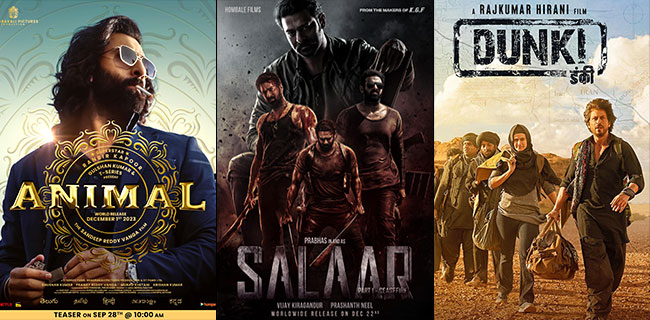
    With Animal and Dunki being non-franchise films, and Salaar: Part 1 being the first of its franchise, this proportion will drop to 35-40% by the end of the year. But the staggering-ness is not in the 45% itself. It’s in the year-on-year comparison.


    Proportion of Hindi box-office from franchise films was only 19% in 2019, and increased to 31% in 2022 (the interim years were pandemic-disrupted). Within two full years, the contribution of franchise films to the Hindi box-office has doubled.


    The equivalent number in Hollywood has been in the high 70s or 80s for a while now, depending on the year we look at. Clearly, Hindi cinema is moving in that direction. It could be a matter of another couple of years that we hit 60%, if not even higher.


    Even on OTT, franchises are beginning to dominate, now that the category is somewhat settled in India. Amazon Prime Video has done a particularly good job of building strong franchises, none less than The Family Man and Panchayat. The latter is produced by TVF, which is a franchise factory of sorts, with a long list of illustrious web original franchises, such as Kota Factory, Gullak, Aspirants, Permanent Roommates, Pitchers, Hostel Daze, etc.


    Linear television’s attempts with franchise creation have been less emphatic, but that’s only because the approach to having seasons does not exist, and it’s impossible to do a Season 2 if Season 1 is the ever-running season anyway. Yet, Zee TV has managed to create some sort of a quasi-franchise, which some young audiences even have a name for: The Bhagya Universe. It has three largely-unconnected shows in it: Kumkum Bhagya (2014), Kundali Bhagya (2017) and Bhagya Lakshmi (2021), all three produced by Balaji Telefilms.


    The rise of franchise content is an interesting phenomenon. At one end, audiences crave for new stories and characters, because fresh and imaginative ideas is generally a strong driver of content consumption. But at the other end is the comfort in watching something familiar. This continuum of original to familiar is a compelling one, because both ends of it are strong on intrinsic benefits related to why content is watched to begin with.


    There are franchise films and shows that manage to re-imagine their world, and provide freshness within the familiar. Some of the early Marvel films, leading up to Avengers: Endgame, managed to do this very well. But those are far and few in between, and in general, franchise content willingly lets go of new imagination, and focuses on the familiarity factor.


    So, if franchise content is becoming stronger than before, does it mean that audiences prefer comfort of the familiar to the excitement of something original and imaginative? That’s not an evident piece of truth. The real difference lies in the differing risk levels. Franchise properties are significantly safer than non-franchise ones. The latter must get the idea, however original it maybe, right. In the former, that’s already been tested.


    But we need a healthy mix, because if franchises begin to dominate to the extent of 70-80%, which is a real possibility soon, the originality will get sucked out of the content ecosystem, leading to a decline in business at some stage in the cycle.


    Be that as it may, in the short-term future, we can expect franchises to dominate Hindi cinema and OTT categories, in a way India may have never seen before.


  • One-worded Box-office Beasts


    By Shailesh Kapoor


    Shailesh KapoorIt’s a huge Friday at the box office today. Ranbir Kapoor starrer Animal, directed by Sandeep Reddy Vanga, releases today, and is set to witness one of the highest openings in Hindi cinema, with even a shot at the 50 Cr first-day box-office, a mark that only four Hindi films have ever achieved.


    2023 has been an interesting year at the Indian box-office. A series of non-performing films have been punctuated by mammoth blockbusters. In the Hindi language, it started with Pathaan in Jaunary, post which we saw a long period of flops, with an occasional hit like Rocky Aur Rani Kii Prem Kahaani. August saw positive momentum shift, with Gadar 2 emerging as a huge blockbuster. And then, Jawan followed it up early September, recording the highest-ever lifetime box-office for a Hindi film at the domestic box-office.


    In the Tamil market too, Jailer (Rajinikanth) and Leo (Vijay) have done great numbers, and are a part of the list of top 5 grossers of the year, after Jawan, Pathaan and Gadar 2. Animal would be challenging to enter this list, as will Dunki, the third Shah Rukh Khan release this year.


    What’s with film with one-word names, most of which are names or descriptors of their lead characters, doing well? Perhaps there’s more than a coincidence at play here. It could be a sign that audiences are gravitating towards superstardom and larger-than-life hero characters again. While this factor always existed, the pre-pandemic period in Hindi cinema saw a slew of thematic and genre-led films do very well. With OTT around, theatre-going is about scale today, more than ever before. But it need not be the conventional definition of “scale”, which comes with elements like large sets (Bhansali) or VFX (Marvel). It’s about bold-stroke, larger-than-life storytelling too, led by protagonists with an unmistakable swagger.


    If the three big films of December (Animal, Salaar and Dunki) live up to their expectations, 2023 has more than a real chance of becoming the best-ever year at the India box-office, with a gross business of 12,000 Cr in India.


    Animal, however, won’t be the only media highlight of this weekend. We have important elections results coming up this Sunday, when votes for legislative elections in five states will be counted. These results can have a significant influence on how the national politics will look like in 2024, in the lead up to the General Elections.


    Irrespective of how the film fares or what the election results are, one thing is certain: There won’t be a dull moment for media & entertainment observers this weekend.


  • End of a World Cup… and a Format

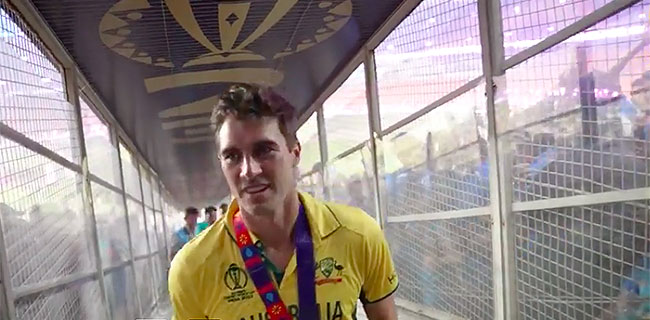
    Australia men’s cricket captain Pat Cummins walking back to the dressing room with the Men’s Cricket World Cup 2023 trophy. Photograph courtesy screengrab from video on ICC-cricket.com


    By Shailesh Kapoor


    Shailesh KapoorFinally, it’s done. The six-week long Cricket World Cup culminated last Sunday, with an imperfect finale from an Indian perspective. Forty-eight games of potentially 100 overs played out over this period. In the age of instant gratification, where “short” is the way to go for most things, cricket administrators seem to have their own unique ideas, some of which seem rooted in another era.


    Last night, India played a T20 game against Australia. It’s the first of the five T20s in a low-key bilateral series. Both sides are resting their star players. Yet, the game had a packed crowd at Vizag. It went to the last ball, something that none of the 48 ODI World Cup games can boast of.


    Cricket has even made it to the 2028 Los Angeles Olympics, on the strength of the T20 format. These are just some of the signs on how the future of the sport lies in this format, and the leagues built around it. Test cricket is there to indulge the connoisseurs. But it’s T20 that will expand the sport, taking it to newer audiences and geographies.


    ICC may be reluctant to end the format altogether, but it’s happening organically anyway. Over the next 12 months, the major cricketing nations are playing less than 20 ODIs put together. The number of T20s are at least twice that number, and that’s not counting the T20 World Cup scheduled for early 2024.


    The World Cup itself had its share of controversies, mostly administrative in nature, ranging from scheduling to the choice of pitches for the knockout games. The crowds in India, especially outside the major centers, can be very ‘un-sporting’, and this became painfully evident in the final, and the prize distribution ceremony that followed. As long as India is winning, all is good. But when we don’t, the picture looks embarrassing from a sporting perspective. It’s perhaps the nature of the hyper-nationalistic times we live in.


    Right out of the World Cup, we jump into the elections season. Next Sunday (Dec 3) is the big counting day for legislative assembly elections in five states, which are a lead-up to the big General Elections next year. Just from a thrills perspective, one hopes there are closer finishes in at least a couple of those, compared to the largely one-sided World Cup we witnessed.


    On the theatrical front, there are three big movies lined up in December: Animal, Dunki and Salaar. The year is well-positioned to be the highest-grossing year at the Indian box office ever. But that’s another story for another day.


    Shailesh Kapoor is Founder and CEO of Ormax Media. He writes on MxMIndia on Fridays. His views here are personal.


  • Reality Check


    By Shailesh Kapoor


    Shailesh KapoorThe linear television business in India has been struggling to find its next big idea. The streaming originals marketplace in India is operating more cautiously too, with economic and industry considerations, both global and local, slowing it down. Amid this relatively low-action period, a new format is making its presence felt: Daily unscripted content.


    While Bigg Boss and Kaun Banega Crorepati have been around for years as dailies, non-fiction has largely been seen as a weekend content type. GECs rightly expect daily soaps to build loyal weekday audiences. In any case, most non-fiction shows in India are in the broad genre of talent competitions, and they tend to be upto five to 10 times more expensive that fiction shows, making them unviable as a staple proposition.


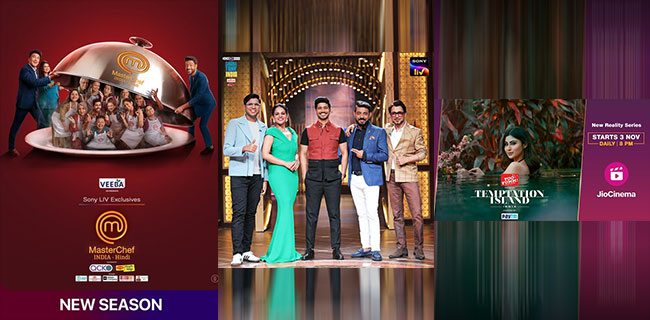
    But the advent of streaming may have changed things a bit. Sony LIV recently launched MasterChef India only for OTT. The show has been around on GECs for years, across two networks, but has never quite found the success it would have hoped to. No surprise, then, that Sony has given up on its ambitions for the show related to mass television.


    Shark Tank India is a more recent, and a more obvious, example of a streaming-friendly show failing to deliver on linear TV, despite the network backing it with up aggressive marketing. The third season will follow the MasterChef India template, with daily episode drops on Sony LIV.


    JioCinema (earlier Voot) has done two seasons of Bigg Boss OTT. MX Player did its own homegrown variant, produced by Balaji Telefilms, titled Lock Upp, in 2022. Tonight, the first-ever season of Temptation Island India, starts on JioCinema. All these shows are in the daily format.


    The weekday-weekend distinction related to fiction and non-fiction seems to have blurred in recent times. It could be a result of many factors: Less compelling fiction content on TV, change in audience habits in the OTT era (such as low appointment viewership), episodic content being more preferred to continuity-driven stories, etc.


    While the reasons are a subject of further analysis, daily non-fiction is finding its takers, both at the platform side and the audience side. The new season of Bigg Boss has opened very well from TV standards. The show has original content in the form of interstitials and spin-offs on OTT, which are carefully designed for better monetisation. In what’s increasingly an AVOD-SVOD hybrid environment for original content (compared to 2020-22), monetisation via advertisers has made non-fiction a more relevant option on streaming.


    The Indian non-fiction market needed this boost in its thinking. There has been a sense of sameness to the shows over the last five years, with the same formats being rehashed. But formats that were safe bets till before the pandemic have struggled to deliver numbers in recent times, and viewer fatigue is evidently one of the primary reasons.


    Daily non-fiction may help GECs and OTT platforms, especially those with a strong AVOD service, find a new business model. It may be just the right time too, given that the web-series (fiction) content on SVOD is beginning to look just a tad jaded. The audience will surely not be complaining if they get a legitimately-different option on the menu.


  • Knocking on November’s Door


    By Shailesh Kapoor


    Shailesh KapoorWe are at the start of what may be a long election season. Legislative assembly elections in Madhya Pradesh, Rajasthan, Telangana, Chhattisgarh, and Mizoram are scheduled for the month of November. These campaigns will segue into the bigger one, the General Elections in 2024. There’s going to be enough in the news to keep everyone busy for at least six months, perhaps a bit longer.


    Of course, when one says “news”, one doesn’t mean print or television anymore. It’s a collective, amorphous mass of sources that intersect and feed into, and from, each other. Earlier this week, Rahul Gandhi interviewed former J&K Governor Satyapal Malik for his YouTube channel. The video has, since then, been widely circulated and discussed on YouTube and social media. But not surprisingly, TV channels and most newspapers have ignored it. Malik is known for being a critic of the Prime Minister, and has gone on record in recent times, including a rather candid interview to Karan Thapar for The Wire, about the systemic lapses in the Central Government that led to the Pulwama attack in 2019, at the time of his Governorship.


    Why did Rahul Gandhi have to interview Satyapal Malik is as interesting as the interview itself. The interview itself has a conversation on this topic. With mainstream media not giving any coverage of any consequence to the Opposition voices, social media and digital news platforms seem to be their recourse to get themselves heard.


    This could be how the media side of the story of the 2024 General Elections plays out. YouTube, and not TV news, could be primary platform where the story unfolds, at least for those hoping to upset BJP, which continues to be a frontrunner to win those elections.


    YouTube’s daily and weekly reach in India is not very different from that of the television news genre’s reach. TV carries more credibility than digital media, but purely for legacy reasons. We have seen digital media overtake traditional media as the lead marketing medium in various mainstream domains, including cricket and theatrical films. Politics is next on the list.


    Talking of cricket, a rather uneventful Cricket World Cup is underway currently. It’s been more than halfway through the round robin stage of the tournament, and we haven’t had a single nailbiter so far. There have been some exciting games, including the recent India-New Zealand one, and some upsets by Afghanistan and Netherlands. But no game has gone into the last five overs without reasonable clarity on who the winner will be.


    Of course, this is an inherent issue with the 50-over format itself. India’s winning streak, now at five matches, has kept the otherwise-drab World Cup alive for fans and sponsors. A semi-final spot is all but assured, and India has a strong chance of being the first team since Australia in 2007 to win a Cricket World Cup without losing a game.


    November, then, is expected to be an action-packed month for more than one reason.


  • The Games Take Over


    By Shailesh Kapoor


    Shailesh KapoorThe Cricket World Cup has taken off to a good start. As good as the World Cup for an eight-hour format can be, in today’s age of instant gratification. Why does the 50-over format still exist is a larger question, whose answer is purely commercial in nature. Many experts have raised doubts over the purpose this format is serving, but who needs to disrupt a cash-generating machine, in India at least?


    So, the current World Cup will put that question aside for a few weeks, even months. The 2027 World Cup, by the way, is already planned to be held in South Africa, Zimbabwe, and Namibia, though four years is a long time away, and a rethink is not entirely ruled out in the coming year or two. On the format itself, not on the venue.


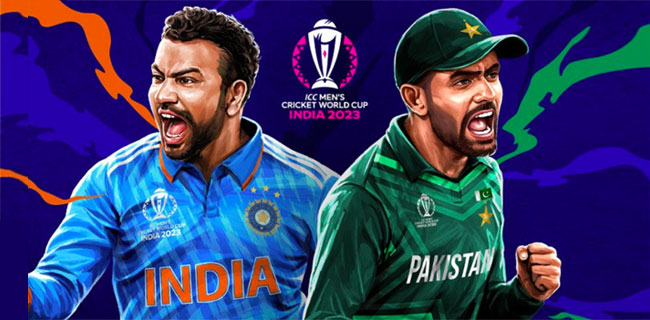
    But let’s come back to the World Cup that is currently underway. By and large, on-field action has taken large share of the attention in the last one week, and India’s two wins have given an initial sense of comfort to the fans. All eyes are currently on the big India-Pakistan clash tomorrow. India’s record against Pakistan in the 50-over World Cup remains unblemished, with a 7-0 lead. We could see both television and online records for live sports being rewritten tomorrow.


    The only major off-field controversy over the last week is not a frivolous one. It’s to do with mismanagement of tickets. The opening game between 2019 finalists England and New Zealand had thousands of empty seats visible on camera, even as the tickets showed largely sold out on online platforms (Imagine that happening with ad inventory during a World Cup game!). BCCI’s handling of scheduling and ticketing of this event has been unprofessional, even incompetent. The advantage of a long tournament is that you can learn on the job, and one hopes corrective action is already being taken.


    The broadcast of the World Cup is strictly on expected lines, and I say that in a good way. BCCI and Disney-Star have kept it simple, focusing on first principles, than offering too many distractions via meaningless innovations. Commentary in nine languages is impressive, though the absence of Bhojpuri (JioCinema’s cute contribution to sports broadcast) takes a bit of the fun factor away.


    The World Cup ends in the week after Diwali, and shortly after, we will be entering the elections season. Our news channels have enough fodder to keep themselves busy till mid-2024 at least. Which is not such a bad thing at all, because at least they will not have too much time to conjure up bizarre stories to keep the ratings going.


  • The Health of our News


    By Shailesh Kapoor


    Shailesh KapoorPolitics is in the air (though that may be true for any given day of the year). We are in election season again, and the build-up to the 2024 General Elections has well and truly started, even though there remains speculation on the dates, even the possibility of an early election, before the stipulated May timeline.


    It’s only natural then that the media scene heats up too. Last month, the I.N.D.I.A alliance announced a ‘boycott’ of 14 news anchors across channels. The news has met with various reactions, depending on which side of the political spectrum one is aligned to. Some have called it a violation of press freedom, while others have endorsed the move as a message against hate speech and biased media coverage.


    The decision to not engage with certain sections of the media is an age-old tactic followed by politicians and celebrities frequently, and to call it a violation of freedom of press is quite a stretch. It’s not so much the move that has caused the debate, but the public announcement of it. If I.N.D.I.A would have silently decided to not send their spokespersons to the shows hosted by the said anchors, no one would have cared much. But by making their decision very public, they have stirred up a hornet’s nest.


    The decision itself carries limited practical value. Many of the anchors listed don’t even have programs that have spokespersons on them. In any case, debate shows on Indian news channels do not need official spokespersons. There is a long list of unofficial supporters and sympathizers who are willing to come on debate shows on short notice. Many even get paid for it, from what one gathers.


    The only pertinent question that is more important than the short-term controversy is: How did we reach here? The Indian media and polity were in a symbiotic relationship for decades, and incidents of friction, some dating back to the times of Indira Gandhi, if not earlier, were more aberrations than norm. But over the last few years, there has been a gradual decline in the health of this relationship. It is no secret that the current Government at the Centre does not give press the kind of access earlier Governments did. Cabinet reshuffles, for example, are rarely known to the media till they are formally announced. This seems a part of a well-considered media strategy, where engaging with the voters directly, via social media for example, is a preferred option.


    But there has also been a gradual decline in the quality of political representation on news channels. Till about a decade ago, it would not be unusual to see faces like Arun Jaitley, Sushma Swaraj, Jairam Ramesh, Ravi Shankar Prasad, et al on various TV news debates, often every night. That is almost unthinkable today. People of stature and experience do not want to be associated with the cacophonic mess TV debates have degenerated into, over the years. They would rather give one-on-ones when they something specific to say.


    But these occasional one-on-ones cannot fuel four hours of prime-time programming every night. So, news channels must manufacture topics, and ‘spokespersons’, to keep their ship running. The viewer may see it as news or entertainment, but that’s not something anyone is losing sleep over. Not anymore.


    The ‘fourth estate’ role of the media seems like an age-old idea in today’s Indian context. Boycott or no boycott, the Hindu-Muslim debates and the thin-on-facts coverage will continue. Because if there are eyeballs, no one is really complaining.


  • Understanding Bollywood’s image problem


    By Shailesh Kapoor


    Shailesh KapoorThe ICC Cricket World Cup is less than two weeks away. The mad rush for tickets has been the dominant headline associated with the tournament so far. But as we get closer to the date (October 5), on-field action will, hopefully, be where all the attention is.


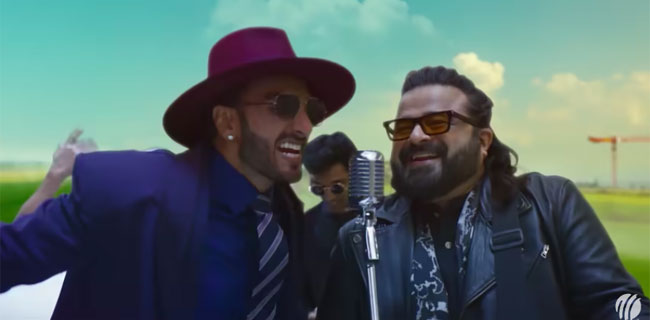
    Earlier this week, ICC released an abomination of a video in the name of the event’s theme song, titled Dil Jashn Bole. There’s so much wrong with the song that one wouldn’t know where to start. Why is the song of a world tournament in Hindi, when it’s not even the language all of India understands? Bizarrely enough, the official YouTube version does not even have English subtitles. Fans have been brutal about their feedback, remembering the much-superior De Ghuma Ke, which was the theme song the last time the event was held in India, in 2011. Despite being in Hindi as well, that song was distinctly Indian (and sporty) in its spirit, and never seemed to struggle on inclusion.


    Which brings me to the main point of this piece: The random obsession with Bollywood. With due respect to Ranveer Singh, who’s a fine actor, ICC (or BCCI, whoever greenlit this train-wreck of a project, pun intended) should have known better. Cricketers don’t need film stars to represent the sport to the fans. And even if one were to go in that direction, someone with a pan-India and global stature would be a minimum expectation for World Cup of a sport India is crazy about. Like an ensemble of SRK, Allu Arjun and Vijay, for example, in the video.


    Obsession of other domains with Bollywood was also evident in the Parliament this week, when Kangana Ranaut and Esha Gupta were present on the day when the Women’s Reservation Bill was presented (and passed) in Lok Sabha. The former’s choice is clearly political in nature, and I don’t quite know what to make of the latter’s presence on the day.


    Over the last few years, and since the pandemic in particular, the idea of stardom has evolved in India, and is clearly a lot more ‘pan India’ in its spirit. As per Ormax Stars India Loves, out of the Top 10 most popular male and female film stars each in August 2023, only three men (SRK, Akshay and Salman) and four women (Alia, Deepika, Kiara, Katrina) hail from the Hindi film industry. The Bollywood lens should have been an obsolete idea by now, for events of national and international significance. Yet, it continues to find more than a few takers.


    Ironically, this obsession doesn’t do Bollywood much good. The industry has been fighting for reputation, and even as box-office has been better this year (though driven by the stars from the 90s, which makes the success precarious), the overall image of a low-on-innovation, spoilt, and inward-looking industry continues to persist as a media narrative. And projects such as the Dil Jashn Bole video only add to that narrative.


    Image management at an industry level is always tricky terrain, because the ownership is de-centralised. But one hopes that somehow, the industry finds a way to come together to address what’s a growing concern, definitely for brands, if not for the box office.


    Meanwhile, away from all this, let the games begin!


  • Free-to-stream: Will subscription models survive?


    By Shailesh Kapoor


    Shailesh KapoorThe much-anticipated India-Pakistan clash in the Asia Cup, scheduled tomorrow (Sep 2), marks the start of a busy cricketing scene. The action is equally hectic off the field too. The start of the Asia Cup also coincided with the news that Viacom 18 has bagged the rights for BCCI-organized bilateral series in India over the next five years.


    Viacom 18/ JioCinema’s entry into sports has disrupted the landscape in 2023. From being a driver of paid subscriptions, cricket is now playing the role of reach aggregator on OTT. The Asia Cup is available for free streaming on Disney+ Hotstar, and the ODI World Cup that follows will go the same way. Indeed, the era of paid sports content in India maybe over. It’s only a matter of time that sports channels on TV go free-to-air as well.


    With the no. 1 sport in the country (and by some margin) being available for free, the state of several other sports, including football, tennis, wrestling, etc. hangs in balance. Will they continue to be “premium” offerings that get smaller audiences who are willing to pay for them? Or will the networks hope to expand the reach of these sports by making them available free? The question, of course, extends to television too.


    Are we going back in time, by shunning subscription models in favor of those dependent on advertising? Far from it. For the last several years, almost all major players, in the streaming space in particular, but also in linear television, have over-rated an average Indian’s inclination to pay for content. They have priced their products at levels that are untenable, and then gone on to offer handsome discounts, to the extent of 50-75% at times.


    But the core question is not about the price alone. It is: “Why pay at all?” Changing a market’s mindset from free to pay is an arduous task. We have seen how niche channels lost out once the NTO effects kicked in a few years ago. Outside the top 10 cities in India, paying for data, however low the rates maybe, itself is a choice to make. Stand-alone subscriptions are not even serious considerations. Reluctantly but inevitably, platforms have consented to being a part of aggregator bundles, where the ARPUs are much lower. A Jio-Netflix deal was announced just last week.


    It may seem like an extreme position to take, but the days of pay content in India, especially when it comes to mainstream content that’s targeting a wider demographic, may be numbered. The major GECs going free-to-air in the next 2-3 years is not ruled out either. It would just take one of the top 4 to make the move and grab the top spot, and things may look very different overnight.


    All hail the advertising economy!


  • Shailesh Kapoor: News: Television’s Problem Child?

    By Shailesh Kapoor


    Shailesh KapoorThe successful landing of Chandrayaan 3 on the surface of the moon has given our news channels, at least for a couple of days, a much-needed break from the pointless primetime communal politics we have now come to expect every night, across channels. The coverage of Chandrayaan 3 landing was not free of politics, and certainly not rooted in science either. But mercifully, the Hindu-Muslim narrative was kept aside.


    The news genre has been under the scanner for the last five years, for various reasons. Reporting of news channel ratings has been a subject of perpetual debate, on topics as ranging from legitimacy of landing pages, to manipulation of ratings, to the evident political bias in favor of the ruling party at the Centre. A few key channels have withdrawn their audio watermark, in effect withdrawing from the ratings ecosystem. Demand to stop news ratings keeps gaining momentum every now and then. Despite BARC being an industry body, it has been difficult to drive consensus on these topics. And the Ministry of Information and Broadcasting always seems to be breathing down everyone’s necks in any case.


    We are entering the year of General Elections soon. News channels look forward to it, because there’s significant advertiser interest in this period, and political advertising (though it has reduced on television in recent years) adds to the topline too. Absence of ratings can lead to a disruption that the category can do well without.


    But at the root of a lot of issues plaguing the Indian television news genre is the larger question: Given its evident role in society and politics, can news be seen with the same lens as rest of the television? This debate is not India-specific. Globally too, including in the US, some of the biggest news channels have been under the scanner for their political dispositions, their tendency to peddle fake news to garner ratings, and for the absurdity of news reporting in general.


    One school of thought would suggest that the free market should be left to decide the fate of all content, including news. And by implication, if audiences watch news for entertainment, so be it. Instinctively, this seems like a fair argument. But in a country where censorship and moral policing is incessantly irritating in the entertainment domain itself, this argument can be hypocritical. A regime that can ask OTT platforms to put a disclaimer on screen every time a character lights a cigarette, surely cannot turn a blind eye to news platforms shunning their social responsibility.


    But we live in a confused and cluttered world, and it will be wishful to think that sanity is round the corner. As we get into the elections year, be prepared for more noise and vitriol than ever before. It’s par for the course, even if the course itself remains undefined.


  • The Box-office Boom: Gadar 2 & Co


    By Shailesh Kapoor


    Shailesh KapoorThe Indian box-office is minting money. After an extended lull that stretched 3.5 years, punctuated by an odd film here and there, like RRR, K.G.F: Chapter and Pathaan, there is an unmistakable buzz at the ticket windows. The weekend of August 11-13 grossed nearly Rs 400 crore at the domestic box-office. To put this number in perspective, films releasing across the entire month of February 2023 grossed a similar amount (Rs 396 cr). August 2023 is in the reckoning to become the first-ever month ever to achieve the Rs 2,000 crore gross mark. It’s a long shot, but not out of bounds as of today.


    The boom has been ably supported by Rajinikanth’s Jailer, and the franchise social comedy OMG 2. But it’s Gadar 2, a sequel to the blockbuster 2001 film Gadar: Ek Prem Katha, that is headlining the windfall. The film is on its way to challenging Pathaan, released just earlier this year, to become the highest-grossing Hindi film of all time at the domestic box office.


    In September, Shah Rukh Khan will have a shot at breaking his own record, and Gadar 2’s, with Jawan. Later that month, Prabhas’ pan-India film Salaar – Part 1: The Ceasefire releases, and is expected to gross 100+ cr all India on its first day itself. 2023 is now well on course to become the highest-grossing year of all time, at the Indian box-office.


    It’s a narrative Indian cinema needed desperately. Knives have been out, targeting the cinema medium and its relevance in today’s streaming-centric entertainment ecosystem, since the pandemic set in, in the first half of 2020. Lack of solid films from the Hindi film industry, barring the odd one every 4-5 months, have not helped matters. But all that is a thing of the past, with Gadar 2, OMG 2, and Rocky Aur Rani Kii Prem Kahaani delivering within two weeks of each other, after the Hollywood-led boost in the Barbenheimer week.


    Outdoor entertainment options are scant in India, and movie-going remains the only inclusive one. It takes a film like Gadar 2 for the inclusivity to realise its true potential. The contrast between the urban, multiplex-centric audience profile of Oppenheimer and Rocky Aur Rani Kii Prem Kahaani, and the wide, all-in audience profile of Gadar 2 is a healthy sign for the medium, and its robust growth in the coming years.


    The success of Gadar 2 is also a validation that the star system has been re-imagined. In Pathaan or Jailer, we see conventional stardom at work, in its full glory. In Oppenheimer, it’s a director’s fan base at work. In Gadar 2, it’s the enormous equity of the original film and its characters, rather than that of its lead star, who hasn’t exactly been active or successful in recent years. This multiplicity of factors that can take audiences to the theatre allow for different types of content models to co-exist, and for the cinema medium to prosper.


    For all the naysayers of the cinema medium, who were eager to record its obituary in 2020/21, it’s time to wake up and smell the popcorn.