Tag: Saurabh Varma

  • Tough & wanting to be in the Top 5


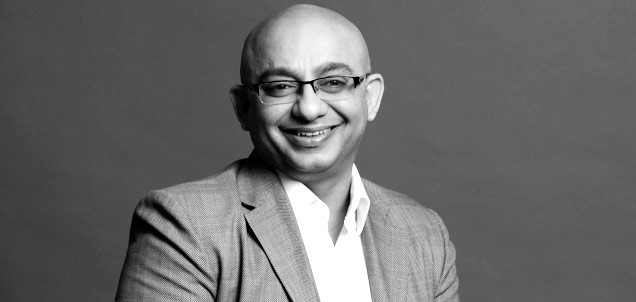
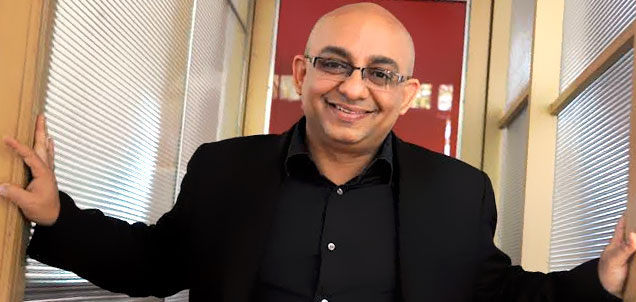
    Saurabh Varma, CEO, Leo Burnett, was considered an ‘outsider’ when he took charge of the network of agencies 18 months ago. But that didn’t stop him from taking some bold steps in acquiring talent, setting goals, and generally shaking up an organisation that was doing well. But, as Varma tells Pradyuman Maheshwari, just being among the best in India is not enough. He wants Leo Burnett’s India operations to be counted among the Top 5 in the world in two years. And he doesn’t mind being the tough taskmaster boss as long as achieves results.


    It’s been a year-and-a-half since you came in. How has been the journey so far, between Leo Burnett then and now?

    It’s been 18-odd months but it seems like a lifetime. For us, the journey always starts with a shared belief and common purpose for collaboration. If you ask any of the leaders or youngsters who have joined us, in the last 18 months, we’ve managed to make sure everybody understands what our shared belief is. As an organisation, we want to become among the Top 5 creative agencies in the world by 2017. Once you have that overall vision, it’s about having a clear strategic roadmap to get there. And that is a function of structures, systems, people, the talent you hire, how you brand yourself in the marketplace and the kind of product you create. In the last 18 months, we’ve been very focused on our growth strategy, which is around integration and specialisation. Integration is not equal to generalisation; it’s not an idea that travels across different media. True integration is when you have a bunch of specialists working together to create magic. We’ve been focused on building our specialist pillars one by one, making sure they have the ability to work with each other. Every client wants integration, but not at the cost of not having specialisation.


    Burnett wasn’t doing badly when you took charge. So why the need to reinvent and fix things?

    In 2013, we were already the Creative Agency of the Year, but our benchmark was India. We were not looking to become the best in the world. Now we are. If you don’t refocus on a new strategic mission, on a new ambition, you will become complacent and not move forward. That’s why the need to reinvent.


    For us, this journey is a function of three things — people, product and profits. Profits are critical in the overall scheme of things, because our belief is, great creativity across centuries has only happened when you have prosperity. On the people front, we’ve made some significant changes. When I joined, everybody wanted a sense of comfort as far as creative leadership was concerned. There were some standard names floating around in the market, and everybody advised us to go for them.


    But you opted for a rank outsider…

    Yes, and it was driven by strategy. We operated without fear, because when the agency is already going through a big change in the leadership at that point, to make one more significant change and change everything, is risky.


    Did you have the full support of your international offices on that?

    Absolutely. I’ve had the blessing to do what is required to create a model organisation. For us to hire a 35-year-old Chief Creative Officer was a bold move, but it was a function of our ambition to be among the Top 5 in the world.


    Were your clients okay with it? You’ve had some pedigreed, long-standing clients. Did they require any convincing?

    I think the question is not whether they were fine then. The question is whether they are fine now. Obviously, we needed to have conversations with clients and share the reason we were making such a big shift. We needed to convince them about our strategic direction, and why it would benefit them in both the short and long term.


    People, product and profits are the mainstay of any business. How have you performed on these?

    I’ve already mentioned one part on the people front. The other part is, if we look at our teams across the board – the business directors, strategic planners or creative leadership team –. there’s a new team in Bengaluru, and a new leadership in Delhi. All of this is a function of knowing we need people who are digital by blood and understand modern paradigms. The industry is full of prima donnas, especially in India, but we’ve steered clear of them. One of the keys to driving integration is a focus on people who can collaborate with each other. So we’ve hired what we call the ‘Positive A’ types – those who have the ability and guts to deliver, and also have a positive spirit about them.


    Was it easy bringing this about? Or was it tough getting the old-timers to believe in this whole new philosophy?

    When you have a clear strategic roadmap, and you share your vision continuously with the teams, they start getting a sense of confidence that you genuinely believe in that vision yourself. They look at the leader to see whether he has the confidence to deliver against that vision. When they start seeing results, it creates more momentum.


    We’ve heard stories that Saurabh is a very tough guy, a taskmaster and all of that. Is all of that true?

    I would think that would be absolutely true. I think we have ruthlessly pursued a single agenda to be the best creative agency in the world.


    So what comes first, the carrot or the stick?

    No it’s not about the carrot or the stick, it’s about decision-making, it’s about making sure that everybody is aligned to a single vision, and I think if you look at what’s happened with us, most of the people have stayed back because they believed in that vision.


    All of us, on the outside, were closely following the many changes taking place [at the agency]…

    Most people have stayed back because they believed in the vision. People who did not are the ones we felt were not going to add to the energy and the momentum that we wanted, and are not with us anymore.


    Was it easy getting a few of the older guys to exit?

    A lot of what you call the ‘old guys’ are still in our system and they’re thriving and succeeding. I think what people want to see is a shared belief and a shared destiny, and everybody who exists here, believes in that.


    What about profits? How are you doing in terms of your bottomlines?

    Right now, we are the fastest-growing Leo Burnett agency in Asia. We are growing twice as fast as the industry average, and I wouldn’t be surprised if we are the fastest-growing agency in the country at the moment. We have huge momentum as an agency and this happened because of focussing on our clients, solving their problems and doing great work, that’s all.


    How has the change in strategy impacted your other arms like Orchard and Indigo?

    So like I said, first, we’re united by that single ambition, which is to be among the Top 5 creative agencies in the world. Second is the function of deciding what the unique purpose of each company is: What is the leadership we need in that country and how we’re going to grow. If you look at Indigo, we are blessed that it’s a build agency. About 18 months ago, we were only a Mumbai agency. Today, we are one of the best holistic digital agencies in the country. For us, Indigo has been a unique growth story, but that’s only one part of it. The second part is integrating it with Leo Burnett as a network. Till18 months ago, there were hardly any shared clients; Indigo and Leo Burnett had their own sets of clients. Today, we have integrated across the board on clients for whom we do multiple things, from search, social and retail to activation and ATL. There are teams from Indigo, from our park shopper unit, from activation unit all working together seamlessly to create solutions.


    Wouldn’t it have been better if you had to integrate Indigo within Leo Burnett to make it fully forward-looking?

    It already is integrated incredibly well at the moment. When you say integration, it is merged; we have one P/L, that’s the great part about Leo Burnett at the moment. We don’t have the same silos you see in some large organisations. Our ability, therefore, to create a systemic solution for clients, is far more dynamic than other agencies. The way we work on these solutions is that we have one integration manager, rather than an account manager, who runs everything and understands search, social, e-commerce, retail, and that requires a very different kind of training as far as the individual is concerned.


    In the last 18 months, while you have possibly been putting your house in order, you’ve been away from most industry events. Was that deliberate?

    It’s deliberate for two reasons. First, the only thing that really matters is our clients’ work. When you spend too much energy on extra-curricular activities, it defocuses you from your true objective. Second, we don’t think there is enough maturity as far as the awards in India go, to participate. There are too many factions, and we don’t want to be a part of any of them.


    But some amount of collaboration with other agencies always helps, right?

    We have been collaborating. The Publicis group has 13,000 people, and that’s where we want to collaborate. We have access to one of the best PR agencies, MSL, and some of the best media agencies with huge digital capabilities, like Starcom and Zenith, and that’s where we’re collaborating. We have lots of shared exercises and shared programmes.


    And awards?

    Every agency loves awards. We participate in Spikes, Adfest, we have a huge battalion going to Cannes – the biggest you can possibly imagine, right from youngsters to account people, HR people etc. We do believe in awards; in seminars and listening to the best people in the world really matters. It tells us what the benchmarks in the world are. What we do not want to be a part of, is what’s happening at the moment.


    You have the D&AD-backed Kyoorius Awards, but you didn’t participate in that either…

    I think the whole industry has not come together. I’ve been pretty vocal about my sentiments on this. Until the time awards are driven by a sense of maturity and not agendas, we will not participate.


    One of the things said about you not participating is because there’s not enough work that you think can win awards. Is that true?

    I am certain that if you put our best work alongside the best work of any other agency, we will be among the Top # in India any time. So that’s not the problem. The issue is what kind of awards do you believe in? We’re not an agency which believes in doing a poster for or press campaign for an award. If you see some of our work you will see what we believe in, is great work.


    Are you looking at any acquisitions, any more organic growth, to achieve becoming among the top five agencies of the world?

    We are continuously looking at building our specialist functions but we’re not looking at acquiring agencies for scale. That’s never been part of our strategy. For us it is very strategic; if there is an agency or a specialist function which is in line with our strategic intent, we will go for that acquisition.


    Coming back to your start at Leo Burnett, there were questions being asked about whether you can do it. You were not from an Indian scenario; you were put into a system which was doing fairly well, but had to reinvent. Do you think those disadvantages actually proved to be your strengths?

    I never thought of it as a disadvantage. For us it was a strategic decision. We started discussing this move four years ago. We planned for this move for the last three years. So it wasn’t done all of a sudden. The industry will say what it will; we’ve never really bothered about that. For us it’s about following through all our strategy and delivering on what we believe is the right thing to do for ourselves and for our clients.


    The fact that your predecessor Arvind Sharma and Co put in some great work would’ve helped?

    Yes, we’ve always focused on great work. Work for our clients and solving their problems. That’s the strength of Leo Burnett and that’s an advantage we continue to build on.


    And great work is possible even through a non-star creative head?

    No I think we have the biggest rock star in the making. And mark my words on that. Raj Deepak Das will be the biggest star, I’m not talking about India, but globally. I’m only betting on my belief in that, and my ability to partner with him in making that happen. So for us all, what we’ve done is we’ve strategically decided what we need to do, we believe we have the talent, we’ve identified the talent to take us into that trajectory.


    Are you looking at hiring more talent?

    All the time. With our growth we need to continuously find new talent to join us, and like I keep saying, talent is what we call the ‘Positive A’ types.


    On a lighter note, now that you’ve reached close to where you are, do you think you would be less tough on everybody, or is that something that you need to be?

    See I don’t think I’m tough, I’m single-minded. I’m single-minded in my ambition, and single-minded in my focus. That’s what I’m doing and I think some of those decisions, might not seem the right decisions at a certain point of time, and I can live with that.


    This interview first appeared in dna on brands on June 15, 2015

     

  • Leo Burnett elevates Samir Gangahar as Prez – North

    By A Correspondent


    Samir Gangahar

    Leo Burnett announced the elevation of Samir Gangahar as President of North India. In his new role, Samir will be responsible to lead Leo Group’s operations in North India. Apart from content, digital and experiential, Samir’s new focus will be to grow other specialisations including shopper, retail and ecommerce.


    Saurabh Varma, CEO, Leo Burnett Group India said, “Under Samir, Leo Burnett, Delhi has transformed into a fully integrated operation. He has been instrumental in creating a culture of collaboration within the agency where a group of specialists work together to solve a client problem. Samir has helped strengthen Leo Burnett Delhi’s digital operation and I’m delighted to state that it has now become a technology/digital hub for many of our key clients. The activation business has grown tremendously in the last one year and going forward Samir’s role will be to build on that momentum. He will help us build new specialisations as part of his mandate. These include shopper, retail and rural.”


    Saurabh Varma

    Samir says, “In my new role I look forward to working closely with Saurabh in growing Leo Burnett India on the back of a “renewed thrust for integration. In line with our Human Kind philosophy, we will intensify our focus on finding and solving our clients’ problems and partnering them in the journey of brand building and business growth.” Samir joined Leo Burnett as Executive Director in August 2007 after a 17-year stint with JWT, where he was Vice President and Director, Client Servicing.


  • Sanju Menon appointed VP @ Leo Burnett, Mumbai

    By A Correspondent


    Sanju Menon

    Leo Burnett has announced the appointment of Sanju Menon as Vice President based at its Mumbai office. Sanju will lead the Bajaj business nationally, taking charge of both strategy and account management.


    Sanju’s appointment reinforces the agency’s talent philosophy of handpicking best professionals to serve clients.


    Saurabh Varma

    Welcoming him on board, Saurabh Varma, CEO, Leo Burnett India, says, “Sanju is extremely passionate about strategic thinking and providing business solutions. His ideology is in sync with that of Leo Burnett’s (HumanKind) philosophy that is to delight clients with integrated ideas that are based on human truth. Apart from leading the advertising mandate, Sanju will deliver solutions for Bajaj across functions, namely – shopper & retail, activation, branded content, website development & maintenance, social and search. He will play the role of an integrated lead managing all these functions to build the strong narrative. In addition to this, he will lead a multidisciplinary team and manage the newly established communication centre called ‘Play’ for Bajaj.”


    Sanju joins Leo Burnett from Rediffusion Kolkata where he worked as the Branch Head. He joined the agency as a brand Associate in 2007 and grew to the position of Business Head in 2011 before moving on to head the operations from 2013.


    He started his advertising career with SN Design in 2005 and a year later joined Bates 141 as Brand Executive. In a career spanning more than ten years, Sanju has worked on brands across categories, namely, Eveready, Lafarge, Berger, AnandabazarPatrika, PC Chandra Jewellers and Spencer’s Retail.


  • It’s People, Product & Profit for Saurabh Varma, Leo Burnett Group CEO

    Sometime yesterday (Jan 5), our inboxes received this mail from a reasonably reliable source. It was written by Saurabh Varma, CEO of The Leo Group in India.


    We reproduce this as is:


    Dear Team,


    Welcome back. I wish you all a brilliant 2015.


    I wanted to start the year by reminding everyone of our Ambition – to be among the top 5 creative agencies in the world by 2017. Raj has set us this worthy target and we are all united in our pursuit of this single minded goal. Everything we do will be to reach this singular goal together. Overall the building blocks of our approach are guided by the 3 Ps. People, Product & Profit. In that order.


    You would have noticed that in 2014 we have moved massively on the People front. We are hiring what we call ‘the +A types’. People who want to reach the stars and they want to do that in the most positive and optimistic way possible. These are people who focus on the task at hand and do not let their egos get in the way. Their focus is the quality of our product and the need to solve our client’s problems. They know that to win we need to collaborate. They understand that to create symphony you need many different specialisations working seamlessly. The hiring of leaders like Neha, Kaizad, Sachin & Prajato, Harshad, Antony, Oindrilia & Rakesh in 2014 reflects our resolve to get the right kind of people who are future ready. You will see a lot of fresh talent getting infused in our Group in 2015. Many of these changes will start getting reflected in the next few days. A closer look at these leaders will also reveal that we are hiring a different breed of talent. Talent who can think beyond the 30 second TVC. We are really serious about winning with integration and these leadership changes will help us move rapidly in the new direction.


    I request you all to focus on the 4 Cs as you look at levels in the organisation. The first C is Curiosity. We want to be child-like in the way we live our lives. We want you to leave your tables and explore the world around you. Nothing will give us more pleasure than people taking all their leave. Sacrifice is in, but the right kind. Hard work is appreciated but not if it comes in the way of us experiencing life. You have our commitment of continuing with this new year break again, next year. Our hope is that next year we are even better organised to take this opportunity to slow down, relax and refresh. So please be curious in 2015. The next C is Champion. Great work stirs resistance. We need champions to help us sell great work. We need people who will not let the incredible idea just die. We all need more champions across the organisation who will challenge the work, shape the work and sell the work. The third C is Craftsman. Leo talked about that restless feeling that nothing you do is ever good enough. We want to live that spirit in our everyday life. We want to reach for the stars, everyday. No matter what you do in the Group, we want you to chase perfection. Average is out. Greatness is all that matters. Finally the 4th and the most important C. Citizens. We live in a world where an idea is shared and created by many. The spirit of knowing that we are all in it together is the fundamental to the organisation we are trying to build. Please populate the agency with people who embody these 4 traits. 2015, will also be a year where we will move forward and create a more performance driven organisation. We need to understand that Growth is everyones job. Growth gives us freedom. Freedom to reward our people. Freedom to train our people. Freedom to create a better destiny for our people. We will reward people who drive growth. Every senior leader will have clear KPIs. Creative leaders will have to deliver on 7+ work. We will need to use our understanding of clients to create and sell them work they need rather than the work they want.


    On the Product front, Raj and I are both excited about the momentum we have created. Work on KBC, HE (man’s day), Kindle, Imagica & Anchor shows that we are moving steadily in the right direction. With our marquee portfolio of brands, we hope to create incredible momentum in the next few months. Our People changes will help us create this new kind of work. We need to challenge the status quo in the industry and I urge you to be bold in the way you approach communication. Raj and I both think that our clients are ready for this change. They are asking for it. This is our moment and we have to seize this opportunity. Please use the specialisations at your disposal to create new work. Overall we need work which is true to ‘imaginative populism’. Work which is shared. Work which becomes part of peoples everyday lives. Work which our families are proud of. Work which delivers on the Purpose of our brands. Please create content. Please create branded utility. Please use the power of technology to create platforms which are always-on. Please try different things. We urge you to take the risks. We will support risk and failures. We are ready for change.


    On the Profit front, I promise you a brilliant 2015. Last year we as a group won 37 clients. Many of these wins came in the last quarter. These wins will come into play through the year. Our leaders are committed to zero complacency. We will not slow down. We will build on the incredible momentum we have created. We plan on both organic growth and new business wins. In 2015 we hope to pitch less and win a lot more. Prospecting will play a critical role in the way we approach our pitches. Please be ready for a lot of action.


    My ask for you is to be brave. Challenge status quo. Be positively paranoid. Win as a team and celebrate your wins. Let 2015 be a year of some outrageous parties.


    I remember a beautiful quote, ‘The secret of our future is hidden is our daily routine’. Please get your best to the office everyday. Let us together create and shape a new destiny for the Leo Group in India.


  • Seven Mantras for Change: Saurabh Varma


    By Saurabh Varma


    Advertising agencies have been fantastic at creating daring destinations for their brands. Agencies are the harbingers of change for their brands. They seek unexplored territories for brands to differentiate from the over-crowded marketplace. They investigate the latest cultural trends for brands to ride on or oppose. Yet, a closer inspection of the agency model clearly indicates that agencies themselves have changed little.


    Fifteen years back, we saw meaning in a print ad. Print ads were shared and celebrated. Beautiful, well-crafted copy was the benchmark of great communication. This changed with the emergence of television. A new kind of narrative emerged, which celebrated and connectedwith the Hindi heartland. Unfortunately, for the last 15 years, even though human beings have changed, our approach to communication has remained the same. We still have the same copy-art partnership to drive our creative product. Frankly, the level of innovation or change we have thrust on ourselves is close to zero.


    Why is change needed? Change is needed because people have changed. We don’t have consumers anymore. The word consumer implies that there are people waiting at the end of a message waiting for a transaction. Messages today are likely to be received with cynicism rather than automatic receptiveness. Loyalty is over, opt-in is in. Obviously communication needs to change to connect with the new consumer. Also, a close reflection of the communication model indicates that we now have new unprecedented opportunities. In the past, we created the stimulus, and the response was the marketshare. Today, we can use response to create the new stimulus which itself can lead to a completely new response. We can create branded content. We can create branded utility. We can create new products and platforms. ‘Always on’ communication is a possibility. And yet, we refuse to change.


    Why do we resist change? One, because, change comes with risk. And the larger agencies like us do not want to disrupt what works for us. Two, because, we don’t know better. Almost everyone is playing by the rules created, and curated by the leader. The benchmark is not global but Indian. Three, we have created too many silos. Today, we are the victims of our own greed. The challenge is our ability to get many specializations to work together to create a new symphony. And finally, we refuse to change because of our fascination with Bollywood. Almost everyone in advertising at some point in his or her life wants to create a Bollywood film. No wonder the natural evolution of the 30-second TVC is now the 3-minuter.


    Personally, I think the agency world is ready for a disruption. And disrupt we must.


    One, we need to re-define new benchmarks. I am personally happier with my agency creating an app for a food brand than creating a 30-second TVC which just creates awareness for the food brand. Once the benchmark is clear, we will then need to figure out the teams needed to deliver and solve client problems.


    Two, we need to understand the difference between an idea and solving a client problem. The difference between the two, although subtle, is infinite. Clients want us to solve their problems not present them with ideas. We need to move from being solution providers, to actually problem hunters. We spend too much time thinking solutions, than defining the problem in the first place. Our belief is that the bigger the problem the bigger the solution.


    Three, we need to understand the difference between the integration and 360-degree advertising. They are not the same. Making an idea travel across mediums is an outdated model, yet it is shocking to see so many portfolios pretend an idea is integrated when clearly it is not. We will also need to understand and appreciate that integration does not mean generalisation. Integration, sans specialisation is meaningless. We will need integration managers who understand specialisation. For example, how are the worlds of shopper and e-commerce collapsing into a continuum?  Understanding specialisation will be the key to build a robust integrated solution.


    Four, we will have to find a way to dissolve the silos. Individual P&Ls cannot come in the way of holistic storytelling. At the same time, specialisation thrives in a specialist atmosphere. Overcoming this complex paradox will be a key to true integration.


    Five, we will need to re-define the people needed for the new kind of storytelling. It might not be copy-art partnerships. It could be a creative-technology partnership. We will need project managers who understand the creative idea and the technology needed to enable it. We might have T-shirt Designers and sound engineers being part of team if the problem deserves this kind of team.


    Six, we will need to explore new revenue models to create the new kind of teams. Ultimately, integration of the true kind has to be monetised. If we don’t know the teams needed to solve the problem, how do you ask the client to pay for it in the first place?


    Seven, we will need to be brave. Chances are anything new will be questioned. Change will be resisted by people who know better and believe in the current paradigm. It will be questioned by the existing status quo. We will need to experiment and explore new models. Chances are we will fail as much as we succeed. At least we would have tried.


    Like Oliver Wendell Holmes said, I would not give a fig for simplicity this side of complexity but I would give my life for simplicity the other side of complexity. In 2015, we want to explore simplicity the other side of complexity.


    Saurabh Varma is CEO, The Leo Group, India.

    First appeared in ‘dna of brands’ issue dated December 29, 2014


  • Kaizad Pardiwalla joins Orchard Advertising as COO

    By A Correspondent


    Kaizad Pardiwalla
    Saurabh Varma

    The Leo Group has announced the appointment of Kaizad Pardiwalla to head Orchard Advertising (one of its group companies), based at their Head Office in Mumbai.


    Saurabh Varma, CEO, The Leo Group said, “We are delighted to welcome Kaizad to The Leo Group. Orchard, over the last year, has grown by 40 per cent y-o-y and has an incredible momentum. We required a leader with integrated experience to take Orchard Advertising to the next level. Kaizad, with his media-agnostic approach to brand building, is possibly the best candidate to add value to our clients’ businesses.”


    Kaizad comes with 18 years of experience in the business with the last three being at Grey where he ran the Mumbai operations. He started his career with Lowe Lintas in 1995 and moved to Ogilvy in 1997. After spending seven years at Ogilvy, in 2004, he was appointed as business director, OgilvyOne Worldwide, the digital and direct marketing division of Ogilvy, where he headed the operations in the western region. After three years, he took over as the national head of OgilvyOne India.


  • Leo Burnett rides away with Bajaj Discover

    By A Correspondent


    Leo Burnett has been appointed as the AOR by Bajaj Auto for the Discover business.


    Commenting on the win, Saurabh Varma, CEO, Leo Burnett said, “It is a privilege to work with Bajaj Auto again. We are committed to using the power of HumanKind and integrated thinking to create a larger share of the future for this iconic brand.”


    Raj Deepak Das, CCO of Leo Burnett said, ‘Bajaj is an iconic brand and gives us an incredible opportunity to create purposeful and participative work’.


    The mandate will see Leo Burnett crafting communications for Bajaj Discover that spans across disciplines including ATL, digital, retail and activation. The agency had created some memorable campaigns for the brand including Bajaj Calibre – The Unshakeable when they worked with Bajaj Auto from 2001 to 2008.


  • Leo Burnett appoints Hitesh Mehta as VP

    By A Correspondent


    Hitesh Mehta

    Leo Burnett India has announced the joining of Hitesh Mehta as Vice President. He will be based out of their head office in Mumbai. Hitesh will be leading the McDonald’s business nationally on both account management and strategy.


    Speaking on the appointment, Saurabh Varma, CEO, Leo Burnett India says, “With over a decade of integrated communications experience, Hitesh is extremely passionate about understanding human behaviour and applying those valuable insights to client work. It is this very orientation that is of great value to our strong HumanKind philosophy for our brands.”


    Hitesh Mehta, Vice President, Leo Burnett, Mumbai shared, “The QSR market is still quite nascent and there is immense scope for growth. It’s a very exciting time for McDonalds and I am relishing the opportunity.”


    Over the years, HItesh has worked in differing local, regional and global roles on some of the world’s biggest brands based out of India, Vietnam, Thailand, Singapore and Indonesia. His last assignment was with Leo Burnett in Indonesia, wherein he was a part of the agency leadership team, successfully delivering on his mandate to partner the marketing teams at Dutch Lady and McDonalds, in pursuit of achieving their growth ambitions within the Indonesian market. On the lookout for new challenges, Hitesh relocated back to India in 2013 and has been working as an independent brand consultant prior to joining Leo Burnett earlier this month.


  • Sainath Saraban elevated to NCD at Leo Burnett

    By A Correspondent


    Rajdeepak Das, Chief Creative Officer (CCO), Leo Burnett Group India announced the elevation of Sainath Saraban as the National Creative Director (NCD), Leo Burnett India. As part of his new role, Sai (as he is fondly known), will oversee and take care of the Chennai market as well as key national clients. He will continue to be based in Delhi as he assumes this new responsibility.


    Saurabh Varma, CEO, Leo Burnett Group shared, “Sai is one of the best creative talent in The Leo Group today. His thorough and in-depth understanding of the target audience coupled with popular culture, comes through clearly in the great work that he creates for our clients. I look forward to seeing him make magic in the Chennai market and on our key national clients.”


    Rajdeepak Das, CCO, Leo Burnett added, “Sai is definitely one of the most promising talents of Leo Burnett India and undoubtedly one of the good human beings I have come across . We want the greatness to spread to one more office. Cheers to Sai.”


    Samir Gangahar, Executive Director, Leo Burnett Delhi says, “I have seen Sai evolve from a rookie writer to being one of the most prolific creative talents we have in the business today.  His creative leadership and ability to address brand issues with effective and popular work has been instrumental in the growth of Leo Burnett in the past few years. It is a privilege to have him work as my partner and I’m sure we’ll see a lot more magic from him in the future.”


    Sai joined Leo Burnett in 2005 and within just 14 months he was promoted to Executive Creative Director. He began his career with JWT Delhi, where he worked for 5 years on brands like Boost, Pizza Hut, Hero Cycles and CNBC. This was followed by a brief stint at McCann Erickson after which he joined JWT Bangalore where he worked on Kingfisher, Red Label Tea, McDowell’s and was a part of the team that won Levi’s and Nike.


  • Leo Burnett appoints new senior cadres into its fold

    By a correspondent


    Close on the heels of the announcement of RajDeepak Das joining the Leo Burnett Group as its chief creative officer comes the announcement of Prajato Guha Thakurta and Sachin Kamble joining in as Associate Executive Creative Directors, Leo Burnett India. Prajato and Sachin will be based at the Head Office in Mumbai and will work closely with RajDeepak.


    Commenting on this latest development, Saurabh Varma, CEO, Leo Burnett Group said, “Leo Burnett continues to be a magnet for incredible creative talent. We want to build the momentum with the hire of Prajato and Sachin. They have an excellent track record and have proven their mettle by creating some outstanding integerated campaigns. We look forward to having them join a super charged Leo Burnett.”


    RajDeepak Das, CCO, Leo Burnett India shared, “With a special affinity for digital, design and technology, I am really happy to have the duo on board. It will be fun working together with them on integrated campaigns across Leo Burnett India’s diverse portfolio of brands.”


  • Raj Deepak Das joins Leo Burnett as CCO

    By a correspondent


    Raj Deepak Das

    Leo Burnett India has announced the appointment of Raj Deepak Das as the chief creative officer (CCO). In his new role as CCO for the India operations across Mumbai, New Delhi, Bangalore and Chennai. Raj will be based in Mumbai and will work closely with Saurabh Varma.


    Mark Tutssel, chief creative officer, Leo Burnett Worldwide who was personally involved in the recruitment process that spanned several continents, said that Raj, with his proven track record behind world-class, award-winning work for global brands including P&G, Pepsi, Visa, Pizza Hut and Tesco among others is a new breed of creative, modern-day leader, a holistic thinker with sharp business acumen. “Raj brings with him an exuberant amount of global experience, creativity, focus and best-in-class leadership.  He understands today’s creative landscape is always-on and always integrated. The decision to bring Raj on board as our CCO holds immense promise for our clients and our creative product. I strongly believe that Raj, alongside Saurabh will form a perfect unity of creative and strategy, making the agency, one of India’s leading creative agencies today, the best integrated agency in the region going forward.”


    Saurabh Varma said, “Five months back we communicated our intention to be the best integrated communication company in India. With the appointment of Raj, we have made a decisive step in that direction. Raj and I will partner to create work that is not only human, but also partcipative by design. We will focus on work which brings out the purpose of our brands. Ultimately, the route to building the most popular brands is in creating work which creates believers not just consumers.”


  • Is it Goodbye Abby given internal & international awards?

    By Pritha Mitra Dasgupta & Shambhavi Anand


    What happens when an industry loses its faith in its own awards? In the case of Indian advertising, agencies seem to have found a solution by launching inhouse awards.


    While Lowe and Partners launched ‘The True Show’ a few years ago, Ogilvy & Mather just held its first internal award, the Envies.


    With other agencies too planning their own inhouse celebrations, does this mean that the days of the industry awards such as the Abby are numbered? “I don’t think so,” says Arvind Sharma, president of Advertising Agencies Association of India (AAAI) that organises Goafest where the Abby awards are conferred.


    “The last 25-30 years that I have seen, big agencies tend to pull out of award shows. In ad award shows big agencies don’t count.


    It is the creatively hottest agencies that matter. People have come and gone in Goafest. While that decision should be respected, it has no bearing at all on the future of the show. The show will go on.” But the advertising industry remains divided.


    Piyush Pandey

    Piyush Pandey, executive chairman and creative director at Ogilvy & Mather India and South Asia, says that his and other agencies are sending out a message to the organisers of industry award shows by holding their own in-house awards. “If the industry comes up with an award show which is believable and credible then we will participate,” he says.


    R Balakrishnan, chairman and chief creative officer of Lowe Lintas, says that message has been going out for a while, but the ad fraternity hasn’t got it yet.


    R Balakrishnan

    “Advertising has a purpose and how creative you are is that purpose. Who better than the agency that has created it to judge it,” he says, predicting that winning an Envie will make creatives at O&M happier than winning an industry award.


    Raj Kurup, founder and creative chairman of Creativelandasia, which pulled out of Goafest this year, has been vocal about scam ads in Goafest and how the event has lost its focus. “Whether it is an internal award or an industry award, I would welcome anything that celebrates fantastic real work that has made difference to the business,” he says.


    Sajan Raj Kurup

    Leo Burnett, which has a global assessment team and a unique scoring pattern that evaluates the agency’s internal work, has planned something special for its Indian winners in 2014.


    “We have very big plans for Cannes Lion 2014 and we are planning to send 25 people including creative, account management and planners.


    Saurabh Varma

    Teams that will score high in internal assessment will be a part of this, so will be the employee of the month and the previous Cannes Lion winners,” Saurabh Varma, CEO at Leo Burnett India, says.


    While a senior official in Leo Burnett says that the agency will not participate in Goafest 2014 because it has shifted its focus to Cannes Lion 2014, Mr Varma says, “We are still making up our mind on Goafest.”


    In fact, there are many in the industry who believe that while internal award shows of Lowe and O&M make a great statement, the industry award shows will co-exist. Josy Paul, chairman and chief creative officer at BBDO India, believes the two should not be combined.


    “This is O&M seeking external input and I think it’s gonna be respected for that. If more people do things like this, it just shows the industry is more united,” he says.


    Rohit Ohri, executive chairman at Dentsu India Group, says the Goafest is a larger forum for discussing industry issues.


    “So there is nothing like loosing sheen. But yes the competitive spirit that agencies like Ogilvy bring about will be missed,” he says. Agrees Vandana Das, president at DDB Mudra Group.


    “Old forums such as Goafest are places where great minds get together to celebrate great work. But it is not necessary that there will be only one such forum. There can be more,” she says. Like all other issues, the Indian advertising industry will remain divided on this one.


    But if there is one agenda where they unite, it is that the industry bodies should introspect the reason for the plight of the agencies from the award shows and try and bring them back.


    Source:The Economic Times

    Copyright © 2013, Bennett, Coleman & Co. Ltd. All Rights Reserved

    Licensed to republish