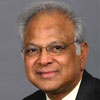
Tag: Sarang Panchal

  • MRSS appoints Daniel Foreman as Executive Director

    By A Correspondent


    Mumbai-based stock exchange-listed firm Majestic Research Services and Solutions has announced the appointment of entrepreneur and digital media specialist Daniel Foremanas Executive Director of the company.


    Daniel Foreman

    Said Foreman: “I have followed the success of MRSS for over a decade, as a client and a technology partner. I have no doubt that MRSS can bring the best the world of MR has to offer to India; at the same time showcase the best of India MR to the world. I am very excited to support the business and pioneer our next stages of growth, with investment, acquisition, innovation and sustainable profit.”


    Raj Sharma

    Added Raj Sharma, Chairman, MRSS India: “It is great that Daniel is coming on Board of the Company at its current juncture. His intent is to garner interest from the international market research community to join as stakeholders that will ensure the vision of MRSS is actualised,” commented.


    Said Sarang Panchal, Managing Director, MRSS India: “These are exciting times with Daniel coming on the Board of MRSS India. I look forward to his astute guidance in introducing leading edge technologies in Asia to complement our exisitng services. Daniel is also well aware of what clients are looking for and this will provide the leadership team at MRSS India with a world view of how research will pan out in the coming years.”


  • Satyen Sharma joins as Consultant at MRSS India

    By A Correspondent


    Satyen Sharma

    MRSS India has roped in Satyen Sharma as a consulting boost to the team. A researcher at the core, his career spans over 24 years.


    Said Sharma on his association: “Along with its large repertoire of research capabilities and the extensive use of technology, MRSS brings something very simple to the table – great business thinking – a strength that the MRSS team has so spectacularly showcased, by its own growth. I am very excited to be a part of the MRSS Team and hope to drive success in everything that we do.”


    Added Raj Sharma, Chairman of MRSS India: “Sharma has contributed and grown across several organisations and his ability to spot talent and specific growth avenues in the market research and technology space will be our asset.”


    Said Sarang Panchal, MD,MRSS India: “Satyen has worked with me earlier and I am delighted to have him back on board at MRSS India. His experience both on the client and agency side will significantly embellish the overall quality of service we offer our clients!”


  • MRSS appoints Retassh Bhansali as its Global CFO

    By A Correspondent


    Majestic Research Services and Solutions Ltd (MRSS) has appointed Retassh Bhansali as its Global CFO of consolidated operations. He will be located in Singapore and India.


    On the addition, Raj Sharma, Chairman MRSS India said: “Bhansali is a professional with Domestic and International experience especially long stints in India and Singapore. To have him onboard fills an important void and will make our financial management engine more robust. We recognized that this is required and we have now reached the size to have a CFO of this stature and so we have timed this appointment appropriately.”


    Added Sarang Panchal, MD, MRSS India: “I am looking forward to work closely with Bhansali not only on the existing Singapore operations but also in reviewing other growth avenues internationally. Once, an acquisition is made, the culture integration becomes equally important as we have seen in the past in which again am expecting him to provide his wealth of experience.”


  • MRSS India wins multi-year ACI-ASQ survey mandate


    We’ve seen findings of Airport Service Quality (ASQ) surveys conducted by Airports Council International (ACI) on how various airports across the world are


    Mumbai-based stock market-listed market research firm MRSS India will conduct ACI-ASQ survey at 20 airports for a period of three years (2018-20). During the survey, MRSS India professionals will capture information from lakhs of passengers travelling through domestic as well as international airlines as per the guidelines of ACI.


    Said Sarang Panchal, Managing Director of MRSS India commented on the win: “This validates our belief in the airport and airlines vertical in Asia which is expected to be half a trillion dollar industry. Airports in India have graduated very quickly in the past few years and for us it is a matter of pride that GMR/Delhi International Airport Limited is the joint first in its category of airports. We are highly confident that we will add more airports and airlines in our client portfolio in the coming couple of years while providing substantial tailwinds for our continued growth.”


  • Majestic Research Services buys complete stake in part of Market Probe

    By A Correspondent


    BSE-SME-listed Majestic Research Services and Solutions Ltd has acquired 100 per cent stake in Singapore-based market research company Market Probe Asia Pacific Pte Ltd from its US parent – Market Probe Inc. in an all-cash deal.


    Explaining the rationale behind the acquisition, Raj Sharma, Chairman, MRSS India said: “We had three criteria set for strategic acquisition that are captive client base, specialised capability and geographical reach. The Market Probe Asia acquisition acts as a gateway to Asia specifically growth markets such as Indonesia, Thailand and Vietnam.”


    Market Probe Asia is a full-service research agency with full-time staff strength of approximately 50 and has over 800 projects under its belt across public, private and government sectors. It is one of the select few market research firms licensed to undertake Singapore government projects valued at SGD 10 million. The agency has completed 15 years of business excellence in Singapore.


    Dr T R Rao

    Speaking on the deal, Dr T R Rao, Chairman of Market Probe Inc said: “The intrinsic nature of the Market Research industry is to scale by inorganic growth.  MRSS, albeit a disruptor, is on the right track by eyeing acquisitions as an important component of their growth strategy. I am delighted that I am handing over the reins of a very critical part of Market Probe to MRSS who have grand plans of taking it to next level.”


    Added Sarang Panchal CEO, MRSS: “The opportunity for a turnaround are immense via MRSS as we not only will look at converting a traditional market research firm to a digital insights agency but also will re-orient the customer focus that the agency so far had. Of course, there is always the added advantage of cost restructuring to improve the margins.”


  • MRSS adds big data tool to provide ‘Predictive Analytics’

    By A Correspondent


    BSE-SME listed Majestic Research Services and Solutions has formed an alliance with California-based global data analystics firm – ScoreData to streamline sophisticated analytics in customer engagement. As part of the alliance, MRSS clients will mine new data sources, modeling on the ScoreFastâ„¢ run-time platform to uncover insights quickly for data analysts and business managers alike.


    “With the Indian economy on the cusp of a major tax reform that is set to galvanize the economy, the alliance would leap-frog MRSS India into the next level and gear itself for several new opportunities that are set to open up in this emerging market,” said Raj Sharma, chairman, MRSS India. Scoredata’s analytic tool will help consumer goods companies including banking and financial services, insurance firms, telecom service and retail companies to unlock their full data potential.


    Added Vas Bhandarkar, CEO, ScoreData: “The current ways of gleaning useful digital signals are too cumbersome and silo’d for most businesses. Our partnership with MRSS gives customers quick access to making sense of their data constantly and quickly, in a broad range of use cases from financial services to retail to media and more.”


    Said Sarang Panchal, Managing Director of MRSS on the alliance: “Every company we encounter seems to have multiple strategic digital data initiatives, but tangible result in a reasonable timeframe eludes them. Working with ScoreData positions us to bring amazing value to our customers, spanning machine learning, domain expertise, and process depth for turnkey solutions.”


  • How effective are Focus Groups?


    By Rahul Sachitanand, Shephali Bhatt, Amit Bapna & Ravi Balakrishnan


    “It’s really hard to design products by focus groups. A lot of times, people don’t know what they want until you show it to them.” That was Steve Jobs, back in 1998, just before Apple launched the hugely successful iPod. If Jobs’ statement had a touch of swagger to it – much like everything Apple – his words were prescient. A decade-and-a-half later, creatives and marketers are coming face-to-face with the decline of one of the most preferred qualitative measurement tools. As consumers get smarter and more connected, companies find it harder to keep focus groups honest. A tool first used in the 1940s at The Bureau of Applied Social Research at Columbia University to study the then revolutionary medium head – radio – is now struggling for a sense of purpose.


    THE DUBIOUS WISDOM OF CROWDS

    Focus groups may be the most popular mode of qualitative research, but things can get hilariously out of hand

     

    KV Sridhar, CCO, LEO BURNETT

    “Focus groups are sometimes like award jury members: if one dumb guy doesn’t get it the entire group gets muddled. Once we tested an ad where someone attempts suicide and from the time of him jumping off a building till he falls there is a courier company that delivers a safety net. It was trying to demonstrate the criticality and speed in a hyperbolic way. They never got the connect. They said “Woh toh mar jata tha.” (He would’ve died.) The van was painted in brand colours and they said it should’ve been an ambulance to help the guy.”


    Sarang Panchal, CO-FOUNDER, MRSS INDIA

    “A focus group in Egypt we once conducted bombed because of one incident. A group of female smokers included some non-smokers (of course, a wrong recruitment). We ended up asking all the women to smoke. The non smokers were also made to carry a pack of 10 with lighters. The moment we asked them to smoke, a nonsmoker actually held the cigarette the wrong way – filter ahead and tobacco end in mouth and started praying! “I am sorry Allah to commit this crime, I know it is haram.” We cancelled the whole group before she could light up. In the end, all we got were a few belly laughs at her expense.

     

    Ambi G Parameswaran, ADVISOR, FCB ULKA

    “The same set of women attends a focus group every day. At a group in Delhi, we overheard the women remarking “Kal ke group mein snacks better the.” (The snacks were a lot better in yesterday’s group).

     

    Prasoon Joshi, PRESIDENT – SOUTH ASIA, MCCANN WORLDGROUP

    “This was in 2002. We were working on creating a campaign to spread the word about HIV for NACO. Researchers were asking men from men Tier-2, Tier-3 towns if they were inclined to wear a condom. One respondent told them that he wears a condom everyday but added that it gets loose by the evening. He didn’t know a condom is to be worn during sexual intercourse and was wearing it as an accessory that he believed was magically helping prevent STDs like AIDS. It was a great insight to create a campaign.”

     

    Ajay Kakar CMO – FINANCIAL SERVICES, ADITYA BIRLA GROUP

    “Hum to sab jaante hain. Hum ko koi bewaqoof nahin bana sakta” (We know everything and cannot be fooled) is a very common refrain, capturing the macho attitude of Indian males. If you are knowledgable and sitting on the marketer side, you soon realise such a person has nothing but confidence.”


    Focus groups use a set of people to test what they are thinking about specific new products or solutions. For example, Café Coffee Day may put together a team to tentatively consider additions or subtractions to its menu and overhauling the ambience of its stores. HDFC Bank has used these groups as a sounding board for new products such as offers for the Solitaire credit card specifically targeted at women. They helped Godrej Tyson Foods build a market for its packaged chicken. “In 2002, consumers were not exposed to fresh packaged chicken,” recounts Sushil Sawant, associate vice president with the firm. “Findings culled out from focus groups were used to position and communicate our strategy,” he adds. Companies such as Britannia have even avoided missteps: putting an Indian sweet – Kaaju Katli – as a filling between biscuits, got an emphatic thumbs-down.


    Despite their uses, focus groups are under sustained fire. Saji Abraham, EVP – planning, Lowe Lintas is dismissive: “They are a misnomer,” he argues. “They usually ramble all over the place, trying to pass superficial observations off as insights.” Focus groups are under siege because of the lack of depth and limited interpretation of the data provided, he adds. “Directly asking a question or keeping it thinly disguised through projection techniques is useless, as it alerts the consumer and influences the answer.”


    The madness, it appears, is in the method. For most marketers, the biggest concern is the quality of the audience. Ajay Kakar, CMO – financial services, Aditya Birla Group likens it to visiting the filthy kitchen of a dhaba reputed to serve excellent food. A provider of men’s grooming products discovered the perils of the technique on putting together a small group to try to explore the nuances of men’s fairness creams. Soon after they assembled, not only were the guys reduced to monosyllables; previously talkative men spent their time examining their shoelaces. It turns out even the vainest men preen only in front of their mirrors and not before complete strangers. Instead of getting nuanced insights, the company ended with a bunch of stilted, predictable reactions.


    A bigger problem is when companies and agencies discover their audience is, if anything, a little too much “on message”, or as an agency head cheekily puts it “have lost their research virginity.” Rajesh Mehta, the former marketing head for Western Union and founder of marketing consultancy Agora recounts: “I have seen agencies and field work where recruiting agents have the same respondents across categories.” He adds, “Sometimes the agents are housewives who hold groups at home and reach out only to acquaintances, family and friends. Maybe 20 or 30 people rotate across groups.” Agrees marketing consultant Suvodeep Das, “Unfortunately, there is a widespread incidence of ‘professional respondents’. Seasoned researchers can easily identify them – they are usually asked to leave within a few minutes.” However there are cases where they aren’t and these appear to be on the rise according to most of the people we talked to. Suave respondents with studied and deliberate answers are of no use to anybody – especially not a company trying to extrapolate their opinions to a larger set. And then there are the bullies; the superficially knowledgeable assertive types who speak for the group, not letting anyone else get a word in edgeways. To the point where several agencies and marketers are thinking of alternative routes to consumer insights.


    Research agencies say companies give them little notice and then expect miracles. “They can give us as little as three days,” says Rohini Abraham, senior vice president, IMRB. In this time, she argues, it is challenging to assemble a strong group, a moderator who can guide attendees through questions and then expect cogent findings. Research agencies offer options to standard focus groups. Sarang Panchal, co-founder of MRSS India, suggests “A better use of say conflict groups or jury groups helps meet the client’s marketing objective, compared to a plain vanilla discussion.” In the former, brand advocates face off against a neutral set of consumers. However, most companies are yet to evolve, since they prefer using ordinary groups to meet their needs.


    Of course it’s unfair blaming just the research agencies. In ad agencies too, research and consumer outreach are low on the totem pole. Leo Burnett’s CCO KV Sridhar says wryly, “Everyone wants to come for a shoot with Amitabh Bachchan. But try getting them to show up for discussion on the same film in a small town and they’ll immediately talk about how there are no direct flights and only poor accommodation options.”


    For too many clients, the group is a box that needs to be ticked. It becomes less about uncovering insights and more about playing safe, claiming a course of action was ratified by research. And so, in this as in so many other industry issues, marketers and agencies are their worst enemies. This time around though, there’s a convenient scapegoat.


    Source:The Economic Times

    Copyright © 2014, Bennett, Coleman & Co. Ltd. All Rights Reserved

    Licensed to republish