Tag: Sanjiv Mehta

  • HUL rolls out initiative for waste segregation

    By Our Staff


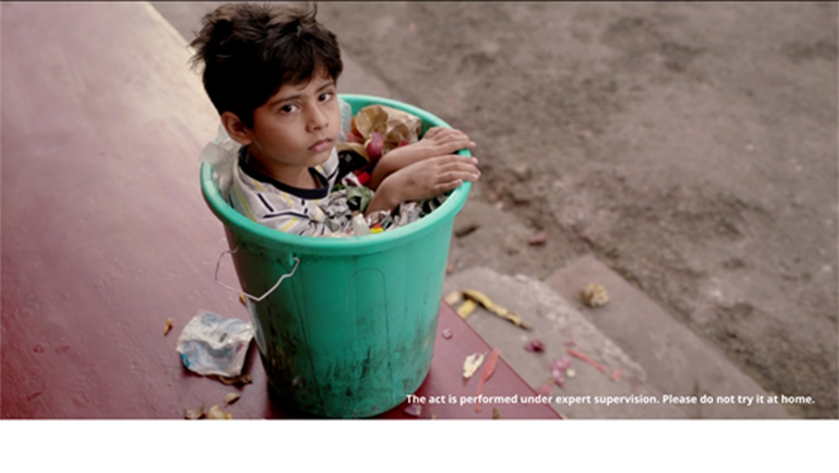
    Hindustan Unilever Ltd (HUL) has launched a campaign that looks to inspire individuals to segregate household waste at source and ensure that waste stays out of the environment and in the circular economy. The ‘Bin Boy’ campaign through its child protagonist ‘Appu,’ aims to drive behaviour change among citizens and urge them to segregate waste at homes and residential societies. Through an engaging narrative and thought-provoking dialogue, the campaign draws attention to the seriousness of mixed waste disposal and need for immediate action.


    Speaking on the campaign Sanjiv Mehta, Chairman and Managing Director, Hindustan Unilever Ltd said: “The need for urgent action on the issue of waste segregation has never been greater. At HUL, we recognize our role in this context and have been working with leading agencies in the space and the Government to drive what is a simple, positive action that each of us could do. We work towards empowering communities to reach the goal of swachhata and a zero-waste circular economy. Children are the strongest advocates of change in society and are also the strongest drivers. We believe that our latest campaign with a child protagonist will inspire and unite citizens to create a waste-free, greener tomorrow.’’


  • HUL partners UNICEF in fight against Covid-19

    By A Correspondent


    Hindustan Unilever Limited (HUL) announced a collaboration with Unicef to undertake a mass communication campaign and to inform the general public against Covid-19. The campaign brings together the marketing expertise and scale of HUL and the technical knowledge of Unicef to create engaging communication tools that can help people change behaviours and stay safe during this time of the pandemic.


    Talking about the campaign, Sanjiv Mehta, Chairman and MD, Hindustan Unilever Limited said: “The need of the hour is simple and effective communication across both urban and rural India to help fight Covid-19 and our partnership with Unicef aims to do just that. Furthermore, we need to come together as a nation and be supportive of each other during this crisis. Our campaign will help address these challenges and at scale. Along with Unicef, we are also committed to working with the government and making essentials like Lifebuoy soaps, hand sanitizers and Domex cleaners available across a wide geography which is the most critical need today.”


    Added Dr Yasmin Ali Haque, India Representative, Unicef: “Covid-19 disease has thrown up many challenges and among them is getting the right information to everyone, no matter where they live and whatever their situation, in the shortest time possible. Our partnership with Hindustan Unilever Limited is important as it leverages HUL’s communications strength as well as rural marketing outreach with Unicef’s technical expertise and messaging. We hope that through this effort we are able to bridge the communication gaps by sharing information to contain the spread of the disease.”


  • Marquees 2018 to return on Aug 29

    By A Correspondent


    The Advertising Club has announced various sector and special category awards for Marquees 2018. Brand performance will be evaluated with data from Kantar / IMRB. This year’s edition of the Marquees is presented by Zee and powered by Colors and Republic TV.

    Brands from sectors in auto (both 2 wheelers and 4 wheelers), Durables, Life Insurance, Banking, E-commerce, Handsets, FMCG (Foods, beverages, household and personal care) and Telecom Service Providers will compete for Marquees 2018, an award that recognises creativity, effectiveness and excellence in marketing.

    Speaking about the special categories of awards, Vikram Sakhuja, President, The Advertising Club said: “Brands have the power to influence and lead conversations however as we all know that with power comes responsibilities. We were very clear from the beginning that the various categories of special awards that we finally choose should be able to directly impact people and their lives positively. The Ad Club has been a catalyst in not only guiding the advertising industry but also creating the ecosystem for positive marketing.”

    Added Partho Dasgupta, Chairman, Marquee Awards: “In a world full of brands, we see very few marketing initiatives that create ripples and actually change behaviour. Data and insights drive me, and I am looking forward to the analysis on how the contenders of the five special categories this time have provided a fresh lease of life in their respective sectors. The Ad Club recognises the hard work of these marketers and this award is an acknowledgement and appreciation of that body of work.”

    Sanjiv Mehta, Chairman and MD, Hindustan Unilever Limited & Executive Vice President, Unilever South Asia is Jury Chairman for Marquees 2018 like last year. The other jury members are: CVL Srinivas, Country Manager, WPP India; Harsh Goenka, Chairman, RPG Enterprises; Agnello Dias, Founder & Chief Creative Officer, Taproot Dentsu; Naveen Chopra, Sr. Advisor, TPG Capital and Raj Nayak, COO, Viacom 18. The event will be held on August 29 in Mumbai.


  • Ad Club’s Marquees 2018 on Aug 29. Sanjiv Mehta to head jury

    By A Correspondent


    The Advertising Club has announced the second edition of ‘Marquees’, the now-annual award that awards brands for excellence in marketing and brand-building. Sanjiv Mehta, CEO & MD, Hindustan Unilever Limited & Executive Vice President, Unilever South Asia, will continue to be Jury President for Marquees 2018. The awards event will be held in Mumbai on August 29.


    The other jury members include CVL Srinivas, Country Manager, WPP India; Harsh Goenka, Chairman, RPG Enterprises; Agnello Dias, Founder & Chief Creative Officer, Taproot Dentsu; Naveen Chopra, Sr. Advisor, TPG Capital; Raj Nayak, COO, Viacom18 and Dilip Cherian, Founding Partner & Group Chairman, Perfect Relations.


    Vikram Sakhuja

    Speaking about the awards, Vikram Sakhuja, Group CEO, media and OOH, Madison Communications & President, The Advertising Club said: “The Ad Club launched the Marquees in 2017 to celebrate Excellence in Marketing. In its second year, we are happy to have the same stellar jury chaired by Unilever’s Sanjiv Mehta deciding on this year’s laurels. The Ad Club sets the gold standard for excellence in Creativity through Abbys, Effectiveness through EFFIES, Media through EMVIES and now Marketers through Marquees. Stay tuned to see the winners in each category and the Special Awards on August 29.”


    Partho Dasgupta

    Added Partho Dasgupta, CEO, BARC India and Chairman, Marquees 2018: “Marquees has been able to carve out a niche for itself and I am glad to be a part of this journey. After a successful debut edition last year, I am looking forward to some great entries this year. As they say, an award is as good as its Jury and in this case the Jury can’t get better than this. The Jury with its years of experience and wisdom will be able to recognise the extra-ordinary work done by marketers over the past one year,”


  • HUL’s take 2 on ‘SwachhAadatSwachh Bharat’ seeks to create a nation of Playing Billion

    By A Correspondent


    Hindustan Unilever Limited, as part of their SwachhAadat, Swachh Bharat initiative has launched a new campaign – A ‘Playing Billion’ to promote three simple hygiene habits among children. The campaign was launched by actor Kajol, the newly appointed advocacy ambassador for the initiative.


    Talking about the campaign, Sanjiv Mehta, CEO and Managing Director, Hindustan Unilever Limited said: “We believe that it is through our ‘SwachhAadatSwachh Bharat’ campaign that HUL can support the Government’s Swachh Bharat Abhiyan. Through the ‘Playing Billion Campaign’, we aim to reinforce the need to adopt three simple hygiene habit and promote good health and hygiene practices among children.”


    Commenting on the campaign, Arun Iyer, Chairman & CCO, Lowe Lintas said: “As a nation, the biggest victims of poor sanitation and unhygienic habits are children, and these often rob children off small and simple joys of childhood. In this campaign, with kids at the centre of our communication, we made an attempt to not only tap into the collective consciousness of the society but to also directly encourage children to adopt these life-saving habits. The narrative is further accentuated by weaving it around Cricket. The SwachhAadat initiative is close to our hearts, and I’m happy that it gave the brands (Lifebuoy, Domex and Pureit) an opportunity to be agents of behavioural change.”


  • Lokmat conducts #RinLokmatWaterSummit with HUL

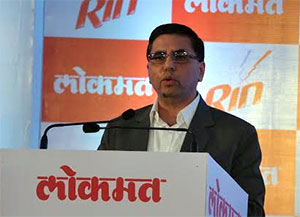
    Sanjiv Mehta, CEO and ​MD, Hindustan Unilever Limited at​ the​ #RinLokmatWaterSummit 2017

    By A Correspondent


    Leading media brand Lokmat culminated its water conservation movement called Jalsamrudh Maharashtra with the #RinLokmatWaterSummit.


    The summit consisted of sessions with speakers from across industry with representatives of the Maharashtra government, corporates, social activists and key industry stakeholders. Lokmat also awarded nine individuals who’ve contributed to the cause of water conservation.


    Said Sanjiv Mehta, CEO and Managing Director, Hindustan Unilever Limited, who spoke on the occasion: “Hindustan Unilever has a clear purpose – making sustainable living commonplace. Our purpose inspires our vision – to accelerate growth in our business, while reducing our environmental footprint. Partnerships with like-minded stakeholders like Lokmat make a difference and we hope this water summit is the start of journey.”


  • HUL’s Sanjiv Mehta appointed Jury Chair for inaugural ‘Marquees 2017’ event

    By A Correspondent


    Sanjiv Mehta

    The Advertising Club has announced more information on Marquees 2017, the awards event it had unveiled at Goafest in April. Chairing the jury for the awards in its debut year will be industry thought leader Sanjiv Mehta, ‎CEO and Managing Director, Hindustan Unilever Limited. The awards intend to recognise brands across categories for their excellence in marketing, building sustainable and path breaking brands.


    The debut edition of the award is scheduled to take place in Mumbai on August11, 2017.

    Speaking about the Marquees, Raj Nayak, President, The Advertising Club said: “Brands have an inspiring role to play in society and ‘Marquees 2017’ is a great initiative constituted towards recognizing marketers and their groundbreaking campaigns that have been a catalyst of social change. MrSanjiv Mehta with his experience of leading a brand at the forefront of innovation and inclusivity is sure to bring great perspective and insight into the jury deliberation process for the debut edition of this unique awards.”


    Speaking about the newly instituted awards from The Advertising Club, Mehta said: “This is a great initiative from Advertising Club which looks at awarding the excellence of marketers. With increasing competition, the holistic marketing of a brand is what plays a decisive role in making the brand a category game changer. Marquees is a step towards recognising this excellence in marketing that requires a great blend of insight, instinct and resilience. I am glad to be chairing the Jury for the first ever Marquees and am looking forward to judging some cutting-edge initiatives.”


    Speaking about the awards and Sanjiv Mehta chairing the awards jury, Partho Dasgupta, Chairman, BARC India who is spearheading the awards event at the Ad Club: “To cater to evolved consumers who seek effective communication, brands today are challenged to create clutter breaking campaigns that set new benchmarks in marketing. Recognising and felicitating such marketers and their ingenuity is the Marquees. The awards is one of those rare platforms that will honour not only the brand but the brand custodians for their ideas and innovation.”


    The awards will adjudge brands and individuals across three classifications namely Category Awards, Special Awards, and the Green Award, which aims to honour brands that have strived and conquered, by keeping a close focus on environment sustainability.


  • Cleaning up India!


    By Ravi Balakrishnan & Ratna Bhushan


    The Swachh Bharat Abhiyan has been announced a while back. Why did it take you so long to come on board?

    First off all, I don’t think it took a while for us to get involved for the simple reason that we were doing it even before it was announced as an initiative by the government. While infrastructure is very important and necessary, it’s not sufficient. There has to be a change in habit, behaviour and in some very deeply ingrained beliefs. That’s where we come in. We have been thinking over what we need to do to leverage our expertise and make a positive difference. That’s where the seeds of Swachh Aadat leading to Swachh Bharat were sown.


    The inspiration came when we met Prime Minister Narendra Modi in February last year, when our global CEO Paul Polman was visiting. Mr Modi said you are doing so much work in rural India but what about urban India? Can you look at mass communication as a means of spreading the message? We went back to the drawing table, had a small team working intensively to understand this and came back with this urban behaviour change programme and mass media campaign. ‘Haath Munh aur Bum, Bimari Hogi Kum’ is something we want to see on everyone’s lips


    What sort of a role do you believe company like yours has in such an initiative

    Over 90% of households use one or more of our brands. Our reach is extensive and small actions make a big difference. Swachh Bharat Abhiyan is not something the government or a corporate can do alone. A company like ours understands our role in society. A healthy society is imperative for business to succeed. And that is ingrained into our ethos of doing well by doing good. Whenever we get into an initiative, it’s always thought through on how we make a meaningful impact and scale it up. We have been doing this and will continue.


    We don’t have a CSR department. We have integrated social responsibility into the conduct of our business. Unilever Sustainable Living Plan provides us the blueprint for us to achieve our purpose of making sustainable living commonplace.


    All our brand managers ask themselves how they can reduce the environmental footprint and improve societal impact of our brands. And so, the activities are in sync with the essence of the brand and not something superimposed or done as an afterthought. That’s where purpose becomes important: if it’s not linked, it then depends on the whims and fancies of a CEO or marketing head.


    How long before we start to see an impact?

    Mass communication on a campaign similar to Swachh Bharat continued for two decades from the 60s and 70s to the early 80s in the US before they could bring a change. We need to stay invested in this cause to be able to bring change in India on a mass scale.


    Source:The Economic Times

    Copyright © 2016, Bennett, Coleman & Co. Ltd. All Rights Reserved

    Licensed to republish


    Can Indian FMCGs do a #CleanIndia?


    By Ravi Balakrishnan & Ratna Bhushan


    How FMCG companies are getting their hands dirty to keep India clean


    Building Loos

    Reckitt Benckiser (RB): 25,000 toilets in partnership with the Swades foundation; adopting 200 villages to make them “open defecation free”


    HUL: Domex Toilet Academy builds toilets across MP, UP, Maharashtra, Odisha and Bihar in association with the World Toilet Organisation and social enterprise eKutir


    Dabur: The Sanifresh 700 se 7 kadam programme will construct toilets and is adopting fi ve villages to make them “open defecation free.” Catching Em Young:


    Catching Em Young:

    HUL: A pilot campaign in association with municipal corporations in Mumbai and Delhi aimed at school children, and reaching their parents via community programmes in slums:200,000 people by end 2015. HUL intends scaling up and expanding the programme through 2016.

    RB: Hygiene curriculum for 2.5 million school children comprising of 45 lessons over three years in four languages, covering personal hygiene, hygiene at home, school, the neighbourhood and during illness.


    Cleaning Hands:

    HUL: The handwash campaign has impacted 60 million people since 2010. In the model village of Thesgora, HUL claims to have brought down deaths by diarrhoea from 36% to 5%.

    RB: Distributed hand sanitizers and liquid handwash during the Kumbh Mela.


    During a brief stint in advertising, I worked on an AV to publicise an initiative one of our clients, a FMCG, had run in rural Bihar. Agency and brand had hit on the idea of pushing hair oil on the back of a cleanliness drive: hook the consumers in with messages and suggestions for a healthier life, and then switch to hard selling product. And yes, rope in some of the youngsters to be “cleanliness ambassadors”, rewarding those who volunteered with a goodie bag. It was hoped that the freebies would motivate them to drive cleanliness in the village long after the company with its vans and hectoring promoters moved on. The activity wound down in the early months of monsoon. But as we cut the AV, we thought it would be a good idea to check back with the volunteers and see how they’d been doing. It wasn’t.


    Let’s just say the volunteers, mainly young women, were motivated more by a tote bag than by an abiding commitment to sanitation. Many of them never expected to be asked to give an account of themselves, especially on camera, some five months down the line, and their only response to our questions was to stare in blank horror. The problem was less with the youngsters and more with the structure of the programme: a mistake that more companies than just this FMCG made.


    For too long marketers dallied with causes. Cleanliness, especially in the rural context, was and remains a perennial favourite. But very few firms have either the budgets or the commitment to see it through to the end. Mainly because there really is no end; at least none that’s in plain sight.


    Starting off on a slightly gimmicky note, with its selfies with brooms and a pay it forward style campaign liberally inspired by the Ice Bucket Challenge, the Swachh Bharat Abhiyan has finally got champions in the FMCG industry. Reckitt Benckiser was the first off the bat. And more recently India’s largest FMCG Hindustan Unilever has come up with a massive campaign driving the clean agenda, as has homegrown FMCG major Dabur.


    There are some obvious places to start and pretty much every FMCG worth its salt is partnering in educating people, particularly children and in the building of toilets (See Being Swachh). Not just FMCG; the Confederation of Indian Industry committed to building 10,000 toilets. Oil and coal PSUs claimed they’d build one lakh toilets in schools across the country in a year. The Bharti Foundation and TCS pledged Rs 100 crore each.


    However, the problem is not only about infrastructure. On a rural visit, Sanjiv Mehta, MD and CEO at HUL discovered that while several households had toilets, they weren’t used regularly. He got flippant responses from people who claimed they liked the idea of going to the bog in the open with their mates, but a response that resonated was from a person who said he didn’t want his wife to clean a toilet and so avoided using the one he had at home. A study by the National Sample Survey Office published in November last year found only 46% of the 95 lakh toilets built in rural India were used for their intended purpose. The problems range from the infrastructural: toilets with no running water to the ideological.


    Which explains why HUL opted for the multimedia and on ground Haath Munh Aur Bum campaign, focusing on handwash, pure drinking water and clean toilets, in the hopes that the same behaviour change model that got people to shift from soaps to shampoos may persuade them to adopt healthier habits. HUL is gunning for a 3% shift in awareness post the activation. The branding is, by FMCG standards, subtle. HUL is not ending its activations with sampling and sale, claiming it would rather people adopt habits than specifically push brands via this initiative. To the point where at a recent event in a school in Mumbai, when a few kids began to sing the Dettol jingle as promoters spoke of handwash, no attempt was made to “correct” them or push Lifebuoy instead.


    It’s of course a little too much to expect brands to do this for purely social reasons. Branding, though covert, is present in all HUL’s initiatives. Reckitt Benckiser managing director Nitish Kapoor says: “Over the last one year, we have made a considerable progress in driving behaviour change towards hygiene and sanitation.” But Reckitt-Benckiser has seen an uptick in sales too following its linkage to Swachh Bharat.


    The cleaning industry is poised to experience 30% growth according to Ken Research’s India Toiletries. Praveen Khandelwal, director at Pranay Impex, says: “The home cleaning equipment industry stands at Rs 4,500 crore and has potential to scale up 20%-30% annually.”


    Which is why marketing consultants like Market Gate’s Shripad Nadkarni believe the association with Swachh Bharat stands to benefit the brands to a greater extent: “Unless you are committing huge amounts of money that you’d normally put aside for CSR it becomes tactical. I think the issue with Swachh Bharat is more social than personal.”


    For years, marketing has laboured under the bad rap of being an industry that convinces people to “buy things they don’t need.” Which is a little disingenuous because people obviously need the products they buy for reasons that go past the merely functional. Beyond profit motives and good intentions, it boils down to this: do Indians believe they need cleanliness, hygiene and a Swachh Bharat as much as they need a new toothpaste? The behaviour change model touted by companies has succeeded since the changes were relatively easy to make. And setting aside the HUL catchphrase of Swachh Aadat leading to Swachh Bharat, there’s a yawning chasm between personal hygiene and a clean country, where our rivers and outdoors are not choked with trash. It remains an area where no brand, however intent it is on a Swachh Bharat, has dared to tread so far. Any takers?


    Source:The Economic Times

    Copyright © 2016, Bennett, Coleman & Co. Ltd. All Rights Reserved

    Licensed to republish


  • It’s Mindshare (& PHD) again for HUL!


    By A Correspondent


    Media agency Mindshare’s India operations will continue to handle the non-digital media duties for FMCG major Hindustan Unilever. The WPP agency has been appointed by Unilever in 60 markets in its global media agency review which it conducts periodically. Omnicom’s PHD will continue to oversee the digital spends for HUL in India.


    “We just celebrated 20 years of a great partnership. This news brings in a momentum to instill new thinking and adaptive way of engagement with consumers. We are completely poised to take on this challenge of discovering inventive ways of achieving key goals of Unilever,” said Prasanth Kumar, CEO, Mindshare South Asia.


    Added Amin Lakhani, Head, Mindshare Fulcrum South Asia, which oversees the HUL business: “We are delighted to continue our partnership with Unilever. As the team, we embark on creating futuristic marketing solutions for all the Unilever portfolio brands. Greater consumer engagement with content in a real time environment and bespoke integrated media planning will be our topmost priority. The team is excited to be the lead partner to Unilever in their next phase of growth.”


    Just last week, Mindshare celebrated 20 years of partnership handling the media duties of HUL in the presence of Sanjiv Mehta, Managing Director and CEO, HUL and Mindshare Global CEO Nick Emery. A communiqué from Mindshare on PR Newswire quotes Emery saying: “Unilever is not only one of the world’s largest advertisers, it is one of the most progressive. It is a great privilege and also a great reflection on our teams that we now work with Unilever in 60 markets across all continents.”


    Mindshare has been confirmed as Unilever’s media agency partner in Europe, North America, South East Asia, South Asia and Africa.  PHD and IPG agency Initiative will also execute media spends for Unilever in certain international markets. . It’s been mostly status quo for Unilever’s media mandates, except, as per an Ad Age report, that some European markets have moved from PHD to Mindshare and the all-important Australian market has moved from Mindshare to PHD. China, it may be noted, will be with PHD, as will be Taiwan, Hong Kong, New Zealand and Australia. Initiative will direct Unilever spends in Latin America and Greece.


    PHD officials were not available for comment.


    In Arrangement with MxMIndia.com


  • Achche or Burre Din for FMCGs?


    By Sagar Malviya & Ratna Bhushan


    Chief Executive Officers of FMCG companies and market research firm are at loggerheads yet again, this time over what is an accurate measure of current growth in consumption.


    Nielsen data suggests the industry is experiencing a strong revival now, compared to last year which witnessed the slowest growth in a decade. It estimates that FMCG sales grew 11.8% in the first nine months of this calendar year compared to the 6.8% growth the industry experienced during the same months of 2014.


    But CEOs of FMCG companies dismiss these estimates as faulty. The market researcher is overestimating growth and is not capturing pricecuts accurately, they argue. “There are no signs of improvement and the market is not supporting demand revival,” said Sunil Duggal, CEO of Dabur.


    “We are well into the festive season and two weeks away from Diwali, but there’s no visible uptick in consumption. The outlook continues to look challenging,” he added.


    “Our sense is that demand revival is still a few quarters away,” the chairman of another leading foods maker said. “Nielsen is over reporting growth.”


    Dabur on Wednesday, reported a 5% domestic volume growth during the quarter ended September, but managed an 18.7% increase in consolidated net profit to Rs 341 crore.


    During the same period, HUL, Dabur and Jyothy Laboratories all reported sales growth that was substantially lower than the previous year. Godrej Consumer Products, with a slight improvement in revenue growth, was the only exception. Other companies are yet to announce their last quarter results.


    Sanjiv Mehta

    A fortnight ago, HUL’s CEO Sanjiv Mehta had said that Nielsen has failed to capture sales trend accurately for a year now. It is still showing price inflation when most companies are taking price cuts to post higher volume growth, not value growth, he had argued.


    Nielsen though is singing a different tune. “2015 has seen revival of conspicuous consumption. Positive macro environment, lower inflation and consumer confidence is leading to improved consumption across all key FMCG categories,” Vijay Udasi, senior VP, Nielsen India said. Nielsen said price growth rose 3.9% during last nine months ended September compared to 4.7% last year. However, companies including HUL, Procter & Gamble and Nestle have all taken average 10% price-cuts on most products from detergents and shampoo to dairy after commodity (crude oil and LAB) prices declined by 20- 50%. This, in turn, boosted growth for companies such as HUL and Godrej Consumers that saw last quarter performance entirely driven by volume growth.


    Consumer goods companies and Nielsen have had a love-hate relationship since more than five years, after HUL first disputed its data in 2009 when Nielsen contradicted the consumer product maker’s internal estimates as well as data from other research firms. Yet, most companies use their data regularly during presentations, especially when it shows an increased market share for their brands.


    But some are hopeful. “We remain optimistic that as the economy improves, the FMCG sector should see a gradual uptick in demand,” said Adi Godrej, chairman, Godrej Group, after reporting 9% increase in sales for the domestic market. The growth was entirely volume-led.


    Stockmarket analysts are enthused by growing sales, but they are trimming their profit estimates due to price-cuts. Still, the MSCI India Consumer Staples Index is currently trading at a 12-month forward price-to-earning ratio of 32.5x, a.29% premium to its 10 year average.


    “Despite sturdy commodity tailwind benefits, the sector’s margin expansion has not been striking. These elevated valuations warrant our cautious stance,” said Nitin Mathur, an analyst at French financial services firm Societe Generale.


    Source:The Economic Times

    Copyright © 2015, Bennett, Coleman & Co. Ltd. All Rights Reserved

    Licensed to republish


  • Indians cut spending on discretionary goods. Consumption at 10-yr low. Sale of consumer goods down to 7.5% in FY15

    By Ratna Bhushan and Sagar Malviya


    Sales of consumer goods have slowed the most in about a decade, suggesting that Indians are making cuts in spending — especially on discretionary products — amid high inflation and a sluggish economy. Most company bosses expect things to get better soon, but a bad monsoon looms as a threat over rural consumption.


    The overall consumer products market slowed to 7.5 per cent in the year to March from 10.6 per cent in the previous year, according to Nielsen data. The declining pace is across urban and rural markets and covers all three broad categories — food, home and personal care, and over-the-counter products.


    “The last time FMCG (fast-moving consumer goods) saw singledigit sales growth was in 2004-05 when it grew 8 per cent soon after a drought situation,” said Abneesh Roy, associate director at Edelweiss Securities. “Hence, last fiscal’s growth is the slowest in over a decade after strong double-digit growth of 15-17 per cent, especially with the rural market opening up.”


    The trend has hit consumer stocks — the BSE FMCG index rose 13 per cent in the year compared with a 63 per cent jump in the Sensex.


    “A lot of discretionary spending slowed down because economic sentiment hasn’t been positive for the most part of last year,” said Chittranjan Dar, CEO of ITC Foods, which makes Sunfeast biscuits and Bingo snacks. Things may be turning around, he suggested. “Indicators that things are looking better, though, are reflecting in the latest quarter and we should see a brighter picture going ahead.”


    Annual performance figures also reflect the direction of the market. Nestle and Godrej Consumer posted decade-low sales growth in FY15. Dabur posted its lowest revenue in nine years. Hindustan Unilever’s income growth in the past two fiscal years was its worst since 2005.


    Within the overall picture, companies report two contrasting trends — a shift to the value segment and premiumisation, or higher-priced products in the same category.


    “Over the past two years, the market has shifted more towards mass and popular pricing and towards sachets as opposed to large packs,” said HUL Managing Director Sanjiv Mehta. “(But) there are consumers who still have the capacity to consume brands such as TRESemme (hair care products) and Magnum (ice cream). We focus a lot on unlocking the potential not just at the bottom of the pyramid, but also at the top end of the fill.”


    More pain could be in the offing if predictions of a deficient monsoon come true, derailing any positive growth sentiment. Consumer goods firms are taking steps to hedge themselves against this risk, especially since the Nielsen data suggest rural market growth has outpaced that of urban areas, albeit on a smaller base.


    Leaning on urban demand

    Companies are leaning on urban demand to improve the numbers as it accounts for nearly 65 per cent of the total market. “We believe revival in the FMCG sector will be led by urban markets as the sector is expected to be at the forefront of development and growth,” said Sunil Duggal, chief executive of Dabur, the maker of Vatika hair oil and Real juices.


    He too is optimistic about things improving soon. “While the overall macro environment continues to remain challenging, consumer demand has started showing signs of a recovery,” he said. A gradual improvement in the consumption environment has helped the company perform well on several operating parameters.


    Dabur has piloted a new sales and distribution initiative, called ‘Project 50/50’, aimed at leveraging the potential of the top 130 towns that account for 50 per cent of urban consumption. The project involves segregating the grocery channel teams for wholesale and retail as both trades have differing requirements. “At the same time, rural demand has proved to be resilient, and we plan to focus on 60,000 high-potential villages over two-three years,” Duggal said.


    The economic situation has meant that the urban poor, who account for nearly 20 per cent of the market for most consumer product companies, have been facing a squeeze.


    “A lot of the urban poor or people like construction workers, because of job challenges, ended up moving back to villages or cutting down spends,” said Godrej Consumer Managing Director Vivek Gambhir. “While we would all love to see much faster growth, at least it is trending in the right direction with higher growth every quarter. It is achallenging environment.”


    Some analysts have been sounding a note of cautious optimism.


    “Consumption demand, until recently, was seeing a continuous decline despite lower inflation and improved consumer sentiment. However, Q4 results imply that demand in at least consumer staples has clearly bottomed out. The worst is possibly over (if monsoon is normal), but it would be a long wait before the party begins,” Axis Bank analysts Sanjay Singh, Ajay Thakur and Mihir Shah wrote in a recent investor note.


    Source:The Economic Times

    Copyright © 2015, Bennett, Coleman & Co. Ltd. All Rights Reserved

    Licensed to republish


  • How Sanjiv Mehta wants HUL to Win in Many Indias


    By Kala Vijayraghavan


    A year into his tenure as CEO of Hindustan Unilever, Sanjiv Mehta has made his most significant move yet. Convinced new consumers can be found in heaps in the mosaic that is the Indian market, Mehta is giving his managers a new structure to go find it. In challenging HUL managers, he’s taking forward the process of embracing the market his predecessor Nitin Paranjpe began.


    When Sanjiv Mehta moved to Mumbai last October to take charge of Hindustan Unilever, India’s largest FMCG company, it had been 21 years since he last worked in the country. Yet, the son of an RBI accountant who grew up in Mumbai intuitively describes this melting pot of India as “home” and himself as a “Mumbaikar”. “When I reach the turn around the museum at Colaba, the years go by in a roll,” he says. “Mumbai has been my home for so many years. My mother lives in Colaba.”


    Still, for Mr Mehta, returning to India with some sense of permanence, and travelling across it, has been about renewing old attachments and finding new ones. That question of identity – just what is India, especially as a consumer – lies at the heart of the change Mr Mehta is trying to sell to his own managers, many of whom have built Hindustan Unilever into a Rs 29,233 crore company and who, at various points in time, have shrugged to say there’s little room for this giant to grow in the India they know. It’s a notion Mr Mehta is challenging.


    “None of the categories in which we operate are saturated. Not even soaps and detergents, which are highly penetrated categories,” says Mr Mehta. “If the per capita consumption in fabric conditioner was to increase to the same level as Vietnam, the market in India for fabric conditioners would be 40X larger.” Mr Mehta is laying down the marker in the inimitable way that has come to define the 55-year-old a leader: firm without being rude, purposeful rather than preachy, looking ahead and not back. The admittance that HUL could have done better on the growth front is implicit in his argument, but is subdued in its expression. The expression, instead, is all about structure.


    That structure is formally named ‘winning in many Indias’, or WIMI, and it was rolled out on September 21. In his one year at HUL, which he will complete this October 10, this is Mr Mehta’s most significant move.


    Previously, HUL made sales via a structure that broke up India into four regions. As part of WIMI, a fifth region has been added. More importantly, sales will now be flanked – and fed – by consumer insights from a parallel geographical structure that carves out India into 14 parts. The philosophy is to change HUL’s responsiveness from a place of being largely homogenous (seeing India as a few big markets) to a place that is a lot more heterogeneous (seeing India as a mosaic of markets). The idea is identify sales gaps and market-creation opportunities – of which, Mehta believes there are ample, even for a large company like HUL – and to infuse it with a growth mindset again.


    It’s the classic HUL leadership template, quips a former senior company official, and every new CEO does this. “Everyone has to justify changes,” he says, on the condition of anonymity. “Undeniably this focus will help… but HUL has been around for 70-80 years. What new findings are there that they haven’t yet discovered in India?” He believes that no what matter what HUL does, it will struggle to fend off the scatter of regional players.


    CK Ranganathan, founder-chairman of CavinKare, a South India-based competitor, is more circumspect in his assessment. “They seem to be focussing in small parts through smaller structures and sharper teams,” says Mr Ranganathan, whose company owns brands such as Nyle, Chik and Fairever. “That will help them win in various smaller markets. One of course needs to wait to see how effective that is.”


    The consolidation

    Mr Mehta could not wait. He began his homework on India between his appointment as the new HUL chief and his actual move from Dubai, where he was handling 20 emerging markets for parent Unilever as its chairman, North Africa and Middle East. “I had sent a note to my management-committee members, seeking detailed insights and information into their part of the business,” he recounts. “And when I moved here, I did the deep-dive sessions and met a large cross-section of people, from managers in my team in groups and individually to consumers for feedback about my business.”When he did move here, the Indian economy was facing economic headwinds. HUL had used price hikes and cost control to not only protect its operating margins, but even grow them. The issue was growth. For the year ended December 2013, its sales grew a lame 8%.


    Mr Mehta began incrementally: for example, renovating and innovating in several big brands, including Pond’s men range of personal care products, Tresemme hair care and Magnum ice-creams. Meanwhile, economic sentiment improved. At 13%, HUL’s revenue growth in the April to June quarter was the its highest in five quarters.


    At 21%, its operating profit growth was its highest in eight years. In the last three months, the HUL stock has gained 20%, against 9% posted by the BSE FMCG Index


    The strategy

    In the background of all this, a pilot was underway at HUL to gauge whether, and by how much, the company’s formidable sales and marketing machinery was missing. The pilot was in HUL’s South India sales branch, which was broken into two consumer clusters: TAP (Tamil Nadu and Andhra Pradesh) and KK (Karnataka and Kerala).


    From the pilot emerged instances where HUL had under-assessed market size and under-sold its products. One of those instance was of Wheel, HUL’s mass-market washing-powder brand, being absent in a small town in South India because its official did not see it as a market. The consumer insights team, however, discovered that a local player – with a product inferior to, and costlier than, Wheel – was building scale. HUL introduced Wheel, and it’s now overtaken that local brand and is number two in that market.


    It became apparent from the pilots to Mr Mehta that, as an organisation, HUL was not peeling the layers deep down in the market as well as it is capable of. Its officials were seeing India as a certain number of parts, but Mr Mehta wanted them to slice and dice it in many, many more ways – to pry open, what he describes as, “many small Indias”. That’s the big idea the 14 consumer clusters will try to service. The 14 new positions of cluster heads will be filled internally.


    “We are empowering our younger managers with challenging roles,” says Mr Mehta. The company declined to share the geographical boundaries of the clusters or the identities of the cluster heads. Mr Mehta is empowering these 14 consumer clusters to change the direction of operations. So, a cluster head can take an insight from her market – say, why Wheel should be launched there – to the sales, planning and category heads, make a case to roll it out, and reorganise planning and supply chain to that end.


    “This is very clearly the result of extreme aggression shown by smaller players across categories and across markets,” says an FMCG analyst at a foreign brokerage, not wanting to be named. “This is an initiative HUL should have taken a couple of years back as the country’s largest marketer.” There is a view that Mr Mehta, with his commercial background, is focussed on controlling costs. “That was an uninformed view,” he says. “My educational background is that of a chartered accountant, but I am running a marketing organisation. My focus, therefore, will be on brands and our people. Having said that, productivity and efficiency too are essential as they provide fuel for growth.”


    The orientation

    By essentially demanding a greater market orientation, Mr Mehta is looking to take forward the philosophical shifts in HUL his predecessor Nitin Paranjpe embarked on, with a fair degree of success. Mr Paranjpe pushed managers into the field and made them listen more to consumers. He wanted an HUL that was less complacent and more humble in the marketplace. One of his initiatives was ‘Mission Bush Fire, which required about 4,000 HUL managers to engage directly with customers. Another was ‘POPeye’, which called on HUL employees across departments to flag off product shortage in any store.


    In an internal email to employees, Mr Mehta is believed to have urged employees to continue with both. The way Mr Mehta has envisaged the consumer clusters, execution of the market plan can feed off a pet concept of Mr Paranjpe: micro-marketing, where the marketing team, once it identifies a smaller market for a brand, goes all out in activation and advertising promotion of a brand.


    Under Mehta, HUL is also doing a rethink on marketing, allocating more to non-TV spends and mobile. “About 25% of our spend will be on non-TV mediums like digital, mobile, print, outdoors and wall paintings,” he says. Amin Babwani, a former senior sales and marketing official at HUL and now an independent consultant, likes the concept of these consumer clusters.


    Asserting it is a continuity of the geographical emphasis HUL has consistently aimed for, he says: “With these clusters, focus is more accentuated and there is greater accountability since it is now enshrined in the structure.” Some observers feel a new structure is great, but the challenge posed by regional players goes deeper than that, and national players don’t understand that. “The issue is with their (HUL’s) portfolio,” says a leading brand expert on the condition of anonymity.


    “Some of their brands do not have a relevant proposition in the local markets and this is a typical MNC problem.” Vimal Pande, CEO of Vi-John Group, which owns the Vi-John brand of personal care and grooming products, says regional players are striking better partnerships in the marketplace.


    “Retailers and wholesalers are very happy with our proposition, which ensures they make reasonably good margins,” he says. “Ours is not a push-down (approach), and laying down of terms and conditions that larger players tend to do.” Mr Mehta points out that the bottom-of-the-pyramid has halved in size, drifting into HUL territory. “We want HUL to be futureready to tap into this opportunity,” says Mr Mehta. And the consumer clusters are being positioned to play a pivotal role in that architecture.


    (With inputs from Kiran Kabtta Somvanshi)


    Source:The Economic Times

    Copyright © 2014, Bennett, Coleman & Co. Ltd. All Rights Reserved

    Licensed to republish