The Board of Directors of PVR Limited (PVR) and the Board of Directors of Inox Leisure Limited ( have approved an all stock amalgamation of INOX with PVR. Upon obtaining all approvals, when the merger becomes effective, Inox will merge with PVR. Shareholders of INOX will receive shares of PVR in exchange of shares in Inox at the approved share exchange (“swap”) ratio.
The combined entity will be named as PVR Inox Limited with branding of existing screens to continue as PVR and Inox respectively. New cinemas opened post the merger will be branded as PVR Inox.
PVR’s Ajay Bijli would be appointed as the Managing Director and Sanjeev Kumar would be appointed as the Executive Director. Pavan Kumar Jain will be Non- Executive Chairman of the Board. Siddharth Jain would be appointed as Non-Executive Non-Independent Director in the combined entity.
Commenting on the announcement, Ajay Bijli, Chairman and Managing Director of PVR said: “This is a momentous occasion that brings together two companies with significantly complementary strengths. The partnership of these two brands will put consumer at the centre of its vision and deliver an unparalleled movie going experience to them. The film exhibition sector has been one of the worst impacted sectors on account of the pandemic and creating scale to achieve efficiencies is critical for the long term survival of the business and fight the onslaught of digital OTT platforms “
Commenting on the announcement, Siddharth Jain, Director – Inox Leisure Ltd said, “Coming together of two iconic cinema brands, which are driven by passion, is certainly the most historic moment in the Indian cinema exhibition industry. Both companies have set high service benchmarks in an endeavor to offer the best cinema experience in the world, to the most passionate moviegoers, and would continue to do so as a unified entity. As we head into the industry’s revival amidst headwinds, this decisive partnership would bring in enhanced productivity through scale, a deeper reach in newer markets and numerous cost optimization opportunities, and continue to delight cinema fans with world-class experiences and landmark innovations.”
ETMarkets launches Crypto Corner in partnership with CoinSwitch Kuber to improve cryptocurrency literacy in India at scale. ETMarkets Crypto Corner will chronicle each little detail on the journey of crypto, bring about an awareness around it along with guiding readers on the regulatory compliance and norms that might be on the anvil.
Said Ashish Singhal, CEO, CoinSwitch Kuber: “Crypto has been gaining massive momentum and the demand for it is only getting stronger in India, and globally. However, there is a shortage of relevant and verified information on this asset class. Therefore, as India’s largest crypto investment platform, we thought it would be a good start to get the right message across. Being India’s go-to destination for news and views on financial markets, ETMarkets’ extensive reportage on the crypto market will help new and seasoned investors make an informed choice.”
Added Sanjeev Kumar, business head at The Economic Times Digital: “At ETMarkets, we believe in serving our readers with the best possible vantage point to understand and invest in an asset. Be it the ripe old ones, or the new emerging asset class. We have a meticulous approach to our reporting that is married with a clear line of thought on ‘what’s in it for me’ analysis for each investment opportunity.”
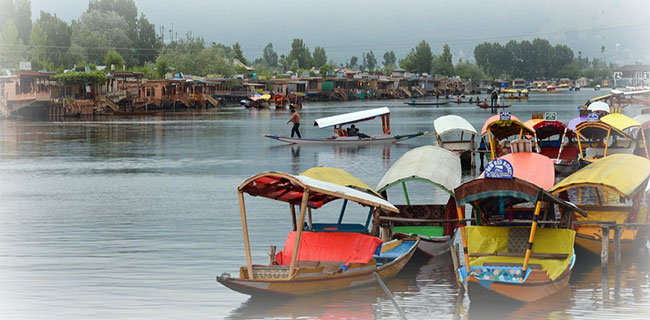
File image of the housboats on Dal Lake in Srinagar
By Ishfaq-ul-Hassan
On January 25 this year, when 2G mobile internet was restored, it reminded me of a dialogue by legendary Sanjeev Kumar in 1975 film Aandhi’: `Waise bhi amawas pandhra din ki hoti hai, lekin iss baar bahut laambi thi;.
I tried to correlate my digital Amawas with this dialogue which was craftily inserted in a famous Kishore Kumar-Lata Mangeshkar romantic number `Teri Bina Zindagi se’…, evoking a childlike response from Aparna Sen… `Nau baras lambi thi na’.
For a journalist working in conflict zone for the last 23 years, I have seen ups and downs. I have worked in the pre- and post-Google era. I have seen how people coped when telephone services were suspended during Operation Parakaram. I have experienced the internet ban during 2010 and 2016 agitations. I have come across small internet breaks during encounters and law and order situation.
But the suspension of the internet in 2019 was the most painful given that the people have become addicted to WhatsApp, Telegram, Facebook, Twitter, YouTube and others. My last WhatsApp message was on August 4 evening to my friend which reads: Has curfew been imposed.
From that evening till January 25, I was living in pre-Google era with no access to internet. I was back to having steaming cup of tea with hard copy of newspaper every morning. I had literally forgotten the hard copy of the newspaper because I was more comfortable with e-papers. But then August 5 changed everything.
On January 25, when I saw my internet signal, I could not resist the temptation of sending WhatsApp message to my friend. To my bad luck, my connection was too slow to send the message. And then came the announcement that social media is banned and only whitelisted websites can be accessed. It came as bolt from the blue. My digital sanyas, it seemed very prolonged like Sanjeev Kumar’s separation in Aandhi.
Next morning when I left for office, I met a tech savvy friend who congratulated me for the internet restoration albeit with low 2G speed. I was not impressed and told him about my predicaments. He quickly suggested downloading VPN. Being a tech-handicapped journalist, I sought his help. And the rest, as they say, is history. Not one but multiple VPNs were downloaded on my phone. If one was blocked another was ready to be used. So my tryst with the digital world was complete.
It was not so in last six months when journalists had to queue up at sarkari media centre, like students waiting to enter exam halls. Journalists had no access to phones or internet for first few weeks post August 5. Such was the communication ban that no local journalist could send stories. The phone suspension made it impossible to dictate stories to the newsdesk. Only television journalists, who had OB vans, were able to send their feeds and communicate with their offices.
Few journalists, who were paradropped in Kashmir, were among the luckiest guys as they were provided all communication facilities for obvious reasons. But a large chunk of local journalists working for national and regional dailies were not able to send their copies. Later a media centre was setup in a local hotel which doubled up as conference room for sarkari spin doctors to project a rosy picture of the situation. Few computer terminals with internet lease line connection were installed. But such was the rush that one had to wait for hours to access the mail.
When I first accessed my mail, the inbox was full and it seemed it was waiting to explode. Had I not accessed the mail, my mailbox would have been blocked. When I sat on the terminal and started deleting mails, it took me few minutes. A journalist colleague waiting in a queue gently tapped my shoulder asked, “Are you done?”. I was ashamed of myself for taking more than five minutes. I said sorry and logged out. It was not one off incident, it was routine for journalists to come to media centre, wait in a queue and then access the email. My journalist colleagues used to write copies on their laptops and bring it in their pen drives just to mail it to their offices.
For senior journalists, it was nothing short of an embarrassment to literally beg junior colleagues to spare few minutes on the terminal so that they could access the mail.
What has added insult to injury is that the journalists did not figure in any of the priority list of government. The internet was restored to hospitals, government departments, hotels and other offices, but newspaper offices and journalists were barred. Every day, a journalist has to go to media centre and wait for hours to access internet for few minutes.
Back to my digital sanyas days, I learnt a lot. I read some books and watched downloaded international drama series including crime thrillers and famous web series. Most importantly, I competed with my son in playing games on the cellphone. I also learnt playing games and gave my son and daughter a tough competition. But again these games could not last long as every time a notice used to pop up to update them online
Even after a year, only the low speed 2G internet has been restored. People are still craving for 4G speeds. But then asking such a question could well invite the wrath of the powers that be.
Ishfaq-ul-Hassan is a senior journalist based in Srinagar. His views here are personal
Viacom18 has partnered with KidZania Delhi and as a part of the partnership, KidZania Delhi will have a Nickelodeon and Colors-themed TV studio.
Speaking about the collaboration with KidZania, Raj Nayak, COO, Viacom18 said: “At Viacom18, we believe that creating experiences through multiple touchpoints goes a long way in fostering an engaged relationship with consumers. This partnership with KidZania brings a perfect opportunity for us to collaborate with like-minded partners and creating a platform for children to experience different aspects of the media & entertainment industry.â€
Speaking about creating an experience for kids, Nina Elavia Jaipuria, Head – Kids Entertainment Cluster, Viacom18 said: “Nickelodeon has always endeavored to engage with kids by providing them unique and immersive experiences that are unparalleled. This partnership is another step towards inspiring kids with an inimitable curated platform that facilitates learning, development as well as play. The Nickelodeon studio will now allow kids to be a part of their favoruite ‘Nicktoons’ life thus building an everlasting bond with them.â€
Added Sanjeev Kumar, CEO KidZania India, on the partnership: “We are delighted to partner with Viacom18 for Colorsand Nickelodeon studios, which will bring an exclusive experience for kids and we look forward to expanding this partnership in the future.â€
As part of building an ecosystem, KidZania will also have Voot Kids, the kids content destination from Viacom18’s OTT service.
Multichannel agency RAPP of DDB Mudra Group has been roped in to handle Simplymarry.com. RAPP India will be responsible for bringing the brands new proposition alive. RAPP’s mandate will cover the full service spectrum with the mainline as well as digital aspects of the campaign.
Matrimonial portal SimplyMarry.com is promoted by The Times of India group and offers a superior matchmaking experience for prospective brides and grooms to meet and communicate with each other.
On choosing RAPP, Sanjeev Kumar, Business Head, SimplyMarry.com said, “The online matrimony space in India is quite challenging with many established and new players. Over the years, we have realized that although the space has a lot of big players, the value differentiator in this category hasn’t been cracked just yet. We are re-launching into this competitive market with an offering unlike any the market has witnessed yet. We were looking for an agency that would help us amplify this difference. RAPP, with its unique strategic and media agnostic approach seemed like a perfect fit.”
Venkat Mallik, President, RAPP India said, “The SimplyMarry team has a strategy that is designed to change the convention among Matrimonial sites. A number of new innovations are planned that will change the rules of the game.To be able to disrupt the convention is a challenge that has always got us going. And we hope to do that with SimplyMarry.com.”
 On January 25 this year, when 2G mobile internet was restored, it reminded me of a dialogue by legendary Sanjeev Kumar in 1975 film Aandhi’: `Waise bhi amawas pandhra din ki hoti hai, lekin iss baar bahut laambi thi;.