Tag: Sanjay Leela Bhansali

  • Snehil Dixit Mehra joins ALTBalaji

    By Our Staff


    Snehil Dixit Mehra joins ALT Digital Media Entertainment Limited, a wholly-owned subsidiary of Balaji Telefilms Ltd, as Head of Content and Digital Media. Earlier Mehra worked with Sanjay Leela Bhansali as Associate Director.


    In her new role, Mehra will be leading the content and programming division for ALTBalaji and will be responsible for managing the upcoming original content line-up and the platform’s creative strategy.


    Talking about joining the team, Mahra said: “This is my second innings at ALTBalaji, a homecoming for me, however with a larger mandate now. I am looking forward to planning a roadmap for further accelerated growth of ALTBalaji as a leading digital content hub.”


  • Representation matters. Inclusion matters. Disabled lives matter.

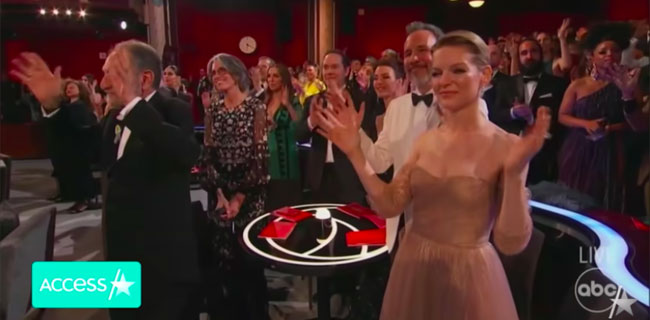
    The Oscar audience applauding Best Supporting Actor Troy Kotsur in sign language. Picture: Screengrab from the Oscar award ceremony – Access/ABC


    By Shruti Pushkarna


    Shruti PushkarnaCODA (Child of Deaf Adults) was named the ‘Best Picture’ at the 94th Academy Awards presented in Los Angeles on March 27, 2022. Equal rights and disability inclusion advocates across the world, reveled at this historic win.


    Personally, I felt vindicated. As someone who firmly believes in integrating persons with disabilities into the mainstream, I have consistently decried stereotyping, misconstrued portrayals and minimal visibility of the subject and the community in the media.


    We have seen several Hollywood and Bollywood productions in the past, focused on the subject of disability and social issues around it. What makes CODA worthy of such an esteemed accolade?


    Unlike its predecessors, the disabled characters in this gripping family drama are played by deaf actors. The central character of the movie is seventeen-year-old Ruby Rossi who is the sole hearing member of a deaf family. She is torn between her desire to pursue her passion of singing and helping her parents and brother with their fishing business. After years of playing the interpreter and the link to the ‘speaking’ world, she finds it hard to prioritise her dreams.


    The film has several scenes which bring out the unique identity of each family member, through the interactions between parents, children, siblings and the external environment. In an emotional exchange following her choir recital, Ruby’s father feels her vocal cords as she sings exclusively for him, so he can ‘experience’ what others can ‘hear’.


    Soon after the official announcement, social media platforms were full of admiration for the cast and their outstanding performances. Troy Kotsur became the first deaf male actor to win an Oscar (Best Supporting Actor) for his role of Frank Rossi (Ruby’s father) in the film. Sign language memes and GIFs populated timelines with ensuing threads on accepting differences, accommodating diverse groups and adopting new ways of communication to stop the ‘othering’.


    There was also a flurry of coverage in the Indian media, especially news items showcasing awe-inspiring stories of successful hearing and speech impaired people. Journalists and critics compared the American production to some of the Indian films that have tackled similar themes. One piece deemed CODA as the ‘spiritual successor’ of Sanjay Leela Bhansali’s film Khamoshi that released in 1996. It’s true that both the movies revolve around a young girl torn between responsibilities towards her deaf family and personal aspirations to pursue music. Yet, the depiction, characterisation and messaging vary in more ways than one.


    Following the coverage on cinematic representations of deafness and disability, I also recalled the 1972 Sanjeev Kumar and Jaya Bhaduri starrer, Koshish. It’s the story of a deaf-mute couple and their everyday struggles, including the challenges of raising a son. Unlike the Oscar winner, there is little use of sign language on screen and the hearing child ends up giving in to his parent’s desire.


    None of the Bollywood productions have been brave or open enough to cast disabled actors for an authentic performance. In a way, we have only witnessed an ableist act projected on the big screen. Films like Black, Margarita with a Straw, Paa, Guzaarish et cetera attempted to address the social stigma around different types of disabilities but somehow, ended up propagating a misconceived idea. Exaggerated fictional accounts and over-dramatisation reinforced stereotypes in the minds of audiences.


    The same is true for some Hollywood portrayals. Disability advocates have criticized the shallow understanding of issues and incorrect depictions in films like Rain Man, The Theory of Everything, My Left Foot and so on.


    Does the prerequisite to entertain supersede the need to educate and sensitize? Does dressing up the reality make it more palatable and less alienating?


    More than the credible rendition, what truly sets CODA apart for me, is a critical shift in the approach towards inclusion. Through the movie and ultimately through Ruby’s choice of going off to Berklee College of Music, the onus to include no longer lies only with the deaf. The surrounding able-bodied fishing community takes cues from the Rossi family and finds ways of interacting, socialising and transacting in mutually beneficial ways.


    Shruti Pushkarna is a former journalist who now works as a programmes and media specialist for the inclusion of persons with disabilities. Shruti was part of the founding team of MxMIndia and now writes for MxMIndia every other Thursday. Her views here are personal. She can be reached via Twitter at @shrutipushkarna


  • Reviewing the Reviews: Critics praise quality & performances in Ram-Leela, pan over-the-topness

    By Deepa Gaholot


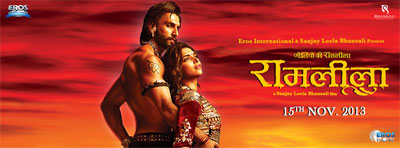
    Goliyon Ki Rasleela Ram-Leela

    Director: Sanjay Leela Bhansali

    Starring: Ranveer Singh, Deepika Padukone, Krishna Singh Bisht, others


    This is a rare film that gets crazily mixed reviews from 1 star by rediff.com to 5 stars by Times of India and every combination in between.


    Most critics praised the visual quality and performances, but also panned the excessive ‘over-the-topness’ of everything.


    Raja Sen of rediff.com ripped it apart, calling in an over-plotted bloody mess. “Goliyon Ki Rasleela Ram-Leela — an acronym of which unfailingly reminds me of Greater Kailash Residential associations — is a monstrously excessive film with a riot of colours, a girl who looks very pretty indeed and a daft hero, but despite that being the warning on the tin whenever you attempt (foolhardily) to buy into a Bhansali product, this can’t be what you bargained for. GKRR is an overplotted, bloody mess.”


    Meena Iyer’s review didn’t match its 5 star rave. “What new can a filmmaker do with William Shakespeare’s classic love story Romeo and Juliet? The answer is, if you are Sanjay Leela Bhansali, who is technically sound and artistically astute as far as art and craft go, you just become impudent, set the story in Gujarat, sign Bollywood’s currently best actress Deepika Padukone (Leela), team her up with `I’ve-got-fire-in-my-loins’ actor Ranveer Singh (Ram) and then let them loose on one another.”


    Rajeev Masand of CNN-IBN was mostly rave. “Bhansali brings all his tropes to the table – unabashed melodrama, stunning visuals, elaborately choreographed dance numbers. Yet, it’s the firecracker chemistry between his leads, and the genuine feeling he infuses into the film that separates Ram Leela from previously disappointing outings, particularly Saawariya and Guzaarish, that were weighed down by shameless manipulation and pretentious, heavy-handed filmmaking.”


    Shubhra Gupta of Indian Express was mostly rant “Bhansali’s ‘Ram-Leela’ is mounted as pure spectacle, no surprises there, because that is his style. The setting is the Rann, in Gujarat. The warring clans, the Gujju versions of the Montagues and Capulets, are attired in costumes where not one thread is out of place. Each scene is meticulously designed: the desert, the havelis, the swirling ghagras, the spurting of the blood. It gets to the point where you start feeling breathless, and that is exactly what Bhansali intends, for you to get encircled by his universe. And in that he succeeds. I was swept up by the way he builds up the love story, between Ram (Ranveer Singh) and Leela (Deepika Padukone). Where he fails– his old failing– is in the insistence on every little thing being perfectly choreographed: a messy love story requires messy emotions, and Bhansali doesn’t ever let his gorgeous Leela’s tears streak down her cheeks. No leaky nose, no hiccups, just back-lit loveliness, which becomes too perfect to be real.”


    Sudhish Kamath of The Hindu wrote, “Bhansali has figured out that he does not need to look far West for inspiration. Okay, it might have loosely borrowed a few things from Shakespeare’s Romeo and Juliet but diegetically, it’s Indian in form.


    So yes, the havelis from Hum Dil De Chuke Sanam are back. So are the chandeliers from Devdas and the folksy refrains from the former. In fact, the backdrop is not only picture perfect, the production design is so rich that you can rarely tell where location ends and set design begins. This is home turf and Bhansali knows the world in and out. While he has always had an eye for aesthetics and sensual shot taking, the director had also kept it contained. In Goliyon Ki Raasleela Ram-Leela, he lets it loose. This is certainly his most uninhibited film with raw sexual energy and explosive chemistry between the two of the best looking people in the country.”


    Saibal Chatterjee of NDTV.com was scathing. “The film doles out super large helpings of everything under its grandiose narrative canopy – be it the oft-repeated story of star-crossed lovers, the garish sets, the musical score, the choreography, the costumes, the pitch of the acting, the delineation of the principal characters or the saturated colour palette. Even on the rare occasion where he gives minimalism an attempted shot, as when he lets the characters articulate themselves only through physical gestures and facial expressions, SLB does not pipe down one bit. He goes for broke every which way. It all adds up to a somewhat disorienting sensory assault mounted by a filmmaker who believes that excess makes excellent sense. Goliyon ki Raasleela Ram-Leela is composed of such a riot of colours that the hues often bleed into each other, leaving behind blobs and blurs. ”


    Finally, seeing it from the point of view of an outsider, unaffected by the hype. David Chute of Variety summed it up well. “”Ram-Leela,” a gorgeous, boisterous, ultimately ineffective new Bollywood adaptation of “Romeo and Juliet,” does accomplish one thing that is quite unusual: it manages to keep you in suspense about the outcome almost to the last frame. Not a bad trick for a re-telling of one of the most familiar narratives in world literature. In fact, this points to a central weakness of writer-director Sanjay Leela Bhansali’s film, which for much of its length is such a brightly-colored song-and-dance entertainment that auds may wonder if it’s working towards a revised, happy Bollywood ending. (Some may even hope as much, as the movie doesn’t seem serious enough to merit a tragic one).”

     

  • High expectations from Bhansali’s Saraswatichandra on Star Plus

    By A Correspondent


    Nikhil Madhok

    “Expectations are high from this show as it would be from any other show that we launch. Saraswatichandra is being mounted on a very large scale,” says Nikhil Madhok, vice president, Marketing, STAR Plus when asked about Saraswatichandra.


    The serial marks the debut of filmmaker Sanjay Leela Bhansali on the small screen. The filmmaker, credited for creating memorable characters in his epic love stories, will replicate his magic through a modern-day portrayal of Saraswatichandra and Kumud. The show will feature Gautam Rode as the multi-layered Saraswatichandra while Jennifer Winget plays the role of Kumud. Actors Monica Bedi and Chetan Pandit will also play pivotal parts in the show. While Sanjay Leela Bhansali is also the creative director, Arvind Babbal will be the series director for the show.


    The show premieres on Star Plus on February 25, and will run Monday to Friday at 7.30 pm.


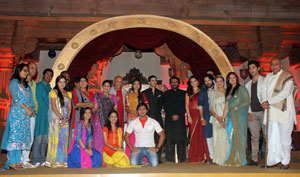
    Sanjayleela Bansali along with the entire cast of SaraswatiChandra

    “Mr Bhansali has got into every detail of every character. He is amazing in making us understand our role. I have been amazed and have been able to understand the character of Saraswatichandra better as he explained it to me brilliantly,” said lead actor Gautam Rode, on how different it was to work with the filmmaker on a daily soap.


    “The show is being promoted through beautifully crafted and mounted TVCs, building up the enigmatic hero Saraswatichandra and the quintessential heroine Kumud. We also did a exclusive web premiere of the show on Valentine Day and a spectacular light and sound show on the elaborate sets to formally announce the show launch. The visual splendour of the show will be further built on outdoor and print closer to launch,” added Mr Madhok.


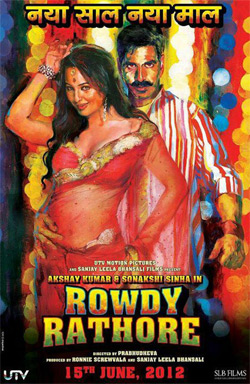
  • Reviewing the Reviews: Rowdy Rathore

    By Deepa Gahlot


    Producer: Ronnie Screwvala, Sanjay Leela Bhansali

    Director: Prabhudheva

    Music: Sajid-Wajid

    Cast: Akshay Kumar, Sonakshi Sinha, others


    These days, most critics have nothing against mainstream cinema. But Rowdy Rathore is the kind of film that has the mildest of then gnashing their teeth in frustration, because the success of such a bad and old-fashioned film is inevitable.


    The masses want mindless entertainment even today, they don’t care how loud, crass or silly the film is; does it give them their money’s worth?  For the non-massy types, such films are a kind of guilty pleasure.  What shocked most is that Sanjay Leela Bhansali is partly responsible for unleashing this on the public.


    Except for Taran Adarsh’s 4 and The Times of India’s now-standard 3 stars, everybody else tossed between 1 and 2. Writes Adarsh, with an eye firmly on the ticket windows of single screen cinemas. “On the whole, Rowdy Rathore, is designed to magnetize the masses in hordes. The accurate blend of action, emotions, drama and humor, besides a superlative performance by Akshay Kumar, makes this motion picture an immensely pleasurable and delightful movie watching experience. If you savour typical masaledaar fares, this one should be on your have-to-watch listing for certain. Dhamaal entertainer!”


    Srijana Mitra Das of the TOI gushes, “Indeed, Rowdy Rathore pays homage to iconic filmi characters – identical heroes, golden-hearted chors, brave Men in Brown beating evil people to pulp. However, it pays most homage to its own star, Akshay Kumar, who pulls off Shiva with style but Vikram less so, possibly because all that violence overwhelms acting itself. Not that the crowd seemed to mind. As Shiva exhorts a woman raped by Baapji’s son to beat him up, the girl next to me cried, “Why doesn’t she?” Her neighbour replied, “She will.” And she did – much to the crowd’s Rowdy delight.”


    Saibal Chatterjee of NDTV gave it 2 stars and commented, “Rowdy Rathore is a shrill action flick designed to help Akshay Kumar return to his hit-making ways. Accept that obvious intent and you might actually end up enjoying certain parts of the film against your own better counsel. Isn’t that the effect that many a Bollywood potboiler of the 1980s would have on us? Yes, Rowdy Rathore employs narrative elements that hark back to a bygone era of Bollywood potboilers: two men who look like each other without any apparent reason, a bunch of baddies that snarl and snap at the slightest provocation and indulge in rape and pillage with abandon, and the good old back-from-the-dead revenge seeker who goes back dispensing rough-and-ready justice.”


    Two stars from Raja Sen of rediff.com.”Inured to the kind of exploding-beedi violence promised by the trailer, the film instead starts stupid and stays silly. This is much more like an early Khiladi movie — where Kumar recklessly got away with anything, goofily stumbled towards the climax and then proceeded to kick bottom without mercy — than any of the recent films which have completely forsaken plot. As a result, it’s far less objectionable. Still moronically stupid and entirely pointless, but nowhere near as horrid as what the genre’s been reduced to in the last couple of years.”


    Shubhra Gupta goes with 2 stars as well, “We don’t have to be told that this is a remake of a Telugu film. It could have been in mainstream Tamil or Kannada. Because whether it is Priydarshan or Prabhudeva (who has directed this one), the film is bound to have South Indian actors trying to pass off as North Indian. Fictional towns which look as if they’ve been created on a set. Blinding colours. Songs at the drop of a hat. Dialogues which don’t go beyond a line. Or two. And a leading lady whose job description is, apart from possessing a swaying ‘kamariya’.. um, let me think about it.”


    Now come the one star rants. Anupama Chopra writes, “Don’t Angry Me! Akshay Kumar bellows this often in Rowdy Rathore. At one point, the command even plays out as background music. I think viewers need to co-opt the line. To all the directors, producers, actors who are inflicting eighties-style, low-IQ, deafeningly loud, unapologetically crass, mind-numbing movies on us, I just want to say: Don’t angry me! Don’t exhaust me! Don’t bludgeon me!”


    Rajeev Masand comments, “Rowdy Rathore is the kind of movie that’s made by people with a cash register in place of their brain. Because no legitimate reason, other than financial gain, can justify why this movie was made – it has no story or plot whatsoever, the characters are entirely forgettable, and it’s so long and loud and silly that the laughs dry up early on. That the film has such impressive pedigree – it’s produced by Sanjay Leela Bhansali, directed by Prabhudeva, and stars Akshay Kumar – is both baffling and shameful.”