Tag: Sandeep Khewale

  • By Invitation | Why it’s so important to get agency relationships right and how to do it: Sandeep Khewle, CEO, FirmDecisions India

    The last month has seen a major controversy around the decisions allegedly taken by the former CEO of one of India’s largest creative agency network and part of one of the most respected advertising networks in the world. Nothing has been on record and decidedly not in public, so we can’t name names. For the moment, it’s being dismissed as a silly rumour.


    Be that as it may, last fortnight, we published a comment by Prabhakar Mundkur which was very well-received. Soon after, we also invited Sandeep Khewale, CEO, FirmDecisions India to comment on the issue of transparency and how the marketing business can take measures to ensure transparency. – Editor


    By Sandeep Khewle


    In India and other major markets around the world, relationships between advertisers and their agency partners are under pressure like never before. This is true for both media agencies of record that plan and buy campaigns as well as creative agencies which develop creative assets to sell and represent the brand. The media and marketing ecosystem is becoming complex day by day and the options available for brands multiply ongoing basis, including into the realm of customer experience.


    The increased complexity of media and creative agency relationship demands greater scrutiny, knowledge, and professionalism in advertiser companies. This is necessary to ensure that agency partners deliver optimal value and return on investment. It’s also vital to determine that agencies aren’t cutting any corners that are in their own – but not their clients’ – best interests. It means that marketing, finance, and procurement teams at client-side need to work together to build functional and effective partnerships with their agencies of choice. Get it right, and the benefits on both sides can be transformational. Get it wrong, and brands can find themselves having to embark on the laborious, costly, and time-intensive process of finding a new partner all over again. In essence it all comes down to openness, transparency, and trust.


    Contracts are king

    In any agency partnership, it’s important that advertisers put in place a contract that enshrines their rights in a simple and clear manner. Contracts should be regularly reviewed – as often as annually in the ever-changing marketing landscape – and amended to include developments in supply chain management, agency ownership structures, and technology. Contracts must also be signed, by both parties. It seems like a trivial issue, but it is not uncommon for both global and national brands to operate with contracts that remain unsigned, months and even years after they’ve been drawn up, putting into question the enforceability of the terms if issues arise.


    The right to audit

    It is critical that contracts provide advertisers with complete and transparent access to all marketing and financial data related to their business, and this can come in the form of data or platform access, supplier contract ownership, and financial transparency. Contracts with agencies also need to include clauses that stipulate rights to an independent audit.


    We have seen contracts which specify that audit partners should be restricted to just one of the Big Four, global auditors. This presents two key challenges. First, the Big Four are not specialists in marketing contract compliance – they’re generalists, and so advertisers working with the Big Four (or anyone else not specialists in the field for that matter) may not be in receipt of the best advice available. But second, advertisers shouldn’t be told by their agencies which audit partner should be used to assess the work of the agency. Advertisers should be free to appoint whoever they choose as their audit partner. If not, it’s like a student grading their own exam paper. Being compelled by contract to choose from a limited pool of non-specialist auditors is little better than having no right to audit at all.


    Creative agency focus

    The industry focus for the last few years has been on media agency transparency, but it’s not only in media where advertisers need to enshrine transparent ways of working in their contracts. It’s vital in creative, too. It’s well known that media agencies can receive benefits from media vendors (publishers, platforms, and sales houses) for purchasing media inventory in bulk on behalf of multiple clients. Unless they’re explicitly called out in advertiser-agency contracts, these benefits can stay with the media agency and not be returned to the brands who fund the marketing ecosystem.


    In exactly the same way, there are issues of transparency and trust that advertisers need to address with their creative agencies. These include: creative agencies’ failure to reconcile project costs or the moving of residual balances into holding accounts, both of which can lead to money not being passed back to advertisers; the over-recovery of staff costs; the outsourcing of studio or production services to affiliates owned by the holding companies, without undertaking competitive bids, circumventing due process; and, bid rigging (making the agency affiliate the most cost efficient option). What’s more, choosing to work with a limited pool of production houses – because they are owned by or affiliated to the creative agency – means that advertisers can end up sourcing talent which is neither the best nor the most relevant for brand campaigns.


    In summary

    It’s the high-profile agency misdemeanours that make headline news. Yet in reality, advertisers should strive to make all of their agency relationships work hardest for them, in media – of course – but also in creative and production. The chances of being under-served abound when you take your eye off the prize; the opportunities for building a solid partnership in everyone’s best interests only emerge when these critical relationships receive proper attention.


    Sandeep Khewle joined FirmDecisions in 2017 to set up business operations in India. Prior to joining FD, he was Financial Controller at Publicis Media and has worked in advertising, ITES and the BFSI sectors. FirmDecisions is the one of the largest independent global contract compliance specialists. It provides advertisers with transparency into their marketing and media agencies. It works closely with advertisers and their agencies to validate and verify that clients receive what they pay for. Over the past 15 years, FirmDecision says it has completed over 4,500 audits in 70 countries, examining over $200 billion in transactions.
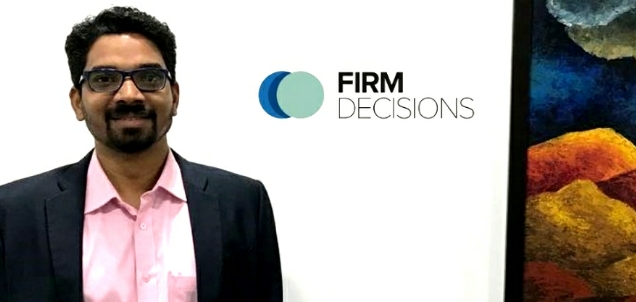
     

  • Bringing in Transparency, the Firm Decisions Way


    By A Correspondent


    There is much talk of transparency and probity in financial dealings these days. But this isn’t about what’s happening to our hard-earned monies in some of our banks. But about FirmDecisions, billed as the largest independent global marketing contract compliance specialist. That descriptor is enough to say what FirmDecisions is all about. In India since last year in partnership with SpatialAccess and having worked with Indian clients for more than a decade, FirmDecisions set up shot in India to conduct media – financial compliance audits. Over a face-to-face conversation and email, Sandeep Khewle, CEO, FirmDecisions India, told MxMIndia about the objectives of his firm, how it’s been doing in India and on the need for audits for marketing spends. Here goes:


    It’s been a little over a year since ‘FirmDecisions’ set up in India. How has the journey been so far? I remember your global CEO Stephen Broderick saying that India will contribute around 10% to your overall business. Are you on course to achieve that?

    We officially started our operations in September2017 and the response has been fantastic. Indian advertisers and marketers were very curious about the service and were keen on knowing more, how does it work? Will agencies “permit’ access to their books? How can we get insights into the volume rebates issue? These were some of the questions that came up from the market. Our support has been wide ranging from Industry bodies such as ISA [Indian Society of Advertisers] who wanted its members to know more to individual corporates who reached out to us.


    As of now we are on track. While our global client mandates in India continue to grow and lead our India revenues, we have even had significant breakthroughs with Indian conglomerates and are in the middle of expanding the market.


    Given that you are kind-of gunning for errant spends by marketers and advertising agencies, have you applied for Z-category security already?

    In last 19 years of operations, FirmDecisions has worked with all the top global agency groups around the world. Agenciesand their holding companies understand our services and how we function and our professionalism ensures that the clients’ interests are always protected.


    Even in India that is our approach. We don’t need Z-Category security because marketers ensure that we stay in the game, thanks to the clear measurable benefits they get from engaging us.


    On a serious note, the very fact that you exist here, indicates that perhaps all is not well or rather all is not being spent well in the marketing services ecosystem?

    All is not well in the global marketing service ecosystem and that has been proved across the world in market after market, including those which were seen as “traditionally transparent” like the US.


    Research and investigations by bodies such as the ANA and WFA has uncovered many issues with transparency. This is a global phenomenon driven to a large extent by the fact that the agency ecosystem has been volunteering fee shrinkages in market after market to retain business. No organisation will retain unviable business.


    Fee reduction is possible only when there are other income streams andthese income streamsare what is keeping the Media agencies afloat. The fact that many media vendors are also facing bottomline pressure makes them more susceptible to providing incentives to the agency.  Thus, the entire ecosystem has become increasingly opaque. In the past few years, issues with transparency have been uncovered several times around the world and India is no exception.


    Our domain expertise (media and finance) ensures that we can dig deep and dig out the true picture. This can lead to savings, but more importantly it leads to better contract terms that provide more comfort for advertisers and a more trusting relationship between them and their agency partners.


    Could you give us an estimate of the incorrect marketing spends that currently happen in India?

    India is the seventh largest media market in the worldannd is one of the few markets showing a significant rate of annual growth. What’s more this market is dominated by a handful of global players unlike China which is a fragmented market with many local players.


    Global players work to a standardised plan across markets and have consistency in their policies and operations. Given this background it would be fair to say that roughly 75% of mediaspend in India is in need of governance and corporate diligence. This is a very conservative estimate.


    And how would the India scenario differ from elsewhere in the world?

    The Indian media market is almost the same as the rest of the world in terms of lack of transparency.Advertisers need stronger agency contracts to unveil any previously undisclosed deals between the agencies and the vendors, while ensuring that all the benefits are passed back.


    Further, India is also following the global digital rush, with digital spends growing by the day. There is still an opportunity for Indian marketers to be diligent about digital spends from an ROI perspective before that too becomes an issue.


    I gather that most of your client mandates are essentially international clients with contracts extended to India, how has your interface been with Made-in-India businesses?

    When we started our operations in India last September, we were prepared for a lot of awareness generation, given that in India compliance and governance are topics that are met with weary cynicism.


    A large number of global clients mandate Governance and contract compliance at a central level. Often this is done with a partner who maynot be the best to deliver deep understanding and results, but it is done, and the box is ticked. For Indian clients the approach is very different. It has less to do with ticking the box and more to do with a genuine desire to understand what happened to their money.


    Thus, we found that to MNCs the concept was part of their global SOP and while the Indian operations were not thrilled they did not have an option and could not refuse the access. To our surprise, Indian conglomerates welcomed us with enthusiasm! They were very keen on understanding the service given the fact that it can find previously undisclosed sums! The overall response from Indian clients has been great and they are now accepting the importance of compliance in marketing/ Media services contracts as the other statutory functions.


    Do you see reluctance on the part of agencies to collaborate with you?

    As I mentioned earlier,we have worked with all the agency groups inthe past in some or other part of the world already. The agencies do respect the professional relationship we hold and have been very co-operative to date.


    Has a CMO lost his/her job because of a ‘FirmDecisions’ report?

    Never.FirmDecisionsis the largest independent global marketing contract compliance specialist.  We work closely with advertisers and their agencies to validate and verify that they received the advertising services that they paid for.


    Our job is to put the facts on table and the objective is to strengthen the relationship between advertiser & the agency.


    But, often, there is a view that there is value put to the creative and innovative work that’s put by the agency. There is an X factor that CFOs and commercial/procurement department professionals don’t seem to be able to appreciate?

    CFO and procurement roles have evolved togreat extent in the past decade. I think CFOs or procurement professionals understand the creative/ innovative work like never before.

    While organisations have rigorous processes like the CAPEX to ensure a viable investment by putting multiple checks in place.


    However, in case of Media / Marketing spends (one of the biggest payouts), the rigor slows down after the partner AOR comes on board and the decision making of media expenditure is transferred out of the finance function.


    It is important for non-finance or creative professionals to assign a diligent commercial value to creative work. Commercial viability is the key to appreciate any creative / innovative work done by the agency.


    I must mention that the CFOs and procurement have other sides to manage i.e.: commercial viability. The commercial valuation of creative / innovative work is an important aspect that CMOs and CFOs must discover collectively.


    Lastly, if I were to make an elevator pitch to someone about your work and how there’s ‘samajhdaari’ to retain your services, what would it be?

    “FirmDecisions will tell you if your contract is strong enough to demand a top class, accountable, transparent service from your partners”


    FirmDecisions is the premier and largest independent global marketing contract compliance specialist. Over the past 19 years we have completed more than 5000 audits in 70 countries, examining over $200 billion in transactions.Our team holds strong experience in agency finance and that’s how we can ensure transparency without any disruption to business as usual.


    India as a market is moving towards increased transparency and integrity. We are here to bring our global expertise in media and marketing compliance, and act as a catalyst in facilitating this change – change that a market the size of India deserves.