Tag: Sandeep Goyal

  • Rediffusion files trademark for ‘Postalgia’

    By Our Staff


    Sandeep Goyal is at the helm and it’s raining communiques and announcements. The Rediffusion Consumer Lab (Red Lab) has coined a new word, Postalgia, or nostalgia in the future tense or ‘post-nostalgia’. It has filed a trademark on the usage of the word.


    Said Navonil Chatterjee, Head of Red Lab and the person who coined the term: “Postalgia is a new pandemic-driven twist to the traditional concept of nostalgia. We at Red Lab observed this trend of consumers today wanting the future to reflect their pandemic-freepast, and came up with the term postalgia to describe it. If nostalgia is for the past or the ‘pre’, postalgia is all about the future or the ‘post’. Hence the coinage.”


    Added Goyal, who is Managing Director of Rediffusion Brand Solutions: “Trademarking of ‘postalgia’ is just to ensure that Rediffusion and Red Lab are credited for the coinage. We will otherwise encourage its widespread media usage, and its usage by brands. Red Lab is dedicated to greater understanding of consumer behaviour, and to sharing key insights with our clients and peers.”


  • Can Kamlesh Pandey help Rediffusion get its mojo back?


    By Our Staff


    Rediffusion has announced the return of its most famous alumnus, Kamlesh Pandey, as ‘Legend in Residence’. Pandey, who has nearly 45 years of experience in advertising, 35 years in films, and 30 years in television is an awardwinning bilingual writer. He was Creative Director at Rediffusion from 1976 to 1992. And returned again in the late 90s and early 2000s for a short innings. He is 72 and will join the agency on June 1.


    Some of the copy lines written by Pandey are legendary: ‘Whenever you see colour, think of us’ (Jenson & Nicholson), ‘Hum Red & White peenewalon ki baat hi kuchh aur hai’(Red & White cigarettes), ‘Palmolive da jawab nahin’ (Colgate Palmolive), ‘When it can’t be done, it must be done’ (J&N Corporate), ‘Gimme Red!’ (Eveready), ‘Annu taazgi de’ (Tata Tea) and many many more. Pandey entered the CAG Hall of Fame in 2005.


    Said Diwan Arun Nanda, Chairman & Founder of Rediffusion who recently sold the agency to senior advertising professional Sandeep Goyal. “I am delighted that Kamlesh Pandey is back home to Rediffusion. I have the fondest memories of working with him on some of India’s most acclaimed campaigns. Pandey commands a first-hand experience, and a deep insight into the lives and aspirations of the people of India. Which is why his thinking for brands is rooted in reality, and his creatives are always memorable,” adding: “Pandey will help the younger talent at Rediffusion to understand consumers better, think differently and write differently”.


    The industry has been abuzz with the development. While one former agency honcho remarked: “Brilliant idea – so Sandeep,” crediting Goyal for doing a smart one to bring back some of the lost glory.


    Another former agency captain was less charitable: “He’s been brought in many times in the last 25 years to resuscitate an ailing Rediff. Famous Rediff magic trick. It’s like bringing Mohammed Khan back somewhere as legend in residence.”


    So what will Pandey do in the agency? According to Dr Sandeep Goyal, Managing Director, Rediffusion, as ‘Legend in Residence’, Pandey will interact with Rediffusion clients. “[He] will discuss emerging consumer trends and help figure where the maximal opportunities exist in both Bharat and India; and how best to pivot brand communication for a real and enduring connect with consumers of tomorrow,”


    Commenting on his return to Rediffusion as ‘Legend in Residence’, Pandey added: “One way, it feels like ‘Back to the Future’. A lot has happened in Rediff since I left Rediff – Rediff managed to shake off the appendages of ‘Y&R’ and ‘Dentsu’ and returned to its original heart, mind and soul, the fearless spirit and the creative precipice that drove it in late 70’s through 90’s, the values that never left me long after I left Rediff and romanced Bollywood with some success. And now it’s great to be back. Great to be with Arun, Ajit and Sandeep. Great to be home among those who managed to get the best out of me, and those who are currently giving their best to take Rediff to a future that could be the pride of the past”.


    When Goyal took over Rediff, one expected him to come up with some moves like these to get into the limelight. Finally, of course, getting a fresh set of big ticket clients and getting back the freshness in the advertising will finally decide on whether this and other moves will work for the aggression which a typical Sandeep Goyal operation promises to bring in.


  • By Invitation | Prabhakar Mundkur: Rediffusion – Never too late?

    Prabhakar MundkurBy Prabhakar Mundkur


    “Tomorrow is nothing, today is too late, the good lived yesterday”.


     Marcus Aurelius


    Rediffusion has come a long way since WPP’s Martin Sorrell made a bid to up his 26.7% stake in the agency in the early millennium, which had a tripartite shareholding of WPP, Dentsu (13.3%) and 60% owned by Dewan Arun Nanda and Ajit Balakrishnan.  The two international shareholders holding 40% were strange bedfellows making the once highly regarded agency a bit of an oddity.   The agency touted some of the industry’s best people once upon a time including the late Dr Ashok Bjiapurkar and Kamlesh Pandey who later moved on to script writing in Bollywood. Not to mention many other well-known names like V Shantakumar. Why, even Mohammed Khan was one of the original founders before he went on to start Enterprise.


    Like many agencies of its ilk, it kept attracting back some its best names in some consultative capacity or the other.  Mr Nanda is known to have had good ties with most of the people who worked for him and that could be the reason.


    According to the grapevine those days, Nanda might have paid dearly for refusing Sorrell’s offer to increase his stake in the early millennium.  Sorrell was known to be very clear in the ownership patterns of his acquisitions. He always wanted a clear majority and typically the starting point would be at least 51% share before engulfing most of the remaining stake in the shortest period of time.  People those days spoke in hushed whispers that Sorrell had threatened that if he couldn’t increase his stake in the agency, he would pull out its largest piece of business which at that time was Colgate, being a global Y&R account and terminate the Y&R partnership with Rediffusion. Moving global accounts to another agency is not a piece of cake, but Sorrell finally seems to have carried out his threat by moving Colgate to Bates 141, which created a special unit to handle the account, reporting directly to the Y&R global management. This gave credence to what thus far was attributed to agency gossip.


    Team Colgate was a typical WPP style business unit that that had become Sorrell’s favourite model, a prime example being GTB for Ford.  This ensured that Sorrell had direct control over some of the most important global accounts in the group.  There is a bit of history there, since the agency heads of individual accounts can become quite powerful with time. A great example was Peter Schweitzer at JWT, who by heading the Ford account which once upon a time contributed to almost 25% of JWT’s global revenue, grew too powerful for Sorrell’s liking. When Schweitzer retired as CEO, Sorrell quickly moved Ford from JWT into WPP’s special unit called GTB thereby retaining direct control over this large piece of business.


    When Colgate left Rediffusion, it was a telling blow.  Losing large accounts didn’t faze Rediffusion. They had lost Airtel in the first decade of the millennium. And after Colgate they it lost the Tata Sons PR business which was placed in their partnership with Edelman to Adfactors.


    In the M&A business, timing is critical. Both for the buyer and the seller. Rediffusion no doubt was well past its best valuation having waited too long for someone to come along.  But the ego and the resilience of the founders kept it plodding along.  What has Sandeep Goyal really bought into, one is not quite sure. The press release talks of its past glory rather than anything else clearly making it a ‘has been’.


    So it would be interesting to speculate on what Goyal would do with the agency he has bought.  He would necessarily have to fill the shell with some meat. If one goes by his earlier reputation, he is known to walk into agency pitches with a bag full of advertising campaigns, something that used to shock advertising professionals 20 years ago because it painted a picture of the ‘servile’ model for advertising.  Servility in the advertising business has peaked since then and also contributed to its downfall.


    The industry did little to continue the legacy of equal partnership and mutual respect with clients.  It needs to be seen however whether the same tactic will work today.  His long-term gameplan of course would be to dress up the bride.  For this, he would need to build adequate value in Rediffusion to attract a global agency for an acquisition.  Of course he can hardly be underestimated. His aggressive business stance is well-known.  As is his passion for hard work, and particularly his extreme dismay at losing.


    But it may take a while for the once famous agency of yore to re-acquire its earlier halo!  For Rediffusion, Sandeep Goyal might well be its Angel Gabriel, the Arch Angel of Resurrection, the Voice of God and the Bringer of good news.


    Prabhakar Mundkur is a veteran advertising person, a former agency CEO – in India and elsewhere in the world, a musician, a music producer, a talkshow host, a prolific commentator and a great conversationalist with an infectious laugh. His views here are personal.


  • Finally done. Sandeep Goyal buys Rediffusion


    By Our Staff


    Two years back, on May 27, 2019, to be precise, MxMIndia carried a speculative story titled ‘Is Sandeep Goyal buying into Rediffusion?’.


    When the media publishes speculative stuff, in all likelihood the deal is done. It’s only not official. So when a veteran adperson alerted us of the news on Saturday evening, our instant response was: Okay, we’ve heard that before.


    The morning after, given the mad rush to arrange an oxygen cylinder for a friend and the election results thereafter, we just parked the news to be tackled in the evening. And then we read the news on a couple of other websites.


    And in the evening, we had this official press release coming in.


    Let’s read what we’ve received, and then interpret it.


    Diwan Arun Nanda and Ajit Balakrishnan, the founders of Rediffusion have decided to step back from the day-to-day management of the 48-years-old ad agency. However, Diwan Arun Nanda shall continue to mentor the agency and will stay on as Chairman. Ajit also will step back from all day-to-day operations here but focus his attention on Rediff.com, the technology world and public service and will be always available to Rediffusion for any guidance it may need going forward.

    Sandeep Goyal, a past President of Rediffusion (1997-2001) will come back as Managing Director.

    Rediffusion is even today, India’s largest independent full service ad agency and was set up in July, 1973. Over the years the agency has created some of India’s most iconic and memorable advertising for brands like Jenson & Nicholson, Eveready, Parle, Garden Vareli, Godfrey Phillips, Tata Tea, Lakmé, Telco (Tata Motors), Colgate Palmolive, Citibank, Maruti Suzuki and many others. Rediffusion also launched brand Airtel in 1995. The agency currently works with Tata Sons, Parle, Tata Trusts, Tata Motors, State Bank of India, Liebherr, Larsen & Toubro, Brookfield, PGIM, Orra, Eveready, Deys Medical, Sulekha, Danone, Sun Pharma, Dr. Reddys, Audi India and many more.

    Said Diwan Arun Nanda, Chairman, Rediffusion: “Rediffusion has been known over the years for advertising that became famous and part of the language and the culture of the people, and helped brands build long term, and lasting equity with consumers. Whenever you see colour, think of us for Jenson & Nicholson was a path breaking campaign. So was Hum Red & White peene walon ki baat hi kuchh aur hai for Red & White cigarettes, Annu taazgi de de for Tata Tea, Gimme Red! for Eveready and the recent Isko laga dala, toh life jhingalala for Tata Sky. Rediffusion was also responsible for creating the cult ad film featuring AR Rahman, with the very memorable Airtel brand tune that has had the highest number of downloads in history.”


    Is Goyal Generation Next? Well, he is in his late 50s and Nanda and Balakrishnan in their late to mid-70s. Not exactly the next generation, in the way it’s made out to be. But what industrywatchers (and more importantly, Goyal-watchers) tell us is that Goyal will usher in huge energies to Rediffusion as well as the creative agency business. There is no word on Goyal’s daughter Carol assuming a role in agency, but then these are early days.


    While the press release received doesn’t indicate how much of stake has been sold, as per the grapevine, Goyal will be 100% owner of Rediffusion. People in the investment circuit, indicate that the valuation which Nanda and Balakrishnan would’ve got for the twin agencies of Rediff and Everest would be in the region of Rs 20-30 crore, a dramatic fall from the Rs 100 crore that was rumoured to be offered by WPP, and twice that by Havas a few years back.


    The agency’s books are in good shape, as of now, with costs haven’t shaved off in a big way. There are a few clients who are loyal, and given Goyal’s deep connects in the industry (if the turnout at his book releases are any indicator), we could see some fireworks all over.

  • So who is India’s Most Progressive Celeb?


    By A Correspondent


    The Indian Institute of Human Brands (IIHB) has released its Tiara Research Report on Celebrities as Human Brands. The Report was released by the Coach of the Indian Cricket team, Ravi Shastri and Dr Sandeep Goyal, Chief Mentor of the IIHB on Dussehra day in Mumbai.


    Sandeep Goyal

    Said Dr Goyal: “The sample size of the TIARA Report is 25% bigger than the universe of TRP data collection currently being done by BARC. Our respondent base is 60,000; while BARC only covers 44,000 respondent homes. So, the study is comprehensive and representative of the entire India market. We have covered 23 cities. No study on celebrities hitherto has been so detailed and exhaustive. We have used 64 active attributes in the analysis of every single celebrity. Totally, there are over 100 data points that have been used in the analysis. This report, for the first time provides a DNA analysis of almost every prominent celebrity in the country. More importantly, our proprietary tools allow cross comparisons across celebrities, across attributes, across demographics, across cities, and more.”


    INDIA’S MOST BEAUTIFUL

    Deepika Padukone is India’s Most Beautiful. She scores 59.9 on the TIARA ratings. Padukone is way ahead of Aishwarya Rai Bachchan who leads the list of beautiful ladies in Bollywood, with a score of 45.0. In Television, Divyanka Tripathi Dahiya top scores with 39.1 TIARA ratings. Cricketer Mithali Raj has been voted Most Beautiful.


    INDIA’S MOST GLAMOROUS

    Deepika Padukone is also India’s Most Glamorous with a top score 60.3. In Bollywood, Priyanka Chopra and Ranbir Kapoor are seen to have the highest glamour quotient. In Television, Rannvijay Singh and Shilpa Shetty are top rated on glamour. In Sports, Virat Kohli and Sania Mirza occupy the top ranks. As a couple, Virushka are most glamorous.


    INDIA’S MOST INNOVATIVE

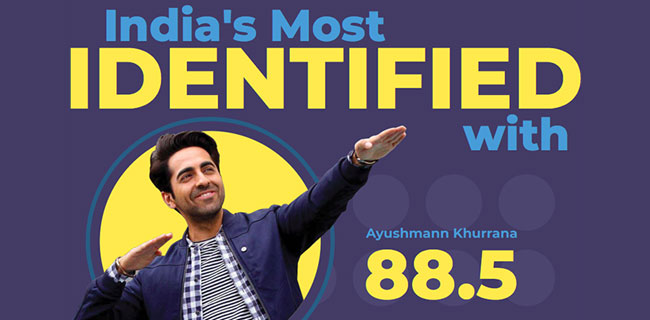
    Retired Indian Captain MS Dhoni is seen to be India’s Most Innovative. He top scores with a TIARA rating of 59.7. In Bollywood, Ayushmann Khurrana is easily No.1 in males, while Deepika Padukone leads on innovation amongst females. AR Rehman top scores in Television, Bharti Singh excels at top spot amongst women. Virat Kohli and Smriti Mandhana top score amongst sportspersons. DeepVeer – Deepika + Ranveer are the Most Innovative power couple.


    INDIA’S MOST  RELIABLE

    Shuttler Saina Nehwal is rated as India’s Most Reliable with a high 69.0 TIARA rating. In Bollywood, old warhorse Anil Kapoor ranks at No.1 while Nushrat Bharucha is top amongst the females. Zakir Khan and Surbhi Chandna are in top places in Television. Sachin Tendulkar and Harmanpreet Kaur are rated best in Sports while Virushka are rated the Most Reliable amongst couples.


    INDIA’S MOST PROGRESSIVE

    Vikrant Massey who was recently in the lead role in Ginny weds Sunny, is rated as India’s Most Progressive, surprisingly ahead of Ayushmann Khurrana who sits on top in the Bollywood list, alongside Deepika Padukone. In Television, Dharmesh Yelande and Mouni Roy top on Progressive. Jasprit Bumrah and Sania Mirza score best on Progressive amongst those in Sports. Virat Kohli and Anushka Sharma top score as a couple on Progressive.


    Other category toppers include:


    INDIA’S MOST RESPECTED : Amitabh Bachchan


    INDIA’S MOST APPEALING : Akshay Kumar


    INDIA’S MOST TRENDY : Virat Kohli


    INDIA’S MOST DISTINCTIVE : Nawazuddin Siddiqui


    INDIA’S MOST VERSATILE : Nawazuddin Siddiqui


    INDIA’S NO.1 HEART-THROB : Ranbir Kapoor


    INDIA’S MOST SEDUCTIVE : Radhika Apte


    INDIA’S MOST SEXY : Priyanka Chopra


    INDIA’S MOST DOWN TO EARTH : MS Dhoni


    INDIA’S MOST FEARLESS: Virat Kohli


    About the Tiara Report:

    The TIARA Report, notes a communique, is the largest and most comprehensive study of celebrities in India.

    • A sample size of 60,000 respondents pa- India.

    • 23 cities (Delhi including NCR), Mumbai (including Thane), Chennai, Kolkata, Bangalore, Hyderabad, Ahmedabad, Surat, Pune (including Pimpri and Chinchwad), Jaipur, Lucknow, Kanpur, Nagpur, Vishakhapatnam, Indore, Bhopal, Patna, Vadodara, Ghaziabad, Ludhiana and Agra.

    • 180 celebrities : 69 from Bollywood (37 male, 32 female); 67 from Television (46 male, 21 female), 37 from Sports (30 male, 7 female), and 7 celebrity  ‘power couples’.

    • The field study was conducted by Japanese research agency Rakuten.


    Tiara is an acronym for Trust, Identify, Attractive, Respect and Appeal. The study uses the research data across 64 active attributes covering image, personality and human factors; and a battery of confirmatory statements to quantify key celebrity dimensions.

    TIARA Research Final-Online


  • Is Sandeep Goyal buying into Rediffusion?

    By A Correspondent


    Sandeep Goyal

    At the launch of his book ‘Blog Buster’, the entire top deck of Rediffusion was in attendance. Nothing unusual about it, except that when the book was being written by seasoned advertising person Sandeep Goyal, a former Group CEO of the agency, and now rumoured to have bought a significant majority stake in the creative agency.

    Goyal has laughed off the suggestion whenever we’ve raised it with him, and a senior source in Rediffusion preferred to not comment.


    The 46-year-od creative agency has seen its highs and lows, and in recent years, this was caused by a rough relationship with WPP, which owned 26.7 per cent stake in the agency. Last year, MxMIndia broke the story on the stake sale, which was confirmed with an announcement in a few months.

    The deal with Goyal is said to have been sealed (if not inked) a few months back, but according to sources, there are two reasons for the holdback of the announcement: one, a legal tangle that’s waiting to get sorted… a fairly old one, we are told. And, two, there is a possible clause in the parting of ways with WPP that there will be no change in the equity structure of Rediffusion until a year of the deal which was announced in August 2018.

    Industry observers say that if Goyal does take ownership of Rediffusion, his aggressive approach to business could see some key clients across the spectrum coming to the Rediffusion fold.

    Watch this space.

  • So how does Sandeep Goyal find time to write so much?


    To the Indian advertising and media fraternity, Sandeep Goyal is well-known name. As someone who led a very successful run at Rediffusion Y&R, as Group CEO of Zee and JV partner of Dentsu in India who finally sold his stake to his Japanese principals. But, in recent years, he has turned one of India’s most prolific business columnists.

    Goyal now prefixes his name with a Dr, not earned with an honorary doctorate degree please note, after some serious hard work and a thesis earned from FMS, New Delhi. He is also an MBA from FMS and an English literature honours degree from Panjab University.

     After selling his stake in Dentsu India, Goyal  pioneered mobile advertising in India, building his company Mogae Media into a market leader. He co-owns the 24×7 food TV channel FoodFood with celebrity chef Sanjeev Kapoor.

    Over the last few years, Sandeep Goyal has turned a prolific writer. He writes a fortnightly column for Business India called ‘Honest to God!’; writes a weekly ad review column, ‘Here’s the Pitch’ for the New Indian Express; writes a fortnightly column, ‘Yes, but…’ for Business Standard. Goyal used to write a weekly column for exchange4media, ‘Ask the Doctor’. In the past Goyal also used to write columns, ‘Perfect 10’ for Financial Express and ‘Horse Sense’ for Business Standard. Phew.

    A compilation of 50 of his Campaign India columns from mid-2017 to mid-2018 on a host of marketing, branding and advertising subjects appears in the book BlogBuster that releases today (May 16)in Mumbai. The book is being released by former Viacom18 COO Raj Nayak and CampaignIndia editor Prasad Sangameshwaran. MxMIndia did a quick interview with Dr Sandeep Goyal on the book, on how he finds time to do all his writing and more. Read on… 


    You are possibly the most prolific industry biggie writing in the A&M and business media? And perhaps across all industries. How do you manage to do it?

    My late mother used to say that the pursuit of Goddess Lakshmi should never be at the cost of venerating Goddess Saraswati. I was always a very good student (I am a gold medallist in English Honours), but once I started working, career obviously became life’s top priority. So after running after business and profits for well over 25 years, after I sold my stake in Dentsu, I decided to go back to academics and to a life more cerebral.


    I enrolled for a PhD at FMS Delhi. That got done last year. So I am now Dr Goyal!


    In 2012, I co-authored You’re Hired! with my daughter, Carol. In 2014, I wrote Konjo – The Fighting Spirit on my entrepreneurial stint with the Dentsu JV through Harper Collins. I had earlier published The DumDum Bullet way back in 2004 through Penguin.


    Today, besides my regular blogs in Campaign, I write columns for Business India, Business Standard and The New Indian Express. I used to write an Agony Aunt piece every week for Exchange4media but have now stopped that for a while. There have been past columns in the Catalyst (Hindu Business Line) and in Brand Wagon (Financial Express). So, yes I do write a lot. Thank you for terming it ‘prolific’.


    I find peace and solace in writing. Actually, to write on a broad canvas of subjects, I need to read a lot. The simplest formula is 10x … You read at least 10 times of what you write. So, the combination of reading and writing is actually a perfect mix for me. I average at least three-four hours of active reading everyday … any kind of reading. And I spend at least two-htree hours writing almost every day.


    The day usually begins at 6:45 am and I continue to read, research and write till I am just pooped out!


    What about your other work? Do you manage time for that?

    Since Diwali of 2017, I have slowed down considerably on the work front. I don’t operationally run any of our businesses any longer. So, ‘work’ now is really about looking at our various investee companies. Which is not so time-demanding.


    But I still do keep aside sufficient time for a passion that my wife Tanya and I share for art, especially collecting studio pottery and ceramics. We are setting up a private museum in Gurugram. So, I try to make as much time as is required everyday for this new project. I am now a regular at art openings, art shows, auctions and even travel quite a bit in pursuit of art we would like to acquire. We were at Art Dubai last month. Art Basel in Switzerland is now next on the agenda.


    I think time is a stretchable asset. Work expands to fill available time. Earlier my life was just work, work and more work. Now, with a little effort and a bit of planning I do work, I find the time for art, I plan time for travel and of course I read and write. Actually utilization and maximization of time is all in your mind. If you want to do it, you can.


    A compilation of your columns in the form of a book is a bit of a shortcut, right? Commentary by way of columns in the media do not count as a considered, well-discussed appraisal of issues. So in a sense it can be considered a ‘fatafat’ read, not to be taken very seriously?

    Haha! I think you are being judgmental. My blogs in Campaign and my pieces for Business Standard online average 1400 to 1600 words, sometimes even more. I have written pieces of length 4200 words too when the subject so warranted (the piece had to be split over four blogs). So, the pieces I write are well-researched and well-detailed. No shortcuts.


    In press, for example, in my long-running column in Business India an average piece is 800 words. Since I normally take one subject per column, and I think the content is reasonably well fleshed out.


    The compendium, yes, will be a relatively easy read.  Whether ‘fatafat’, I don’t know. At least, the content is not flimsy or superficial certainly.


    Which of these comment columns would you say is your favourite? Any column that you regret writing or has put you into a spot with a former/current associate? (please specify the column/issue)

    I enjoy everything I write. Otherwise I wouldn’t do it.


    I derive an ‘instant’ high when I write online because most times the piece is up in a matter of minutes after I have finished writing. That is instant gratification!


    But, yes, the joy of a piece appearing in print is a very different kind of satisfaction. My first ever piece that I wrote was when I was perhaps in Class 3 as an eight-year old for my school magazine, The Soaring Eagle. The untold joy in seeing my name in print is something I cannot forget even today 50 years later. Ever since, seeing my published piece gives me immense happiness. Almost the same child-like joy of when I was a school boy back then.


    Not as much the columns, but yes when I wrote Konjo, and it was a first person account with real names and real people, I ruffled a lot of feathers. There was especially this piece on an ex-client interface at HDFC Life about whom I did some plain-speak. The media asked me a lot of questions, some even wrote that it was all very one-sided, and just my version, but I stood my ground. No rejoinders ever came.


    In the columns, I frequently receive negative feedback. PR agencies of the entities I have covered many times reach out to me to soften my stand. I just tell them to send in their narrative to the publication and ask them to also carry the contra-viewpoint. One particular ex-client who is currently at war with his own father too created a ruckus when I wrote about his misleading posturing on a dispute involving his company and his family, but all that really doesn’t affect me. I am no longer in active ‘business’ and don’t really have to worry about repercussions!


    Have there been issues that you wanted to write, but not as they would impact your interests?

    Not really. But I steer clear of some domains. Telecom and telcos is one such example. For years now I have worked very closely with the likes of Airtel, Vodafone, Idea, and earlier Aircel and Reliance. I therefore have been privy to a lot of inside gossip, insider news, and lots more many times much in advance of the market. But in all these many years, I have never written about anything to do with this domain except an occasional ad review or such. I feel writing on stuff you know because of your advantaged position tantamounts to tattling. I strictly avoid that.


    You’ve been writing a lot, lot more than your Campaign column. Where are the other books? 🙂

    Well, there will be two more books this year, maybe three.


    I am really proud of Japan Made Easy, being published by Harper Collins, and slated for an autumn-winter launch later this year. I have spent 5 years researching and writing this book. It has 101essays of about 500 words each on a range of topics covering business, cuisine, culture, philosophy, creativity, spirituality, customs and rituals … 25 years of my experiences in Japan and with Japan are condensed into this tome.


    And then there is my first novel, Witches of Worli, which is about half-done. I am planning a 2020 release. It should be a good fun read.


  • Sandeep Goyal assumes charge as Prez of Forum for Ethical Use of Data

    By A Correspondent


    Veteran adman (and now a prolific writer) Sandeep Goyal took over as President of the Forum for Ethical Use of Data (FEUD) as a  few senior industry people came together to create a platform which will “engender the right atmosphere and the right mindset sensitised to the ethical use of data”.


    Media veterans Ambika Srivastava and Paulomi Dhawan assumed the positions of Vice Presidents. Srivastava is former Chairman of Vivaki Exchange and Zenith OptiMedia and Dhawan Paulomi is an active office bearer of the Indian Society of Advertisers (ISA) and has spent over 30 years at organisations like Raymond and Rediffusion. Vivek Mohan, former Country Head for Alcatel Lucent India, will be an Executive Member. A graduate from Harvard Business School, Mohan currently spends most of his time in Silicon Valley. A full-time professional CEO will be named soon, notes a communique.


    Said Goyal: “The Forum for Ethical Use of Data (FEUD) has been formed in response to the current vitiated sentiment, both globally and in India, as a result of all the controversies like what is happening at Facebook today, and all the fears that are being voiced even on Aadhar,” adding:  “The Forum will bring together all interest groups and get them to discuss, debate and devise a viable way forward in the handling of data so that it stays confidential, it stays protected and its keepers stay trusted. In India there is yet a lot of work that needs to be done to ensure that data of all kinds is protected and secure so as not to compromise the privacy and confidentiality of customers. Far too many organizations have access to far too much data, but they are not investing enough to keep that data well protected. At the Forum we will provide help, knowledge, guidance and eventually certification to help organizations stay ethical with the use of data at their command”.


    The Forum for Ethical Use of Data, adds the communique, will soon be inviting banks, credit card companies, insurance companies, telecom operators, airlines, hotels, FMCG companies, retail entities, media agencies, digital agencies and all others who are repositories of big data to join the Forum. Even government organisations will be invited to become members of FEUD.


    Said Srivastava: “We are plagued today by multiple issues in data protection and its ethical usage. For starters, most organizations are not even aware of who has access to, and who uses sensitive data within their own ecosystem. Compliance regulations and guidelines are very lax. No one even spends time cleaning up toxic data dumps. There are no investments to protect sensitive data appropriate to its value. At the Forum for Ethical Use of Data (FEUD), we will stimulate necessary awareness and action across organizations.”


    And this is what Dhawan said: “Outsourcing data and allowing uninhibited access to vendors and partners can create unprecedented situations like in the case of Facebook. At Forum for Ethical Use of Data (FEUD) we will bring about risk assessment and security awareness programs that will instill both understanding and trust within our member organizations, and their customers in turn.”


  • Sandeep Goyal picks up equity stake in Sync Media

    By A Correspondent


    Sandeep Goyal

    Over the last few months, Sandeep Goyal has been more prolific than possibly any other columnist in the country. The digital evangelist and media veteran who runs Mogae Media who has several investments across media has picked up 10 per cent equity in adtech platform Sync Media. The deal has been closed at a pre-money valuation of USD 3 million. Goyal’s daughter, Carol, will join the Board of Sync Media.


    Sync Media was promoted last year by media professional Anubhav Sharma and Vikas Saxena, ex-CEO of Nimbuzz and founder of Samgavi is also an early investor in the company.


    Sync is India’s leading ad-first technology platform measuring, segmenting and offering targeted audiences to brands synching mainstream media with mobile. It uses  advanced, always on, acoustic fingerprinting technology to real-time indexing of every program and ad-airing across over 300+ broadcast and cable network feeds to identify the right timing and the right environment for the placement of a brand advertisement.


    “I think Sync Media is one of the pioneers in its space. The synching of television and mobile is an area that excites all brands and digital planners. It gives both enhanced relevance and enhanced conversion to brand campaigns. From my very many years of evangelizing the mobile as an advertising medium, I think Sync Media will be at the forefront of technology in the days to come. Mine is an investment in not just the platform but in the innovativeness of its promoters”, said Sandeep Goyal who is a former joint venture partner of Dentsu in India and ex-Group CEO of Zee.


    Added Anubhav Sharma, Managing Partner of Sync Media: “Our understanding of offline audiences through superior analytics delivered by our data-driven technology which gives us an edge in helping clients do better media planning and delivery, both cost-efficiently and cost-effectively. We are already working with all the large digital and media agencies in India. We see great potential for our offering with clients who want offline audiences to be linked to mainline media.”


    Said Vikas Saxena, Director of Sync Media: “Our systems sensitise us to what is really trending on TV, who is watching what when and for how long. We use this knowledge to help advertisers to reach consumers based on these media consumption preferences. What is even better is that we can sync a mobile ad campaign or a facebook campaign in real time with the TV media plan of a brand. This gives brands higher sales conversions through contextual targeting.”


  • Mogae Media partners with Kotak Mahindra Bank for **811

    By A Correspondent


    Mogae Media has partnered with Kotak Mahindra Bank to provide its StarStar (**) call-to-action service, a patented B2B2C offering that enables brands to connect their advertising with customers through a convenient/memorable ‘call-to-action’ both from feature and smartphones.


    Kotak Mahindra Bank will use **811 (StarStar811) as a Call-To-Action to generate enquiries and to facilitate downloading 811 – India’s unique full-service digital banking ecosystem on mobile. 811 is a digital account that can be downloaded and operated from anywhere, 24×7 and serves as a platform where your money and everything you can do with it come together on your mobile phone.


    Sandeep Goyal

    Commenting on this, Sandeep Goyal, Chairman, Mogae Media said: “We are delighted to bring this path-breaking technology to people. We are confident that soon, StarStar (**) will become to the mobile what hashtag (#) has today become to the world of social media.”


    Added Ambuj Chandna, Senior Executive Vice President, Kotak Mahindra Bank:“With 811, we offer customers a unique all-in-one value proposition of a zero balance savings account with zero charges for all digital transactions, where customers can earn up to 6 per cent p.a. on their savings account balances. **811enables us to further simplify access to 811 for our customers.”


  • Low comprehension, uptake cause of slow embrace of digital media: Sandeep Goyal


    At 52, Sandeep Goyal has achieved what most people in the A&M business would strive to be at. Former CEO at Rediffusion Y&R, former Group CEO at Zee Entertainment, Former Chairman, Dentsu India, a jv partner of Dentsu in India and the Middle East, an investor in a dozen-odd enterprises and now Chairman of Mogae, which again has some prized partnerships. He is currently also purusing a PhD on ‘Human Brands’. Pinning down Goyal to an interview isn’t easy. Over many attempts to fix a meeting (some because of his schedule and some ours), a meeting which happened over some ‘gharkakhana’ but didn’t result in the desired Q&A, MxMIndia did manage to Sandeep Goyal to speak on Mogae, mobile and more. Excerpts:


    As a veteran of the industry, how do you view the slow embrace of digital platforms even as the number of devices sold and being used has leapfrogged?

    To me this is not surprising at all. I suppose when you refer to me as an industry veteran, you mean advertising?! Actually I have been now away from mainline advertising for well over six years. And in the interim, advertising has really not changed, or changed much.

    The slow embrace of digital is simply a function of client and agency businesses being run by a generation that is too old. Thankfully, many of them have either retired or just faded out in the last few years. But the decision-making layer on both sides of the table is a pre-digital generation. In India, the dividing line is 1995 when mobiles were launched. If you were born before that, you are not born digital. You still think print and you still think TV. You don’t read your morning newspaper on the mobile. Neither do you catch all cricketing action on an app. You therefore also do not create for the mobile or think mobile first.

    These are not sweeping generalisations. I have seen them first-hand. While a lot of the older guys in Indian advertising try to feign knowledge and understanding of digital and mobile, those from my generation, some even younger, struggle to make sense out of digital offerings. I have now been in digital, especially mobile, since 2005 when we setup Mogae Digital and started making Indian comics for mobile. Ever since then, my experience with fellow advertising peers has been one of low comprehension and low uptake. Reason is not just age. It is a mindset. Advertising was always about client briefs and campaigns therefrom. Concepts such as UGC (User Generated Content) or targeting using ARPU rather than SEC needed a fresh start. It never happened.


    Captains of some large corporations like Coca-Cola and P&G have questioned the efficacy of digital… your comments?

    Who am I to quarrel with such worthies? This is precisely the point I was making earlier. Captains of large corporations (and I won’t say Coca-Cola or P&G alone) are still calculating brand and communication effectiveness on parameters and metrics that are a generation too old. It is not that digital is not effective for their brands. It is that they have not tried hard enough (or long enough) to make concepts meant for a digital consumer.

    Your answer lies in looking at sluggish sales for cola as a category. I am not singling them out, but perhaps some introspection on whether the brand owners are really connecting with a consumer who has either moved on in taste or in habits. Entire categories like banking, travel, commerce, even education and learning have adapted themselves to a new digital world where consumers became co-partners in the brand journey. FMCG never tried hard enough. Its digitalization remained dwarfed.

    In some markets, the colas have done remarkable work. But as long as you continue to refer to such work as ‘innovations’, it will never become mainline or the new normal.


    You have acquired Ao1 which is a personalised video platform as well Ngage, adtech platform of Nimbuzz. What are the specific growth plans for each of these?

    We were already working on personalised video since 2015 when we tied up with Idomoo of Israel. But because we were dealing with CRM data, most clients wanted the servers to be located in India for regulatory compliance. With Idomoo, we were unable to that despite their product being a world leader. We had no choice but to look for indigenously developed solutions. Ao1 fitted the ask. We now have a versatile and cost economical platform that works like magic on large customer data bases allowing customisation of content and creating this entirely new category of targeted personalisation.

    Today, we work across banking, insurance, travel, holidays, hotels, retail, e-commerce, in fact every category that has personalisation possibilities. Global research shows that personalisation of a message kicks up response rates by almost 86 per cent. Every one of our clients is now a repeat client. Initial hesitation has been more than overcome. Also, new experiments are being tried out every day. I think Ao1 will do well.

    We never did eventually consummate the Ngage/Nimbuzz deal despite press reports to the contrary. The due diligence and the financial model did not meet satisfactory levels. We preferred not to take the deal to conclusion. We are instead fully focused on our Mozeo programmatic platform which I can discuss later in this interview.


    Given the rapidity with which technology is changing, there is a need for continuous upgradation and bettering of service, especially in the areas of adtech and video. What are your commitment levels to both business.

    On adtech, our Mozeo platform is world class. Our partners Zeotap of Germany now have a 25-strong backroom team in Bengaluru looking at customising the platform to Indian requirements. We have been running campaigns since January 2017. We are in an advanced stage of integration with most of the large digital agencies and large clients. We have created dedicated trading desks and both quantitatively and qualitatively, we are poised for large numbers in 2017.


    Our biggest plus is that we are in the process of building up 150 million profiles on the telco data. These anonymised customer profiles make for the best targeting possibilities, far superior to FB or Google.


    On video, I have already talked of Ao1. It is not video alone (and the recent YouTube controversy on inappropriate targeting is a good example) but personalisation of video content that will separate the winners from the losers going forward. With Ao1, we have a technology that can address an audience-of-one. This kind of precise targeting allows custom made content to be beamed to individual customers.


    While everyone in the media agency business is talking of programmatic, the value of business done via it is minimal. Your comments?

    The problem with programmatic is that not enough amount of consumer profiles are available. This naturally restricts and constricts the scope of business. As more and more of consumer profiles come into circulation, the conversion rates on programmatic will improve.

    Also, programmatic worldwide is used for brand communication. In India digital buyers insist on running performance campaigns to these audiences. There is therefore a big mismatch there. The owners of the data are very hesitant to allow intrusion into the lives of customers. Performances campaigns necessitate that. So, there is a lot of learning required there between privacy and performance. We are pioneering this business. The road is tough but it leads to the right destination.


    Talk to us more about StarStar… your launch happened with much fanfare and you have some big-name clients who have signed up?

    StarStar has done well. The recent high-decibel Kotak Bank campaign for their 811 initiative was run on all CTAs with **811.


    Our list of clients includes Star TV who ran a very successful campaign for HD a few months ago. Yes Bank uses StarStar extensively. So do SAB Miller, Discovery TV, Nerolac Paints, Axis Bank, Urban Clap, Kellogg’s, Merril Lynch and more. One of India’s largest car companies will be using StarStar soon.


    StarStar is a disruptive idea. Yet it is a boon for creating an actionable real time customer data base. The opportunities are just beginning to open up. You will see a lot of StarStar in the days ahead.


    We understand you are looking at investing in more digital startups. Are these all in the mobile space? Any specific direction that you are looking at?

    We have a big appetite in this space. But I am not indiscriminate in making investments. Any business model predicated on advertising as the main source of revenue is largely pipe-dreaming. The reason is that discoverability of content and destinations in the digital world is a big issue. If you do not achieve critical mass, your business model remains theoretical.

    Most businesses that approach us are copied ideas from the West with insufficient inputs or understanding on how this will work successfully in India. One Flipkart competing with an Amazon or one Ola competing with an Uber cannot become the flag bearers of every untested idea.

    We are actually now focused on looking at distressed assets who have burnt sufficient investor funds so far to build some market visibility but now are running low on fuel. We think we can reinvent some of these businesses and take them to a new level of being able to succeed.


    Most successful digital entrepreneurs and investors have a tech background, and can get their hands dirty on code or hardware. But you are essentially a businessperson with successes in the creative and marketing services business. Is the fact that you aren’t a techie a stumbling block to be on top of the various technology business you own and evangelise?

    Yes, I am an English Literature graduate. And have 30+ years in advertising. But neither of this has prevented me from creating new and profitable digital ventures.

    As I said before, we setup Mogae Digital way back 12 years ago. We pioneered comics for the mobile. We were the first guys in India to use JavaLite. I had to struggle to find developers and coders.

    I setup India’s first Fantasy League when IPL launched 10 years ago. We were in the Alexa Top 100 within the first week. The Times of India group were our partners. We ran leagues for cricket, tennis, for the BSE and ran many jigs on politics, elections, the Olympics and much more. We had a team of over 200 tech guys working for us. We ran into legal complications and had to scale the business down. But while we ran the business, it was intensely profitable.

    I launched www.lastminuteinventory.com in 2008. We did Rs 100 crore of business over the next 2 years, every year. We were again pioneers in the space. The contours changed when we sold out to Dentsu.

    When I launched Mogae Media even the telcos did not know enough about mobile monetisation through third-party advertising. We used a lot of ingenuity and technology to mine the data and to meaningfully interpret it.

    I think technology is just all in the mind. In fact those that come from a technology background struggle to find customers for their businesses. So, I wouldn’t worry too much about my Literature background. Life is about being receptive to opportunities. Technology is only a means to the end.


  • Reactions to Budget 2017-18


    Although there may not been any specific media and entertainment-related provisions in the Budget, there is an overall mood of positivity in the sector. Although no one has given a specific forecast, there is a belief (or at least a hope) that with the housing, auto, telco and most importantly FMCG sectors having a positive outlook, adspends could increase.

    Here are a few reactions we received to Budget 2017 from a cross-section of the media and entertainment sector and a consulting major (published here in no specific order):


    IBF on the Budget

    The Indian Broadcasting Foundation (IBF) commends the efforts put by the Finance Minister in presenting a reform oriented budget mainly focused on Rural, Social and Infrastructure sectors. We are certain it will help in further strengthening the foundations of the Indian economy.


    The massive thrust on Infrastructure sector in general, and on the social and rural sector in particular, will go a long way in generating additional income and employment. This, we hope, will provide direct and indirect impetus on the growth of the Broadcasting sector though enhanced spends on advertisement. The 5% tax relief provided to the MSME companies is also a step in the right direction.


    “India is on the threshold of scripting a successful growth story. It is already the world’s fastest growing economy. The Union Budget presented by Finance Minister will help in consolidating the benefits of this unfolding economic regime,” said IBF President PunitGoenka, while hailing the Budget proposals and describing it as a transparent instrument for prudent fiscal management. He was also hopeful that some of the specific proposals and concerns raised by the broadcasters in its pre-budget memorandum are addressed soon by Hon’ble FM.


    The IBF welcomes the Finance Minister’s proposal to allow carry forward of Minimum Alternate Tax (MAT) up to a period of 15 years instead of the present 10 years. “The Foundation was, however, extremely hopeful that the Government would consider the suggestion for granting ‘infrastructure status’ to the broadcasting industry along with permission to carry forward of losses in case of amalgamation or merger as that would have made the M&E sector a more viable engine of speedy growth,”said Girish Srivastava, Secretary General of IBF.


    Speaking on the budget,  A Mohan, President-Legal and Regulatory Affairs, ZEEL re-emphasized on the need of Infrastructure status for the Broadcasting sector as the Broadcasting, Cable and DTH sectors fulfill all the eligibility criteria required for qualifying as “Infrastructure services” viz investment criteria, creation of assets giving enduring benefits, employment criteria and contribution to exchequer in the form of direct and indirect taxes and accordingly this sector deserves to be treated as Infrastructure industry thereby qualifying for benefit u/s 72A(1) of the Income Tax Act.


    IBF is certain that the Government would revisit this issue on a priority basis in line with the overall theme of its budget to promote infrastructure in country – both physical and digital.


    Sudhanshu Vats, Group CEO, Viacom18 & Chairman, Media and Entertainment Committee, CII:

    “Much had been speculated about the economic slowdown post demonetization. With this budget, the government has taken important steps to boost the economy in a structured manner, building on the promise of transparent growth. Steps to liberalize the FDI regime further coupled with the abolishment of FIPB and tax reforms for MSME’s are bound to have impact in the foreseeable future. This budget has seen some positive solutions to tackle poverty in our country including one of the highest allocation of funds to MNREGA and rationalization of rate for the lower personal tax slabs. I am particularly enthused by the strong reforms push for digitization and look forward to digital transactions increasing in the country. This also augurs well for digital consumption of video content. The move to cap political donations in cash at Rs 2000 and all cash transactions at 300,000 are also much-needed, bold steps that are in line with the government’s commitment to uprooting corruption. With Swaach Bharat being close to our hearts, the budget has built further on this theme in a welcome move. I’ve said this before and will say it again: as the M&E sector we have a lot to gain from buoyance in the economy at the aggregate level and I believe this Budget has delivered on that front.


    Punit Goenka, MD & CEO, Zee Entertainment Enterprises Limited:

    “ #Budget2017 speaks a lot about the Government’s positive & committed approach towards creating a stronger & balanced economy. Being directionally right & focused on spending in growth centric areas, it clearly reassures the fact that #Remonetisation is in! ”


    Ashish Bhasin, Chairman & CEO South Asia – Dentsu Aegis Network:

    The Budget has some good growth oriented features, which should help the overall economic growth. Whenever the economy grows by 1% point, advertising grows by 1.5 – 2% points and therefore this should benefit the advertising industry in the long run. There are several steps to encourage Digitisation. This is the  right direction and eventually this will also benefit the Advertising Industry. The fact that the Service Tax was not raised is a relief and the Finance Minister has taken into account  the sufferings caused by temporary setbacks due to demonetization and that is a welcome step.Personal taxation has shown some marginal relief, which should put some money into the pockets of people and spur the economy, though I wish some more had been done  on that account. There was an expectation for corporate taxation to be reduced. Unfortunately,  particularly for mid to large organised sector, that has not happened but hopefully it will happen in the near future. Overall, the Budget is better than what we had anticipated, for the Advertising & Media Industry  in my view.


    Deepak Lamba, CEO, Worldwide Media

    The Union Budget 2017 doesn’t include much on the  M&E sector, however there are some points that will have a positive impact on our industry. The budget reinforced India’s huge shift towards digitization especially with the proposed deployment of high optic cables to increase internet penetration in rural India. This is a big positive for content creators like us, as it will boost the digital content consumption across online and mobile platforms. Further impetus on digital payments and transactions will eventually help the subscription model. Also, the government’s move to abolish FIPB to make the inflow of FDI smoother and to consider liberalisation of the FDI policy will have a positive impact for players across sectors in the long run’’.


    M K Anand, MD & CEO, TIMES NETWORK

    After the recent massive policy implementation of demonetisation, my expectation was of some radical reforms. I was a bit disappointed on that count. However, enhanced provision for MNREGA and allocations for rural, agriculture and allied sectors and a clear push for the affordable housing sectors are the silver linings. Agriculture and real estate are the most important employment generating sectors in India. This should improve the rural situation which is still recovering from demonetisation. Hopefully that will have a ripple effect on spending and the larger economy.”


    Rohit Ohri, Group Chairman and CEO, FCB India:

    The focus on reviving rural consumption, digital India and Swayam were the highlights of Budget 2017 for me. The high impetus on digitisation will pave the way for empowerment of the common man. And will open doors to a massive opportunity, untapped as of now, in the digital space. Overall, a progressive budget.


    Tarun Katial, CEO, Reliance Broadcast Network Limited:

    Budget 2017 is neutral for the M&E sector although the consumption-centric Budget will put more money in the pocket of the common man and hence help the advertising and broadcast industries. Radio broadcast industry has requested specific policy measures like 5% GST rate, reduction in custom duty for capex, etc and we look forward to the announcements when the GST rates are announced.


    Sreedhar Prasad, Partner, E-Commerce and Start-UPs, KPMG in India

    The Government gave income tax exemptions to start-ups with certain conditions last year. For the purpose of carry forward of losses in respect of such start-ups, the condition of continuous holding of 51% of voting rights has been relaxed subject to the condition that the holding of the original promoter/promoters continues.


    For start-ups, the condition of continuous holding of 51% of voting rights has been relaxed. Now, if the shareholders having voting rights continues to hold those shares, the Start-ups will be eligible to carry forward those losses. In other words, fresh infusion of funds will not obviate start-ups from carry forward of losses. This will be significant advantage to Start-ups which are likely to be profitable in say 4 to 5 years’ time frame as this will reduce their tax burden.


    The profit linked deduction available to the start-ups for 3 years out of 5 years is being changed to 3 years out of 7 years.

    This would be a big benefit for startups since they can choose which all consecutive 3 years they can avail tax exemption within a wider time frame of 7 years based on their assessment of the business in the future.  Many startups in Technology products, Pharma & Healthcare, Consumer products, Education and B2B online businesses would benefit considerably through this reform since they would have a higher chance of being profitable within the period specified.


    The Government is targeting INR 2500 Crore worth of digital transactions by FY18. Towards this, they are encouraging rollout of 20 lakh Aadhar based PoS machines and another 1- lakh additional POS terminals through banks over the coming few months. To enable access to digital services at low tariffs and increase the adoption of BHIM app for mobile payments, Government also announced INR 10,000 Cr allocation for Bharatnet for providing high speed broadband to 1.5 lakh gram panchayats, supplemented by removal of all duties on devices – such as PoS machine, fingerprint reader etc. – used in cashless transactions.


    Given the clarity on digitization of transactions, businesses will continue their efforts on enabling cashless transactions on their offline and online channels. These initiatives will not only increase the fraction of cashless transactions from current consumers, but also serve as a catalyst for onboarding new ones. Bill payment for utilities as well as services such as telecommunication, dish TV and others will be among the early beneficiaries of this initiative. Overall transparency in the system will rise on account of the digital trail and over time, the transactions will also become more secure.


    Amarjeet Singh, Partner – Tax, KPMG in India

    “Although there are mix responses to the Budget and there are many such areas where Government could have done more. However, from a startups perspective, the Government has taken care of key demands to support this sector.


    Clearly, the focus of the Government is on the ‘Digital economy’, starting from the impetus on building requisite infrastructure for digital transactions, promoting BHIM application through referral bonus and cash back schemes, incentivizing small and medium tax payers to do digital transaction and save 2% additional tax, exempting excise/custom duty on POS equipment etc. These steps would bring in more people on the digital platform and thus, helps the entire e-commerce sector.


    From a tax perspective, for Start-ups, the Government has accepted three key demands, firstly, extending the period of claiming deduction to 3 years out of 7 years, second – relaxing the carry forward of losses rules, thirdly, the Government has also given boost to investor by clarifying that conversion of preference shares into equity will not be taxable.


    In summary, the long term future of the e-commerce and Start-up sector in India looks robust with more and more people coming on digital platform. It would be interesting to see the investors perspective on growing Indian digital consumer market. “


    The stock markets seemed to appreciate the Budget, with the Sensex and Nifty rising steadily as Jaitley’s speech progressed. When Jaitley finished, the Sensex was more than 300 points up and finished the day more than 480 points in the green.


    Jaideep Shergill, Founding Partner, Pitchfork Partners:

    There seemed to be a strong, if not euphoric positive reaction from industry. The worry is the fiscal deficit. While the finance minister reiterated his commitment to maintaining it at 3% from the next fiscal, the failure to stick to it will worry many. The aggression on rural development, the socially backward and agriculture will be seen by many through the lens of the upcoming Assembly elections in Uttar Pradesh, Punjab and Goa. These are politically significant and losses in these states would severely set back the NarendraModi government. Also, the greatest challenge will be effectively implementing what has been laid out in the Budget documents. This has historically been a problem in India, and could derail this government’s agenda.

    Similarly, how effectively the government rolls out its digital economy measures will be keenly watched. Demonetisation was turbulent and more such shocks to the system could be disastrous. Having said that, a paperless economy would be greatly beneficial to the economy, ensuring greater transparency and compliance.

    This is a politically significant year for the Modi regime and ensuring the effectiveness of its economic and social agendas will be critical for it.


    Tanay Kumar, CEO and Creative Director of Factral Ink Design Studio.


    The Union Budget 2017 gives a huge impetus to Digital India. Incentives like no service tax on digital rail bookings, digital pension distribution system for retired defense personnel for easier access to their funds, the DigiGaon initiative to provide tele-medicine, education, and skills, through digital technology and two new schemes to promote use of BHIM should drive digital traffic.

    Along with this steps to strengthen connectivity with high-speed broadband on OFC will be available in more than 150,000 gram panchayats, with hotspots and access to digital services at low tariffs, and the emphasis on cyber security with computer emergency response team to be established for the financial sector to work in close coordination with financial sector regulators and other stakeholders, with boost confidence in the people to use digital platforms.

    As a Digital Design company we are really excited on the opportunities that this budget has created in developing some path breaking work in the areas of user interface and user experience.


    Ashish Shah, CEO and Founder, Vertoz

    The budget presented by the Finance Minister is encouraging for different strata of society. From agriculture and rural economy to digital initiatives and from FDI to relaxation in tax slab in the entry category, the Finance Minister had something for all.

    As a tech-based advertising firm, Vertoz welcomes these measures announced today to promote the digital sector. From infra layout to digital transactions and from introduction of Aadhaar Pay to cyber security, Budget 2017 is certainly a booster for the digital economy.”


    Sandeep Goyal, Chairman, Mogae Media:

    It is a growth oriented budget with special emphasis on youth and rural, and large provisions for skill development and alleviating unemployment. Combined with the digital thrust, this should help brands focussed on younger audiences especially outside cities. Two-wheelers, telecom, handsets, ‘get-ahead’ education products, grooming and accessories (look-good) products should all receive an advertising fillip.

    Digitisation of payments and purchase should help enhance the geographies of e-commerce making more brands more easily available to larger numbers of newer customers. This is a new opportunity for advertising and a new challenge for targeting right media to right customers through right apertures at the right time.

    GST will help brands effect more uniform and deeper distribution. This should naturally enhance impact of advertising. I see this as big opportunity for targeted programmatic advertising especially on mobile.


    Vivek Bhargava, CEO, DAN Performance Group:

    It’s a good budget overall and an extremely positive one for the digital industry. The strong focus on promoting a digital economy through various initiatives on the digital payments front will give a great impetus to the digital revolution that the country is currently undergoing. We are witnessing a significant increase in digital transactions owing to the cashless movement already, which is a huge indication of the times to come – largely in the benefit of the common man. It’s encouraging to see the government introduce movements like ‘Digi-gaav’ and others which will take digital technology to the rural areas where most of the country’s population is actually based. This aggressive digital push is sure to contribute substantially in making India one of the fastest growing economies in 2017.


    Tripti Lochan, CEO, VML SEA & India:

    The government has created a budget with prominence on digital.  Demonetisation’s longer term benefits will percolate – as the first step towards a cashless economy.  But more importantly, there are incentives across all areas of the budget pushing digital.


    Rahul Puri, MD, Mukta Arts:

    The Union Budget this year has focused more on uplifting some of India’s poorest sections of society. While this year again the media and entertainment sector has been overlooked, however some announcements will definitely help our industry in many ways. Setting up the cyber security teams will help fight piracy, similarly, the government’s push towards Internet penetration in rural markets will help increase content consumption and increase the audience base. Further the abolishment of FIPB will make it easier for foreign investors to invest in Indian companies.


    Venugopal Ganganna, CEO, Langoor:

    There are a few positives for the advertising world. The impact won’t be an avalanche increase in spend in advertising rupees, but rather, more like drops filling up a bucket. Firstly, the strong push around digital transactions will result in greater digital spends. That should see some direct increase in digital marketing spends in particular. The reduction in tax rates will have some positives too. For smaller businesses, they will have slightly more room to invest within their business. That should see an increase in their marketing spends. News around making credit more available through banks will see businesses be more aggressive around building their brand. That increase in liquidity, especially for smaller businesses will directly impact advertising spend. The increased infrastructure spend will infuse some capital in the economy. Consumption should also increase given the reduction in tax rates at lower income levels. Both of these will see revenue growth for consumer brands, which will directly increase their budgets for advertising. We haven’t spotted any major negatives yet for this sector.


    Divyansh Bajpai, Co-Founder, Indi.com:

    The Union Budget 2017 lives up to our expectations, since it brings about institutional changes warranted for the evolution of a nascent digital economy. To begin with, allocating INR 10,000 crore to Bharat Net is an impressive step in the direction of digitalization. This is going to democratize digital access to over 150,000 gram panchayats, while also improving the Fiber Optic network. Besides, the GST bill and allocations of INR 745 Cr to policies like MSIPS and EDF will further reduce the cost of owning a smartphone, hence making it easier for users fromTtier 2, 3 and 4 cities and towns to transition online. Lastly, investments in cyber security along with setting up CERT will immunize users from cyber-attacks and hacks. In conclusion, we really appreciate the announcements and feel inspired to further innovate and channel our efforts in taking the digital wave forward.