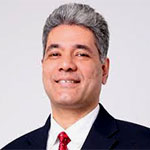
Tag: Samar Singh Sheikhawat

  • Kingfisher banks on humour for the Indian Prank League

    By A Correspondent


    Kingfisher has introduced the Indian Prank League as part of its IPL campaign “Divided by teams, united by Kingfisher”. The Indian Pranks League comes with a series of video commercials featuring players from Sunrisers Hyderabad, Mumbai Indians, Rajasthan Royals, Kolkata Knight Riders, Kings XI Punjab and Royal Challengers Bangalore, who are seen pulling pranks off at their teammates.


    Commenting on the campaign, Samar Singh Sheikhawat, Chief Marketing Officer, United Breweries Limited, said: “For years, Kingfisher has been a catalyst in bringing rival teams together with a fun element off the fields to establish the brands campaign line for the IPL, “Divided by teams, united by Kingfisher”.


    Added Kishore Tadepalli, SVP & Managing Partner, J Walter Thompson Bangalore: “Despite the rivalry between teams, the players are thick friends with each other. They constantly pull each other’s legs, crack jokes and have a laugh off the field. Kingfisher brings the camaraderie alive for the sports fans and gives them a sneak peak to their lives beyond Cricket.”


  • Heineken hopes to unite generations via latest campaign

    By A Correspondent


    Heineken has launched an India-specific ‘Generations Apart’ campaign to address the father-son communication gap, a social norm prevalent in India, but an issue found worldwide. The experiment aims to surface invisible barriers and inspire open discussion.


    Said Samar Singh Sheikhawat, Senior Vice-President (Marketing), United Breweries Limited: “With Generations Apart, Heineken has launched a campaign that is attuned to the Indian market for the very first-time. India is a key market for Heineken, and we are committed to exploring innovative avenues to engage with the Indian consumer. With the current generation gap and polarising opinions in the country, we felt it apt for us to play a part in providing a platform for people to open their world and spark positive conversations.”


    Added Gianluca Di Tondo, Senior Director Global Heineken brand: “Open Your World gives us an unprecedented opportunity to help change attitudes and spark conversations between different ages, genders and cultures. This campaign reinforces our belief that you can build true human connections and break down barriers when you enjoy shared experiences”.


  • Publicis wins Kingfisher Ultra Max account

    By A Correspondent


    Publicis has announced that it has been awarded UB’s Kingfisher Ultra Max. The account will be handled out of the agency’s Bengaluru office. KF Ultra Max was launched in 2014 and JWT is the incumbent agency.


    Said Samar Singh Sheikhawat, Senior VP – marketing, United Breweries: “Having partnered with Publicis for a year now we have seen exceptional work done on the Heineken brand. From there it was a natural progression to enhance the scope of our engagement with this outstanding communications partner. We are delighted to partner with them on the KF Ultra Max brand, which is one of the fastest growing brands in our portfolio. We believe the agency will bring their strategic vision and creative clarity to further drive traction and business growth for the brand”


    Added Nakul Chopra, CEO, Publicis South Asia: “There is no better accolade for us than when an existing client awards more brands to us. We are both humbled and honoured. I am sure our teams will only work harder to partner them towards more & more success.


    Said Paritosh Srivastava, COO, Publicis Ambience on the win: “Kingfisher is an iconic brand and a giant in the alcobev industry, we are thrilled to work on its high potential variant Ultra Max. The team in Bengaluru led by Theresa Ronnie has done a great job on Heineken and made the decision in our favour easier. We respect the client for creating a great product and having a sharp vision for it. We’re confident that our work will get KF Ultra Max a disproportionate share of the fast growing super premium strong beer segment”


  • BTL Baatein: Samar Singh Sheikhawat, United Breweries Ltd… Powered by VISCOMM

    A veteran in building brands, Samar Singh Sheikhawat joined United Breweries Limited, as Senior Vice President – Marketing in November 2009. A post graduate in MBA – Marketing and Finance from Symbiosis, Pune, Sheikhawatstarted his career with Cadbury’s India Ltd in 1989. He is currently theSenior Vice President – Marketing of United Breweries Limited. We present to you the ‘BTL Baatein’ of the week which is powered by VISCOMM with Anuka Roy speaking to him Below The Line (BTL) advertising, the focus of the company and the balance between ATL (Above The Line) and BTL


    How important is BTL to your overall marketing plan?

    It is extremely important. We function in a media dark environment. So, historically, the BTL part of our business has been an extremely important part, whether it is at Point of Sale or Point of Consumption, or whether it is displays, shop frontage, all consumer activations and promotions, sponsorships, events, associations etc. are very critical to our business.


    Can you also specify the range of activities that you undertake as part of the below-the-line advertising and promotion?

    We do everything under the sun from sponsorship to promotions to road shows to events- music, sports, food festivals, fashion gigs, display in stores, posters, danglers, streamers, digital intervention, activations on ground. I mean everything that is possible to be done is literally done in the alcohol business because you technically are not allowed to advertise. Things have changed a lot in the last few years but so far it was that way.


    Can you give a broad idea of your spends pie of ATL v/s BTL?

    It typically would be 60% of our total spends will be ATL now and about 40% is BTL. BTL, there is a lower percentage in other consumer product companies.


    Do you prefer to do this through BTL agencies directly or via your existing creative/media agency?

    We use both. We use agency that specialises in BTL work and we use our ATL agencies also. But largely it is working with agency that specialises in BTL work. A lot of BTL is also executed by our own sales teams but at the end of the day we end up using agency that specialises in this business.


    In terms of generating results especially from consumers and in B2B, do you find BTL a more sureshot avenue than ATL?

    I do not think you can compare the two. It is like cricket, you need both batsmen and bowlers. You cannot have a team of 11 batsmen or 11 bowlers. So, they need to work in conjunction with each other. First of all, you need to have distribution of the brands, you have to have cold stock available, you have to be visible etc. So, those three basic things have to happen. Thereafter, you need ATL to bring consumer pull in to the stores and you need BTL to give them an added incentive once they are there. Sometimes BTL can also play the role of ATL, if it’s associational and desirable property. The two play a complimentary role to each other.


    While sales and salience are good indicators of its success, what are the attributes you look at to measure the success of a BTL campaign?

    Depending on the campaign there are several ways of looking at it. Whether it is number of consumer contacts, strike rates or conversions, then you look at how that outlet or that brand or that market how it is doing during the BTL activation period and how it does after the activation period. So, typically if it is executed well, it will do well during the BTL period but we also hope that after the activity is over, it settles at a level higher than the level at which you started. Otherwise, it is not a permanent change.


    There are many organisations that often do new launches almost entirely on BTL aided with an outdoor and/or digital blitz? Your view on this. Given rising media costs, do you see BTL managing on its own, without ATL?

    Most companies across the world, actually, cannot afford ATL costs. You look at smaller businesses SMEs, startup businesses, local businesses etc. most of them do what traditionally is known as BTL. The number of organisations and brands that are sold only on BTL anywhere in the world is always larger than the number of brands that actually get on to ATL. So, if I run a neighbourhood grocery delivery business, how will I make sure that people know about me? May be in every bill I will have rubber stamp with my phone number, may be I would give a leaflet with every delivery bag that goes. So, the number of people who use BTL in our country is- I am not talking about volume of business and the amount of money that is spent, obviously a far more popular way of communicating to consumers than ATL. ATL requires certain size, a certain funding and also it requires a certain economic threshold to be effective. If I have one crore for instance, it will be suboptimal to put it up to television. Whereas, one crore on BTL could make a big difference depending on what I want to achieve.


  • Selfie with RK: Week #4 | Samar Singh Sheikhawat, Senior VP – Marketing, UBL

    By Rahul Kishore


    I have known Samar Singh Sheikhawat, Senior VP – Marketing at UBL  for 44 years. On the human front, not much has changed. He continues to be as charming, friendly, warm and generous as he was then. Professionally of course he has evolved. It is not easy being surrounded by Kingfisher girls and keep your sanity. To me, he will always be the Kingfisher man. I began by asking him…


    What is your biggest strength?

    People skill. I get along famously with people, I’m great at getting them to work together and building consensus.


    What’s your biggest weakness then?

    Can’t stand lies and hypocrisy he says with a smile. I hate politicking at work and at a personal level. I let too many things bother me, I’m a bit of a control freak actually.


    Hardwork or luck?

    Definitely hard work! I am the most unlucky person around. Almost everything comes to me five years later!


    Favourite CEO?

    Jack Dorsey of Twitter. He’s a guy with his heart in the right place, is empathetic and doesn’t shy away from saying it like it is.


    How would you like to live your life again?

    Exactly the same way. Life only gets better as I get older, I’ve been a late bloomer. The 40s were brilliant and my 50s are even better. I’m like Beethoven’s symphony, slowly building up to a crescendo.


    If a movie was to be made about you, who would you like to play you?

    Samar thought for a very long time on this one. The guy who plays me would have to be as smart as me. Leonardo DiCaprio… he can play anything.


    On a scale of 1-10 how weird are you?

    About 7-9 at home and 2 at work. Normal is boring. I like meeting interesting people who have another side to them.


    What didn’t you get a chance to include in your CV?

    Game warden in Africa. I applied when I was 20 for the WWF in Africa. I was refused because I wasn’t a local.


    Describe yourself in four words.

    Altruististic, Sportsman, Philosopher,  Thinker.


    What’s your Superpower, Samar?

    Perception. I can sense anything before it happens almost!


    How often do you de-stress?

    I hit the gym everyday, I listen to a lot of music. Since I travel a hell of a  lot  it feels good to be back home always. I like to hear my family in the background somewhere and that relaxes me. SAmars famil,y consists of a wife and a daughter.


    Dream Job?

    Teaching, at any business school or university. I’d make a good teacher…


    If Bill Gates gives you 10 million US, how would you use it to improve the world?

    I would educate women. Encourage the girl child, it would have a cascading effect on the birth rate. Infant mortality would reduce. Empower women, build more toilets for them.


    Rate RK as an interviewer.

    You asked the toughest questions I’ve ever had to answer. Some of them have been quite brilliant I would therefore rate you a 9/10.


  • Day1@Goafest: Agency-client ties dominate discussion

    By Labonita Ghosh


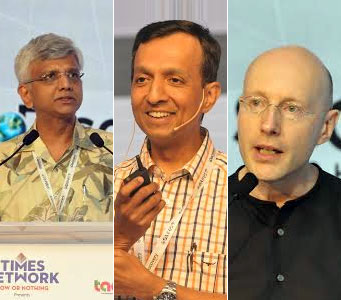
    What makes for a good agency-client partnership? The question that plagues both the marketing and the advertising world, formed the subject of discussions on Day 1 of Goafest, the annual, big-ticket event jointly hosted by the Advertising Agencies Association of India and the Advertising Club. The answer was delivered by the three main speakers of the day, Chandramouli Venkatesan, Managing Director of Mondelez Foods (makers of Cadbury), Samar Singh Sheikhawat, Senior Vice President, Marketing at United Breweries, and Oliver Maletz, head of connections planning, media and international communication at Volkswagen.


    If a client-agency partnership has to be successful, it must be like the partnership of Jai and Veeru, the protagonists from the film Sholay, said Venkatesan. “It should be a study in contrasts,” he said. “A client and an agency, who are two different entities, coming together to create magic. Not two entities who think in a similar manner.” Indeed, client-agency meetings are often like a Bollywood potboiler, fraught with emotion, drama and even tragedy. But what works, in an overarching manner, is when two very different styles at play come together to complement their strengths; have a shared purpose and passion, as well as a trust and friendship that allows them to challenge each other continuously to do better. The last bit is really important, said Venkatesan giving examples of successful campaigns that Cadbury entrusted its agencies with, and backed them on. Some years ago, when there was a quality issue with chocolates in the UK, and the company had to recall hundreds of bars, the agency came up with the hugely-successful Gorilla ad, showing an ape beating a drum. The company was puzzled. Instead of addressing and firefighting on quality issue, the agency was suggesting that they go in completely different direction. Cadbury trusted the agency view, and it led to one of the most memorable campaigns for the company. Given such a situation, there are things agencies can do to forge better partnerships, according to Venkatesan, and this  involves generating trust, earning that trust and putting better processes in place.


    Sheikhawat had a slightly different take on client-agency partnerships. “Agencies need to get to know the business,” he says. “They don’t spend enough time understanding the business.” Sheikhawat said he facilitates brewery visits for agency reps working with his organisation, just as he had to – early on in his career – spend time in the offices of advertising stalwarts like Roda Mehta, to understand how the agency world works. Agencies should also get to know the consumer – a big challenge in a rapidly-changing country like India, when consumer choice plays an increasingly large role in the success of brands and products. One sureshot way to do this, says Sheikhawat, is to get into the marketplace and see for yourself. Get behind the counter at a department store or a liquor shop to gauge things for yourself. And once agencies get past the barriers of understanding the business and knowing the consumer, they need to be the solution for their clients. Sheikhawat cited an interesting example to illustrate this. Experience shows that women don’t like to drink beer. So trying to market a product which doesn’t appeal to half the (potential) population of India, is bound to be a problem. That’s when a 24-year-old representative of the agency UB was working with some years ago, came up with a unique (though initially incredible) solution. She suggested creating a beer-based drink that would be fruity, which led to the Kingfisher Buzz, in flavours like lychee.  It just goes to show, Sheikhawat said in conclusion, that while solutions can come from anywhere, agencies should be the first to generate them. Oliver Maletz of Volkswagen, in his session, outlined that agencies need to be true business partners to clients; be innovators, though not just for the sake of innovating and aim to deliver meaningful value to a meaningful number of people.


    In its eleventh year, Goafest 2016 edition has seen participation from over 2300 delegates, and that number is expected to exceed 2500 with spot registrations.


  • Stage set for Kingfisher Ultra Derby on Feb 7

    By A Correspondent


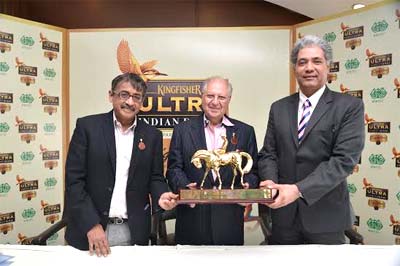
    Kingfisher Ultra, the successful brand from United Breweries, announced its first ever association with the Indian Derby, leading to the 2016 running of the Grade 1 Indian Derby – The Kingfisher Ultra Indian Derby.The Derby is partnered by Signature Packaged Drinking Water and will be held on Sunday, 7th February 2016.


    Samar Singh Sheikhawat, Senior Vice President – Marketing, United Breweries Limited along withZavaray S. Poonawalla, Chairman of the Royal Western India Turf Club and Vivek Jain, Chairman of the Marketing Committee, RWITC, unveiled the trophy recently. The Kingfisher Ultra Indian Derbyis one of the richest sporting events in India boasting large stake money in excess of Rs. 3 crore, and a grand exhibition of equine power and high fashion.


    Samar Singh Sheikhawat, Senior Vice President – Marketing, United Breweries Limited said, “We have leveraged fashion and lifestyle to create a distinct premium identity for Ultra, and the Kingfisher Ultra Indian Derby is India’s biggest show of fashion, apart from being the most prestigious horse race in the country. We look forward to delighting consumers with the Ultra Experience – The Emperor of Good Times”


    Subroto Geed, Senior Vice President – Marketing, United Spirits Limited said,  “USL will continue to partner with RWITC through revised terms of engagement for the remaining two years of the existing contract – in 2016 and 2017.  USL and RWITC have had an unprecedented long and mutually beneficial relationship for over 3 decades, with USL building the Indian Derby to its current stature as India’s premier racing and lifestyle event.  USL through Signature Packaged Drinking Water will continue partnering with the Indian Derby as a title partner as the title transitions to the new sponsorship.”


    The upcoming extravaganza will boast internationally acclaimed jockeys and their prime stallions battling it out on the turf as the city gears up to put their best fashion foot forward. The Indian Derby is the single largest attended event in Mumbai and one of the leading community celebrations in the world.


  • Heineken leverages UEFA Champions League to build connect with consumers

    By A Correspondent


    As some of the best football teams in the world battle it out for the UEFA Champions League trophy, Heineken in India celebrated its association as global partner with the prestigious league. The occasion marked the announcement of the ‘Heineken Social Reporter’ who will fly to London and report on the UEFA Champions League final for the Heineken social media channels in India.


    The winner, Akhil Shah from Mumbai, was selected from over 400 applicants received on the brand’s Facebook app. Applicants went through a three-stage selection process both online and offline, that assessed their football knowledge and passion, apart from other softer attributes and personality traits.


    Heineken also unveiled its plans for leveraging its global sponsorship of the UEFA Champions League, as it does so for the first time in India. As part of the Global Campaign titled ‘The Road to the Final’, Heineken in India is activating the campaign via digital and on-ground channels.


    Samar Singh Sheikhawat

    Speaking at the event, Samar Singh Sheikhawat, Senior Vice-President Marketing, United Breweries Limited said, “Heineken has been associated with the UEFA Champions League for seven years now. Given the growing fan following that European football now enjoys in India, we decided to leverage our global partnership in India for the first time this year with a multi-pronged activation programme. We expect the campaign to make the brand more salient and desirable among young Indian consumers by leveraging a sport that they are increasingly relating to favourably.”


  • Heineken upbeat about social for UCL

    By Johnson Napier


    With the rollout of the Social Reporter contest, Heineken is looking to recruit a ‘Man of The World’ from India, to live the Heineken Experience and report on it. The attempt is to recruit a lucky football fan, who is digitally and socially savvy, creative, witty, passionate and eager, to report on the UEFA Champions League Final weekend for Heineken’s social media channels in India.


    Samar Singh Sheikhawat, Senior Vice President (Marketing), United Breweries Ltd. tells MxMIndia on what makes this contest a unique experience for football fans in India and also what are Heineken’s growth plans for India.


    This is Heineken’s first association with UEFA Champions League in India. Given the huge popularity that UCL enjoys around the world, what are your expectations from the association in India?

    Heineken globally has been a sponsor of the UEFA Champions League, the world’s most prestigious club football tournament, since 1994. This makes it a perfect match for Heineken, the world’s most international premium beer brand.


    The Heineken Social reporter initiative is an extension of the brand’s global campaign The Candidate, and one of the initiatives as part of Heineken’s activation of the UEFA Champions League sponsorship in India.


    We expect this initiative and our overall Champions League activation plans to give Heineken a salience boost, and connect with young urban consumers in the key consumption months of the upcoming warm Indian summer. The winner of our search will not only experience the time of his life, but will also play an extremely important role in his assignment as Heineken’s Social Reporter. We are looking for someone not just with advanced degrees or skills, but for someone who is smart, spontaneous, witty and creative; and someone who has the ability to think out of the bottle.


    Could you elaborate on the Social Reporter contest that you’ve announced in India? How is it unique?

    With the Heineken Social Reporter, the brand is looking to recruit a ‘Man of The World’ from India, to live the Heineken Experience and report on it. The attempt is to recruit a lucky football fan, who is digitally and socially savvy, creative, witty, passionate and eager, to report on the UEFA Champions League Final weekend for Heineken’s Social Media channels in India.


    The search will begin with the profiles that interested fans create on our Facebook app: https://apps.facebook.com/heinekencandidate/. From here we will create a shortlist and then engage with the candidates on a one-to-one basis over two or three more rounds, before we arrive at our Heineken Social Reporter.


    Will you be looking at extending the contract of the winner beyond the UCL tournament?

    The Heineken Social Reporter is ideally a onetime opportunity for one successful consumer to report Live from the upcoming UEFA Champions League Final from Wembley Stadium, London.


    What are Heineken’s plans around other sporting properties (including football) in India?

    Across the world, Heineken connects with consumers through marketing activation campaigns based on its global Sport, Music and Film platforms. These include the UEFA Champions League Football and the Rugby World Cup. In India, we will be continuing on the same lines. At this moment we are concentrating on Heineken’s activation of the UEFA Champions League sponsorship in India. We do not have any other sporting associations at the moment.


    Growth-wise, what are your expectations from India for the year 2012-13?

    Heineken is our fastest growing brand. It has grown at close to 100%. We have almost doubled volumes from what they were last year.


    For the upcoming year, we are looking at increasing distribution of the brand to reach out to our target consumers.


  • MxM Monday: Is BTL gaining acceptance as a must-have in a media plan?


    By Ananya Saha


    Is Below-the-Line (BTL) advertising gaining bigger share of clients’ advertising budgets over the last few years? How innovative has BTL become, and what are the challenges it still faces?
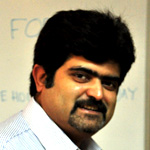
     

    Anwesh Bose, Senior VP, DDB Mudra Max

    BTL has gained prominence over the years and will continue to do so as advertising communication is evolving from a ATL-BTL model to a Through the Line (TTL) model. The lines have blurred between ATL & BTL giving rise to a new phenomena where a medium can take the form of ATL or BTL depending on the need of the communication. The challenge today is for the communication professionals to justify the Return on Investments on any form of media and the pitch will keep getting higher. It is time for the industry to jointly work on a multimedia optimization model that would justify investments.
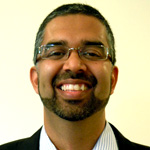
     

    Narayan Devanathan, SVP, National Planning Head, Dentsu India Group

    That’s a very broad question, but going by overall trends, the answer is probably yes. The more pertinent question, how much bigger is “bigger?” Who is measuring this? How does it differ by category? What all goes into the definition of BTL? For example, with the expansion of modern trade in retail, you’ll obviously see a lot more BTL money being spent on in-store merchandising, POS and promotional campaigns. A second factor affecting expanding BTL investments will likely be the short attention spans and the myriad of choices and screens that consumers interface with today. TV, radio, web and mobile are probably vying for the consumers’ attention simultaneously at all times. But with definitive metrics, the impact of last-mile tactics and campaigns will be a key differentiator between brand success and business success. All this does factor into the fact that, yes, BTL as a share of clients’ ad budgets is seeing an upsurge.


    Innovations can happen on three fronts: technology, measurability and the balancing act between strategic and tactical objectives of the campaign.


    On the technology front, something like RFID, for example, can turn walking behind a shopping cart into inputs for a shelf-stacking strategy in-store. A combination of GPS, augmented reality and a promotional scheme can turn a mobile phone into a CRM platform. But innovations like these and others depend on the evolution of both marketers and the retail (and other parts of the brand) environment.


    Technology can also be the difference between best-case guesstimates and data-driven strategies that reduce wastage of marketing investments.


    Finally, marketers have to find ways to close the gap between strategic and tactical goals. If brand-building is a strategic goal, how do you use BTL not just be a one-off tactic or part of promotions but contribute to brand-building?


    All said and done, as with ATL, the point of all communications, regardless of medium, is to create stories, conversations and transactions (not always monetary) that people want to engage in. If that perspective is missed, then we will continue to see a “line” and see “below” and “above” this imaginary line that only marketers – not consumers – see.
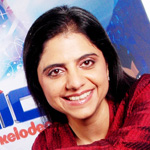
     

    Nina Jaipuria, EVP and Business Head, Sonic and Nickelodeon India

    Nickelodeon has always believed in the virtues of experiential marketing through on-ground engagements. While TV helps in reaching out to millions of viewers, it allows for only one way-communication. On the other hand, BTL promotions despite the high cost per contact have the potential of making the engagement truly memorable for consumers. There is nothing that can replace the experience and thrill that kids feel when they meet their favourite Nicktoons Ninja Hattori, Dora, SpongeBob or Keymon in person.


    In addition to engaging our young viewers at schools, malls, retail chains etc, we also conduct van activities that helps us reach out to smaller towns and villages in the interiors of India. For example during the launch of Motu-Patlu, we engaged kids in over 30 towns like Lucknow, Kanpur, Allahabad, Varanasi, Agra, Mathura, etc in Uttar Pradesh and Gwalior Khandwa, Indore, Ratlam, Bhopal, Jabalpur, etc in Madhya Pradesh. We often do mall activities to celebrate days and occasions that are important to kids.


    At Nickelodeon, we are constantly seeking new and innovative ways of connecting with kids all through the year. In-store promotions and toon visits at retail stores further helps in strengthening our on-ground presence when it comes to merchandize


    Brand partnerships also play a very important role in creating unique propositions for designing innovative on-ground programmes. BTL promotions are thus an integral part of our media plan as they enable us to connect with our consumers and give them a ‘Touch. Feel. Play.’ experience. In today’s day and age, it is imperative to be present across multiple touch points and to tangibilize the brand.

     

    Uday Mohan, Executive Director – North, MPG India

    With the increasing fragmentation of the media space it is not enough to just make “contact” with the consumer, but more importantly to “connect” with him. First hand experience of the product/service offering and the customization of it allow this impact extending it to sales as also brand perception. It is here where the relevance of BTL in the overall marketing/media mix is increasingly gaining importance.


    BTL is now moving from its earlier perception of basic activation to being an integral part of the consideration set at the media strategy formulation stage itself. FMCG for the mass audience spends even up to 25 percent of their advertising budget, luxury would spend more. Auto, telecom, food outlets also see the merits of BTL as we see more spends and ideas. It is getting very innovative using insights and planning; 3M Scotch-Brite came up with Wash your Bill, where you had the choice of washing dishes over paying the bill, adding a fun twist to the old adage of ‘pay your bill or wash the dishes’. The activation connected with a younger audience, made them use the product, gave immediate gratification, put it up on YouTube and created word-of mouth.


    Lack of quality data is a major challenge that BTL faces as there are as yet no set parameters for evaluation. Another challenge is the infrastructure and operational co-ordination required from global and nationalized brands of mass appeal where delivery to target audience becomes an issue. For example even Pepsi in its ‘Open Happiness’ campaign could create the reach because of the use of digital and social, else the cost would go out of hand. BTL activation for a mass brand would require innovative use of the media mix to get the desired effect.

     

    Ambika Sharma, MD & CEO, Pulp Strategy Communications

    There is a definitive shift in perception, below-the-line is media that barrier is fading, it is new media which adds the rich creamy layer to the traditional media plan. Inclusion of BTL in a plan has increased steadily but has seen a stronger spike in the last 2-3 years. It is not in the perfect place that it could be in the consideration set but it is no longer ignored like it used to be a decade ago.


    BTL is now increasingly being evaluated and included when developing the mix, for the simple reason that it cannot be ignored, as it is the only media that allows people to experience the product outside of the retail format. Below-the-line activations can be great when done cleverly. The medium provides the freedom to engage with your core consumers and almost always has the potential if designed wisely to be quirky and attention-grabbing.


    BTL needs to be carefully considered in the planning process and not as an after thought. A well-thought-out, through-the-line campaign (or 360-degree approach), will always have more impact than one curtailed to a limited approach. This is perhaps the most positive change where in some marketers are consciously choosing BTL within their plan with specific deliverables in mind. This way the plan is tighter knit, and the ROI is richer. This change has reflected in a higher share of voice for activation in the media budget.


    Other factors have also contributed, one is what we call the “Ego” slice in the media plan, prominent some time back its the forced fit into the prominent / upmarket ATL mediums because “presence there was a must” at times this ate into the working budget which would have been considered for new media including activation. This is no longer the case. Activation / BTL is holding its own in media plans and gaining its due in media budgets.
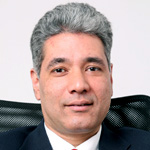
     

    Samar Singh Sheikhawat, Senior Vice President - Marketing, United Breweries Ltd

    We do not call it BTL, but refer to it as activation or leveraging. I would say that activation has always been an important part in the UB Group’s marketing intervention. And today it is almost equal to our sponsorship amount. So if we are involved with an event, property or platform, and suppose Rs 50 lakhs as sponsor, we will spend an equal amount in leveraging it or BTL. I would say, it is practically 1:1 for UBL and our portfolio of brands when it comes to the ad pie division of BTL with other media.


    I think a lot of things are happening apart from the display being used in this medium. The kind of consumer touchpoints being used, digital and social media is becoming a big thing and is being used increasingly as activation by us. Video mapping, production technologies have improved a lot. There are new techniques we are using from overseas in terms of projections, holograms, video mapping on walls etc. the ways to reaching out to consumer is getting innovative whether it be direct mailers that we do or CRM or get-togethers. The kind of media being used in activations is seeing innovation and substance that is being used in production is getting innovative.


    This medium faces challenges in terms of credibility and execution capability. Anything that you do in BTL needs to be relevant to your product, your target audience and to your brands’ positioning. A large part of differentiation in BTL goes towards execution.

     

    Raghu B Viswanath, Founder & Managing Director at Vertebrand Management Consulting

    Media today is fraught with many challenges. While the overall ADEX spends has been growing at a much higher rate than GDP increasingly clients are questioning whether they are getting enough bang for buck they have spent by advertising in media.


    Earlier brands focused on getting more eyeballs translating to more awareness on the brand. Since the competition intensity was earlier relatively low mere awareness got translated to purchase. That is not the case today. With increasing competition and very little differentiation, it is important for brands to not just enhance the brand – building efforts on awareness creation, but to go beyond and engage their customers meaningfully. This in turn means that brands need to connect with their customers through as many touch points as possible. So, non-traditional (BTL) lends itself to this two-way communication. The rules of the game is not about seeing or hearing. It is about experiencing the brand with all the senses. Hence, touch feel and other sensorial connects with the brand, is the need of the hour.


    For many brands, BTL is becoming a more significant component of their marketing spends (almost equal to ATL). I believe this trend is expected to grow, as brands pursue serious efforts to engage better with their customers.


  • UB bets big on ‘unchilled’ Kingfisher Red

    By Tuhina Anand


    Kingfisher Red, marketed as India’s first ‘all season’s beer’, is looking at expanding its footprint in the next 12-18 months and to have a nationwide presence. Currently, Kingfisher Red is available in nine states including Punjab, Chandigarh, Bihar, UP, Rajasthan, Himachal Pradesh, Arunachal Pradesh, Meghalaya and Assam.


    Talking about the roadmap for the product, Samar Singh Sheikhawat, Senior Vice-President Marketing, United Breweries, said, “There was a need to bring in a beer that can be consumed round the year as we have seen that the market swings a low of as much as 40 percent during cold weather as beer is largely seen as a drink for summer months. But I must add that since its launch one and a half year ago, Kingfisher Red comprises 5 percent of our total market share in the strong beer market and so far we are satisfied with the progress of the brand.”


    Kingfisher Red is marketed using the premise ‘Tastes great when chilled and even better when not chilled’. The product is designed to meet the unmet market during cold weather conditions when traditionally there is a drop in beer sales. Hence the communication is built around the season summer, monsoon and winter and how when it’s cold get Red, when it’s hot get Red and when it rains get Red hence a beer that is suitable for consumption irrespective of the season. The collaterals and merchandising is also built around seasons, like its jackets for winters and T-shirts for summer.


    On plans ahead, Mr Sheikhawat said, “We will be looking at being present in 15-20 markets in the next 12-18 months. Also currently the beer is brewed in Ludhiana and Rajasthan and we intend to pinpoint 5-6 more locations where it will be brewed.”


    He also said that the overall strong beer category from UB is growing at a CAGR (Compound Annual Growth Rate) of 15 percent in the last five years which means it is doubling growth yoy. In the case of Kingfisher Red it has been growing at more than 100 percent. In fact, he is bullish on the product and says that by end of March 2015 Kingfisher Red will comprise 10 percent of the total market share in the strong beer category.


    Kingfisher Red is a Premium Gravity beer and is specially brewed to give a distinctive taste with an oaky woody flavour and artistically crafted beer inspired by the traditional brewing practices of medieval European monks. It is so developed following a unique process whereby the beer is golden light oaky brown and can be consumed even at 14 to 17 degree Celsius, without any change in the taste of the beer.