Tag: Salil Kapoor

  • Orient Electric appoints Salil Kapoor to lead its Home Appliances biz

    By A Correspondent


    Salil Kapoor

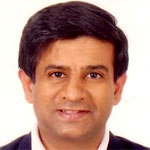
    Orient Electric has appointed Salil Kapoor as Business Head, Home Appliances business. Kapoor will be based at the company’s Head Office located in New Delhi.


    Kapoor has held leadership positions at leading brands like LG Electronics, Samsung, Microsoft, Dish TV and Voltas. His previous assignment was with Voltas Limited where he was working as COO for the UPBG division and was leading air-conditioners and other appliances business.


    Said Rakesh Khanna, MD & CEO, Orient Electric Limited: “It gives me immense pleasure to welcome Salil to the Orient Electric family to lead our Home Appliances business. He brings with him extensive experience and deep understanding of consumer durables industry which will help us to propel growth in our Home Appliances business.”


  • FoxyMoron & Motivator win creative & digital mandate for Hooq

    By A Correspondent


    Following a multi-agency pitch, video-on-demand service Hooq, appointed FoxyMoron and Motivator as its creative and digital agencies respectively.


    Said Salil Kapoor, Managing Director, Hooq India:”We are thrilled to have FoxyMoron and Motivator onboard as our creative and digital agencies. Being a digital brand ourselves, we believe that these partnerships will helps us stand differentiated in the consumer mind space through innovative campaigns. We are looking ahead to create and execute successful campaigns for Hooq”.


    Added Rabe Iyer, Managing Director of Motivator: “VOD services have paved the way the Indian audience consumes content across platforms. We are glad to partner with one of the best VOD service platforms in the world. We are excited about the possibilities of blending different creative minds to deliver results that continue to propel Hooq’s growth journey in India.”


    Speaking about the association with Hooq, CVL Srinivas, South Asia CEO of GroupM said, “The VOD service has seen tremendous growth across Asian markets and with their foray in India, we hope that we can help them capture the attention of their target audience with our innovative solutions. We hope that we can extend this association further.”


    Said Pratik Gupta, Co-founder, FoxyMoron: ”The win is significant for us for three reasons. Firstly, we have been openly talking about the blurred lines between mainline and digital. This win sets us in high-gear to bridge the ever so dwindling gap between the two. Secondly, the VOD segment is creating tsunamis. We have always liked to be at the center of such creative explosions. The content offered by the brand motivates our teams to do some path-breaking creative work. Lastly, it consolidates the new business wins that we at FoxyMoron North have had and validates the hard-work put in by Prachi Bali and team.”

  • Former Dish TV COO Salil Kapoor joins HOOQ as MD

    By A Correspondent


    HOOQ, Asia’s first premium video-on-demand service, has announced the appointment of Salil Kapoor, former COO at Dish TV India Ltd, as Managing Director of its India operations. As country manager, Kapoor will push the company’s goals of getting India HOOQd via the video-on-demand service landscape in India.


    HOOQ, a joint venture by Singtel, Sony Pictures Television and Warner Bros, claims delivery of over 30,000 hours of Hollywood and Bollywood blockbusters along with popular regional and local programmes.


    Commenting on his new role, Kapoor said: “It is an exciting opportunity for me to be associated with HOOQ and lead its India operations since this is clearly the future of entertainment. A developing country with an interesting demographic mix, India offers several opportunities for technologies like Cable, DTH and on demand services like HOOQ to co-exist. With growing interest in enjoying an uninterrupted viewing experience and internet penetration on the upswing, more and more time stressed viewers prefer enjoying their daily dose of entertainment at their convenience.The freedom of enjoying premium content from anywhere and at any time clubbed with better internet connectivity and growing smartphone penetration will drive the subscriber growth for HOOQ. I look forward to taking the HOOQ brand philosophy to the next level.”


    Prior to HOOQ, Kapoor was Chief Operating Officer at Dish TV for over seven years and has also been associated with LG (as CMO),  Microsoft and Samsung.


  • DishTV adds Gemporia TV to its portfolio

    By A Correspondent


    DishTV has added Gemporia TV on its platform, taking its total channels and services count to 500+.Gemporia TV is India’s first dedicated shopping channel for gems and jewellery.


    With the addition of Gemporia TV on its platform, DishTV has increased their shopping channel count to nine channels, which is highest amongst any DTH player and is available in all subscription packs, in all categories for its viewers.


    Announcing this new development, Salil Kapoor, Chief Operating Officer, DishTV India said, “Being a pioneer and market leader DishTV has always stood up to its promise of providing unique content to its viewers. Gemporia TV is one such unique channel where people can buy gems and jewellery. Addition of Gemporia TV, 9th shopping channel on our platform also proves that due to undisputed leadership and popularity of DishTV platform amongst viewers, more and more shopping channels wants to get aligned with us.”


    Announcing this development, Manuj Goyal, Co-Founder, Gemporia TV, India said, “Gemporia manufactures the very best in stylish, affordable and responsibly made fine jewellery. Our unique business model involves using only genuine gemstones and precious metals to create beautiful timeless treasures. We make limited editions and bring them to you at Direct to Home prices, cutting out all the middlemen.”


    Announcing this development, Steve Bennet, Founder, Gemporia said, “An ever growing customer base across the globe, through our TV channels and website in the UK and US, Gemporia TV comes to our manufacturing home in India with the promise of being able to deliver even better deals. We are very happy to launch with DishTV in India, a leader in content and technology innovation.”


    DishTV’s subscribers will be able to watch this new channel on LCN 116.


  • DishTV announces tie-up with Hungama

    By A Correspondent


    DishTV has announced a tie up with Hungama to launch Music Active. The active service will enhance DishTV’s portfolio in the field of VAS and music and provide unlimited music to its subscribers.


    Catering to the need of Bollywood music lovers and the other streams of music such as devotional, western, and pop music Music Active will have a good mix of Bollywood hits and Bollywood retro. Simultaneously reaching out to the music lovers of other genres, Music Active will also have international hits, international classics, devotional, ghazals, Bhojpuri, Kannada Hits, Tamil Hits and Carnatic Hits. Customers of this active service will be able enjoy uninterrupted music as unlike music channels. Music Active is completely ad free. Another important advantage for music lovers would be unlike music apps, there will be no buffering of the songs leading to steady entertainment.


    The service is available at an introductory price of Rs.35 till 31st October and will be priced at Rs.45 starting 1st November’15.This audio service can be availed by a simple missed call on 18002700096. The service is available free of cost from 27th Aug – 6th Sep (10 days). Music Active will be available on channel number 671 on DishTV.


    Speaking on the occasion, Salil Kapoor, Chief Operating Officer, DishTV said, “Being a pioneer and market leader, it has been our constant endeavor to make television viewing a wholesome experience for the entire family and to increase affinity with our audiences by providing them the choice of content they would like to watch. DishTV has always taken the lead in enhancing the value proposition and believes in providing the maximum and the best in entertainment to its subscribers. We are delighted to tie up with Hungama for launching Music Active, with the launch of Music Active, we are continuing with our legacy of offering another unique service for our consumers who are inclined towards music and will have this great opportunity to enjoy music of all genres in the close comfort of their homes.”


    Siddhartha Roy

    Speaking on the occasion Siddhartha Roy, CEO of Hungama.com said, “Music Active co-launched by Hungama and DishTV will bring uninterrupted and ad-free music to subscribers. We are proud to associate with the DTH service as we bring subscribers their favorite music across 10 different genres ranging from Bollywood, Regional, devotional to International, etc. I am certain that DishTV subscribers will enjoy grooving to Bollywood, regional and international music’s most popular hits and retro tracks only on Music Active.”


  • More ads go digital as ICC World Cup action shifts to sites, apps

    By Vijaya Rathore & Ravi Teja Sharma


    The morning and working hour timings of matches in the ongoing cricket World Cup have made millions of sport lovers follow the action on dedicated websites, apps and social media, prompting several big and small brands to latch on to digital advertising like never before.


    Brands across industries, including Lufthansa, Accenture, Tissot and Hero are looking to catch the on-the-move consumer on a variety of platforms including official broadcaster Star India’s starsports.com, social media sites, cricket portals and apps such as Hotstar.


    “Some of our clients have looked at digital very seriously. Hero, for instance, has bet heavily on digital and it is really doing well for the brand,” said Praseed Prasad, national director for digital trading at media buying firm GroupM India. Another client of his, Pepsi Lays, has chosen to do more on the digital side and only advertise on television during select matches in the World Cup this year.


    A spokesperson for Star India says they have seen an exponential growth in consumption online. This World Cup, Star has got around 35-40 advertisers, including Lufthansa, Accenture, CarTrade, Tissot and Hero for its online platforms, with about 20% of those exclusively on the digital medium. “Revenues from digital will be significant this time,” the person said.


    Hero is the co-presenting sponsor of the World Cup 2015 digital. “The medium has seen exponential growth in terms of traffic,” a Hero MotoCorp spokesperson said. It is the lead sponsor on the property with branding/inventory in terms of video inventory, logo presence, banner ads, special sections such as replay and match insights, and has also launched a dedicated app, Hero Super Skipper, the spokesperson said. “This association is a strategic move, owing to a perceptible shift in viewership patterns in favour of digital medium.” The India-Pakistan match at the beginning of the tournament, for example, got over 25 million views on Star’s digital platforms, the highest in the world for a single game.


    Firms such as DishTV have created fresh campaigns around the World Cup. “Most digital campaigns are either in the form of graphics or extension of TV campaigns but we created one especially for the digital medium and that has helped us reach the young consumers, the millennials,” said Salil Kapoor, COO of DishTV.


    He said the interactive nature of the digital space helps consumers to make purchases by routing them to the firm’s call centres if they wish to. Also, a television ad campaign costs at least 3-4 times more than a digital campaign, Kapoor said. DishTV has shot a campaign with brand ambassador Shah Rukh Khan to promote their HD channels during this world cup.


    Digital adoption by brands is on the rise with large companies now allocating significant spends to this medium. “From about 2-3% of a large company’s marketing budget, digital is now in double digits,” says Ahmed Naqvi, CEO at digital and social media agency Gozoop.


    Source:The Economic Times

    Copyright © 2015, Bennett, Coleman & Co. Ltd.

    All Rights Reserved, Licensed to republish


  • Dish TV announces new HD feature for North India

    By A Correspondent


    Dish TV has introduced an all-new package for its new and existing customers in North India. Special variant of these packages are also available for its customers in South India.


    Speaking on the occasion, Salil Kapoor, Chief Operating Officer, Dish TV said, “The initial response to the new packaging for this festive season has been overwhelming for Dish TV. As Asia’s largest DTH operator, we have always focused on offering premium and exclusive packages with a value proposition offering for both new and existing customers. Dish TV has always been at the forefront for being pioneers and introducing a host of customer- centric products and services.  Our new packaging with an enhanced focus on HD is in response to our consumers viewing habits making quality entertainment more accessible and economical.”


    In High Definition, Dish TV now has maximum content, 36 HD channels, making it highest in the country. The growth of the High Definition category over the past year together with rising sales of flat panel TV’s has added a new dimension to the superior HD viewing experience. The overall packaging, with enhanced HD and sports bouquet will further encourage viewers in the metros and larger cities to subscribe to new offerings from, Dish TV.


    With the addition of 2 sports HD channels Star sports HD 1 and Star sports HD 2, Dish TV has a complete offering & mix of entertainment, music, news and regional language channels (for its viewers).


  • Big Boss marketers go Saath Saat to beat Slowdown


    By Lijee Philip & Kala Vijayaraghavan


    By his own admission, Mayank Pareek, who is responsible for ensuring that cars keep moving out of Maruti Suzuki showrooms at a faster pace than never, says he has no personal life today. Cars are not moving at India’s biggest carmaker like they used to. “I am working seven days a week,” says Pareek, chief marketing officer. “Tough times call for tough measures. We can’t be selling cars sitting in the office.”


    In August, Maruti organised about 26,000 events aimed at the consumer, including exchange melas, camps for financing and AC check-ups. “The idea is to reach every potential consumer and convert them into a buyer,” he says. It’s a challenge for every chief marketing officer (CMO) in this slowdown, and it’s not an easy one to overcome. “There are no homogenous customers,” says Sunil Kataria, CMO at Godrej Consumer Products.


    In the first two quarters, the Indian economy has grown at a tepid 4.8 and 4.45 percent respectively. And the forecast for the entire year is only mildly better- 5.3%, according to a panel advising the prime minister last week. High prices and job insecurity, in the face of economic uncertainty, has upset consumer confidence, with spends on electronics and automobiles dropping for eight months in a row.


    Yet, Kishore Biyani, who knows a thing or two about the Indian consumer, feels this is not the time for companies to be defensive. “It is the time to be aggressive,” he says. “If marketers keep quiet, the consumer will keep quiet. One has to behave normally during such times.” Not CMOs, though, who are having to deal with reluctant consumers, tighter budgets, and a competitive and changing marketplace. Even as they pull these six levers to beat the slowdown, there’s a seventh one they cannot afford to let go off.


    1. Find new niches

    Alongside marketing campaigns aimed at the consumer in general, some companies are targeting niches for growth that is more visible, is easier to record and comes at a lower cost. For Maruti, this thinking has seen it pinpoint and drive into settlements, with a need and purchasing power, like priests in Tamil Nadu and turmeric growers in Nashik. “So, it’s not mass marketing, but niche marketing,” says Mr Pareek, the carmaker’s CMO.


    Having a widespread network helps as such campaigns become just incremental work for a sales team. They can make a catch and return to their bread-and-butter. More recently, adds Mr Pareek, Maruti has been adopting a similar strategy in Jamnagar, Gujarat, where groundnut and cotton farmers have seen a kicker in their incomes following a good crop and higher prices. Elsewhere in the state, its sales executives, pitching its Eeco as a cost-efficient mode of transportation, recently sold 40 vans to restaurant or motel owners on the highways of Ahmedabad and Baroda.


    Similarly, earlier this year, Vodafone launched a campaign for migrant workers in mid-town Mumbai to teach them how to use a mobile application of the Indian Railways to book train tickets. “A number of these workers have entry-level phones,” says Vivek Mathur, chief commercial officer, Vodafone India. “With an application, they see the utility of a data connection against MBs or GBs of a data plan.”


    Godrej Consumer found new consumers for its room and car fresheners, Aer, through a new distribution channel. In the first five months of launch, Godrej was selling Aer as an FMCG product, moving it through traditional and modern trade. After its consumer research showed home care and car care to be different segments. “Car buyers are very passionate about what they use in their car and spend time in car accessory shops,” says Mr Kataria of Godrej. “We quickly appointed separate distributors for car accessory shops.”


    2. Get out of the office

    It took several consumer interactions for Godrej realised its folly on how to distribute Aer. But those consumer interactions were not by default, but by design. This June, Godrej kicked off an initiative called ‘conquest’, whose objective is to have five employees meet 100 consumers in a week, gather information, process it scientifically and embed it into decision-making.


    The mid-course change in how Aer was to be distributed was one example of Conquest at work. “The main idea behind Conquest is to pick consumer knowledge first hand and work on it swiftly,” says Mr Kataria. “In regular research, there is a transition loss that tends to happen as research agencies moderate and diagnose data.”


    Most companies, in their own way, are strengthening their efforts to reach the consumer. In early-2013, mobile service provider Idea Cellular started participating in ‘haats’-local markets, typically organised on a weekly basis, both in rural and urban areas. Idea now sets up a permanent stall in haats in 450-500 districts, with each market serving a population of 2,500.


    According to Himanshu Kapania, chief executive of Idea, 60% of the company’s customers are in rural areas. Elsewhere, Axis Bank is also promoting more field initiatives to win new business. One such initiative aims to get more senior citizens to open accounts with the bank. Its product, called Senior Citizen Privileged Account, offers health checks, bill payment facilities, an ID card for medical emergencies and a CD of old movie songs. “Banking is not an acquisition business like FMCG,” says Manisha Lath, head of marketing, retail liabilities & electronic banking, Axis Bank. “It is really a relationship business.”


    3. Engage more with sellers

    Consumers are one touch-point of such outreach exercises. The other is the links between the company and the consumer: dealers and retailers. Increasingly, CMOs acknowledge, it is in their interest to do so as these two sets are influencing sales in a bigger way; they are no longer dormant channels and, today, have the power to convince consumers to choose a particular brand.


    According to Nilesh Gupta, director of consumer durables retail chain Vijay Sales, Apple is the only brand that has the differentiation for a marketer to call the shots, and even that is under question today. “There is no brand or product differentiation in the market today,” he says, in the context of consumer durables. “Usually, the dealer may have the final say in the brand choice picked up by the consumer.”


    So, companies are offering incentives. This April, Aircel launched a reward scheme for its retailers, targeting their wives: the wife whose husband sold the highest number of Aircel connections got a Hyundai Santro car, the runner-up got to meet MS Dhoni, captain of the Indian cricket team.


    If it’s not incentives, it’s meetings. “It is important in a downturn, and amid killing competition, to have your trade channels back you solidly,” says Salil Kapoor, CMO of Dish TV. “We have been directly meeting our top-performing 7,000 dealers of our 48,000 dealerships in the last few days to solve on-the-ground issues and motivate them.”


    “You manage dealer problems and they will manage yours,” says Chandu Virani, managing director of Balaji Wafers. For many years now, Virani has been holding an annual meeting of 25-50 dealers, of Balaji’s 800-plus dealers; he is now increasing their frequency. There is no talk of sales. Instead, Mr Virani listens to the problems of dealers and tries to offer immediate solutions.


    4. Make a rural push

    In today’s skidding market, the top-of-the-mind concern for dealers and companies alike is growth. Mr Kapoor of Dish TV says market trends in India, especially in urban areas, is a partial repeat of 2008, when a feeling of gloom pervaded over India following a financial crisis in the west.


    Concerns on job losses, a declining rupee and mortgages is an urban phenomenon, adds Mr Kapoor. “Half of the problem is sentiment-driven,” he says. “But the villages are not affected by this gloom talk.” Harvests in general have been good, yielding higher incomes for farmers, and this likely to see them spend more. Dabur expects growth in rural India to be 30-40% higher than urban markets.


    Mr Pareek of Maruti says the company has identified about 300 rural niches in recent years, which account for 10% of its domestic revenues.


    These include potato growers in West Bengal , blue pottery makers in Jaipur, timber merchants in Gujarat, turmeric growers in Tamil Nadu, granite pol i sher s in Hyderabad, painters in Madhubani in Bihar, and manufacturers of nuts and bolts in Sonepat.


    An August 2013 study by Nielsen, titled ‘India: Boom or Bust’, validates the rural push of companies. The report says that of the 400,000 new stores set up in India in 2012, more than 70% were in rural areas. CMOs expect companies to stay this course, not just in terms of where all they are but also in terms of what products they offer. So, for example, Emami, Dabur, LG and Videocon are looking to go beyond small packs and entry-level products, with larger packs and mid-range products, in the belief that consumers in rural areas will start upgrading. LG plans to ship more smartphones and flat-screen TVs to villages and smaller towns in this festive season.


    5. Entice with the price

    The Nielsen report cited above says the companies that did well are those that “were not so aggressive on price…they recognised the pressures on the consumer”. The report says that in 2012, the five fastest-growing FMCG companies in increased product prices by an average of 8.2%, against 11% in 2011. By comparison, the bottom five companies raised prices by a greater amount -12.5% in 2012, against 9.3% in 2011. In this slowdown, price has emerged as an important lever, both as perception and as real value. The auto industry, which is reeling under eight consecutive months of declining sales, leads the way, with price cuts and hefty discounts. For example, Hyundai pitched its Grand i10 Rs 50,000-80,000 cheaper than Maruti Swift; Ford launched its new and improved Figo at its previous-generation price, of Rs 3.99 lakh; manufacturers sought to disrupt the market with aggressive pricing of brand new models like Ford EcoSport (Rs 5.99 lakh) and Honda Amaze (Rs 4.99 lakh).


    In the FMCG space, bundling, promotions and discounts are galore on soaps, shampoos and laundry. So, for example, Hindustan Unilever is offering a discount on its premium detergent brand Surf Excel Matic, while P&G is offering 15% extra shampoo on its Rs 3 sachets. It helps them the cost of crude oil and palm oil, key ingredients for soaps and detergents, have declined 7% and 3%, respectively, in the past few months


    6. Keep innovating

    Even as they play defence and keep a check on prices, the slowdown winners also turn on the offence and keep innovating, observes the Nielsen report. More importantly, they support these new launches. The new launches made in 2011 by the five fastest-growing FMCG companies grew five times in value terms in 2012, against two times for the bottom five companies in the set.


    Devendra Chawla, president, Food Bazaar, a modern retailer, says FMCG companies have dared to take big bets with new product and category launches in 2013. The list of new product launches- not refreshes-in this slowdown is long and formidable. So, for example, with its whitening toothpaste, Colgate launched a new category, pricing its product at a 50% premium to other products in the market. P&G launched its big toothpaste brand Oral B in India a month back.


    There’s also HUL’s hair care brand Tresemme, Marico’s Saffola Masala Oats, Engage Deo by ITC, Park Avenue Beer shampoo, Instant Chinese noodles by ITC, Dettol Kitchen by Reckitt Benckiser, Odonil gel from Dabur, Alpino chocolates by Nestle. “The consumption economy is definitely leading to consumers willing to pay for differentiated products,” says Mr Kataria of Godrej, which has launched two new products and two product variants in the last 10 months.


    At Big Bazaar, for example, olive oil sells more than Marico’s Saffola. Mr Chawla says modern trade has helped companies drive sales in new categories: while its contribution in overall sales growth has been 7-8%, it’s been 35-50% in new-age categories such as anti-aging creams, health foods like oats and toilet cleaners. “In a way, it is a new marketing lever-focusing from general to specific, and with a long-term strategy,” he says.


    7. Keep thinking long term

    Rajiv Bajaj, managing director of Bajaj Auto, has a different thinking on offering too many brands. “The marketing principle is that the width of the brand portfolio must be inversely proportional to the breadth of the markets that one seeks to address,” he says. “Unfortunately, most marketers lead their companies to offer more and more brands as they seek to enter more and more markets.


    That’s usually the beginning of the misadventure to a sorry end.” In the domestic market, Bajaj has just two brands: Pulsar and Discover. K Ramakrishnan, president marketing of Cafe Coffee Day, also stresses on holding on to the basics as a guiding force. “Life (for a SMO) has always been full of complications and changes, and we have to accept that,” he says. “If there is primary focus on the value offered by the brand, I think, one is on safe ground.”


    It’s why Bajaj feels marketers should think less about the world and more about their brand. “When there are too many competitors and not enough customers, CMOs need to heed (marketing guru) Jack Trout’s advise, ‘differentiate or die’, and reorient their organisations from being manufacturers and sellers of products to becoming an engineer of categories and a marketer of brands.”


    Marketing consultant Suman Srivastava feels marketers are probably making little headway in unconventional ways to reach the consumer because the marketing tools being used today are primarily for FMCG products and evolved in the 1960s, for a different consumer. “Today, FMCG is just one of the various product categories,” says Mr Srivastava, founder of Marketing Unplugged. “The world has changed and the CMO has to change dramatically too. Their immediate instinct is to control the communication to the consumer like speaking from a podium; they are not having a conversation with them.”


    With Deepali Gupta and Writankar Mukherjee


    Source:The Economic Times

    Copyright © 2013, Bennett, Coleman & Co. Ltd. All Rights Reserved

    Licensed to republish

     

  • Dish TV launches India’s first SD Recorder with unlimited capacity

    Salil Kapoor

    By A Correspondent


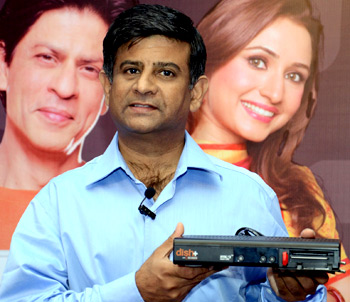
    Dish TV has launched “Dish+”,India’s first standard definition box with unlimited recording facility. Dish+ is positioned at a consumer-friendly and competitive price of Rs1,690 (against all other SD boxes at Rs 1590) with a free 4 GB pen drive as promotional offer. Post VCR, there is no recording device available with consumers and there is a huge vacuum to fulfil the consumer need. Dish+ fulfils the ‘need gap’ of recording facility for the consumers.


    Speaking on the launch, RC Venkateish, Chief Executive Officer, Dish TV India, said: “Being pioneers and market leaders, we have constantly reinvented and redefined the market with thought leadership to be ahead of the pack. Dish+ is being launched in 42 cities of Phase I and Phase II of digitization and will clearly demonstrate Dish+ as a better alternative for all viewers who will shift from analog to digital.”


    Salil Kapoor, Chief Operating Officer, Dish TV India, emphasized: “Dish+ is a comeback of recorders in the living room and is a clear differentiator vis-à-vis other alternatives including digital cable. Its highly competitive launch price will position it as a preferred option amongst all DTH buyers”.


    The unique feature of Dish + is its compatibility with any USB device enabling consumers to simply plug and play an existing USB stick/ HDD, and build an entire genre based library of their favorite program. Dish+ offers unmatched advantage of recording on SD. Dish+ is user-friendly with features like “plug-n-play” through an external USB device. This enables all benefits of a traditional DVR like recording and playing back programs, Pausing or Rewinding live TV, different play-back positions, event based recording (EBR), time based recording (TBR) and so on.


  • Is Brand SRK losing sheen due to controversies?

    By Samidha Sharma


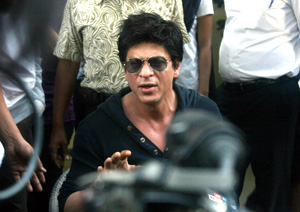
    He was, arguably, the biggest Bollywood superstar not long ago but with a few unsuccessful releases, a night club brawl and now a scuffle with officials at a Mumbai cricket stadium to his credit, Shah Rukh Khan’s brand is losing sheen.


    In the last couple of years the actor has not signed any big brand endorsement deals, although his portfolio still boasts of more than a dozen brands. People in the endorsement industry say that SRK’s image has suffered in the last couple of years not only due to the controversies that have surrounded him but also because he is an ageing celebrity.


    “Controversy does not make for good brand endorsers and any marketer will keep away from a celebrity like that. Besides the controversies that have courted him recently, what is a bigger concern is that he is ageing and that does not bode well for multiple brands in India that want a youth connect,” said Manish Porwal, MD, Alchemist, a talent management agency.


    Cola major PepsiCo, for which SRK was a brand ambassador for a long period, dropped him in 2009. In a move that was veering towards the youth, the cola major got on board Ranbir Kapoor. Later, telecom major Airtel did not renew its contract with SRK, although, they have not officially announced their disassociation with him.


    LOST IN TRANSITION?

    Endorsements: Tag Heuer, Hyundai, Belmonte, V-jon, Navratna, Dabur sona chandi, Lux Cozi, Linc pens


    SRK’s endorsement rates haven’t come down though as he charges around Rs 1.5 crore per day. But it’s 50 per cent less than what Aamir Khan commands.

    Today, his roster of more than a dozen of brand endorsements include Belmonte, V-jon, Navratna, Dabur sona chandi, Lux Cozi, Linc pens, besides a few marquee names such as Tag Heuer and Hyundai. SRK’s endorsement rates haven’t come down though as he charges around Rs1.5 crore per day.


    However, it’s 50 per cent less than what his contemporary Aamir Khan commands, but the latter has largely been off the endorsement market of late, say industry people.


    “What you are seeing is something that a lot of stars have gone through. It’s a transitional phase which all celebrities go through; while some bow out gracefully, some do not. It is an inevitable shift of power and it has not been a smooth ride for him,” said Santosh Desai, CEO at Future Brands.


    However, some of the brands that he endorses are sticking with him. DTH player Dish TV, which has him as a brand ambassador for over five years, says these incidents have had no rub-off as far as his brand appeal among masses goes. “There is no dent that has been made on Brand SRK, we will continue to have our association with him,” said Salil Kapoor, COO, Dish TV.


    Source:The Economic Times

    Copyright © 2012, Bennett, Coleman & Co. Ltd. All Rights Reserved