Tag: Sachin Kalbag

  • Sachin Kalbag is back at Mid-Day, as Editor-in-Chief


    Sachin Kalbag
    Sachin Kalbag

    Senior journalist Sachin Kalbag has been appointed Editor-in-Chief (Print and Digital). He has joined the Dainik Jagran group-owned Mumbai daily today. He will also oversee the group’s weekly paper, Sunday Mid-Day and the website, mid-day.com.

    This is Kalbag’s third stint with the paper, having joined it as a trainee in 1994. He has also worked across various publications over the last three decades, and other than being Editor of Mid-Day from 2011 to 2015, he was also Resident Editor of The Hindu’s Mumbai edition (2015-18) and Executive Editor of Hindustan Times (2018-22). Since 2022, he has been working with The Takshashila Institution as Senior Fellow. For a bit, he was also Washington DC correspondent with the now-suspended DNA newspaper.

    Kalbag takes charge from Tinaz Nooshian who has moved on.


  • November 26, Dus Saal Baad


    By A Correspondent


    For news journalism in India, the Mumbai terror siege was a gamechanger. News channels had gained ground from the mid- to late 1990s, they played a key role in covering various political and social events in the period, Kargil, the Gujarat riots, the no-condidence motion that Atal Behari Vajpayee lost, the various Budget presentations, the various cricketing specials… but the Mumbai terror siege starting November 26 saw news television play a dominating role in news breaks.


    MxMIndia pays tribute to the departed soul and salutes all those who fought the terrorists and helped in those trying circumstances.


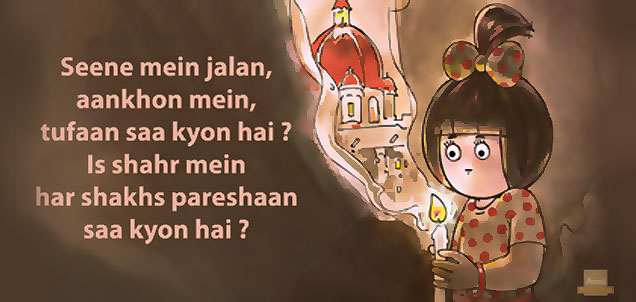
    The Amul ad that you see above was released on the first anniversary of the terror siege.


    At MxMIndia, we’ve carried many articles on the media coverage of the terror strike. Here, we bring you some of the articles we published on November 25, 2013 to mark the fifth anniversary of the attack.


    What’s made Arnab the Face of News TV

    The events of November 26, 2008 and thereafter saw the rise and rise of Republic TV editor-in-chief and chief promoter Arnab Goswami. A freewheeling chat with Goswami when he was Editor-in-Chief of Times Now.

    http://www.mxmindia.com/2013/11/whats-made-arnab-the-face-of-news-tv/


    Sebastian ‘Saby’ D’Souza: I want to erase the event from my memory completely

    Other than images of the Taj Mahal hotel and scenes of frenzy around the spots where the terrorist had struck, the Mumbai Mirror picture Ajmal Kasab in the concourse of the Chhatrapati Shivaji Terminus (CST) got Saby much fame and accolades. But the ace photographer says he doesn’t like to about the event. “I want to erase the event from my memory completely. I wish it had never happened,” he told us.

    http://www.mxmindia.com/2013/11/sebastian-saby-dsouza-i-want-to-erase-2611-from-my-memory-alert-some-explicit-pictures/


    Ranjona Banerji: 26/11 – battleground news channels and newspapers

    If 26/11 was the making of Times Now, it was also a battleground for newspapers, writes Ranjona Banerji. For journalists, it was the story of the decade playing out in front of one’s eyes.

    http://www.mxmindia.com/2013/11/ranjona-banerji-2611-battleground-news-channels-and-newspapers/


    Sachin Kalbag: No time for water, no time to blink

    Hindustan Times Executive Editor Sachin Kalbag reported on the Mumbai terror siege for Delhi’s Mail Today, where he worked as Senior Editor from 2008 to 2011. Here, he recounts the hardships faced by journalists covering the Mumbai terror siege. This article was written when Kalbag was Execuitve Editor at MiD-Day

    http://www.mxmindia.com/2013/11/sachin-kalbag-no-time-for-water-no-time-to-blink/


    Page 1 of some Mumbai dailies – Nov 27-30, 2008

    The following are the front pages of some Mumbai dailies from November 27-30, 2008

    Page of some Mumbai dailies – Nov 27-30, 2008

    http://www.mxmindia.com/2013/11/front-pages-of-some-mumbai-dailies-november-27-30-2008/


    Amul ads on the terror attack & after

    The creatives we see on Amul Butter’s billboards are excellent indicators of popular mood and perception. Here we bring you some of these released after November 26, 2008 and until the Kasab hanging.

    http://www.mxmindia.com/2013/11/amul-ads-on-the-terror-attack-after/


    Ranjona Banerji is a senior journalist and commentator. She is also Consulting Editor, MxMIndia. The views here are personal


  • Panel discussion deliberates role of media in promoting culture of giving

    By A Correspondent


    The Mumbai Press Club recently organized a panel discussion that deliberated the role of media in promoting a culture of giving. The panel discussion touched upon important topics like Is news today turning morbid? Is the focus solely on crime and scams? Is there space in the media for sunshine stories? More importantly, can the media foster a culture of giving in society? The discussion was held in the run up to Daan Utsav (formerly the Joy of Giving Week) celebrated from October 2-10.


    The panelists included Ajay Piramal, Chairman, Piramal Group, Mid-Day editor Sachin Kalbag, Raheel Khursheed, head, politics, government, news at Twitter India, Ingrid Srinath, CEO, HIVOS India (former CEO, CRY) and actor Gul Panag. The panel was moderated by senior journalist Indrajit Gupta.


    Venkat Krishnan N, founder, Daan Utsav, pointed the vast spectrum of people who had participated in the joy of giving festival, from CEOs to farmers in Gujarat who gave 4000 litres of milk to parts of the country that needed it.


    India has always had a culture of giving since the days of the Ramayan and Mahabharat, shared Ajay Piramal who has hitherto been shy of talking of the philanthropy he has been involved with. He chose to discuss it openly in order to promote a culture of giving.


    Charity is not about spending a lot of money. It is about giving whatever you can at any given point of time, said Gul Panag, who spearheaded Social Outreach Accreditation Program to bring the common man, NGOs and corporates together. “Many NGOs fall short when it comes to instituting programs for weekend volunteers,” said Panag.


    Raheel Khursheed spoke of the role that social media plays in expanding conversations and connecting people who want to give. While getting blood for trauma victims was once a nightmare, Khursheed said that it’s now a matter of tweets and re-tweets, with blood being procured at tremendous speed. He even spoke of a teacher from a remote school in Kashmir who got laptops from a stranger in Mumbai thanks to social media.


    Ingrid Srinath shared that the advent of social media has seen journalists reach out to her for stories rather than her having to pitch them to journalists. She spoke of CRY’s unique initiatives to network with the media, from cricket matches with CEOs and journalists to stories on profit and marketing initiatives that many NGOs shy away from.


    Sachin Kalbag spoke of Mid-day’s role in focusing on local initiatives and on good news rather than solely on the bad. He spoke of his paper’s role in spreading awareness about malnutrition in Melghat that resulted in the Bombay High Court taking suo moto cognizance of the tragedy of 3,000 children and thereafter directed the state government address the situation.


    The panelists were unanimous that media fared poorly when it came to spreading a culture of giving. Panag said she never read newspapers first thing in the morning as the flood of bad news ruined her day. When asked to wear the editor’s hat, Panag said that she would want two sorts of stories to make it to the paper every day. Stories of giving by the very rich and the very poor, from CEOs to chaiwalas. This, she feels, would help foster a culture of giving among most people who fall in between the two extremes.


    Senior journalist Ayaz Memon said research showed that it was not simply editors but readers who crave bad news. Memon, who gave the vote of thanks, pointed to the need for changing the narrative.


  • Sachin Kalbag: No time for water, no time to blink

    By Sachin Kalbag


    On the morning of November 28, 2008, around 100 reporters rushed to Chabad House in Colaba where four Pakistan-trained terrorists had taken hostage all the eight Jewish people living in the building. Chabad House, or Nariman House as it was previously known, is the outreach centre for the Jewish community in Mumbai, and is the first stop for any religious activity for the community, especially for those visiting from outside the country. It was a natural target for Islamist militants who had laid siege to key locations in Mumbai from the night of November 26.


    There were a few reporters present at the spot, but most of the attention from media houses for the most horrific terror attack in India’s history was given to the Taj and the Oberoi, both plush five-star hotels where hundreds were held hostage, and many later killed. Nariman House, on the other hand, is in a middle-class area of Colaba at Hormusji Street, and access to the building is through a narrow lane on the west, and a slightly wider but still crowded lane to the north. Escape is practically impossible.


    It was in this situation that Rabbi Gavriel Holtzberg and his pregnant wife Rivka found themselves on the night of November 26. Later, reporters at “ground zero” were told that the hostages were tortured badly before being killed.


    For the reporters, which included this writer who was reporting for the Delhi-based newspaper Mail Today, there was seemingly not much to do but wait until the well-trained National Security Guards (NSG) commandos neutralised the four terrorists.


    However, it was not all just wait and watch. Intermittent fire had already been targeted at journalists at the Taj on the night Nov 27, and the four terrorists at Nariman House could have, out of desperation, hurt any of the hundreds of onlookers and journalists, which included cameramen from news agencies all over the world. In fact, a few bullets were indeed fired at us, but they seemed more like warning shots than any attempt at killing us. The terrorists, reportedly, were told that their only aim at Nariman House was to kill the Jews. According to a Times (of London) news report, the Pakistani handlers told the terrorists that “the lives of Jews were worth 50 times those of non-Jews”.


    A unit of 22 NSG commandos arrived in the morning rappelling down a military helicopter, and entered Nariman House. Soon, the exchange of fire began. A second unit of NSG commandos, most likely snipers, took positions in a building situated 100 metres north of Nariman House. Separating them was the narrow lane, whose most remarkable feature was a large banana godown which was shut indefinitely.


    There was neither food nor any water for journalists, so we relied on the goodness of the locals to provide us with biscuits and cups of tea. The more fortunate ones were given vada pav. We could not even imagine the stamina of the NSG commandos who had nothing to eat or drink during the entire offensive that last close to 12 hours.


    The terrorists, it was immediately obvious, were well-trained in military warfare and hand-to-hand combat. How else could they survive an onslaught by some of the best trained commandos in the world?


    In the middle of all this, journalists were shooting pictures, giving live newscasts and filing stories to their respective newsrooms. The pressure on television reporters was immense. Viewers from all over the world wanted the latest, and the live pictures were not providing much context. Studios kept calling their correspondents, who had nothing much to say. This often resulted in misreporting.


    One such reporter, whom I got acquainted with, was being repeatedly called upon to give updates. In frustration, he began describing events that never took place. For instance, he would sit and chat with me for 20 minutes, and then, when his editor called, he would simply rattle off trivial stuff that was the figment of his imagination at best. When I asked him why he did that, he replied, “This is television, yaar. You print guys will never understand.” Later, at around 6:20 pm, they even claimed that the operation was over.


    I was more amused than angry. I cross-checked with a Hormusji Stree resident, Dhaval Koli, whom I had befriended during the day. He said the firing is still on, and the operation isn’t over. Koli worked at the local Baskin Robbins shop, and he offered to take me around as he had lived his entire life there. His help turned out priceless because I could add details to my reports that others could not. For instance, he was the first to tell me that Sandra Samuel, the 44-year-old nanny of Holtzbergs’ son Moshe, had rescued the toddler. The operation finally got over at night, three hours after television reporters had declared it finished.


    Around 9 pm, I ate my first morsel in 26 hours – a vegetable sandwich bought by a colleague working at India Today’s Nariman Point office. Later, after filing stories, I went to a pav bhaji stall to eat some Mumbai street food. There is a certain satisfaction you get by eating good food after more than a day of not eating. My respect for war reporters went up a hundred notches.


    I had arrived in Mumbai on November 27, and stayed on for four more days. Most of these 102 hours were spent on the streets. I could not meet my parents or my friends, who kept calling up. No reporter I knew there could find time to drink water, leave alone meet friends and family. This was one of the most horrific events of independent India, and as reporters, we could not even blink. We were, we soon realised, eyewitness to history.


    Sachin Kalbag is Executive Editor, MiD DAY


  • Jaldi 5 with Sachin Kalbag: Upholding civil liberties…

    The arrest and eventual release of a young lady living in Palghar in suburban Mumbai thanks to a Facebook post as also her friend who ‘liked’ it sent shockwaves across India’s urban set who happily post their comments on social networks and microblogs. Leading English daily Mid-Day has announced a People’s Freedom Charter in defending the citizen’s right to free speech. MxMIndia interviewed Mid-Day executive editor Sachin Kalbag and asked him on what the paper hopes to achieve with the Charter.


    01. How do propose to ensure your Charter reaches its logical conclusion… as in ensure that students are not found to be on the wrong side of the law for exercising their rights, as stated by you?

    There will be no “conclusion” to this process. This is the first step in a long journey to defend freedom of speech. MiD DAY will, stridently and on a sustained basis, defend the freedom of speech of India’s citizens. It will mean that we give stories pertaining to this issue wide play. Of course, due to constraints of space in the print medium, we cannot be talking only of freedom of speech-related stories, or even all stories pertaining to the topic. But yes, it will be a large focus area.


    2. One of the biggest problems is the interpretation of how any speech or action will affect law and order and the social fabric. Don’t you think that what’s needed is public opinion against age-old laws and getting them changed eventually through the Executive or the Judiciary?

    In a true democracy, freedom of speech must be absolute. It is something we do not have right now because Article 19(2) of the Constitution puts “Reasonable Restrictions” on freedom of speech. Those restrictions are the sovereignty and integrity of India, the security of the State, friendly relations with foreign States, public order, decency or morality or in relation to contempt of court, defamation or incitement to an offence. If you read between the lines, practically anything can constitute as an offence (I calling someone ugly, or, for that matter, saying Sachin Tendulkar is an ordinary batsman). This is where the arbitrariness of “reasonable restrictions” needs to be highlighted. Another example of arbitrary interpretation and application of law is Section 66(A) of the Information Technology (Amendment) Act, 2008. Once again, anything can constitute as “offensive” and I could lodge a complaint with the police against you because I found your email or your Facebook post offensive. This is what we need to be guarding against. As right-minded citizens, we must oppose this arbitrariness. We should stand up against laws that can be used to settle scores or wrongfully applied.


    Through our Freedom Charter, we want to build public opinion in this regard. Ultimately, it is Parliament (the lawmaking body) which will have to debate and pass laws that do leave nothing to arbitrary interpretation. It is a tough challenge, but someone needs to be a catalyst.


    03. It’s been seen that not just the government, but also otherwise well-meaning, educated and well-read individuals do not take very kindly to criticism, especially when it’s on social media (and Twitter)?

    Not taking kindly to criticism is a universal trait. Who wakes up in the morning and says, “Come on, world, criticize me.”? The point is not about criticism, but my freedom as a citizen to speak my mind without any fear. If the person on the receiving side feels that the critic has no basis for what he or she said, the “affected party” can sue the critic for defamation so that the critic can prove whether his allegations are accurate or not. There are these laws that give the affected party a platform for redressal. But we cannot sit on a high horse and say, “No one can criticize me,” or “No one will oppose me because I am the government and I know what is best for the country.”


    04. Your report mentions that the Charter will be the guiding principle in your paper’s reportage. Could you give an example of how this will happen?

    We will ensure in reportage that civil liberties are upheld at all costs. You will see this in all our stories.


    05. This also means that in case of a situation where you or your paper are subjected to criticism, you’ll take it in the right spirit?

    Of course, we will take in the right spirit. We are an irreverent, anti-establishment, ideologically neutral newspaper. No matter what we do, our stories offend someone or the other. We believe that as a responsible newspaper, we will investigate our stories thoroughly, and that we will not carry stories without proper documentation to prove we are right. If in that process someone is offended, so be it. We are ready to defend our stand. And if we are wrong, we shall apologize and take steps to ensure that we do not repeat our mistakes. But at no point in time shall we say that, “We will not carry the story because it will offend someone.”


    Interviewed by Ananya Saha


  • Mediaah!: Of a toothless Press Council and spineless Editors’ Guild

    By Pradyuman Maheshwari

    Apologies for not being regular. A colleague has been indisposed. We’ve been getting our share of exclusives and firsts. So a good part of the day is spent in ensuring that MxMIndia turns into a broadbased media website. So all of you who’ve been missing your daily dose of Mediaah!, chill! I don’t think the blog will be a daily, but an update at least three to four times a week?!


    Mint editor R Sukumar’s ‘Edspace’ is a delight to read. Pity it doesn’t appear every Saturday. Delight for me because it deals essentially with the media, and often on ethics. For instance, last weekend, he wrote about journalists being responsible for the state in which the profession is in the India – the corruption levels given the direct and indirect favours journos take (see link). Like awards, being part of a government committee. Sukumar hopes the Editors’ Guild of India will debate these issues.

    Being a Delhi-based editor and “an unacknowledged member” of the Guild, I guess he hopes the apex association of editors will do something. My own belief is that it will not. It could do precious little when the paid political news controversy first surfaced a couple of years back and Medianet did a decade ago.

    If the Press Council of India is toothless, the Guild is spineless. And this is despite having editors like T N Ninan, M J Akbar and Rajdeep Sardesai at the helm. Guess it’s one thing writing about the government or demining, say, a Narendra Modi, but another to take on biggies in their own biradiri.


    Paid news and Mid-Day

    Mid-Day exec editor Sachin Kalbag makes a brave defence for the paid news practice that his paper indulges in. Quoted in The Big Story on MxMIndia.com earlier this week, he defends the ‘Centre Stage’ feature in his paper that contains advertorials. Just 15 percent of the content is paid for. He also calls the tagline under the Bombay Times masthead as a disclaimer.

    I don’t think people see it as a disclaimer. If The Times of India and Mid-Day are serious about informing their readers that some of the stuff in their papers is published not on the merit of its editorial content but the amount someone’s paid for it, they must clearly state that they are doing it. They must tell the reader that the content in question must not be construed as that done by the paper’s journalists. Just as Mint has been doing about its advertorials. So in every sense of the term, the 15% of the paper’s Centre Stage section is paid content.

    So, lemme repeat what Sachin says:

    My opinion on paid news is very simple: It’s an abhorrent practice. It demeans journalism. I don’t really know when this crept in, but it has plagued the media for decades. Unscrupulous journalists have been on the take for several years, and this is not a new phenomenon. The widely cited example of institutional selling of content space is Bombay Times which introduced a rate card for coverage in the supplement. Recently, the supplement began putting a disclaimer under its masthead. The phenomenon of institutional selling of content space crept into the media for various reasons – but the root cause was always to increase revenue.

    Our editorial policy is very clear: any “Advertorial” is placed in a two-page section called Centre Stage, which is part of the Classifieds section of the newspaper. Centre Stage in Mid-Day is differentiated in various ways from the editorial part of the newspaper. Here’s how: 1) The Centre Stage carries a prominent disclaimer in a large point size under the masthead “People, Parties, Promotions”. This has been happening since the day Mid-Day started Centre Stage, which was more than two years ago. In Centre Stage, we carry items on movie releases and profiles of actors, fashion designers, parties, etc, that happened in Mumbai that week, apart from product launches.

    Close to 85 percent of the Centre Stage advertorial section is non-paid, that is to say the Centre Stage team of writers (this team is not part of the Mid-Day editorial team) interviews people or writes about their parties or products. Around 15 per cent of the items are placed where the content space is sold by the sales team. Once again, these items are only about Bollywood, fashion, parties or product launches. There is a separate, specialized sales team that sells this space, and at no point in time do they dictate terms to

    Editorial, mainly because Centre Stage is not editorial space, but marketing real estate. In fact, there have been several instances when the Editorial staff in Mid-Day has trashed Centre Stage advertisers in the review section of the newspaper, and the sales team has gotten into trouble due to that negative coverage. Yet, we are very clear at Mid-Day that the Sales and Editorial wires do not cross, and that the Chinese wall between them stays even though we may be good friends outside the office.

    We are also very clear that Centre Stage will not carry any “news”, but only information on these three or four categories listed above. There is neither any opinion nor any recommendation made in the section that is endorsed by the editor. In the strictest sense of the term, it is an advertorial. Mid-Day, therefore, has stayed away from “paid news” and will continue to do so.

    Thus, Centre Stage in Mid-Day is institutional selling of content space which I guess has a rate card. I am told revenues are healthy and though they don’t run over a 100-odd crore as Medianet is said to be generating, but even if it’s 1/100th that, it’s too much to sacrifice for stupid things like editorial integrity.

    Guess for some publications, editorial ethics is also an abhorrent practice. It demeans ad sales!


    Dabbang Sinha!

    As a strategy, it’s a win-win. He took on the information broadcasting minister in public saying that ever since DNA went ballistic with the anti-corruption drive of Anna Hazare, the government stopped advertising in his paper. (Link to column)

    Now, from whatever I’ve known of Ambika Soni, she’s a pretty reasonable minister. Given all the complaints that every I&B mantri receives, she could’ve made life miserable for media players. Especially broadcasters. Like her predecessors did.

    A senior journalist in the Capital told me that Aditya Sinha’s column last Sunday is sure to see his scalp. Subhash Chandraji could find it too hot to handle, and the Zee supremo needs the government for his plans a helluva lot.

    But this is why I said it’s a win-win for Sinha. If he gets the sack, he will turn a martyr (that doesn’t help much, I can tell you from experience). And if he continues, he’ll turn into a hero because after all, few have had the balls to say the government is kinda blackmailing the press.

    Sample some gems from his column:

    > Soni’s statement led us to infer that our Anna Hazare coverage was being punished by a suspension of government ads, and that Soni met our ad executives just to ensure the point was driven home.

    >This was not surprising because DNA recently has faced suspicion and hostility from the government which has apparently adopted an attitude of “you’re either with us or against us”. The prime minister’s media advisor has privately accused DNA of an agenda against the government, and its Editor-in-Chief of being close to a political party in the opposition.

    >The day after the meeting with Soni, DNA started getting DAVP ads again. Presumably, from the government side, mission was accomplished

    >Loss of business can be measured, but the loss of credibility cannot. Above all, that someone in government tried to be petty and vindictive is, to us, validation that we were doing our job right

    The views expressed here are my own and are not necessarily those of MxMIndia and its editorial team. In fact often it’s in variance with their views. Meanwhile, buzz me if you have a story to tell. Confidentiality assured. There are various ways you can reach me: pradyumanm[at]mxmindia.com, 23050B5D, pradyumanm@gmail.com, @pmahesh, 98338 76278.


    Tomorrow:  Is The Times of India taking on Times Now?
  • Wanted: a mast, mast Mid-Day

    Pradyuman MaheshwariBy Pradyuman Maheshwari

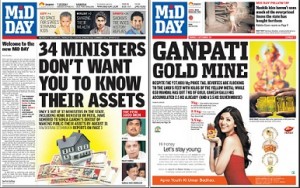
    We’ve been promising a review of Mid-Day. It would’ve been unfair to do one by just appraising a single day’s edition, so we thought of doing that over the last 10-odd days since the paper went for a new look.

    First off, a couple of disclosures. Okay, let me use the ‘I’ instead of ‘We’. I worked with the group for seven years (1993-2000), was a shareholder for a bit and I take great pride in the rapid strides that current executive editor Sachin Kalbag has been taking in his career.


    Yet another disclosure, I was invited to write for the paper’s new-look, but declined the offer because of a Medianet-like scheme that Mid-Day runs for part of the paper.

    But let’s get to the relaunch. I’ve always perceived Mid-Day as a Mumbai institution, with the paper celebrating the city and reporting on what’s happening in here. At first, it lost its constituency of the society circuit to Bombay Times and over the last six-odd years, Mumbai Mirror has been steadily eating into Mid-Day’s dominance on civic and Bollywood news.

    The Medianet-like practice that the paper started was the final nail on the coffin. When I spoke to former owner Tariq Ansari for an interview with Impact last year, he said he was against the concept but was forced to given commercial considerations. Well, a couple of crores of revenue is good to have, but all of it at the cost of integrity?

    While The Times of India group clearly says that Bombay Times is an ‘advertorial entertainment promotional feature’, while the statement upfront is a step in the right direction, it’s not enough as it ought to make a very clear announcement of what it means on its main Times of India page as well as on Bombay Times. I’m sure not many have noticed that small line under the Bombay, Delhi etc Times mastheads

    Back to Mid-Day, I believe it must reinforce as identity as a Mumbai paper. The Page 1 story must be ‘Bambaiyya’ in content and outlook, the feel ought to be tabloidy and the stories must have punch. I would like to see the Mate and snippety Diary back on Page 3. Or at least Page 2.

    Despite an edit page and some pretty good (and serious) content, Mid-Day was always known as a timepass read. Sachin was around in Mid-Day those days, so he should know.

    Agreed the look-and-feel has got to be more contemporary, but if it wants to create the same magic as it did until a few years back, it’s got to get its masti back.

    Why jail only for political paid content

    Beware, media barons and editors accepting money for publishing editorial content. While the election commission can do precious little about the corrupt practices of media entities carrying content in lieu of money and not clearly tagging it as an advertisement, it’s heartening to note that all those who are doing it for politics will be put behind bars for 2 years.

    Now, what about those doing it for lifestyle products? Shall we count the years?

    Read: an IndianTelevision report

    What’s a piece on the Campaign A-List doing on MxMIndia.com?

    If you’re surprised why the MxM anchor has Everest Brand Solutions president Dhunji Wadia telling us why it’s great to be on the Campaign India A-List, don’t be. It’s not that he put my name on the mail instead of the Campaign editor’s. We asked him to write it. He did that in record time, in between meetings. (Read Dhunji on the A-List)

    Here’s my take on the issue: MxMIndia is media-neutral and would like to write about every media entity. We will write about all the activities of even those who consider MxMIndia it’s rival. For in my books, no one is. I’ll be happy to cover the activities of all business publications and the media trade publications. This includes the Campaign A-List, the afaqs events, the exchange4media group events etc etc. That is, of course, if an MxM reporter is allowed in.

    Buzz me if you have a story to tell. Confidentiality assured. There are various ways you can reach me: pradyumanm[at]mxmindia.com, 23050B5D, Gtalk: pradyumanm[at]gmail.com, @pmahesh, 98338 76278