Tag: Rupert Murdoch

  • Star India is now part of 21st Century Fox

    By A Correspondent


    The Rupert Murdoch-owned News Corporation has been demerged. News Corp will now have publishing firms like The Wall Street Journal and Harper Collins and education firm Amplify, while 21st Century Fox will have Star, Twentieth Century Fox, Fox, Sky, National Geographic, Fox News, Fox Sports and FX.


    The old News Corporation announced yesterday that it has completed the previously announced separation of its business into two independent publicly-traded companies.


    21st Century Fox’s assets will span a global portfolio of cable and broadcasting properties, including Fox, FX, Fox News Channel, Fox Sports Network, National Geographic Channels, Star, Fox Pan American Sports, as well as film studio Twentieth Century Fox Film and television production studios Twentieth Century Fox Television and Shine Group. The Company’s assets also include leading pay-tv businesses Sky Deutschland, Sky Italia and its equity interests in BSkyB and Tata Sky.


    “21st Century Fox launches as a unique force bringing news and entertainment to more than a billion customers every day in over 100 languages,” said Rupert Murdoch, Chairman and CEO of 21st Century Fox. “Our success will continue to be rooted in a deep belief in originality and a commitment to empowering creative minds and entrepreneurs around the world. Our management teams are the best in the business and we will drive growth and shareholder value by expanding our existing assets and brands, while embracing new opportunities and technology.”


    While Mr Murdoch will be Chairman and CEO, son James Murdoch isDeputy Chief Operating Officer, Chairman and CEO, International. Chase Carey is President & Chief Operating Officer of the company.


    Meanwhile, the new News Corp will be a global network brands in news and information services, sports programming in Australia, digital real estate services, book publishing, digital education, and pay-TV distribution in Australia. News Corp’s global portfolio includes Amplify, The Australian, The Courier Mail, Dow Jones, Fox Sports Australia, Foxtel, HarperCollins, Herald Sun, The New York Post, News America Marketing, REA, The Sun, The Sunday Telegraph, The Sunday Times of London, The Times of London and The Wall Street Journal. Bedi Ajay Singh is Chief Financial Officer of News Corp.


    Robert Thomson, Chief Executive of News Corp, said, “We are continuing a proud tradition and fashioning a prosperous future in the new News Corp. We have a valuable collection of complementary companies and our task is to make the new News more than the sum of these distinguished parts. We have a robust balance sheet and a team of creative, energetic and passionate employees who are determined to make the company a resounding success and to make a positive difference in their communities.”


    “The new publishing company will be a test for investors and their appetite for print assets,” noted a Reuters report, adding: “While the company also has pay-TV assets and an equity stake in a real estate classified site in Australia, it is coming out as a separately traded company during a challenging times for newspapers. Advertisers are choosing to put their dollars elsewhere, especially in digital products. Although News Corp, like other publishers, is a player in the virtual work, advertising in digital media commands lower prices than traditional print publications.”


    According to a report in The Guardian, London by Lisa O’Caroll, “The demerger is the culmination of a two-year campaign to “detoxify” the News Corp brand that started in the summer of 2011 with the abrupt closure of the News of the World and finished with the announcement in the last week that News International’s brand in London would be axed and the company rebranded News UK.”


  • Ranjona Banerji: TV news viewing can be injurious to the lower jaw

    By Ranjona Banerji


    Since president-elect Pranab Mukherjee spoke to almost everyone on Tuesday, it was hard to see why news channels rushed to qualify their interviews as “first” or “better” or whatever. Exclusive, in TV parlance, is apparently when you do the same thing as everyone else, except five minutes before.


    Anyway, Mukherjee did not say very much about anything he was going to do as President although he talked about his childhood and his early political career. The silliest question I reckon came from Sagorika Ghose of CNN-IBN who asked whether Mukherjee’s ascension to Rashtrapati Bhavan was a “return of Bengal to the mainstream”. At this point my jaw dropped so low that it fell off and I was so busy retrieving it that I couldn’t pay attention to the rest of the interview.


    The best I could get from Arnab Goswami’s interview with Mukherjee on Times Now was that first Mukherjee walked round his garden 40 times, then 33 times and now 30 times and he did not know how many times he was going to walk around the Mughal Gardens. He said he heard the gardens were very large. Anyway, as President he will have ample time to work out stuff like that. Or if he asks someone they might tell him how big the Mughal Gardens are.


    * * *


    Sunday was all about the presidential election as well as everyone gave us live coverage. Of course, after some time they ran out of things to say because there was very little to say about a presidential election in India, at least not enough that can last a whole day even given TV’s marvellous propensity for waffling on about nothing. The highlight of the day was losing candidate PA Sangma’s losing speech. He started by congratulating Mukherjee and then went into a whine about how the Congress had used bribery, extortion and threats to ensure Mukherjee’s victory and how the North East and betrayed not just him but all tribals and themselves as well. (They didn’t vote for him.) Sangma’s entire campaign was based on pettiness, so nothing surprising here. What was surprising was Navika Kumar of Times Now stating emphatically that this was the best, most gracious and most sportsmanlike speech she has ever heard from a loser. Her guests Krishna Prasad of Outlook and commentator NN Satchidanand tried to point out otherwise, but she would have none of it. Jaw-retrieval is a common affliction for those who watch too much TV news, as I should know by now.


    * * *


    Rupert Murdoch has stepped down from several boards which control News Corp’s titles in the US, UK and India. The pressure to do so apparently came from investors, after the phone-hacking scandal led to the closing of The News of the World and all the arrests of News Corp staff, current and former. Murdoch’s rise saw a lot of bile but in his fall are some abject lessons for media bosses and for those journalists who decide that principles are nothing when faced with corporate pressure to perform in a particular manner or to do anything to get results. The Nuremberg trials ought to be required reading for young aspiring journalists: the fact that you got an order is not defence enough.


    * * *


    I was appalled yesterday and continue to be appalled today about Monday’s front page anchor in The Times of India about a group of Indian athletes that went to the 1936 Berlin Games under a saffron flag singing Vande Mataram and impressed Adolf Hitler enough to give the group a medal. The story behaved as if getting a medal from the 20th century’s most frightening dictator was a great honour. There was not a squeak in the story about Nazism and what the organiser of the group thought of that. The glorification of Nazism in India is restricted to those influenced by the religious nationalism that comes of out of Nagpur. The story, therefore, should have mentioned or questioned the RSS connections of the group. Saffron flags and Vande Mataram were clear giveaways but why not come out openly and say so? And for a journalist – and a newspaper – to ignore the Nazi angle to such a story is criminal.


    * * *


    Vikram Doctor’s article in The Economic Times on food and the Olympics was extremely readable and well-researched. Try it: http://blogs.economictimes.indiatimes.com/onmyplate/entry/thanks-to-french-humour-here-s-best-of-british-food


  • Former FIPP chief Donald Kummerfeld no more

    By A Correspondent


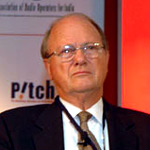
    Donald Kummerfeld

    Donald Kummerfeld, famous for being the Deputy Mayor of New York city and also a name that the Indian magazine industry wouldn’t forget, passed away at the age of 78. Mr Kummerfeld, who was affectionately referred to as Don by colleagues and friends, was the former CEO of Magazines Publishers of America.


    Mr. Kummerfeld was president of MPA for around 12 years – making him the longest serving president – during which time, he travelled the world to spread awareness and increase popularity of the magazines. He was also president and CEO of The International Federation of Periodical Publishers (FIPP), and was widely credited for increasing the membership from 161 to 269 member companies and national associations across 68 countries.


    Reminiscing his experiences with the man he finds hard to forget, Maheshwar Peri, Founder & Publisher, Pathfinder and former publisher, Outlook Group and president, Outlook Publishing said: “Don was an evangelist who encouraged us in forming the Association of Indian Magazines (AIM). Those days you had people like Aroon Purie, Paresh Nath, myself and a few others who got together with the intent of wanting to do something for the Indian magazine industry. But it was Donald Kummerfeld who kept pushing and motivating us to launch AIM in India. So much so that, the day we were launching AIM in India, he flew all the way from Europe just to be present on the occasion.”


    Sharing another attribute of Mr Kummerfeld, Mr Peri said: “The other thing about Donald Kummerfeld is that he has been very instrumental in getting international magazines to explore base in India. Whenever he sniffed an opportunity of a magazine wanting to launch in India, he would immediately bring it to our attention. So, he was instrumental in international magazines evolving, developing and having a far bigger presence in countries other than their origin.”


    He further shared: “The biggest thing about Don that struck me the most was that he was always there whenever you needed him. Whenever he was in India, he made it a point to call up and meet different magazine owners / editors, even if it wasn’t work-related. In fact, I would say that he has hand-held me several times and helped me in strategising plans whenever I had to launch a new magazine/venture. It’s actually come as a shock that he has passed away, especially since he was still working actively a couple of years ago.”


    Though his last years were dedicated to social and political causes, Mr Kummerfeld’s tryst with media began when he joined Rupert Murdoch’s News America Publishing as president and COO. He was also the publisher of the National Journal.


    Photograph source: Association of Indian Magazines (aim.org.in)


  • Peter Mukerjea: GoodCo, BadCo & NewCo

    By Peter Mukerjea


    So it has finally happened. The break up of a mega corp. And it’s happening before our very eyes, and like global warming, it’s a sign of the times. In years to come, students at media schools in India and elsewhere in the world will be reading how the media landscape evolved and how new media slowly, but surely, took it’s place in society. The demise of print and eventually, television, along with the numerous obituaries on the subject will all be in the history books eventually. How media moguls like Rupert Murdoch and James Murdoch were literally pushed off their lofty perches and new names and faces like Mark and Sergei took their places will all be a chapter or two in reference books. The erosion of the powerful dominance of print media brands will be replaced by brand names like Google, Facebook, Instagram. This period in social history will be seen by students of media studies as part of a process of evolution and not much more.


    But for those of us who are seeing this unfold, it’s indeed an interesting and captivating phase.


    Speaking to friends and ex-colleagues in New York, LA and in London recently, it seems many of them are seeing this as the transitioning of one company which comprises of both GoodCo and BadCo to several NewCos. Many of them are also now wondering how many more NewCos will emerge from this, and how soon, but more importantly for them, who will run them. The share price of the company stock has always been a subject of conversation amongst those fortunate enough to get share options, and the fact that it has been static or of negative value for long periods of time has been a source of annoyance. But the fact that this announcement has caused a flutter of activity and raised the share price is seen by many to be a good thing for them personally, so they can now actually make some use of the stock options and realise some value. Most also believe that this value will increase more dramatically when the family gives up control but that could be like waiting for Godot.


    Let’s not forget that it’s the profits of today’s so called BadCo that  were used to acquire, build and grow the television businesses in the first place, which are now seen as today’s GoodCo. Like God made little green apples, surely there will come a day, very soon, given that the seed of thought has been planted, when these very television businesses at GoodCo will also be spun off into individual entities, driven by the same principles that are the cause for the split today – providing better shareholder value and value creation. But that’s the way the cookie crumbles.


    The company which is the largest revenue driver within GoodCo could well find a viable financial spreadsheet reason and which showcases a scenario where better shareholder value could be created if certain parts of their GoodCo were then hacked off and cut away into separate entities as they were losing money or were no longer beneficial to their shareholders.


    I do think that the possibility that billions of dollars of further investments into the UK and Europe being stopped and being diverted to the US is more of a veiled threat than reality, but the possibility that the Euro Zone and their currency itself may not survive for too long, will have financial planners everywhere crunching their numbers and hedging their bets in all sorts of different currencies, anyway. So for Rupert Murdoch to say this so plainly in a recent CNBC interview is not altogether surprising but is reminiscent of childhood cricket games, where if one could not get to bat then, they would pick stumps, bat and ball and go home so no one else could play either. Maybe some of those billions will head to India or Afghanistan or Pakistan, where there’s plenty of low hanging media fruit and bargains to be had for those with pockets of cash.


    In India though, the trend compared to the UK seems to be the reverse and where each of the various media segments – print, television, cable, radio, outdoor and new media are all growing – albeit in an unregulated and pressure cooker kind of environment. This has to be great news for those working in the industry, and the business case for setting up several GoodCo, BadCo and NewCos would be different but the ethos and principles would of course be the same.


    Maybe it’s time for the head of an Indian conglomerate to sail across to meet the boss of the media company that is now busy setting up GoodCo, BadCo, NewCo and  ‘make him an offer that he can’t refuse’ as they say in Mario Puzo’s The Godfather. Not that this is in any way connected to the words used by British MPs in the select committee set up to investigate the hacking scandal in the UK – when asking James Murdoch if he ever felt that he was running a mafia company or words to that effect? James Murdoch was, of course, most offended by that question and as expected, he refuted it completely.


    Nevertheless, maybe it’s time for an Indian company to do what Rupert did some decades ago when he moved out of Australia and bought papers in the UK, thus  creating a global media company. For an Indian company now to own a few internationally acclaimed newspaper titles around the world, then cut losses by injecting Indian cost control systems and management into them would create real shareholder value – rather like the brilliant way in which Tatas have done with the Tata Motors acquisition of Jaguar Land Rover which was a real BadCo and is now a true GoodCo.


    Maybe this is where the NewCo will come in.


  • News Corp announces intent to split news & ent biz

    By A Correspondent


    News Corporation announced that it intends to pursue the separation of its publishing and media and entertainment businesses into two distinct publicly traded companies.


    Upon closing such a transaction, shareholders would hold interests in a publishing company, consisting of the largest collection of best-in-class publishing assets and a new digital education group, and a global media and entertainment company, each of which would benefit from enhanced strategic alignment and increased operational flexibility with respect to an unparalleled portfolio of assets, brands and franchises.


    News Corporation’s board authorized management to explore this separation after a board meeting.


    The proposed transaction would create global category leaders in both publishing and entertainment: a publishing company, which would be comprised of News Corporation’s newspapers and information businesses in the US, UK and Australia, the Company’s leading book publishing brands, its integrated marketing services company, its digital education group, as well as its other assets in Australia; and a global media and entertainment company, which would encompass News Corporation’s broadcast and worldwide cable networks, leading film and television production studios, television stations and highly successful pay-TV businesses in Europe and India.


    “There is much work to be done, but our Board and I believe that this new corporate structure we are pursuing would accelerate News Corporation’s businesses to grow to new heights, and enable each company and its divisions to recognize their full potential – and unlock even greater long-term shareholder value,” said Rupert Murdoch, Chairman and CEO of News Corporation.


    “News Corporation’s 60-year heritage of developing world-class media brands has resulted in a large and unparalleled portfolio of diversified assets. We recognize that over the years, News Corporation’s broad collection of assets have become increasingly complex. We determined that creating this new structure would simplify operations and greater align strategic priorities, enabling each company to better deliver on our commitments to consumers across the globe. I am 100 per cent committed to the future of both the publishing and media and entertainment businesses and, if the Board ultimately approves a separation, I would serve as Chairman of both companies,” he added.


    News Corporation believes that a separation of the businesses into distinct public corporations with their own identities and strategies would enhance overall shareholder value and allow each company to:

    • Focus on and pursue distinct strategic priorities and industry-specific opportunities that would maximize their long-term potential.
    • Benefit from greater financial and operational flexibility and better position each company to compete.
    • Respond and react more quickly to rapidly-evolving technology and global market opportunities.
    • Tailor its capital structure, and allocate and deploy resources in a manner consistent with its strategic objectives that best enhances value for its respective shareholder group.


    With more focus devoted to each business’ financial and operational structure, investors would be able to more clearly evaluate the inherent value of both portfolios of assets and invest in each company accordingly.


    The new global media and entertainment company that would be created through the proposed transaction would consist of News Corporation’s highly-profitable cable and television assets, filmed entertainment, and direct satellite broadcasting businesses, including Fox Broadcasting, Twentieth Century Fox Film, Twentieth Century Fox Television, Fox Sports, Fox International Channels, Fox News Channel, Fox Business Network, FX, Star, the National Geographic Channels, Shine Group, Fox Television Stations, BSkyB, Sky Italia and Sky Deutschland, among others.


    As a pure-play content producer and distributor, the company would build on its deep heritage in developing incredibly strong, premium content for distribution on screens of all sizes by leveraging its leading content across its entertainment and cable news verticals, as well as its unparalleled collection of regional sports networks, and the industry’s leading movie and TV production and distribution company.


    In addition, the entertainment company would benefit from its rapidly growing, high-margin cable network and pay-TV assets, and the distribution capabilities and opportunities associated with its unrivaled global footprint with significant scale across North and South America, Europe and Asia.


    The new global publishing company that would be created through the proposed transaction would consist of News Corporation’s current publishing businesses, as well as its book publishing, education and integrated marketing services divisions. The new publishing company would create a scaled publishing platform that would be one of the best capitalized in the industry. The publishing company would have the opportunity to leverage its trusted brands for innovation and value creation across all traditional and digital platforms.


    The publishing company would incorporate some of the world’s most successful print, digital and information services brands including Dow Jones, The Wall Street Journal, Dow Jones Newswires, HarperCollins, The New York Post, and The Daily, as well as offer the rich diversity of assets in Australia, including leading brands such as The Australian, The Herald Sun, The Daily Telegraph and The Courier Mail.


    In addition, the Company would include The Times, The Sun, The Sunday Times, as well as News Corporation’s integrated marketing services group and its ground-breaking digital education group, including Wireless Generation. With a balanced portfolio of stable and growing news publishing brands and other assets, shareholders would benefit from strong and consistent free cash flow generated by these businesses, over multiple platforms.


    Upon closing of the proposed transaction, News Corporation’s shareholders would receive one share of common stock in the new company for each same class News Corporation share currently held. Following the separation, each company would maintain two classes of common stock: Class A Common and Class B Common Voting Shares.


    Upon closing of the proposed transaction, Rupert Murdoch would serve as Chairman of both companies and CEO of the media & entertainment company. Chase Carey would serve as President and COO of the media & entertainment company.  Over the next several months, the Company will assemble management teams and Boards of Directors for both businesses.


    The separation is expected to be completed in approximately 12 months. Management is developing detailed plans for the Board’s further consideration and final approval. To execute the transaction requires further work on structure, management, governance, and other significant matters.


    After receiving final approval of the Board of Directors, News Corporation will convene a special shareholder meeting to consider the transaction.  This meeting is not expected to take place until the first half of calendar 2013.  During the closing process, News Corporation will remain focused on delivering the best possible results for the benefit of its consumers, customers and shareholders.


    In addition to shareholder approval, the completion of the separation will also be subject to receipt of regulatory approvals, opinions from tax counsel and favorable rulings from certain tax jurisdictions regarding the tax-free nature of the transaction to the Company and to its shareholders, further due diligence as appropriate, and the filing and effectiveness of appropriate filings with the U.S. Securities and Exchange Commission.


    The Company will provide interim updates as appropriate.  There can be no assurances given that the separation of the Company’s businesses as described in this announcement will occur.


  • Rupert Murdoch’s News Corp to buy ESPN’s 50% stake in ESPN STAR Sports

    By A Correspondent


    Rupert Murdoch’s News Corp has agreed to acquire the 50 per cent it does not own in its Asian sports TV joint venture, ESPN STAR Sports, bringing to an end a 16-year-old relationship which, among other things, dominates cricket broadcast in the sub-continent.


    A unit of News Corporation will buy ESPN’s 50 per cent equity interest, a statement from the two partners said.  The transaction, which is subject to customary regulatory approvals, will allow News Corporation unit to own and operate all ESS businesses, including STAR Sports, ESPN and STAR Cricket.


    ESPN STAR Sports, which generates about Rs2,500 crore in revenues, also owns television broadcast rights for the ICC World Cup Cricket and T20 Champions League.


    No financial terms were disclosed but people close to the transaction said that it could have cash and non-cash components.


    While the cash component would not be very substantial, the non-cash portion could involve handing over the non-India distribution rights of possibly the T20 Championship League rights to ESPN.


    “News Corporation’s acquisition of the interest of ESS that we did not already own continues the programme of simplifying our operating model, consolidating our affiliate ownership structures, and furthers our commitment to delivering incredible sports programming to consumers across the globe, and particularly enhancing our position in sports programming in emerging markets,” said James Murdoch, deputy chief operating officer and chairman & CEO International, News Corporation.


    Wednesday’s announcement comes just weeks after STAR broke up with long-time Indian partner, the Kolkata-based ABP Group and sold its stake in Hindi news and regional language channels.


    “After 16 years jointly managing ESS, we have decided to independently pursue future opportunities in Asia,” said John Skipper, president of ESPN and co-chairman, Disney Media Networks.


    The partners also announced that Manu Sawhney, managing director of ESS, who has led ESS in the past 16 years, will hand over charge to Peter Hutton, SVP of sports for Fox International Channels (FIC).

    Mr Hutton will report to the ESS Board. Mr Sawhney will be staying with the company until August 31 to work with Hutton on a smooth transition.


    STAR’s ambitions in the sports broadcasting space were evident when it acquired the rights to Indian cricket from the Board of Control for Cricket in India, beating rival Sony and paying Rs4,000 crore.


    Speakingfrom the US, STAR India CEO Uday Shankar said: “Till the regulatory framework is done, it will be business as usual. As for the money we spent on acquiring the Indian cricket rights, it is money which will be paid over several years, (six) and I am confident of a broadcast transformation and a bigger market. A lot of distortion in this space will also have sorted out.”


    Mr Shankar also clarified that all the ESPN employees would continue not only as of now, but post the regulatory framework. “It’s not as if STAR has a ready-made sports setup all ready,” he added. As for competition and raising prices for acquisitions, he said, there are four active players and all will compete very vigorously.


    Source: The Economic Times
    Copyright © 2012, Bennett, Coleman & Co. Ltd. All Rights Reserved

  • Comment: Jehangir Pocha on Media’s new Moguls

    By Invitation


    By Jehangir S Pocha


    Among all the transformations taking place in media, here’s the crucial one – the media baron is being replaced by the media conglomerate.


    Corporations are buying news properties once owned by individual proprietors at a rapid pace. Expectedly, media mavens and professionals are crowding conferences to express their angst: Are these oligarchs becoming media’s new moguls only to protect their empires and project their interests? Will they interfere every time a story is done on their favourite babu, minister or party?


    But this holier-than-thou approach that automatically assumes a media baron is better for journalism than a media conglomerate is as reactionary as it is wrong.


    A corporation owning a news property can be expected to slant or kill a story inimical to its core interests.  But those are few and far between.


    After all, how many core interests can a corporation have? On the other hand, many media barons have been notoriously whimsical, politicized, opinioned and ideological, slanting almost every story almost every day, and killing (or overlooking or underplaying) almost every story out of sync with their ideology, views or interests.


    In all democracies, the most slanted and ideological journalism has always been driven by media barons, from William Randolph Hearst, to Ramnath Goenka, Thaksin Shinawatra, Rupert Murdoch, Silvio Berlusconi, Michael Bloomberg and others.


    Their news properties have openly, sometimes shamelessly, displayed their biases.  Compare Murdoch’s Fox News with its corporate-owned competitors, NBC News (owned by General Electric), CBS (owned by Westinghouse), ABC (owned by Disney) and CNN (owned briefly by AOL). Which is most slanted? Which is most protective of vested interests? Which would any unbiased media professional rather work for?


    Yes, a media corporation might protect its pet politicians and restrain its news properties from covering its other businesses fairly. But many media barons do the same. Some appear to have more pet politicians than any corporation. In fact, often the “other business” of media barons is politics (consider Berlusconi, Thaksin, and Bloomberg).


    When it comes to coverage of oneself, it is India’s media barons who have constructed the self-serving maxim that “media mustn’t cover media”, leaving them free of all public scrutiny. That’s what’s allowed some of these tycoons to injure Indian media and dupe their viewer/reader by introducing poisonous practices like “paid news” and “private treaties”.


    It is highly unlikely that any media conglomerate would allow such practices precisely because of the fear of public scrutiny that publicly-listed and/or publicly known corporations naturally have. Companies run by professionals and overseen by a board of directors that includes independents and representatives from government-owned institutions are generally forced to put in place the systems and standards needed to run a business right.  Media barons exempt from oversight rarely do so.  This is why Murdoch’s newspapers spy on people and others don’t.


    This doesn’t mean concerns over how corporations will manage their new media enterprises can be ignored.


    As Indian media comes of age it must codify its journalistic standards and rigorously implement them through an independent body akin to Britain’s Media Standards Trust. Such a body should give India’s journalists protections, such as the legal right not to disclose a source, and freedom from prior restraint (attempts to prevent publishing/airing of an opinion/idea/story before it is published/aired).


    Every news organization must also be required to have an independent Ombudsman charged with ensuring fair and balanced coverage.  At the same time, this Ombudsman and/or the standards authority should also ensure journalists and news outfits respect the rights and reputations of others (anti-defamation), separate news from views, eschew ‘paid news’ and private treaties, protect national security, public order, and public health, and prevent incitement to hostility, violence or discrimination.


    Stringent regulations that prevent any monopolistic control of news are also essential to any democracy. To some extent, digital technologies and social media already ensure this. A smart line on Twitter or great video on YouTube can become more influential than an op-ed in the Times of India. But the government must still work to ensure there are enough voices in the media and that no one voice dominates the national discourse.


    Corporations enter (and sometimes dominate) the media business because it is highly capital-intensive. So, one effective way to maintain a plurality of views in news is to keep entry barriers and operating costs in the business low. For example, existing distortions in media policy, such as exorbitant “carriage fees” that benefit the well-heeled and hurt small news operations must be ended. Banks must be encouraged to lend to smaller media companies, capital requirements in the industry should be eased and more journalism schools built to develop a larger talent pool. Building stronger news-related services, like more text and video wire services, freelancer organizations, and shared news infrastructure, would also help newer and smaller players. Lastly, the government must pass laws to separate carriage from content, and control media cross-holdings.


    Ultimately, every kind of media owner – the government, individual, the public trust and the corporation – comes with pros and cons. India knows well the short-comings of the first three.  We will now discover the dangers of the fourth.  But as long as all four kinds of news organizations are allowed to exist and flourish – and are subjected to firm and fair regulation and oversight – the news media in India will remain strong and vibrant.


    Jehangir Pocha is CEO, INX News.

    The views expressed here are the writer’s and not necessarily those of MxMIndia.


  • [MJR] The mighty Murdoch empire wobbles

    By Ranjona Banerji


    The cycle of life and death is such a wicked thing, sparing no one, especially not the high and mighty (Thank god, really, for us who are not only low and but are also tiny – I’m speaking metaphorically here). And so the mighty Murdoch empire wobbles.


    The Leveson inquiry into media ethics last month and the British parliamentary committee report after an inquiry into Rupert Murdoch’s companies released last week after last year’s inquiry commission both highlight that fall. The parliamentary report indeed calls Murdoch senior “unfit” to run his companies, although the Conservative party members of the commission would not endorse that. The irony for British politicians is that both the Labour and Conservative parties can be accused of getting too close to the Murdochs and their editors.


    From the time he bought the Sun and then venerable Times, Murdoch has been a figure of controversy. His disdain for journalists and senior editors was applauded by media moghuls elsewhere as a fine way to treat employees (India’s journalists have also suffered from the Murdoch effect). Murdoch sacked, moved and reduced journalists everywhere to paid hacks, only capable of doing what he assigned them.


    At the end, that became hacking into the voice mails of a murdered child’s mobile phone in order to sell more copies of a newspaper.


    Murdoch has said he is sorry – inasmuch as he remembers anything at all. Although he does appear to recall a bit more than his son who saw and heard (and read) apparently almost nothing all the while that he ran the European branch of daddy’s company.


    At a time when the Indian media is grappling with all sorts of issues and allegations, the Murdoch saga presents an interesting contrast. That Murdoch’s editors bent the rules and ignored media ethics is a certainty but it presents almost the exact opposite of the way that the Indian media operates. Can you imagine any Indian reporter – especially one involved in the glamour world – going to such depths to get a story? Hiring private investigators, bribing police officers – all this shows a commitment to newsgathering that most Indian newspapers had given up and many journalists would faint at the idea of so much hard work. (So much easier to let the PR person write the story which his client has paid the marketing department for.) I am not sure how many would object to the ethical problems raised since we have our own monsters to deal with.


    Meanwhile it’ll be interesting to watch as the vultures start circling around.


  • Star to go solo in sports, buy ESPN from JV

    By Nandini Raghavendra & Ratna Bhushan


    Broadcast major Star Group’s 16-year-old equal joint venture with sports broadcaster ESPN is being dissolved with Star buying out ESPN’s stake in the JV, three people familiar with the development said.


    Once the transaction is complete, Rupert Murdoch-owned Star will become the owner of ESPN’s India business, the people said. Two of them said the companies were finalising details of the deal and an announcement was likely to be made shortly. They declined to disclose details.


    ESPN Software India, which operates ESPN Star Sports’ India operations, generates revenues of about Rs2,500 crore through channels that include Star Sports, ESPN and Star Cricket. ESPN Star Sports owns television broadcast rights for the ICC World Cup Cricket and T20 Champions League.


    ESPN’s Singapore office said they did not comment on speculation. A spokesperson for ESS said, “We do not comment on speculations and rumours. ESPN Star Sports continues to run the business as usual. Two partner companies frequently discuss business plans and both the companies, ESPN and News Corp, are proud of the success ESS has made since its inception, and the relationship it shares with fans and business partners. They extend complete assurance for delivering value to our partners as committed by ESS.”


    Star India Chief Executive Officer Uday Shankar did not respond to an email and text messages sent to his mobile.


    “Star wants a bigger play in the sports broadcasting space,” one of the people quoted earlier said.


    “Star’s recent Rs4,000-crore acquisition of the rights to Indian cricket from the Board of Control for Cricket in India, beating rival Sony, are indications of its ambitions in this space,” one of the people quoted earlier said.


    It is not yet clear how many of the 200 employees of ESPN, who work for the joint venture, would be retained by Star. An ESPN official, requesting not to be quoted, said employees were uncertain about their future after the deal.


    A deal between the two companies could potentially be a complex one as they have a bouquet of advertising deals and cross-sponsorships. But senior executives at two leading media-buying companies, who deal closely with both broadcasting networks, said they did not foresee any impact on advertising deals and sponsorships.


    ESPN, Star Sports and Star Cricket either sell airtime and sponsorship inventory independently or as bulk package deals, they said. An analyst from one of the big four audit firms said the battle for the rights to various cricket events will now be fought out between Star and Sony, with the latter holding the rights for Indian Premier League, the 20-overs cricket tournament. ESPN Star Sports was formed as a 50:50 JV between two of the world’s leading cable and satellite broadcasters – Walt Disney, the owner of ESPN, and Rupert Murdoch’s News Corporation – in 1996 for Asia.


    It has offices in China, Hong Kong, India, Malaysia, Taiwan and Singapore, and employs more than 650 employees across the region. Star is fast changing gears in India. In the past two months, the broadcaster has launched its second Hindi movie channel under its new brand ‘OK’, called Movies OK. It recently exited its television news business and dissolved its JV with the ABP Group. It also purchased the broadcast rights to Indian cricket for around Rs4,000 crore.


    Star seems confident of making money from its cricketing ventures. Speaking to reporters a few days ago, Mr Shankar said the deal for cricket rights would not affect the JV with ESPN. However, the market has been abuzz with the latter’s exit. “Many permutations and combinations of the deal have been worked out, which has taken this long, but ESPN is now fully exiting,” said an official from a firm with knowledge of the deal.


    Source: The Economic Times
    Copyright © 2012, Bennett, Coleman & Co. Ltd. All Rights Reserved


  • Possible for ethics & profit-making to co-exist: Paranjoy Guha Thakurta (Text & Video)


    By Shruti Pushkarna


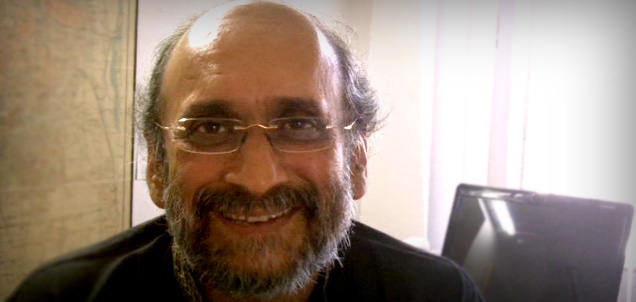
    As he launched the second expanded edition of his book, ‘Media Ethics: Truth, Fairness and Objectivity’,  in the capital last week, MxMIndia caught up with veteran independent journalist and educator,  Paranjoy Guha Thakurta for an exclusive interaction. In this candid one-on-one, Mr Guha Thakurta spoke at length about ethics in media today, self-regulation vs. regulation; the debate on the freedom of expression on the internet and the need for media to be ethically and socially responsible.


    Mr Guha Thakurta’s experience spanning nearly 35 years, cuts across different media: print, radio, television and documentary cinema. He is a writer, speaker, anchor, interviewer, teacher and commentator in three languages, English, Bengali and Hindi. His main areas of interest are the working ofIndia’s political economy and the media, on which he has authored/co-authored books and produced documentary films. He lectures on these subjects to general audiences and also trains aspiring and working media professionals.


    Mr Guha Thakurta has served as a member of the Press Council of India nominated by the University Grants Commission between January 2008 and January 2011. In April 2010, as a member of a two-member sub-committee of the Council, he co-authored a 36,000-word report entitled ‘Paid News: How Corruption in the Indian Media Undermines Democracy’.


    Does an expanded edition mean a lot more to discuss in media ethics?

    The first edition of this book came out more than three years ago, since then a lot has happened. Moreover, after the book came out, there were a lot of people who came up with suggestions on how this book could be improved. So this book is about 40 per cent bigger and thicker than the earlier edition. There are new chapters – there is an entirely new chapter on corruption in the media based quite a bit on my experience as a member of the sub-committee of the PCI, which inquired into corruption in media and how it undermines democracy, the entire phenomenon of paid news. There’s also a new chapter on reality television and some of the existing chapters have been drastically rewritten and revamped, notably the chapter on the internet because a lot has been happening in the internet space; also the chapter on advertising, which was particularly weak in the first edition – I think it has been strengthened substantially in the new edition.


    Also a whole lot of major developments have taken place concerning the media in the recent past; these have all been incorporated in the new edition. Among these would be the News of the World and Rupert Murdoch controversy in UK, the entire Wikileaks and Julian Assange phenomenon and back home here in India, the entire Niira Radia conversations; all of these have raised significant questions pertaining to media ethics and these have been incorporated in the new edition of the book.


    How important is the ‘code of ethics’ in today’s commercialized scheme of things?

    Ethics is very important in every sphere, particularly so in the case of media, because you are dealing with information which is akin to a public good. The problem essentially arises because this information is being disseminated by privately owned corporate bodies with an important goal to maximize profit; therein lies the conflicts of interest. The problem arises because there are sections of the media that are interested in profit maximization to the exclusion of other goals.


    It’s become a bit of a cliche – once upon a time it used to be said, ‘journalism is a mission’, today journalists work only for a commission. We are seeing the corporatization and commercialization of the media having an impact on the kind of content that is being produced. The viewers of television channels, the readers of newspapers, and the listeners of radio stations are being perceived more as ‘consumers’ rather as citizens. They are ‘consumers’ of products and services which are being provided by companies which advertise.


    Can journalistic ethics and profit-making can co-exist?

    I do believe it can, it’s not easy but it is possible for ethics and profit-making to co-exist.


    What is your view on the issue of regulation v/s self-regulation? What works for you?

    In an ideal world, self-regulation is the best form of regulation. But what do you do with those who cross that proverbial ‘lakshman rekha’, what do you do with those who don’t follow the code of conduct which is supposed to be self-regulatory in nature. I’ll give you an example, in the US, when Janet Jackson had a wardrobe malfunction in the middle of a live broadcast, the channel was fined immediately by the Federal Communications Commission because the wardrobe malfunction happened during a live broadcast, it happened during primetime and the channel had to first pay the fine and then appeal against the decision in a court of law.


    What happens in India? Not very long ago, there was a series of incidents involving Bhanwari Devi Maderna episode in Rajasthan and content was put out during the day on television, which many considered to be pornographic in nature. When the Ministry of Information and Broadcasting issued show cause notices against these TV channels, all of them came to Shastri Bhawan saying, ‘we apologize and we won’t do it again’. That’s the nature of self regulation in this country.


    As far as print is concerned, we have a Press Council of India which has no powers to punish anybody, it cannot impose a fine, leave alone put a person behind bars, and its recommendations are not even binding on the government. We don’t have statutory organizations which are empowered in the manner in which say the Federal Communications Commission is, or the Office of Communications in the UK is. So it’s fine to talk about self regulation but what do you do when somebody doesn’t listen to you, do you have the wherewithal to punish them?


    Do you think we need an independent official regulatory authority for television news channels as against one set up by the channels?

    Yes, I do personally believe that it is possible and desirable to have an independent regulatory authority which is independent of the government as well as the media. Such a regulatory authority can be funded by the government, but it can nevertheless be autonomous and independent of the government, in the manner in which bodies like the Supreme Court of India, or CAG or Election Commission of India function.


    So, I do believe it is possible to have such a communications commission. The problem is that for the last decade we have been debating the need for such a commission and the joke is that every time the government proposes to form such a commission, the government collapses. There have been 10 or 12 avatars of a Bill to set up such a commission; time alone will tell when and if such a commission is established in India.


    Your view on Dirty Picture not being allowed to air during the day on Sony?

    The whole Dirty Picture episode has thrown up a number of issues pertaining to censorship, pertaining to what content is appropriate or not, and if adult content can be shown on television, if so when. I think these issues are contentious and debatable and they are going to be debated for quite some time to come.


    Would you agree with Justice Katju’s view when he says people in media are of poor intellect?

    I think Justice Katju is exaggerating. There are journalists who are dumb and there are journalists who are not dumb. I think Justice Katju is not being fair to the media fraternity but that’s his personal point of view, he also thinks 90 per cent of Indians are fools, I beg to disagree with him.


    There’s a belief that the Indian media doesn’t take too kindly to criticism. Agree?

    Who among us are willingly going to accept criticism? All of us have our egos, in that sense, I don’t think the media is unique. I think there is neither any individual nor any group who likes criticism but the point is if you do believe in democracy, if you believe in fairness, and if you are in the public eye, then you better get used to criticism otherwise you’ll end up like Ms Mamata Banerjee who could not take being lampooned online. This shows not only lack of tolerance on part of individuals, especially public figures, but I think it fails to appreciate the nature of freedom of expression.


    Isn’t it upsetting that all the journalists’ organizations like Press Club, Editors Guild are tightlipped about Paid News?

    I won’t entirely go along with you on that, I mean there was a conspiracy of silence about corruption in media and paid news, even the report of the subcommittee that was prepared by me and my colleague for the PCI, was sought to be suppressed by a powerful lobby of publishers within the PCI. Finally in October 2011, the PCI was literally forced to make that report official, place it on their website with a disclaimer saying that entire council had not approved of its content. But I won’t say all journalists’ organizations conspired to put under wraps this report. There have been sections of the media who have been reticent of highlighting corruption within the media fraternity, but I don’t think it’s true for the entire media.


    Do you think that Public Relations has adversely impacted the quality of journalism?

    No, why blame the PR person…she or he is doing his or her job. You can also say the government has bribed the media, you can say that corporate captains have bribed the media. So I don’t think we need to look for excuses, I think journalists have to look within if they have to introspect about why there is corruption in the media. You can always hold somebody or the other responsible for your sins but at the end of the day, you are yourself responsible I believe.


    Your views on the ongoing debate on the freedom of expression in the internet age

    I think this is a huge debate. The internet is not just the newest medium of mass communication, it’s also a form of personalized communication, and it’s difficult to control. Issues relating to freedom of expression on the internet have acquired many new dimensions and these are very contentious and not easy to resolve. And we’ve seen this debate been going on for a while…the ‘infamous’ Danish cartoons on the prophet Mohammed were all drawn ostensibly to generate a debate on freedom of expression. Yes, that cartoon was widely circulated on the internet, as was the gruesome video showing Daniel Pearl getting beheaded. But it’s also worth remembering and underlining the fact that the mainstream media were restrained in reprinting, publicizing either the Danish cartoon or Daniel Pearl’s beheading.


    The point is, sometimes in the name of freedom of expression, you want to generate a debate but you end up generating one huge controversy which goes out of control. It was the Danish PM who argued that the cartoon controversy was the biggest crisis that small Scandinavian country faced after the Second World War and he was particularly worried because it even had an impact on the economy of Denmark because countries of West Asia stopped buying dairy products made inDenmark.


    So very often we might want to start a debate without realising its wider ramifications. But the bigger question of what constitutes the right to offend, what is freedom of expression and the new dimensions these issues have acquired in the day and age of internet, these are very important, they are being debated and I think these debates are going to go on for quite some time.


    And given all of this, your view on the future of news media in India?

    The future of news media in India is very bright. Unlike many countries in the world, all media in India continue to expand, whether it’s print, radio, TV or internet. According to 2011 census, one out of four persons in India still cannot read or write her or his name, so as more and more people become literate I think all sections of media are going to expand. At the same time, media has to become more responsible, not just socially responsible but also more ethical if it indeed has to contribute to building democracy, to building a better country.


    If you were still a kid getting out of college, would you get into journalism given the ethical standards followed?

    That’s a difficult question…when I became a journalist 35 years ago, the Emergency had just got over. That was a unique 19 month period in the history of the country where for the first and so far the only time in politically independent India, the government of the day sought to abridge freedom of expression. For 19 months, during the Emergency, freedom of expression was sought to be curbed. I don’t think that will happen again, but the very fact that I was a student during that period did influence my decision to become a journalist. If I was born 35 years later, I don’t know if I would have preferred to become a rock star, or an airline pilot or a heart surgeon instead of a journalist.

     

  • Murdoch inquiry: the murky side of media highlighted

    By Ranjona Banerji


    The questioning of Rupert and James Murdoch in the Leveson inquiry into media ethics in the UK was undoubtedly the highlight of this news week. Both the BBC and CNN showed major portions of the inquiry live and it was fascinating to watch these two very powerful men being closely questioned on their closeness to British politicians as well as on the way they ran their business.


    James Murdoch followed the line he had had at the earlier Parliamentary inquiry after the phone-hacking scandal broke which led to the closure of The News of The World: he remembered nothing. This is, even though he had been the recipient of a chain of emails which explained what was going on. Murdoch the younger claimed he had not read any of the emails.


    Two days were devoted to Rupert Murdoch who seemed far sharper than he had been during the Parliamentary inquiry. However, he also claimed to remember nothing, in spite of there being sufficient documentary evidence to prove his various meetings with various British prime ministers. Murdoch claimed that politicians always wanted to meet editors and proprietors but that did not mean that he wielded any influence.


    However, by the end of the second day of questioning, Murdoch admitted that there had been a cover-up of the practice of phone-hacking in his newspapers, which went at least up to the editor and beyond. He apologised and called it a failure.


    The venerable and respected Harold Evans, the one editor of the Times who Murdoch sacked, was scathing in his criticism of Murdoch’s testimony and his supposed inability to remember anything significant at all, in his piece in the Guardian on Thursday.


    In the backdrop of this questioning were the revelations that a close aide of British culture secretary Jeremy Hunt had been leaking secret information to the Murdoch organisations about the BSkyB deal, which has since been scuttled. But with both sides of the political spectrum in Britain being in the pockets of the Murdochs, finger-pointing is going to be a little difficult. In Prime Minister David Cameron’s favour is the fact that he commissioned this judicial inquiry.


    The parallels with India are fascinating, if at the least because media tycoons here remain shady figures, lurking in the background, pulling strings and manipulating policies. Also, despicable as phone-hacking was, it is hard to remember the last time any newspaper really spent any effort on news-gathering. We, in India, follow the other Murdoch model – use PR agencies to get everything done.


    Needless to say, Indian TV was not much taken with the Murdoch case, although newspapers gave it the mandatory space on their international pages.


    * * *


    The one story which got almost no space in the Indian media, in spite of the verdict being shown live on the BBC and CNN on Thursday, competing with Murdoch, was the trial of Charles Taylor. The former Liberian president was charged with war crimes for his role in the brutal and bloody war for power in the neighbouring Sierra Leone. Although the film Blood Diamonds got considerable media attention in India, the man who was part of that horror story, was obviously not worthy of too much space. For example, The Times of India had nothing, the Hindustan Times, a brief and The Indian Express a story on the international pages.


    * * *


    Instead the Indian media had absolute hysterics about Sachin Tendulkar accepting a nomination to the Rajya Sabha. One would imagine this was the first time anyone had ever accepted a Rajya Sabha nomination (12 distinguished persons are appointed every term) for all the hot air expended on TV. Newspapers also saw this as headline news.


    So far of course no one knows whether Tendulkar will be a good, bad or indifferent Parliamentarian. Therefore, tedious before-the-fact discussions and camera-inspired rage are pointless. Much time was spent on why Tendulkar was joining politics. It occurred to no one that being nominated to the Rajya Sabha is not “joining politics”. That would be when Tendulkar fights an election. Many nominated members gone back to their distinguished lives after their terms finished.


    The only benefit of such discussions is that you see just how stupid some people are.


    * * *

    Sometimes I find myself in full agreement with Press Council chairman Markandey Katju that 90 per cent of Indians are fools. And most of those fools find their way to TV studios.


  • The Year in the News Media


    By Ranjona Banerji


    This year started with a hangover – like all New Years should. But unlike the pleasant pain that goes with the knowledge of a party that may have meant over-indulgence but was fun just the same, the media started 2011 with one of those truly mammoth unpleasant hangovers.


    The outcome of the Radia tapes was, at best, a loss of reputation for a few well-known journalists but at worst, a loss of faith in the media as an institution. Public knowledge about the somewhat questionable dealings between journalists and publicist Niira Radia meant that the media could no longer hide in those famous ivory towers. Even more unfortunate was that the finger of suspicion was pointed at all journalists because of the transgressions of a few. It did not help matters that although Vir Sanghvi lost or surrendered his influential column Counterpoint in the Hindustan Times, Barkha Dutt did not just continue with NDTV, but went from strength to strength.


    So it was a somewhat cautious Indian media which initially tackled the phone-hacking scandal in the UK and the closure of the Rupert Murdoch-owned News of the World. Here was journalistic excess in order to get a story taken to a whole other degree – criminality. The tabloid press and the British public and celebrities have historically had an interesting and confrontational relationship. But the desire to delve into every aspect of the lives of the rich and famous – without the reverence shown in our part of the world – made for big sales and bigger profits. The readers loved the sleaze and watching the powerful cringe.


    But this scandal was something else. It was newspapers hiring investigators to pry into the private lives of ordinary citizens and using dubious methods like hacking into voicemail messages to gain information. One reporter lost his job for spying on British royals; but what was the punishment for breaking into the cell phone of a murdered teenager, deleting her messages and not only giving hope to her family that she was still alive but also materially distorting a police investigation into her disappearance?


    As it turned out, the reprisal was fierce and final: a newspaper which was over 150 years old was shut down and the British parliament had a public questioning of the owners and editor of News of the World – Rupert Murdoch and his son James and Rebekkah Brooks.


    The world’s media watched shocked as skeleton after skeleton popped out of the News of the World and NewsCorp cupboards. But surely there was no room for complacency here in India. After all, the problem was not just the Radia tapes; it was also the elephant in the room – paid news. Media houses – without or without the collusion of journalists – had been selling editorial space to political parties. The reader or viewer, of course, was left in the dark and assumed s/he was reading or watching real news stories.


    In the midst of all these depressing signs that some media introspection was required, we had all the uncomfortable revelations by Wikileaks, which turned international diplomacy on its head and exposed lies about the US role in the Iraq war and the black money held by European banks. The subsequent arrest of Wikileaks editor Julian Assange in the UK, on an old sexual assault charges filed in Sweden added to the drama. Was Assange really guilty as charged or was this an international conspiracy to get him extradited to Sweden and from there to the US to punish him for publishing secret cables and other information on the internet? The jury’s still out on that one.


    Wikileaks, though, emphasised once more how the internet was changing journalism and anyone who ignored it, did it at their own peril. Social media is playing the role of a catalyst in creating public opinion outside of the traditional media. The traditional media may not be destroyed but it will be damaged if it does not pay attention.


    Back in India, though, we still had a couple of dramas to play out. The new chairman of the Press Council of India, retired judge Markandey Katju, decided that he didn’t want to be head of a toothless body that was limited to the print media. He proceeded to write a series of articles attacking journalists, calling them frivolous, badly educated and shallow. He listed the sort of news that should be carried and slammed the choices made. He also said that the Press Council’s ambit had to be increased to include television.


    Katju may have been wrong and he may have been right in his opinions, but unfortunately for him, the Press Council remains toothless. And besides, instructing newspapers and TV channels on what aspects of news should and should not be carried impinges directly on the freedom of the press. No one spared Katju and so he quickly backtracked a little.


    Then, perhaps just to prove Katju right, media coverage of the Anna Hazare-led anti-corruption agitation proceeded on just those shallow, one-sided and breathless lines that the former judge had bemoaned. This protest was covered as if it was the only one the country had ever seen. Numbers were inflated or exaggerated. Those who questioned aspects of the Jan Lokpal Bill were shouted down as enemies of the people. As is inevitable, the print media could not sustain its adoration of this movement and started asking uncomfortable questions. TV however continued with its happy path of supporting this “national movement” at all costs until, slowly, a bit of reason leaked into the emotion.


    The doubts had crept into TV studios after the standing committee submitted its version of the bill but the Anna Hazare movement remained adamant on its own stand. But it was really the indifference shown to the movement by the people of Mumbai which ended that love affair. Rather than focus their cameras on 4,000 people pretending they were 40,000, TV cameras panned empty grounds showing us how low the turnout was.


    In journalism, as in life, there are no absolute truths. But there are facts. In 2011, the facts have shown that the people are watching the media. And there’s hardly any place to run or hide. Like we’re forcing politicians and government servants to come clean on their dealings, a little bit of spring cleaning by the media would not be amiss in 2012.