Tag: RRR

  • The Box-office Boom: Gadar 2 & Co


    By Shailesh Kapoor


    Shailesh KapoorThe Indian box-office is minting money. After an extended lull that stretched 3.5 years, punctuated by an odd film here and there, like RRR, K.G.F: Chapter and Pathaan, there is an unmistakable buzz at the ticket windows. The weekend of August 11-13 grossed nearly Rs 400 crore at the domestic box-office. To put this number in perspective, films releasing across the entire month of February 2023 grossed a similar amount (Rs 396 cr). August 2023 is in the reckoning to become the first-ever month ever to achieve the Rs 2,000 crore gross mark. It’s a long shot, but not out of bounds as of today.


    The boom has been ably supported by Rajinikanth’s Jailer, and the franchise social comedy OMG 2. But it’s Gadar 2, a sequel to the blockbuster 2001 film Gadar: Ek Prem Katha, that is headlining the windfall. The film is on its way to challenging Pathaan, released just earlier this year, to become the highest-grossing Hindi film of all time at the domestic box office.


    In September, Shah Rukh Khan will have a shot at breaking his own record, and Gadar 2’s, with Jawan. Later that month, Prabhas’ pan-India film Salaar – Part 1: The Ceasefire releases, and is expected to gross 100+ cr all India on its first day itself. 2023 is now well on course to become the highest-grossing year of all time, at the Indian box-office.


    It’s a narrative Indian cinema needed desperately. Knives have been out, targeting the cinema medium and its relevance in today’s streaming-centric entertainment ecosystem, since the pandemic set in, in the first half of 2020. Lack of solid films from the Hindi film industry, barring the odd one every 4-5 months, have not helped matters. But all that is a thing of the past, with Gadar 2, OMG 2, and Rocky Aur Rani Kii Prem Kahaani delivering within two weeks of each other, after the Hollywood-led boost in the Barbenheimer week.


    Outdoor entertainment options are scant in India, and movie-going remains the only inclusive one. It takes a film like Gadar 2 for the inclusivity to realise its true potential. The contrast between the urban, multiplex-centric audience profile of Oppenheimer and Rocky Aur Rani Kii Prem Kahaani, and the wide, all-in audience profile of Gadar 2 is a healthy sign for the medium, and its robust growth in the coming years.


    The success of Gadar 2 is also a validation that the star system has been re-imagined. In Pathaan or Jailer, we see conventional stardom at work, in its full glory. In Oppenheimer, it’s a director’s fan base at work. In Gadar 2, it’s the enormous equity of the original film and its characters, rather than that of its lead star, who hasn’t exactly been active or successful in recent years. This multiplicity of factors that can take audiences to the theatre allow for different types of content models to co-exist, and for the cinema medium to prosper.


    For all the naysayers of the cinema medium, who were eager to record its obituary in 2020/21, it’s time to wake up and smell the popcorn.

     

  • Naatu Naatu and Naren!


    By Avik Chattopadhyay


    Avik ChattopadhyayWe woke up on January 11 with the news that the song ‘Naatu Naatu’ from ‘RRR’ had won the Golden Globe for best original song. The nation erupted into celebration. It was almost as if Indian cinema was finally redeemed. Some celebrations also took curious routes. A very close national awardwinning friend of mine wrote on social media, ‘Naatu Naatu gets Golden Globe…bad day in wokistan. All agenda driven films of Marvel and Disney are failing…people are tired of woke messaging of diversity and inclusion…” Now, where did that come from seriously?! But it surely did!

     

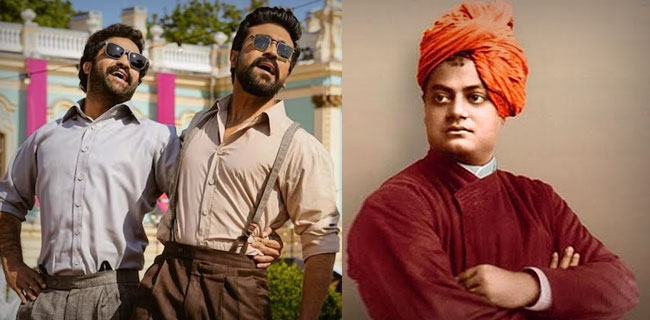
    January 12 was the birth anniversary of Swami Vivekananda aka Narendranath Dutta. Along with the usual social media chatter and media articles, especially in West Bengal, some went into overdrive. Times Now news published a piece titled “How Swami Vivekananda’s ideals influenced PM Narendra Modi?” A certain MLA in West Bengal declared that the current Narendra is the incarnation of the then Narendra!


    Both are equally powerful brands – Indian cinema and Vivekananda.


    To me, the Golden Globe award was the perpetuation of the stereotypical image that a larger part of the world has created for Indian cinema…of escapist over-the-top song and dance! This is a far cry from the 1950s to 1970s when film makers like Ray, Ghatak, Sen, Kasaravalli, Gopalakrishnan, Benegal and their contemporaries across languages represented Indian cinema and helped create a certain image of sensitive neo-realism. Over the last 20-odd years the image of celebratory escapism has largely been consciously and deliberately created. And this award goes further into reinforcing that image. I do not wish to judge whether the image is the desirable one or not. But I do question whether brand “Indian cinema” wishes to continue operating in this very space or wishes to do a personality re-jig? Will it continue to be sustainable this way or will it have to paint a fresh image soon? Will it continue to thrive within the box it has created or have to look outside?


    For when one talks of looking and thinking outside the ‘box’, one must study brand Vivekananda.


    The prevailing image of the man within the country is quite different from that outside. Most Indians see him as a “Hindu monk” who was always about “Vedanta” and the pride of being a Hindu. This image has been appropriated and used to the hilt by the current political party in power to immense effect. The current Narendra almost takes refuge and recourse under the shadow of the then Narendra to justify his thought and action. It is like a “guru-shishya” relationship which has been conjured up. And that is most convenient as it miraculously panders to the sensitivities of the majority.


    Brand Vivekananda is about constant reinvention and recalibration of theology, thought and action. If one were to read his works and lectures, one will understand what brand revisioning is all about. The brand is like water, having a physical form but not confined to a fixed shape and always ready to change course. Yet it does not lose its relevance and core identity. From a non-believer he turned into the biggest disciple of Ramakrishna. In fact, the world would not have know about the teacher had the student not set up an institution like Ramakrishna Mission. He would have remained a local spiritual guru like his contemporaries Byamakhyapa or Loknath had it not been for the Naren who questioned and challenged him no end before agreeing with his theology. And he kept exploring and experimenting right through his short life of less than 40 years! He adapted to where he stayed and incorporated the customs and habits to both expand his mental horizon as well as evaluate what would be best for the India of his dreams. Hence, beef was his staple when in Chicago while it would always be fish when in Calcutta. In one his lectures he said, “I do not come to convert you to a new belief. I want you to keep your own belief; I want to make the Methodist a better Methodist; the Presbyterian a better Presbyterian; the Unitarian a better Unitarian. I want to teach you to live the truth, to reveal the light within your own soul.” Amongst his admirers and followers were Lord Kelvin, Nikola Tesla, Sarah Bernhardt, Herman Helmholst and Robert Ingersoll.


    On June 10, 1898, he writes to his friend Mohammad Sarfaraz Husain, “I am firmly persuaded that without the help of practical Islam, theories of Vedantism, however fine and wonderful they may be, are entirely valueless to the vast mass of mankind. We want to lead mankind to the place where there is neither the Vedas, nor the Bible, nor the Koran; yet this has to be done by harmonising the Vedas, the Bible and the Koran. Mankind ought to be taught that religions are but the varied expressions of THE RELIGION, which is Oneness, so that each may choose that path that suits him best. For our own motherland a junction of the two great systems, Hinduism and Islam — Vedanta brain and Islam body – is the only hope. I see in my mind’s eye the future perfect India rising out of this chaos and strife, glorious and invincible, with Vedanta brain and Islam body.”


    Simultaneously, in the same year he composed the song “Khandana Bhava-Bandhana” dedicated to his teacher and master, which has now become the anthem for the Mission.


    And then in 1899, his translation of the first six chapters of “The Imitation of Christ” were published in his periodical “Brahmavadin”!


    On a ship-ride together with Jamsetji Tata in 1893, he inspired him to set up a research and educational institution of world standard in the country. Yet in 1900, when Tata asked him to head the proposed Research Institute of Science [eventually the Indian Institute of Science in Bangalore], Vivekananda politely refused saying it required someone more dedicated to the cause as it conflicted with his spiritual journey!


    Brand Vivekananda is possibly one of the finest manifestations of Trotsky’s theory of “perpetual revolution”. It is a brand that has gained its stature by exploring, challenging, pushing boundaries, experimenting and thereby remaining highly relevant to people across countries and cultures. In spite of the attempts of institutions here, including the Ramakrishna Mission, to put him in a straight jacket, for their own convenience and limited benefit.


    Will Brand “Indian cinema” take inspiration from Brand Vivekananda, ever?


  • From RRR to TRAI… Five Wishes From 2023


    By Shailesh Kapoor


    Shailesh KapoorIt’s a new year, and that’s a legit reason to be excited about what one can expect in the year ahead. Here are five things, in no particular order, related to the Indian M&E industry that I’m hoping to see, some of them only wishfully so, in the new year.


    1. RRR at the Oscars

    An Indian film being nominated in the main Best Picture category at the Academy Awards is an exciting thought. It’s never happened before, and there’s more than a decent chance that RRR may be the first. The film also hopes to be nominated in some other categories, especially Best Original Song (Naatu Naatu). I’m eagerly looking forward to January 24, when the nominations will be announced.


    2. Box-office revival of Hindi cinema

    2022 has been a tumultuous year for Hindi cinema at the box-office, with collections dropping by almost 30% compared to the pre-pandemic year 2019. Other major Indian languages, especially the South ones, have grown or stayed stable, and the overall India box-office has done quite well in 2022, which is only the second year after 2019 to have grossed more than ₹10,000 crore across languages put together. If Hindi cinema is back on its feet in 2023, starting with Pathaan in January, it is almost certain that 2023 will be the biggest-ever year for the Indian box-office.


    3. Better non-scripted content

    After all the exciting developments in the decade of 2000-2009, which saw the import of several international formats and creation of a few homegrown ones, non-scripted content on Indian television, and now streaming, has lost its innovative streak. Even the true crime genre, that saw Crime Patrol, and later Savdhaan India, create a category of their own, is languishing. Shark Tank India (Sony) and Indian Predator (Netflix) have come as beacons of hope. But they stand out more as aberrations, because the streamers are obsessed with fiction, and television is happy launching new seasons of their long-running international formats. It won’t be an over-statement to say that along with comedy, non-scripted content is currently the most under-served category in mainstream entertainment in India. Hope 2023 changes that, at least to some extent.


    4. Reboot of Indian television news

    I’m now entering wishful territory, by hoping that 2023 can see rejuvenation of Indian TV news. It’s not a realistic wish given the timing of the recent change-of-ownership at NDTV. Indian television news has slowly but surely acquired a spoof-ish imagery, and even though mass audiences continue to watch it, that’s more a testimony to the reach of television in India, than the quality of the content our news channels are dishing out. One would have used the phrase ‘trash television’ for it, but Indian TV news content is often purposefully idiotic or divisive. The good old days of UFOs lifting cows up from the fields suddenly seem quite acceptable, when you compare it to the communal ideas being spread through the news on primetime every night. While digital news platforms attempt to make a difference, they currently don’t have the reach and the budgets to make the larger national impact.


    5. TRAI exits the television business

    This is that joke wish, the kind that a media website can run as a Fool’s Day headline. It’s not going to happen (at least not in 2023), but nothing will make me, and the entire television industry, happier than seeing TRAI’s incessant meddling, which has damaged the business in more ways than one can imagine, stop in 2023.


  • 2022: Six Months & Counting


    By Shailesh Kapoor


    Shailesh KapoorJust like that, we are already into the second half of 2022. It’s been a somewhat unusual year for the Indian entertainment business. The last two years have been heavily impacted by the pandemic, but 2022 has had a more ‘normal’ feel to it, and that itself has been refreshing.


    The maximum action was seen on the theatrical front, with a slew of new releases seeing audiences go back to the theatres in big numbers across India. K.G.F: Chapter 2 and RRR have been huge success stories, with the latter finding enhanced fan following in the US after its Netflix release in May. The Hindi theatrical market, which has struggled for two years now, saw sporadic success beyond the dubbed versions of the two blockbusters mentioned above. The Kashmir Files, Bhool Bhulaiyaa 2 and Gangubai Kathiawadi got the audience, while several other films, including big-ticket Akshay Kumar starrers Bachchhan Pandey and Samrat Prithviraj, struggled at the box office.


    In the first six months of the year, Hindi language’s share of the domestic gross box office stands at about 35%, down from 44% in the pre-pandemic year (2019), but up from 27% in the two pandemic years put together (2020-21). The twist in the tale is that a staggering 43% of Hindi box office in Jan-Jun 2022 has come from Hindi dubbed version of South Indian films.


    While theatrical films grabbed the headlines, this half-year period has been somewhat muted for the streaming category. There has been a spate of new launches across platforms, but very few have achieved unqualified success. Rudra (Disney+ Hotstar), Panchayat S2 (Prime Video) and Aashram S3 (MX Player) crossed an estimated viewership of 25 Million audience in India, while Rocket Boys and the recently-launched Suzhal: The Vortex have received widespread critical acclaim.


    News of Netflix struggling to grow its subscriber base, worldwide and in India, continued to surface every few weeks in this half year. Big brands can sometimes feel the burden of giant expectations they set for themselves, and Netflix currently faces this challenge on the global front.


    As usual, there wasn’t much in the television content space to write home about. A deftly-executed season of Shark Tank India was noticed and appreciated, but its success was largely streaming-centric, as the show failed to find a sizeable audience on linear television.


    While there was little action on the content side, the TV industry was not short of action on the industry side, with the return of the news ratings, and the subsequent mad rush we witnessed, in which almost every news channel staked a claim at the no. 1 position. February was the elections month that saw five states, including Uttar Pradesh and Punjab, go to the polls. News channels had enough on their plate to keep themselves busy, including controversies around several prominent anchors.


    But the big media story of the first half of 2022 is the astronomical price for which the IPL broadcast rights were sold. The auctions place IPL unquestionably at the top position on the list of the most powerful media brand in India, in a year that also saw two new teams make their IPL debut, one of which went on to win it.


    If the first half of the year is any indication, we can expect that the second half of 2022 will not be short of fireworks.


  • Dubbed & Delivered: K.G.F, Doctor Strange & more


    By Shailesh Kapoor


    Shailesh KapoorThe success of K.G.F: Chapter 2 has emerged as the big entertainment headline of 2022 so far. The film has gone on to do exceptional box-office in multiple markets, including overseas. In the Hindi language, the film is now the second biggest domestic grosser of all time, after Bahubali 2: The Conclusion.


    Both K.G.F: Chapter 2 and Bahubali 2 are films from southern parts of India, made originally in Kannada and Telugu respectively. RRR, another Telugu film, is also a big grosser of this year. By the time 2022 ends, we may have seen a few more of their ilk.


    Doctor Strange: In The Multiverse Of Madness released last week to opening collections in India that no Hindi film has been able to achieve since the pandemic started. A large share of the film’s collection has come from the language-dubbed versions, i.e., Hindi, Tamil and Telugu.


    Can one call this the breaking of the ‘language barrier’? Technically, that will be an inaccurate description, because the language of consumption is the local language of comfort, not the language in which the content has been originally been produced.


    In our yet-unreleased report titled ‘The Ormax OTT Audience Profiling Report: 2022’, a typical paid streaming audience (SVOD) is watching content in 2.3 languages. But if you include the languages in which dubbed or subtitled versions are being watched, this number doubles to 4.6. The equivalent numbers are 1.8 and 2.3 for AVOD audiences. The big difference is the D-word: Dubbing.


    Dubbed content has been around in India for two decades now, with Hindi movie channels thriving on Hindi-dubbed versions of South Indian action films. These films found a core audience (typically men in the smaller towns and the lower socio-economic strata) over time, and the ratings from this core group fueled more acquisition and programming of such content over the years. Licensing fees of South Indian dubs have seen upward revision to the degree of 10X, perhaps even more, over the last 15 years.


    But South dubs on Hindi movie channels were treated with a touch of condescension by the cosmopolitan audience, which includes the media fraternity, ranging from advertisers to Hindi-language content creators. “Set Max” (as Sony Max is popularly called) entered the pop culture for its love for such films, along with its love for Sooryavansham, a Hindi film that has its origins in the South of India too. There were ratings, but a perception of legitimacy, if one can call it that, was missing.


    Things started to change around 2015, for two parallel, unrelated reasons. The first reason was the Bahubali franchise. The first Bahubali film that year raised the bar on South Indian dubbed content overnight, and by several notches. Around the same time, the Marvel Cinematic Universe had started building a loyal teenage and youth fanbase in India, leading to dramatic growth in Hollywood box office in India, which has multiplied by a factor of 3 from 2014 to 2019.


    The next big boost came during the pandemic, when streaming consumption skyrocketed, and a large section of audience started sampling content (both films and series) in non-native languages, via dubbing or subtitling options. This included not just Indian languages and English, but also other foreign languages like Korean, Spanish, German, etc. The Spanish series Money Heist was the most-watched Netflix content in India in 2021, ahead of all Indian series and films. Money Heist was available to watch in English, Hindi, Tamil & Telugu in the India market.


    Dubbing has unlocked a world of content that was hitherto inaccessible to the wider Indian audience. The possibility that the next big content wave may come from an unexpected part of India, or the world, is now a real one.


    It doesn’t make the task of content creators any easier. The Hindi film industry has been facing an identity crisis of sorts, as it sees Hollywood and South Indian films outperform, while big-ticket Hindi films struggle to find audience in their native markets, let alone down South in the dubbed versions.


    But the audience is not complaining. And that’s why, you can expect a lot more action on this front in the coming times.


  • 2021: The Year of Restoration & Regional Duality


    By Shailesh Kapoor


    We are out of the dreadful 2020 and into a new year. A date change doesn’t mean much in the present. But history is segmented by years and decades. And 2021 will stand out in history as an unusual year. If 2020 was the year of disruption and setback, all hopes are pinned on 2021 being the year of restoration and comeback. The next few weeks will be fascinating, to see how the recovery story actually unfolds.


    The Indian media and entertainment sector is on its comeback trail too. Revenue challenges apart, the television industry is running like 2019. Once again, off-screen news is dominating on-air magic. This time, the off-screen news is centered around the ongoing Mumbai police investigation into peoplemeter tampering. That’s a story that could have long-term ramifications, or turn out to be a case of much ado about nothing, depending on how the investigation progresses.


    The year of the pandemic was a big shot in the arm for the digital entertainment sector, especially streaming and gaming. Paid subscriptions have seen unprecedented jumps, and the streaming content landscape is looking healthier than ever before.


    But it’s the theatrical business that’s still trying to stand back on its feet. Theatres opened in October 2020, but the road has been a difficult one so far, with only about 15% regular theatre audience having revisited a theatre. While the fear of the pandemic is a factor, a bigger factor is the absence of mainline content itself. Producers, especially Hindi, have been reluctant to release their films, playing a cautious wait-and-watch game. It’s a strategy that’s arguably too conservative for its own good.


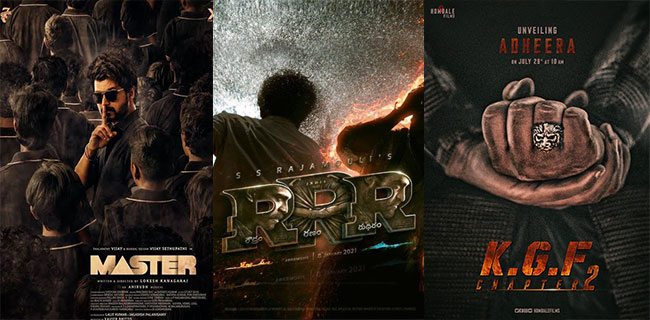
    But things are going to look up soon. The South film industry has been more forthcoming, with a huge Tamil release (Master) lined up for release next week. The teaser for one of the biggest pan-India films of the year (KGF Chapter 2) dropped yesterday. We are set for some real, big-ticket action at the box office in the regional markets in early 2021.


    But it’s not just the regional markets that will see audience flocking the theatres for these entertainers. KGF Chapter 2 and RRR are huge films for the Hindi market too. It will be an irony of sorts if the post-pandemic revival of Hindi cinema comes via dubbed version of South Indian films. And that’s a very distinct possibility as of now.


    Which brings me to a trend that’s likely to become even bigger in 2021: Breaking of regional boundaries in the content marketplace. This trend is manifesting itself in different ways across sectors. In television, remakes and adaptations of regional shows into Hindi and other regional languages are on the rise, and it seems like Star Plus’ new content mantra in particular. In streaming, it’s the idea of making originals available in multiple language feeds, and most platforms, especially Disney+ Hotstar and Amazon Prime Video, are taking this up on priority. And in theatrical, the doors that Bahubali opened will be broken altogether by the next line of big regional films releasing in 2021.


    The interesting facet of this trend is that it is shaping up in a era of growing regionalism. Pride around one’s culture, history and language continues to be on the rise at a pan-India level. It’s a more localised interpretation of the idea of nationalism, which is on the upswing globally, not just in India. The successful of 2019’s only Hindi blockbuster, Tanhaji: The Unsung Warrior, finds its roots in this trend.


    On the face of it, the two (acceptance of regional content and burgeoning regional pride) may seem contradictory. But that they are developing in parallel as growing trends is a statement about the fascinating reality that India is. The next year or two will see this duality unfold in full force, and it’s an exciting journey to witness.