Tag: RPWD

  • Shruti Pushkarna: Disability Inclusion: How far are we from a Sugamya and Saksham Bharat?

    Shruti PushkarnaBy Shruti Pushkarna


    In his first term, Prime Minister Narendra Modi was applauded for path-breaking campaigns like Swachh Bharat, Jan Dhan Yojana, Sugamya Bharat, Ujjwala Yojana and so on. The promise of ‘inclusion’ for larger sections of the Indian population gave the country hope for a better tomorrow, or ‘Acchhe Din’.


    Having been sidelined and neglected for decades, the disabled community felt vindicated with the announcement of the Accessible India movement in 2015. Finally, the lack of ‘access’ was acknowledged at a national level. In a move to dignify their existence, PM Modi also coined a new term, ‘divyangjan’ or divine being replacing the demeaning usage of ‘viklang’ or handicapped.


    Furthermore, the passage of the Rights of Persons with Disabilities (RPWD) Act 2016 was celebrated as a landmark moment. Repealing the 1995 Act, the new legislation included 21 types of disabilities, with a view to empower and enable as opposed to a dependence on mere handouts.


    Often persons with disabilities face entry-level barriers in education and employment. The reasons could vary, discrimination, poor financial condition, ignorance or inaccessibility. And that adversely impacts their social and financial standing, mis-shaping the general societal perception.


    The RPWD Act 2016 introduced new sections, providing rights and entitlements to ensure barrier free access to the physical infrastructure as well as to information and communication technologies (ICT). Four per cent reservation in government jobs, equal opportunity policy for private establishments in addition to incentives for recruiting at least five per cent disabled employees, and extending the right to free education to every disabled child between the age group of 6 and 18 years, are some of the pertinent steps to level out the playing field.


    With all these initiatives and asseverations, one would assume all is hunky-dory. Except it’s not.


    The leadership seems to have mastered the art of utopian announcements. Spinning yarns ridden with lopsided statistics, they have created a false picture of progress to sway voters. The ground reality is not as idyllic as the written word. Red tapism, absence of coordination between departments and ministries as well as Central and State governments, creates roadblocks in implementation.


    Unique Disability ID (UDID) is a case in point. The UDID portal, swavlambancard.gov.in was launched in 2016 with the intent of creating a national database of persons with disabilities (PwDs) and also to ensure easy access to schemes and benefits. As opposed to a state issued Disability Certificate, UDID is valid pan-India, which enables PwDs to avail government provisions without producing multiple documents.


    But the rollout has been shoddy. As of March 2021, 54.84 lakh UDIDs have been issued against nearly 1.66 crore Disability Certificates. Across states, disabled folk face challenges in online application, medical verification from district hospitals, tracking the issuance status, editing wrongly registered details on printed IDs et cetera. Even after completing all the steps in registration, thousands of PwDs haven’t received their cards. See tweet below.


    1) Applied in 2016 till 2021 waiting (19150000016100029048)
    2) A Municipality/SUB DIVISION (HMC/SADAR )missing from WEB Page Application Form Howrah Dist ,WEST BENGAL #UDID@Drvirendrakum13@socialpwds @RamdasAthawale @kataria4ambala @MSJE_AIC@MSJEGOI#DigitalIindia pic.twitter.com/30w4lSbhFK

    — Mangal Hazra (@mangalhazra3) July 22, 2021

    A tweet stating UDID applied in 2016 has still not been received


    From June 1, 2021, the Centre notified for all disability certificates to be issued online. “The Department of Empowerment of Persons with Disabilities (DEPwD), Government of India has issued Gazette notification SO 1736(E) dated 05.05.2021 making it mandatory for all States/UTs to grant certificate of disability through online mode only using UDID portal w.e.f. 01.06.2021.”


    The notification conveniently puts the onus on the States and local hospitals at a time when they are preoccupied with administering vaccines and managing Covid-19. How does the Centre plan to achieve the desired digitisation when the online process so far has been moving slower than molasses?


    Just last week, the Ministry of Social Justice and Empowerment issued a notification exempting all posts under the Indian Police Service and Indian Railway Protection Force from the provision of four per cent reserved quota for persons with benchmark disabilities. This goes against Section 34 of RPWD Act 2016 which states that “the appropriate Government, in consultation with the Chief Commissioner or the State Commissioner, as the case may be, may, having regard to the type of work carried out in any Government establishment, by notification and subject to such conditions, if any, as may be specified in such notifications exempt any Government establishment from the provisions of this section.”


    In this case, only the posts for combatant roles should be exempt from reservation. Interestingly, a separate notification issued on the same day by the Ministry distinguishes between combatant and non-combatant roles, exempting all combat posts in the Border Security Force, the Central Reserve Police Force, the Central Industrial Security Force, the Indo-Tibetan Border Police, the Sashastra Seema Bal and the Assam Rifles.


    It’s important to note that all reserved posts are based on the jobs identified for PwDs by a specially appointed committee. There are several skilled and unskilled roles under Group A, B, C and D categories, where disabled people can be hired as clerks, technical specialists, engineers, delivery assistants, cleaners, telephone operators, designers etc.


    On January 4, 2021 the Department of Empowerment of Persons with Disabilities notified 3566 posts in Central Government establishments as suitable for persons with benchmark disabilities, adding 593 new posts to the previous list issued in 2013. The latest detailed list can be seen here: http://disabilityaffairs.gov.in/content/upload/uploadfiles/files/224370.pdf


    There are many more examples that point to a lackadaisical approach of the government when it comes to integrating persons with disabilities into the mainstream. While progress has been made on several counts, we need stricter enforcement and execution of policies. Empty sloganeering won’t suffice.


    It’s also time for the media to go beyond inspiration porn and focus on consistent hard-hitting coverage of issues facing the disabled population.


    Shruti Pushkarna heads operations of the New Delhi-based Score Foundation where she works as Director-Programmes & Communications. She is a former journalist (part of the founding team of MxMIndia) who has moved full-time to the social sector. Shruti writes for MxMIndia every other Thursday. Her views here are personal. You can tweet your comments and suggestions to @shrutipushkarna
     

  • Shruti Pushkarna: Who really cares about Disability?


    By Shruti Pushkarna


    Shruti PushkarnaOver the last year-and-a-half, through this column, I have highlighted the sheer neglect and absence of empathy towards persons with disabilities. It is apparent in our policies, provisions, their implementation, legal framework, news coverage and above all in our general lingo. We don’t care about the disabled. As harsh as it may sound, it’s true.


    Disability seems to be the last on any agenda, that is, if it pictures at all. It took us a while to acknowledge equal rights of women, homosexuals, transgender and so on. One wonders how many years to go before we can dignify the existence of the country’s disabled citizens. This when more than one billion people in the world are living with some form of disability.


    Let’s look at the ongoing vaccination drive to prevent the third (or fourth or fifth) wave of Covid-19. Periodically, the government and the media showcase data, citing millions of doses administered across states. But there are no numeric mentions of jabs taken by the disabled community. There are ample media stories speculating the efficacy levels of different brands of vaccines, the shortage of centres or doses, distribution issues etc. What’s missing from the coverage is that there are no systems in place to ensure persons with disabilities have proper access to the process.


    Most people can go online and make an appointment or register themselves on the CoWin app. But is it really accessible to all? There are many blind and visually impaired people who are unable to make an appointment using the drop-down menu on the website or the mobile application. People with vision impairment use screen readers to interact with their digital devices. And drop-down menus not designed adhering to accessibility guidelines, are almost impossible to navigate.


    Moreover, the assumption behind online registration is that everyone has access to a smartphone. That is fallacious, because a sizeable chunk of the disabled population has no access to mobile phones or Internet. It’s almost as if the process is designed to exclude.


    Physical access to the vaccination centers is also an uphill task for the disabled folk. Traveling from point A to point B is not easy in these times because social distancing is hard to maintain for people who heavily rely on physical assistance. Even if hospitals have ramps for wheelchair access, the staff lacks the awareness of how to engage with a person with hearing impairment or visual impairment, or someone with autism or cerebral palsy. Not every disabled individual is lucky to have a caretaker accompany her or him. Not to mention disabled couples who live alone or worse, have been discarded by their families.


    But all the raving and ranting about this issue is confined to closed discussion groups or disability welfare forums, that struggle to find a mainstream voice for advocacy. The media doesn’t report. And so the policymakers and the medical fraternity couldn’t care less.


    Speaking of reportage, the two-child policy was in the news earlier this month. After Assam, Uttar Pradesh is pushing for a new norm in the state, aiming to bring the birth rate down to 2.1 per thousand population by 2026 and to 1.9 by 2030.


    The draft bill emphasises on incentives and disincentives with regards to government jobs, schemes and provisions. Uttar Pradesh is not a lone player, states like Rajasthan, Madhya Pradesh, Maharashtra, Gujarat, Uttarakhand, Andhra Pradesh and Telangana have had some form of the two-child norm in place. They have restricted people with more than two children from contesting Panchayat elections or made them ineligible for government jobs.


    The UP Chief Minister’s announcement evoked quick reactions from political, social and religious groups. Followed by analysis and opinion pieces in leading publications. While some focused on the very method of population control and the draconian disincentives, there were others that drew attention to the disastrous impact on women and poor people.


    But I don’t intend to debate on the premise of such a law or its implications on a select few. I simply want to cite some elements from Chapter III on General Exceptions.


    Titled, “Of Death or Disability of Child”, this section states, “Notwithstanding anything contained in this or any other law for the time being in force, an action of an individual shall not be deemed to be in contravention of the two-child norm under this Act, if the either, or both, of his children born out of the earlier pregnancy suffer from disability and the couple conceives a third child subsequently.”


    India ratified the United Nations Conventions on the Rights of Persons with Disabilities (UNCRPD) in 2007. And yet the above section violates the principles of UNCRPD as well as the Rights of Persons with Disabilities Act (RPWD) 2016. The disregard for the disabled is appalling. The law seems to empathise with families who suffer from the birth of a disabled child. There seems to be no hesitation in equating Death with Disability in this rule of exception.


    The RPWD Act advocates for inclusion and empowerment, for equal rights and reasonable accommodation. And here’s a new legislation that undermines it all.


    Still no mention of any of this in the news pieces dissecting the proposed draft bill.


    It brings me back to the point where I started off. Are we guilty of willfully ignoring 2.1% of the 130 crore Indians? Aren’t their concerns significant enough to garner some media attention?


    Shruti Pushkarna heads operations of the New Delhi-based Score Foundation where she works as Director-Programmes & Communications. She is a former journalist (part of the founding team of MxMIndia) who has moved full-time to the social sector. Shruti writes for MxMIndia every other Thursday. Her views here are personal. You can tweet your comments and suggestions to @shrutipushkarna


  • Shruti Pushkarna: Invisible Disabilities: Missing from any Discourse on Disability

    Shruti PushkarnaBy Shruti Pushkarna


    Lately, I have found myself unwinding to reruns of old favourite TV shows (now easily available on OTT platforms). The extensive amount of work unleashed by the pandemic, both on the professional as well as home front, leaves me utterly exhausted. So I treat myself to a nightcap in the form of yesteryear soap operas.


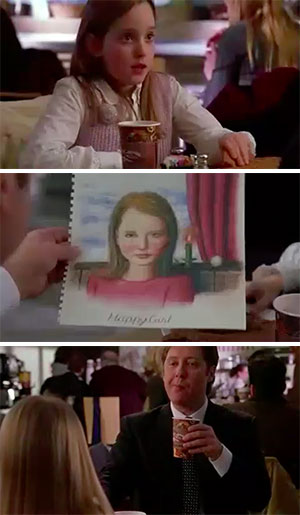
    An episode of Boston Legal, (an American legal drama series which first aired in 2004) resonated with my current stance on challenging stereotypes and perceptions, specific to disability.


    Screengrabs from Boston Legal, Season 2, Episode 15 where the protagonist makes a case for a little girl who cannot smile after a car accident damaged her nerve

    In this particular episode from Season 2, the protagonist Alan Shore (James Spader) makes a case for a little girl who cannot smile after a nerve damage from a car accident. As she is mercilessly teased at the public school, Marrisa’s mother pulls her out, and decides to give her daughter a fresh start at a private institute.  Except the girl’s brilliance in academics and co-curricular activities is not enough to secure admission at a top-tier school. She is denied admission because she didn’t ‘smile’ at the Admissions Director.


    Like Marrisa, several people with invisible disabilities face rejection by family, friends, peers and society at large. Only because they seem incongruous with our limited definition of ‘normal’. In fact, they are worse off than the disabled people in wheelchairs, people with white canes or hearing aids, because their condition isn’t ‘obviously’ seen or recognised.


    Invisible disabilities are not immediately apparent but they are debilitating in their own ways. These include chronic illnesses like sleep disorders, diabetes, renal failure, autoimmune disorders, food allergies or gastro-intestinal disorders, epilepsy, haemophilia, developmental and learning impairments, fibromyalgia, psychiatric illnesses and so on.


    Although appearances may not indicate anything, people with invisible conditions live with symptoms such as continuous pain, fatigue, dizziness, loss of bladder control, brain fog, sudden vision disturbance, speech issues et cetera.


    The World Health Organisation estimates that globally almost a billion people live with some form of disability. And a United States report suggests that 74 per cent of persons with disabilities don’t use a wheelchair or any aid that makes their impairment visible. Both the United Nation Convention on the Rights of Persons with Disability (UNCRPD) and the Rights to Persons with Disabilities Act (RPWD) 2016 of India clarify that disability includes people with mental illness, epilepsy, intellectual impairment and other disabilities which may not be evident to a casual observer. And yet, they face discrimination.


    In a country like India, where disability is anyway stigmatised, persons with invisible conditions (are bound to) face various challenges while traveling, shopping, making hospital visits, in places of entertainment and interacting with people in general.


    To cite real life cases, two people suffering from Multiple Sclerosis and Sjogren’s syndrome respectively, had to compromise their career choices because the effects of their conditions hampered their professional output. Sjogren’s syndrome is an autoimmune disease in which your immune system attacks your own body parts. Symptoms like dry mouth and dry eyes make it hard to continue in a regular job. Rheumatoid Arthritis (RA) is another example of a chronic inflammatory disorder which leads to bone erosion and joint deformity. RA also attacks internal organs and its fatigue symptoms are more than just feeling tired.


    Now many persons with invisible disabilities learn to cope using medication, pain management or physical therapy, depending on their ailment. But the fact that their disabilities are judged or reduced or even entirely overlooked, causes them further mental and physical problems.


    It’s imperative that the media creates awareness about such conditions so our society becomes sensitive and empathetic towards this section of the population. Schools and offices should be expected to train teachers and staff as well as introduce policies to make reasonable accommodation for persons with invisible disabilities.


    Inclusion can happen when (physical and attitudinal) barriers are overcome. Anyone who wears eye glasses or contact lenses is not considered ‘disabled’ today. Of course that wasn’t true before spectacles were invented in the 13th century. Simple solutions can change the way we perceive people’s limitations.


    It’s about time we think solutions rather than imposing our expectations on people who struggle for most part of their lives trying to ‘fit in’. Acceptance cannot be conditional to a constricted imagination.


    The little girl in Boston Legal was inspired by René François Ghislain Magritte, a Belgian artist who was well-known for his work with surrealism and thought-provoking images. He often depicted ordinary objects like clouds, pipes, bowler hats in an unusual context and mislabelled them, to challenge observers’ preconditioned perceptions of reality. Marrisa defies the common idea of happiness denoted by a smile by drawing a self-portrait and writing ‘Happy Girl’ under it.


    Shruti Pushkarna is a former journalist (part of the founding team of MxMIndia) who has moved full-time to the social sector. She heads operations at the New Delhi-based Score Foundation where she works as Director-Programmes & Communications. Shruti writes for MxMIndia every other Thursday. Her views here are personal. She can be reached via Twitter at @shrutipushkarna