By A Correspondent
More than two thirds (69%) of businesses expect to end the second half of 2020 in decline. Just under half (45%) of those expect their business to be down by 20% or less, while one in five of those leaders expects their business to be down in excess of 40% y/y. As news of positive Stage 3 clinical trials emerges, just one quarter (23%) expect their business to recover within a six-month timeframe of a vaccine being widely available, while 41% expect recovery within a year. More than one quarter (27%) expect their business to take as long as two years to fully recover from the Covid-19 crisis.
In Global Business Compass, a study of almost 4,500 business leaders around the world, Kantar identified that almost two thirds (61%) of companies had reduced their marketing spend by an average of 36.7% in 2020. This included half of companies (50%) cutting comms and media spend by an average of 39.3%. With this widespread economic concern, and the constraints being placed upon marketing, Kantar, the world’s leading data, insights, and consulting company has identified the three core strategies marketing teams should pursue to support their business’s ‘rebound and recovery’ strategy.
Imperative #1: Digital Transformation:
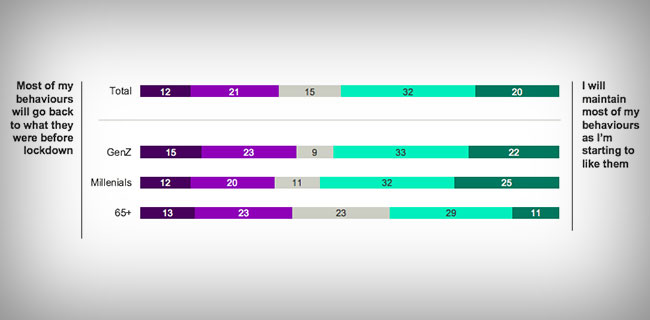
Omnichannel and ecommerce is surging. 40% of consumers say they have increased their ecommerce spend during lockdown, rising to 48% of households with children. 45% of consumers will continue shopping with online stores they found during the pandemic. 55% of companies invested in their ecommerce capabilities during the pandemic. The change is not only about online business, new buying patterns and behaviours are emerging making brands and companies more vulnerable to competition. With digital becoming an integral part of the new normal, brands that elevate the human experience will be strongest.
Marketing teams can drive success through reinventing channel strategies, shifting towards the best performing channels. Testing new models of growth and partnerships (social commerce and direct to consumer) should be on the agenda of every CMO, while investigating changing needs, buying power and the importance of different touchpoints in new ecommerce journeys will inform those strategies. This understanding will require a purposeful data strategy that discovers the power of owned data within the organisation and integrates it with trusted third-party data to understand the new buying signals and deliver that data to the decision makers within the marketing and media teams.
Imperative #2: Purpose and sustainability really will make a difference
The pandemic has made people re-evaluate the importance of purpose and sustainability in their priorities. 85% of consumers think it is important to buy from companies that support causes in which they believe. Brands need to have an impact in people’s lives and the world they live in. Purpose is a systemic stabiliser for brands in times of global economic recession. It is paramount to revive and reinvent relationships that connect the brands to emerging consumer needs. Businesses are under pressure to play a more supporting role in giving meaning to people’s life and position themselves on issues such as diversity, local culture vs. globalism, racial justice, sustainability and community.
Marketing teams in 2021 should reflect on what explicit or implicit needs are being met and consider the impact you can have on users’ lives, functionally or emotionally. Integrate purpose as a living element of the communication, product, brand experience and brand commitment rather than treat it as an isolated concept. Re-engage with consumers and their issues in a transparent, meaningful, connected way, and be ready to make sacrifices for the public good.
Imperative #3: Organisation performance and innovation:
Almost two in three leaders don’t feel they have the right operating model to be competitive. During the pandemic 20% of businesses experienced growth. There are lessons to be learned from these companies that will transform how businesses are run. 59% of companies that achieved growth during the pandemic pivoted their business model, while more than a quarter invested more in innovation. Recovery will require businesses to make drastic changes to old ways of working and significantly review and invest in organisational performance.
Create a feedback loop with your employees and consumers to ensure your corporate narrative and long-term strategic priorities are still relevant and to accelerate your learning curve and consistently scale best practices. People’s new rituals need to be at the heart of the portfolio innovation strategy. Innovation is one of the key characteristics that enable meaningfully different brands to rebound up to nine times faster. Reinvent channel strategies – remember people crave human connection. Elevate the human experience even in digital environments. Only one in four consumers are satisfied with retailers omnichannel presence. Siloed-organisations that isolate customer experience from sales and marketing need urgent reorganisation to get a holistic view of how to reactivate demand.
In discussing Kantar’s advice for marketing leaders Rosie Hawkins, Chief Innovation Officer at Kantar said: “Adapting to new conditions and being brave are key to fast recovery. Virtually every business we interviewed for this study agreed that consumer behaviour has changed for good. Whether it is how they shop, their product needs, their customer service needs, we need to reset what we know about customer behaviour in the future. History has taught us that businesses that are brave during these recessionary periods rebound stronger. Understand your changing customer needs, invest as much as possible in gaining share of voice (and share of market), adapt your strategy to leverage more digital shopping and service channels. Every company has an opportunity to reframe the experiences they deliver to offer purpose-driven actions and they should not be afraid of serving this important new role in society.”
Added Preeti Reddy, CEO – South Asia, Insights Division, Kantar: “In this changing world order, it is an imperative that organisations and brands continue learning about changing consumer preferences and adapting strategies on a real time basis. This will need businesses to be agile and to develop mechanisms that capture information from multiple sources to aid decision making. This will also mean that the need to build stronger, more resilient brands will only increase further; and also to build a strong communication network to communicate brand value and intent to customers on an ongoing basis. Consequently, the role of marketing in driving future strategies of the organisation will become even more significant.”
Kantar’s three imperatives for rebound and recovery are part of Global Business Compass. More insights can be found on Kantar.com.