Tag: Ronnie Screwvala

  • Life after UTV for Ronnie Screwvala

    Life after UTV for Ronnie Screwvala


    By Malini Goyal


    What would you have done if you started off with a few thousands of rupees and turned them into a couple of thousand crore over roughly three decades? Ronnie Screwvala, 57, reckons it’s the time to do “something entirely new”. A smalltime cable operator in Mumbai in the early 1980s, Mr Screwvala went on to build a $1.4-billion media empire straddling movies, gaming and new media, TV content and broadcasting.


    After selling his entire stake of 70% in UTV Software to Disney by 2011 for a cool Rs 2,000 crore, last month Mr Screwvala exited the company he had founded – and in the process exited the media and entertainment (M&E) sector, too. “I came into this industry with Rs 37,500. Today, I have lots of money but that’s all notional. The struggle [going forward] for me will be of a different kind. I am at a crossroads, looking at incredible opportunities,” says Mr Screwvala.


    The opportunities involve parting with parts of the stash he’s sitting on in two ways – one, with a profit motive, by turning investor-mentor for start-ups; and the other with a philanthropic objective. And they promise to keep him busy – and away from the M&E world for some time to come.


    A non-compete clause signed with Disney bars Mr Screwvala from starting a conflicting business. But his new calling may ensure he never returns to the business he knows best. “If I know Ronnie well, he will never come back to the media industry. The sense that I get from him is that he has totally moved on,” says Star India CEO Uday Shankar. Globally, successful entrepreneurs like Marc Andreessen, founder of Netscape, have followed non-linear paths by exiting successful ventures to turn both investor and serial entrepreneurs. Back home, Ajay Piramal is one prominent investor who is looking for avenues to park the proceeds from the sale of a pharma venture.


    Elsewhere, Infosys’ NR Narayana Murthy and Wipro’s Azim Premji have set up funds to invest their personal wealth. But they both remain deeply entrenched in and committed to the businesses they co-founded or founded. Screwvala, for his part, belongs to a rarer breed that is starting all over again from scratch on a totally fresh canvas.


    Entrepreneurial Dream

    Sitting relaxed in his spacious fifth floor penthouse in the tony Breach Candy area of south Mumbai, Mr Screwvala is applying the finishing touches to the blueprint for his second innings. While his plans are still evolving, there are few ground rules he has set for himself. One of them: politics is a strict no-no as a career alternative. He also broadly wants to spend half his time in business and half pro bono. “I want to evangelize entrepreneurship,” declares Mr Screwvala. He wants to use 10% of his time figuring ways to build a platform to boost entrepreneurship.


    “I want to do this for myself. I have to do one or two very disruptive things so that people can look at entrepreneurship more positively in India.” He is vague, he admits. But his mind is running wild doing some blue-sky thinking. His options: either become a catalyst in building an ecosystem; or help figure out new ways to make crowdfunding possible in India; or even write a book. “That’s a massive passion for me. I want to build communication tools and platform to enable that ecosystem. This could be the touchpoint to my past.”


    Currently at the heart of his strategy for investing – both money and his leadership bandwidth – in start-ups is Unilazer Ventures. And here too he’s doing it his way: He won’t settle for less than 35% in a firm; unlike private equity investors, he will not have a time horizon; and he’s extremely selective about sectors, reluctant to look beyond e-commerce, health, education and agriculture.


    “This [Unilazer Ventures] is for profit. Agri is so unglamourized. Nobody is looking at it. But it offers great margins,” he says. While most of his investments will be in start-ups seeded by others, Mr Screwvala plans to build at least one or two businesses ground up.


    His optimism and passion notwithstanding, sections of the PE industry have their reservations about the start-up fervour in the country. “The track records of investments made by many entrepreneurs have been mixed so far,” warns Rahul Bhasin, managing partner at Baring Private Equity Partners India, adding that in India managing the external environment is a huge challenge for greenhorn entrepreneurs.


    Swades and Philanthropy

    By contrast, Screwvala’s other plan on the drawing board appears infinitely less risky although he will be as demanding in making every penny count. He’s set aside Rs 350 crore of his personal wealth and will raise a similar amount from others for Swades, the philanthropy arm. “India does not have a problem of resources. Government spends massive amounts of money but the impact is low. Execution is the key,” Mr Screwvala explains.


    Most corporate philanthropic outfits focus on a specific issue – Bharti and Premji foundations focus on education, for example. Swades, though, has a geographic approach – for starters it plans to look at all major issues faced by Maharashtra’s villages in a 360-degree manner. “I want to create a model that is scaleable, efficient and has measurable impact – like any company,” says Mr Screwvala.


    Swades is already working in 1,000 villages impacting a lakh villagers. Deval Sanghavi, cofounder, Dasra Foundation, a philanthropic organization, points out that Swades does not want to reinvent the wheel. It prefers to get the right expert partners in a range of areas like education, farming, water, health and sanitation, and turn into a catalyst.


    Take for example its work with the farmers. In villages you realize men between 20 and 45 have migrated to cities and are living in terrible conditions, Screwvala says. He wants to reverse the tide and figure ways to improve incomes and standards for farmers. Swades has collaborated with Jain Irrigation to introduce drip irrigation for small farmers. A year back it began working with agricultural bank Nabard. “The best thing about Swades is that they first do a pilot on their own to demonstrate the benefits and then seek government support for farmers,” says Nanda Survase, district development manager (Raigad), Nabard.


    One such villager to benefit is Jeeteshbhai, 22, who was in Mumbai since 2010 working at a retail shop on a monthly salary of Rs 5,000. Last year he returned to his village in the Raigad district. His farm is small – under three acres. But using drip irrigation, vermin compost and some smart management of crops like water melon and a few vegetables, he has earned Rs 25,000 in the past four months. He is looking at a net income of Rs 1 lakh a year – far more than what he was earning in the city.


    Praveen Jain, COO, Swades says there are a few things they keep in mind before starting work in a village. “We measure everything so that we know the progress. We only look at projects that are self-sustainable in 3-5 years. And our exit is built in.” Also to ensure villagers’ commitment, nothing is offered free. Villagers need to co-contribute, even if a small amount. Take for example, the water supply to each home. Villagers co-contributed 10-15% of the cost of the project. And they also put together a small committee and a mechanism to build a corpus for regular maintenance of the pipes. Today, six gram panchayats – 20 villages and 6,000 people – are getting drinking water right inside their homes.


    Understanding the Disney Exit

    It’s difficult for many – including his peers in the M&E sector – to figure why Mr Screwvala chose to quit the game he was so good at. “When I sold off, they [other entrepreneurs] were shocked. Most couldn’t believe it,” he admits. But he’s convinced it’s the right reason. For a couple of reasons.


    First, UTV may be well diversified within M&E, but lacks size and scale in most of them. In broadcast, for instance, the absence of a general entertainment channel (GEC) is stark. “Their presence was through niche channels where getting advertisements and franchises becomes difficult if you are not No. 1,” says Nikhil Vohra, an M&E analyst who recently founded Sixth Sense, a consumption-centric venture fund.


    The second reason for exiting is the challenging and uncertain nature of the content-driven business. One, while the industry is secular in consumer demand, its heavy dependence on advertising makes its financial performance asecular. Second, the entire industry is undergoing a massive churn as technology, ubiquitous smartphones and an anytime-anywhere audience are disrupting old business models. “Competition, choice and globalization of content mean that it’s game over for a lot of M&E companies. Many will disappear and there will be consolidation. Only those who have the resources to invest in high quality content and strong brands will survive,” says Mr Shankar.


    That Mr Screwvala is remarkably detached from the business he built with his blood, sweat and passion made the exit easier. “I don’t think you can expand and build scale if ownership and control is what you are obsessed with,” he says. Star India’s Mr Shankar explains that Mr Screwvala is “passionate but not emotional about his decisions”.


    Disney began its association with UTV first as a customer, then as an investor, partner and, eventually, owner. After picking up a minority 14.99% stake UTV in 2006, by 2010, both partners were asking the same question: “Now what?” “A buyout seemed the most logical step,” says the founder.


    The Disney Ride

    In 2012 after completing the buyout of UTV, Screwvala was appointed managing director with the mandate to steer the integration of the two companies. It wasn’t a smooth ride. “There were cultural differences although value systems were similar,” says Mr Screwvala.


    Like all integrations, this one too had its own share of issues. Some redundancies were inevitable. With the far bigger (in India) UTV dominating the merged entity and Mr Screwvala at the helm, it meant most key positions were helmed by UTV executives. Siddharth Roy Kapur, from the UTV stable, took over as managing director. Unsurprisingly, many Disney executives put in their papers.


    Disney’s MNC culture with a thrust on structures and processes is a polar opposite of Mr Screwvala’s entrepreneurial style of functioning. His informal style – epitomized by the round-neck T-shirts he often sported at meetings and important events – was in stark contrast to the formal suit-and-tie culture of Disney.


    By the fag end of his stint as Disney India MD, Mr Screwvala’s patience was running out. “He was completely stressed,” says an ex-Disney executive. For an entrepreneur who was used to taking quick decisions, working in an MNC where decisions were being taken far away in Burbank, California wasn’t proving easy. Take, for instance, a simple thing like finalizing office space – the process took an entire year. “I could see the frustration and suffocation building inside him,” adds the former Disney executive. Starting afresh is clearly proving to be liberating.


    Source:The Economic Times

    Copyright © 2014, Bennett, Coleman & Co. Ltd. All Rights Reserved

    Licensed to republish
     

  • Ronnie Screwvala’s Unilazer Ventures picks up 25% stake in EkStop Shop for an undisclosed amount

    By Biswarup Gooptu


    Unilazer Ventures has picked up a 25% stake in online grocery retailer EkStop Shop for an undisclosed amount, the family office set up by former Walt Disney India head Ronnie Screwvala announced on Monday.


    Proceeds from the Series A round of funding will be used by the Mumbai-based EkStop Shop, which runs the e-commerce website EkStop.com, to build its technology, hire talent and expand it geographical footprint, according to a press statement released by Unilazer Ventures.


    Launched in 2012, EkStop Shop is an e-commerce retailer specialising in home deliveries of groceries, supermarket products and daily essentials, and delivers all across Mumbai. It plans on launching services to Navi Mumbai and Thane by February later this year.


    “I see tremendous potential and scalability for the e-grocery space in India. A disconnected last mile experience for the customer, high customer life time value, and an ability to build local monopolies in the top metros of India – are all exciting opportunities for this kind of business to grow exponentially,” said Abhishek Shah, AVP – Private Equity at Unilazer Ventures.


    EkStop Shop has partnered with over 500 brands to offer over 8,000 products. It also has its own in-house logistics and warehousing capabilities. The startup had earlier raised an undisclosed amount of capital from a group of angel investors.


    “Ekstop.com provides consumers a convenient, efficient and cost effective alternative to the corner store kirana and the supermarket. We have, in a short span, seen incredible customer traction and retention,” Sumat Chopra, co-founder and chief executive of EkStop Shop.


    While sector and stage-agnostic, Unilazer Ventures has a strong investment focus on India’s early-stage internet ventures. In December it led a $6 million investment in lingerie retailer Zivame, a transaction in which the Bangalore-based e-commerce company’s existing venture capital backers IDG Ventures India and Kalaari Capital also participated.


    It has also invested in Valyoo Technologies, the parent company of online retailer LensKart.com, and agri-farming and horticulture firm INI Farms.


    As part of its mandate, Unilazer invests across three major asset classes – fixed income and commodity, public equity investments and seed-to-growth stage investments in privately held companies and startups.


    Source:The Economic Times

    Copyright © 2013, Bennett, Coleman & Co. Ltd. All Rights Reserved

    Licensed to republish


  • Rise, Rise (& now Exit) of Ronnie Screwvala

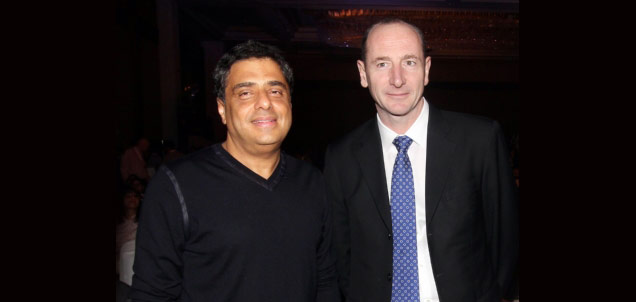
    Ronnie Screwvala with Andy Bird. Picture: Fotocorp


    By A Correspondent


    The exit wasn’t unexpected, the timing may not have necessarily been known. There were many who said while The Walt Disney Company may have acquired UTV, it was the latter which was calling the shots. Yes, indeed. Disney-UTV was a Ronnie Screwvala company, and even though Andy Bird, Chairman of Walt Disney International, was around to oversee that all was well with the India operations, clearly it was Mr Screwvala who steered the business.


    With reason. While UTV’s promoters were happy to cash out, Disney needed a UTV for its India presence. It was the film business that was a huge pull for Disney. Meanwhile, Siddharth Roy Kapur, currently Managing Director of Disney UTV’s studio business, has been appointed successor. He will take charge on January 1, 2014.


    Winner all the way

    Rohinton Screwvala started out big even in the early 1980s. He offered top quality international programming and movies via cable, when people were content watching all of it via video cassette recorders. Ronnie, as the boy in his 20s was known, built a cable TV network called Network and wowed his customers in the Cuffe Parade district of South Mumbai.


    Ronnie was popular on Bombay Doordarshan’s youth-centric show called ‘Young World’ as also in the city’s theatre circuit. He soon ventured into producing ad and corporate films and some content for Doordarshan. His crew comprised now-wife Zarina Mehta, Deven Khote, Shernaz Patel, Bugs Bhargava and a few others. Even then, programmes like ‘The Mathemagic Show’ from the Screwvala stable were considered slick and top-grade.


    On June 22, 1990, United Software Communications Private Limited was incorporated as a private limited company. The private was dropped in 1995, and the United turned into UTV in 1998.


    In 1992, when Subhash Chandra started Zee TV, he commissioned UTV to produce some 250 hours of programming. In the meantime, the company ventured into inflight entertainment for airlines and even started selling airtime for programmes made by non-UTV producers. In 1995, UTV launched India’s first daily soap titled `Shanti’. The soap starred a certain Mandira Bedi who now stars in the Indian version of ’24’.


    In May 1995, UTV acquired 54.60% stake in Laezer Production Private Limited (incorporated in 1982) in order to enter into the area of post-production. Laezer Production was rechristened United Studios (USL) the same year. In 1996, Disney contracted USL to dub its library into various Indian languages. Two years later, the firm acquired the animation production company of the renowned animation artist Ram Mohan. Somewhere around then, the company also got into movie distribution business.


    UTV’s foray in broadcasting started with Vijay TV in November 1998 and in 2000, Ronnie set up an internet content creation and aggregation business under the aegis of UTVNet.


    From then on, there was a fair bit of restructuring and financial consolidation that happened. In 2001, 51 percent of Vijay TV was sold to Star India and in 2002-03 and later in 2004, UTV’s 43.89 percent equity in the Tamil channel was also sold. In the meantime, the studio business of Western Outdoor Media Technologies Limited (WOMTL) was acquired.


    In 2005, UTV went in for an IPO which was oversubscribed by 26.35 times. Having forayed in news-based programming early and even anchored some shows, Ronnie set up business channel UTVi which was later called Bloomberg UTV given a tie-up with the overseas financial information network. The business channel saw a stake sale to Reliance Capital.


    Given the success it found with many movies , there were several international studios and entertainment majors eying a stake in UTV (including Rupert Murdoch who made an investment), but it was The Walt Disney Company which acquired it eventually. As of February 2012, UTV turned into a wholly owned subsidiary of Disney with Ronnie at the helm.


    Succession planning

    For a few weeks now, there has been a buzz that Ronnie was stepping down. On Thursday, October 24, the announcement finally came in as the Walt Disney Company (TWDC) announced that Ronnie Screwvala will step down on June 30, 2014 and Siddharth Roy Kapur, currently Managing Director of Disney UTV’s studio business, will take over the company’s India operations. Mr Kapur will become Managing Director of TWDC India effective January 1, 2014, and Ronnie will assist in the transition until June 30 next year. Later in the evening, he hosted a dinner for the staff. An early farewell dinner of sorts.


    “It’s been a fantastic seven-year working relationship with Disney,” said Mr Screwvala, “first as a co-shareholder, then when Disney held a majority stake in UTV, and since February 2012 as Managing Director of Disney UTV India. It has been a great experience to be part of the world’s No 1 entertainment company and to have worked with such a talented team to solidify our footprint in India as a diversified and successful business across television, broadcasting, movies, consumer products, games and digital.”  Andy Bird, Chairman of Walt Disney International added, “I’ve had the pleasure of working with Ronnie for the past seven years and appreciate his entrepreneurial drive and vision for Disney in India. He has successfully managed integration efforts and set the foundations of long term growth for our business. In 2012 when we acquired UTV, Ronnie had a clear mandate to merge two organizations, build a single team and lay the strategic direction for a diversified media and entertainment company that would be part of the growing India growth story. When he passes on the baton in June 2014, almost two-and-half years since the acquisition, he will leave the company in a great place strategically and with a strong leadership team.  I want to thank Ronnie for helping to shape Disney’s journey in India and for his contribution to our success. We are delighted that he will continue to be associated with Disney in the future,” added Mr. Bird.


    Mr Bird also announced that Mr Roy Kapur will become Managing Director of TWDC India effective January 1, 2014. “Sid has been an integral part of the Disney UTV family and brings to the role a diverse set of business and creative skills and a strong pulse on the Indian audience and consumers.”


    “Sid’s innate understanding of the Indian viewer, his ability to leverage those insights in business, coupled with his experience and expertise in fast-moving consumer goods businesses, television and in building India’s leading movie studio made him the natural choice for the role. I look forward to working with Sid to take Disney UTV to its next level of growth in the years to come,” added Mr Bird.


    “Disney is one of the most admired media brands in the world and I see this as a great opportunity to work together with the incredible team we have at Disney UTV in India, to take our content and our brands to the next level of growth in one of the most dynamic media markets in the world,” said Mr Roy Kapur. “It’s been close to 15 years for me in media and entertainment, more than half of those at Disney UTV, and it’s wonderful to be part of a fantastic team and the diversified businesses that now make up the combined company.”


    What next for Ronnie?

    As per a communiqué issue, after June 2014, Ronnie will pursue his entrepreneurial goals in some of the impact sectors in India and devote more time with his foundation, Swades. While at the time of writing one is unsure of what the contract says on whether he can venture into any of the sectors that Disney-UTV is into for a while, but clearly all those who have tracked his career know that you can’t keep the man away from the action for too long.


  • Ronnie Screwvala to step down at Disney UTV on June 30, 2014. Siddharth Roy Kapur will be MD wef Jan 1

    Ronnie Screwvala

    By  A Correspondent


    The Walt Disney Company (TWDC) has announced that Managing Director Ronnie Screwvala will step down on June 30, 2014 and Siddharth Roy Kapur, currently Managing Director of Disney UTV’s studio business, will take over the company’s India operations. Mr Kapur will become Managing Director of TWDC India effective January 1, 2014, and Mr Screwvala will assist in the transition until June 30, 2014.


    “It’s been a fantastic seven-year working relationship with Disney,” said Mr Screwvala, “first as a co-shareholder, then when Disney held a majority stake in UTV, and since February 2012 as Managing Director of Disney UTV India. It has been a great experience to be part of the world’s No 1 entertainment company and to have worked with such a talented team to solidify our footprint in India as a diversified and successful business across television, broadcasting, movies, consumer products, games and digital.”  After June 2014, Mr. Screwvala will pursue his entrepreneurial goals in some of the impact sectors in India and devote more time with his foundation, Swades.


    Andy Bird, Chairman of Walt Disney International added, “I’ve had the pleasure of working with Ronnie for the past seven years and appreciate his entrepreneurial drive and vision for Disney in India. He has successfully managed integration efforts and set the foundations of long term growth for our business. In 2012 when we acquired UTV, Ronnie had a clear mandate to merge two organizations, build a single team and lay the strategic direction for a diversified media and entertainment company that would be part of the growing India growth story. When he passes on the baton in June 2014, almost two-and-half years since the acquisition, he will leave the company in a great place strategically and with a strong leadership team.


    “I want to thank Ronnie for helping to shape Disney’s journey in India and for his contribution to our success. We are delighted that he will continue to be associated with Disney in the future,” added Mr. Bird.


    Mr Bird also announced that Mr. Roy Kapur will become Managing Director of TWDC India effective January 1, 2014. “Sid has been an integral part of the Disney UTV family and brings to the role a diverse set of business and creative skills and a strong pulse on the Indian audience and consumers.”


    “Sid’s innate understanding of the Indian viewer, his ability to leverage those insights in business, coupled with his experience and expertise in fast-moving consumer goods businesses, television and in building India’s leading movie studio made him the natural choice for the role. I look forward to working with Sid to take Disney UTV to its next level of growth in the years to come,” added Mr Bird.


    “Disney is one of the most admired media brands in the world and I see this as a great opportunity to work together with the incredible team we have at Disney UTV in India, to take our content and our brands to the next level of growth in one of the most dynamic media markets in the world,” said Mr Roy Kapur. “It’s been close to 15 years for me in media and entertainment, more than half of those at Disney UTV, and it’s wonderful to be part of a fantastic team and the diversified businesses that now make up the combined company.”


    The Walt Disney Company India started operations in July 2004 with its head office located in Mumbai, and significantly expanded its footprint in February 2012 after acquiring a controlling stake in UTV


  • 3-day informational event fulfils tryst with destiny, almost!

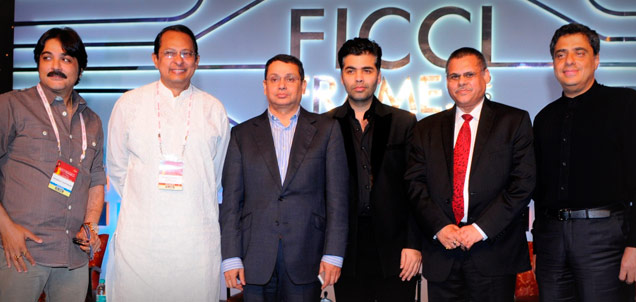
    Actor and Convenor, FICCI MEBC East Prosenjit Chatterjee, Bangladesh Information Minister Hasanul Haq Inu, FICCI M&E chair Uday Shankar and co-chair Karan Johar, I&B secretary Uday Varma and Ronnie Screwvala, MD, Disney UTV


    By Johnson Napier


    If there was ever a platform that was going to foretell the future that lay ahead for the M&E industry in a manner that was befitting, it had to be at the FICCI-Frames 2013. After an invigorating, insightful, challenging and forward-looking three days of deliberations, the biggest informational event for the M&E industry in India came to an elaborate end yesterday.


    While the day began with a series of interesting sessions that centred around topics like the economics of running a sports business, long versus short form of content consumption, skills in the M&E sector, unleashing the power of data, single window clearance for films, reinventing regional media and electronic news media among others, an equally power-packed panel of speakers made sure that the delegates had a lot to take away as learnings from the sessions.


    Perhaps the mood that was prevalent over the entire three-day event at the venue was summed up at the valedictory session on day 3 at FICCI-Frames. The session once again saw a line-up of dignitaries who had words of wisdom and promises to make to the gathering.


    Union I&B Minister Manish Tewari was not present at the event but shared a recorded message with the audience. Affirmed the minister, “The I&B ministry exercises various limits – we are licensors, we are players and stakeholders and are also regulators… so it’s a mixed bag of duty for us. But it’s incumbent upon the government to try and play the role of a facilitator and enabler in order to ensure the growth of this sector takes place at a more rapid pace than what it has witnessed over the past few years.”


    Highlighting his observations over the entire digitization exercise and the demand to do away with the hike in duty on STBs the minister said, “In the first phase we went through a digitization process in the four metros and what was observed was that the STBs are important from also a regional point of view – South East Asia. In order to give a fillip to the Indian manufacturers the Union Finance Minister therefore decided to hike the duty from 5 to 10 percent. So while a rollback is not possible we should see it in the perspective that we as a country also have a duty towards seeing that the other sectors are also benefited and a robust mechanism be established. To achieve success in the second phase across 38 cities all the players, stakeholders and MSOs and LCOs have to come together and make it a reality.”


    Adding further Mr Tewari said, “The other issue that had been highlighted was the issue of pricing of talent and that is something I feel has to be handled between the private-public players jointly. While the government has its own institute for providing training and other skill-sets it will take the combined efforts from the private sector to make that dream a reality.”


    Sounding a word of caution to the industry, Mr Tewari said that where the issue of freedom of speech and expression was concerned, it is something that is guaranteed by the Constitution but it also carries certain restrictions. “The challenge is to see how we can find the golden mean between liberty and the reasonable caveats that have been imposed by the Constitution. If you ask me the freedom of speech and expression does include the right to offend but we also need to ask ourselves the question – what about the remedy? As we unfold the debate further, it is worth that the industry also introspect that there is a distinction between a debate that is honest, candid and something which can be corrosive to the national spirit.”


    Next it was the turn of Ronnie Screwvala, MD, Disney UTV to put forward his predictions as he presented the keynote address. “Some of the good things that have happened in the recent past is the onset of digitisation that has had a huge impact on us. But I think we should hold on to popping the champagne as it will be another 2-3 years before the monetisation from this exercise comes about. So while we have made the investments, the consumer doesn’t necessarily reflect them. But it’s good news that after 20 years of waiting the move has finally come to fruition,” said Mr Screwvala.


    Adding further he said, “Where new media is concerned there is a lot to celebrate about, but unfortunately we have not been able to monetize it. The fact that we are going to be a 150-200 million smartphones market in less than two years, and the fact that large digital and mobile players look at this market as the second or third in the world is phenomenal. There is a need to take this growth further.”


    According to Mr Screwvala the future will belong to dominance from a single screen. “We all talk about the second-television household but that will become irrelevant as it is going to be our personal screen. We will be surprised to see how consumers from all corners of India wake up to using mobile as their primary source for entertainment. The issue is going to be of bandwidth and pricing,” asserted Mr Screwvala.


    Taking over from Mr Screwvala, Uday Verma, Secretary, I&B Ministry began by thanking the industry and the stakeholders for the response that was elicited for the digitization exercise. He said, “The digitization exercise has come about to be because of the alignment of the industry and the stakeholders. It was a difficult task but we are satisfied with what we have managed to achieve. It is something that has happened in a record time and has happened in a smooth manner. Also, it is something that has happened with no intervention from the government where cost is concerned; it has all been borne by the industry.”


    “Where Phase 2 is concerned the progress has been satisfactory with more than 60 per cent conversion having already taken place. There are 21 cities that have reported more than 50 percent digitization and about 10 cities have reported more than 75 percent digitization. There are just four cities that have been posing problems with a conversion rate hovering around 30 percent,” added Mr Verma.


    On the issue of measurement, My Verma said that the option of the industry making its own rating system is already there and the IBF is working hard towards making it a reality. “If there is a consensus that the government should intervene in this matter in terms of guidelines we can do so for the benefit of the industry.”


    Mr Uday Shankar, chairman of FICCI Frames summed up the proceedings by announcing the rollout of a Centre for Regulatory Excellence in collaboration with the industry. “This won’t be limited just to M&E but the entire corporate sector. It will also act as a facilitator in aligning corporate India’s objective with that of the goals of the government and policy establishments. We hope we receive active participation from all quarters.”


  • #Frames2013: Combination of data, bandwidth and content will be more valuable than oil: Ronnie Screwvala

    By A Correspondent


    Assigned the task of providing a roadmap for the M&E industry to take itself into the next phase of growth, Ronnie Screwvala, MD, Disney UTV did a splendid job at that at the valedictory session on day 3 of FICCI Frames 2013.


    Mr Screwvala began by presenting his observations about the trends that were witnessed across various domains and what was needed to take the growth to the next level. He said, “If we start with the assumption that we are growing at 12 per cent, then compared to the top 4-5 industries we are still growing lower than most sunshine industries. So if we want to be in the peg of those sunrise industries we cannot afford to grow at just 10 per cent. My sense is that there is a certain gap that we are missing between the phenomenal talent that we have in the industry when it comes to creating content and also the talent that we have to make commerce out of it. Somewhere down the line there is a sliver in which a lot of it goes away. Each of us needs to introspect as individuals and also players to bring about a genuine change.”


    Elaborating on the big thing that has happened in the recent past, Mr Screwvala said, “A good thing that has happened in the recent past is the onset of digitisation that has had a huge impact on us. But I think we should hold on to popping the champagne as it will be another 2-3 years before the monetisation from this exercise comes about. So while we have made the investments the consumer doesn’t necessarily reflect them. But it’s good news that after 20 years of waiting the move has finally come to fruition.”


    Where the issue of measurement is concerned, Mr Screwvala said that it is upon the industry to come together and solve the problem. “It is catastrophic to note that 70 per cent of television households are still not in the ratings scanner. I cannot understand how anyone can run a business if we still cannot scan such a huge population size. But, we have moved from 10 per cent to 30 per cent and that can be seen as the cup half-full.”


    Where new media is concerned, Mr Screwvala added that there is a lot to celebrate about, but unfortunately we have not been able to monetise the medium. “The fact that we are going to be a 150-200 million smartphones market in less than 2 years, and the fact that large digital and mobile players look at this market as the second or third in the world is phenomenal. There is a need to take this growth further.”


    Presenting his outlook on the other mediums, Mr Screwvala said that this is the only country where print as a medium is growing. “It speaks about the dynamism as far as the print market goes.”


    “Also, we have been one of the largest DTH markets in the world but if you look at the foundation stone that has been laid for the sector and of you see the 4-5 year view, I feel we are heading in the right direction. But it is again a matter of seeing the glass half-full. There is obviously a lot to be done to derive more out of this medium,” said Mr Screwvala of the medium of DTH.


    Moving on to a more important topic of regulation, Mr Screwvala was candid as he said, “The fact is that our country enjoys minimum regulation where the M&E industry is concerned and if we benchmark that against the outside world there is actually very little regulation that we go through. When it comes to censorship I believe it is not necessarily a regulatory challenge; it has actually become a democratic challenge, an environmental challenge and a political challenge. Most of the resistance to self-censorship comes from organisations that are not part of the regulatory framework. We have to look at how we can support the regulatory mechanisms.”


    According to Mr Screwvala, “another big that has happened is that we have seen a massive audience democratization; it has flattened out. No longer can one sit out there and believe that a single advertising or media agency and a single marketing message os going to get anyone to consume anything else. Social media and word-of-mouth has made everything that is being created into a level-playing field. So while we are living in a competitive world we cannot undermine that thought process.”


    “Also, the regional market has grown phenomenally and will continue to post that kind of growth in the next 5 years or so,” noted Mr Screwvala of the domain.


    Moving on to the needle-movers, as Mr Screwvala put it, “the first thing is that we lack unanimity in this industry. Everyone has to look at what is going to be our contribution over the next 5 years to grow this industry further. We do work in competitive environments but we cannot be at loggerheads over 3-4 issues that emerge every year; we have to be a force to reckon with.”


    Adding further he said that “the other thing is that there is going to be a lot of innovation and disruptiveness. There are very few innovations that have taken place in the recent past. We have to see how Apple-innovative or Amazon-innovative are we with our ideas and have to plan accordingly to take the industry forward in the future.”


    He cautioned the audience saying that it is going to be very imperative for them to know the consumer. “It is something we take very lightly but it is a very difficult thought process. We have to make it a point to study our audience and see what they are going to require 4-5 years down the line.”


    Summing up his address, Mr Screwvala said, “We all talk about the second television household but that will become irrelevant as it is going to be our personal screen. We will be surprised to see how consumers from all corners of India wake up to using mobile as their primary source for entertainment. The issue is going to be of bandwidth and pricing. As an industry we have to look at engaging a billion users, this medium is going to be the one that will help us achieve that target. The next ten years is going to be a combination of data, bandwidth and content, which will be more valuable than oil.”


  • Uday Shankar @ CII summit: 100 billion dollar dream is worthy dying for

    Text of Star India CEO Uday Shankar’s keynote address at the CII Big Picture Summit in New Delhi on October 29


    Good morning. Mr. Amit Khanna, Mr Andy Kaplan, Ms Shabana, my dear friends Andy Bird, Ronnie, the remarkable team of CII that has organized this fabulous event, friends from media, ladies and gentlemen.
     

    I am truly privileged to have this opportunity to speak to this august gathering.


    What makes it even more of an honour is the theme of this summit. Because, over the years we have come together on multiple forums to engage on critical and interesting issues facing the industry – taking a specific aspect of it: be it content creation, content regulation or more recently digitalization.


    But what is special about this summit is that – first and foremost it is one of those rare occasions where the whole industry has come together to look at the big picture. What is even more important is not only that we trying to paint a big picture, but we are also trying to paint a bold picture because of the tangible goal that the industry has set for itself: “A 100 billion dollar media and entertainment industry”


    Let’s see where we are and how difficult it is to get there.


    We are a 15 billion dollar industry  today, which includes television, print, radio, digital media – growing at around 14% a year. This, by some accounts has been impressive – benefiting immensely from the tailwinds of GDP growth of the last decade.


    At this rate, we will still take 15 years to get to 100 billion dollars. Obviously we want to get there much faster.The question is: Why and how do we do that?


    I do not pretend to have a ready reckoner with all the answers – I hope that over the next two days some of the best minds from Indian and global media will exchange notes on this.


    The benefits of pursuing this dream are obvious to the industry– larger size should lead to bigger profits, bigger share holding value and more wealth. It is easy for the industry to get motivated about the goal.


    Today, at $15 bn as an industry, we are about half the size of Google – a 10-year-old company ($26 billion revenues)


    Let’s not even go that far: if the entire Indian media industry was a company, it would rank 7th or 8thin India!


    Media and industry is a globally growing industry – but our participation in that eco-system is zero and India is hardly factored into the global thought process of technology or content.


    In the late 90s – when I first went to IBC in Amsterdam I remember that the first thought that struck me as a young television professional was the complete lack of attention for Indian visitors. No matter how early you made the appointment – the people one got to meet were hardly ever the most senior people. They showed little patience or enthusiasm. I notice how – 15 years later, because India is now a fast growing market, there is a clear shift in their focus. I do not frequent the IBC – however, with striking regularity I get invitations from technology and product vendors.


    However, it still has not changed as much as it should Technology is still not developed keeping India in mind. They are still not keen on developing products for the country, which is not the deal with China or the United States for example.


    Similarly, even in programming – Hollywood studios ARE keen to sell to India. However, because it is not meaningful in size – there is no customization in any aspect: sales, product contracts or content – to suit the needs of the Indian buyer. Not being able to sell to India has no material impact on their top lines. As a result, we are not able to fully exploit the potential of that content. Taking this argument a bit further – Hollywood content is sold in two categories as premium and classic. That classification in India does not work. But explaining it to them continues to be a struggle and there is no third bucket for the Indian consumer. Not having the scale does not give us a top seat at the table – our ability to maneuver business discussions the way we would like tois severely constrained.


    The question naturally follows: How do we achieve this scale?


    To start with – we are drunk on our own volumes: largest number of newspapers in circulation, largest number of television viewers at 400 million, 100 million digital consumers. Digital in particular – is an indictment of our creative and strategic limitations – we have 600 million mobile screens and yet we do not have a unique content proposition for the medium.


    So, our ability to convert that into corresponding value is disappointing – of course some of that value will come through economic growth but there is nothing that stops us from creating more value out of our volume today.


    And do remember, even at these volumes our reach as a % of population is not spectacular: we still have 100 million households with no television, their time spent on it is abysmally low when compared to global standards, 350 million people read the newspaper – but that tells how many do not read!


    Scale brings with it not only value but also greater reach. One place to look for scale is to gaze outside India. Our friends in the pharma sector have shown how this possible: 50% of the pharma sector revenues come from outside of India. These are from developed markets like US, developing ones like Brazil and newer markets like Africa.


    Our media and entertainment industry serves – what is arguably the world’s toughest media market: catering to a diverse culture, language, value systems and sophistication of tastes. If a pan-Indian broadcaster acquires the expertise to speak to an audience in over 5 or 6 languages, why should it not allow us to go beyond the Indian diaspora?


    However, whether it catering to an audience beyond Indians or just scaling for the domestic market – we all know that it is not that simple.


    In television for example we will need lots more content and will come not only by scaling production but a fundamental transformation of the eco-system – resources, talent etc: all have to evolve dramatically. For example – the production infrastructure in Mumbai studio space, access to talent is creaking and is unable to keep pace with the demand. However, it is not a problem that the industry can solve in isolation – it requires intervention from municipal corporations, state government, central government and perhaps even the initiative and support from other states. Similarly, look at distribution – for years this industry has reeled under the impact of analog. Finally the needle has moved when the UPA Government understood the needs for digitalization and passed an act to enforce this. Again – we are seeing how important it is for all state Governments to actively participate in this endeavor. The nature of the business is such that it is wide-spread and far-reaching in its relevance and impact.


    For all of this to happen, the entire society – whose interest the Government is supposed to represent must help us in this.


    Usually, it is easy to make the case to the Government and the Politicians when the benefits to society are clear and immediate. However, if the benefits accrue over the long-term and inflict short-term pain – I am one of those who believe that this is a struggle to get them behind us. So it is even more critical for us to establish a clear case for a 100 billion dollar M&E industry.


    Two of the goals that all establishments are worried about are financial resources and jobs.


    The sheer scale of a $100 billion dollars can generate over 5 billion dollars in taxes (assumption: 15% EBIT; 30% tax rate). Let us look at what that means: it is more than half the current allocation for NREGA (8 billion). The Government has passed the Right to Education act and as part of that efforts on Sarva Siksha Abhayan have been scaled up.


    At a 100 billion dollars our tax revenues would have been able to fund the entire budget of Sarva Siksha Abhayan (5 billion) or the National Rural Health Mission (6 billion).Perhaps, outside the I&B ministry, the media and entertainment sector is not taken seriously in the economic agenda of the nation. In the best of times it is seen a vehicle of glitz and glamour and most of the times as a source of irritation. At 100 billion dollars the significance of the industry will be difficult to ignore or undermine.


    The other big benefit will be in driving employment. For example, today we directly employ atleast 80 people when we do a drama on Star Plus and obviously this can be much higher depending on the scale of the show. This is just direct employment – you can imagine the number of people directly and indirectly that can be employed by the M&E industry.


    The beauty of the Media and Entertainment is that it does not place massive demands on technical and educational infrastructure. Most of us are born with the creative skills and this can be honed with marginal investment. This is quite unlike creating a pool of doctors, engineers and software programmers.


    We all know about the college drop-outs who have gone on to create enduring businesses – be it Microsoft or Facebook. While maybe not at that scale, the number of drop-outs who get embraced by the M&E industry and go on to be successful is a story waiting to be told.


    So, whether it is the industry or society this is a goal worth pursuing.

    Before we embark on this journey – we need to achieve clarity of vision and consensus on that clarity.

    Until that clarity comes in we will not have the commitment to pursue it.

    I look forward to the next two days to discuss such ideas and many more, which this august gathering will bring – to challenge status quo and put us on a trajectory to a 100 billion dollars.

    100 billion dollars is a dream, but it is certainly one worth dying for.


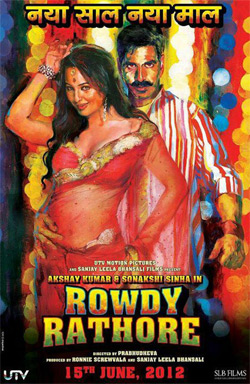
  • Reviewing the Reviews: Rowdy Rathore

    By Deepa Gahlot


    Producer: Ronnie Screwvala, Sanjay Leela Bhansali

    Director: Prabhudheva

    Music: Sajid-Wajid

    Cast: Akshay Kumar, Sonakshi Sinha, others


    These days, most critics have nothing against mainstream cinema. But Rowdy Rathore is the kind of film that has the mildest of then gnashing their teeth in frustration, because the success of such a bad and old-fashioned film is inevitable.


    The masses want mindless entertainment even today, they don’t care how loud, crass or silly the film is; does it give them their money’s worth?  For the non-massy types, such films are a kind of guilty pleasure.  What shocked most is that Sanjay Leela Bhansali is partly responsible for unleashing this on the public.


    Except for Taran Adarsh’s 4 and The Times of India’s now-standard 3 stars, everybody else tossed between 1 and 2. Writes Adarsh, with an eye firmly on the ticket windows of single screen cinemas. “On the whole, Rowdy Rathore, is designed to magnetize the masses in hordes. The accurate blend of action, emotions, drama and humor, besides a superlative performance by Akshay Kumar, makes this motion picture an immensely pleasurable and delightful movie watching experience. If you savour typical masaledaar fares, this one should be on your have-to-watch listing for certain. Dhamaal entertainer!”


    Srijana Mitra Das of the TOI gushes, “Indeed, Rowdy Rathore pays homage to iconic filmi characters – identical heroes, golden-hearted chors, brave Men in Brown beating evil people to pulp. However, it pays most homage to its own star, Akshay Kumar, who pulls off Shiva with style but Vikram less so, possibly because all that violence overwhelms acting itself. Not that the crowd seemed to mind. As Shiva exhorts a woman raped by Baapji’s son to beat him up, the girl next to me cried, “Why doesn’t she?” Her neighbour replied, “She will.” And she did – much to the crowd’s Rowdy delight.”


    Saibal Chatterjee of NDTV gave it 2 stars and commented, “Rowdy Rathore is a shrill action flick designed to help Akshay Kumar return to his hit-making ways. Accept that obvious intent and you might actually end up enjoying certain parts of the film against your own better counsel. Isn’t that the effect that many a Bollywood potboiler of the 1980s would have on us? Yes, Rowdy Rathore employs narrative elements that hark back to a bygone era of Bollywood potboilers: two men who look like each other without any apparent reason, a bunch of baddies that snarl and snap at the slightest provocation and indulge in rape and pillage with abandon, and the good old back-from-the-dead revenge seeker who goes back dispensing rough-and-ready justice.”


    Two stars from Raja Sen of rediff.com.”Inured to the kind of exploding-beedi violence promised by the trailer, the film instead starts stupid and stays silly. This is much more like an early Khiladi movie — where Kumar recklessly got away with anything, goofily stumbled towards the climax and then proceeded to kick bottom without mercy — than any of the recent films which have completely forsaken plot. As a result, it’s far less objectionable. Still moronically stupid and entirely pointless, but nowhere near as horrid as what the genre’s been reduced to in the last couple of years.”


    Shubhra Gupta goes with 2 stars as well, “We don’t have to be told that this is a remake of a Telugu film. It could have been in mainstream Tamil or Kannada. Because whether it is Priydarshan or Prabhudeva (who has directed this one), the film is bound to have South Indian actors trying to pass off as North Indian. Fictional towns which look as if they’ve been created on a set. Blinding colours. Songs at the drop of a hat. Dialogues which don’t go beyond a line. Or two. And a leading lady whose job description is, apart from possessing a swaying ‘kamariya’.. um, let me think about it.”


    Now come the one star rants. Anupama Chopra writes, “Don’t Angry Me! Akshay Kumar bellows this often in Rowdy Rathore. At one point, the command even plays out as background music. I think viewers need to co-opt the line. To all the directors, producers, actors who are inflicting eighties-style, low-IQ, deafeningly loud, unapologetically crass, mind-numbing movies on us, I just want to say: Don’t angry me! Don’t exhaust me! Don’t bludgeon me!”


    Rajeev Masand comments, “Rowdy Rathore is the kind of movie that’s made by people with a cash register in place of their brain. Because no legitimate reason, other than financial gain, can justify why this movie was made – it has no story or plot whatsoever, the characters are entirely forgettable, and it’s so long and loud and silly that the laughs dry up early on. That the film has such impressive pedigree – it’s produced by Sanjay Leela Bhansali, directed by Prabhudeva, and stars Akshay Kumar – is both baffling and shameful.”


  • We’re a one-stop shop for broadcasters: Santosh Nair, UTV

    UTV Television, known to be a pioneer in the TV content business in India, was started by Ronnie Screwvala in the early nineties. Though the group has expanded its wings to being a broadcast major, its television business, which has now, in a way, been overshadowed by the international companies’ foray into India, is slowly but surely taking bigger strides in becoming a significant player in the business.


    as put by Chief Operating Officer Santosh Nair, the content house’s biggest USP is the fact that it offers fiction and non-fiction shows, plus the company’s wide experience in the regional space. In a freewheeling interview with MxM India’s Rishi Vora, Nair speaks about the content business in India, UTV’s role in that, company’s plans and much more. Excerpts:


    Q: So how was 2011 for UTV Television?

    The year 2011 was very good for us. Saubhagyavati Bhava, which was launched at the end of the year, is doing well. Dor, which aired on Star Plus, was launched early in 2011 too performed fairly well. The non-fiction shows, especially on UTV Bindass, such as Big Switch and Emotional atyachar too have delivered.


    Q: Is it tough competing with the likes of Endemol, Freemantle, Balaji and a host of other content houses?

    all businesses are tough in that sense. My sense is that there is space for everybody. Yes, there are international format companies, but we’ve been successful in doing home-grown formats. The first season of Dance India Dance was done by us. and that’s the first and the best example of a successful home-grown format. Ek Khiladi Ek Hasina -India’s first cricket format show too is a great example of a great home-grown format. and not to forget Emotional atyachar – that too is a home-grown reality show.


    Q: But not all home-grown formats have been successful.

    Most of them have done fairly well. Dance India Dance is doing well season after season. The show is now in its fourth season. These are tried and tested formulas. and that’s one reason I feel there is space for everyone in the industry.


    Q: While there are home-grown formats done by Zee and various other channels, international formats like KBC, KKK, Bigg Boss and others are more popular. Why is that so?

    International formats are formats which have worked internationally – they have worked well in many countries and hence are successful formats. There is a big market for international formats in India and that’s one of the main reasons why international production houses like Endemol, Freemantle and others have entered India.

    Look at KBC for example. That’s a show that has seen a lot of success. Some have worked, some have not. But broadcasters will always look to do international formats more as these are the shows that have seen some success in overseas markets.


    Q: are you also doing an international format show?

    Yes, there is one in the pipeline.


    Q: For a content house like yours, are non-fiction shows profitable?

    Non-fiction shows are seasonal and each season lasts for about 13 to 26 weeks. So often they turn out to be more profitable because fiction shows usually takes about 200-250 episodes to break even. It takes that much time to understand how your fiction is doing on the ratings front, whether it is a good call to continue or not.


    Q: UTV Bindass is a sister company, so if I may ask: How do reality shows like Emotional atyachar and Big Switch benefit you and the channel from a cost perspective?

    These shows target the youth. So from a cost perspective, it is working out well for the channel and for us, too. That’s the reason why we’re doing them every year. So I’m pretty certain that the channel makes a fair amount of profit on these shows.

    To be very clear about how we deal with Bindass: We treat the channel as any other broadcaster, the way we work with Star or Sony or Imagine, it’s the same way we work with Bindass. We pitch to them – and if in case they don’t like it – we take the project to someone else.


    Q: So Bindass also works with an Endemol for example?

    Yes, Bindass works with Endemol.


    Q: Which means UTV Television is not much inclined with Bindass.

    No-no, it’s not that way. What I’m saying is we are one of the content houses for Bindass.


    Q: There is a buzz that some of the non-scripted shows are not really non-scripted in the true sense.

    No-no. The kind of shows we have done, we have never done any doctoring, purely in terms of making a non-scripted show a scripted one. I can’t comment about other shows, but my fair sense is that nothing is scripted in non-scripted shows, apart from anchor lines.


    Q: What is it that makes UTV Television stand out in the clutter?

    Look at any content house right now in the Hindi space vis-a-vis UTV, which is the only content house that delivers both scripted and non-scripted content. That for us is our USP. We are doing some work in the southern market. We are doing shows languages such as Tamil, Kannada, Malayalam or Telugu. apart from being present in the Southern market, we’re also doing shows in Marathi. We recently did two fiction shows in Marathi, so the kind of programming we do – we are into six or seven languages.


    Q: So where do you focus more: fiction or non-fiction?

    We’re strong on both – fiction and non-fiction so we focus on both the formats. We’re a one-stop-shop for any broadcaster to look at fiction as well as non-fiction.


    Q: a lot of content is being produced in regional languages, so is it a beginning of a trend in the content space?

    apart from UTV, I don’t think many players have made a foray into the regional space. The reason why I’m saying this is because we have a decade old relationship with the network and we have been doing quite a bit of work down south. apart from the local players, I don’t see many of the Hindi players getting into the regional space.


    Q: What is your view on the issue of IPR, where the broadcaster owns it when it is the content house that is producing the show…?

    The broadcaster owns the IPR because he commissions the content house to produce the show. There is a budget which is rolled out, the content house keeps its margins and that price is fixed. That’s the model which is operational in the industry now minus Sun Network. With Sun Network, we spend the money on producing a show, we pay them slot fees and the IPR lies with us. So that’s a slot model.


    We are doing Shubh Vivaah on Sony, a remake of a Tamil show; Saubhagyavati Bhava too is a remake of a Telugu show…


    Q: So for all these shows, the IPRs lie with you?

    Yes. In fact, there are two other shows in the pipeline which are remakes of south shows (we are currently in talks with broadcasters) and we own the IPRs.


    Q: What is your view on broadcasters’ interference in terms of storylines or tweaks?

    It’s team work. Broadcasters respect our expertise in terms of creative formats that we bring to the table. While we respect them in terms of their understanding about the business, so it’s a mutual thing.


    Q: What are we going to see from UTV television this year?

    We’re doing Shubh Vivaah on Sony, an international format show with one of the GECs. Two more fiction shows are lined up with top broadcasters and we will be launching a few fiction shows in the south. So a lot happening this year.


  • Ronnie Screwvala to be Disney India MD as Disney, UTV ops to integrate

    By A Correspondent


    The Walt Disney Company (NYSE: DIS) announced on Wednesday that it will acquire, through a subsidiary, a controlling interest in UTV, one of India’s premier media and entertainment companies. The acquisition will be completed through a successful delisting offer and will enable Disney to integrate UTV’s current operations. In addition, UTV CEO Ronnie Screwvala has been named Managing Director, The Walt Disney Company India. Mr Screwvala will be reporting to Andy Bird, Chairman, Walt Disney International.


    “Increasing our brand presence and reach in key international markets is a cornerstone of our growth strategy. This acquisition expands our footprint significantly and allows us to more effectively build, monetize and brand multi-platform franchises, and deliver a rich library of content to the world’s second largest population,” said Mr. Bird. “We couldn’t be more pleased that Ronnie, with his vast experience and proven track record, will now run our operations in India. Under his leadership, we will be able to deliver more programming on more platforms to this considerable audience.”


    As a result of this acquisition and building on UTV’s success in the market, Disney will be India’s leading film studio and will produce both UTV and Disney-branded local films.


    UTV is the leading TV producer in India with distribution in 20 countries in seven languages and across 27 channels. Its six owned channels have emerged as the fastest growing cable and satellite network in India. In three years UTV has also become a leading broadcast network in the country. After the transaction, Disney will be one of the leading broadcasters reaching more than 100 million viewers weekly in households across India. Disney will also gain a significant presence in digital media with the addition of UTV’s Indiagames, the country’s number one mobile gaming company, to its portfolio.


    “In combining the creative capabilities of each company we will integrate a large stable of vibrant brands and franchises in the branded entertainment space,” said Mr. Screwvala. “With the middle class expected to grow from 50 million to more than 500 million people by 2025, this market offers huge potential for us to deliver quality branded entertainment to consumers,” he said.


    Disney currently owns India’s leading kids’ television networks – Disney Channel, Disney XD and Hungama and is the largest retail character licensor in the country.


    UTV is a leading media and entertainment company in India reaching more than 247 million consumers with a presence in motion pictures, television and interactive media.