It’s the time when Board meetings are held as was the case with the Advertising Standards Council of India (ASCI) held on Wednesday where  D Shivakumar, Group Executive President, Corporate Strategy at Aditya Birla Group was unanimously elected as the Chairman of the Board of ASCI. As the member of the Board of Governors for three years, supporting self-regulation, Shivakumar is an accomplished business leader having spent over 19 years in sales, marketing and general management positions across consumer products and the luxury industry.
Rohit Gupta, President – Network Sales & International Business, Sony Pictures Networks India Pvt Ltd, was elected Vice-Chairman and Shashidhar Sinha, CEO, IPG Mediabrands, was re-appointed Honorary Treasurer.
Members of the Board of Governors include; Harish Bhat (Director, Tata Global Beverages Ltd.), Subhash Kamath (Managing Partner, BBH Communications India Pvt Ltd), Sandeep Kohli (Executive Director & Vice President for Personal Care Hindustan Unilever Ltd), Prof SK Palekar (Adjunct Professor & Advisor – Executive Education Institute of Management Technology), NS Rajan (Managing Director, Ketchum Sampark Pvt Ltd), KV Sridhar (Founder & Chief Creative Ofï¬cer (Director), Hyper Collective Creative Technologies Pvt Ltd), Abanti Sankaranarayanan (Former Vice Chairperson, CIABC), Girish Agarwal (Director, Dainik Bhaskar Group), Madhusudan Gopalan (CEO, Procter & Gamble Hygiene and Health Care Ltd.), Prasun Basu (President – South Asia – Nielsen (India) Pvt. Ltd.), Sivakumar Sundaram (President- Revenue Bennett, Coleman & Co. Ltd), Vikas Agnihotri (Director Sales, Google India Pvt. Ltd.), Umesh Shrikhande (CEO, Taproot India Comm. P. Ltd.).
Said Sankaranarayanan, the outgoing Chairman, ASCI: “2017-18 has been another strong year for ASCI as we have made significant advancements towards building our organisational muscle, external credibility and strong collaborations. Our stringent guidelines, seamless processes and the dedication and hardwork of our Consumer Complaints Council have contributed to restricting the use of misleading advertisements and enhance self regulation. ASCI’s momentous achievements for the year include successful completion of three year-long collaboration with Department of Consumer Affairs, renewal of Memorandum of Understanding (MoU) with Food Safety Standards Authority of India, introduction of ‘Guidelines for Celebrities in Advertising’ and inclusion in Ayush’s Empowered Committee to control misleading ads of AYUSH drugs. As the Chairman for ASCI for the year 2017-18, I am extremely proud to be a part of this journey and I am confident that under Shivakumar’s Chairmanship. ASCI will continue to grow swiftly and steadily.â€
Added Shivakumar: “I want to thank Abanti for her stewardship. We live in changing times with respect to information, media and trust of society. ASCI has been built on the foundation of self-regulation and the wisdom of the previous chairmen and the board. It’s my privilege to do the role now.â€
Zee Entertainment Enterprises Limited (ZEEL) announced the appointment of Rohit Gupta as the Chief Financial Officer. Gupta will report to Punit Goenka, MD & CEO, ZEEL.
Prior to joining ZEEL, Gupta was associated with the Chaudhary Group where he was responsible for the roll-out of 5G ready Telecom network in Nepal. Previously, he has also worked with leading corporations like the DCM Shriram group, Hero Group, Hutchinson Max, British Telecom, Bharti Airtel, Virgin Mobile, NIIT and Brightstar India.
Rohit Gupta, President, Sony Pictures Network and Sapangeet Rajwant, Senior Vice President, Viacom18 Media are on the jury of the inaugural Venice TV Awards. The award, notes a communique, been launched “as a tribute to television at a time when broadcasting is being challenged by multimedia. It will bring national and international recognition for quality contentâ€.
The first award is supported by egta, ACT (Association of Commercial TV). Categories are Documentary, News, Light Entertainment, Program Promotion, Branded Entertainment, Sport, Children/Youth, Comedy, Performing Arts, Reality TV, Best Of Technical High Quality, Cross-Platform Programming, Best Series, Best TV Movie. A Grand Prix will be given for the best production.
Sony Pictures Networks (SPN) has announced a re-alignment of key management portfolios. In the re-aligned organizational structure SPN’s International business gets consolidated within the network’s sales and syndication business, and also its sports business gets more closely aligned to the distribution business.
Consequently, Rohit Gupta’s role gets expanded to President, Network Sales & International Business, Sony Pictures Networks while Neeraj Arora, Business Head for SPN’s International business will now report to Rohit Gupta. Other elevations include, Rajesh Kaul whose role has been expanded to President, Distribution and Sports, Sony Pictures Networks and Prasana Krishnan, Business Head for SPN Sports business will now report into Rajesh Kaul.
NP Singh, CEO, Sony Pictures Networks commented: “This realignment is configured to further our global business ambitions. It allows us to maximize complimentary synergies existing within the network and augment SPN’s consideration as a partner-of-choice by brands and businesses, alike.â€
Rohit Gupta and Rajesh Kaul have been with SPN for 14 years and 8 years respectively.
The controversies that have bedevilled the Indian Premier League don’t seem to have dented its value as an advertising property.
Advertisers will likely spend a record Rs 1,200 crore during season nine of the T20 league that will be held in April and May, top media buyers said. That’s up a fifth from last year.
Exclusive broadcast rights holder Sony Pictures Network, which will air the tournament on the Set Max, Sony Six and Sony ESPN channels, has increased the number of presenting sponsors to three from two for the first time. They are telecom services provider Vodafone, ecommerce platform Amazon and first-time advertiser Oppo.
Chinese smartphone maker Oppo recently named actors Hrithik Roshan and Sonam Kapoor as brand ambassadors and is looking for big play during the league. With rival PepsiCo exiting, Coca-Cola is among the new names in the associate sponsorship list along with discount wallet FreeCharge, owned by ecommerce company Snapdeal.
Close to 70% of the ad inventory has been sold with two months to go before the tournament for the first time in IPL history, said Sony Pictures Network president Rohit Gupta.
“IPL is a risk-free investment for advertisers, as both ratings and reach have been consistently growing year on year,†he said. “We are expecting 20% growth in overall revenues. The unprecedented levels of interest are despite the T20 World Cup and a host of other cricket.â€
Advertiser interest in upcoming tournaments such as the World Cup and the Asia Cup hinges largely on India’s performance. “The controversies seem to have settled down, which is bringing in advertisers,†Gupta said.
“The high-definition feed is also working out as an additional revenue stream for us. The IPL ad sales have come on the back of a 20%-plus viewership increase the tournament saw last year.†Besides Coca-Cola and FreeCharge, other associate sponsors include Ceat Tyres, Vimal Pan msMala and Tata Sky.
Sony Pictures Network got Rs 1,000 crore from ad sales last year. According to two media buyers, sponsorship slots have risen to Rs 5.25 lakh from Rs 4.75 lakh last year. Spot rates are up to Rs 1.5 lakh for 10-second slots from Rs 1lakh in season eight. “This year is the year of sports,†said Nandini Dias, chief executive at media agency Lodestar UM.
“With so much sports, including Olympics, one would think that this time budgets would be reallocated from IPL. But currently, the IPL has already closed eight sponsors. So, obviously the demand is high.â€
Spot buyers include Panasonic, LG, Microsoft and mobile phone makers Micromax and Intex. “Despite all the controversies around the IPL, I don’t think that from a consumer standpoint there is a problem of demand, so advertisers will be there,†said Vinit Karnik, business head at ESP Properties, a sports and entertainment consultancy of media management giant Group M.
IPL suffered a setback in image and brand valuation with spot fixing and betting scandals that led to a Supreme Court-appointed panel banning two popular teams—Rajasthan Royals and Chennai Super Kings. Both teams were previous champions and CSK was led by India captain MS Dhoni. The IPL has added two new teams in their place—Pune and Rajkot, with Dhoni being acquired by the first.
In October last year, PepsiCo ended its IPL title sponsorship two years ahead of its five-year term because of “concerns about ethics in the IPL tournament.†Chinese mobile phone maker Vivo has taken the title sponsorship for two years. FreeCharge plans to launch new forms of payment during IPL, COO Govind Rajan said.
“The youth in the country are passionate about cricket and more so IPL and we see tremendous synergies for FreeCharge and IPL in this association,†he said. “The IPL is an opportunity to drive massive awareness.â€
Sky Li, president of Oppo India, said: “IPL is one of the most popular games for Indians. Oppo has also become the global official partner of ICC (International Cricket Council), which shows we are devoted to a lot of cricket.â€
The final match of the Indian Premier League’s (IPL) eighth edition between Mumbai Indians (MI) and Chennai Super Kings (CSK) got an average rating of 6.4, according to data from Broadcast Audience Research Council (BARC), which tracks and monitors television viewership.
About 49.4 million individuals across 20.7 million households spent an hour and 48 minutes on an average watching the IPL final, BARC ratings show. The data also shows that the final game delivered a rating of 12.8 for CS4+, All India Households. The average rating for the last 47 games of IPL 8 was 6.
According to TAM Media Research, which also provides television viewership ratings, the final match of the T20 league garnered a rating of 7.4, which was much higher than any other match in the current season.
Time spent by viewers per match during IPL 8 was 46 minutes and 17 seconds, which was 9% higher compared to IPL 7.
Overall, IPL season 8 was sampled by 192 million unique viewers, according to TAM.
While BARC and TAM both provided data on television ratings, BARC is the new industry currency that most broadcasters, advertisers and agencies currently use.
“The rating of the final is in keeping with what has been happening with IPL and is at similar levels to last year. The format has retained its popularity and ended on a positive note,” said Rohit Gupta, president of Multi Screen Media (MSM), the official broadcaster of the T20 cricket league.
TAM data shows that the average rating through the 60 matches played in IPL 8 was 3.8, which is 20% more than IPL 7.
The cumulative reach of the IPL has risen from about 100 million in its first edition in 2008 to 160 million in IPL 4 to 191.4 million last year in its seventh edition. Last year, rating for the tournament grew 7% from 3.2 in 2013 to 3.6 despite a part of the tournament being played in the UAE and stiff competition from the Lok Sabha elections in the country
While the league was plagued by controversy over the last few years, this year it was relatively controversy-free. MSM was able to sell most advertising inventory before the start and expects to make close to Rs 1,000 crore from IPL 8. It has signed up 12 sponsors that include e-commerce firms Amazon, Paytm, Magicbricks and Car Dekho and traditional advertisers such as Vodafone, Hero MotoCorp, Intex Mobiles, Pepsi, Vimal Pan Masala.
Everything worked out just perfectly in IPL8: Vaishali Sharma
Vaishali Shama, Head of Marketing at Sony Max, has reason to be elated with the success of IPL 8. But along with the cricketing action, a lot of credit would go to the preparatory marketing aggression before the tournament and even as it was on. Excerpts from an interview
The 2015 edition was fantastic for you in terms of popularity and ratings, in specific. This is despite the fact that it was on the back of a World Cup where India did well until a late stage What would you attribute this success to?
From a couple of perspectives really. One is that in last one or two years, it’s all become very exciting and unpredictable. The quality of the games has been fantastic, new players have emerged, and the whole dynamics of the game have become very interesting from a product perspective. So that definitely is a really strong point. Secondly. I think there are a lot of new audiences also who have walked into the existing base of audiences and therefore added fresh energy in terms of people watching and talking about it. So we’ve seen a growth in the last few years. From a marketing perspective, in the last two to three years. we’ve tried to go down to newer, smaller markets to create an excitement around the property, and I think the returns of the consumer engagement activities are now beginning to show.
Smaller markets like?
Last year, we did a really big LC1 activation. In five states we went to over 400 districts. And then of course the one to one million-million-plus centres. So from a marketing perspective you’re going out, it meant creating that excitement, and finally I would say that one of the biggest things is that this year we also hit the right note in terms of a campaign. We very consciously said we have to strengthen emotional affinity while not losing the ethos and losing the strength of what the IPL has always been known for, which is entertaining cricket. And how do we simultaneously keep things at the same platform, really reach out and touch people’s hearts. I think we’ve been really successful in coming up with a campaign idea of ‘India ka Tyohaar, which our agency has crafted very beautifully for us, which really says that this is the biggest festival, and this is the biggest event that any sport in this country would have and also give you the length and breadth of the largeness of the event from an idea perspective. The fact is families come together to watch the IPL, the fact is it’s a conversation starter, the fact is that you can bridge distances through it you know. And then adding another layer in the final campaign of ‘Isme Hai Dilon ka Pyaar’, so bringing people together really. Everything worked out just perfectly, and given that we had one of the largest cricket events which was the World Cup. However I think that we’ve really held our ground, because the IPL from a product perspective has something very different to offer, which is two to two-and-a-half-hour’s excitement… nailbiting excitement
And this is despite the fact that unlike football in Europe where people are nuts about their teams…
See I wouldn’t compare it to EPL etc, because those are very well-established for many years, but in the last few years we do hear conversations about alignment to teams. So, for example, the home team matches always score more than other team matches. And also while people do watch the IPL for the excitement of the game per se no matter who is playing, at another level, from a consumer or an audience-viewing pattern, you do tend to take some team’s side. There’s always that sentiment that I want this team to win, or I support this team. I’m sure it’s only going to grow further as people get more and more into it and the way that teams build themselves in the future.
We’ve not seen weekend shows like Comedy Nights with Kapil go down in viewership thanks to IPL. Ditto with many fiction shows, as we noticed some years back. Given the rising popularity of the IPL, would you say we’ve seen the emergence of a new viewership base?
Possibly, a hundred percent.  While new viewership you examine through reach, we have a very strong time spent also this year, so I would say that it also shows that the current base is spending a lot of time on it. I’m sure there is enough space for everyone to ensure that they watch what they want to, but I would also see it from two parameters of measurement. One is to see if new audiences are coming in or not, and the second is to see if the time spent is significant, so you know that your consumers are also watching it significantly.
Given that you also the transmission on high definition feed on Sony Six, did you see divided viewership in urban and premium home segments?
That’s led to expansion. Absolutely expansion. Plus more and more audiences coming in from our language regions. That’s been actually a very critical aspect of expanding our audience base as well.
And how have the languages done for you?
We’ve done fairly well. We’ve seen a significant growth even for Six and Kix too has performed very well. Overall I would say that it’s been a great strategy. We also promoted these channels in local markets very aggressively.  With Max, obviously the Hindi base in really huge, and in places where you expect a viewer to see regional languages, you have a strong significant base that watches English as well, and in the case of Kolkat, it’s English, Hindi and Bengali; all three languages, and of course in the South you have a lot of people who watch English, plus language versions.
What are the learnings from this year?
It’s too early actually. Unfortunately this year we do not have a comparative base, since it’s a fresh new BARC base. So the learnings will be highly qualitative if at all. We’re just waiting for the complete data to come in now, to really look on a week-on-week and then to take learnings on-board.
From the Max point of view, how is it post IPL, after the 60 days of hyperactivity? You do always have announcements of film festivals, et al?
No we continue hyperactivity every month. We never rest. We always have something to do in terms of consumer engagement, movies, so from a marketing perspective, there’s a lot of work that we do to even engage with our audiences in the realm of movies as well. There’s a lot of brand connect work we do. There’s a lot of engagement we do, there’s a lot of pushing our premieres. In these months our hands are full with movie promotions and Max Deewana Bana De and we also have a second channel which is Max2, which has worked brilliantly in the last one year.
Multi Screen Media, the official broadcaster of the Indian Premier League, has managed to sign up nine sponsors for season eight even as the ongoing Cricket World Cup is giving it stiff competition. The league has signed up Amazon and Vodafone as presenting sponsors this season and advertisers including Hero MotoCorp, Intex Mobiles, Cardekho.com, Pepsi, Vimal Pan Masala and Paytm as associate sponsors, according to Rohit Gupta, president of Multi Screen Media.
Rohit Gupta
“We had eight sponsors last year but this year we might have to increase our sponsorship slots to 12,†said Gupta. Although Gupta declined to comment on the revenues that Multi Screen Media expects to get from IPL 8, industry executives indicated that the broadcaster could make up to Rs 950 crore from advertising this year, coming close to its revenue figure in 2013, when the league had 76 games.
With 60 games, IPL made about Rs 800 crore last year. IPL has been riddled with controversies over the past few years, especially the spotfixing and betting scandal that rocked it in 2013. However, Gupta said such controversies do not impact viewership.
“For consumers, it is the best cricket being played and till the cricket is good, viewership won’t drop,†he said.
In 2014, despite the controversies, a watershed election and the first half of IPL being moved to the United Arab Emirates, the tournament saw its viewership grow 7% from that in the previous year, to 192 million from about 175 million.
Ratings for IPL, according to Gupta, have been stable for the past three to four years.
With the IPL coming close on the heels of World Cup, advertisers were cautious initially, Gupta said. “But we were able to convince them because we had ratings to back us.â€
Vinit Karnik, national director, sports and live events at GroupM ESP said it was never an either-or situation between the World Cup and IPL for advertisers.
“India has an appetite for both, which is what was proven in 2011 as well,†he said, pointing out that IPL is a seasonal league and people have planned marketing campaigns around it. “It is part of the calendar for marketers now,†he added.
Controversies have, however, impacted the brand value of the league.
According to brand valuation consultancy Brand Finance, IPL’s brand value peaked in 2010 at $4.13 billion but dropped to $2.92 billion in 2012. It picked up again in 2013 to rise to $3.03 billion.
Another brand valuation firm American Appraisal India pegged the value of the IPL at $3.2 billion before the start of the 2014 edition of the tournament.
With barely a week to go before the soccer world cup FIFA 2014, Sony Six, the official broadcaster of the tournament in India, has managed to sell half its on-air advertising inventory, MSM president Rohit Gupta has said.
“We will be closing in most of the deals for the remaining inventory next week”, he said. The tournament will also be aired on Sony Six HD in English and Sony Aath, the Bengali channel of the network. According to TAM data shared by Sony Six, in 2010, 62.7 million Indians tuned in for the FIFA World Cup.
“This year we are expecting the viewership to cross 100 million and it will be at least 50% of the IPL (Indian Premier League),” said Mr Gupta. IPL 2014 received viewership of over 185 million and the 2012 World Cup T20 raked in a viewership of nearly 120 million in India.
“To that extent, football viewership in India is growing at a steady pace of 20-30%,” he added. The data also shows that in 2013 alone 155 million Indians watched football matches on various channels, which is only second to the top game — cricket, which is watched by 209 million Indians.
While the channel has mnaged to ink deals with some of the top advertisers including Hero Motocorp, Xolo Mobile, Microsoft, Havells, Sony India, Samsung, UB Group, Micromax and Diageo, some advertisers have shown concern over the odd match timings. While the sponsors have paid anywhere around Rs 15-20 crore, a 10-second slot on the channel is selling at Rs 2-2.50 lakh, which is almost half of what it had charged during the recentlyconcluded IPL.
“It is not a problem at all because 60% of the matches start before midnight”, said Mr Gupta. Concurs Basabdatta Chowdhury, CEO, Platinum Media, a subsidiary of the Madison World. She said, “A good number of matches will be played at 9.30 pm and World Cup timings have always been in the night. Moreover, South East Asia is a huge football market and therefore some of the match timings have been adjusted to suit the viewers. So timing is not a concern at all.”
However, some media planners have raised concern over the distribution of Sony Six and how many market it reaches in comparison to other established players like ESPN Star Sports and Ten Sports. “The distribution of Sony Six is 50-60% of that of other top sports channels in the country. So advertisers are pretty apprehensive about the reach of the platform and that why the channel is left with so much unsold inventory. Unavailability of Sony Six could be a dampener to its advertising revenues,” said a senior media planner who didn’t wished to be named.
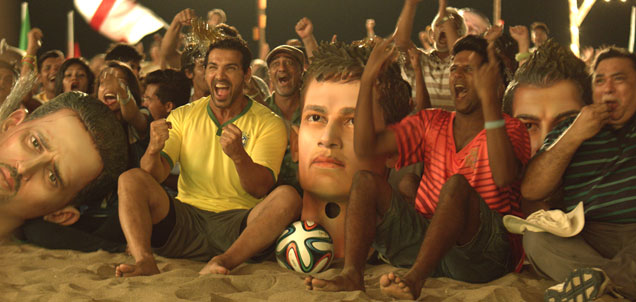
But Mr Gupta says distribution of the channel is not a concern at all. “The biggest testimony of that is the IPL figures. If we didn’t have the reach then how is IPL viewership growing?” he asked. The channel has also planned a two-hour wrap around show on Sony Six which will be aired for 32 days and the channel has signed in actor John Abraham to spearhead the show.
A clutch of e-commerce companies are investing heavily in the current edition of the Indian Premier League (IPL), the country’s most glamorous cricketing extravaganza, for buying onair advertising space.
Companies, including Amazon India, Flipkart and Go Daddy, have invested heavily in IPL7, confirmed Rohit Gupta, president of Multi Screen Media, the official broadcaster of the tournament. Multi Screen Media will have nine presenting and associate sponsors for this season of IPL.
“This is at par with previous seasons of IPL where we had eight to 10 sponsors,” Gupta said. The presenting sponsors include Vodafone and Karbonn Mobile and the associate sponsors are Amazon India, Havells, Perfetti, Marico and TVS.
According to Gupta, while the presenting sponsors have paid anywhere between Rs 50 crore andRs 60 crore, and will get airtime of over 200 seconds per match, the associate sponsors have paid Rs 25-35 crore and will get over 100 seconds of advertising time per match.
“We will be signing two more associate sponsors next week,” he added. The channel has already sold 60-70% of its on-air inventory at Rs 4.75-5 lakh for a 10-second spot.
Amazon India, which launched its operation in India 10 months ago, will be launching its first Indian television commercial during IPL 7. The company’s print and online campaigns have been created by Taproot and the media mandate is being handled by IPG Group company Initiative Media.
“Amazon.in is working across platforms for the IPL season. In line with our vision to be the most customer-centric company, we have spent the last 10 months building on our favoured, trusted and reliable global brand,” Amazon India’s spokesperson said, but declined to divulge the details of the TV commercial. “As our target customers around the country will be watching IPL, we hope to entice and delight them with our trusted online shopping experience.”
Sharing the advertisement space with the e-commerce firms is first-time entrant and two-wheeler maker TVS.
According to Gupta, the Supreme Court verdict helped iron out the initial hiccups in signing the deals. “There was a lot of skepticism and apprehension in the beginning whether the tournament will happen or not and therefore we faced a lot of challenges in closing the deals with advertisers. But once the Supreme Court verdict came in favour of the tournament within 7-10 days, we closed most of the deals,” he said.
A senior media planner attributed the surge in advertiser interest to the IPL brand. “Good or bad, there is no other property on television which can give the kind of mileage that IPL can deliver. And the tournament has built so many brands over the last six years, especially mobile handset brands like Micromax, which has now become aglobal player,” the media planner, who did not wish to be named, said. Multi Screen Media is expecting a spike in viewership to over 200 million, according to Gupta.
“Firstly, the number of matches has come down to 60. Secondly, this year, there are fewer afternoon matches, which tend to get low viewership. Finally, because of the player auction, there are no clear favourites. Anyone can win the tournament. We believe all these factors will culminate into high viewership this year.”
Continuing with the feature we carried on July 2 (Link: http://www.mxmindia.com/2012/07/the-half-year-that-was/), we bring in more views from the industry on the six months gone by. This half-yearly report card is again a mixed bag – while some have had an excellent run, others had few hitches on the way. Here’s bringing views from some leading players of the industry.
Broadcasting:
Rohit Gupta
Rohit Gupta, President, Sony Entertainment Television
So far, it’s been an excellent year for Sony network. And I’m sure it’s been same for the industry, at large. The industry is still growing and there have been no cuts in spends. People are still putting their money in the medium. I’m sure there is no gloom surrounding this industry. Even the 2008 slowdown didn’t affect us. So, there is nothing to worry about too.
Sunil Lulla
Sunil Lulla, MD and CEO, Times Television Network
I would say, it has been testing six months for the broadcast industry. The biggest set-back has been the extension of the digitization implementation. The IBF ran a very good campaign for it but since MSOs couldn’t fulfill the requirements, unfortunately it has to be postponed. My advice to the ministry now would be to take strict actions and make sure the new deadline is met. It is important for the industry since it will shape the industry and help us understand it better too.
By and large, important events in the broadcast industry like IPL, Indian Idol did well and a new show like Satyamev Jayate was launched. However, there is still a gap between how a show performs and what the viewers really want. Hence, I think TAM needs to be more clear and needs to increase its sample size too.
But what really shocked the industry was the new adult timings and ‘A’ restrictions on television. What happened with Dirty Picture’s telecast was regrettable. Nevertheless, after the self regulation imposed by various channels – news and GECs – the quality of content has improved.
As from the business point of view, from January till April, it was good; but May onwards the marketers have had a watchful attitude. It might not impact the industry at large, but a certain sections might get affected. Also, given the current economic climate, one will have to keep a very watchful eye for the near future.
The last six months have been eventful for the broadcast industry. First it was the whole discussion regarding digitization – from notifications to it finally getting delayed. Hopefully, the new deadline will be met as it is positive for the broadcast industry. Also, the new advertising guidelines set by TRAI will make sure that the market doesn’t get diluted.  Such moves will only benefit the industry and help it grow.
However, there has been a slowdown in ad sales and revenue generation. Everyone knows what happened during an event like IPL. It is a slow phase right now, but the costs of purchasing rights are still high. So, it won’t be wrong to say that testing times are ahead.
K Sriram
K Sriram, GM, Vijay TV
The last 6 months in the Tamil GEC space has seen a dramatic change in programming. KBC travelled into Tamil Nadu and with actor Suriya donning the role of anchor. The barrier between the big screen and television was truly breached for the first time. KBC Tamil ensured that prime time television in TN was redefined, as it not only cut across audiences, but also surged ahead of the power cuts and the IPL fever and eroded into SUN TV’s prime time shares. Vijay TV saw a growth of 41 per cent in the year in a market which was otherwise declining. Content came to the fore.
Tamil television also saw the movie acquisition game being taken to another level with Nanban, the hit Tamil adaptation of 3 idiots, being screened within 100 Days on Vijay TV. Another path breaker given that A+ titles before were insulated for a year. Loud and clear in the Tamil GE space – the game just got bigger and in the last 6 months there was only one player playing the game. Competition is sure playing catch up.
Marketers:
Harkirat Singh
Harkirat Singh, MD, Woodland
The overall market in the branded retail segment has been seeing growth. The biggest change that one sees in this segment is that now the growth comes from smaller towns. In the earlier phase, the growth came from metros; and if one ventured into smaller towns in branded retail say a decade back, most likely, things would not fall in place. Now the risk factor in venturing into the smaller towns is much less and there are many players in branded retail who are turning towards these cities knowing that growth opportunity lies there.
For Woodland, last six months have seen steady growth and we intend to open 60 stores this year, though the rider is to expand but be selective. The market, I would say, has been slow. But that is the trend I would say during a particular time of the year where each year business is slow and picks up only later. As for retail, I think the market is vibrant and the sector has been seeing activity and is slated to see increased activity with FDI in retail being relaxed.
Vikas Jain
Vikas Jain, Executive Director and Co-Founder, Micromax
For the mobile phone industry there has been no concern about consumption, as the demand for new sets continues to be on rise. The change being that now the customers are well-educated on the mobile sets they want to buy and with change in technology there have been change in the preference on the type of mobile sets. The key, therefore, is to recognize and anticipate the product in demand and meet the needs of consumers. The players need to create a roadmap of the products to be launched rather than get carried away by technological changes. Keep an eye on the changing trends and tweak the launches accordingly.
On the flip side, the devaluation of rupee has put pressure on the margins and Micromax being a player that vouches for being cost effective will not yield to increasing prices of the phone sets. As for following any trend on cost cutting on the marketing and communications front, we have not done any. We continue to be associated with Bollywood and Cricket and would associate if any good opportunity came to us.
Media Agencies:
PM Balakrishna
PM Balakrishna, COO – Allied Media
I think the months of April-May were on par but June was not so great. The feeling is that of a slowdown for sure. But an advertising perspective there is cause for worry. It’s a reflection of the economy not looking good in the past few months with petrol prices seeing a hike, inflation seeing a rise and other such factors. These factors play a part in the way media spends pan out.
Where television is concerned there were some properties that did well like the Euro Cup recently and also the IPL before that, but then there are signs of slowdown with advertisers not being too keen to be associated with properties and also with the rates coming down. With Print, which sees ads from sectors like Real Estate and so on, there was a sudden upsurge that was seen in June with most property dealers advertising a lot in dailies and magazines. But that may be a sheer sign of desperation because transactions are not really happening or consumers are not really picking up stocks. There has not been a surge from other sectors as well and they are treading cautiously. So if one were to do a quarter to quarter analysis, one would see that there has been a decline in April-June this year compared to the same quarter last year.
As for the revival, what I have observed recently is that clients have been drawing up plans which they might want to unveil soon, probably around the festival season. But I think overall, the growth will meander along in the next quarter also. Probably the last four months of this year may turn out to be good but whether it is enough to offset the slow-burn over the first six months – I am not too sure.
Anamika Mehta
Anamika Mehta, COO – Lodestar Universal
Although we are six months into the year, I do not think the industry will record the original projections that were forecasted. We are just into the first quarter and therefore we cannot conclude much but overall some categories are seeing a slowdown. Sectors like real estate and finance have seen a slowdown in the spends but FMCG companies are yet to go slow. They are playing a cautious game though.
Also, much of the growth is also the result of the current economic conditions which do not look good at the moment. But it will not be all gloom and doom as is being witnessed in Europe but it will also not be a great story as was being propounded forIndia. Also, one cannot predict the exact figure beyond a point but the approach is going to be that of caution.
Sundeep Nagpal
Sundeep Nagpal, MD, Stratagem Media
I would say the media industry in India is already feeling the effects of the economic gloom that has been in the works for some time now. From what I have been given to understand the first quarter of this fiscal has been reasonably difficult. In fact nothing can be said about the trend that will emerge in the next six months as there is some amount of scepticism in the industry. Unfortunately, in our industry fluctuations are happening faster than what we have witnessed before – whether up or down. It takes a lot of deeper understanding and attention to details if one has to figure out what the current media scenario correlates to. Frankly, even I do not have an answer to that. It’s very easy to say that it is dependent on the overall global or Indian outlook but that is too macro a view to attribute to. If I was a media planner, I would be looking at ways to look out for the early signals and accordingly find out the relevant methods to adopt. Overall, the industry may just about see a decline in its growth numbers for 2012 than what was originally anticipated.
Advertising:
Arvind Sharma
Arvind Sharma, Chairman, Indian Subcontinent, Leo Burnett
As the GDP numbers have been showing a slowdown, one can see that it is getting reflected in the advertising spends too. While at peak the advertising industry was showing a growth of 25 per cent, it would be somewhere around 7 per cent in the first half of 2012. At individual agency level, while we have seen a growth on 40 per cent in 2010 and 25 per cent in 2011, in the first half of 2012 we would see a growth of around 15 per cent. But I think at an individual agency level we still can manage fairly good growth as India has close to Rs35,000 crore advertising expenditure hence the need of the hour is to get aggressive and lay claim to the bigger pie from that budget. This will happen from organic growth from current clients to acquiring new businesses. This growth will also come from making our offering robust.
If one were to look at growth, then in our case, I would say that we have seen growth from our existing clients but growth from new clients or from new major initiatives have been significantly less. However, I would say that the mood currently is to be cautious.
PR:
NS Rajan
NS Rajan, Managing Director, Ketchum Sampark
While we have grown by about 20 per cent in the first half, we are witnessing headwinds gathering across various sectors which can in turn affect growth in these segments and consequently the PR business in the second half.
Also margins could be under pressure in the coming months as the increased cost of servicing may not be compensated by incremental revenues unless the economic environment changes significantly which can lift up sentiment.
At a time when India’s economy is slowing down and the advertising-media industry is facing a bit of a setback, the Indian Premier League readies itself for a mega show which, experts believe, will come as a relief to all stakeholders – the broadcaster (Multi Screen Media Pvt Ltd in this case), advertisers, sponsors and of course, the franchise owners and the otherwise cash-rich BCCI.
There is a great deal at stake as far as the actual delivery of the event is concerned, with crores of rupees spent by brands on sponsorships and advertising, and the question doing the rounds within the media fraternity is whether IPL season 5 will deliver well on the ratings front.
As Sundeep Nagpal, Director, Stratagem Media, said, “All else notwithstanding, we could do well to consider that Indians are emotional about IPL. It’s almost like it’s a contest for the Indians, by the Indians, even if it’s not of Indians only. So this is good enough to get over any overdose. Secondly, memories of test cricket losses, or Sachin not getting his 100th ton, no matter how sordid, would by then be two months old and have faded by the time the IPL gets under way. Besides that, clever marketing has always propped up the IPL. And if some of our heroes click during the tournament, that would bolster the popularity ratings even further, because let’s not forget, success tastes even sweeter after failure.”
The general sense is that even if it doesn’t match the success of the first two seasons, the event will put up a better showing than last year, where it delivered an average rating of 3.91 across 74 matches, the lowest ever in four years.
The primary reason cited by media planners and observers was that the ICC World Cup and India’s win that contributed to the slump in IPL viewership. It may be recalled that a few advertisers had stayed away from the event last year, having chosen to advertise with the World Cup which had preceded the IPL.
But this year, it’s going to be very different, says Rohit Gupta, President, MSM: “IPL is the single biggest property. So I don’t see any reason for it to not deliver as per expectations. The cricket fatigue or India not doing well does not impact IPL in a big way. It’s a different format altogether. Viewers look forward to IPL every year, for it promises live entertainment.”
Punitha Arumugam, CEO, Madison Media, says, “India’s recent losses and a slowdown in ad spends, especially in the non FMCG segment will impact the advertiser’s sentiment on IPL. However, given the prime time of IPL for over six weeks day after day, we expect the viewership to be sustained.”
Divya Gupta, CEO, Dentsu Media, is even more upbeat: “IPL viewership will not be affected, at all. Consider this – the IPL game and format is completely different. Team performance and outcome can change with every game. And IPL is beyond just India Team performance. It is live entertainment, at its best!”
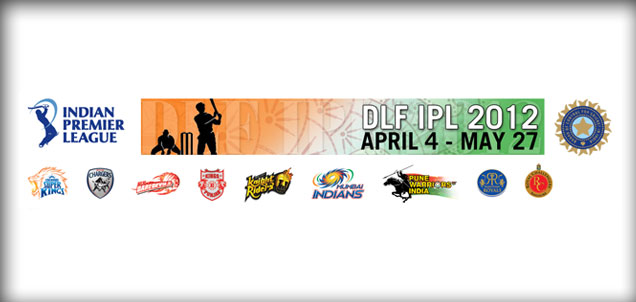
MSM will be heavily promoting the event, which is scheduled to begin on April 4. Mr Gupta added, “We have marginally increased the ad rates (about 10 per cent). We hope to sell out our inventory well before the tournament begins.”
Though Mr Gupta refused to divulge names of advertisers, industry sources have said that TV screens will be buzzing mainly with players from the telecom sector. Brands like Vodafone, Idea, Tata Photon and Pepsi have agreed to be a part of IPL this year.
Rema Harish, Co-Founder, DoMore Communications, says, “Advertisers may lose out a bit as far as ROI is concerned because cricket seems to have lost its charm among fans in India. There is a sense of fatigue and also the fact that the Indian team has not performed well in the recent past. While advertisers are aware of the risk, they’re betting on IPL because it is the only event in that size, promising greater reach and visibility.”


 Vaishali Shama, Head of Marketing at Sony Max, has reason to be elated with the success of IPL 8. But along with the cricketing action, a lot of credit would go to the preparatory marketing aggression before the tournament and even as it was on. Excerpts from an interview