Tag: Roda Mehta

  • The Roda Mehta Acceptance Speech


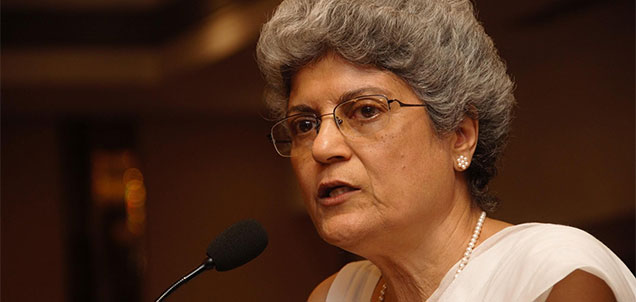
    It was supposed to have reached us last weekend, but it didn’t. Normally we would’ve forgotten about it. But, as we were urged at the event itself, and then later via Twitter and various Whatsapp messages, we decided to wait for it, and publish Roda Mehta’s acceptance speech on her being presented the Lifetime Achievement Award by the Advertising Agencies Association of India. As is.

    Yes, the speech is a little long and may not seem very relevant to those who entered the profession after 2000-odd, but one would say it’s essential reading for every advertising profession in India. So, sit back, and enjoy.


    Nakul Chopra and the Managing Committee of the Advertising Agencies Association of India, Ashish Bhasin and members of the Selection Committee, and the many who have graced this occasion with your presence.


    It never ever occurred to me that one day I would be back again before you! This award has come as an unexpected surprise, for in the past 19 years since I left this industry, I have thought and worked on much else than advertising!


    You are honoring me for much today. As far as I can remember, all I did was a good day’s job, followed by a good night’s sleep, and that was all there was to it! That all these developments took place at a time of rapid change was entirely coincidental!!! But since you have chosen to honor me for it, let me share how this came to be.


    Back in 1971, at the age of 21, faced with the choice between an unknown called advertising that was asking for computerisation of the National Readership Survey 1970 and a known called banking, the advice of a professor guided me: “If your aim is to contribute and grow, take the former. If you want a steady path in your career, take the latter”. I took the former and was completely undecided on the wisdom of that choice for the first two years. I remember the first day I stepped into HTA at Express Towers, Heather Almeida, a senior Account Executive, exclaimed “What is an MBA doing in Media?” That pretty much summed it up! For, unknown to me, Media was primarily a clerical function, releasing advertisements created by the agency. Not too long after came the realization that with only printed data on offer, computerisation was well nigh impossible. All this laid bare the very reason for my being there!


    Those first years were spent studying the NRS inside out, linking it to other sources of information like the Audit Bureau of Circulation, Census data, etc., and in developing Reach and Frequency estimation methods with sister agency IMRB. Those formative years developed my knowledge and set the foundation for what was to come.


    In 1973, the Clarion-Mote Media Model was presented at the Advertising Club of Bombay and HTA was asked to critique it. The talk catapulted me onto the industry stage. A two-month secondment to the Indian Space Research Organisation for their Satellite Instructional Television Experiment, working with some brilliant minds, followed, and then a study across markets on the impact of Hindi Cinema on young adult behaviour. My first industry experience was on the Advertising Club Committee for All India Radio. In 1972, an assistant in the Account Servicing Department requested for training in Media and was assigned to me. Her name was Roxane Guzdar. Others followed. One day, a media clerk came up and said, ”You train outsiders, but you never train us”. It came as a jolt. That day I vowed that no one, irrespective of his or her job role, should be held back from working at his or her full potential. But by then, I was close to leaving HTA.


    The formal offer from Ogilvy Benson & Mather came without a meeting; so I asked to interview the Managing Director! I placed before him two conditions – complete independence in work and no politics! Mani Ayer accepted and I moved to OBM as Media Group Head in August of 1975.


    The very first media presentation made to the Marketing Director of an international food company was in the presence of Mani Ayer and the full servicing team. After many appreciative comments, the client left and then sent back its usual list of publications for release! That experience drove me to targeting one client every year to scientific media planning.  Fortunately, client companies had also begun hiring MBAs as trainees and promoting them to Brand Management. As we spoke the same language, very soon scientifically conceived media plans were being accepted down up.


    Now unlike HTA, where Account Servicing would analyse and decode client brand marketing briefs for Media, at OBM, client briefs were handed over directly to Media. With limited resources and ambitious targets for an over-stretched function, I remember storming into Mani Ayer’s cabin one morning stating that Account Servicing was not doing its job and was merely passing down client marketing briefs, to which he quietly responded, “Then you do it”.


    That is how the Media functioned, through backward integration, started market-consumer-media analysis that became a part of every brand media strategy.  Clients took to this approach instantaneously and often fine-tuned their own objectives through this process.


    Now to every direct approach made by the Media to clients came the response: “Our agency decides our media plans”. With nowhere else to go, they learnt soon enough that a visit to OBM necessitated a deep understanding of their product – its content and layout, advertising categories (particularly use by classifieds), advertising placement strategies, distribution network, printing quality, etc. Why was this necessary? Because the projections in the NRS from small sample sizes at each target group level needed other measures to ratify media choices. Publishers began changing their selling approach, training sales personnel with a study of their readers, with intra-media and inter-media competitive profiling, etc. Thus Media began to hire differently and to professionalize its service.


    A detailed conceptual understanding of media definitions and the manual process involved to develop plans became great training ground for new entrants. It also became the engine for new business acquisitions. And soon Media was the place to be in. Talent began applying from all over – banking, account management, the print media, graduates from management schools, etc. By the mid-80s, Media at OBM was on a roll. Not unexpectedly, it also became readymade hiring ground for other agencies. While it was not easy to loose talent, the realization dawned that these trained professionals, imbued with a strong work ethic, would assist in the professionalisation of this industry.


    While these developments were taking place in OBM, there was much churning in the mass media. When I joined the industry, there was only B&W print advertising, radio spots and cinema films or slides.  Then 1976 saw the launch of B&W commercial television in the four metros. Inclusion of Hindi films and film song sequences led to smart growth in demand for TV sets across the entire social spectrum. Six years later, in 1982, television went color with the Asian Games held in New Delhi, followed by the setting up of transmitter-a-day across 141 towns in the country.  These developments proved to be a game changer in every way.  Television set sales grew exponentially. Cinema, a monopoly medium that had resisted audience measurement, got wiped out for advertising. Print found itself confronted by a very strong competitor with live News telecasts generating publisher nightmares.  For advertisers, strong demand-pull was a new experience as consumers chased products, demanding rapid distribution expansion.


    In all this turmoil, when needed most, Media audience measurement was slow to respond, appearing after long gaps – in 1978, 1983, 1989. So the impact of rapid changes in audience consumption was either not captured (as in rural India) or not delivered in time for sound planning. Furthermore, the bandwidth and financial resources of research agencies to host a National Readership Survey before recovering costs, raised issues of reliability due to high projections on low target group sample bases. These two factors finally led to the formation of the Media Research Users Council after AAAI and IENS declined undertaking future NRSs. Conceptually the Council was a very sound idea as it made users the owners of information with full inputs on questionnaire design, sampling structure, fieldwork reviews, data analysis etc. – in short its reliability. So when a newspaper from another state entered Rajasthan and the IRS data revealed a decline in the readership of the then leading newspaper, we held back for three months to conduct incognito checks to gauge the reliability of the findings. Once verified, the data was released.


    During these years, industry fortunes see-sawed, as did advertiser spends. Media budgets saw many periods of stagnation or marginal increase. But media costs kept rising.


    To ensure that brand budgets went the extra mile, we looked at print pricing structures and found that add-on charges for double-spread, bleed, newspaper positions, etc. using the same quantum of newsprint was unfair. That is how the need to negotiate began. It was always done with a view to get more for the given level of brand spend, and for no other reason. We also worked much harder on small budgets. This led to agency-level negotiations for benefits to be passed across all brands.


    On television, the major issue was a completely irrational rate structure. The Advertising Club of Bombay under Amol Bose set up a committee for Doordarshan rate rationalisation but we made no headway at all. As David Ogilvy would say “Search your parks in all your cities. You’ll find no statues of committees”! In 1984, at a last quarter OBM Board meeting, we came face-to-face with the reality that clients had been unable to spend 30% of their customary Diwali budgets for want of Doordarshan commercial time. I resolved that day that the situation had to change. So every month from then, I walked the corridors of the Ministry of I&B, getting to know every official that had anything to do with Doordarshan, building a case for rate rationalization, as well as meeting everyone from programming to commercial to audience measurement at Doordarshan. In the early days it looked like a hopeless case with All India Radio personnel appointed at the helm.  Then in July 1986, Bhaskar Ghose, an IAS officer, was nominated as Director General. Independent of decision, he was nevertheless open and understanding, and many an hour was spent educating and convincing him. When the much sought-after rationalization of rates finally got introduced, it benefitted both industry and Doordarshan’s coffers. As an aside… In late 1987, Mani Ayer received a call from Mr. Ghose requesting him to second me as Additional Director-General, Doordarshan. Mani replied that I would be of greater service outside Doordarshan than inside. The following year, Bhaskar Ghose was summarily removed as DG because a news feature had shown the Congress party in unfavorable light! What a lucky escape!


    When a new person joined OBM, s/he went through an induction programme during which David Ogilvy’s Agency principles on advertising and “the way we do things here” was shared. Each hiring came with a six-month probationary period. If the person had the right attitude and showed promise, confirmation came within 3 months. After a year, came responsibility under the guidance of a Media Supervisor. Each year-end, appraisals were sacrosanct across all offices, and every person’s progress was reviewed with me. Increments were decided with Servicing, Creative and Media sitting together and negotiating proposals. In fact, there was a time when Mani Ayer, the Creative Director Suresh Mullick and I interviewed a potential hiring, as the aim was to get seamless teamwork.


    David Ogilvy’s credos of “We Sell or Else” and “First-class business in a first-class way” was fundamental to the working of the agency. If a publisher said, “Take it or leave it” when we complained about poor reproduction, we left it, no matter how important that publication was. If attempts were made to get business in anything other than a well-reasoned way, we not only refused it but also discussed it openly in the department so everyone learnt from it. And they knew that I would never ask of them anything that I would not do myself.


    The concept of “One Agency Indivisible” seeped through the fabric of Media. Every office was on par, irrespective of the size of its media spend. In fact, offices were assigned to Media teams along with their clients. The day the person in Delhi office, assigned for Doordarshan storyboard approval for all offices, alerted a Media team in Bombay of a competitive brand launch, forewarning the client, it ratified a neatly ticking network, unaffected by narrow territorial constraints and client loyalties. It was teamwork at its best.


    After OBM crossed a hundred-crore billing, the Board was asked how we could help take this further. Evaluating our client spends across media, I realized that we were not delivering on 16% of their spend as we did not have any expertise in outdoor as a medium. At the time, this medium formed a part of regional sales budgets, and was entirely discretionary. To change the client’s approach was the first objective. For which the foremost problem was lack of data on the value of the medium. Even till today, media has not realized that data, even if it offers challenges, also provides opportunities to adapt, modify and grow. The one attempt to professionalize this medium through the Indian Outdoor Survey in 2009, I am told, was not subscribed to by a single outdoor owner! By now, Outdoor should have been a strong medium contending for the advertising rupee on a scientific platform, and supported by the advertising community in the face of regulatory enforcements. Instead, it has remained an uncoordinated band of owners, intent on navel gazing.


    In 1991-92, at a Blue Sky thinking program, Media mooted the view that brands were moving into rural areas and it was an opportunity for the agency. Thus began the journey of initiating a rural network to service brand communication needs. It took 3 years to establish, but it has not looked back ever since.


    You honor me today for what, in hindsight, was primarily a 16-year period — from 1976 to 1992 — before I moved on to other assignments within the agency.


    Three factors made this possible.


    Firstly, the only reason I came into this industry was because of media measurement. And to think that in a developing country like ours, conflict of interests have led to 2 national-level readership surveys at very high cost and with conflicting outcomes, that outdoor measurement is non-existent, that radio measurement is meager, and that Internet measurement has not even begun begs some questions, among which is the viability of the current media remuneration system that must surely inhibit investment in time and resources for sound measurement studies.


    Secondly, Suresh Mullick.

    A Creative partner whose work spoke for him. When I returned from London in December 1980, OBM had just won the Cadbury’s Dairy Milk Cholocate business that had thus far promoted the nutritional glass-and-a-half of milk.  To grow the market by re-positioning the brand, Suresh had created the “Sometimes Cadbury’s can say it better than words” campaign in full color with salivating close-ups. There was not a single publication that could have saved face for not featuring that campaign. This gave Media the negotiating strength to buy adequate frequency from a major newspaper by changing its policy on the minimum size for color advertising. Of the 10 best campaigns in the Decade of the 80’s announced by the Advertising Club of Bombay, Suresh, won for OBM, 4 out of 10 – not a bad tally at all! Campaign after campaign, Suresh’s partnership raised Media’s delivery to new highs.


    The fact is that advertising space will always be there if the medium or vehicle exits. Is the role of Media then merely to choose which vehicles and at the lowest price? At a very early stage, I came to realise that unless Media recommends a medium, Creative does not develop the experience and skill sets for it. A case in point was television in the early days. At best, creative would offer film slides with radio jingles!  And then when radio was not recommended for quite some years with the rush to television, creative forgot how to create advertising for radio! Or when we began outdoor, print ads were what we got! Rural advertising was another matter altogether.  Likewise, if a brand promise is better communicated by Creative via certain media or in certain lengths, Media has to adapt and tweak its plans to allow for its full expression. It is completely beyond me how Creative and Media can be disassociated.


    Finally, Mani Ayer.
    In your citation to him for the Lifetime Achievement Award, it said and I quote: ”Over the years, Mani’s position as a leader in the industry and one of the most successful managers in advertising has been unquestioned…. his leadership is inspirational and at all times encourages civilised behaviour. His acumen in the business of advertising is unquestioned and widely acknowledged.”


    You were so right! Being given the top job when he was just 34 years of age, led to the emergence of an agency where grey hair or gravitas was not material, where heirarchy was not in the reckoning. Merit and performance were all that counted. Given the task of turning around an agency in the red, he sought exceptional people across the board, and then gave them full rope. I can think of no other reason why at 26 years, he made me head of Media. I never had to look over my shoulder, my decisions and actions were independent, and he stepped in whenever support was needed.  He would tell others: “Roda is her own boss”. It needs a very secure person to be able to say that. So Mani Ayer delivered in every way on his promise when I first met him. He led this agency through reflected glory.


    Inherently, Mani, Suresh and I were all trainers. We knew that our partnership set an example of mutuality of interest within the entire agency, across all offices and disciplines. Even as we spread out to larger teams across levels and offices, we aimed to be inclusive, to build across the board and across disciplines. The many fine professionals trained to service client and brand needs are evidence of that. We built others even as we were growing the agency. The memories of those who passed through the agency ratify to those having been the best years of their careers. Those were OBM’s Camelot years when we trained knights to join the round-table.


    Being essentially an Indian agency with Ogily & Mather Worldwide as a minority partner, and with the Indian shares widely held across all offices and disciplines – from a peon to the Managing Director – the sense of ownership was very strong; and the dividends reaped each year renewed employee commitment. Under David Ogilvy as Chairman during the latter years of the 80s, we were encouraged to undertake work in the public domain. When he wrote to dissuade me from taking the Doordarshan offer, he said: “I applaud you for wanting to contribute at a national level.  But marketing TV would not be much of a contribution, compared, for example, with running the population programmme or the information department in the Prime Minister’s office. ….If I owned OBM, I would set up a think-tank in Delhi, to advise all departments of the Government on how to communicate with the public on issues of national importance.”


    So you see, the critical ingredient that set this agency apart was that while others were slugging it out for the top slot, OBM’s orientation was creating value for brands, for the industry and for the nation.  Had its focus been on size, the agency would have been a very different place.


    So let it be said today, that I could never have done what you honor me for today had it been any other agency or had it been at any other time in the history of this agency.


    Across the spectrum of advertisers, agencies, research and all arms of the media, this industry will be preserved only through the masterpieces of women and men who through their organizations serve the interests of all, who through their Associations seek the betterment of all, and who through their actions deliver what is best for all.


    Thank you.


  • Piyush Pandey on Roda Mehta


    The Advertising Agencies Association of India is felicitating Roda Mehta this (July 14) evening with the ‘Lifetime Achievement Award’, regarded as the Indian advertising industry’s highest honour. Here we bring you a very personal account on Mehta by Piyush Pandey, Executive Chairman & Creative Director, Ogilvy South Asia.


    By Piyush Pandey

    Roda Mehta is one of the foundation pillars of Ogilvy and Mather India. When I joined Ogilvy as an Assistant Account Executive, Roda was a Director of the company. Along with the late Mr Ayer, the late Suresh Mullick and Ranjan Kapur, Roda was one of the four pillars of Ogilvy through the 1980s and 90s. She gave stature to the media business overall. She made media aspirational at Ogilvy, at an equal standing with client servicing and creative.

    A no-nonsense person, Roda has a very sensitive mind. Apart from regular work, I had the privilege of working with Roda on the National Literacy Mission project. She was the brand leader of the task force- the media leader- and I, her creative partner. We travelled the country together and I saw the soft and sensitive side of her- beyond her tough and disciplined approach to work. Roda continues to contribute to media and society in various capacities.

    There are people who make a difference to Ogilvy, there are people who make a difference to the industry. Roda did both!

    Roda inspired many women to play significant roles in their companies and business.

    Today, we salute Roda Mehta. We salute her for being honoured with the AAAI Lifetime achievement award for her contribution to the Advertising Industry. Let’s take this occasion to thank her for what she has done for all of us at Ogilvy. And wish her the best for the future.

  • Roda Mehta to be conferred with AAAI Lifetime Award 2017

    By A Correspondent


    The Advertising Agencies Association of India (AAAI) has announced that the recipient of this year’s AAAI Lifetime Achievement Award is Roda Mehta. The award is the highest honour given to an individual in India for his/ her outstanding contribution to the advertising industry.
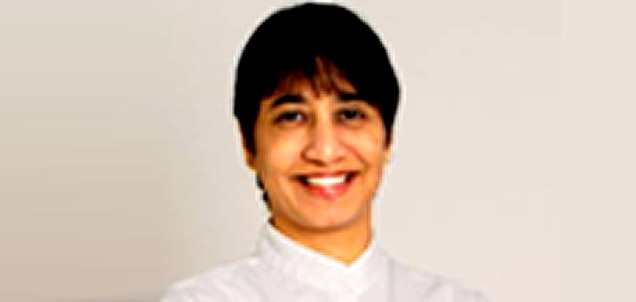
     

    Mehta played a legendary and pioneering role in establishing scientific media planning and buying in India. While doing so, she built a whole generation of media professionals for the advertising industry. Mehta joined Hindustan Thompson Associates in 1971 and became the first MBA and first woman in the media function of an advertising agency in India. She moved to Ogilvy Benson & Mather in 1975, and rose from Media Group Head to Media Controller for Bombay Office in 1976 to representing Media for the first time on the Managing Committee of Bombay Office in 1978 to being sent to London for 3 months to introduce Account Planning and Research in the Indian operation in 1980 to the Board as Director – Media & Research in 1982. She transferred, as President – South in 1992, became Director -International Client Service in 1994, and Managing Consultant – the Media Network in 1996.  Along the way, she pioneered Outdoor planning and buying and set up a Rural Media network to service client requirements.


    Invited on several committees and associations by the industry, including the Expert Committee on TV Marketing for Doordarshan & AIR, she was Founder Member of the Market Research Society of India (MRSI) and Founder Member and Chairperson – Technical Committee of the Media Research Users Council (MRUC).  She chaired MRUC from 1994-96. Ms Mehta was also on the Board of several other committees including Advisory Board – Ministry of Information & Broadcasting (Govt of India), AAAI’s Media Disputes Committee, Economic Times Advisory Panel, etc.  An avidly sought after speaker at industry conferences/seminars, she served as faculty on training programs run by Ogilvy & Mather India and Asia Pacific.


    Roda Mehta bagged several prestigious awards including the David Ogilvy Award for Asia Pacific & Agency of the Year Award (Public Service) 1992 for the National Literacy Mission campaign.


    Currently she is associated with several non-profit organisations as a Trustee of the Lila Poonawalla Foundation, which provides scholarships and mentoring to economically challenged girls from Maharashtra for postgraduate, graduate/diploma and secondary school education; Board Member and Treasurer of Nagrik Chetna Manch, a citizen’s watchdog organisation on public expenditure. She administers a very active Citizens’ Whatsapp Group for civic affairs of PMC Ward 21 and is a practitioner of Kriya Yoga.


    Making the announcement, Nakul Chopra, President, AAAI, stated, “Roda Mehta is a pioneer in more ways than one. This Award is well-deserved recognition for the stellar leadership she provided our industry and our eco-system for over two decades, during which time she also nurtured a whole generation of professional talent.”


    Added Ashish Bhasin who was Chairman of the AAAI Lifetime Achievement Award Committee – Selection: “Roda Mehta has single-handedly played a vital role in getting due respectability for the Media function in Advertising.”  Members of the Selection Committee for this Award included Sam Balsara, Srinivasan K Swamy, Ambi Parameswaran and Nakul Chopra.

    This Award, instituted in 1988 by AAAI, has been bestowed on 24 persons thus far. It will be presented on July 14 in Mumbai.


  • With animals, what you see is what you get. With human beings, it’s more complicated


    Make no mistake about this: Lynn de Souza has a soft, warm, chilled out, happy exterior. But inside that resides a steely, tough, hard-edged professional. And she needed all that internal strength to survive and thrive in an industry notoriously dominated by what she calls the ‘Old Boys Club’. Lynn and I go a long way back, and this made our conversation frank, fun and, yes, highly argumentative. And we discussed many issues ranging from the dubious media research, the future of various media, her role in promoting gender equality, her formula for cleaning up the otherwise scandalous Goafest. And why she, er, chooses dogs over men.  


    By Anil Thakraney


    What’s your exact job portfolio at Lintas?


    I look after Lintas Media Group, and our subsidiaries Karishma Initiative, Aaren Initiative and Lin TV. LMG and Karishma are media agencies, Aaren Initiative is the largest OOH agency and Lin TV produces and distributes branded content. I am responsible for their overall financial and reputation, health, corporate governance, etc.


    Who do you report into?


    Michael Wall, the global CEO of Lowe Worldwide.


    Would you not like a global role now, having been there and done that in India?


    Have I been there and done that in India? I don’t think so. India’s potential story is not even the tip of the iceberg, and I haven’t even travelled the whole tip yet! I would love to have a global role that is based out of India, because this is where it’s all happening. I am fiercely proud of India and all things Indian and it’s our time to show the globe a thing or two. We don’t need to be sitting in Manhattan or London to do that, in fact, that could be counterproductive.


    Would it be correct to say you’ve reached the top of the Indian media peak?


    More like the bottom of the ocean, which has the most beautiful creatures and colours in the world. There are so many challenges ahead, so much to learn and so much to do. Our lives as consumers of media are being transformed so rapidly it’s really hard to keep pace, and this rate of change is even faster in an emerging market like ours. What we thought we knew yesterday is no longer relevant today, and what we think we know today will not be relevant tomorrow. The only people who can be on top of all of this are those who want to keep learning and keep evolving and keep travelling. There is no place for those who think they have arrived.


    What’s your goal for the next 10 years? What else would you like to achieve?


    Goals are for footballers and 20-year-olds. I don’t have any. I am just happy to be alive, to have a wonderful family, to work with some awesome people, to have a few good friends, and to do my little bit for my four legged friends. I take each day at a time, that’s all, and just try to do the best I can for that day, honestly. When I was young, I did have plans and was ambitious, too ambitious. My values have changed. It’s important to be good at what you do, but it’s also important not to be so good that you become bad for everything else around you.


    Key challenges ahead for the media buyers.


    Look beyond the colour of money to the colour of advertising and media content, and the kaleidoscope of consumer insights. Get away from the keyboard and play some real piano now and then. Visit places they have never been to, in reality, and not only on 3G. Meet and talk to people from all cultures including, especially including, our villages in the length and breadth of our country. Data will never be a substitute for reality and as long as we hold on to it for dear life, we will continue to reduce the value of the media, and the consumers they deliver, to the lowest common denominator – a CPRP.


    Are our creative people ready for the new media? And the clients?


    I think the younger ones are. I have been meeting a lot of independent digital agencies recently, and it’s always great fun to meet their founders – usually young creatives and techies who have left traditional agencies and employers to write their own dreams and ‘apps’! You would also be surprised how many clients are now taking to what you call ‘new’ media like fish to water. There are lot of questions and uncertainties and domain knowledge issues of course, but there is no dearth of desire to learn, because user technology has become so easy and enjoyable that once they use the digital spaces for themselves, they want to start using them for their brands.


    Was media unbundling a good thing? You pioneered it.


    It was the best thing to happen to the media function. Till then, media planners were languishing in the backrooms with their big red NRSs and estimates, always at the tail end of a presentation and often sent home without even presenting. Making the function profit seeking in its own right attracted the right kind of front-room talent, investment in tools and databases and the ability to then cope with a magnifying media world. Which industry has seen such an explosion of new offerings in such a short time – 600 TV channels, 70,000 print titles, 350 radio stations, and countless websites, all in 15 years or less? Unbundling has allowed us to specialize enough to cope with this growth, possibly even enable this growth.


    Predict the future of the print media in India. Newspapers are shutting down all over the world.


    You need to separate form from content. Newspapers abroad have digital versions that have a much larger following than the newsprint version. I read the NY Times every day because the reading experience is so enriching, it doesn’t matter that I don’t live in that city. As long as people have eyes, they will read, and as long as they read, there will be something delivering the news to them in a written form… in newsprint or cyberspace, or Kindles, how does it matter? About India, do you know that the highest read newspaper in the world is a Hindi daily? Regional language papers have trebled in readership in the last ten years. Tier two and three cities, where literacy is still not even 70% and growing, register the highest growth.


    And what about television?


    TV will be fully digitized very shortly and this means that the convergence of content across digital broadcast, web and telephony platforms is almost here. My agency is already producing content for television, re-purposed for mobile, and developing web apps to go along. As are many others. Consumers follow and lead content, so to track them and predict their behavior will be very important, our measurement systems will need to keep pace and adopt new technologies to capture, retrieve and analyze data.


    There are too many complaints about media research in India. What can be done to change things?


    There’s an overload of data in some aspects. We have different data sources for different media. And there’s no one single source available. That’s why many of the media agencies invest in their own studies. We have our own, for example. What worries me is that nobody’s looking at the future. So that we have future-ready research which is truly centered around the consumer. I told the IRS people that they need to think ahead. They have a 10-year-old way of collecting data and that has to change.


    Also TV viewership measurement.


    That’s why you can’t recommend media only on that basis. Which is why a lot of us have our own proprietary research which picks up a whole lot of other aspects. You cannot rely only on these data sources.


    That’s no solution. We need few but reliable research studies which the whole industry can follow.


    It’s not necessary for everything to be done at the industry level. You do things at an industry level when you want a currency. When you want a common parked research where both the buyer and the seller access it, so it becomes a currency. But if you want to do things that are genuinely good for the brand, you develop a whole lot of other proprietary studies, which many of us do.


    Lynn, frankly I am disappointed with you. You’ve spent a lifetime in the media industry, you’ve done it all, you’ve made your money. Isn’t it time for you to think of the industry and take on the challenge of reforming media research so that everyone benefits?


    If I did that, I wouldn’t say it to you. If I had any ambitions that I want to change something, I would quietly go about doing it my way. Three years ago, I didn’t want that there should be two research agencies, the IRS and the NRS. I was sitting on both the committees and I found both doing the same things, both saying the same things, so I said why can’t they be together. So quietly, at both meetings, I would suggest let’s have only one study. It took three years of doing this before the RSCI got formed. They’ve elected me as the first Chairman and we had our first meeting only last week. I am hoping we will change the readership agenda of this nation. Print is still the largest medium in India, and if the RSCI works out, we will make a big change. But I won’t thump my chest and say ‘Hum yeh kar rahe hain, hum woh kar rahe hain!’ (Laughs.)


    Not enough. You should take on media research full-time, and become the Queen B who made a huge difference.


    (Long pause.) I promise to give it a serious thought just to please you. (Laughs loudly.) But I will not commit to anything you wish me to commit to!


    You’ve cleaned up Goafest. There were no scandals this year. How did you do it?


    I am a great delegator. And I give a lot of respect to people I delegate to. So we had Shashi (Sinha) completely given the role of running the awards. I gave Sundar the role of running the conclave. I looked after the organizing and the venue. The most important thing I did for Goafest was to create an impression of being clean. I looked for a very clean looking place, I changed the venue itself. So it looked fresher, cleaner, greener. That had a very subtle effect. Then, I roped in the ASCI and the IAA with the responsibility agenda on the first one and the sustainability agenda on the second one. That gave the impression we are doing something good for the industry, and not just pampering creative egos.


    How did you handle the problem of self-voting?


    Shashi led that and he did a fantastic job. People were not allowed to self-vote. One or two individuals who were supposedly high on self-voting in the past were not included as judges this time.

    But Lintas still won’t take part in the awards…


    We do not have any confidence in the awards given by our peers. I was given a job to do, to chair Goafest. I was forced to do it, and I did it to the best of my ability. But that’s different. You know, I served at the Cannes media jury in 2009 and it was a fantastic experience. It was professionally run, it was technically advanced. I have served on the Indian juries as well, and it was nonsense, though am sure this time around they did a better job. I have seen the behaviour of our peers, the kind of lobbying and planning that goes on. As an agency we are not into chest-thumping. But when our agency wins awards because our clients have won, I value those because the consumers voted us.


    But now that you’ve cleaned up the place, will Balki take part next year?


    That you have to ask him. But it has to do with the value you place behind awards. Not everyone thinks awards are the best thing in life.


    Looks like you’ve fallen in line with Balki’s ideology.


    (Laughs.) On the contrary he may be falling in my line! We have our own independent reasons.


    What’s this about women’s rights you’ve been promoting?


    Internationally, diversity and inclusion is a big agenda. As a part of that agenda, two years back, IPG asked me to set up and lead the women’s leadership network. Initially I refused. I didn’t think there should be segregation of any kind. Later I studied the subject in detail, and I realized there’s a very powerful economic reason why you have to support women. There are three ‘Ws’ that will transform this century: Web, Weather and Women. And the power that women are exerting on this century is enormous. It’s said if women were empowered at Wall Street in 2009. things wouldn’t have been the way they were. In India we have 29 women heading banks and financial institutions. So there is an approach that women bring to the table that improves the productivity of a team. So it’s important to keep and retain women. At IPG, 30% of our staff are women, and when you come to the top, it’s just 11%.


    How do we change this inequality?


    We need hardcore practices in place. We can have a hiring quota set aside for women. I believe last month Hindustan Lever hired only women. We need to make everybody conscious we are not doing anything special for women. We have to make men and women understand that when you work together, you do well. For example, Coca Cola has something called the ‘Power of 3’. They believe that in any big team, the minute you have three women in the team, the group becomes far more productive. And if you have just one woman in the team, she gets eaten up.


    But Lynn, women falling out along the way is a social problem. Babies have to be looked after. How will you change that?


    You try and keep them engaged in the work orce. Some of the things we’ve done include giving them the option to work from home when they are pregnant. By giving them a desktop mirroring system at home. That’s literally like working in the office. There are lots of such ways in which you can keep women productive even if they have babies.


    Personally, I am quite cynical about this whole thing. You can’t change deeprooted beliefs and attitudes so simplistically.


    Anil, you are basically cynical about everything! Anil ‘bloody cynical’ Thakraney! (Laughs.)


    Why are all ad agencies headed by men?


    In the creative agencies there is a very strong old boy’s club. It’s very difficult for women to break through into that club. And if they don’t play by those rules, they will not break into it. Read my blog on this (link).

    Exactly why were the 3As of I guys giving you stress? Why didn’t they want you in?


    (Long pause.) Because I am clean.


    You found corrupt activities going on?


    (A longer pause this time.) No comment.


    One rival media chief you admire.


    Sam Balsara. He’s awesome. A hardcore desi boy with so much energy, he does so much.


    The best boss you’ve had.


    Ravi Gupta. And Steve Gatfield.


    One thing you learnt to do from Roda Mehta?


    Two things. Precision and integrity.


    One thing you learnt NOT to do from Roda.


    (Thinks.) Over-precision. Beyond a point you have to just let it go, you don’t need perfection.


    Roda didn’t just do the media job, she built the media planning and buying industry in India. None of you guys have been able to do that. She was a game changer.


    It’s not needed. You don’t need a crusader in today’s world. You need inventors and innovators. In today’s world we need enablers. Twenty years ago it was different, it was the licence era, there were strictures and rules. Today there’s far more freedom. No one wants a crusader. Everyone wants an enabler.


    Would it be correct to say you love dogs more than men?


    (Laughs.) Why only dogs, any animal. With animals, what you see is what you get. With human beings it’s more complicated.


    Is that the reason you are still single?


    No, it has nothing to do with that. I didn’t find anyone as intellectually stimulating as… my dog! (Laughs.) Are you happy to hear that?


    Have you watched Balki’s two films?


    I haven’t watched ‘Cheeni Kum’ yet. And Balki hasn’t forgiven me for that. But he sent me the ‘Paa’ DVD, and I really liked it. I didn’t watch the last five minutes of the film though. Because I wanted to make my own ending. I wanted the character to live. So I made him into a dog. (Laughs.)