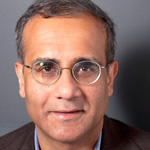
Tag: Rishad Tobaccowala

  • Rishad Tobaccowala: Why Nestle’s “Share Your Goodness” is more than Good

    Rishad Tobaccowala

    By Rishad Tobaccowala


    Nestle has hit a nerve with its latest “Share Your Goodness” campaign. This series of heartwarming ads has emotionally resonated with millions of people in India, as well as a larger set of the global population via social/online media.


    If you haven’t seen the campaign yet, I’d encourage you to check it out. The first commercial is Adoption and the second Dabbawala.

     

    I share this campaign because it’s a great example of next generation storytelling and its message has resonated with many, largely because the campaign leveraged a number of new media tricks – from online video with extended versions to smart search optimization and seeding its own hash tag #ShareYourGoodness to enable sharing and discovery.


    But the campaign is a success for more reasons than just great storytelling and new media tricks. So why did this campaign succeed and what can we learn from it as global marketers? The lessons are surprisingly less about digital technology and more about analog humanity.


    1. Storytelling is critical: Both executions, particularly Adoption, is a well-honed story – a story with humanity that leaves enough unsaid that the viewer brings their own experiences into the experience and therefore it becomes more engaging.


    2. Human insights are key: The core insight is really about how food is central to human bonding and social experience. In both commercials, food serves as a bridge, a connection, an expression of love and understanding between siblings, husband and wife and just people.


    3. Smart marketers own the category benefit: Food is an effective way to share our goodness. This is the underlying emotional benefit of food, besides its ability to sustain us physically. By linking Nestle to this underlying category benefit, Nestle looks bigger, more purposeful and more relevant to life than just being a food manufacturer.


    4. Break The Mould: Somewhere a client or a series of clients made some bold calls. First, they decided to launch the campaign online. Second, they approved story lines where the brand is the hero without the product being the hero or appearing all over the story. Third, they approved scripts that took on out of the ordinary topics. And finally, they understood that we live in a connected world and had their agencies seed, enable and leverage sharing.


    5. Recognize  and leverage the power of new media: Many marketers see digital and new media – even today in India and often around the world – as an after thought, an add-on or something one does to claim it is in the plan. The reality is that in places like India, which is the second largest market for Facebook with 100 million users (also Twitter’s and Linked In’s second largest market) and a highly mobile (soon in India 250 million smart phones), new media is as much media as old media and can allow for far more flexibility to create and distribute an idea. Why not start with the idea first and then determine the media rather than starting with the :30 or the print ad?


    International appeal

    The underlying insight of human goodness linked to sharing food, combined with the realization that the digital world allows one the room to tell a story which can then be shared and edited for other media, is so big that I believe this campaign has an appeal for international audiences, making it possible to leverage this effort across the globe.


    In a connected world, the best ideas can come from everywhere and the Internet is global!


    Marketers and agencies need to realize that some of the old arts (storytelling, insights, understanding category benefits) and pure client and agency guts are very critical. So is the ability to seamlessly leverage old and new media in ways that get people not only to be viewers, but be part of the media distribution plan.


    Rishad Tobaccowala is a senior thoughleader in digital media and advertising. He works with the Publicis Groupe and is chair for Digitas, LBi, Razorfish for Publicis Groupe.


     

  • Chief Digital Officer: A fancy meaningless designation or a crying need of the hour?

    By Amit Bapna


    A recent Gartner study in the US predicted that by 2015, 25 per cent of organisations will have a CDO and that the chief digital officer may be the most exciting strategic role in the decade ahead. While such statistics are often swept aside by Indian head honchos as a US reality, the wave may reach Indian shores faster than expected.


    Though a relative late starter, digital has made swift inroads into the Indian marketplace. Brands are upping the ante on digital allocations. No Indian marketing head can have a conversation without talking about how serious they are about digital. They’ve even moved to saying “It’s not the wave of the future but what’s happening right now!” which is an improvement.


    But where are all the CDOs then? Globally, organisations as diverse as Starbucks, Metropolitan Museum of Art, BBC Worldwide, Amnesty International are known to be already deploying the services of a CDO. While the title is yet to gain vogue, some companies are making a few non-cosmetic changes.


    PepisCo tweaked its structure to make digital a strategic vertical reporting in directly to the head of marketing. Earlier, it resided with individual brands. Deepika Warrier, vice president – Po1 (Power of 1) marketing, PepsiCo India, is clear that digital needs to be incubated by the CMO as it requires focused mentoring to build interactions with other business functions. Their team is led by Rishi Dogra, who along with the digital mandate is involved with a unique concept called Pepsi Labs. He works with co-creators incubating, experimenting and testing new content ideas. PepsiCo claims to have doubled its digital budget from last year.


    SBI Life has a business vertical to tap the potential of online sales of life insurance policies. Shares Chandramohan Mehra – country head – digital business, SBI Life Insurance, “Through the channel, it distributes products exclusively developed for online business, and has gained leadership position in direct-to-consumer sales.” He was formerly the VP and head of brand at SBI Life Insurance.


    Jasmin Sohrabji

    Jasmin Sohrabji, CEO India and South East Asia, OmnicomMediaGroup is convinced about the case for a CDO. The reason it hasn’t happened thus far is due to scale and scope. Even among the more digital aware, spends hover at about 10 per cent, offering little or less than threshold scale. As focus (and spends) move to digital platforms, the relevance for a CDO will come into play, she feels.


    Adds Rishad Tobaccowala, Chairman, DigitasLbi and Razorfish, “CDOs should be the evangelist for ensuring the company remains relevant to changing behaviour. His role is important in the early years of digital to ensure a voice for tomorrow.” The case for a CDO becomes even stronger in a backdrop where digital budgets are increasing but cutting edge case studies are few and far between.


    Most conversations hover around aggregating fans and likes on Facebook as also prerolls of campaigns on YouTube. But has the market reached a stage where the advent of a CDO is imminent? Or is this yet another instance of India leapfrogging a few stages of development, to create its own delivery-mechanisms?


    At L’Oreal India, where the digital spends have been ramped by nearly 125 per cent over the last year, the function is embedded within respective brands. Satyaki Ghosh, director, consumer products division, L’Oreal India avers that they could eventually have a CDO, but he would service the entire company as against just the Consumer Product division.


    The CDO role needs to have a larger platform to build the digital capability of the entire organisation and the digital business, according to Arjun Srivastava, consumer practice leader – India, Egon Zehnder.


    Marico too is currently embracing a decentralised structure. Sameer Satpathy, EVP and business head, Marico India says, “The medium gives enormous flexibility in terms of engagement, creativity and speed.” All their brand managers are being trained and certified on using digital, in order to have an enabling ecosystem.


    CVL Srinivas

    Which is as it should be says CVL Srinivas, CEO (South Asia), GroupM: “CMOs need to drive digital as part of their core job. Most advertisers still look at digital as a silo and struggle to integrate it into their mainstream plans.” However digital specialist Harshil Karia, cofounder, Foxy-Moron makes a case for digital having grown too big for a CMO’s mandate.


    He says, “CMOs haven’t naturally taken to ‘digital thinking’ and ‘digital as an ecosystem’. It is difficult in a world where maintaining Share of Voice, pleasing brand ambassadors, coordinating to get the best out of various agencies and reporting to management and sales teams is a priority.”


    A private sector bank claims that only 5 per cent of its business is coming from branches. The rest is from other channels that include digital: mobile and internet as well as telebanking. In such a scenario the medium is no more just for marketing or brand building but has a huge business implication as well. The biggest need for CMOs today is to adapt or otherwise provide for the digital landscape since it will emerge as a key component of marketing strategies.


    Kent Wertime, COO, Ogilvy Asia Pacific, and co-author of DigiMarketing, believes “The CMO has to determine today how to integrate traditional means of marketing/channels with digital channels, the capture and use of data, and build new relationships with big digital media players/platforms.”


    Digital gives insight in real time through social media and its endless streams of conversations and insights. Increasingly, it will be about harnessing this information. For instance, Dell has a chief listening officer, who “listens” to what consumers are saying and feeds these insights to the CMO. So whether as an adjunct to the CMO or his equal, a company serious about the future would do well to consider the CDO.


    Source:The Economic Times

    Copyright © 2014, Bennett, Coleman & Co. Ltd. All Rights Reserved

    Licensed to republish


  • The Six Ps of Data Driven Marketing


    By Rishad Tobaccowala


    Samuel Taylor Coleridge in his famous poem “The Rime of The Ancient Mariner” has a stanza describing what it is like to be stuck in a salty ocean under a withering sun:

    Water, water, every where,

    And all the boards did shrink;

    Water, water, every where,

    Nor any drop to drink.


    Today we live in a data driven, data infested, data diarrhea world where we may plaintively wail:

    Data, data every where

    So much data that we will sink

    Data, Data every where

    Pray who will help us think?


    It is clear that data itself is being created in such piles that data itself is close to meaningless and information from it is often not too meaningful. What we really need is to be able to make this torrential flow yield a waterfall of actionable insights and maybe even wisdom.


    This is unlikely to come from yelling “big data”. ” we need to own the data”, “data is critical” and other data shibboleths that the most data challenged companies and individuals brandish like some magic sword.


    A better way is consider the six Ps of Data.


    1. Perspective: What perspective do you expect to get from the data ? What connections are you hoping to see? How do you plan to use this data? Asking the questions before you collect or cull through the data can be very helpful. There are times that the data itself may yield the answers but to do so you will need the next P which is people.


    2. People: The shortage in data driven marketing is clearly not the data or the storage capacity or even the computing capacity but of this rare bird called the “data scientist”. John Rauser of Amazon in this fine talk explains how this species combines applied math and engineering with a layer of curiosity, skepticism and good writing skills.


    3. Punctuality: The half life of a tweet is probably 8 minutes and of any piece of data probably less. Collecting data is like building a museum to the past in a real time world. What is critical is to have data arrive where you need it, and when you need, both from some past archive and some just in time magic. As the world gets more mobile and place and time-based relevance increases in importance so will the punctuality of data.


    4. Privacy: As data scientists glean insights such as the likelihood of you being a valuable pet food buyer is if you celebrate/promote your pets birthday on Facebook , and combine it with the amazing technology of just in time, things may get all creepy and icky. And to ensure that this privacy issue will become a critical factor one can look to the Government. Not just the Europeans but of every country whose political structures are being disrupted by technology armed citizens. To make an example of things the Government  will come after the big companies and so data policies and transparency will be key going forward to keep things all nice and elegant.


    5. Pooling: We are living in a connected world. The Internet is a connection engine. Data APIs and access to databases from all over will be critical to make data driven marketing a reality. Here is a simple example of how Google Trends data and retail location allowed for some superb marketing. It’s not the data you have but the data you can access. Access to rather than ownership of data is key and therefore the ability to partner and leverage platforms and portholes into data clusters will be key.


    6. Partnering: As large companies like Google, Amazon, Facebook, Experian, IBM and several others around the world build data stacks, warehouses and tools,  the key will be to partner with these platforms that allow companies to process, pool and pull their own information. There are huge economies of scale that come with data collection and processing and therefore it will be key to decide what platforms to partner with rather than build a complete vertical stack.


    The age of data driven marketing arrived some time ago. Now companies and people have to catch up with how best to thrive in such an age and collecting data and running algorithms are unlikely to yield much without the six Ps.


    Rishad Tobaccowala serves as Chief Strategy and Innovation Officer of VivaKi which combines the media and digital assets of the Publicis Groupe including Starcom, Zenith, Mediavest, Optimedia, Digitas, Razorfish, Moxie Interactive, Performics and Denuo. Mr Tobaccowala can be reached at @rishadt


  • Amir Kassaei, Prof John Philip Jones & Rishad Tobaccowala to speak @ Goafest

    By A Correspondent


    The Goafest Committee has announced the names of three renowned speakers for Goafest 2012 Knowledge Seminars. Amir Kassaei, Chief Creative Officer, DDB Worldwide, Rishad Tobaccowala, Chief Strategy and Innovation Officer, VivaKi and Prof John Philip Jones, Emeritus Professor at the Newhouse School of Public Communications, Syracuse University, New York will impart their knowledge and expertise at the Goafest 2012 Knowledge Seminars to be held on April 20 and 21.


    Commenting on the exciting lineup of speakers for Goafest 2012 Knowledge Seminars, MG. Parameswaran, Member of GoaFest Committee said, “We have lined up a galaxy of globally renowned speakers with an interesting mix of creative, branding, digital and media experts for the Knowledge Seminar this year. We conducted a survey last year and realized that the young delegates wanted Goafest 2012 to cover all aspects of communication at our seminars. Hence we left no stone unturned to get the best speakers to enrich and enlighten young minds this year.”


    “To reiterate our promise of having a bigger and better Goafest 2012, we have brought the best minds from across the globe to be a part of the fest and engage in conversation through their thought provoking ideas and discussions. I am certain that these speakers will add immense value to our event,” added Arvind Sharma, Chairman, Goafest Organizing Committee.


    Amir Kassaei is the Chief Creative Officer DDB Worldwide and one of the most lauded creatives in the world. Born in Iran, raised in Austria, and educated in France, Amir settled in Germany in 1997, gaining experience early in his career in a variety of roles ranging from Account Manager to Strategic Planner to Art Director and Designer at agencies such as TBWA, Barci & Partner and Springer & Jacoby. At Springer & Jacoby, Amir advanced from Copywriter to Creative Director and finally to Executive Creative Director on the global Mercedes-Benz and smart accounts. In 2003, Amir joined DDB as Chief Creative Officer and Associate Partner of DDB Germany, where he quickly helped reshape the agency. After joining the agency as the youngest DDB Chief Creative Officer in Europe, he quickly transformed it into one of the most creative and successful agencies in Germany. Under Amir’s leadership, DDB Germany has also been ranked the most awarded German agency in the Gunn Report. During his tenure at DDB Germany, Amir founded and established Tribal DDB Germany as a modern and multichannel agency. Amir and his teams are the recipients of more than 2,000 national and international awards, including 40 Cannes Lions in the past five years.  He was named TheBig Won Report’s Top Chief Creative Officer” in 2009, and has been one of TheBig Won’sTop 3 Chief Creative Officers for each of the last three years.


    Rishad Tobaccowala helps guide strategy and serves as a catalyst to innovation efforts across Vivaki – a Publicis Groupe entity that combines the collective scale, clout and talent sitting inside of Denuo, Digitas, Razorfish, Starcom MediaVest Group (SMG) and ZenithOptimedia. Working closely with brand CEOs and VivaKi Country Chairs, he helps VivaKi’s companies show clients the way forward in an exciting and changing time for marketing.


    Prof. John Philip Jones was born and educated in Britain and graduated with the Economics Tripos from Cambridge University (BA with Honors and MA). He spent twenty-seven years working in the advertising agency business, mainly in branches of the J. Walter Thompson Company in Europe and as a market researcher and manager of the advertising for major international clients. For eight years he was international account director on Unilever’s Lux Toilet Soap, the largest-selling bar soap in the world. He has also published sixteen books and 100 articles in professional and academic publications: all on branding, marketing and advertising.


    Goafest 2012 is being organized by AAAI and Ad Club Bombay in partnership for the 5th year. Over the years, specialist areas like Out of Home & Ambient, Design, Digital & Mobile Advertising, Direct, and Integrated Advertising have been growing in importance. In recognition of this phenomenon, in 2012, Abbies at Goafest will have provision for Grand Prix in all the nine verticals- the Grand Prix is being introduced in the media awards as well.

    Click here to view all Goafest 2012 stories


  • AdAsia: From chat rooms to Twitter

    By Akash Raha

    That the digital revolution is already here, and is here to stay, is a given. But marketers are still perplexed on how to make full use of this phenomenon. In AdAsia 2011 a complete session was devoted to this very issue, and to be more precise, the subject of social media was discussed. The session in context was called ‘From chat rooms to Twitter… what next?’

    The panelists at this session were Kate Day, Communities Editor, Daily Telegraph Online, Arvind Rajan, Managing Director & Vice President, Asia Pacific and Japan, LinkedIn and Earl Wilkinson, Executive Director and CEO, INMA. The session was moderated by Rishad Tobaccowala, Chief Strategy and Innovation Officer, Vivaki.

    The session proposed that discussions were going to be a reverse of what this conference is about ‘Uncertainty: The new certainty’. What the session proposed was ‘Certainty: The new uncertainty’. It is certain that over the next few years the driving force will be social media. However, the uncertainty aspect is only what it means to marketers, media company etc.

    Ms Day said, “The question one often asks is, ‘What is the next big platform?’ My answer is it’s all about the people rather than the technology. Actually the underlying shift is with the patterns of behaviours of the people involved and audiences. Brand and customer relationship is the key. If that’s the case, then what platform is next does not matter because the people are here.”

    All the panelists stressed on the need to build consumer relationship and make the social media experience more real and humane. The consumers today want to interact with a human rather than with an automated interface, they want real conversation, moreover, in real time. It is essential to “get your own house in order and make the customers feel at home”. Also, often while we talk about social media, there are assumptions made about the product, content and consumers. Such clichés are something one should stay away from and not base one’s social media plans on them. Crating content and platform for ones invaluable customers is the key.

    FB, Twitter and LinkedIn are three global platforms, but as Mr Rajan said, the reason they are used still remain different. Twitter is a syndication platform. FB is for friends and family and LinkedIn is a professional network. The social media platforms are still new, there is still a lot to be done and lot of understanding needed. The essence is to have meaningful conversation with the audiences, connect with the customers and once that is done, it can be leveraged upon.

    Earl Wilkinson, of INMA also shared his learning in the field of social media apropos newspaper publishers across the globe. He pointed out how sharing has becoming the value added special sauce for journalism online. And in a way, he emphasized that digital times have saved journalism. Now that social media is here already, and everyone knows that communication is essential, the trick is how to structure the communication. For newspaper publishers, the way forward is going to be projecting newspapers and news brands as a trusted voice out in the community and the blog-sphere and get the audiences back on the websites.

    Arvind Tobaccowala of Vivaki said that the essence to being leader in social media space is differentiating content. Speaking about social media platforms he expressed hope for Google+. He said “Google is an amazing company… Believe it or not, Google+ will work, and it will work in a very big way. I don’t know how it will fit into broader eco system but it will be interesting to watch.”

    Pointing to sharing content on the social space as an interesting behavioural aspect and social media phenomenon, the panelists expressed hope that it will only grow further as it is a great way to engage with the audiences. Mr Tobaccowala also pointed out that on the social media space it is important to understand the behavioral aspects of the consumers. There are heavy users and heavy influencers. Right now the focus is less on heavy influencer… Heavy influencers can be further be divided into advocates and detractor. In a nutshell, he stressed that it’s imp to talk to detractors because they are the ones who are more vocal, even more than the advocates. Social media helps rediscover the idea of sharing in new and different ways to new and different audience. The essence is to start with Social media and start with it now. The panelists beseeched everyone to get on it and one might stumble upon something wonderful… “It is not necessary that you always know what you are doing,” said one of the panelists. Also, one should not look for any returns, one will get it eventually. Social media is new and still developing. Not everything that one experiments with comes out right, but one should try nevertheless. Ms Day emphatically suggested, “Don’t throw the baby out with the bathwater,” advocating that even if a few ideas don’t turn out right, it is a must to explore social media, as it is the big thing of the future.


  • AdAsia Exec Summary: Lively sessions mark Day One

    By Tuhina Anand

    AdAsia 2011 was inaugurated with the anthem of the Republic of AdAsia and a performance by the Shillong Choir Group.  This was followed by lighting of lamp by the Minister of Information & Broadcasting Ms Ambika Soni along with Dr Bhaskar Das, Co-Chairman of the Organising Committee and President, The Times of India Group and Mr Madhukar Kamath, Chairman Organising Committee for AdAsia and Group CEO and MD, Mudra Group. The flag for AdAsia was hoisted by Shahrukh Khan who also addressed the audience and reminded people of all the brands he has endorsed in his short speech. He however did emphasise that he believes advertising is not just for entertaining but about informing the consumer of a product so that when he or she is making a purchase he can make an informed choice.

    The keynote address was delivered by Mr Ram Charan, Author, Speaker and Business Advisor. The first session of the day was on ‘The Game Changers’ where Mr Harish Manwani, Chief Operating Officer, Unilever , and Chairman, Hindustan Unilever Ltd gave an insight into the company reinventing itself according to the changing times.  Mr Michael Roth, Chairman and CEO, Interpublic posed questions to Mr Manwani who answered all with aplomb. The key that emerged from this session was on the importance of adapting to the changing environment thus making the brands relevant to its consumers while at the same time being able to sell its products.

    The second session was on ‘Decoding the New Age Consumer’  where Mr Adil Zainulbhai, MD-India, McKinsey and Company Inc and Mr Laxman Narasimhan, Director, New Delhi, McKinsey & Company Inc, Mr Kochi Yamamoto, GM, Global Solutions Center, Dentsu tried to understand the behavioural pattern of the ‘New Age Consumer’.  The session gave insight into the changing world where the future remained uncertain and how marketers are grappling with this reality and trying to understand today’s consumers.

    Tom Doctoroff, JWT, North Asia, Area Director, Greater China CEO moderated the next session on ‘Asian Creative? A New Brief. On the panel were Akira Kagami, Global Executive Creative Advisor, Dentsu, Bruce Haines-Chief Strategy Officer, Cheil Worldwide, Kitty Lun, CEO, Lowe China and Piyush Pandey, Executive Chairman and CD, South Asia, O&M India. The panel gave an insight into creative from different countries where they operate including Japan, Korea, China and India. While Ms Lun talked about challenging authority and showing by example to help youngsters come up with great ideas. Mr Pandey brought into fore the relevant issue of remuneration where he stressed, ‘if you want good people, start paying them better’. Defending  standard of Indian advertsing, Mr Pandey said, “Just because a market is not in international domain for a century doesn’t mean that India is not into brand building.” He mentioned The Times of India and Cadbury’s advertising over the years that have made them successful brand in the country.

    Mr Kagami on the other hand who too was on the panel discussed the importance of corporate brand building that is critical in Japan as this helps in creating trust for thecorporate and its brands.

    Nikesh Arora, Senior Vice President and Chief Business Officer Google gave a ‘Google’ angle to his session where he began by asking people to put questions to him as QandA was not allowed in the earlier sessions. This set the mood for his session.  The next discussion was on ‘From Chat Rooms to Twitter…What Next?’. Kate Day, Communities Editor, Daily Telegraph Online, Arvind Rajan, MD and VP, Asia Pacific and Japan, LinkedIn, Earl Wilkinson, Executive Director and CEO, INMA were on the panel which was moderated by Rishad Tobaccowala, Chief Strategy and Innovation Officer, Vivaki.

    The last session of the AdAsia on Day 1 was on India 2020 where Kurush Grant, Executive Director, ITC, Sanjay Kapoor, CEO-Bharti Airtel Ltd, India and South Asia, Ravi Swaminathan, MD and Regional VP (Sales and Marketing), AMD South Asia shared views on how India can be made a truly global brand in the next 10 years. The session was moderated by Pankaj Ghemawat, Global Strategist.