Tag: RIP

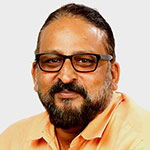
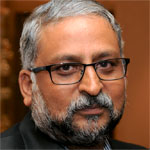
  • RIP, Bobby Sista. Advertising Hot Shot. Champion of Gender Sensitivity

    RIP, Bobby Sista. Advertising Hot Shot. Champion of Gender Sensitivity

    Those who have met him only in the last decade or so have only seen a soft-spoken senior in his trademark white. But everytime he would speak, it was evident that here was someone who has been there and doing it. And how!


    We are referring to Shambhu Venkatrao Sista, better known to his friends as Bobby, who passed away in Mumbai, peacefully, on Saturday, July 27. He was 93, and leaves behind his family and a large number of admirers.


    In his passing, the Indian marketing services fraternity has lost one its most revered pioneers with. A visionary leader who helped shape the landscape of Indian advertising over several decades, Sista leaves behind a rich legacy of creative excellence, brand-building and social impact.


    Born into an advertising family, Sista took over the reins of Sista’s Advertising, founded by his father in 1934, and transformed it into one of India’s most respected creative shops. Under his leadership from 1970 to 1998, Sista’s rose from 27th position to become Top 10 agency, competing with multinational giants through its focus on breakthrough creativity and strategic brand-building.


    Sista’s early career provided him with a multifaceted understanding of the marketing and communication landscape. After an apprenticeship at Sista’s under his father, he gained international exposure by attending an advertising conference in London as a youth delegate in 1951. He stayed on in London for two years to study advertising and work at an agency, experiences that shaped his approach when he returned to join Sista’s as an account executive.


    One of Sista’s earliest and most successful campaigns was for Tinopal (later Ranipal), an optical whitener that he helped launch and build into a market leader with 90% share within three years. The campaign was praised by famed scientist Dr Vikram Sarabhai and even caught the attention of Hindustan Lever’s chairman for its distribution reach. This early success highlighted Sista’s strategic acumen in leveraging advertising to drive distribution and market dominance.


    After a stint as marketing manager at Tinopal’s parent company and as India’s first marketing manager for Reader’s Digest, Sista returned to take over as Managing Director of Sista’s Advertising in 1970. Over the next three decades, he built the agency into a creative powerhouse, personally nurturing talent like creative director Jean Durante and fostering a culture that prioritised creative excellence above all else.


    Under Sista’s leadership, the agency created iconic campaigns for brands like Nycil, S Kumar’s, VIP Luggage, HMT Watches, and Hot Shot cameras. The “bramble back” campaign for Nycil helped it overtake Johnson & Johnson to gain 70% marketshare within a year. For VIP Luggage, Sista’s not only made it the #1 brand but grew the entire molded luggage market by 300%. The Hot Shot camera campaign featuring the audio mnemonic “Just aim and khatak” broke records for awards won (the khatak bit was courtesy Prahlad Kakkar).


    Sista was a pioneer in many aspects of advertising and marketing in India. His agency created Mumbai’s first three-dimensional lighted hoarding, organised one of the earliest fashion shows on a swimming pool, and executed ambitious on-location shoots and sets that pushed the boundaries of production at the time. He also instituted the Annual Advertising Arts Ball as Secretary of the Advertising Club Bombay, which became a marquee event in the industry calendar.


    Beyond his advertising career, Sista was deeply committed to social causes. After selling Sista’s Advertising to Saatchi & Saatchi in 1998, he focused his energies on social communication and development sector work. He founded Population First in 2002 to address population issues from a gender and social development perspective. The organisation’s Amchi project brought development to 100 villages in Maharashtra through community empowerment, while the Laadli campaign and Media Awards worked to change perceptions and portrayals of women in media and advertising. In Dr A L Sharda, he found an able leader, who could take his mission many steps forward.


    Sista’s contributions to advertising and social causes earned him numerous accolades, including the Lifetime Achievement Award from the Advertising Agencies Association of India. In his acceptance speech for this honour, Sista’s humility, wisdom and passion for positive change shone through. He credited much of his success to luck and to the talented people he worked with, while also pushing the industry to institutionalise gender sensitivity in advertising through a dedicated award category.


    He was also a very active member of the complaints committee of the Advertising Standards Council of India.


    Bobby Sista will be remembered as more than just an advertising veteran. He was a visionary who understood the power of communication to build brands and change society. His legacy lives on not just in the iconic campaigns he created, but in the institutions he built, the talent he nurtured, and the causes he championed. In fact, if the Indian media – especially advertising – is a lot more gender sensitive than it was, say, a decade back it is thanks essentially to the wonderful institution that he set up under the aegis of Population First and Laadli.


    In his acceptance speech at the 3As of I award, he said: “I did not have an MBA Degree. I had neither training nor experience of running an agency. Common Sense was my only qualification and personality and people skills my assets. I was lucky with the team I was able to build up and the roster of clients we had acquired as we went along.” And this is what he said on the transition from Sista’s to the social sector: “the period 1970 to 1998 when I headed Sista’s was a happy period. Of course, there were worries- financial and otherwise, frustrations, many mistakes I made, but on the whole it provided a lot of satisfaction and sense of achievement. In 1998 I sold the advertising business to Saatchi & Saatchi. We had a staff strength of 370 between the Head Office and four branches. I quit because my heart was into social communications and I wanted to explore the opportunities in the development sector.”


    As Indian advertising continues to evolve in the digital age, Sista’s principles of creative excellence, strategic thinking, and social responsibility remain as relevant as ever.


    The passing of S V “Bobby” Sista marks the end of an era in Indian advertising. Yet, his impact on the industry and society at large ensures that his influence will continue to be felt for generations to come. He will be deeply missed, but warmly remembered as a pioneer, mentor, and changemaker who helped shape the soul of Indian advertising.
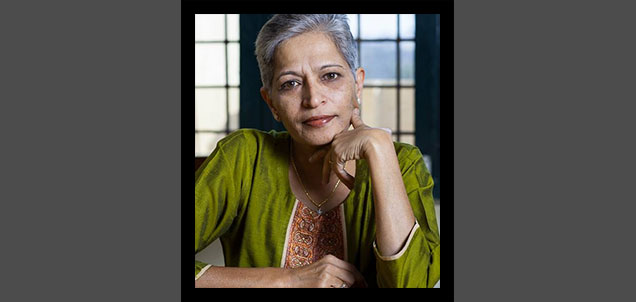
  • RIP, Gauri Lankesh


    By Ranjona Banerji


    The murder of senior journalist and activist Gauri Lankesh, 55, sent shock waves through one part of India. And open gloating and mockery through another part of India. This is the “New India” brought upon us by Hindutva forces, after the victory of the Narendra Modi-led BJP in the general elections of May 2014.

    She was shot on the doorstep of her home in Bengaluru, with seven bullets fired at her, all at close range. The similarities with the murder of writer MM Kalburgi in 2015, killed for his anti-Hindutva stance, are chilling.

    Lankesh was an outspoken critic of Hindutva and rightwing forces although she also criticised other political regimes. She lost two defamation cases filed against her by the rightwing, including one by BJP MP Prahlad Joshi and was sentenced to six months in jail in November last year. She was out on bail pending appeal.

    “The right to dissent is being threatened,” she said at the time.

    These are obvious means of harassment by a party preening itself with power, flexing its muscles. A member of the BJP’s IT cell had tweeted at the time of Lankesh’s conviction that he “hopes other journos take note”. That is a threat, whichever way you look at it and sadly, so many of our “neutral” commentators will not until something tragic like this happens.

    News channels discussed the murder last night but as usual allowed rightwing forces to run amuck with their usual whataboutery, defensiveness and the invisibility cloak of “law and order being a state subject”. Some Indian journalists have not fully comprehended the idea of “objectivity” and confuse it with a series of “false equivalences”. Therefore, we never really stand up for our own.

    Is it normal in India for writers, rationalists and journalists to be shot dead while out on their morning walks or in their homes? Is this the “New India” promised to us? Is this not a matter which needs greater study and action than primetime debates where political forces yell at each other?

    Can we continue to deny that there is a growing majoritarian militancy and a force of intolerance of free thought running through society? For how long can you keep pretending that objecting to the BJP government’s policies and to the hatred of the RSS towards religious minorities is not becoming increasingly dangerous?

    This is our country too.


    **


    What happened on social media after news of Lankesh’s murder broke is equally if not more frightening. The online rightwing trolls were out in full force, mocking, gloating and threatening.

    One gentleman on Twitter, followed by the Prime Minister of India, no less, had this to say, in Hindi: “A bitch dies a dog’s death and all the puppies start howling in one voice.” He has since deleted the tweet but it is representative of a mindset. After all, if the head of the BJP’s IT cell sends out a warning to journalists, why should the party’s online army of trolls exercise discretion, compassion or even humanity?

    A few BJP ministers did put out tweets expressing shock and dismay without any qualifications which is very welcome. But alas, other BJP followers – including several rightwing journalists – could not find it in themselves to even pretend to mimic their masters and hold their bile for once. A sad reflection on our times.


    **


    Press Clubs and associations all over India are holding meetings and candlelit vigils in Lankesh’s name. They all urge the Congress-led Karnataka government to act fast – unlike the slow pace of the Kalburgi investigation.

    I quote from the Mumbai Press Club release:

    “If this is how the Fourth Estate is going to be treated by the powers that be, while the government looks the other way, it is indeed a black hour for Indian democracy.”

    Indeed. What else is there to say?


    Ranjona Banerji is a senior journalist and columnist. She is also Consulting Editor, MxMIndia. The views expressed here are her own


  • RIP, Ramesh Chandra Agarwal


    He didn’t just dream big…


    He was just 73. And had a heart attack as he descended at Ahmedabad airport on work yesterday (Wednesday, April 12).Ramesh Chandra Agarwal, who co-founded the Dainik Bhaskar group with his father, was a mediaperson who believed in his dreams. Not content to be leader in Madhya Pradesh, he launched his newspaper in Rajasthan, fought Rajasthan Patrika fiercely and later entered Gujarat and eventually Mumbai in the English market.

    Now a diversified group – with interests in real estate, power and education, Agarwal was a firm believer in being hands-on in everything he did. Something he instilled in his sons – Sudhir, Girish and Pawan. So, for instance, when he launched Divya Bhaskar in Gujarat, he ensured the leadership team not only understands the state and the aspirations of the people there, but also learn the language and its nuances.

    Although the group entered cable television in a limited way, he chose to stay away from television broadcast. Though his group’s forays in radio and digital have grown in a big way.

    That Dainik Bhaskar is not just India’s but one of the world’s largest and most successful newspaper-led media groups speaks a lot for Ramesh Chandra Agarwal’s vision and all that he stood for.

    While we will all remember him for being one of India’s most successful media barons, there are many who remember him for his journalism. At the time of the Bhopal gas tragedy, his newspapers were the first to expose the mismanagement and the sufferings of the people. Even later, while he was close to many governments, he also ensured that his papers were perceived to be fiercely independent.

    Many in the ad and media fraternity may not be familiar with Ramesh Chandra Agarwal, but the fact that he was the chief promoter of one of India’s largest media-led conglomerates is testimony to his influence and contribution to the world of media.

    While his passing is a huge loss for the closely knit Agarwal family, it is a great loss for the country of a pragmatic and successful media owner.

    Our condolences to the Bhaskar family. And may we all help realise Ramesh Chandra Agarwal’s dream of a powerful media.

     – Pradyuman Maheshwari
    Editor-in-Chief, Founder and CEO, MxMIndia


    Presenting tributes to Ramesh Chandra Agarwal by Bharat Kapadia and Sanjeev Kotnala


    Tribute by Sanjeev Kotnala: The Man who Accelerated Dainik Bhaskar ride with Escape Velocity


    By Sanjeev Kotnala

    Ramesh Chandra Agarwal, the patriarch of the successful Dainik Bhaskar Group, left us yesterday. It is a great loss to Indian journalism and media as a whole. As news of his sudden demise spread amongst friends and former colleagues, it brought back some fond memories and reflections on him.I worked with Dainik Bhaskar for 10 years (2004-2014) and in that period, I had a few opportunities to interact with Rameshji. Each short interaction was a masterclass in smart thinking, a rich experience that led to new learning. I bow my head in respect to him.

    Rameshji was a simple man with a sharp analytical business mind. He had an uncanny ability to go through the whole slide deck, flipping through the pages and catch a discrepancy in data. He was of the school where raw data and direct experience and impression counted more than any external inputs. While on one hand, he raised the most pragmatic practical questions and on the other, he refused to accept the impossible as an answer.

    He believed in the belief of ‘ULTA SOCH’ (think inversely) and ‘WHY NOT’ and also felt that it’s vital to find the barrier that is stopping you and then break it down, which the industry called the Bhaskar Way … that came from him.

    When you see a large vision and decide to build on it, many friendly and not-so friendly relationships are created. In the early 1980s, he seeded the vision of expanding the footprint rather than living in the glory of being the #1 newspaper of Madhya Pradesh.

    Amply supported by a collective force of divergent expertise of his sons, Sudhir, Girish and Pawan, he pushed the boundaries and found ways to realise the dream.

    Knowing Rameshji’s constant devotion to think and plan, I am sure there will be some unfulfilled dreams that his sons and the group will look forward to realising them as planned. The concept of sooner or later was never a part of his vocabulary. He just wished a date on a project and then went about ensuring the successful completion. He knew when and where the right triggers and levers had to be pushed for the project to get the escape velocity or to get to the orbit.

    He harboured no political ambition. He dedicated his life to the group and ensured there was no political alignment that placed constraints on the newspaper delivering on ts promise. He wanted to be in control – and not controlled by the external forces. You naturally respect a person for such passionate dedication to a cause.

    There is a story I must share. I am not sure how much of it is true; but it represents Rameshji in many ways. I have heard different versions but here is what I know.

    It was in the early 80s when he called his sons to check if they were happy being the #1 in MP or they had the dream of being India’s largest. The young sons wanted more success and dreamt big too. Rameshji then told them that success would not come easy. It will mean fighting against all odds. Nevertheless, if they were sure and ready to work relentlessly and dedicate themselves to the dream, success will be theirs. This is when he is supposed to have said you have to think differently and may need to make social sacrifices because to go to heaven, you should be willing to die. Something that is ingrained as a work culture in Bhaskar.

    Ever-smiling and looking for ways to expand, to grow and consolidate at the same time, he was always willing to converse and spend time over a thought that smelled of any new opportunity. He was a perfect optimist who believed in his own capabilities to realize the dreams.


    Sanjeev Kotnala, Contributing Editor, MxMIndia, is a senior media industry strategist and consultant. He is also an accomplished trainer. He writes for MxMIndia every Wednesday.


    Tribute by Bharat Kapadia: Ramesh Agarwal’s Mantra: Vision + Aggression + Hardwork = Success


    By Bharat Kapadia
    When the whole world was predicting doom for the newspaper industry, here was a man who saw a boom and saw to it that his vision comes true.
    Rameshji, as he was known, came across as a simple, ever smiling, unpretentious newspaper publisher but once you started talking to him you could see an entrepreneur, a visionary and a go-getter media believer.
    What set him apart from the other media owners is that he believed in creating a market rather than worrying about how much share one can get from the existing players. His vision, ably supported for fine execution by his sons Sudhir and Girish (joined later by Pawan), was to enter a new market as a leader. “#1 from Day 1” was his goal and would leave no stone unturned. Door-to-door survey supported by huge outdoor campaign in a target city of a new launch was a very unique idea which actually did pre-selling in the guise of a survey.
    In  half a century post-independence there was hardly any case where an established #1 newspaper was overtaken by any other competitor. Eenadu, probably became the first major newspaper to do so. Limitations of printing technology and physical distribution made it difficult for publishers to think beyond their established territory.
    Although Ramesh Agarwal was not very tech savvy but he knew how to deploy the changing technology and create an impactful entry into a new market. He created modern printing presses, gathered a team and aggressively went to become a market leader in almost everywhere he entered.
    What surprised many is after MP and Rajasthan, he set eyes on Gujarat. It was an unknown territory and a language for him and other Bhaskarites.
    Gujarat was a lucrative market which had been suffering from biased reporting, very poor production values and poor working conditions for the journalists and the management staff.
    With Divya Bhaskar launch, things changed dramatically. I had first hand experience to interact with him when I joined as the Executive Director. He would carefully listen to you and would give you full freedom to implement any idea if he saw confidence and conviction in you.
    He was a workoholic and would not take a no for an answer if he was convicted about his plans. He would not spare anyone, including his own sons if things were not moving according to the plan and targets set. He can be credited to create an unprecedented growth in the Print industry and make India as the only growth market when the world showed a continuous decline in circulation and readership.
    Ramesh Agarwal has left a ray of hope to believe in oneself and work relentlessly to achieve what others think as impossible. He has given this mantra to us: Vision + Aggression + Hardwork = Success
    Bharat Kapadia is a veteran mediaperson and a former publisher. He had known Ramesh Agarwal before the joined the Bhaskar group as Executive Director and Publisher. 

    See Also:

    DB Post: Some images

    http://epaper.dbpost.com/bhopal/12/13042017/3/

    Business Standard: A booklover who created a media empire

    http://www.business-standard.com/article/current-affairs/ramesh-chandra-agarwal-1944-2017-a-book-lover-who-created-a-media-empire-117041300078_1.html

    Business Standard: “Bhaskar (group) should be professional, like the Tatas, and aggressive, like the Ambanis.”

    http://www.business-standard.com/article/beyond-business/ramesh-chandra-agarwal-chairman-of-dainik-bhaskar-group-dies-at-72-109121800038_1.html

  • RIP, AGK


    Sanjeev Kotnala: I will always remain an AGKite

    By Sanjeev Kotnala


    A G Krishnamurthy ( 28th April 1942- 5th February 2016) will be remembered for different reasons. The industry may just note him as the founder chairman of Mudra Communication, taking it to newer heights earlier only associated with MNC and network agencies. Or as a person who has the vision to start MICA. Or even an author of books like ‘If you can dream’, ‘Ten Much’, ‘Desi dream merchants’, ‘Learnings of an advertising professional’ and many more.


    To me he will always be AGK and I will be another of the many AGKites.


    He always remained a person ingrained with middle class values and openness to ideas. One who could be called a homegrown ad man with a street-smart style and a belief of ‘success being a process not an end’.


    About A G Krishnamurthy

    Born on the April 28, 1942 in Vinukonda, in Andhra Pradesh, AGK graduated in history at the Andhra University.


    In 1968, he joined the Calico Mills, a big textile name in the 60s and 70s, to assist Giraben Sarabhai. In 1972, he moved to their Advertising Agency – Shilpi Advertising, as an Account Executive.


    In 1976, he moved to Reliance Industries, as their Advertising Manager.


    Four years later, on March 25, 1980, he founded Mudra Communications as its Chairman & Managing Director.


    In 1989, Mudra became India’s 3rd and the largest Indian advertising agency.


    The agency’s two major brands, Vimal Fabrics and Rasna Soft Drink Concentrate have been nurtured by him from infancy to their current status as two of India’s leading and most recognised brands. Vimal and Rasna have been joined by many more Indian brands who are today, leaders too in their own categories.


    In March 1991, he set up Mudra Institute of Communications, Ahmedabad (MICA), the only advertising institute of its kind in Asia. MICA was set up to feed the growing Indian advertising industry with trained talent.


    A couple of years later, he set up Mudra International. It was again a pioneering step. The first time an Indian agency opened shop on foreign shores.


    The agency has over the past 22 years received 844 awards and accolades including The Agency of the Year Award, which Mudra has won for 6 years.


    In 1995, Mr. Krishnamurthy was nominated Advertising Person of the Year, by A & M, India’s leading marketing journal.


    In 1997, he was inducted by The Advertising Club, Calcutta, into their ‘Hall of Fame’.


    The British Magazine’ Media International’ in December 1998 nominated Mr. A.G.Krishnamurthy as one of the 25 key figures of the international advertising industry.


    In 1999, he was awarded the prestigious AAAI – Premnarayen Award in recognition of “his pioneering spirit and entrepreneurial vision”.


    In 2000, he established the country’s first online reference library for advertising – MAGINDIA.COM


    In 2002, he was inducted into the 2002-2003 edition of International Who’s Who of professionals.


    In 2003, he was honored by MAA TV and the Chief Minister of Andhra Pradesh as one of the top Andhra born achievers.


    Retired from Mudra on 31st March, 2003, Mr. Krishnamurthy was chairman of AGK Brand Consulting.


    The father of four children, three daughters and a. son, Mr. Krishnamurthy lived in Ahmedabad and Hyderabad with his family.


    Information source: http://www.agkonline.com


    I remember the poster in his office at Mudra. Early days, when Mudra operated out of Manikyam apartments in Ahmedabad. It had a rooster running after a hen, while another in a corner was busy hatching an egg. It read ‘Yes, we run after new business- but we keep out existing clients satisfied’. This is a philosophy that he lived by.


    AGK was Mudra and in many ways Mudra was AGK. Mudra was started with a mandate for excellence and that remained the driving force behind its success. A lot of its growth was organic. So when AGK said ‘Truly and honestly the age of the fittest surviving has dawned on us. The only way we (can prosper is by raising our bar of efficiency… There isn’t any alternative’. You knew he meant it.


    He was also one of the toughest bosses I had. He never accepted mediocrity. I remember one incident where the legs turned lead- while we seven were paraded and blasted by him in Ahmedabad. (Full incident http://sanjeevkotnala.com/sardar-khush-hoga/). He was a great teacher of human relationships. One of the best bosses (not a direct boss) I ever had. Few people from whom I learnt the art of managing and motivating teams.


    My career in advertising could have been short-lived if he was not there to make sense of my brashness and actions. I did mistakes and he allowed them as a learning ground. This openness is something that I carry with me.


    He kept you on a leash. The leash of freedom of doing things you felt right and had conviction in. Yet he could be break your heart with one of the most brutal honest observation or a remark. Reward and reprimands ran parallel in his office. Biases were few and rare.


    We all Mudraities who have worked under him or interacted know how motivating were the simple Ganeshas and those silver or golden pens could be. They were medals that many of us hold dearer than the awards won at later stage of life. Many a time, it was even the hard-boiled sweets that could come your way as an appreciation.


    I will always remember him as AGK. That’s what he will remain for me.


    I know he never forgot a Mudraite who has worked with him. In my advertising career, he twice asked me to come back. For some reasons I had to decline. But I started my advertising career at Mudra (1987-90) and I ended with Mudra (2001-2004) with my second stint.


    AGK commanded respect that did not come entirely from the position he had but because he was through professional. I remember asking him for his observation as an ITC-Sheraton resident at Banaglore while I wasworking with HTA. And was not too surprised when I did get a handwritten note after two days. (http://sanjeevkotnala.com/upgrade/)


    I read the news of his demise in the Whatsapp group of old and current Mudraites actively praying for his recovery. It drained me as memories flashed by me. The only way to charge myself was to hold the four Golden Ganeshas and a silver pen that he gave me during my 1987-1990 stint with Mudra Ahmedabad. And to relive few incidents and episodic interactions. They will always hold a special place for me and they always will.


    Trust me SIR, whenever you look down from your heavenly abode, you will never find any moment of disappointment from Mudratites. Or better, AGKites


    AGKSPEAK: The warmth of a time-worn leader

    This was an article published on January 2, 2009. Source: agkonline.com

    WHAT I’VE LIKED

    Friend, Philospher…Brand!

    Let’s face it. If you are a premium fabric brand, it is very difficult to stay away from the fashion circuit. But one brand that effectively manages to do so (at least on television) and still stay on top is Raymond Suitings. This is not to say that they avoid talking about fashion altogether but in the dynamic medium of television they have chosen to be viewed as your warm, caring family friend. The recent television commercial adds to this perception with their storyline of a father reinforcing his daughter’s commitment to her newly-wedded husband at their reception. It appears that he is reassured that his daughter is in very safe hands indeed. All the emotions evoked are that of trust, warmth and caring which on one level is what being cocooned in warm clothing is all about but on the other hand it also reinforces the brand’s time-worn stance of being someone you can trust and look up to whenever you need a friend and guide. Raymonds used to run a very strong campaign years ago where they were the ultimate guide to spiffy dressing. And then they moved on to the Complete Man stance and the recent series ‘Feels like heaven’ takes this further. The brand is perhaps the oldest suiting brand in the country and has always remained one of its top sellers but what’s more important is that their advertising too matches the solid stability of an iconic brand. Rather than flitting directionlessly from stance to stance, they have charted a clear course and have managed to stay on it despite all the changes and distractions that might have come their way. And that is what leadership is all about.


    WHAT I’VE LEARNED

    Rise! slave. Be your own Master.

    Call it right-sizing, weight reduction, flab cutting, waste management, whatever the jargon big industry justifies it with, there’s no getting away from the fact that there is a sudden influx of well-educated, highly skilled, well-experienced professionals in the unemployment market today. There are also, interestingly enough a respectable number of start-ups. Small one-man, two men units are cropping up all over the country offering a wide variety of skills from architecture and design consultancy to advertising, leaflet and bill printing services and almost every conceivable niche service possible. These are the ones who dare to risk their hard-earned savings on charting their own course. Because of the smallness of their size, they have tremendous advantages like speed, personalised service, a more in-depth knowledge of their field, and what’s more the client gets access to some of the sharpest minds in the country personally rather that having to deal with the small fry as they might have to do earlier. It is also a very refreshing sight to see so many youngsters trying to standing on their own feet instead of continuing to have their careers and their livelihood jerked around by the vagaries of inclement business weather conditions.


    Admittedly entrepreneurship is not in everybody genes. Who knows? Of the 1000 odd one-man shows trying to make their way maybe only a fraction might survive the journey. But the good news is that rather than seeking negative outlets, they are keeping their chin up and at least trying to make a brave attempt at independent livelihood. This is when they will begin to slowly relish the joys of being their own master. Not having to report to seniors they despise, not having to curry favour, not having to justify when and why they come to office or stay out of it. The freedom of being on one’s own is a particular joy that only the free know. In fact it is a high that is so addictive that one takes on its flip side — the responsibility and the worries of where your next business will come from — quite willingly. So while I hope that these brave little ventures do manage to reach their goals, I am sure that this is one move they will definitely not regret.


  • RIP, Vinod Mehta: Must-read tributes


    Must-read tributes on Vinod Mehta from various Indian publications:

    From Lucknow boy to editor unplugged: Journey of Vinod Mehta: Anil Dharker/Hindustan Times

    http://www.hindustantimes.com/india-news/from-lucknow-boy-to-editor-unplugged-rip-vinod-mehta/article1-1324018.aspx


    The Editor I never had: Arnab Goswami/The Times of India

    http://timesofindia.indiatimes.com/india/Vinod-Mehta-The-editor-I-never-had/articleshow/46498122.cms

    Vinod Mehta: Farewell editor: Rajdeep Sardesai/DailyO

    http://www.dailyo.in/politics/vinod-mehta-journalism-outlook-pioneer/story/1/2450.html

    Do great journalism, do not be boring: Tarun Tejpal/Mumbai Mirror

    http://www.mumbaimirror.com/mumbai/others/Do-great-journalism-do-not-be-boring/articleshow/46498890.cms


    Vinod Mehta, the Last Great Editor, 1942-2015: Krishna Prasad/ Sans Serif

    Vinod Mehta, the Last Great Editor, 1942-2015

    Vinod Mehta fought for free thought: Ayaz Memon/Hindustan Times

    tinyurl.com/lskqepg


    Remembering Vinod Mehta: The boy from Lucknow had an unconventional approach towards editing newspapers: Coomi Kapoor/Indian Express

    http://indianexpress.com/article/opinion/web-edits/remembering-vinod-mehta-the-boy-from-lucknow-had-unconventional-approach-towards-editing-newspapers/


    Vinod Mehta judged stories on their merit, not on their ideological colour: Ajith Pillai/Scroll

    http://scroll.in/article/712273/Vinod-Mehta-judged-stories-on-their-merit,-not-on-their-ideological-colour


    End of an era in journalism: Smita Gupta/The Hindu

    http://www.thehindu.com/news/national/vinod-mehta-19422015-end-of-an-era-in-journalism/article6972315.ece?homepage=true

    Fluff had no place in Mehta’s world: Jyoti Punwani/Mumbai Mirror

    http://www.mumbaimirror.com/mumbai/others/Fluff-had-no-place-in-Mehtas-world/articleshow/46498907.cms

    Vinod Mehta was the best editor I worked with: Aditya Sinha/DailyO

    http://www.dailyo.in/politics/vinod-mehta-journalism-outlook-pioneer/story/1/2449.html


    ‘The Indian media will be Ambani-ised,’ warned iconoclast Vinod Mehta: Smruti Koppikar/Scroll

    http://scroll.in/article/712241/%27The-Indian-media-will-be-Ambani-ised,%27-warned-iconoclast-Vinod-Mehta

    The man who had editorial chemistry: Anjali Puri/Business Standard

    http://www.business-standard.com/article/current-affairs/obit-vinod-mehta-the-man-who-had-editorial-chemistry-115030800226_1.html


    Statement from Krishna Prasad, Editor-in-Chief, Outlook

    http://www.outlookindia.com/article/Vinod-Mehta/293636