
Tag: reviews

  • Decluttering Personal Branding


    By Sanjeev Kotnala


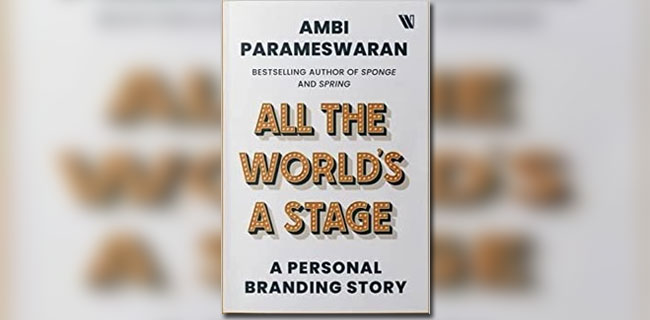
    Sanjeev KotnalaYou can read ‘All The World’s A Stage’, by Ambi Parameswaran, for a brief view of the ‘why’ and ‘how’ of personal branding. It is like the foundation course in an MBA institute – Personal Branding 1.0. So, after reading the course material- the book ‘All The World’s An Stage’, you know enough to hold attention and conversation on Personal Branding. However, there is not enough for you to push on a journey.


    Having read almost all the books by Ambi Parameswaran, I did expect something more. Something much solid. Something that could help a novice to start working on Personal Branding and not just think about it.


    As with all his books, in ‘All The World’s A Stage’, Ambi Parameswaran declutters and simplifies the subject matter. In this case, he oversimplifies the damn thing. It is an easy read with hardly any jargon. And wherever new terms are introduced, they are to create the opportunity to explain the subject – No complaints there.


    I do like the way the subject is approached. A conversation between friends Ambi, Shankar, Rita, Kunal and Joe during the Silver reunion at IIM Calcutta. Ambi plays the field expert role, amply supported by Rita, the HR expert, and Kunal, the almost convert. Shankar is the sceptic who gets converted by the end of 2 hours late-night walk late on the last night of the reunion.


    Now, in terms of personal branding, by naming the character of branding expert AMBI and suggesting he is much younger.


    Not that Ambi Parameswaran needs it, but demonstrating the nuances of personal, he uses the opportunity well. Ambi’s expertise, success with brands, networked connections, teaching assignments, books like Sponge and Spring, talks and references to keynote addresses are sprinkled throughout the book. Well, that is some real suggestion and hints towards Personal Branding.


    ‘All the World’s A Stage’ does an excellent job showing that each individual is a unique brand. Your responsibility is to care for and create your Personal Brand, as it is an influencing factor in your professional life.


    In the book, Parameswaran touches on various steps and questions that one needs to address in creating and nurturing a personal brand. However, it lacks a concrete roadmap and exercises that would allow the reader to gain much from the book. Maybe that is a flaw of the conversational storytelling adapted by Ambi Parameswaran in his books for the first time. But some exercises could have helped make the book more relevant and impactful.


    Discussing the process or the steps of Personal Branding will spoil the impact of enjoying reading ‘All The World’s A Stage’, which is not right.


    However, here is something that I can share without taking much away from the book. Brick by brick, the book brilliantly demolishes seven personal branding myths.

    1. Personal branding will conflict with corporate branding.

    2. Personal branding happens on its own.

    3. Personal branding is very different from product branding.

    4. Personal branding gets set in stone and is unchangeable.

    5. Personal branding can exist independent of your executive presence.

    6. Personal branding is very different from executive communication or executive voice.

    7. Social Media is a unidimensional one-way street for personal branding.


    Ambi’s book almost kills the book that I have been writing, which is still WIP. The idea of the book ‘You The Brand’ was seeded in our 30th Reunion at IIM Ahmedabad. There I took my batchmates through a small part of my ‘Brand-i’ workshop and empathised with my belief in being responsible for our Personal Brand. That night I ended up discussing the subject with a few of my friends at Louis Khan Plaza and a walk through the old campus. So, the book was almost a déjà vu and a reminder that the projects should be completed on time.


    I go further in my ‘Brand-i’ workshop on Personal Branding or individual coaching. I warn the participants that they better care and work towards the desired Personal Brand identity – impression and perception or be willing to be branded by default. Because branding anyone is as simple and naturally involuntary as breathing. Well, one does need to perform and have the desired skill sets. Still, a right Personal Brand – actual or perceived can definitely smoothen the process of climbing the organisational pyramid and exploiting business or personal opportunities. And here, as a true advertising person, I am more interested in how it is perceived than it actually is. Because perception is more potent than reality. I know I should have placed more importance on Executive Dressing, Voice and Presence than I did during my corporate life.


    To know more, read the book ‘All The World’s A Stage’ by Ambi Parameswaran. He does a pretty good job of explaining their importance.
     

  • Reviewing the Reviews: Mausam

    By Deepa Gahlot

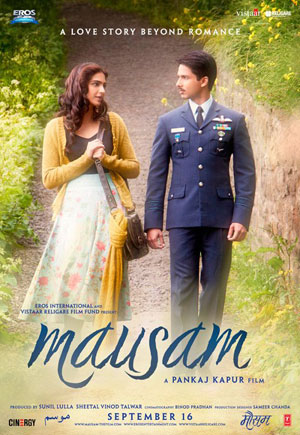
    Mausam

    Key cast: Shahid Kapoor, Sonam Kapoor

    Written and directed by: Pankaj Kapur

    Produced by: Sunil Lulla and Sheetal Vinod Talwar


    Pankaj Kapur’s debut film as director seems to have done the near-impossible—united critics across the board, with harsh-to-gentle panning and ratings from one and a half to two stars. All except the Times of India, of course, that rarely drops below three, and NDTV. Everyone agreed that the film fell fall short of its epic pretensions, and went on and on till the audiences were bored to tears.


    The film, with the pompous tagline: A Love Story Beyond Romance (means what?), has its Punjabi hero and Kashmiri heroine meet and separate over several countries and calamities, till the pathos is wrung inside out to become farcical. All that fuss about the Air Force was needless, the bloke need not even need to be a pilot. Shahid gets to wear a uniform, a moustache, a still expression and pretend for a few minutes that he is Tom Cruise in Top Gun. Sonam Kapoor looks pretty, giggles, screams, weeps and dances in Scotland!


    Sudhish Kamath of The Hindu titled it “Epic Disaster”. “Think of all the possible clichés that have kept star-crossed lovers away in Hindi cinema over the years and put them all in one movie — jilted lover, jealous rival, death of father, change of address, call of duty, misunderstandings, unread letters and those riots every few years,” he writes.


    Mayank Shekhar of Hindustan Times gives it one and a half stars and writes, “There’s an old, popular Shailendra ditty in this movie that goes, of course, Ajeeb Dastan Hai Yeh, Kahaan Shuru, Kahan Khatam (It’s a weird legend. Not sure where it begins. Not sure where it ends). The second time they play that Shankar Jaikishen song on this screen, you’re convinced this is some kind of an inside joke between the film’s director and his drooping audience. He’s ushered you into the theatre all right, seated you comfortably with popcorn, Coke and other supplies for the day, it’s been over three hours (has felt like multiple mausams, seasons, of a television series), you’re still not certain when this epic tragedy will end, or if it will at all.”


    According to India Today’s Kaveree Bamzai, “Every scene is beautifully shot, the romance is meant to grow on you with its artful glances and coy exchanges. But instead of a slow burn, it’s just plain exhaustion.”


    Raja Sen on rediff.com echoed the sentiments of many, “This is a love story gone awry purely because of under-communication, and while that seems fine enough on paper, it’s rather hard to swallow two lovers cleaved for well over a decade simply because they don’t have each other’s forwarding address.”


    IBN Live’s Rajeev Masand calls it an unfortunate mess and says, “Plodding along for close to three hours, Mausam loses steam early on. By the time the film hobbles to its end at a riot-stricken Ahmedabad fair, all you can do is gasp. Gasp in complete shock at the inconceivably embarrassing climax that involves a Ferris wheel, a crying child, and a horse. This one scene alone hints at just how desperately this script was begging for a rewrite!”


    Aniruddha Guha of DNA quips that the only thing epic about Mausam is its length. “Two lovers separated by circumstances repeatedly would be acceptable if the situations were at least believable. But the story demands you to suspend belief repeatedly, and gets convoluted beyond repair eventually.”


    The Reuter’s Review headline says “Mausam is several seasons too long,” and then, “If director Pankaj Kapur hadn’t gone to pains to establish that Mausam plays out between the mid-’90s and the early years of this century, you’d be forgiven for thinking this film takes place in the ’20s — when there was no internet, no phones and no technology. Why else would two, reasonably well-off, intelligent people who obviously have access to technology be unable to trace each other? It makes no sense, and instead of feeling sad for them, you feel frustrated.


    The usually kind Taran Adarsh of bollywoodhungama.com surprisingly dubs it a “colossal disappointment,” and comments, “The screenplay, to put it bluntly, is unengaging and what makes it worse is the fact that it seems like a never-ending saga. The film just goes on and on and on, moving from one city/country to another, till the viewer gets jetlagged and exhausted by watching this saga unfold on screen. With a running time of close to 3 hours, Mausam has a few sequences that do stand out, but the weak script blows the efforts away.”


    And the usually sensible Shubhra Gupta of The Indian Express gives it an uncharacteristic two and a half stars, saying, however, that “Mausam starts like a dewy-fresh spring morning, where everything is familiar yet new. It then wilts, autumnal overtones taking over. And then never quite recovers, falling into a dreary never-ending winter.


    One of the few who recommends the film is NDTV.com’s Saibal Chatterjee. “To conclude, Mausam could quite easily have ended up being a stodgy, strenuous and self-conscious drama. Writer-director Kapur, the accomplished actor that he is, orchestrates the emotional ups and downs of his tale with a commendable degree of moderation for the most part. Mausam is certainly worth a viewing.”