Tag: report

  • So who is India’s Most Progressive Celeb?


    By A Correspondent


    The Indian Institute of Human Brands (IIHB) has released its Tiara Research Report on Celebrities as Human Brands. The Report was released by the Coach of the Indian Cricket team, Ravi Shastri and Dr Sandeep Goyal, Chief Mentor of the IIHB on Dussehra day in Mumbai.


    Sandeep Goyal

    Said Dr Goyal: “The sample size of the TIARA Report is 25% bigger than the universe of TRP data collection currently being done by BARC. Our respondent base is 60,000; while BARC only covers 44,000 respondent homes. So, the study is comprehensive and representative of the entire India market. We have covered 23 cities. No study on celebrities hitherto has been so detailed and exhaustive. We have used 64 active attributes in the analysis of every single celebrity. Totally, there are over 100 data points that have been used in the analysis. This report, for the first time provides a DNA analysis of almost every prominent celebrity in the country. More importantly, our proprietary tools allow cross comparisons across celebrities, across attributes, across demographics, across cities, and more.”


    INDIA’S MOST BEAUTIFUL

    Deepika Padukone is India’s Most Beautiful. She scores 59.9 on the TIARA ratings. Padukone is way ahead of Aishwarya Rai Bachchan who leads the list of beautiful ladies in Bollywood, with a score of 45.0. In Television, Divyanka Tripathi Dahiya top scores with 39.1 TIARA ratings. Cricketer Mithali Raj has been voted Most Beautiful.


    INDIA’S MOST GLAMOROUS

    Deepika Padukone is also India’s Most Glamorous with a top score 60.3. In Bollywood, Priyanka Chopra and Ranbir Kapoor are seen to have the highest glamour quotient. In Television, Rannvijay Singh and Shilpa Shetty are top rated on glamour. In Sports, Virat Kohli and Sania Mirza occupy the top ranks. As a couple, Virushka are most glamorous.


    INDIA’S MOST INNOVATIVE

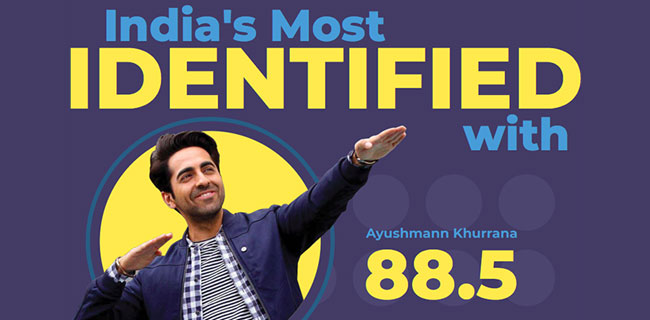
    Retired Indian Captain MS Dhoni is seen to be India’s Most Innovative. He top scores with a TIARA rating of 59.7. In Bollywood, Ayushmann Khurrana is easily No.1 in males, while Deepika Padukone leads on innovation amongst females. AR Rehman top scores in Television, Bharti Singh excels at top spot amongst women. Virat Kohli and Smriti Mandhana top score amongst sportspersons. DeepVeer – Deepika + Ranveer are the Most Innovative power couple.


    INDIA’S MOST  RELIABLE

    Shuttler Saina Nehwal is rated as India’s Most Reliable with a high 69.0 TIARA rating. In Bollywood, old warhorse Anil Kapoor ranks at No.1 while Nushrat Bharucha is top amongst the females. Zakir Khan and Surbhi Chandna are in top places in Television. Sachin Tendulkar and Harmanpreet Kaur are rated best in Sports while Virushka are rated the Most Reliable amongst couples.


    INDIA’S MOST PROGRESSIVE

    Vikrant Massey who was recently in the lead role in Ginny weds Sunny, is rated as India’s Most Progressive, surprisingly ahead of Ayushmann Khurrana who sits on top in the Bollywood list, alongside Deepika Padukone. In Television, Dharmesh Yelande and Mouni Roy top on Progressive. Jasprit Bumrah and Sania Mirza score best on Progressive amongst those in Sports. Virat Kohli and Anushka Sharma top score as a couple on Progressive.


    Other category toppers include:


    INDIA’S MOST RESPECTED : Amitabh Bachchan


    INDIA’S MOST APPEALING : Akshay Kumar


    INDIA’S MOST TRENDY : Virat Kohli


    INDIA’S MOST DISTINCTIVE : Nawazuddin Siddiqui


    INDIA’S MOST VERSATILE : Nawazuddin Siddiqui


    INDIA’S NO.1 HEART-THROB : Ranbir Kapoor


    INDIA’S MOST SEDUCTIVE : Radhika Apte


    INDIA’S MOST SEXY : Priyanka Chopra


    INDIA’S MOST DOWN TO EARTH : MS Dhoni


    INDIA’S MOST FEARLESS: Virat Kohli


    About the Tiara Report:

    The TIARA Report, notes a communique, is the largest and most comprehensive study of celebrities in India.

    • A sample size of 60,000 respondents pa- India.

    • 23 cities (Delhi including NCR), Mumbai (including Thane), Chennai, Kolkata, Bangalore, Hyderabad, Ahmedabad, Surat, Pune (including Pimpri and Chinchwad), Jaipur, Lucknow, Kanpur, Nagpur, Vishakhapatnam, Indore, Bhopal, Patna, Vadodara, Ghaziabad, Ludhiana and Agra.

    • 180 celebrities : 69 from Bollywood (37 male, 32 female); 67 from Television (46 male, 21 female), 37 from Sports (30 male, 7 female), and 7 celebrity  ‘power couples’.

    • The field study was conducted by Japanese research agency Rakuten.


    Tiara is an acronym for Trust, Identify, Attractive, Respect and Appeal. The study uses the research data across 64 active attributes covering image, personality and human factors; and a battery of confirmatory statements to quantify key celebrity dimensions.

    TIARA Research Final-Online

     

  • FM radio will generate Rs 14bn in coming year: E&Y report

    By A Correspondent


    India’s private FM radio segment is expected to generate revenue of around Rs 14 billion in 2012–13. With 245 private FM stations operating in 86 cities, the sector has been growing at a CAGR of 14 percent annually. Furthermore, the sector is expected to grow to INR 23 billion, at a CAGR of 18 percent, within three years of Phase III being rolled out, according to ‘Poised for Growth: FM radio in India’, the latest study by CII and Ernst & Young. The sector accounts for around 4 percent of the country’s total ad industry. Globally, radio’s average share of the total ad industry is between 5 percent and 10 percent.


    According to IRS 2012 Q2 data, radio has an estimated audience of 158 million people (out of which FM radio accounts for 106 million), as compared to 563 million in the TV segment and 352 million in the print sector. Advertising revenues comprise more than 85-90 percent of the total revenue generated by FM radio companies; non-FCT sales can contribute up to 20 percent of a radio company’s total revenue today.


    Ashish Pherwani

    Ashish Pherwani, Partner, Ernst & Young said, “The report is a compilation of the views of 23 industry stakeholders including radio companies, regulators, music labels, etc. It highlights the need for a speedy implementation of Phase III, which can grow the radio industry from INR14 bn to INR23 bn in three years, subject to enabling networking and cost management, development of a measurement metric which supports the industry, and ensuring license fee prices during Phase III auctions are not irrational. The report also highlights operational, tax and technology implications of the industry.”


    Current state of the industry

    Radio is not considered a primary advertising medium due to its limited number of stations. While larger cities are mostly covered by it, advertisers interested in regional ad campaigns prefer using regional print (which can enable them to reach several more cities and towns than radio currently can) or regional TV, which has grown significantly since 2005. Therefore, radio is only used as a back-up medium for most ad campaigns. However, with the implementation of Phase III, with 839 frequencies being made available for auction, radio is expected to provide advertisers with a much deeper reach.


    More than 50 percent of FM radio consumption is in homes, followed by people listening in transit (on mobile phones and in-car listening) and out-of-home listening at restaurants, offices, shops and so forth. Around 25 percent of total radio listenership is now on mobile phones, fuelled by handset manufacturers that have made FM radio a standard feature in most of their models. Some radio companies claimed that their research indicates that mobile phone listenership in metros comprises more than 75 percent of their total listenership.


    The study highlights the fact that the key challenges faced by this industry today include limited inventory, inability to demonstrate ROI and slow recovery of ad effective rates (ERs). Therefore, the need of the hour is for radio industry is to collaborate and implement a measurement system that supports the growth of the industry.


    Phase III

    Phase III of FM radio licensing promises further growth opportunities for the Indian FM radio industry, since it covers 294 cities and 839 licenses.  However, only 52 of these licenses are in high revenue-generating category A+, A and B cities.


    They expect the share of local retail advertising to increase from current levels to more than 50 percent of the total revenues generated in the segment, and activations and other below-the-line marketing initiatives to play a more important role in generating revenues. The margins of radio stations are projected to decline in the short run, stabilize in three to five years and then rise. The growth in mobile and internet ad spends could, however, pose a threat to the rise of FM radio.


    Phase III is also likely to make the industry more conducive to M&A due to proposals such as reduction of the license lock-in period from 5-3 years, an increase in the license period from 10 to 15 years, significantly more networking between all the stations to enable cost optimization, ownership of multiple frequencies in a city and an increase in the foreign investment limit to 26 percent from the current 20 percent. The industry needs to push for parity with the FDI norms of other media segments such as broadcast TV.


    In the long term, significant growth for the private FM radio industry will only be possible if several thousand stations are operationalized, burden of high licence fees is removed by increasing the variable component and reducing fixed costs, and news dissemination is equated with other media.