Tag: Reliance Broadcast

  • OnMobile appoints Asheesh Chatterjee as Global Group CFO

    By Our Staff


    Those who’ve battled for their dues with Reliance Broadcast would be familiar with the name. Some mails may have even had the CFO/CBO marked.


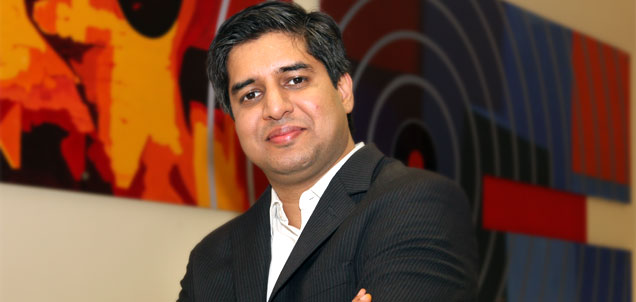
    Asheesh Chatterjee

    Well, after many, many exits from the company, Asheesh Chatterjee has moved on. To: OnMobile Global Limited, the mobile entertainment company as Group Global CFO, as per a press release. He has joined OnMobile on April 18.


    Chatterjee, a Chartered Accountant, has 25-odd years of experience across organisations like EY India, ICICI Pru AMC, Sony Pictures and Moser Baer India.


    At Reliance Broadcast Network Ltd, he was as a CFO & CBO, managed various responsibilities in multiple areas, and played a leadership role in JVs, Asset monetisation, Phase-3 auctions for FM Radio, Sales, and Revenue management, etc.


    Welcoming the new Global CFO on board, Sanjay Baweja, MD & Global CEO of OnMobile, said: “We are excited to have Asheesh join us as Global Group CFO. He will be an integral part of the company’s management, helping OnMobile realise its long-term financial and operational goals. Over two decades of his experience makes him the perfect fit to lead the financial chapter of the company’s transformation as we work towards putting our customers first.”


    Other than being a CA, Chatterjee is also a Management Accountant (India & UK), Chartered Global Management Accountant, and an alumnus of Northwestern, Kellogg School of Management.


  • Dentsu Aegis launches The StoryLab in India, Sunil Kumaran joins as country head

    By A Correspondent


    Sunil Kumaran

    The StoryLab (TSL), the specialist content agency from Dentsu Aegis Network, has expanded its footprint into India with a slew of product offerings in the area of content partnership, curation, original content and content investment, Dentsu Aegis Network has roped in Sunil Kumaran to head TSL in India. Based out of Mumbai, Kumaran will be guided by Carat India Managing Director Kartik Iyer who also bears the title Executive Sponsor for TSL.


    TSL, which operates in 16 geographies including India, will work with brands to innovate their supply chain of storytelling and thereby help them invest in the most engaging and effective content solutions for their media ecosystem, notes a communique


    Prior to this, Kumaran was Chief Strategy Officer at Reliance Broadcast. There, Kumaran comes with over 20 years in strategy, media planning and buying and has worked with agencies including JWT, Lowe Lintas and Rediffusion.


    Commenting on the launch, Ashish Bhasin, Chairman and CEO South Asia – Dentsu Aegis Network said, “Content is an exciting space for us to be in. Clients are increasingly looking at how they can ‘influence’ the consumers more effectively than just increasing their ‘reach’ through traditional forms of advertising.”


    Added Iyer, “An entity like TSL is the need of the hour as brands look to accelerate the effectiveness of their ecosystems through innovative content solutions that can deliver scale, engagement and advocacy.  We are very happy to have Sunil Kumaran on board who brings with him years of strategic media planning experience and deep understanding of this space.”


    Said Kumaran, “I’m very excited about this new initiative which is based on the philosophy of providing a superior value proposition to clients. Media convergence has disrupted the traditional advertising-led marketing communications model and ‘Content’ is one of the most valuable assets within media companies’ and brands’ ecosystems.  I am looking forward to doing some exciting work across brands within the Dentsu Aegis Network Group.”


  • 92.7 will be a 100-plus radio networks soon: Tarun Katial


    Buoyed by the success of some key stations going retro, Reliance Broadcast has Big plans for 92.7 FM. In a wide-ranging interview with Pradyuman Maheshwari on the radio business at his company’s headquarters in north-west Mumbai, Tarun Katial, Chief Executive Officer of Reliance Broadcast Network spoke on the switch to retro, his plans for Phase III and news on private FM radio.


    You must be proud of the way 92.7 Big FM has grown in leadership. The retro strategy has worked wonders, right?

    We researched that all radio consumers are not the same, all tastes are not the same and we will go region by region, city by city to decide the format and we put our radio station in buckets so there is the retro bucket where all stations that we saw that the liking for retro music was high, we’ve taken the ‘hit thhe, hit rahenge’ positioning in all those stations. There are some stations where we continued to run as contemporary hit radio but they are in a bucket of regional plus contemporary so there is Bangalore, there is you know the whole Punjab belt, there is Chennai. Chennai is actually different, there is Hyderabad, and some of the others which are regional contemporary hit radio. So they primarily belong to that region and to the music of that region and contemporary music of that region.


    Going retro has obviously been successful but did you think that it would alienate the youth?

    We did extensive research in all target audience groups and was quite surprised to see the results. New music has so little shelf value even among the youth that beyond eight to ten weeks, a song fades away and never comes back. That’s the maximum period that a song stays on the charts today.


    How’s it done for your revenues?

    The money today is in categories like auto, insurance and FMCG. And these all talk largely to 25+ male or female consumers. Even though you may worry about our youth ratings which are very, very big and competitive when compared to others, it is in the 25+ audience largely where all the advertising money gets spent. We are clearly the No 1 here. So it has impacted our revenues extremely positively. Our Mumbai station which was priced anywhere between Rs 6-700 bucks has nearly doubled its price, its ARPUs and its volume going up extensively…


    In terms of overall revenues, what has been the kind of growth?

    If you look at our last six months which is where we’ve really gone retro, we’s seen a near-15-20 percent rise.


    While you were always known to be the large 45-station network, given your leadership status in the two key markets of Mumbai and Delhi, you must be now calling the shots in the radio genre?

    I think most large advertisers realise that we deliver very good value and they’ve started to work with us far more extensively than they ever did in the last one year. A few of the larger ones have actually gone and done some really innovative work with us. So we’re seeing larger marketshare shifts towards us. We’re also seeing advertisers finally getting conscious about where they spend their money because spends on radio are going up after the cap of ad time on TV and so we’re seeing people holding themselves and their agencies far more accountable in terms of RoIs. Advertisers are increasing looking at RAM data. Around 70-80 percent of adspend is in the four metros which are measured by RAM weekly.


    An aside: radio players do not seem to have too much of a problem with RAM as the televisionwallahs have had with TAM.

    I think even radio players want RAM to upgrade itself. Baselines need to be updated, data needs to be looked at for challenges that it has. So there are issues with RAM and we want to move towards electronic from diary, but it’s far better than an IRS kind once-in-a-quarter, once-in-six-months, once-a-year kind-of study and now with IRS not come since 2012 that data is virtually redundant now.


    With BARC a reality, now from October onwards, presumably TAM will be off so they will only have RAM.

    I don’t know whether TAM will be off or we’ll have two sets of ratings….


    Huh?

    The jury is not out on whether TAM will be off.


    Yes, but they need to have enough subscribers to be able to fund that kind of research.

    Yes, but I think everybody is going to look at the stability of the BARC data for the first few months before we all switch off TAM… which is an eventuality


     Assuming that happens whenever, are you worried about research because that company will only have RAM as a business proposition in the field of audience measurement?

    Internationally there are enough companies that do both radio and TV research. The good part in RAM is that it’s a commissioned study by the radio broadcasters. Unlike TAM which is a subscribe-to data, this is a commissioned data and as a radio body we can commission it to any other research company we think fit.


    So will you continue with RAM for the moment?

    For the moment, yes, I think the radio industry is going to be with RAM.


    Coming back to 92.7, from what you say the people who matter for revenues – the adult listener – listens to retro and hence the switch to retro has been rewarding. It now appears to be a no-brainer, so why didn’t you do it all these years?

    I think everybody likes to believe that there is safety in majority and you try to do what  everybody else is doing and try to make the marginal delta difference of what you and the other player are. You realise that the marginal delta difference only gets you that far and you’re all pretty much aping each other and the only way to stand out is to break free from the clutter. So we decided that you have to take some slightly bigger risks to get some slightly bigger results.


    We took some risks, some aggressive ones and that paid off quite well and we also took these risks with a good execution strategy behind it. So not only have we gone retro, we’ve gone retro with some very pathbreaking shows.n Suhana Safar with Annu Kapoor is just one of that. What it’s done to radio is that not only is it the No 1 show but its added to new listeners on radio. And very few products or shows on radio or on TV can add to the base of viewers or listeners. There isn’t anybody who you would talk to around who listens to radio or listens to our network who wouldn’t have consumed Annu Kapoor today.


    What next? People are trying to replicate what you’re doing.

    What we have been able to do is that we’ve built a format with talent around it which you can’t replicate. You can replicate the music but not the talent around it and the insights that we’ve been able to do with music. We have actually had a panel of serious musicians help us classify our music. We haven’t done it with little knowledge like most other radio stations including us have about music. We actually brought in experts. I think the next step would be to add more formats within the retro format, to add new talent and new shows. We’re in the process of talking to two very big artists. You can replicate music, but not talent.


    But talent can be poached.

    Well, you can poach talent but you can’t replicate it.


    What about the attraction of associating with new films like a Humpty Sharma?

    You have to make some sacrifices right? You have to stay true to your format. We have not done any such movie tie-ups in a long while. Yes, we do interviews because we’re not away from the current world so they all come to us. They come and talk to them about the legends and the retro music they’re in love with.


    Given the success that you’ve had with retro, what are you plans for Phase III?

    I think Phase III will be a great opportunity for us to refine our formats even better so in places where we get multiple frequencies. Having succeeded with different shades of work with retro which a lot of people including some people on our Board said was doubtful and questionable, we’ve got some two-three formats up our sleeves that we want to test in Mumbai and Delhi and some of the other markets.


    Is there anything that you could make public right now? Would  you look at classical music at all in the future?

    While we haven’t done classical music but we do classify our music for ragas and we do play our music by day parts according to ragas.


    So Phase 3… how many licences are you looking at? 

    We’ll go for max. Max in terms of whatever is possible so I think from a 45-station network you can expect us to be a 100-plus network.


    But, of course, there’s still some time before Phase 3 happens.

    It should happen. I think the government will do it before December, I would think.


    Will you possibly look at regional also like in a city like Mumbai?

    Why don’t I just write the format strategy and give it to you? (laughs)


    Okay, what about news? Is that something that you will get into?

    Well I’m excited about it.  I think it’s almost archaic to not have news on free radio and not allow the consumer to be able to make himself aware on what his happening on the world around him on free radio. It’s not fair and I think this government had finally woken up to that reality I think we spent five years representing to the last government or more. I was so hopeful that they would have done something under the last regime. But I hope this regime will come and I think the statements from the I&B minister are very positive.


    This is independent news, not AIR news.

    We’re hoping that some of the leading news agencies will be allowed.


    But why don’t you still pitch for independent news?

    Definitely! And that’s our argument. We are still hopeful that the minister will stay true to his earlier announcements of allowing at least Press Trust of India (PTI) news on air. With all sorts of news available even on local cable television, radio should be treated fairly and equitably. It is a responsible medium, live, here and now, can be consumed on the go, and can be very effective. We free-minded and free-spirited media people like you will help us in taking this cause forward.


    I’m the only person who writes about it. Seriously, don’t you think the radio bosses haven’t pushed for it enough?

    I think we haven’t. I think we haven’t worked hard enough for it. I think we have been caught up in other issues and haven’t focused on this hard enough. I think some of the other business issues like renewal of licenses and music royalty caught our attention more than this. But I think we will fix it.


    Will Phase III licence prices be under control, unlike the past?

    I don’t think that we will see a new pan-India player coming in. Tough. I think there will be a certain amount of consolidation among current players but I don’t think there is going to be a new pan-India player coming in.


    This talk of consolidation has been there for a while but not really happened…

    I think people are waiting for the Phase III policy and the renewal of licenses clarity. And I think people are looking at their build vs. buy options so. Currently, the build options looks far more easier than buy because of the Phase III licenses so for current players there is no real motivation go buy.


    Assuming Phase III is announced in October, by when do you think you will be up and running?

    Launches are going to be far more quicker, they’re pretty much linked to just capex procurement because technology is easier and no real infrastructure is to be create so it will happen quick. Toh jaldi ho jayega


    Have you already started work on it?

    Obviously there is some amount of groundwork that is already in place.


  • Ajit Singh appointed Sales Head at Reliance Broadcast

    By A Correspondent


    Ajit Singh

    Reliance Broadcast Network has announced the appointment of Ajit Singh as National Sales Head, SME. Ajit will spearhead the sales function with SME clients across the radio and television businesses.


    Ajit has over 11 years of work experience across Sales, Product Development, Compliance, New Branch Distribution management including break-even across the Banking and Insurance Industry while working across different client segments. A BCom Hons graduate from Delhi University and a Post Graduate in Management from Amity Business School, he has had a distinguished career having worked with prestigious brands in the B & I sector such as ICICI Prudential, ABN Amro Bank and IndusInd bank. In his last assignment, he was with Indusind Bank as Deputy Vice President and Business Manager – New Branch Distribution.


    Ashwin Padmanabhan

    Commenting on his appointment, Ashwin Padmanabhan, National Business head – 92.7 BIG FM Reliance Broadcast Network said, “We are delighted to welcome Ajit into the RBNL family. Ajit brings to the organization a keen sense of setting up and operationalizing new businesses, we are confident that under Ajit’s leadership the SME vertical will flourish and grow.”


    On his appointment Ajit Singh said, “I believe the Media and Entertainment industry will grow at a good pace and there will be immense opportunities for learning and growth during my stint here. My agenda will be to build the company’s respectability and partnership with new and existing SME clients, while making the brand experience more enjoyable. I’m looking forward to carrying forward the fantastic work at Reliance Broadcast Network.”


  • Reliance Broadcast announces Q1 results, mood upbeat

    By A Correspondent


    There may still be some bracketed numbers out there, but the mood is upbeat at the Reliance Broadcast Network Limited offices over the earnings of the first quarter of the current fiscal year. The Reliance group company announced its financial results for the quarter ended June 30, 2013, reporting operating breakeven, with consolidated total income of Rs. 61.1 crore and consolidated EBITDA of Rs 0.9 crore.


    The Company reported a 31% increase in revenues for radio at Rs. 47.3 crore in Q1 FY14 and is hopeful of gains from FM Phase 3.  Television business clocked 37% Y-o-Y growth with revenues at Rs 8.4 crore.


    Tarun Katial

    Commenting on the performance, Tarun Katial, Chief Executive Officer, Reliance Broadcast Network Limited said, “Reliance Broadcast Network has delivered robust performance, breaking even at the operating level. Radio has delivered the highest ever Q1 performance fortifying its position as the leading national network and both key businesses of radio and television are primed to benefit from the impending government reforms.”


  • Zee aims to Ditto its DTH success story


    By Rishi Vora


    It is said that one who adapts as per the changing times is the one who succeeds in the long run. Recession or no recession – it doesn’t matter. If organisations continue to focus on what the market needs, success stories will continue to emerge and growth will eventually take precedence over many a hurdles.


    Adapting to the market and launching a relevant product in India’s broadcast sector is Zee Enterprises Ltd; the company that has been credited for making early inroads in the TV entertainment space in India and making it big internationally. It has now set an example in the New Media space with the launch of Ditto TV.


    Punit Goenka

    Ditto TV is India’s first Over-The-Top TV distribution platform offering live TV and on-demand content to end consumers on mobile phones, tablets, laptops, desktops, entertainment boxes and connected TVs.  The product has been brought out in the Indian market with the help of technology partner, Siemens.  “The offering fundamentally turns appointment viewing as a concept on its head,’ said Punit Goenka, Managing Director and Chief Executive Officer, ZEEL.


    On what it means to the group Mr Goenka said: “It adds a different dimension to business model. The idea was to bring cutting-edge wireless broadband digital services to customers across the world. Over the years, we have launched many industry firsts, but this is a launch that I’m excited about; I believe that Ditto TV will transform the way content is consumed and monetised.”


    Vishal Malhotra

    “For our channel partners- namely, for content owners, distributors, retail, OEMs and service providers, Ditto TV creates unique revenue generating opportunities,” explained Vishal Malhotra, Business Head – New Media, Zee Entertainment Enterprises, on what it means to its channel partners.


    Apart from India, the platform will be available in the UK, UAE, New Zealand and Australia. And United States will follow in the priority list, by end of this quarter.

    So yes, it’s an experiment by Zee, but as experts have pointed out, it’s a risk worth taking as consumption patterns of consumers are going through a sea change with the advent of digital technologies.


    Ditto TV will offer features such as adaptive streaming, elaborative programme guide, content recommendation engine and an interface which is integral to enhance the user experience. Moreover, it allows for complete customisation in terms of cost as well as content – where users are given an option to handpick a basket of channels as per their own personal preferences.  Price points start at Rs49, where the consumer gets access to three channels of his choice.


    Yogesh Radhakrishnan, a veteran in the field of TV distribution in India, said: “There are some issues like inadequate bandwidth; broadband connectivity is a pain, but having said that OTT is a technology for the future. For it to reach to the masses, it will take some time.”


    As for the broadcasters, Ditto TV comes in as an additional platform to showcase their channels on. And just as the thought crosses the mind, as to how many broadcasters will Zee be able to get on board, the news is that already 21 channels have agreed to use this platform.


    MSM Group, TV Today Network, BBC, and Zee are a few networks that will allow their channels to be available on the platform. A few important contracts yet to be signed which includes Reliance Broadcast, Star and Times Network. The company expects to offer a complete set of 50 channels shortly.


    The sense is that it is a matter of time before the rest of the industry embraces this new platform from Zee. As informed by Mr Goenka, monetisation via advertising can only happen once it reaches out to a critical mass – at least 5 per cent of the audience which consumes TV content on a daily basis. So there is still some time for advertisers to worry about this new delivery platform. But, that doesn’t make this venture of any less significance for Zee.


    Mr Goenka pointed out that a significant investment has gone into setting up Ditto TV and that he expects his new media division to contribute about 10 per cent to the group in terms of revenue in the next five years. Needless to say that Ditto TV is the first step in the bigger game to boost the company’s digital and new media play.


    On what this means to DTH and cable operators, Mr Radhakrishnan explained: “These are very, very early days. There is no doubt that OTT is the technology of future, but for now, it is just a beginning and not a threat to other distribution channels. Also, it is unlikely to replace the existing mode of distribution channels, as new media and technology comes as a welcome ‘value addition’ to the business.”


    So whether Ditto is able to script a ditto success story that of Dish TV – Zee’s DTH offering, is something to watch out for. For now it looks like a welcome initiative – both from the consumer and the trade point of view.