Tag: reality shows

  • Reality goes Regional… and how!


    By Ananya Saha


    Kaun Banega Crorepati might have been adapted from the international Who Wants To Be A Millionaire, but that is not where the adaptations stop. Suvarna TV, the Kannada general entertainment channel, has adapted the reality show into Kannadada Kotyadhipati, Vijay TV in Tamil Nadu has a version in Neengalum Vellalam Oru Kodi, and so does Asianet, which has the Malayalam version of KBC – Ningalkkum Aakaam Kodeeswaran. ETV Marathi has launched the Marathi adaptation recently. And it is not only KBC. Bigg Boss was recently launched on ETV Kannada and an announcement has been made for a Bangla variant of the show with Mithun Chakraborty as host. Many reality shows in the past have been adapted into regional languages and channels, and the trend seems set to grow.

    MxMIndia spoke to industry professionals for their view on regional adaptations of reality shows.
     

    Dhruv Jha, GM- Content & Experiences, Lodestar UM

    The regional adaptations do well, and they open well. It is to do more because of the kind of buzz that is generated on national scale – they are able to replicate it in some manner, and then it’s more like ‘we are not far behind’ and ‘if you can have a Bigg Boss, so can we’. And there is an aspirational level at the state and regional level that the channels also feel ‘our stars also deserve a Bigg Boss’. I believe the initial ratings were good, though I am not sure of the ratings now.


    I am sure that there are brands buying into it. If initial TRPs are generated, if there is a buzz, then regional adaptations are able to monetize. Strong national brands that are strong regionally, they are able to look at this option. I know of brands who are looking at AFP (advertiser funded programming) model and they are looking at programming in region – if it the format that is going to work, then there will be brands investing into it.


    All said and done, most of the reality shows on national GECs are also adaptations. Truly adapted, it can be as good – in any language or market. And the channel or programme would have to consider local culture, sensitivity and sensibilities while adapting.

     

    Anuj Poddar, AVP and Business Head – Regional Channels, Viacom18

    KBC is a proven format that continues to be successful; audiences have not tired of watching six seasons in Hindi. So why should the Marathi audience (even if they have watched it before in Hindi) not watch KHMC when it is tailormade for them? Format shows are adapted all the time, across the world, across regions.


    But let me also give you a specific fiction example: “Uttaran” from Colors has been remade as “Asava Sundar Swapnancha Bangla”. For that I asked the team to answer 2 questions: “How will we make it different enough and more relevant so that viewers who have seen the Colors version will yet watch the remake on ETV Marathi?” and “How will we make it as similar or true to the original Colors version so that the elements that made it work in the first place are not lost in the remake?” We made sure we had the answer to both these questions and a healthy balance on both these seemingly opposite aspects. If you get that right then the viewers will come. And if the viewers come, the advertisers will follow.


    KHMC (Kon Hoeel Marathi Crorepati) is completely tailored for the Marathi audience. The questions, while being based on overall general knowledge, are inclined towards the culture and history of the Maharashtrian heartland. Our objective with this show is to also create awareness of the rich heritage and history of this Maha – Rashtra amongst people. The contestants are naturally Marathi-speaking people. The auditions have been done across Maharashtra. So in every way, the show is adapted to the regional audience. Having said that, the grandeur and the magic of the original format is all there – no compromises on that!


    The KHMC format is hugely back-end intensive. I must admit that before getting into it I did not realise how much logistical work goes into the show. And what we have achieved is probably the fastest ever mounting of this format so far, because we had a specific time-window that we had to catch. So my full compliments to my team and to Big Synergy for having pulled this off. The challenge of course is that such formats come with well-established quality benchmarks that the audience expects – if you compromise on that, they would feel cheated. And yet, the resources available to a regional channel are fewer than to a national channel – so it is a tight balancing act. Having said that, I am confident that the Marathi and other regional markets will scale up further.
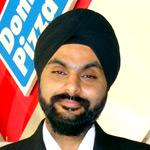
     

    Harneet Singh Rajpal, Vice-President – Marketing, Domino’s Pizza India

    For any brand, particularly a mass brand that is present across the country, it is very important to have a regional connect. While presence on national television gives a wider reach across the country, to engage a consumer at a regional level it makes sense to advertise on regional properties, especially for the brands that have regional presence through regional channels on the shows that have been adapted and already follow on the success of national shows.


    Domino’s spends close to 20 percent of our total media and television ad budget on regional channels. This would mean the 7-8 markets that we are present in.

     

    Anilkumar Sathiraju, AVP & Head South, DDB Mudra Max

    The adaptations of big ticket shows are being accepted by many, be it audience or advertiser for that matter and the response is, in my opinion, a positive one. Not sure about whether the channel is able to make profits, but yes, they are investing heavily and the channel dependence on that particular show is becoming very critical and important


    Challenges as such that the show should be accepted by the audience regionally/locally, else its no point, cos it might just not work. Therefore channels are obviously looking at what kind of content appeals to the local audiences and thereon adapting the same


    KBC in Tamil did ‘average’ in 1st season, later on seasons it’s doing pretty ok. In Malayalam, KBC did quite well, in Karnataka it was a bigger success than Tamil Nadu. May be it’s because the audiences were used to a personality such as Big B that nobody else was accepted. In today’s scenario if you look at what a Big Boss has done in Karnataka, we have something to talk about. The original Big Boss in Hindi was accepted anyways but when it came to adapting it to Kannada, initially am sure people couldn’t accept it, but now the program as such is doing well in the market place.
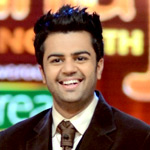
     

  • I’ll never give up anchoring: Manish Paul

    A show without a good host is Nothing. And that’s why anchoring has become such an important part of not only events, but shows on television too. The boom of reality shows on television has given birth to a new breed of hosts – spontaneous and as much a part of the show as the contestants and judges.
     

    MxMIndia’s Meghna Sharma spoke to Manish Paul, the anchor of Jhalak Dikhla Jaa, to find out what makes one the most sought after host…


    From RJ to VJ, actor to anchoring shows, you have done it all. How has been the journey so far?

    The journey has been just brilliant…and hosting shows has taken my career to another level. I’m glad that I got an opportunity to be associated with some of the biggest shows and events.


    How are the two worlds of radio and television different?

    The only difference between the two for me has been the fact that for a radio show, I don’t have to worry about my looks. No one will care if I host the show in my shorts, whereas when one is on TV, one has to worry about how presentable they are. Here, looks matter too.


    You have also acted in serials and now are hosting shows. If you had to choose between the two, which one will you opt for? Why?

    It’s very difficult to choose between the two. Right now, I’m opting to stay away from acting – even though I’m getting offers – because the character or role I have to play doesn’t match my sensibilities. For an actor it is very important that he/she truly believes in the role they have to portray. And until and unless, that happens, I’m happy doing what I’m doing right now.


    You have anchored DID and now hosting Jhalak, how has been the experience? How are the two different?

    Jhalak has been outstanding for me, now I get smses and mails from my fans about the show. Some even tell me which lines or jokes of mine entertained them the most. As for difference between DID and Jhalak; though both are dance shows, the difference comes from the celebrities. If you take DID, apart from the three judges and one grandmaster, the contestants are all common people, whereas in Jhalak, even the contestants are celebrities. So, as a host I have to keep that in mind and work according to that. One cannot make a mistake of offending anyone.


    Will you be hosting India’s Got Talent?

    Yes. Cyrus Sahukar and I will be hosting the show. The shooting has already started and it would be an understatement to call my life ‘hectic’ right now. With the amount of flying to and fro for the shootings of Jhalak and IGT, I have gone almost deaf (laughs).


    So, how do you balance work and your personal life?

    There is no doubt about the fact that television industry has become very competitive over the past few years and hence life has become difficult. One has to not only juggle between family and work, but at times, between various projects they have taken up. I make sure that in all this, I don’t compromise on my family.


    What are the most memorable moments of your career?

    I started my career 10 years ago and have done a lot so far. However, the most memorable moment would be the night where I was awarded the ‘Best Anchor’ award. And the funny part is that I was also hosting that show, so I read out my nomination with the others before being handed over the trophy!


    According to you, what qualities should a good host possess?

    A good anchor should be a well-read one. He/she should know what’s happening around too. Also, one needs to read the script well. Many a times, anchors don’t read their scripts, which I don’t think is a correct way to go about their work. And, of course, one needs to be spontaneous as well as witty. However, one also needs to be careful and know where to draw a line. It’s not our job to offend anyone. Humour too has its limits.


    Every TV actor harbors the ambition of becoming a film star. Will you ever give up small screen to concentrate on films?

    I am doing a film called Oye Mickey. And if interesting offers come which meet my sensibilities, then of course, I will be inclined towards the big screen. However, I will never give up anchoring. It is what I love doing…I love talking, so it is one profession which suits me the best!


    What’s next on you agenda?

    Right now its Jhalak, IGT and Oye Mickey….life is good, so far.


  • Anchor: 5 ways how Imagine could’ve survived

    By AN Chorrea


    It was indeed shocking to see Turner cease all operations of Imagine TV with effect from yesterday. My considered view is that Turner Broadcast could’ve managed to see Imagine survive the Great GEC Race and also thrive by any of these five programming tweaks.


    1. Rakhee round the clock

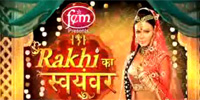
    Rakhee Sawant may have got into the limelight thanks to Bigg Boss on another GEC, but it’s all the crazy things that she did on Imagine that caught the world’s imagination. And made her a household name. So, wouldn’t it have been a great idea to have Rakhee and Rakhee along all 24 hours?!


    2. Reality round the clock

    Imagine isn’t the only channel which is into reality shows… almost every channel is. But remember they started out with one, albeit for just a week. Methinks heavy doses of Rakhee Sawant, Rahul Mahajan and all other types of international and desi formats would’ve got it all the ratings!


    3. Maximum Mythology

    All channels have mythologicals, but given its superior rendering of Ramayan and later Dwarkadheesh Bhagwan Shri Krishna and more recently Mahima Shani Dev Ki makes one wonder that if Imagine aired only mythologicals round the clock – with lavish sets, et al – wouldn’t it have worked in its favour?


    4. Supernatural mumbo-jumbo

    I am sure you’ve seen Raaz Pichle Janam Ka, the primetime show that’s a reality show showing the practising of past-life regression. The programme is quite engaging leading us to suggest that the channel should’ve gone in for all the supernatural, astrological and other bizarre stuff for at least 18 hours a day. And for the other six hours: more supernatural stuff. Possibly TV shopping for gizmos that can help you cross all barriers in life.


    5. Get the original Jhatka from Pogo

    For a man who stole everyone’s hearts in Fauji, Shah Rukh Khan has had a  easonably awful track record on telly ever since he became a superstar. KBC with him as anchor was no great shakes and Paanchvi Paas on Star Plus and Zor Ka Jhatka on Imagine were disastrous. It would’ve perhaps been nicer if Imagine could’ve got Pogo to part with its version of Takeshi’s Castle. While the show’s fun, it’s Javed Jaffrey’s commentary that does the trick and one can keep watching it endlessly. As the show’s name suggested SRK’s Jhatka deserved a kick at all the right and wrong places. Zor ka!


    AN Chorrea is a seasoned industry-watcher who writes under a pseudonym


  • Thakraney: Sony after KBC. Reality shows must face the music

    By Anil Thakraney


    I really don’t know what Sony’s revenue model was for the recently concluded KBC. As in, did the channel actually make money on advertising and sponsorships after deducting the massive costs? Which include phenomenal sums going to the host Big B, not to speak of all the prize monies (Mr Sushil Kumar alone walked away with five crore rupees). Maybe they did make a little profit on the show, maybe they did not. But here’s what has happened immediately post the show: On the ratings chart, the channel slipped to No 3 from its position of No 2.


    Now, traditional programming logic suggests that expensive reality shows and blockbuster cinema films play the role of a magnet, of getting a channel some stickiness with the viewers. Having come onto the platform, viewers would taste the regular fare on the channel and hopefully stay on. Well, KBC doesn’t seem to have delivered on that promise. After enjoying the show, clearly many viewers defected to the other channels. This naturally raises a doubt in the mind: Are reality shows over-hyped in the desi entertainment channels? Are they worth all the effort and the expenditure? Is too much expectation being loaded on them?


    There are no easy answers to this one. But one thing is clear: You can tempt patrons into a restaurant by offering an outstanding dessert, but they will only return if the food is delicious. You can’t build loyalty through window dressing. The idea should be to first build a powerful back-end… which is to create super regular programming. And then run a huge reality show, so that viewers like what they taste when it comes to the ‘bread and butter’ shows.


    In this context, one has to wonder if Sony put the cart before the horse. Star Plus’s consistent No 1 position should provide a way forward for other channels: Which is to first do the basics rights. And then dial Mr Bachchan’s number.

    ***

    PS: LOL! Watch this ad for Snickers. A good example of how to (literally) use research methods in advertising, AND make it work very nicely!

  • Can telly newbies score with biggies around?


    By Dhara Salla

    Whenever one thinks of Antakshari on Zee TV there is only one face that comes to mind: Annu Kapoor. Or it’s Sonu Nigam for Sa Re Ga Ma. Fast forward to today, and the story is much the same – the big faces on television have always helped audiences to connect and reinforce the recall value. Today, all the channels have either celebrity hosts or celebrity contestants, be it the Big B Amitabh Bachchan in KBC, Salman Khan and Sanjay Dutt in Big Boss, Akshay Kumar in Khatron Ke Khiladi, Mithun Chakraborty in Dance India Dance, Madhuri Dixit in Jhalak Dikhla Jaa… and the list goes on. In the reign of big faces, the question to ask is, what is the scope for newcomers and can a new face create the same magic?

    Ms Anita Mookerjee, GM, Mediacom, said, “It depends on the newcomer and the format of the show. However, a big name is most often successful. In most of the cases the celebrity, along with the mass appeal, also has the ability to engage and enthrall the audience. Amitabh Bachchan is an icon, a legend people can’t get enough of.” She further adds, “Salman Khan has a unique mass appeal, he was media elusive for a long time and it was the fact that the audiences were getting to see a more personal side of him which worked to the advantage of the show. Akshay Kumar took Khatron Ke Khiladi to a different level; the same show as Fear Factor didn’t really click.”

    Mr Jamnadas Majethia, MD, Hats Off Productions, says, “No, I don’t believe a newcomer can create the same magic as the big stars. The life of a reality show is limited to about three months or 12-14 episodes. So it would take time for a newcomer to get established. By the time they reach the third or fourth week the viewers would have already shifted their loyalties. The pull that a Hrithik or any celebrity like Madhuri can give, nobody else can give.”

    Industry pundits’ views seem to reflect that a newcomer cannot create the same magic that big names and faces can. An established celebrity with an X-Factor, hence, can add more to the flavour of the show than a newcomer can. Having said that, the success of reality shows depends on influences such as the celebrity quotient, programme promotions, the channel on which the programme is telecast, controversies and PR, and lastly the concept.

    We may remember that Shahrukh Khan, Abhishek Bachchan, Genelia D’Souza and R Madhavan were also hosting shows which did not do well and were taken off air, so the success of reality shows depends not only on the celebrity but also on other things. There is more to it, as Rajendra Dwivedi, Vice President, Starcom Worldwide, Mumbai, explains. “Emotional stakes are more valuable than financial stakes. A real life credible drama or story of the participants works better than prize money. The format has to be engaging and good talent scouting should be undertaken. Then the celebrity host can build on these factors.”

    On Indian television, where there are celebrity hosts there are also celebrity participants on the other side. Examining the question of which one works better, Ms Mookerjee says, “Celebrity participants definitely work; we see spikes in episodes with celebrity participants.”

    On the contrary Mr Majethia says, “The shows with celebrity anchors or judges work better but not really the shows with celebrity participants. Celebrities should be there as they add a lot of value to the content. There is a lot of fresh talent, and because of these celebrity hosts they also get some mileage.”

    When almost all the reality shows currently on television include celebrities, then how does the TG differ? According to Mr Dwivedi, the TG of the reality show depends on the format of the show. Hence, for KBC it will be all individuals but for Emotional Atyachar it will be youth and for Khatron Ke Khiladi, it will be males.

    The big faces have been ruling the roost on the small screen for a long time in the reality show format. What is more interesting, however, is that the emotional storytelling and the HSM focus has added to the success of shows as it helps with audience connect. That’s something for media planners to note.

    Photograph: Fotocorp