
Tag: ratings

  • News Ratings: “Approval” Received


    By Shailesh Kapoor


    Shailesh KapoorAdvisory. Directive. Missive. Instruction. Notice. Approval. Order. Go-ahead.


    These are some of the words that have described the communication sent by MIB to BARC India, for the latter to release new channels ratings with “immediate effect”.


    While the decision to revive news channel ratings has been long overdue, that such a decision must come from MIB and not from BARC India itself encapsulates the core issue with India’s television ratings system (or Indian television, in general) today. The industry must suffer from the vagaries arising out of too much interference from government bodies such as TRAI and MIB.


    To begin with, some of this interference is extra-constitutional. MIB has no official role to play in BARC India, which is an independent industry body. Some may argue that the MIB note is just an advisory that’s not legally binding on BARC India. But we know that’s not how things actually work. If MIB has said news ratings must restart, BARC India has no practical option but to comply.


    The restarting of news ratings is a welcome step. But the MIB statement begs the question: Whose decision was it? Why now, just before some big state elections? Have the “problems” that warranted the stopping of ratings in late 2020 been fixed?


    When founded as an independent industry body, BARC India would have aspired to hold the positioning of a credible and progressive TV ratings measurement company of one of the biggest TV markets in the world. It’s a highly technical role, and one that should command immense respect from stakeholders across the board. But today, they are positioned as an agency that’s at the beck and call of ministers and administrators, who seem to know more about research, measurement, and statistics than the company set up to run the show. The role of BARC India CEO should have been arguably the most enviable position in the Indian media and entertainment industry. Instead, it’s one burdened with controversies and bureaucratic hassles.


    It’s difficult to say how we reached here. Did BARC India make the mistake of opening its doors to “interference” in its early years? Avoiding government interference in media altogether may be difficult. After all, you never know when an “advisory” or a notification is coming your way. Perhaps BARC India could have pre-empted some of this, and worked on setting committees and processes in its formative years.


    So, we will soon have news ratings back. That, in isolation, is a good development on several counts, though some would argue that our news channels have become marginally more watchable since the ratings went out of their lives. But the real issue is: The government is finding new ways to run the Indian television industry by proxy, with no apparent logic at the heart of it. From the disasters called NTO and NTO 2.0 to the involvement in BARC India, the government seems to be back in the old Doordarshan mindset: That the state must exert its influence over the media, even if it is just to flex its muscles. And the television industry must grin and bear it!



  • Does anyone care about GEC GRPs see-sawing?


    By Meghna Sharma


    The battle of the Hindi general entertainment channels has intensified in the past few months. With most of them showing new seasons of popular shows like Kaun Banega Crorepati, Jhalak Dikhla Jaa, Dance India Dance etc, the competition has not only increased between the channels but also viewers – who wants to watch what?


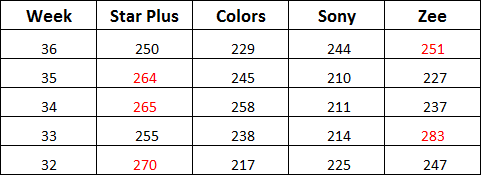
    If the TAM ratings of the past few weeks are studied, it becomes very clear that there is no sure-shot contender for the numero uno position. The weekend which saw the first episode of KBC on Sony made the channel numero uno for the weekend slot. However, overall ratings for week 36 saw Zee in the top slot. Week 35, saw Star Plus in the top place whereas for week 33, it was Zee at number one position.


    The yo-yoing has been going on for sometime now, so who gets affected by this – channels, media planners or advertisers? Or don’t the weekly ratings matter much? MxMIndia spoke to a few media planners/buyers and advertisers to get their perspective on it and to find a few answers.


    According to Anita Nayyar, CEO, India and Southeast Asia, Havas Media, in the GEC space there are four top channels – Star Plus, Sony, Zee and Colors – and their ratings keep fluctuating among themselves, which isn’t a recent phenomenon. “One week, one channel is peaking so the other week it’s another channel’s chance. Also, there isn’t much difference between their GRPs; it’s a matter of only a few numbers that they fall short of each other in the race. Therefore, it’s nothing alarming even for the clients who follow the GRPs to the T. However, we do keep in mind the trends and what gets the eyeballs to the channel. For instance, KBC taking Sony to number slot was expected. One needs to keep such issues in mind and plan accordingly.”
     

    Agreeing with Ms Nayyar, Hiren Pandit, managing partner, GroupM adds that one needs to keep in mind what is the programming mix of different channels. With KBC opening with 6.1 TVR, Sony was bound to reach the top slot. Therefore, one needs to track the new big shows coming up and how they’ll fare rather than worrying about channel shares which keeps see-sawing because of these shows. As for advertisers, they too focus more on shows and its performance rather than channels. Hence, such yo-yoing shouldn’t bother anyone unless it’s a drastic one.


    “I don’t think anyone takes these weekly GRPs of GECs into account; therefore, such weekly see-sawing shouldn’t matter. If one looks at various channels, you’ll see that most of them have reality shows or special episodes or Grand finale etc as their strategy to drive channel GRPs especially on the weekend. Hence, a media planner or buyer doesn’t get affected by it as most of the deals are separate for these (channel driver) reality shows and separate for rest of channel (regular) programs. And to advertisers what matters is the consistent deliveries through regular shows and not these few spike on select shows,” adds Neelkamal Sharma, COO – Buying, Madison Group.


    However, the advertisers feel a little different as GECs which have a vast reach in the country are seen by the advertisers as the best way to reach out to their audiences and brands spend millions to use the visibility given by these channels.


    Kamal Nandi, vice-president (sales & marketing) of Godrej & Boyce Manufacturing explains that as a brand, for them the two things that matter the most are efficiency and effectiveness. “Therefore, as advertisers on these GECs, we do look at cost and ratings points as the two most critical evaluating parameters. Hence, such fluctuations do effect our decisions as we monitor them closely.”


    Similarly, Mayank Shah, Group Product Manager, Parle Products says, “The content of every show on every channel varies. Despite the fluctuations, there are certain properties that continue to be at the top. These shows provide great opportunities for advertisers. However, strategies keep changing. So we do keep these fluctuations in our mind and alter the strategy as and when required. Advertising strategies are based on the kind of viewership a channel has. If a product matches with the channel’s target group, then advertisers will continue to advertise on that channel because the reach is effective. Also, there are various aspects to consider while choosing channels. Hence, the positioning is an important criteria, but not the sole criteria.”


    Hence, one thing is clear, that weekly ratings of GECs might not be considered as the sole criteria by planners or advertisers as much a monthly or the performance of the show in general. But they do matter when it comes to brands spending on GECs to reach their desired audience.


  • Will IPL 5 ratings match those of earlier seasons?


    By Johnson Napier


    The Indian cricket team’s performance over the last year has left much to be desired. Having suffered humiliation at the hands of several opponents and having failed to pep up ratings with their cricketing prowess, it was a telling sign that all was not going well for the men in blue who were crowned World Champions just about a year ago. Had such a downfall in form gripped any other country, it would have attracted the wrath of the fans that would’ve boycotted the sport by staying away from the game even if it meant empty stands (in stadiums) or viewership ratings on television taking a plunge.


    But that is precisely what is different about India, especially the bond that its people share with their favourite sport – cricket. Lose or win, big score or small score, there will always be a legion of fans who will continue to stand by the sport (and their idols), and be there in good times and in bad. This probably even sums up BCCI’s recent move in selling the broadcast rights of Indian cricket to Star Group for a staggering Rs 3,851 crore for a period from 2012-2018. One can only empathise with the broadcaster who now requires to come with a foolproof strategy that would see it recover revenues and also arouse curiosity levels amongst advertisers. But that is for later. For now, all eyes are on the most-anticipated tournament – IPL, that kicks off from April 4, 2012.


    Not wanting to take sides and given the string of ups and downs surrounding cricket in the recent past, experts are opting to play it safe and are predicting viewership ratings to be at par or slightly lower than the past year. In a sense, this augurs well for the wellbeing and popularity of the sport given the uprising it has faced in the recent past particularly with brands many of whom have opted to stay away from the event given the high costs being quoted for a 10-second ad. Also, the fact that a few franchise owners were left in the lurch awaiting divine intervention from the BCCI and with big players not being picked up by stake owners during the bidding process didn’t help solve matters either. And so while an average rating of 3.5 was what IPL managed to throw up in its fourth season, experts predict a somewhat similar rating for the fifth instalment too.


    Avg. Viewership of all IPL Seasons
    Tournament Number of Matches Avg. TVR
    IPL Season 1 59 4.81
    IPL Season 2 59 4.17
    IPL Season 3 60 4.65
    IPL Season 4 74 3.5


    Viewership of first match of all IPL Seasons
    Tournament First Match TVR
    IPL Season 1 L/T DLF IPL T20 KKR/RCB-BG 7.19
    IPL Season 2 L/T DLF IPL2 T20 MI/CSK-CT 5.09
    IPL Season 3 L/T DLF IPL3 T20 KKR/DC-NM 5.86
    IPL Season 4 L/T DLF IPL4 T20 CSK/KKR-CH 7.14

    (Source: TAM Peoplemeter System / Market: All India / TG: CS 4+)

    * In IPL 1 one match was abandoned due to rain

    * In IPL 2 two matches were abandoned due to rain

    * In IPL 4 one match was abandoned due to rain


    According to data from TAM Sports for season 4, the inaugural match between Chennai Super Kings and Kolkata Knight Riders had notched up a 7.14 TVR in the all India market for CS4+ (refer table for data). The number was much higher than what the previous seasons had managed to notch up. But despite the number of matches being increased to 74, the tournament managed an average TVR of 3.5. For season 5, while the tournament average is touted to stay the same the opening day numbers are estimated to be below par than the previous year. Asserts Anita Nayyar, CEO India & South Asia at Havas Media: “There is some commonality in the average ratings that season 5 is expected to throw up from the previous year but where for the opening day numbers are concerned, it could fetch a TVR of 5 or so.” Elaborating on why the numbers would not be as high as the previous years she said, “If you see, there has been an overdose of cricket in the past one year leading it to be a cricket-heavy year for team India. This has resulted in some form of fatigue setting in amongst the masses. The fact that a host of advertisers have opted to stay away from the event this year further signals the plight of the event in the days to come. But one could look forward to the event garnering an average rating of 3-3.5.”


    Echoing a similar sentiment, Nandini Dias, COO – Lodestar UM said that this year could be one of the bad years for the event where ratings are concerned. “The average ratings have been slipping over the years and would hover around the 3-3.5 mark this year. But what is more concerning this year is the way the advertisers have been treated despite trends suggesting an expected downfall in ratings. With such exorbitant rates, most advertisers have preferred to stay away from the event.” On the opening day numbers to be expected from the event, Dias said, “The buzz around the event this year has been surprisingly low and much of this may have to do with India’s dismal performance in the year gone by. I expect lower opening day numbers compared to last year given the low decibels around the event. Even the sale of tickets is low-profile with many preferring to stay away from making a purchase.”


    So while a dip in numbers is what is forecast, it would be interesting to see how the broadcasters play up the viewership numbers game as there is a slight change in the opening day schedule of the event. While in previous years, the opening ceremony was followed by a match on the same day, this year the organizers have split the two for separate days. Explains Jai Lala, Principal Partner – The Exchange, Mindshare: “Last year and in the previous years the opening ceremony was followed by a match being played on the same day and the number as such was high but this year there would be a difference in the numbers as the opening ceremony and the match have been separated from each other. So just the ratings from the opening day of the match per se, I would say it would be marginally low but as suggested that is due to the splitting of events. We’ll have to watch how the broadcaster plays up the numbers.” In fact according to Lala, “Season 5 may have an upper hand where the average ratings are concerned as one, there was no World Cup like last year that resulted in fatigue amongst viewers and also the fact that a lot of teams were in a sense rehashed last year resulting in small drop in ratings. But that shouldn’t be the case this time around; hopefully the ratings could be better than what was last year.”


    Preferring to stay optimistic, Neelkamal Sharma, COO – Buying of Madison Media Group is hopeful of the event managing a good opening in terms of ratings. And his supposition stems from the fact that the “general public’s mood being low due to economic slowdown/ scams/inflation etc hence they may look forward to watch something more entertaining and something that will drive away their attention from regular news.” As for the average numbers per se, he expects the numbers to be somewhat similar to last year +/-5-10 per cent.


    Having faced the heat last year for reporting a drop in viewership numbers that was backed by an unwarranted hike in ad rates, MSM would probably have to come up with some magic formula that would see them gain their way into the hearts of the viewers and naysayers too. It may help that the reach numbers for the tournament are estimated to be 8-10 per cent higher than last year due to rise in C&S households but the question is: will the viewer cling on to see the event complete the journey in its entirety or will he (or she) quit midway resulting in depleting numbers than previous years? The ball, for now, is in MSM’s court.


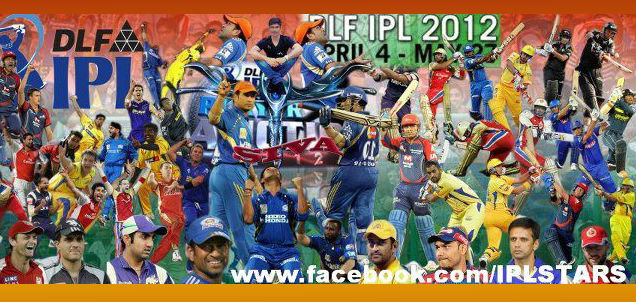
    Image courtesy http://www.facebook.com/IPLSTARS