Tag: Ranjan Kapur

  • Ranjan Kapur: 1942-2018


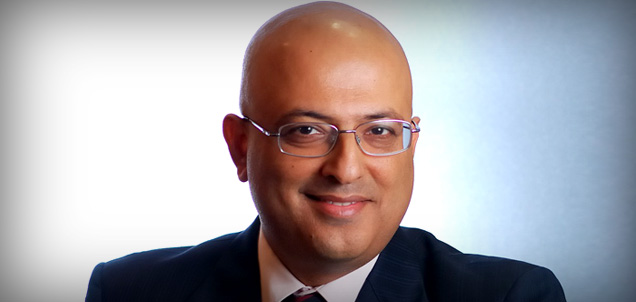
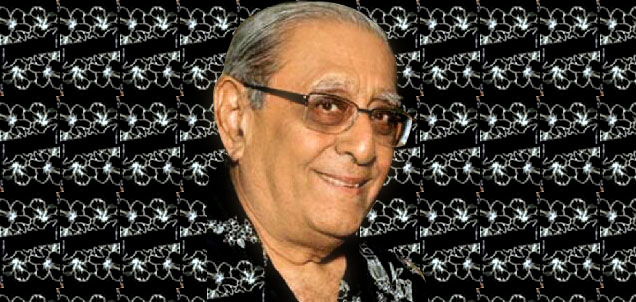
    Ranjan Kapur, WPP India Chairman, former Ogilvy India CEO, a mentor to many young entrerpreneurs and one of the Indian advertising industry’s leading lights, passed away in Mumbai on Saturday, January 27. He died due to a heart attack. He was 75 and survived by his wife and daughter.

    Born in Lahore in pre-Partition India in 1942, Kapur had did an MA in English from St Stephen’s College, Delhi in 1964.He joined Citibank, but the lure of the creative business got him to Ogilvy in the ‘60s. He moved to head Ogilvy India in 1994, and he helped catapult the agency to the top. There have been many tributes paid to him on the social media, some of which we have compiled in this report.
     

    Bhaskar Das

    Dr Bhaskar Das: An Advertising Man who was also an officer and gentleman 

    I vividly recall that afternoon on January 14 at 1.30pm. When the door opened at 281 B Twin Towers at Prabhadevi, two sunny side up faces–Jimi and Ranjan embraced me and my wife at their annual new year brunch. At their artistically designed flat, every corner of the room was abuzz with animated conversations. Ranjan and Jimi always appeared to me as made for each other-attended to each and every guest with warmth and smile. At that moment, I couldn’t visualise that I would meet Ranjan for the last time.

    Though I never worked directly with Ranjan, I heard a lot of positive marketlore about his aggression, combativeness in the market and business per se,  for his agency and the confidence that he enjoyed of the WPP Group supremo. My first encounter with him happened way back in 1996 when he was occupying the corner office of O&M, Bombay. That one meeting revealed the Man –statesmanly demeanour, impeccably courteous, clarity of vision both for his agency business and the Industry , and the foresight about the forces that would impact advertising landscape including digital — a rare skill amongst his contemporary leaders.

    Ranjan straddled the Indian advertising and marketing like the Collosusof Rhodes for more than four decades. He motivated, mentored, coached many stalwarts of advertising world of today. Everyone agrees that his human qualities are multifaceted–aggression (when it comes to business), modesty, ability to pun, storytelling, social sector activism, a painter and sculptor (this latent talent found expression during later stage of his life).

    Ranjan has touched so many lives and left an indelible impression for ever. The invitees on January 14 could never imagine that destiny had arranged for sumptuous farewell party from him to the industry leaders. What a way to say goodbye, Sir!

    Individuals like RanjanKapurare a rare specimen of human beings. They are not made anymore. We shall miss you Sir. Rest well and peacefully.

    Dr Bhaskar Das is Executive President, DainikBhaskar Group

     

    Ajay Kakar

    Ajay Kakar: End of an era

    I believe that the fame and love that a person attracts should not be gauged by the attention he gets during his holding a high office. But thereafter. And what can be a better tribute, than the love a person attracts, when he is no more.

    Today, as I walked out of the cremation grounds where the life and journey of RanjanKapur came to an end, I marvelled at the multitude of people who came to bid him adieu. People from all walks of life, all ages and from the world of Advertising and beyond. All those whose life Ranjan touched and enriched.

    Ranjan had retired as the MD of Ogilvy, a decade and more, ago. And when a typical person’s corporate life comes to an end, Ranjan was invited and requested to continue to mentor the industry. As Country Head and then Chairman of WPP. And steward to ISMI WPP Institutes. And remained on the board of many companies. Client companies. Clients who loved, respected and valued his wisdom. So much. How many from today’s generation can boast such client respect!

    Since yesterday when the sad news of his demise spread, Facebook is flooded with love and rich adjectives that Ranjan so richly deserves.

    A boss. A mentor. A guide. A gentleman. The last of Mohicans. A rare all-rounder, unheard of in today’s days. He could speak on any brand, with knowledge and passion. His understanding of business and brands was unparalleled. His sensitivity to creative, too. No surprise then that at Ogilvy he created a “3 legged stool” with Piyush and Rane. They thought and worked like one. A key reason for the agency’s success – with brands and the agency’s flattering financials.

    With the passing away, the world of advertising and brands sees the end of an era.

    A man with interests and hobbies beyond brands and work. He used to pen portraits in seconds. Loved sculpting and naming his creations. Enjoyed making perfumes.

    He lived life king size. Yet remember envying the blood red Merc coupe he bought and drove, as he ended his corporate life.

    His birthday wishes coming, every year. Unfailingly. From the days when there was no mobile diary or Fb to remind you.

    I was blessed to work for and with him. He held my hand and supported me set up and grow a financial practice for Ogilvy. And then also entrusted me as country head of Ogilvy PR. Had me on the executive committee of the agency.

    So having seen him up close, I could go on and on. Each of us has such fond memories and stories that any one or two will do injustice to the man and legend.

    Ajay Kakar is CMOAditya Birla Capital
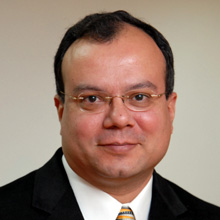
     

    Pratap Bose

    Pratap Bose: Ranjan was one of the finest brains on technology

    I heard the news on the Ogilvy group… it was a very sad day. Ranjan was my finest boss ever. I owe everything to him. He was my go-to man. And in a sense a godfather. I met him just a month ago. I still remember when I left Ogilvy, he said I was stupid to join another agency and that I should turn an entrepreneur. He even drew a business plan across the table!


    He was an Epic Man. A risk-taker, who would think forward in everything. Even at his age, he was one of the finest brains on technology.


    I joined Ogilvy in 1993 and got to know him when he came to India in 1994. The interaction was very regular until he retired, but even later, he was always around me.


    Sir Martin Sorrell trusted him immensely, and in fact I met the WPP chief through Ranjan a few times.  His passing is a great loss for the industry, and for me personally.


    Pratap Bose is Chairman and MD, The Social Street

    Goodbye #RanjanKapur .. Will never forget your spirit, warmth and constant sense of wonder .. the world will miss you ..

    — Shekhar Kapur (@shekharkapur) 28 January 2018


    They say nothing grows under a mighty banyan tree. Ranjan was the rare exception. Many a giant oak flourished in the sunlight of his shadow. My heart breaks for Jimi and Tina. It breaks for all of us who were blessed to have him in our lives. #ranjankapur #legend #fatherfigure

    — Bobby Pawar (@FRIEDFOODBRAIN) 28 January 2018


    I will not cry. I will not cry. I will not cry. I will not cry. I will not cry. I will not cry. I will not cry. I will not cry. I will not cry. I will not cry. I will not cry. I will not cry. #ranjankapur

    — Bobby Pawar (@FRIEDFOODBRAIN) 28 January 2018


    A professional par excellence & a gentleman. You will be missed my friend. #RanjanKapur https://t.co/7vFA7oatO2

    — Raj Nayak (@rajcheerfull) 27 January 2018


    A very very sad day for Indian advertising. RIP Ranjan Kapur. I am lucky to have worked with him – he was one of the biggest influences on many of us at that time. They don’t make them like him anymore. The biggest chapter of Indian advertising just got concluded.

    — Partha Sinha (@parthasinha) 28 January 2018

    RIP Ranjan Kapur ( Chairman, WPP INDIA ). How many of us have humility to give prompt feedback on a packaging created by our juniors? pic.twitter.com/i8S0ACVRZM

    — Manish Bhatt (@manishscarecrow) 28 January 2018


    Saddened to hear about Ranjan Kapur. An architect of the Advertising industry in India. Cherish the moments spent with him and Jimi

    — Prasoon Joshi (@prasoonjoshi_) 28 January 2018


    a true gent who radiated wisdom shaped WPP and who made me feel welcome from the first time I visited india for work 25 years ago. Indian ad legend Ranjan Kapur passes away | ET BrandEquity https://t.co/DTYdjeJGql

    — eric salama (@ericsalama) 28 January 2018


    RIP Ranjan Kapur. You were such an inspiration for so many of us in our younger days and I was proud to call you my friend in the later years. You will be sorely missed @WPP @WPPStream @martinsorrell @roshanabbas @Ogilvy pic.twitter.com/jCE0oVYKm6

    — Devraj Sanyal (@DevrajSanyal) 27 January 2018


    Deeply deeply saddened at the passing on of RANJAN KAPUR: a great advertising professional and an even greater human being. The world is much much poorer with his death.

    — SUHEL SETH (@suhelseth) 27 January 2018


    Ranjan Kapur, RIP. Contributed more to building modern Indian advertising than anyone else.

    — Anant Rangaswami (@AnantRangaswami) 27 January 2018
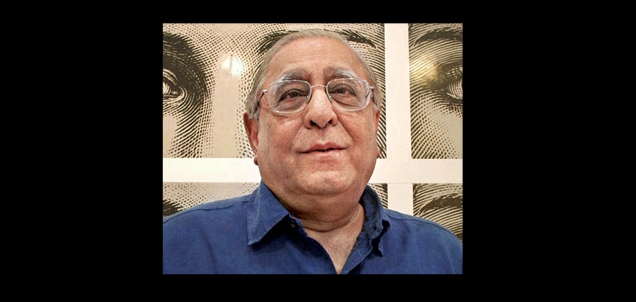


  • RIP, Ranjan Kapur (1942-2018)


    By A Correspondent


    Ranjan Kapur, WPP India Chairman, former Ogilvy India CEO, a mentor to many young entrerpreneurs and one of the Indian advertising industry’s leading lights, passed away in Mumbai on Saturday. He died due to a heart attack. He was 75.

    Born in Lahore in pre-Partition India in 1942, Kapur had did an MA in English from St Stephen’s College, Delhi in 1964.

    He joined Citibank, but the lure of the creative business got him to Ogilvy in the ‘60s. He moved to head Ogilvy India in 1994, and he helped catapult the agency to the top. He is credited to have spotted the talent in now Ogilvy India chairman Piyush Pandey and make him creative head.

    The cremation will  be held on Sunday, January 28 at 11.30am at the Worli Crematorium, Dr E Moses Road, Near Hotel Four Seasons.


  • Indrani Sen: The Missing Elephant

    By Indrani Sen

    Yesterday, Gowthaman Ragothaman or GMan (as we all call him) posted on the Facebook: “Digital Platforms still requiring advertising revenues to invest in technology that eventually disintermediates advertising. This is the biggest paradox in marketing today. Very soon these two forces will be at cross-purposes and from it will emerge the “subscription” model from the current “subsidy” model”. The post generated some thoughtful comments to which GMan replied that in the futuristic “subscription model”, we will subscribe for advertising –as in – willing to know more about a brand or a category. Ranjan Kapur applauded GMan saying that “We will have arrived the day people subscribe for brand communication. It is a distinct possibility and you are going to be in a position to make it happen.”


    Ashish Karnad added to the discussion by saying: “My take is that the subscription and advertising models will co-exist just like it does in television today”.  I responded to Ashish: “In traditional media, consumers do not have to pay for reading or viewing advertisements, the cover price of newspapers, subscription of cable or dish TV includes the cost of all types of content apart from the consumers’ time cost… Agree that as long as the consumers do not have to pay for the internet access cost, digital advertising will not have any handicap”.  I simply loved Gman’s reply to my comment:“This is the missing elephant everybody is playing around with!”


    The above chat on Facebook based on Gman’s post summarises our concern about the future of advertising in the world of digital media.  Yesterday, I also read an interesting article by Lucy Handley on www.cnbc.com (courtesy etbrandequity.com) titled: “Is Advertising Over? What the chief marketers are saying about the future of marketing” suggesting that “there are clear signs of nervousness among big business and recognition that ads can be super annoying.”  (http://www.cnbc.com/2017/05/26/is-advertising-over-what-chief-marketers-are-saying-about-the-future.html).


    The article referred to a report published earlier this month byForrester Research: “The end of advertising as we know it.”Forrester’s research suggests that 38 percent of U.S. adults who use the internet have installed an adblocker, and 50 percent claim to actively avoid ads on websites.Co-author James McQuivey has suggested that in future,digital assistants will replace Google search, and bots will become digital slaves who at their masters’ commands will scrape and remove stuff people don’t care about, including advertising before presenting people’s social media and other internet feeds back to them.


    The same article quotes Keith Weed, Chief Marketing Officer at Unilever saying: “Adblocking is a hugely hot topic… There has always been adblocking. Adblocking was the 30-second TV ad coming on air and you got up to make a cup of tea. That was real physical ad avoidance and what did we try to stop that happening is to create more engaging advertising…There is a huge fragmentation and clutter out there in advertising absolutely, and so people have more choice and I totally agree [that] this idea of the attention economy, of course people have choice, they can switch around more, and hence if we as advertisers don’t show great advertising, people switch around more.”


    We need to find out if people are using adblockers because they do not like the quality of the advertisements or they want to save the cost they are paying for accessing advertisement on the internet. If the consumers have free access to internet, will they still be using adblockers? This is the “Missing Elephant” that we are playing around with without knowing who will bear the huge cost of installing the free internet network in public places and who will maintain them.


    If advertising has to subsidise the system of free internet, then will the access of free internet in any public place be automatically denied to any platform with an ad blocking tool? The “subsidy” and “subscription” models of internet can co-exist in future with the first model based on free access to internet with an in-built mechanism of rejecting access to all mobiles, tablet, laptops etc. with adblocking devices and the second model based on subscription to the internet and digital content including selective information about a brand or a category.  We need to find the “Missing Elephant” before investing in creating great advertisements as once the consumers decide to block the ads, they will not be able to judge how good or bad the advertisements are.


    Indrani Sen is a media services veteran, having worked with JWT, later Mindshare and then with Emami. In recent years, she is an independent consultant and academic. She is Adjunct Professor in charge of the Media Management programme at the Symbiosis Institute of Media & Communication, Pune. The views expressed here are her own.


  • HDFC, other finance brands dominate WPP’s BrandZ

    By A Correspondent


    Finance brands are highest risers in the BrandZ India Top 50 with HDFC Bank being the most valuable brand for second year. The total value of India’s strongest brands has risen by a third (33%) over the last year, according to the second annual BrandZ Top 50 Most Valuable Indian Brands ranking announced on Wednesday by WPP and Millward Brown. This is the highest rate of growth achieved by any BrandZ ranking in the 10 years since valuations began, exceeding that of the Global Top 100 as well as the rankings forChina, Latin America and Indonesia.   India’s Top 50 brands are now worth $92.2bn (up from just under $70bn in 2014). The record-setting value increase has been driven by brands’ successful response to the rising sense of empowermentamong Indian consumers, and the government’s efforts to create a more conducive business environment.


    Brands in the financial sector (+49% growth) made the largest contribution to the overall increase in value, but significant lifts were also seen across most other sectors, indicating the broad strength of India’s economy and Indian brands. Home and personal care brands achieved a combined increase of 32%, followed by the auto aftermarket sector (28%), automobile brands(27%) and telecom providers (21%).


    Private companies, state-owned enterprises (SOEs) and brands owned by multinational corporations that are publicly traded in Indiaall experienced growth, illustrating how receptive the market is to brands of all kinds. 52% of the brands in the Top 50 are privately-owned, evidence of India’s entrepreneurial energy. 30%of the brands are owned by multinationals, which have successfullyadapted to the needs of Indian consumers, becoming so embedded in their lives that they are perceived as ‘local’.


    The BrandZ™ Top 50 Most Valuable Indian Brands 2015

    Rank 2015

    Brand

    Category

    Brand value 2015 ($m)

    Brand value change

    Rank 2014

    1

    HDFC Bank Banks

    12,577

    33% 1

    2

    Airtel Telecoms

    11,039

    34% 2

    3

    State Bank of India Banks

    9,374

    37% 3

    4

    ICICI Bank Banks

    5,122

    45% 4

    5

    Asian Paints Paints

    3,867

    38% 6

    6

    Bajaj Auto Automobiles

    3,345

    10% 5

    7

    Hero Automobiles

    2,907

    34% 7

    8

    Axis Bank Banks

    2,494

     New New

    9

    Kotak Mahindra Bank Banks

    2,394

    39% 9

    10

    Maruti Suzuki Automobiles

    2,318

    54% 11

    11

    Idea Telecoms

    1,981

    5% 8

    12

    Castrol Lubricants

    1,773

    40% 15

    13

    IndusInd Bank Banks

    1,542

    46% 19

    14

    McDowell’s Alcohol

    1,516

    9% 13

    15

    Nestlé Food/dairy

    1,498

    22% 16

    Key highlights of the 2015 BrandZ Top 50 Most Valuable Indian Brands study include:

    • Financial brands continue to dominate.With 13 brands in the Top 50, accounting for 41% of its value ($38.1bn), the financial sector has built brand strength by making a consistent effort to serve consumers better. Biggest risers: Union Bank of India (no.46, +72%), Punjab National Bank (no.22, +61%) and IndusInd Bank (no.13, +46%).
    • Home and personal care brands grew 32%, driven byincreased disposable income and spending on premium products, and investment by marketers across traditional and new media. These 12 brandshold 15% ($13.4bn) of the ranking’s total brand value. Fastest risers: Lakme (no.44, +69%), Lifebuoy (no.31, +49%) and Colgate (no.26, +44%).
    • Purpose is power. Indian consumers expect brands to actively participate in building a better society, and those that do have a higher brand value. Lifebuoy (no.31) has a social mission to change consumers’ hygiene behaviour, while Asian Paints (no.5) aspires to rejuvenate people’s living spaces and bring joy to their lives.
    • Indian consumers trust brands.In stark contrast with other markets, trust in brands is growing steadily. Consumers in Indiaappreciate brands, and 33% say they trust them. Among the most trusted are jeweller Tanishq (no.21), part of the respected Tata conglomerate, and Colgate, which is part of Indian folklore, and has been instrumental in organising dental check-up camps to raise dental hygiene awareness.
    • All four new entrants are of Indian origin – Axis Bank, Canara Bank, MRF (tyres) and Royal Enfield. Three are privately owned, and one is an SOE.
    • Disruption is on the horizon – from e-commerce and mobile brands that are building scale and connecting with consumers at a frenetic pace. These are not yet eligible to be ranked in theTop 50because they are not publicly traded.

    David Roth, CEO of WPP’s The Store commented: “The 2015 study shows that India is a market of great opportunities where consumers are feelingempowered, and this is increasingly reflected in their brand choices. The new Modi government is committed to creating an environment in which brands can flourish. India is distinct in many ways from other fast-growing markets, however, so simply applying strategies that have proved successful elsewhere will not work in India. Any brand intending to compete in India must gain deep insights into its nuances – such as the need to modernise while respecting the past, and the desire to remain fundamentally Indian.”


    Added Prasun Basu, Millward Brown’s Managing Director, South Asia:“India’s top brands are strong, and getting stronger – but there is no room for complacence. The top four had to grow their value by 37% on average to hold on to the same positions as last year, and close to 10% of the brands that made the Top 50 in 2014 have dropped out. To benefit from the continuing rise in consumer confidence and optimism brands need to understand the changing consumer, respond with innovative products and breakthrough communication, and experiment and invest in new media that reflect the spirit of the country today.”


    Said Ranjan Kapur, Country Manager, WPP India: “Building a successful brand in India also means helping to build India itself. Consumers are trustful of brands, but trust can crumbleovernight. Brands must work hard to sustain trust by connecting with thecountry’s communal sense of responsibility. Brands need to find ways to support the national agenda, and help to develop a more modern, prosperous and equitable society.”


    The BrandZ Top 50 Most Valuable Indian Brands 2015 report, charts and photography, can be downloaded from www.brandz.com.

  • Creative agencies have allowed themselves to be dumbed down: Vikram Sakhuja


    By Anil Thakraney


    Vikram Sakhuja heads GroupM, India’s largest media buying conglomerate. In a long and animated discussion, the ace number cruncher shares with us insights from the Indian media industry. As well as his own organization’s approach to the various challenges staring at the media business.


    Fifty-year-old Sakhuja is an IIT/IIM grad, and he did a number of years in marketing before he shifted to the world of media in 2001, when he signed up as Managing Director of Mindshare Fulcrum. During our meet, I could see that the outspoken GroupM boss is extremely passionate about his work, and is someone who could get easily agitated over provocative questions. Thankfully, we had a smooth run. Guess it’s all thanks to Yoga which Sakhuja has recently taken up. 🙂


    You were a hard-core marketing man at one point. What prompted the switch to media?

    I believe in taking the career as it goes, and taking decisions at different points of time. Let me take you through my career graph to explain this. After IIM, Calcutta, I was pretty clear I wanted to get into the marketing side of things. So I joined P&G and did eight years there. When I joined them, Richardson Hindustan Limited (RHL) was becoming Procter & Gamble (P&G). So when I started out, the company had RHL values and very quickly the organization got Procterised.


    And you were not happy with that?

    I was happy with that, but Procter believed in the system of specialization. So the guy who gets into sales, stays in sales. The guy who gets into advertising, sticks to advertising. I was in research and they extended that to marketing services. I learnt a lot there, but later on I wanted to move to brand management and P&G wasn’t allowing me that. And I didn’t want my epitaph to read ‘Marketing Researcher’. So I moved to Coca-Cola which was more flexible in these areas. Out there I managed the entire brand portfolio. That worked very well for 5 years. I was reporting to Sanjeev Gupta in those days, and he was handling both, marketing and bottling. And later he went on to take up a bigger job. So they got Shripad (Nadkarni) to head marketing, and I felt my job would get undermined a little bit. And so I left to join Star TV.


    And you lasted there for just one year.

    It was a mistake. I call it jawaani ki bhool. Peter (Mukerjea) said they wanted to start a strategic marketing function there, and it would include marketing of the creative product as well as on-air marketing, which is where the bulk of the spending goes. But it didn’t pan out like that because the programming department had a territorial interest in the programming piece. So it became very clear to me this was going to be an off-air game, and that didn’t have too many legs. And I left Star without a job. Later, Ranjan Kapur introduced me to Andre Nair (this is year 2001) who was looking for people to start Mindshare in India. We had a drink and one thing led to another. I felt a little trepidation in the beginning because I perceived ad agencies to be a little unprofessional. But later I thought about it rationally and it made sense. And so here I am.


    There are large media shops under the GroupM umbrella. How do you manage to give personal attention to each one?

    I am running GroupM, I am not running Mindshare or Maxus. There are capable people running those. I am a management by objectives kind of a person. One aspect of my deliverable is Profit & Loss, there’s no getting away from it. I have told my guys we should get growth from our existing clients. We should have the source credibility to go to them and manage 100% of their marketing investments. That is the agenda I drive. Then, I have to create an eco system for technology, talent and on how to do things better. The scope of service has actually dumbed down, clients are paying peanuts and they are getting monkeys. So I go and tell my clients if they want the right kind of talent and want to get the value out of it, then this is how it works.


    I suppose you operate more as a coach than as a player.

    Do I meet clients? Yes, I do. Am I directly involved in the day to day plans? No, I am not. Unilever is our biggest client. So every year at least one or two deals I will sit in on. Also for other clients. I love to be there for the sheer passion of it.


    What is Sir Martin Sorrell’s brief to you?

    Martin is pretty hands-on in most of the businesses. I rely on him more for counsel. I whet my new plans with him. For example, I went to him with the idea of celeb endorsements. And he felt it wouldn’t work, but asked us to try it anyway. And it didn’t work. Then there was a time we were offered some sweat equity in the IPL Deccan Chargers team. I took it up to Martin and he didn’t think it was a good idea, because he didn’t know the nature of the animal. But he’s brilliant, he is one of the few guys who understands our business, he wants to get in deeper.


    What is your stand on the shift from the commission system to the fixed fee system for media agencies?

    I definitely support the fee system. Though I would prefer a balance of commission and fee. Because in a growing economy you win with commissions. But when spends are not looking good at all, as is the case this year, fee bails you out. In principle, however, I like the fee system.


    How are the clients reacting to it?

    The people who take their marketing seriously believe in the fee system in letter and spirit. The top notch companies like Unilever, Ford, Pepsi, etc, totally get this. I believe clients should pay us Cost + for service, and a factor of that for the value we are able to demonstrate.


    What qualities do you look for in a media buyer in today’s time?

    You must understand that in our organization we don’t just buy media. I would like to believe that our agencies are actually driving the marketing agenda, probably more than the creative agencies. Most of the creative agencies have allowed themselves to be dumbed down, most of them are only interpreting briefs in a TV commercial format. They are only driven by the tactical creative idea rather than a long term view of the brand. All these wonderful creative minds should spend a little time thinking brand stewardship. Out here, we want people who can think account planning and communications. People who can understand the brand, the consumer, and then have the ability to unlock all the media solutions. So the media person needs to understand content, activation, digital, conventional media, and then he has to see how all this comes together.


    Key challenges ahead for media agencies?

    The clichéd one of course is that the commissions we earn are not allowing us to invest in the best talent. But we have to all individually work ourselves, show value and then ask for stuff. The other challenge is in the digital space. The erstwhile DNA of the media companies excluded digital. I believe integrated media planning is the way to go. This is distinct from multimedia planning, which had the TV plan, print plan, radio plan, etc, all working in silos. But with the increasingly multi media environment, the key is integrated planning. And digital is allowing that seamlessness even more. We have embraced this some time back.


    And yet, the media buying business, after the unbundling, has got totally commoditized. Shashi Sinha said to me the media planner has become a zombie.

    I was the first guy to bring the AOR into the country. So you can blame me for the disintegration of the full service agency. (Laughs) I would say each of our agencies has its own planning way. Maxus has something called ‘Relationship Media’, MEC has got ‘Navigator’, and so on. Each of them talks the consumer journey. They talk much more about the communication challenge. I am actually finding the plans looking more different now than they were earlier. So I disagree with my dear friend Shashi Sinha. Maybe I am not cynical. The planner is alive and kicking. It’s in fact the most exciting time to be in the media because of the large amount of fragmentation and the large amount of media choices.


    You did a stint with television. Do you foresee threats to this medium in the near future?

    Yes. The problem with TV today is that it has become a media game of the value of the inventory. At the end of the day, there are only about four million commercial GRPs being broadcast every year at an all India level. And that’s growing at 2 or 3% per year. This is the market for TV eyeballs. So like it or not, you have to extract value out of this. Today, at last count, we have 500 or 600 channels, and it’s getting fragmented. If an Imagine TV dies, someone else will pick up ratings. And if someone else launches, there’s further fragmentation. So the problem is that the same money is chasing some eyeballs. Until the new ratings system comes up and there’s a tectonic shift, you are talking about a metastable equilibrium. Now if the value has to go up, either you have to deliver more reach, or you have to deliver some associated imagery or sponsorships or incremental value.


    When do you expect the shake-out to happen in television?

    We’ve been expecting a shake-out since 1996. I guess some people seem to be having deeper pockets. I am not a finance guy so I don’t know how it works. But I can’t imagine many of them are making money.


    Think the IPL is losing some of its sheen?

    No. The ratings this year were a tad higher than the last year. But for all practical purposes, have held on to last year’s levels. It has stabilized at about 5 rating points. In fact, this year was the best year primarily because of the games, which went down to the wire.


    And it’s a good investment for team owners?

    For them it’s going to be a slow burn. You have do it sensibly, like the KKR franchise does, and I think they make money. Whereas a large number of other people don’t make money. It’s about how you manage the entire franchise.


    There’s a perception that you guys are not passing on bulk rates you get from the media to your clients.

    We have something called the WPP Compliance. And we take it very, very seriously. So we are making sure that we do everything as per our contract with each client. In letter and spirit. We are definitely not holding back anything which is due to a client. We have a media owner invoice and it’s backed by an agency invoice. If the clients want to audit us, they are most welcome to do so. We are a global leader in this space doing global deals, we won’t mess around with something where there’s a breach of trust involved. We can’t afford that.


    Perhaps this was one of the reasons Reckitt Benckiser came up with the idea of agencies paying to pitch, and compensating them in case of a drop in ratings.

    They invited us to pitch and we asked them if they were being ridiculous. We turned them down. If somebody has an obscene point of view, I cannot subscribe to it.


    And yet, some agencies pitched for that account. Isn’t the industry united in these things?

    I thought we were united on that but obviously we weren’t. What do I say now?


    You’ve done many years in this business. Ever thought of starting out on your own?

    The thought has crossed my mind but I didn’t pursue it. I am not a very entrepreneurial guy. My philosophy is: Don’t fix it unless it’s broken.


    Does the lack of adequate talent in the media industry frustrate you? Is it a constant battle to find the right people?

    Yes, it is. But we have to be able to pay right to get the right talent. And for that we have to work our own internal financial structures. The level at which we work, there’s only so much we can afford to pay people at the entry level.


    Is there corruption in this business? There are allegations of planners taking money and other favours.

    One hears about these things from time to time. There is an opportunity for something like this, and clearly we have to plug it. This is where I believe organization culture is very important. If conversations in an organization involving integrity are strong, then the one or two people who entertain these thoughts will find themselves in a very uncomfortable situation.


    Have you ever fired people from your company because of this?

    Oh yes, I have.


    I saw a Youtube video of yours where you mention something about getting stressed out at work.

    I tend to be very animated and passionate, and I do get worked up. But I have been doing Yoga and stuff like that. And that’s helped. I have also started taking it a bit easier now, we have a good team. And at the end of the day, tension lene ka nahin, dene ka! (Laughs.)


  • [Flashed y’day] Ranjan Kapur is new Bates chairman

    Veteran adperson Ranjan Kapur has agreed with the Regional Management of Bates Asia to step into the role of Chairman Bates India. It will be in addition to his current role as Country Head, WPP, India.


    In his new role, Mr Kapur will work closely with the senior management of Bates India to fire a new ambition and help develop an organization structure that offers more relevant ways of engaging with clients and consumers “Bates has developed an exciting new ‘changengage’ philosophy that helps provide solutions that are both media and discipline neutral, and it has through the line capability and resources, to deliver them. To drive this thinking forward we are in conversations with a few new age thinkers and we hope to finalize on the CeO for bates India very shortly,” said Mr Kapur in a communique.


    Mr Kapur has been informally engaged with Bates ever since he stepped down as Chairman of Ogilvy. Mr Dheeraj Sinha, Regional Head of Planning feels that Ranjan will help galvanize the people at bates India. “His reputation precedes him and he hasn’t lost any of the passion and drive he displayed when he led Ogilvy to the top.”


    “The recent departures at Bates India, have presented us with an opportunity to put the right leadership in place”, says Mr Tim Isaac, Regional Head of Bates Asia. “I am delighted to renew my partnership with Ranjan. I have worked with Ranjan many times since I first arrived in Singapore in 1986. With Ranjan as Chairman and a new CeO in place shortly we will be looking to accelerate our growth in India”.


  • Chinese Madhouse looks to wow India


    By Johnson Napier


    Countless comparisons could be drawn on how two of the biggest and most admired economies are driving brands from all across the world to be a part of a growth story that is unparelled. Or how the APAC region is all about just these two economies today, putting the other developed nations in the region in a state of oblivion. Having wowed the world with growth stories that defy market odds, China and India today command attention from business stalwarts and entrepreneurs like no other, especially entrepreneurs from emerging mediums like Digital and Mobile that are shaping the way the world goes about doing its business. But despite the huge buzz around these two economies, there is very little that transpires when it comes to the two economies trying to venture into each other’s territory to gain mileage and expand base – especially in the digital space.


    But all that could change with the advent of the largest mobile solutions and advertising network firm from China- Madhouse. Launched in 2006, the company enjoys the reputation of being tagged as the most intellectual and largest mobile ad solutions company in China. In India, Madhouse will work towards providing brands, advertising and media agencies and marketers with a host of comprehensive mobile marketing solutions. It has already tied up with a host of strategic partners including WPP, Vivaki, Omnicom, Aegis and so on from the media agency side of the business and would work towards providing them holistic mobile marketing and advertising network solutions.


    The Madhouse India team would be headed by Vinod Thadani, who until now was handling mobile responsibilities for Group M India andSouth Asia. Given that the two countries share market complexities that are similar in nature and have a population base that is very high, it seemed like a natural extension for Madhouse to step in to India, making it the first such venture into foreign territory in APAC.


    Throwing light on how the APAC market compares to the other regions and reacting on his choice of targeting India as the hub for launching the venture, Joshua Maa, Founder & CEO, Madhouse Inc. said: “Today APAC occupies ad spends growth to the tune of 32 per cent, making it the largest in the world. These are led by the economies of China , India and Indonesia that are the key drivers of this growth in APAC. To gain success in a market like India requires the ability to manage complexity, and this is an area where we excel.”


    Hoping to leverage the opportunity of using mobile as a mass media device, Maa went on to elaborate the business module by stating: “If you compare the mobile markets of India and China, they are almost identical. While China has a mobile user base of 960 million, India’s number stands at 894 million. But where mobile internet users are concerned, China has 356 million users while India’s number stands at 150 million. Therefore, we foresee a huge growth in India and decided to make this our first market to launch in APAC.”


    In India, the agency’s focus would be centred around disciplines of mobile ad serving, mobile ad network and mobile marketing solutions. Having wowed clients in China like HP, KFC, Unilever, Intel, Coke, and others, Maa hopes to emulate a similar example here by getting important brands to align with the network: “Being the only full-service provider in the market and having a skilled and experienced team in place, we hope to attract a lot of clients in the days to come.”


    Emphasising on the partnership, Vinod Thadani, COO, Madhouse said: “Madhouse will offer mobile marketing solutions created and carried out for advertisers by a team of experienced media professionals that understand this medium. On a technical level, mobile advertising can now achieve accurate intelligent targeting and provide real-time reporting – a very convincing proposition for advertisers.” According to Thadani, the need of the hour is to unlock the potential of the mobile medium and they are therefore determined to grow the Indian Digital Media market from Rs125 crores to Rs1,000 crores in the next 3 years. “The need of the hour is to understand the medium thoroughly and this would be possible by partnering with the right partners and going back with the right solutions to clients.”


    Perhaps the best reason for elation among mobile clients in India was provided by Ranjan Kapur, Country Manager, WPP, who began by discussing how India, as an advertising market, was highly undervalued. “Despite India boasting such a good growth in economy, the advertising spends in China stand at US $55 billion while for India it is at US $6 billion, this shows that we are still an under-advertised and under-branded market.” Citing the reason for China leapfrogging ahead of India, Kapur said that the single biggest factor for India’s dismal record in getting more ad spends was because it jumped on to the services bandwagon and chose to ignore the manufacturing sector. “While the Services sector contributes about 55 per cent to the GDP growth, it is still very shy on spending on marketing and promotional activities. And this is an area where Manufacturing excels. But all that is changing and the Services industry is opening up and spending more.”


    On the ad spends growth in India, Kapur said that while there is a 15-20 per cent growth, it is digital that is intriguing the advertisers the most. “Digital ad spends recorded a growth of 30 per cent.Mobile, specifically, is a Rs125 crore industry today and given that there are 300 million internet users predicted by 2015, mobile advertising is expected to account for about one-fourth of conventional traditional advertising. So it can be said that a revolution in digital in India is beginning to happen now.” This growth will be boosted further by the Government’s efforts to spread mobile and internet usage in rural areas for which it has promised 2,50,000 nodes for broadband in the next four years. “So mobile marketing in the rural areas will be a mass phenomenon, once this plan gains momentum.”


    Another interesting addition to the venture would be Rovio Entertainment that is more popular for its Angry Birds concept around the world. “Madhouse is a valuable partner for us in China , and we are excited about the opportunity to extend our collaboration to India as well,” said Bijay Gurung, Key Account Director, Rovio Entertainment Ltd. “With India being the second largest Facebook market, it opens the door for us to entertain even more fans as we are aiming for one billion downloads by the end of the year.” The current number stands at 700 million. Apart from that, Rovio would also focus on pushing itself as a publishing firm, a large-scale animations firm and further look to enhance its merchandise business.


    In an era where it is becoming difficult to lead lives without smartphones, iPads and other such mobile gizmos and with a lot left to be accomplished in the Data, Voice and Text domain and lack of established tools and systems that makes it difficult to answer the question of how this medium can be leveraged by advertisers to reach out to their consumers, probably an established Chinese mobile dragon could well show Indian mobile companies the way this medium could be harnessed to its full potential.