Tag: Rajiv Verma

  • Madhavi Sekhri appointed head of INMA South Asia Division

    By A Correspondent


    The International News Media Association (INMA) has appointed Madhavi Sekhri as Head – South Asia Division. She will oversee INMA South Asia’s growth strategy and execution. Sekhri succeeds Priya Marwah, who headed INMA’s South Asia Division since 2007. Sekhri’s last assignment was with HT Media Ltd. as head of brand and marketing for the business daily Mint. Prior to that she spent nine years with The Indian Express.


    Regarding her appointment and INMA’s plans for South Asia, INMA CEO Earl Wilkinson said: “Madhavi joins INMA at a time when INMA has great momentum in this region. We aim to increase our footprint at an accelerated pace in South Asia. Having Madhavi on board with her experience in this space will further this.”


    Added Rajiv Verma, president of INMA’s South Asia Division and an advisor with HT Media Ltd: “In the very near future, we will see INMA members being more actively engaged within South Asia and better connected globally. Madhavi’s appointment enhances our focus on broadening INMA’s reach in South Asia.”


  • Praveen Someshwar will helm HT Media wef August 1

    By A Correspondent


    Praveen Someshwar has been appointed as Additional Director and designated as Managing Director & CEO of HT Media with effect from August 1. The appointment is for a period of five years.


    Someshwar, a Chartered and Cost Accountant, has been working with Pepsico since 1994 and is currently SVP and GM for Pepsico North Asia, Phillipines, Indonesia, Malaysia and other islands in Asia Pacific Region. Prior to this, he had a stint with ICI India Limited between 1991-94.


    He has also led Pepsi’s food and beverages businesses in India, and has also been CFO of PepsiCo India from 2007 to Jan 2009. Someshwar will take over from Rajiv Verma who will continue with HT as an Advisor.


  • HT Media inks strategic tie-up with Minute Media

    By A Correspondent


    Minute Media is bringing its revolutionary contributor-driven sports-media platform to India in a joint venture with HT Media Group.


    The new joint venture will launch 90min, Powered by HT, to serve millions of football fans in South Asia in English and later in Hindi. Built on 90min’s next-generation mobile and socially driven technology, the site will offer the latest news, commentary, statistics and visuals on global football to an increasingly passionate Indian market across HT Media Group’s properties.


    “India is not just home to one of the world’s largest football fan bases, at 170 million and growing, but more than 20 million football fans are already active on social media. That’s where our content comes in,” said Asaf Peled, Founder and CEO of Minute Media. “We see a tremendous need to provide brands, publishers, and fans with a platform to generate and share football related content across web, mobile and social based channels. Our strategic partnership with HT Media is the perfect gateway to introduce our open technology platform into the Indian market and give a powerful voice to the growing number of football fans across India.”


    90min, Powered by HT will feature an array of topics created by the fans using various multimedia formats including video, polls, slideshows and interactive polls. Powered by Hydra, Minute Media’s proprietary content management platform, publishers such as HT Media can feature or embed its rich content across their media properties.  Global advertising partners and local brands will also be able to reach consumers through customized content marketing campaigns across 90min India’s platform.


    Announcing the Joint Venture, Rajiv Verma, Group CEO of HT Media, said: “We are very pleased to partner with 90min.com, the fastest growing soccer site in the world with over 50 million monthly users, and bring to India 90min.in which will provide a platform for the massively expanding number of soccer fans in the country to engage with and be a part of the global soccer community and conversation. 90min.in is a contributor-led offering in English, and soon in Hindi, and is available across web, mobile and social platforms. In the coming months, we intend to build scale into this hyper-connected fan platform, covering of course all of the best of global soccer and the biggest global tournaments, but also the fast emerging Indian soccer leagues, teams and players.


    The idea is to bring together the proven platform of 90min in engaging football fans and HT Media’s established reach with audiences, brands and customers.”


    “This is a perfect pairing for football fans in India,” said Marcus Brauchli, managing partner of North Base Media, a minority investor in both 90min India and Minute Media and a partner of HT Media in the MediaHack accelerator. “A football match lasts 90 minutes. 90min is the place football fans can go online or on mobile in the 146 and a half hours every week when their favorite teams aren’t on the pitch.”


    The 90min partnership with HT Media comes after a year of rapid growth for Minute Media. Its global audience has climbed from 7.5 million unique visitors a month to 55 million global unique visitors in the past 18 months. More than 110 million users engage with 90min through social media monthly and 70 percent of the audience is under the age of 25. Minute Media enables more than 4,000 fan journalists to create a new form of rich, interactive, social content and is currently generating more than 15,000 pieces of curated content per month in 10 languages. Last October, the company closed a $15 million round of funding, bringing its total funding to $45 million, led by leading venture capital firms Battery Ventures, Dawn Capital, Gemini Ventures, North Base Media and ProSieben.


  • HT Media and North Base Media launch Mediahack.in

    By A Correspondent


    HT Media Ltd. and North Base Media, an international investment firm, announced the creation of Mediahack.in, an innovative accelerator program aimed at fostering a new generation of digital media companies.


    Mediahack.in will identify and support entrepreneurs who want to build leading-edge, original content and advertising-related technology businesses in India. Both HT and NBM’s leaders have decades of global and Indian media experience that they will bring, along with extensive connections to pioneering technology and media companies around the world.


    Mediahack.in will invite entrepreneurs to apply to participate in the accelerator starting this summer. Successful applicants will spend several months on the program, interacting with each other and leading media and technology thinkers from around the world. They also will receive an initial investment of up to US$ 100,000 to convert their great ideas into fast growing and world changing businesses.


    Talking about the potential of the Indian media market, Marcus Brauchli, co-founder and managing partner North Base media and former editor of The Washington Post and The Wall Street Journal, said: “Mobile and social platforms are transforming the way billions of people consume news around the world. Nowhere is that more evident than in India, where more than 500 million people will have access to the Internet, many for the first time, in the next few years. We want to help the next generation of entrepreneurs create the platforms, products and technologies that will bring news and information to those new audiences. We are fortunate to have as a partner HT Media, with its deep commitment to news and innovation and its leadership’s strong interest in innovation. We hope to provide Media Entrepreneurs in India our expertise so that they can scale up to be global businesses.”


    Speaking about the launch of mediahack.in, Rajiv Verma, CEO, HT Media Ltd., said, “Media is one of the most exciting sectors in India today. I am therefore delighted that we at HT in partnership with NBM; are going to provide a platform which will encourage media entrepreneurship in India.  NBM with its global expertise will add immensely to this endeavor and provide great learning opportunities for upcoming media entrepreneurs.”


  • Embracing the New Consumer


    By Shruti Pushkarna


    The Advertising Club’s popular annual event, Media Review 2014 was held at the DLF City Club, Gurgaon on Thursday (Dec 18) evening. In its 60th year, the Advertising Club decided to tweak the format of the media review in its latest edition. Unlike the previous editions, there were three eminent speakers speaking on varied topics. CVL Srinivas, CEO South Asia, GroupM spoke on ‘Redefining the role of media agencies in a borderless world’. HT Media CEO, Rajiv Verma also spoke on similar lines, differing only in restricting his topic to redefining the role of ‘print’ media. The third speaker, Shashi Sinha, CEO, IPG Mediabrands spoke on, ‘Separate and Together: The future is about being specialist and holistic’.


    There was a lot of talk of redefining and reinventing the roles of media agencies in the new digital era and what to expect of the future trends but Mr Sinha, summed it up in a most appropriate way when he said, “We have to manage our present in order to reinvent our future”. He emphasised on the need to tell stories in a way that they evolve and reinvent the future automatically.


    As in any other forum that takes place today, there was talk of integration, the need to align different cultures and different mediums to effectively send out a message. There was also anxiety expressed on whether older mediums like Print will hold value in the growing digital world. But the concluding remarks hit the notes of optimism that rode on the back of realigning and in assimilation of various models present today, to arrive at that ‘magic model’ of communication.


    Redefining the role of media agencies in a borderless world

    CVL Srinivas, CEO South Asia, GroupM opened his session speaking about the evolution of the media agency and trying to define a ‘borderless world’.


    He compared the evolution of man with the evolution of media agency, which he said was presently in its fifth stage. The first stage of media evolution, according to Mr Srinivas, happened in the mid 1990s when media buying shops were being set up in India. The next stage came when media planning business moved out of the creative agencies. After which most media agencies started to diversify, setting up allied businesses, beit outdoor or digital, in order toprovide what they called, 360-degree solutions.


    He said, “We started off as a little chimp who is standing right in the back, as being the backroom office and I was one of the chimps when I’d joined the industry in the early 90s, following the client servicing guys wherever they went, hoping to get my five minutes to present my 80-odd slides. From then to now, it’s been quite a journey. But where we are today is at a very interesting stage. Whatever changes have happened in the last four to five years have forced media agencies to take on an entirely new avatar.”


    Trying to define a borderless world, Mr Srinivas cited the example of a Facebook map which stands for a connected world. Since the world we live in has all the customers connected and well informed, there is an urgent need for brands to not just stay relevant but also remain meaningful. Mr Srinivas said he sees an opportunity for agencies in this newly connected world, He said, “Today it’s not enough to be a trusted adviser of clients. Agencies can move up the value chain by moving from advising clients to leading clients.”


    In the digital era, added Mr Srinivas, a lot of disruption is taking place because of exceedingly available data and technology. He also mentioned some disruptive trends that agencies can take advantage of by designing content strategies around them. One of them was multi-screen viewing, which as a study by Milward Brown on ‘ad reaction in India’ states, is a growing trend in the Indian market. More and more Indian consumers are involved in multi-screen viewing. Milward Brown notes that by 2020, it’s estimated that about 50 to 60% of mobile owning population of India will have smartphones. Mr Srinivas added, “If you put that alongside with the kind of decreasing involvement in TV viewership, the whole ball game completely changes.”


    Another disrupter is e-commerce or m-commerce as some would like to call it. Mr Srinivas observed that because now consumers are using a digital gadget to close the loop, agencies have an opportunity to interact with the consumer up to the last mile.


    Brands are also getting into publishing and that is turning out to be a disrupter too. They are standing for functional benefits. The more content a brand can keep sending out, the more they can interact with the consumers. “Brands realize that it’s important to become a franchise of content because then a consumer interacts with the brand in so many more ways”, said Mr Srinivas.


    Talking of new trends in audience planning, CVL Srinivas said, “We have to move from contextual planning to audience planning with the help of data and the digital. Manual processes will give way to automated processes. We also need to build different communities within the organization.”


    CVL Srinivas concluded his session by once again emphasising the importance of reinventing and redefining the role of media agencies and the need to take advantage of every new point where you can touch the consumer directly.


    Redefining the role of print media in a borderless world

    HT Media CEO Rajiv Verma started his session on a similar note as Mr Srinivas. He also started by talking oh the history of media and how it has shaped up through the centuries. He divided it into three eras, Pre Media, Mass Media and Infinite media. He confessed that all this talk of the ‘cool digital world’ has had him worried about the future of print but since the infinite media we live in is younger than our kids, he still had some hope. He said, “Infinite media is younger than our kids so it’s not even a blink of an eye in the entire chronologue of media evolution. Therefore it’s just the beginning.  And there’s scope for all mediums to coexist.”


    He talked about how reporting has changed over the years and yet the essence remains the same, finding out accurate information and putting it out there. “From one half-hour news bulletin in a day to the days of embedded journalism that began with the Iraq war to today’s day and age where the model of reporting has shifted from ‘one to many’ to ‘many to many’, we have come a long way,” he said.


    In a borderless world, media is no longer acting as a filter. It has become more ubiquitous.  He reiterated Mr Srinivas’ point of massive amount of disruption that is taking place today, which presents huge opportunities for business.


    But Mr Verma wasn’t all that optimistic as Mr Srinivas as he stated that the digital has its own problems. He said, “In the age of digital reporting, before the truth gets known, the virality takes over. The lines between blogs, tweets, photos are blurring; becoming a mish mash of data and information. The war for ad $s is leading more to noise rather than to news. And the pressure of ad $s is leading to trivialization of news.”


    He emphasized on the unique characteristics of print media, like, the written word is still the most trusted word. He said print can go beyond straight facts, presenting a range of views and building a sense of community among its readers.


    He concluded on an optimistic note stating that print will coexist along with other media given its unique characteristics. He said, “While all these disruptive forces are at play, the real question that comes to mind is that print media will have to go back to basics in figuring out its comparative advantages, what is exactly is the audience it’s trying to serve and try to go more hyper local in serving that audience because that’s the only unique characteristic of print media which differentiates it from others.”


    Separate and Together: The future is about being specialist and holistic

    The last session saw Shashi Sinha, CEO, IPG Mediabrands, reiterating the points made in the previous two sessions, adding a few new ones.


    Shashi Sinha, CEO, IPG Mediabrands, started the session with the word ‘Integration’. He talked of his own career where he started off with advertising and what integration meant in those days, and then talked of the need to integrate not just ideas and processes, but to integrate, mindsets, culture and philosophies, in order to remain relevant.


    He also emphasized on the need to embrace the new consumer. He said: “Consumer wants to be the protagonist, he/she wants to be at the center of communication. He/she doesn’t want to be bored with information. Just tell them how it impacts them and how can they participate.So there’s a need for consumers to be constantly engaged and constantly touched.”


    He added that what’s important in today’s ever-changing media environment is the need to tell a powerful story. He said, “The success of any model depends on the story and its storyteller. You have to play it together to tell a story. We have to manage the present and as we manage the present, the stories will evolve for us to reinvent the future. And keep your stories simple.”


    He concluded by saying that while we live in an increasingly specialist world, without integration we will not be able to remain relevant to the new age consumer. He said, “In this specialist world, where you have Starbucks, Café Coffee Day and Barista, I still have my coffee from the baker.”
     

  • Mint Asia holds India Dialogues in Singapore

    By A Correspondent


    HT Media business daily Mint’s Singapore-based edition Mint Asia presented the first India Dialogues at the Marina Mandarin in Singapore recently, bringing together on one platform U K Sinha, Chairman of capital market regulator Securities Exchange Board of India, K V Kamath, Non-Executive Chairman of ICICI Bank and Diwakar Gupta, Managing Director of the State Bank of India. They discussed the future of the Indian economy with Tamal Bandyopadhyay, Mint’s Deputy Managing editor. In attendance were luminaries of the global investment community based in the island-nation.


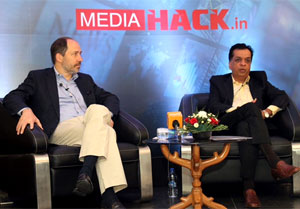
    This session was preceded by a panel discussion on ‘Where is Media in Asia headed?’ Panelists Norman Pearlstine, Chief Content Officer, Bloomberg LP, and Marcus W. Brauchli, Vice President, The Washington Post Co, engaged in a free-wheeling exchange of ideas with moderator, Mint Asia Editor R Sukumar


    Said Mr Brauchli: “From the point of view of media companies, those who are agile and adapt (will succeed). HT (Media Ltd) has done a terrific job. What has happened with HT is Mint has produced a very specialised string of contents that happens to coincide with the mood and interest of the country at the time. The competition is going global.” Normal Pearlstine said, “It is dangerous to generalize about countries in Asia, but particularly given the differences in internet penetration, you will see areas where there will be continued growth in short and medium term in terms of print in India, in Indonesia and perhaps a couple of other places but for the most part in Japan and (South) Korea you will see real fall rather quickly in terms of print.”


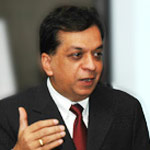
    Rajiv Verma

    Earlier, Rajiv Verma, CEO of HT Media (and publisher of Mint Asia), said in his keynote address that “Mint Asia will cater to the information needs of Singapore’s significant market of Indian influentials. It will provide insights and perspectives on the Indian economic and business environment.”


  • HT Media’s Bridge School to be operational in a year

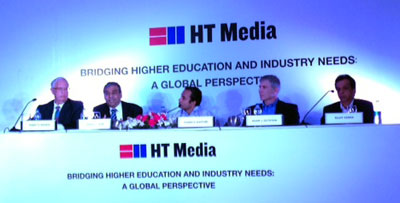
    (L-R) Professor Henry Bienen, Professor Dipak Jain, Charu Sudan Kasturi, Adam Gutstein and Rajiv Verma

    By Ananya Saha


    After launching Studymate tuition centre for Class IX-XII in association with MT Educare in the year 2010, HT Media has announced another JV in the education sector. India Education Services Pvt Ltd is a JV between HT Media Ltd and Apollo Global, Inc. (USA).


    To address the skills gaps in India, IESPL is planning to enter Higher Education with the Bridge School of Management. Bridge School of Management has been conceived to address the ’employability’ gap to help India’s rapidly growing Service and Manufacturing Industry educate and empower employees for a 21st century global workplace. Leveraging the best-in-class knowledge, experience, expertise and technology from Apollo Global, Inc. (USA), Bridge will aim to provide an innovative learning environment and industry focused management programs for working adults to boost their career.


    To announce the launch, IESPL held a panel discussion on ‘Bridging higher education and industry needs: A Global Perspective’ recently in Delhi. The panelists in the discussion included experts from the academic and corporate world – Professor Henry S. Bienen, former President of Northwestern University, Professor Dipak Jain, Chaired professor of Marketing and former Dean, INSEAD, Adam J. Gutstein, Principal and Management Consultant Leader PwC, USA, and Rajiv Verma, CEO, HT Media Ltd.


    Mr Verma said, “I strongly believe that it is possible for an enterprise to ‘do well’ and ‘do good’ and these are not mutually exclusive goals. Thus for HT as a company we realised that there is an opportunity, since there are many young adults looking to improve their skill sets in accordance with the needs of the industry, we decided to enter this space where we can’t only ‘do well’ but also ‘do good’. ”


    The panel discussed how most management institutes today focus only on theoretical learning with outdated content irrelevant in today’s competitive world, which results in an ‘education-employment mismatch’. As high as 44% of recruiters find it difficult to find the right talent in the 4- to 8-year-experience bracket. On the other hand, there are millions of working adults who are unable to fulfill their need for career enhancement and higher income due a mismatch in the skills and competencies that they have and what industry needs. Forty percent try and upgrade their qualifications while making a career shift.


    Speaking to MxMIndia, Mr Verma informed, “There is a lot of intricacies involved in this project. We are working with academicians and corporate industry to gauge the scene, We are also mapping the kind of courses we should offer. However, we do plan to open the institute in a year. Delhi is definitely one of the markets we will be present in.”


    Talking about education needs and India in particular, Professor Henry S. Bienen said, “The world keeps changing, so what becomes important is to provide people with continuous learning and in a heterogeneous country like India, a lot of different institutional forms need to be developed to meet the needs of a highly differentiated population.”


    Said Professor Dipak Jain, “When students graduate from American institutions they feel a need to ‘give-back’. This is the kind of culture we need to develop in India, where the students feel that the school made a difference to them. The most important aspect of an MBA education is the sharing of knowledge between teachers and students. It is equally important for teachers to learn from their students as we, in the education profession, are in the business of lifelong learning.”


    According to Mr Gutstein, what is really required in management curriculums is the “focus on developing these sector specific skills”. “Additionally, there is a big need to take advantage of today’s technology and educational institutions need to remain abreast with technology as much as the corporate,” he said


  • Mint goes to Singapore lah

    By Ananya Saha


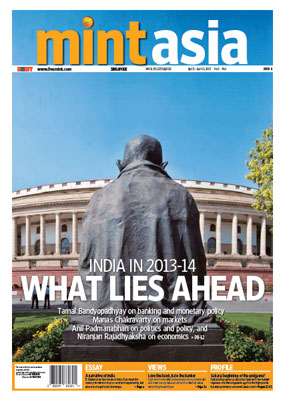
    HT Media’s business daily – Mint has forayed into the global market with the launch of MintAsia, a weekly business paper, in Singapore. To be retailed at 6SGD, the newspaper will hit stands every Friday. The first edition was unveiled on April 6 at the IIMPact alumni event in Singapore by Dr. Raghuram Rajan, Chief Economic Advisor to the Government of India and R Sukumar, Editor, MintAsia.


    “Our readers are not only highly affluent but also of a global outlook and have gone beyond the shores of India. Singapore is home to a large Indian diaspora, belonging to the Mint reader mindset, actively seeking insights into the Indian business market,” said Vivek Khanna, Business Head, Mint and Head- Strategic Partnerships, HT Media told MxM India. Targeting over 10 percent population of NRIs in Singapore, Mint Asia’s in-depth analysis and sharp insights will keep the global audience abreast of developments shaping the Indian economy and markets, according to Mr Khanna. The content of the paper will be distributed into various sections including banking and finance, policy and corporate affairs, opinions and views of experts across industries and a lifestyle section, offering insights into the Indian business market.


    In an official communique, Rajiv Verma, CEO, HT Media Ltd, said, “When we conceptualized Mint, we were always very clear that it would be a regional media brand and I am delighted that, with this launch in Singapore of MintAsia, we have started on that journey. This is amongst the first for an Indian media company.”


    Said Mr Sukumar, “Singapore is one of the world’s foremost financial centres and many decisions regarding investments in India happen here. With our unique Web First approach and a weekly print offering, both backed by an integrated newsroom we will try and cater to the India-specific information needs of the discerning Singapore reader.”


    While MintAsia would be editorially managed from India, it will be printed in Singapore. The initial circulation would be around 3,000 copies. The first edition has 40 pages, and has a healthy mix of content and advertisements. “We have had a very encouraging response from the readers and advertisers for the very first issue,” remarked Mr Khanna. On the rationale behind launching a weekly, he said, “Mint is more about the analysis of how a financial event can impact you, which cannot be done for a 10-15 minute read. And since all information is now globally available, the monthly would have been too dated. Hence, we decided on a weekly based on our research.”


    Currently, the Singapore print market is robust and is dominated by The Strait Times. The business weekly The Edge also has a good hold on the market. “We are sure that with our content and right proposition for our target group, we will become a good vehicle for advertisers and a great product for readers,” Mr Khanna asserted. The only challenge MintAsia might face would be to address the audience present in another market from here. “Yes, it is a challenge. Every new market is the same challenge. But to address Singapore readers, and since you are not sitting in the same market will be challenging.”


    MintAsia will be unveiling a multiple-media campaign soon, but Mr Khanna refuses to divulge details. For the record, Mint started its journey on February 1, 2007 in India with the premise of bringing ‘Clarity in Business News’.


  • Google, HT Media, Vodafone bag ‘Best Companies to Work for’ accolade

    By A Correspondent


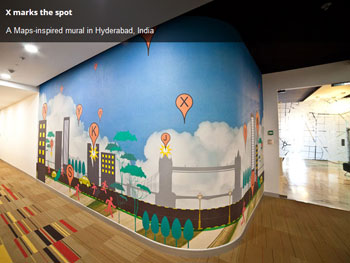
    A Google Maps-inspire Mural in the Hyderabad office. Photograph courtesy: Google.com

    It may not be the best of times to release a report like ‘The Best Companies to Work for’, given the low morale on the economy front and crunch in job opportunities prevailing in the marketplace. But there are companies that prefer to stand aloof from the depressing lot and would like to be counted as being amongst the best places to work for.


    The Economic Times in partnership withGreat PlaceTo Work have released ‘India’s Best Companies to Work for 2012′. The study throws up a diverse line-up of companies as favourites to work for.  Emerging the number one employer is Google India followed by Intel and NTPC at third. Further, five out of the top 10 companies are multinationals, pointing at the role played by global HR practices in stimulating employee satisfaction across workplaces in India.


    The study has been divided into the Top 50 and Top 25 best workplaces. When analysed further, only two out of the Top 25 Best Workplaces are companies which are new to the list of Best Workplaces, the rest having featured in the list in previous years. However, similar consistency is not seen in the Top 50 list in which there are 14 companies which have never featured in the list in India before.


    As for the standings, Gurgaon-based Makemytrip occupies the fourth spot, a drop from last year’s third rank. Amongst the media companies, HT Media Ltd is the only player to figure in the Top 25 list and is ranked 16th.


    Reacting to the win, Rajiv Verma, CEO, HT Media Limited, said: “This recognition is a testament to the strength and integrity of HT Media’s corporate culture. A few years ago, when we crafted a set of long-term goals for our company, we embraced the vision of being an ’employer of choice’. The recognition that we received from the study is a compelling sign that we have been moving in the right direction.”


    Other nominees include Cactus Communications that has been placed at number 20, Cleartrip Travel that is placed at 29th spot, Music Broadcast (operates radio channel Radio City) at number 41, Viacom18 placed at number 48 and Vodafone at number 49.


    In the category of Best in Class, Outdoor Advertising Professionals India Pvt. Ltd. achieves the top spot under Advertising & Marketing; Vodafone India Ltd. is number 2 under Telecommunications; Godrej Consumer Products Ltd., Procter & Gamble, Mars International India Pvt Ltd. and Mother Dairy Fruit & Vegetable Pvt. Ltd. are selected under FMCG; and Google India under IT.


    Some prominent companies that came up trumps across 22 sectors include: Vodafone India in Best Company in Large Organisations (more than 10,000 employees); Makemytrip, Cactus Communications & Cleartrip Travel Services under Professional Services, and HT Media Ltd and Viacom18 Media under Media.


    The study

    TheGreat Placeto Work® framework is based on over 27 years of research of the best workplaces across the globe from employees’ point of view. Some key trends spotted include: overall employee perception of their workplace culture has not changed significantly from 2011 – this is true for all companies, the Top 50, and Top 25 best workplaces in the Study. Thus, while individual companies may have done well or poorly in building trust with their employees, the workplace culture in India Inc., as perceived by their people, remains the same.


    Positive perceptions about their workplace culture continues to be high for senior management category compared to supervisory staff, with 7 per cent less supervisory staff giving positive feedback about their workplace culture. The study further reveals that 75 per cent of employees are below 35 years of age. While they are the majority in most organisations, their views about the workplace culture are significantly less positive than employees over 45 years in age. Only 20 per cent of employees, on an average, have worked in the same organisation for more than five years. There is a slow but gradual improvement in employee perception as one stays longer in an organisation, the study notes.


    As in the previous years, the Top 50 best workplaces are concentrated in Mumbai, NCR and Bangalore, but also have representation from Chennai, Pune, Hyderabad and Ahmedabad. 35 of the Top 50 have more than 1,000 employees, with 14 out of 50 having more than 5,000 employees. Only 7 of the Top 50 Best Workplaces saw employee increases of more than 30 per cent in the previous year, and 6 actually reduced their workforce.


    Also, the percentage of women continued to be low with only 5 of the Top 50 employing more than 40 per cent women employees. Women constitute less than 10 per cent of employees in seven of the top 50. Only three of the Top 50 have more than 30 per cent of their senior management as women. While 15 out of Top 50 best workplaces have employee attrition of over 20 per cent, however, in all major industries, attrition for the Top 50, on an average, is less by one-third to two-third of the industry average.


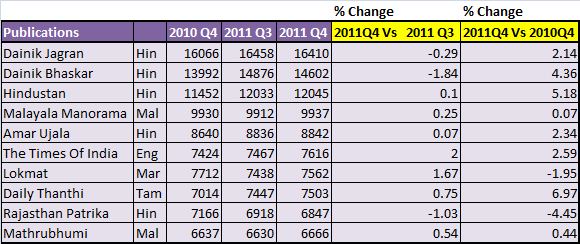
  • IRS Q4 2011: Dailies flourish Year-on-Year


    The fourth quarter results of 2011 for the Indian Readership Survey were published on Monday and a quick look at comparing the numbers of IRS Q4 2011 versus Q4 2010 data, eight of the Top 10 publications – Dainik Jagran, Dainik Bhaskar, Hindustan, Malayala Manorama, Amar Ujala, The Times of India, Daily Thanthi and Mathrubhumi ­- have grown in their AIR (Average Issue Readership) Year-on-Year (YoY). Tamil daily Daily Thanthi and Marathi Daily Lokmat and Hindi Daily and the second most popular newspaper, Dainik Bhaskar  have registered the highest growths in AIR.


    When we compare Q3 2011 V/s Q4 2011, Dainik Jagran, Dainik Bhaskar and Rajasthan Patrika witnessed a slight decline in their readership. Dainik Jagran, Dainik Bhaskar, Hindustan, Malayala Manorama and Amar Ujala have retained their spots as the top five publications.


    After looking at the numbers, MxMIndia spoke to some of the publications for their views on the IRS Q4 2011 Topline numbers. Mr Rahul Kansal, Chief Marketing Officer, Times of India Group said: “Overall, I am quite happy with results, we have done pretty well in most of the markets including Delhi, Mumbai and Chennai, where we have seen very good growth.”


    However, Mr Rajiv Verma, CEO of HT Media Ltd, is disappointed with the IRS numbers but said in a statement, he will continue with investments in various markets. “While Hindustan Times has for long been No 1 in Delhi and No 2 in Mumbai, and Hindustan and Mint have consolidated their positions in their respective markets, as a group we are disappointed that these IRS numbers don’t reflect the full picture of our growth, and the reality of our investments and our efforts in the various markets across the country. However, we will continue to invest in various markets, to meet the needs of our readers and our advertisers, and will hope that the readership growth will be fully captured going forward.”


    Mr Sanjeev Kotnala, Vice President, Dainik Bhaskar Group said: “The IRS figures justify our focus on the urban, non-metro cities. Dainik Bhaskar is the only Gujarati newspaper to have a readership of more than 10 lakh in cities like Jaipur and Ahmedabad. If you see the figures for only the urban, non-metro cities, then you will realise that Dainik Bhaskar dominates the list. As far as the overall figures are concerned, we feel that it is a minor fluctuation, nothing major as far as our own perspective is concerned.”


    Speaking on trends from IRS Q4 findings, Mr Gautam Dalal, Vice President, Marketing, DNA said: “We observe that within Mumbai there is an increase in the overlap of English dailies readership – for every two readers there are three dailies being read. Mumbai, therefore, is seeing more penetration of English dailies and the trend of reading multiple newspapers is on the rise. Having such a high overlap percentage is a positive sign.”


    “In Mumbai we have had the highest number of growth for DNA, and these numbers are a testimony to our stand of having a high level of copy supported by the cutting edge editorial and by a focused market programme,” he added.


  • Yesterday’s story: Keerthivasan tunes out of Fever, Harshad Jain is new biz head

    By Ritu Midha

    S. KeerthivasanMr S Keerthivasan, CEO, HT Music and Entertainment Ltd, has decided to call it a day. Mr Keerthivasan, who is currently pursuing higher education at the Kelloggs Business School, plans to explore new opportunities once he completes his course.
    The responsibility of Business Head, Radio would be now handled by Mr Harshad Jain, who is expected to join the organisation shortly. He moves from Airtel DTH at Bharti Airtel Ltd. Prior to which he has also spent productive time at Pepsico and Worldspace India.
    Praising Mr Keerthivasan for his achievement at HT Media, an internal communique by Mr Rajiv Verma , CEO, HT Media, states, “Under his leadership and sharp focus, the radio business has done very well. In five short years,  Fever has become one of HT Media’s most successful businesses with annual revenues poised to cross the Rs 100 cr mark, exiting on a growth of almost 70% last year. “ He adds, “While he will certainly be missed, I am sure he will be very successful and be of great value to any team he joins. I wish him the best of luck in all of his future endeavours.

    Mr Keerthivasan joined HT Media in 2004. He has over 15 years of experience. In HT Media, he spanned various large leadership roles including Head – Business Excellence, where he was instrumental in creating a blueprint for future development of the division. Mr Keerthivasan has also been CFO of HTML. He has previously worked in companies like Whirlpool, Xerox and A F Ferguson and is a Chartered and Cost Accountant by qualification.

    Picture: From the HT Media website (http://www.htmedia.in)