Tag: Rajiv Rao

  • Rajiv Rao, the man behind the Vodafone ZooZoo & Pug, quits Ogilvy


    Rajiv Rao, one of India’s most acclaimed advertising creative directors and National Creative Director of Ogilvy & Mather, has announced his decision to move on. The man responsible for the awardwinning Vodafone pug and zoozoo campaigns has been with the leading creative agency since 1999. A recipient of several awards at almost evey leading global and Indian awards event, Rao is a product of the Sir JJ Institute of Applied Arts in Mumbai. On Monday (July 10), Ogilvy India had announced the return of Sonal Dabral as Group Chief Creative Officer and Vice Chairman. It is learnt that the appointment and announcement had been made given Rao’s decision to move on.

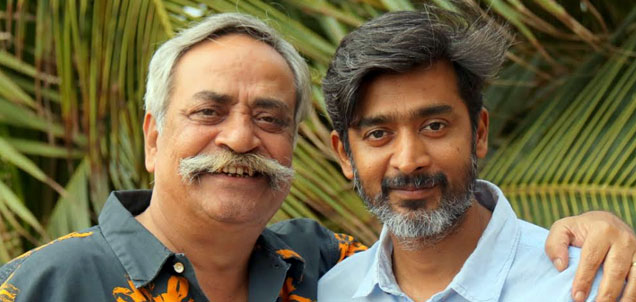
    In a signed statement issued by Piyush Pandey, Executive Chairman and Creative Director, Ogilvy South Asia, writes:

    It is not at all easy for me, as I inform you that Rajiv Rao moves on from Ogilvy India to become a film-maker. It has been Rajiv’s dream to make films for the last four years. I have nothing but a deep sense of gratitude to Rajiv, that he respected my request to stay on to help make a better and stronger Ogilvy.  There are not too many in this business who make a sacrifice of this magnitude.

    Rajiv joined Ogilvy in 1999 with his partner V. Mahesh. And shortly thereafter, they started blazing new trails.

    In 2002, I had the joy of partnering him as a copywriter to create the legendary ‘Second hand smoke kills’ campaign for Cancer Patients Aid Association. This campaign won India’s first double Gold at Cannes.

    Whenever the Orange/Hutch/Vodafone history is written, Rajiv Rao’s name will feature in golden letters. Every piece of work on these brands has Rajiv’s personal stamp on it.

    The ‘silent killer’, Rajiv has always displayed phenomenal leadership skills without saying very much. Along with Mahesh, he led Ogilvy Bangalore from 2003 to 2006 and gave the office a renewed energy. In 2009 Rajiv and Abhijit Avasthi took on the role of National Creative Directors and raised the bar up many notches of creativity at Ogilvy India.  And since 2015, Rajiv has played the role alone and compensated for his partner.

    Loved and admired by one and all in the industry, nationally and internationally, Rajiv is one of the finest creative people and the gentlest giant I have met in my life.

    I am sure Rajiv will be no less a film-maker than the creative leader he has been. We will stay connected in more ways than one.

    Meanwhile, Rajiv will continue as Ogilvy India’s National Creative Leader till Sonal takes over and a smooth transition is complete.

    I will refrain from being personal and just say, “Thank you Rajiv. You are a true son of Ogilvy India. Keep the flag flying.”


  • 11th edition of Pepper Creative Award to be hosted on 5th May

    By A Correspondent


    The Pepper Award 2017, organised by Pepper Creative Award Trust, will be held in Kochi on May 5 at 6.30 pm. The opening ceremony will be graced by Piyush Pandey, Executive Chairman and Creative Director, Ogilvy & Mather India and South Asia, accompanied by Rajiv Rao, National Creative Director, Ogilvy & Mather India and Prathap Suthan, Managing Partner and Chief Creative Officer, Bang In The Middle.


    Close to 600 entries received from more than 70 agencies were judged from print, film, radio, OOH, direct mailers, digital and cyber categories. From both open category and Kerala category, more than 130 metals and 15 finalists would be awarded.


    K S ‘Chax’ Chakravarthy, Suthanand  Santosh Padhi were the members of the jury for. The judging was held in Mumbai late last month.

    The awards are given in categories such as Agency of the Year Award, Advertiser of the Year, Special Jury Award, Press Campaign, TV Commercial, Outdoor, Radio, Interactive – Web-based, Digital, Cyber, Direct Mailer, Packaging, Logo Design, Unpublished works and Promos. The eleventh Edition of Pepper also has an exclusive section for participants from Kerala: Jewellery, Real Estate, Textile, Hospitality, Ayurveda and General.


  • The Ogilvy Way on Digital


    It’s the numero uno creative agency in the country. And it was among the earliest big agencies to go digital. Even as it started this transition over a decade ago, Ogilvy India is still perceived as an agency tied to the more traditional areas of television, print and outdoor. For this discussion, Vikram Menon, President and Country Head, OgilvyOne Worldwide India and Neo@Ogilvy; Kunal Jeswani, Chief Executive Officer, Ogilvy India, and Rajiv Rao, National Creative Director,Ogilvy India got together to speak with Pradyuman Maheshwari about Ogilvy India’s digital outlook…


    Ogilvy has been in digital for many years, but it is perceived as a traditional television campaign agency. Why?

    Kunal Jeswani (KJ): Because it is the best advertising agency in India, and possibly in Asia too. When you want to build something else within that kind of a unit, it takes a lot of effort, and years, for it to shine.

    Rajiv Rao (RR): I think the shadow advertising agencies cast, is very large. If you are an independent agency, and into digital, people say: ‘Oh! Ogilvy also has digital’.

    Vikram Menon (VM): The sheer size of this agency and the work it delivers overshadows everything, from an advertising standpoint. So it becomes far more difficult for a unit — regardless of what the unit is — to stand out.


    Are you happy with the way things are?

    VM: Absolutely. As a part of Ogilvy, you have resources and talent you can always rely on. We are 500 people; I don’t think there are many agencies of that size anywhere in the country.


    Of all the large agencies, you got into digital fairly early. You acquired a digital agency many years ago, but the perception, that you are essentially not a digital agency, continues…

    KJ: Ogilvy One was one of the first agencies in India to start taking digital seriously. We started making a transition from being a direct one-to-one agency, to a digital agency almost 12 or 13 years ago. Now, three things could have happened at the time. Either the advertising agencies Ogilvy and Mather- could have started declining, in which case we would have seen Ogilvy One shine a lot more than it does now. Or Ogilvy One would have been scrapped, or – as it has happened — advertising has continued to hold its own, and [Ogilvy has been] the best agency in the country for the last 12 years. Ogilvy One has been built up, gradually, as the largest digital agency in the country, but in terms of perception, it is still hard to break out the ‘we-are-an-advertising-agency-first’ mode. People need to see that right next to the advertising agency, sits this big, shiny, fantastic digital agency. We churn out 250 to 300 fantastic films a year, and you see it a lot more because it is on TV. Television is difficult to outshine. But anyone who has worked with Ogilvy One and seen the capabilities we have, will know it is great. [We] have done fabulously in [awards events like] the D&A Echos globally. We are listed eighth on Warc, and are the only Indian agency in the Top 50 I think. I think we were a little ahead of our time. The demand for digital work, and client spends started only five or six years ago.


    Rajiv, Ogilvy has been a creative-led agency. Are you looking at digital as a part of the thing or you do stuff television and it is kind of shoveled in to digital?


    RR: The approach to what we do is the same, whether it is digital or advertising. We look at every brief and try to make something as interesting and exciting for digital as we would for advertising. There is a lot of work we have done that you do not see on television. Television is the most visible medium, so that is another reason you do not see a lot of digital works, which are less in-your-face. Most of the time we create work for television first, and then adapt it to digital.


    I was there at the Kyoorius Creative awards judging, the fact of the matter is while digital was there, print and radio, there were a 100-plus entries which entered but only four both categories which were shortlisted. Clearly, I think the focus is coming towards digital in a bigger way than the others.

    KJ: In terms of spends, yes. If  I asked a client five years ago, where their spends were, they’d have television, outdoor, print, radio and then digital. Today, digital is right after television. But it differs from client to client. We have clients even now coming to us and saying: “Where is my Digital First work? I want to see it.”


    Only an agency like Ogilvy can convince clients that they need to use digital and it is a better way to communicate something. Are you all doing that?

    KJ: I don’t think we need to. Every one of our clients is pushing us for fabulous digital work.

    VM: We have passed that point where we have to convince people that digital is a necessity. Earlier, it used to be a tick box. But now it is integral to the campaign in itself, and measured on several different parameters. So there is no need to convince people.


    What about digital-only clients?

    VM: I don’t think there are too many clients like that. It may be an Ogilvy One only client rather than an Ogilvy One plus advertising client, but they also have their advertising agencies, and a lot of cases where you see digital leading the campaign. So the idea is first cracked and then we decide how it will work on mobile, social and all other platforms. And then we may do television also.


    When a client is getting advertising work done for television, is separate thought going into digital, or is most of it the same?

    RR: About 50 per cent of work is outside of the main campaign. Yes, we do a lot of it.

    KJ: If you are doing a large ATL campaign, the campaign should have a digital face as well. It does not need to be the same thing, but it needs digital integration. There are times when you are silent on television. Most clients cannot afford to be on television throughout the year but you can afford to be on digital. You have your whole campaign amplification, idea amplification piece on it and then when you are off television, you do a digital-only campaign.


    Rajiv, would you say the agency has changed over the years given the fact that it is now more digitally-active than, say, five years ago?

    RR: Not just the agency, but even the environment across the industry. People are thinking of ideas and not films, about ideas that would go social and viral. It is a conscious decision which comes to people naturally.


    The essence of this conversation is to see how Ogilvy has changed. So what are the kinds of services that you have on offer at Ogilvy One?

    VM: We offer things across the spectrum. There’s just consulting at one end of the spectrum (which we do for a few clients like Aditya Birla), where we design programmes and then hand it off to the agency to execute it. From there all the way across is social media, in terms of what your presence should be across social channels, building websites, building your own media, the content that you are putting up there etc. For Rajasthan tourism, for example, we have done some hundred pieces of content for their website to make sure people keep coming back. Then there are things like social care, where we manage all the online complaints of Vodafone. Today it is very difficult to define digital as a space, but we have got a lot of offerings in that space, with full teams working on it.


    As digital gets mainstreamed into the agency, will the entire agency be seen as a digital agency also? And will all agencies eventually be viewed that way?

    KJ: Will Ogilvy be seen as a digital agency? The answer is no. I think the market will shift very fast, with all agencies, including Ogilvy, being able to do and deliver digital content and campaigns across the agency. Exactly the way we do a print ad, television or radio spot and outdoor. The entire agency will be able to churn out digital campaigns and video content and all other content seamlessly. At the same time, digital is going to get more fragmented and more specialist. You are going to need deeper e-commerce specialisation, performance-marketing specialisation, digital production and asset management-specialisation, data analytics specialisation linked to all the content and such, and all of that is what we, at Ogilvy, are going to be known for. I think that is where it is going to move. You need the digital content, campaign done; you do not need a specialised digital agency, every agency in the country will be able to do it soon.


    Many years ago, a similar thing happened with big, creative agencies. Media agencies were de-merged and became independent. In the last few years, there has been a growing realisation that it makes sense to have full-service agencies. Given this background – that is the advantages and disadvantages of having media separated — do you think the digital part of business should be integrated with the creative?

    VM: We are doing that, actually. We do have digital media, in a set-up called Neo, and it has been around for some time. But as of now, we are investing quite significantly in it. It has trebled in size in the last one-and-a-half years. We brought a new head, and we have been driving performance. We’ve got great models and tools for that, so you will see a lot more use from that.


    In the past, media agencies have broken away from creative agencies. Do you think it is better to have a separate digital thing?

    KJ: There was a time when you had one agency. Then it split, and media and creative were separated. Then came digital. You had digital agencies and you had digital media agencies. Every client is going to a separate media agency and a separate digital media agency. Then you had the digital media agencies splitting into three. Mainstream digital media agencies do all your buying and planning across channels, and you have specialist search agencies and specialist performance agencies. Now, most clients want one agency that does everything. Soon client will start asking, ‘Do I really need a digital agency to do all this stuff?’ Not really. They need specialist capability. So you will see more and more specialist capabilities inside the digital agencies separate, and you will see the basic capability delivered by integrated agencies like Ogilvy.


    Rajiv, how do you look at performance and..

    RR: (laughs) I don’t. But I agree with Kunal. I think there is a digital agency and there is an advertising agency and, I think at least for some time, it should be one unit. We are creating ideas which have to be adapted or transmitted into digital and vice versa, so it should be one unit. And yes, there are specialist parts of the digital thing which can be a separate entity. As Kunal said, the clients also want to go to one place and find all the digital solutions.


    If you had to make a pitch to clients to show how different you are from earlier, and that digital is very much part of your offerings, what would it be?

    VM: I would just like to position ourselves as a modern agency, in terms of the skills we bring to the table in delivering campaigns. I would stick to something as simple as that. Underneath all that, you have specialist skills that go towards making what I call a modern agency. It becomes complex to explain.

    KJ: Let us look at why anyone comes to Ogilvy today. Any client, why do they call us? What would your perception be?


    Piyush (Pandey) and Rajiv… (Everyone laughs)

    KJ: Perfect! What do Piyush and Rajiv stand for? They stand for a fantastic creative product. That is why anybody comes to us for. They come to us for a fantastic creative product. I will be completely stupid to try and do something different with that, because it is not necessary. This agency is built on great story telling and fantastic creative. The only job Vikram and I need to do with Rajiv’s partnership  and everybody else we have here is make sure that the great story telling, that fantastic creative spreads across every single channel that we have.


    And, is that happening?

    KJ: Yes, it is. We were already discussing that it is much more difficult for people to remember great digital campaigns because in India television campaigns come to you very easily as we are exposed to it.


    Once upon a time, most digital campaigns used to be Gabbar Singh and Rajnikanth

    VM: That was 10 years ago.

    KJ: At heart, we are going to be a fantastic creative agency which delivers great storytelling across every single platform. But the bit Vikram was talking about, about being able to do a degree of modern marketing, also means we need to get more tech-savvy in the way we approach advertising. The data backbone, the technology backbone of the agency and the ability to deliver on digital. From the delivery point of view, one is the story and the second is being able to give the client confidence that we can build his mobile applications, websites and manage his social platforms. So, at heart we will always be a creative agency. I just need to build enough backbone to ensure clients also understand that these guys also have the technology, data and delivery chops.


    Rajiv, are you looking at re-tooling your team for the new order, or is it just as it comes?

    RR: The way it is right now, I don’t see the need to. Everybody across the agency — whether it is advertising or digital – is thinking in the same manner, and whether they are thinking about film or editing or anything else, the approach is very similar. When you have a brief on an exciting thing, most teams are thinking [in multiple ways], unless they are asked to think only film or TV. I really don’t think I need to make any changes.

    KJ: At the same time in terms of messaging, everybody in the company understands we need to be fantastic. It is not a choice. We have training in place. We have done something called Digital Dojo, a three-day workshop for everybody. Right now, it is for our senior key managers, but it will distill down. Next month, we are doing an intensive digital planning workshop [about] the way we approach digital as a company.


    Is it for everybody?

    VM: The dojo was for creative; the digital and data-planning framework is going to infiltrate the entire organisation. So we are doing a two-day workshop next week for everybody again.

    KJ: Every week there is a global webinar on a different aspect of social done by the best people in the world. It is done from New York and it is available to all of us. Everyone accesses it.

    VM: Some of the sessions are for clients too.


    The thing has to come from top down.

    KJ: At the same time, our employees are not in school. I cannot take a ruler and hit people on their wrists and say, ‘you have to attend 10 sessions in the month’. We are not that kind of company. We are a creative company and at the end of the day we will make training accessible to everybody. Rajiv, Piyush, Vikram and I will send the message to everybody that this is important for them; they need to be thinking in these spaces and it is important for the company, and the rest of it is up to the employee.


    This story first appeared in dna of brands on June 13
     

  • Lenovo redefines ‘cool quotient’ for the youth with Yoga laptops

    By A Correspondent


    Lenovo has announced the launch of next generation Yoga laptops. With a screen that offers a 360 degree swivel that goes from laptop to tablet mode in one smooth movement, HD screen, Dolby sound and intel core i7 processor, these laptops offer an ideal combination of innovative design and powerhouse performance. With prices starting as low as Rs. 30,490/-, Lenovo Yoga is an ideal choice for the youth of today.


    The TVC introducing the next generation of Yoga laptops shows a young girl in a café calmly working on her Yoga laptop, observes a few bikers enter and misbehave with the staff. She decides to teach them a lesson without having to let go off her Yoga. To our surprise she turns out to be a martial art pro and leaves the goons feeling pretty stupid. Her Yoga laptop twists and turns to her moves, helping her carry her cool all the way.


    Rajiv Rao, NCD Ogilvy added, “Geeks represent the new cool. Their technology is their style. The usual and mundane doesn’t appeal to them. They need something new, something flaunt worthy… they need to ‘carry their cool’. The Lenovo Yoga laptops offer them just that!”


    Talking about the campaign, Bhaskar Choudhuri, Director Marketing – Lenovo India said, “Lenovo’s philosophy of bringing accessible products with innovative technology and ground-breaking features gets further magnified with the next generation of Yoga laptops. These ultra-thin and light convertibles are packed with top of the line features … making it an ideal choice for the youth.”


  • Up, Close & Personal with Abhijit ‘Kinu’ Avasthi


    By Pradyuman Maheshwari


    He is a metallurgy graduate, has done various odd jobs before getting into advertising in 1997. Two years later, he joined Ogilvy and hasn’t look back ever since. Winning several Indian and international awards, on the jury of most big award shows and having done some superlative creative work. Last week, Ogilvy South Asia Executive Chairman & Creative Director Piyush Pandey , sent a mail out to employees that National Creative Director Abhijit Avasthi was moving on. November 30 will be his last day at work. The news sent shockwaves in the ad frat, because, one never thought he would quit. Excerpts from an interview…


    So what happened? How? Why?  The lyrics of a song from the 1972 Rajesh Khanna-starrer Amar Prem would possibly best capture my question: Yeh Kya Hua, Kaise Hua…

    Kyun Hua… Kuch toh log kahenge (laughs). While it may seem sudden, it’s something I’ve been mulling for a long, long time, and discussing with Piyush (Pandey) too. As I have maintained, there are many things I’ve enjoyed doing over and above advertising. There are certain products or opportunities outside that I would love to think about. There are problems that I would like to solve which need a totally different mind and head space to work on.


    Like?

    I enjoy absolutely everything.  While I like advertising , being from an engineering background, I love technology, design, history, music and maths. I love music to death. There are many things which I keep thinking about.


    So you want to wander?

    I want to wander and think about things a bit. I’ve always wanted to contribute in some way to society. There is a new government, there is an air of optimism, some change can genuinely happen. I would love to participate in a change like that and do whatever I can.


    Do you think it is the right thing to do when you are at the peak of your career? Just chuck your job to take a break?

    My heart tells me, so I think it’s right. I’ve never chased a career. I’ve never chased a designation. Even my entry into advertising was purely by chance. I am an engineer by training. I used to work in a steel plant. I used to sell sarees, I would work in a factory that made dyes for textile. I came to Mumbai in 1997 to figure what to do in life. Someone suggested advertising, so I got into it. I’ve loved advertising as it allows me to do lots of things. One day I will figure what I want to do and may be today is the time. I have the sense of this is really what my skills are, this is what I enjoy doing. This is where the opportunities are. This is a new age in India. May be the time has come to take a step back and say, ok, let’s pursue this, this seems like a good option.


    But look at it from the Ogilvy point of view. Here is a guy they’ve nurtured, believed in for 15 years. Now suddenly he wants to quit and go. From the agency’s point of view, it’s a huge loss.

    It’s a bit of both. Yes, it’s a loss, there’s no doubt. But that’s how all companies go. That’s how all individuals go. While I’ve been here, I’ve been nurturing a whole team and there are many Piyushs, Kinus and Rajivs waiting in Ogilvy. I think my exit may be a great opportunity for them to shine and come out. While I was here, I’ve served Ogilvy and its clients and its people with all my heart and mind. Every second of the day for the last 15 years. So I have received much and I have given whatever I have. And I think that’s the cycle of life.


    You and Ogilvy were like bonded with Fevicol.

    I thought so too. There’s still a Fevicol jod binding us. Just because I am moving out of Ogilvy does not mean I am not attached to the agency, or I don’t have an association with it or we won’t find some way of working together. Like I said, I am rolling so many things in my mind, may be I might stumble upon something whereby I need to collaborate with different disciplines or people in Ogilvy and move ahead. So it’s such a wide canvas.


    The clients who’ve trusted you much will now feel orphaned?

    No, I think that’s the amazing thing about Ogilvy. While I was the face, and yes I was the significant contributor to what they were doing. But I used to always work along a team. So they also know that when team makes a contribution and there is this Ogilvy culture and things will come to place and life will move on. And you know what, brand managers, managers, marketing heads change on the client side every 2-3 years. So here’s a guy who is leaving after 15 years.


    So are you getting into films? There are many adpersons out there.

    Unlikely. I think it is too much of work. Too much hard work.


    Advertising is also hard work!

     I am hoping to try out something really different.


    You wandered into advertising in 1997.  Did the fact that your uncle Piyush Pandey was in advertising influence you to join advertising?

    I’ve been very close to Piyush and Prasoon. They are more friends than anything else. So I would always love hanging around with them. I would see them come up with ideas, and would discuss with them. But in 1997 when I was in Mumbai and people said give advertising a shot and I also thought of the fact that I used to enjoy those moments with Piyush and Prasoon. I would just brainstorm with them and throw in my random idea and they’d say it was very cool. So it gave me a sense of confidence that maybe I should give it a shot.


    Why didn’t you join Ogilvy then?

    I was quite clear I wanted to earn my stripes elsewhere.


    And how did the transition to Ogilvy happen?

    I had a great time for the two years I was at Enterprise. I met my first art part Raj Kamble. But as I spent time there, I realised that my interest lay more in big brand stuff, in television than print. Then I had a chat with Mohammed Khan and said “Look, I need to move on”. There were friends at Ogilvy who were asking me to join, but I wasn’t ready.


    What was working with Mohammed Khan like?

    Absolutely fantastic. I had a great time working with him. His best quality is that he’ll never make you lose your passion for anything. Even if you’ve done something really crappy, he would never kill your enthusiasm, Of course he would be strong and strict and shout about at times. But I think he managed it in such a way that he would never kill one’s enthusiasm. I am quite grateful to him for that.


    And with Piyush… did the personal relationship impact your professional life? Or vice versa?

    Bobby Pawar and Anil Batwal hired me in 1999. But I have to admit, it was a little odd. I was always conscious of the fact that what will people would feel he is Piyush’s nephew… so what is he doing here? Is my work good enough or are people just being polite? What could they be saying behind my back? Those things use to bother me a lot. Initially things like what should I address Piyush as? I can’t call him Piyush, he is my uncle, my mama. It was very odd. Till date I don’t think I have ever addressed him in front of anybody because I refused to call him Piyush and I don’t think it’s right to call him mama in front of everybody in the office.


    You’ve haven’t been calling him anything for 15 years?

    I can’t call him Piyush, My values don’t allow me to call him by first name. It’s not possible. And I can’t call him mama in front of everybody. It’s an office, it’s a corporate setup. It’s just not done.


    And when you meet him one-on-one?

    Then of course I do refer to him as Mama.


    What do you do if you have to call his attention in a meeting?

    I find a way of addressing him.


    Like what?

    I have some tricks. I get his attention.


    He knows that?

    I’ve never mentioned it, but he must have figured it out.


    As you look back at the work you’ve done at Ogilvy, what can we say is a typical Abhijit Avasthi piece of work? Your signature style?

    I am hoping that nobody can say that this is an Abhijit Avasthi ad. If everything is going to have my style, then it’s not fair on the brand of the company. That’s my belief. Which is why my attempt is, and I don’t know how far I am successful, is to give varied flavour to different things. So I would be very happy if people say “are you saying that guy who did Fevicol bus ad is the same guy who did the Centre Shot ad?” I’d like to hear stuff like that. Rather than, oh this is also a Kinu ad, this is also a Kinu ad, this is also Kinu ad.


    How do you and Rajiv work along with each other…

    Yes, it’s all amazing that how Rajiv and I are working together. Till the time we became NCDs we’ve never worked with each other. So Piyush had put the two of us together. It’s just that we’ve been along for so long, we’ve put so much time together. We’ve joined in the same year, 1999, just a few months apart. We’ve always admired each other’s work. We’ve always been honest with each other. So when the NCD announcement came in, we never ever sat down to formally divide this is what you will do, this is how I will do. These disciplines you will look after, or these cities you will look after. Everything was natural and organic and it just happened instinctively. Both of us know our strengths and we know we are the persons can contribute so I seek pretty much every work he…


    And how is your work divided?

    It’s natural, it happened. The legacy business which I was involved in I continued on them, the legacy business he was involved in, Vodafone primarily, he continued. I am intelligent enough not to put my two bits in Vodafone and destroy it, because he has done something phenomenal. He has headed the Bengaluru office. So typically the most of the Bengaluru accounts he would look into. Some I would look into. And historically I’ve always been closer to the Delhi office, so everything was organic, we never sat and formally did anything, we had enough respect for each other.


    Do you critique each other’s work?


    So when I show him some stuff and what’s nice about Rajiv is he has no sense of diplomacy. So he’ll say Kinu this is rubbish. Which is very nice. There is no emotion.


    What about you?

    I try and cushion the blow!


    How much have you embraced the digital media yourself?

    I am very aware of what happens, what’s happening, what are the possibilities, but am I immersed in it myself? No I am not. I wish I was, but I think life is too busy.


    One thing which is said is that the reason why digital media hasn’t entirely grown  is because biggies like yourself are not doing too much digital advertising

    It’s a bit of both. I don’t agree with it entirely. Some great digital work is happening. See, everything our industry does is compared to what’s happening in the west. One must not forget that the societies there are much advanced and developed and digital is a way of life for people. So when you do something in the west, the man on the street gets it. Do I believe ad folk in India are capable of doing great digital work? Yes, they are. But the reality is that the person on the street is not digitally evolved. There is no point in doing a really creative digital innovation which the man on street doesn’t get.


    Any advertising from competition that you would have liked to do?

    Yes there are plenty. I think I enjoyed, rather than pick individual pieces, I would rather say the whole thought of ‘Daag ache hai’. It is a lovely campaign, I would loved to have done it. Some of the early Pepsi stuff, I would have loved if I’d done that. I think some of the work happening on Tanishq is fantastic.


    People whom you liked to work with? People who moved out of Ogilvy, whom you miss very much?

    Lots of them. I think one thing that keeps it going is more and more amazing people keep coming even though some amazing people leave. Yes, there are many, there use to be this guy called Avinash Baliga. I think he is one of those guys who understands my sense. He is the guy I genuinely believe who is way ahead of what India is now. He works in a hot shop in Argentina now. I think he is found his place over there. He is one guy, many a times I do think, if he had stuck on then things would have been really great.


    So effective December 1, we see you wander?

    Absolutely . , I won’t sit, I have some thoughts. I won’t lie that I don’t have thoughts. I have a sense on what is it that I should do next. I am not chasing money or some kind of crazy fame. Now is the time to put things down and evaluate, okay this could be some interesting place to go. For example, if I could use words, I would like to do some thing which is original, meaningful. Some thing where I could use all my skillsets over and above advertising.


    A shorter version of this appeared in ‘dna of brands’ dated November 3, 2014


  • Ogilvy’s ‘jod’ goes unstuck as Abhijit ‘Kinu’ Avasthi quits


    By A Correspondent


    It’s a bond one thought would last forever. For many years, Ogilvy & Mather India has been known for Piyush Pandey. So strong is the association with Pandey that the agency’s name could well be prefixed with a Pandey.


    But over the last five years, National Creative Directors Abhijit Avasthi and Rajiv Rao have come into their own and established themselves as creative gurus with their own standing, albeit a notch below Pandey.


    The news of Ogilvy India National Creative Director Abhijit Avasthi parting ways with the agency after working there a decade-and-a-half sent shockwaves in the industry. Confirming this development, Avasthi said he was mulling his next steps.  He said he was in discussions with Mr Pandey (coincidentally also his maternal uncle) for a few months.


    Last evening, Piyush Pandey, Executive Chairman & Creative Director, Ogilvy South Asia sent a mail to Ogilvy & Mather employees announcing the development. Rajiv Rao, who also shares the creative charge of the agency as National Creative Director (NCD), will be the sole NCD with effect from December 1.


    Mr Avasthi will be with the agency till November 30 and continue to be associated with small projects, Mr Pandey said in a mail. According to sources, Mr Avasthi is likely to set up his own creative agency, a move that he has been contemplating for a while. The outgoing NCD though is tightlipped about his plans and would talk about them when the time is right.


    A metallurgist by formal education, Kinu, as Avasthi is known in the fraternity, got into advertising after working in a steel plant, manufacturing textile dyes, trading in saris and even exporting playing cards and match-boxes. He started as a copywriter with Enterprise Nexus in 1997 and joined Ogilvy in July 1999. Other than winning several awards and being on the jury of many award shows, Avasthi has been several acclaimed advertising campaigns to his credit. These being for: Fevicol, Cadbury, Asian Paints, Google, Tata Sky, Bajaj, Centerfresh, Mentos and Unilever amongst others.


    Friends in Ogilvy, say that while he is a creative, Kinu has a sharp business mind and in his quiet, affable way can win over clients and make decent monies for his agency.


    Watch this space for more.


    Image: Part of a Fevicol ad was doctored to show a hand (Abhijit Avasthi’s) getting unstuck from that of Ogilvy’s


  • Minions music video Zumi Zumi to end Zoozoo campaign

    By Meghna Sharma


    An added attraction of the IPL is the season’s Vodafone campaign featuring the Zoozoos, which have been a hit ever since they first appeared on TV four years ago.


    Ogilvy and Mather dishes up something new for Vodafone every year, and this year the agency lived up to its reputation with the ultra-cute Minions. The miniature versions of the Zoozoos quickly became popular, and as the IPL season concludes, the campaign ends with a new twist – a music video.


    A music video is a first for the Zoozoo campaign. So why now? “When the campaign started it began with a teaser wherein these Minions were getting ready for ‘something’. They got internet, gossip, jobs etc for the Zoozoos so we thought it would be apt for us to end them with an anthem of their own,” says O&M’s Rajiv Rao.


    Like the Zoozoos, will we have to say goodbye to the Minions as well when the IPL season ends? “We don’t know yet. Who knows, maybe after three or six months or maybe only next year will we be able to see them,” Mr Rao says.


    Rajiv Rao

    And what can we expect from him and his team next year? “Every year, it’s a new challenge and we will see what brief and challenges are thrown at us,” says Mr Rao. He was interrupted by Piyush Pandey who jokingly said, “The future of the campaign is me working as Rajiv’s assistant.”


  • Lenovo launches TVC on new range of smartphones

    By A Correspondent


    Lenovo India has released its latest television commercial that showcases a new range of smartphones for the Indian market.


    The premise of the new advertisement revolves around the fact that smartphones are one of the most personal devices, and are an extension of one’s personality. The focus is on ‘Hands’ of different sets of ‘Doers’ – a base jumper, a guitarist, a chef, a painter, a surfer girl, a young traveller, a ballerina, group of bikers, and a group of youngsters partying. These are the same ‘Hands that hold a Lenovo’ and ‘Do More’ with their phones, tying in with Lenovo’s brand campaign ‘For Those Who Do’.


    Speaking on the new commercial release, Shailendra Katyal, Director – Consumer Business, Lenovo India, said, “With this launch Lenovo continues its drive to leadership in the PC plus era and takes forward the ‘For Those Who Do’ platform. Our smartphones are synonymous with style, performance and quality, making them an ideal choice for the youth. As a brand, we are focused on empowering the youth with ‘tools’ that allow them to follow their passion, and succeed and transform their lives.”


    Rajiv Rao, Creative Director, Ogilvy India said, “In a market that is cluttered with various smartphone brands, the idea was to highlight Lenovo as a brand that has not only aspirational value, but also a strong connect with the youth. In short, it is an ode to what is the most personal and capable tool of ‘Doers’.”


  • Ad Strat: The friendship pug

    Rajiv Rao, NCD, Ogilvy &Mather


    1. Name of the Campaign: Vodafone Network


    2. The Brief: In the initial phase of market development Vodafone had communicated ‘Where ever you go, our network follows’ using the Pug. The campaign made our brand synonymous to an omnipresent network and gave it the stature of a constant companion.


    As the market evolved, in the next phase, we needed to build a strong consumer perception on not only the network presence, but also of Vodafone’s network quality.


    [youtube width=”400″ height=”200″]http://www.youtube.com/watch?v=jNU1yCpIGGU[/youtube]

    3. Researchinsights:  Research helped us identify that the key parameters in the perception of a good quality network are – connectivity, voice clarity and call continuity( no call drops).


    4. The thought process behind the creative: The network qualifiers being slightly technical in nature, we needed a story to bring them to life. The stories we chose used metaphors of friendship in all 3 ads. Each TVC showed our Pug, who signifies our network, being the enabler in forming and growing this friendship.


    5. Media vehicles chosen: TV, Outdoor, Print, Radio, Digital


    6. Does the treatment do justice to the brief? Yes, we made sweet stories, the Vodafone way, to tell a very tangible network promise. Our metaphors were simple to understand, distinct and left an impact yet emotional to touch hearts.


    7. What is the differentiating factor about the ad? In a market where the network promise has mostly been a show what you mean exercise, we have taken the lesser travelled emotional route to communicate the same promise. We have precious moments of interactions between 2 friends coming closer with our Pug (network) as the enabler.


    8. Market and client feedback:

    200,000 plus views on YouTube in 1 month

    Early indicators, from a business perspective, look positive. Results are still expected.


  • The Anchor: Rajiv Rao on the 5 Mumbai watering holes he misses most

    By Rajiv Rao


    For most advertising professionals, office becomes home and the nearby bar is the second home. It’s where we head after a long day for a well deserved drink, be it raising a toast or drowning sorrows.


    Here is a list of 5 watering holes that I miss today. They have meant so much to me over different phases of my advertising career. Some have lost their charm and glory and some closed forever. So, there’s little I can do but head for the nearby bar and drink to some good memories.


    Tavern (Hotel Fariyas) Colaba

    Tavern was one of the most rocking bars in the early 90’s. It was the perfect combination of beer and good old rock music and the best part, a huge screen that would play live shows of the legendary musicians. Queen, Floyd, Stones, Doors, Hendrix, and the likes of Zeppelin were regulars there. Fridays and Saturdays would be insanely loud and packed. After a point everything would be a blur. At least that’s how I remember my Tavern nights.


    Cafe Naaz

    Though I got to experience very little of this place I still miss it the most. I was introduced to this place very late in life. Naaz was perfectly located, away from the madness of the city and yet you could see the buzzing city from a distance. The queen’s necklace was best seen from Naaz. Warm beer, lousy food, slow service but loads of the charm. Naaz beats any of the high rise bars of today hands down.


    Sports Bar (Bowling Co)

    The day I joined Ogilvy, I joined Sports bar. Countless lunches, happy hours, lunches that got extended to happy hours and of course after work drinks. Large screens, screaming fans and endless pitchers with Nachos. A lot of male bonding has happened over beers and pool tables in this sporty venue that has given many a “men will be men” moments. I would run into people from work more at the bar, than the office corridors. (And some of these people were people I was running away from)


    The Ghetto

    Ghetto played real music. The reason it became the preferred hangout for an entire generation of beer, rum and rock lovers. It was where you walk in to a hole through the wall, to a world that unwinds you after work. And yet this is the very place where many ideas were born over many more pitchers. The unusual fluorescent lighting made way for many fun moments. Not to mention, this is the place that introduced writing on walls even before the Facebook epidemic. In fact chances are you will still find your drunken slogans and thoughts scribbled on the walls even today. The Ghetto spells sheer nostalgia for me and many more who welcomed by the tuxedoed doorman ‘Shuklaji’ knowing all the patrons on first name basis


    Zenzi (Bandra)

    Not too long ago, Zenzi with its open multi-cultural vibe was a mecca for advertising professionals for a short phase. In fact if anyone was to look for a job in the industry, floating a resume at this premise would be a better bet than sending emails to head hunters. It was cool and casual enough that one could walk in with chappals and yet it had a certain attitude that was only for the like minded people from the mad ad world. At any given time, there was so much creative energy, it was like a doctor’s prescription for recharging creative juices.


    Rajiv Rao is NCD, Ogilvy &Mather.


  • The Diwali ads that crackle


    By Shubhangi Mehta

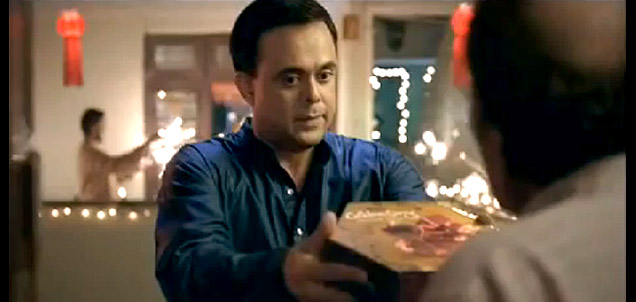
    Though the Diwali campaigns this season did not create much hype as they were fewer than in the past, going a little back in time we have seen some absolutely delightful campaigns, from Cadbury’s “Iss Diwali aap kise khush kar rahe hain?” and Coca-Cola to Samsung’s Diwali commercial or the latest Tanishq campaign featuring Amitabh Bachchan and Jaya Bachchan.

    Which is the Diwali commercial that has been an all time favourite for the industry? MxM India asked the biggies themselves.

    Mr KV Sridhar aka Pops, NCD, Leo Burnett, said, “My favourite Diwali commercial would be ‘Iss Diwali aap kise khush kar rahe hain?’ by Cadbury, which was out almost a year ago. For me and I’m sure for everybody else, the best way to celebrate Diwali is to catch up with near and dear ones and make them happy. Hence I found the commercial very real.”

    Mr Dheeraj Sinha, Regional Planning Director, Bates, said, “The Diwali campaign that has appealed to me the most is the Fiat Festive season campaign done by Bates. The campaign goes a step beyond the Diwali promotional offers etc and talks about the philosophy of Fiat, therefore I find it more appealing.”

    Mr Rajiv Rao, NCD, Ogilvy & Mather, said, “I know it’s my own agency work but I can’t resist saying that it is Cadbury’s ‘Iss Diwali aap kise khush kar rahe hain?’ There is so much of humanity and it breaks the clichéd concept of just greeting only your family and close friends on Diwali. It is most definitely my favourite Diwali campaign.”

    Mr Bobby Pawar, COO, Mudra, however took a different tack, saying, “No ad campaign has been able to capture a place in my mind; I really cannot think of any Diwali campaign that has appealed to me so much as to be called my all-time favourite campaign.”

    Cadbury’s seems to be the brand and campaign to have captured minds and hearts, and the sweet taste of success is certainly well deserved. But with such a wealth of creativity on tap and such a rich diversity of cultural references available all over India, it is high time a new, iconic ad or campaign came forth.

    We’re waiting.

    [Link] Debrief: In the midst of the drought, the Diwali ads that caught Anil Thakraney’s eye.