By Ranjona Banerji
It was something of a shocker when Rajesh Khanna’s marriage to the young Dimple Kapadia made it to the front page of the venerable Times of India. I can still remember the shock with which my father read out the news to us. Newspapers in 1973 were serious and sober and did not have much to do with filmi matters. It was perhaps a measure of the enormous popularity of the film star that his marriage was worthy of mention in a space strictly reserved for politics and matters of great import. It was only decades later that The Times of India became what it is today. In those days, film stuff was reserved for film magazines and those were read assiduously by all faithfuls. My mother banned me from reading Stardust for some years to protect my young and innocent mind but that doesn’t mean that I didn’t sneak a peek whenever I could.
Film stars in the 1970s were different and so were film magazines. It was not all PR driven and film journalists were usually bitchy rather than slobbering the way they are now. Filmfare of course was goodie-goodie and nicer than Star & Style and Stardust was irreverent and chock-full of stuff. The subjects of discourse would shock today’s pap-fed journalists as starlets discussed the colour of their nipples and their Playboy days. Katy Mirza burst her way into our lives long before Sherlyn Chopra was a gleam in her daddy’s eye. The fact that Mirza’s assets took her career nowhere was a subject of much sniggering. Cine Blitz came later.
Rajesh Khanna was also the subject of much mockery. After he married Dimple, the family was often called Pimple (he), Dimple and Simple (her sister, who tried to imitate but failed). He was also dubbed “The Phenomenonâ€. Devyani Choubal promoted him heavily. And unlike Amitabh Bachchan, Khanna did not declare war on the film press.
This is in spite of a colourful lifestyle lived openly. First with Anju Mahendroo for years, then marrying this young girl about whom there was already much speculation, the dumping Dimple for Tina Munim… It was as if Rajesh Khanna did not have to succumb to the hypocrisy which Indian society still demands. He was the eternal romantic and needed nothing else. And the press went along with that.
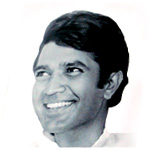
It is perhaps fitting then that in his death Khanna has sent the media into one of the biggest nostalgia sprees I have ever seen. For anyone born before about 1970 at a vague guess – and there are many in the media of that vintage – Khanna was an inescapable part of the environment, crinkling his eyes and smiling down at you.
And he’s taken us back to that journey with his death.
 By Subhash Kamath
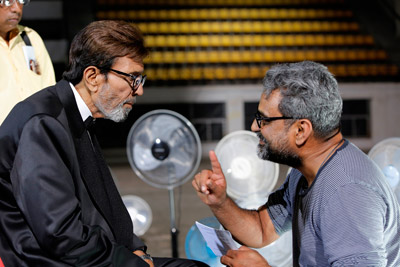
 As for the dialogue, the favourite will always remain the one from Anand… Babumoshai, Zindagi ek rang manch hai aur hum sab is rang manch ki kathputliyan hain…. The role played by Rajesh Khanna was really powerful, one of a dying man who had the ability to still laugh and make others laugh. I remember a scene in the movie where he makes light of his illness and Amitabh Bachchan in total frustration says, “Agar main kahoon ki tumhein lymphosarcoma of the intestine hua hai toh?” and Rajesh Khanna just smiled and says, “waah waah, baabumoshai, bimaari ho to aisi.” I think it was incredible how he delivered his dialogues and performed his role in the movie Anand.
 R Balki,  Chairman and Chief Creative Officer Lowe Lintas
 4. Media vehicles chosen: TV, Print, Internet and in-shop POSM
4. Media vehicles chosen:Â TV, Print, Internet and in-shop POSM By Anil Thakraney