Tag: R Sridhar

  • IndoStar Capital Finance Limited believes every life deserves to take-off, in latest brand campaign

    By A Correspondent


    IndoStar Capital Finance Limited has unveiled its new brand positioning that signifies of IndoStar as a Non-Banking Financial Company (NBFC).


    Conceptualised by Grey, the new brand campaign refers to the upward change of trajectory that IndoStar initiates through its advice and products.


    Said R Sridhar, Executive Vice-Chairman and CEO, IndoStar Capital Finance Limited: “As our offering moves to B2C, we felt a need to communicate in a succinct and lucid manner. We wanted our brand identity to be distinctive and have a consumer friendly touch and GREY has helped us in doing just the same. Our new tagline “Life ka Take-Off” reflects our commitment and responsibility to lead the transformational growth in the lives of our customers by offering the best of advice and products. We are happy to associate with GREY which has done a magnificent job in portraying IndoStar to the outside world.”


    Adding about the new campaign, Sandipan Bhattacharyya, Chief Creative Officer, Grey said: “Our starting point was the new purpose of IndoStar and how we could humanize it and, translate it into a gesture that captures the soaring spirit of middle India. The team then used slices of peoplesÂ’ ambition to embed this gesture, hopefully into popular culture. ‘Life ka take-off’ is a campaign that’s encouraging, reassuring and positive; just the kind of thrust millions of Indians need today”.


  • Sanjeev Kotnala: A review of R Sridhar’s ‘Unlock the real power of ideation’

    By Sanjeev Kotnala


    Ever wondered why there is not much to write about the ideation sessions happening every few days in the corporate environment?Or why things don’t seem to move the way you want even after taking every possible precaution and ensuring the participation of right people and great environment? Is it the process or the facilitator, the people or the environment, the location or the subject?

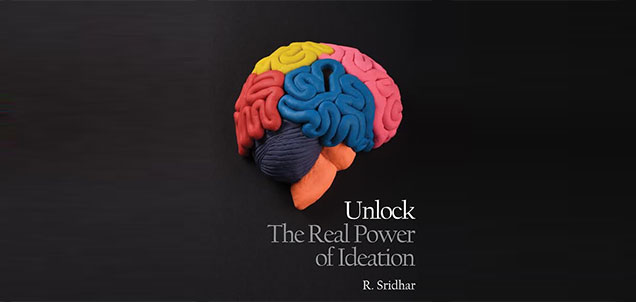
    Stop panicking. In his book “Unlock The Real Power of Ideation,”R Sridhar, the ideation and creativity guru, answer few of these questions. He shares what he has learnt in his career as a corporate exec and then as a coach and facilitator.

    R Sridhar

    While sharing the earnings, Sridhar uses storytelling to full impact. He gives you a ringside view to a hypothetical ideation session with a company where the CEO is sceptical about the outcome. The CEO baits Sridhar with a challenge and then invites him for a session with his team.

    The rest is the story that takes off from this confrontation. Sridhar fortunately uses many examples and a nicely paced conversation to drive home the point.

    Sridhar identifies and keeps the focus on to the ‘SEVEN KEYS’ to help an effective ideation session.

    The 7keys that helps unlock the real power of ideation are.

    1. Define what you want ideas for.
    2. Choose the right people.
    3. Design a robust process.
    4. Use divergence to generate a variety of options.
    5. Use convergence to arrive at idea’s worth pursuing.
    6. Make a business case.
    7. Commit resources, time and money and act.

    Sridhar empathises the three stakeholders important for a great ideation session. He says, “In in my ideation sessions, there are three key players. The first is the problem owner or client who wants ideas to solve a problem. The second is the facilitator – me – who designs and manages the process. The third are the participants in the session. I call them advisors.” Nothing could be away from the truth.

    The book has a short description of useful tools and techniques for ideation.

    First part of the book deals with generating divergent multiple solutions and approaches ( ideas) for the agreed issues. And the latter part tells ways to converge ( select) the best solution from the large number of ideas developed in the first phase.

    Sridhar has used Grey Screen to highlight the things e wants you to read and think about or what he considers as a critical takeout of the chapters or the discussions. Here are few examples

    ‘The assumption we make about the problem limits the quality of our solutions. So, it is important for us to clarofy boundaries if any. Otherwise, people make their own assumptions, which affect their thinking’ – Page 39

    Here is another gem that I personally fully endorse and believe in. ‘People affected by the problem are likely to give better solutions than those who created the problem’ Page 49

    ‘When people have no stake in the issue under discussion, they feel and are unafraid. They have no inhibition or bias. They express anything that strikes their mind. It could be wild, crazy, impossible, unusual, funny, risky, foolish, stupid, childish, expensive, dangerous and sometimes even irritating. It is from such a crop that we get a brilliant possibility. Quantity leads to quality’ Page 54

    On page 151; he simplifies the definition of idea. ‘An idea is a prescription for action…… By definition, an idea will change people, places and situations. And you know what is expected.

    There are two areas where I believe that Sridhar should have pushed more.

    •     Everyone is creative, and everyone can contribute in these sessions.

    •     The need for multiple solutions and the quantity (number of solutions) leading to quality (selection of a better alternative).

    It is a simplified approach to a simple process that people see as a complex one. I am very happy that Sridhar in his book over simplifies it. The only area which I feel could have been toned down is the self-appreciation. In some parts of the book, it seems to sell Sridhar as an ideation facilitator, and it does a damn good job of it.

    In my ideation workshops – ‘IDEA-HARDVEST’ and ‘InNoWait’ -  I use similar processes and can vouch for quality of results. There is no cramping for space. The lines and words are well spaced. This does add bulk in terms of the number of pages but then the type size and space enhance readability.

    Go ahead and read the book. You can’t bore people into thinking differently. Sridhar book will surely help you think differently in your future approaches to ideation. And yes, he does not bore you.


  • Exclusive pre-release extract from R Sridhar’s Unlock The Real Power Of Ideation


    For a while now, former Ogilvy honcho R Sridhar has been a popular Business Innovation Coach. Conducting sessions with business leaders and corporates, he even came up with an app that could help generate ideas at all times.

    Sridhar has spent a little over 25 years at Ogilvy (1975-2000) where he held various positions: Principal Consultant – Ogilvy Consulting, Director – Integrated Marketing Communication, Director – Head of Ogilvy Mumbai, President – O&M Direct, Chairman, Ogilvy & Mather Direct (Ogilvy One) and Vice President, Ogilvy & Mather, Bengaluru.

    For the current generation of senior to junior professionals who may not be too familiar with his work, suffice to say that Shiv Shivakumar, Chairman and CEO, Pepsico Holdings looks up to him as an Ideas Guru.

    We could have just carried Shivakumar’s foreword to the book as it very succinctly captures all about the book and the author.

    But we’ll leave that to another.

    Here’s an extract from the book, specially chosen for MxMIndia readers by the author.

    Read on, and if you are in Mumbai today and can attend, do come for the release of the book at 6pm at Crossword Kemps Corner.


    By R Sridhar

    Prelude

    [“We cannot become what we need to be by remaining what we are.” – Max de Pree ]


    It happened in a split second. My wife and I were taken by surprise when the black BMW suddenly overtook us from the left and moved into the parking space I was about to get into. I slammed the brakes in time in a reflex action.

    We sat there quite shaken and watched a well-dressed man and his wife get out of the BMW and walk past us to enter the banquet hall. They too were going to the wedding reception of my friend’s daughter.

    When we approached the entrance to the hall, I noticed the man talking to my friend, the bride’s father. As we approached them, my friend came towards us with a big smile. He gave me a bear hug and offered a namaste to my wife. He then introduced the BMW man.

    He was VJ, the MD of a fast growing Rs. 50 billion consumer products company. He told VJ, “You must talk to Sridhar. He is an Innovation Consultant, and makes a living conducting ideation workshops.”

    Later, VJ, his wife, the two of us, and a few others were at the same table for dinner. VJ, sitting right across, started a conversation with me.

    “So you make a living out of conducting ideation workshops. Quite frankly, I think ideation sessions are a waste of time,” he said.

    Taken aback a bit, I managed to mutter, “Oh… keen to know why you think so.”

    VJ: “My core team and I meet every year for our annual strategy meetings. We have been to Macau, Mauritius and Seychelles besides a couple of other places for these meetings. I conduct ideation sessions on new business growth. It has always been a disaster. They suggest mundane ideas and I have to step in to bail the session out with some of my own ideas. No more ideation sessions for us. We can save the money; feed the poor people instead or donate it to some worthy cause.”

    He was direct. There was no mistaking the aggression in his tone.

    I smiled and kept quiet, unwilling to get into an argument and spoil the evening. I turned my attention to the other people at the table.

    I bumped into him later as we were leaving.

    He accosted me with another barb.

    VJ: “Looks like you had nothing to say in your defence.”

    RS: “You just shared your point of view. I don’t have to agree with it.”

    VJ: “If you don’t agree with my view, you must have the courage to state what your view is.”

    RS: “You may not find that palatable.”

    VJ: “Cut the courtesy and come to the point.” He egged me on to share what I thought.

    RS: “Well, from what I heard, you seem to have no respect for your people or their intelligence. You seem to think that they should feel indebted to you for taking them to all the fancy places. I believe that you do not have the skills to conduct an ideation session. I think you conduct these sessions like your regular office meetings with the only exception being the venue. Finally, I think you manipulate the meeting to push your own ideas, without honestly giving an opportunity to your colleagues to contribute their thoughts and suggestions.

    It is like someone blaming the piano, when he doesn’t know how to play it. If you have the same old people, discussing the same old issues the same old way, you will always get the same old results.

    I am hardly surprised that your ideation sessions were a waste of time. You set yourself up for failure due to your pre-conceived notions.”

    I realised that I had perhaps spoken too much, and so I excused myself and moved away. My wife and I met a few more friends and left soon thereafter.

    “Why did you have to do that?” my wife asked as we were driving back home.

    “Do what?”

    “You talked down to the man. You were almost insulting.”

    By this time I had calmed down.

    “Maybe you are right. I should get his number and apologise to him.”

    Two weeks later my friend called.

    “What happened at the reception? I am curious.”

    I recounted the whole conversation. “I was rather blunt about my views with your friend VJ. I am truly sorry about that. I did not mean to be rude.”

    “No wonder he is eager to see you. He is keen to know more about your work and what you do.”

    “Wasn’t he upset?” I enquired.

    “He was, but your candour shocked him. You have given him a feeling that he was not doing things right. He is quite intrigued and wants to know how he can set things right.”

    “Thanks. I will certainly meet him,” I assured my friend.

    I called VJ and we set up an appointment a fortnight later.


    The First Meeting

    VJ was keen to know about what I do, my process, my clients, how I measured the impact of my work and whether I had tangible results to show. He also made a request before I could answer his queries.

    VJ: “I am keen to know about your work and your insights through your own experience. Do not give me examples that I can find on the net. I have read a bit and know about what 3M, Apple, Google and some of the others do. Is that OK?”

    RS: “Well, I will try. Sometimes I may stray away from our agreement into the forbidden territory, but you can raise a red flag and bring me back.”

    “Another thing. I like asking questions because that is how I understand things better. Would that be okay?”

    We had several conversations which extended over four to six weeks. In a way, I was grateful to him. His questions gave me an opportunity to revisit 15 years of my work as an Innovation Facilitator, Consultant and Coach.

    At the end of our conversations he was talking about making the most out of his people’s experience and expertise. We designed a process together to help him do that.

    What follows in this book captures what I shared with him. It covers many of the principles, templates and frameworks that I use. I also shared anecdotes, experiences (including some instances where I failed), and a long list of books I have found invaluable. Somewhere during the course of the conversation, he gave me the license to call him VJ.


    Creative Block Busting – 7 Keys to Unlock the Real Power of Ideation

    [“Better a diamond with a flaw than a pebble without.” – Confucius]

    “Imagine a chest with valuable treasure inside. The beauty of the chest is that it has boundless wealth. Even if you take something from it, nothing reduces in it. It has unending wealth to offer.

    You have seven keys to open the chest. If you use the seven keys intelligently, patiently and in the right sequence, you will get everything you want from the chest. If you use them randomly, you will only get access to a small portion, but that is not good enough. Opening the chest and getting what you want is simple if you know how to use the keys in the right sequence.


    1. Key No. 1. The Master Key. Define what you want ideas for. This is the most critical key. If you use it, it will make using the other keys easy. Besides, you will get access to everything in the chest.

    2. Key No. 2. The Brains Key . Choose the right people for the task. This key will help you get the best of what you are looking for. If you skip using this, you are unlikely to get to the most valuable part of the chest.

    3. Key No. 3. The Design Key. It is a robust process for divergent and convergent thinking. Using this key requires patience. If you do it right, your diligence will pay rich dividends.

    4. Key No. 4: The Wizard Key. Use a bouquet of tools and techniques. This is the divergent key and helps you explore anything and everything. People who use it well are the ones who reap the best benefits from the chest.

    5. Key No. 5: The Smart Key. Use a smart selection process. This key helps you focus on what will be most useful or effective for you. If you don’t use this key, you will have a great time exploring the treasure, but will get nothing useful from it.

    6. Key No. 6: The MOT (Moment of Truth) Key. Committing money, resources and time. This key shows you how to make the right choice for action. If you falter here, you lose everything you have got.

    7. Key No. 7: The Action Key. Making things happen. If you used the first six keys, got some great treasure, but did not do anything, you lose everything you have got.


    Unlock The Real Power Of Ideation

    By R Sridhar

    Republished with permission from the author

    Published by Productivity & Quality Publishing Pvt Ltd

    318 pages; Paperback

    Price Rs 360 (Rs 285.95 on Kindle, Also on Amazon.in)

     

  • R Sridhar to launch iPhone/iPad app to help get ideas

    By A Correspondent


    Former Ogilvy honcho R Sridhar, now a popular Business Innovation Coach, is working on an iPhone and iPad application that will help generate ideas at all times.


     

    “The beta version will be ready by next month,” Mr Sridhar said, adding the app will “help people get ideas anytime, anywhere… no more mental blocks, no more frustrations.” And how will that happen? “It will tickle your brain and help you think differently.”


    The app will be available from next month at a small price. “I will fix the final price soon. It is an affordable price. What is more 5% of the sales revenue will go to a foundation to help build creative thinking and problem solving skills in young kids,” Mr Sridhar said.


    Mr Sridhar has spent a little over 25 years at Ogilvy (1975-2000) where he has held various positions: Principal Consultant – Ogilvy Consulting, Director – Integrated Marketing Communication, Director – Head of Ogilvy Mumbai, President – O&M Direct, Chairman, Ogilvy & Mather Direct (Ogilvy One) and Vice President, Ogilvy & Mather, Bengaluru.


    Those interested can mail Mr Sridhar at vijisri@ideasrs.com and he will send an advance intimation when it will be available at the app store.


    Also Read:  How to get ideas (& climb the corp ladder)


  • How to get ideas (& climb the corp ladder)

     
    By Tuhina Anand


    Veteran adman and now business and innovation coach R Sridhar has come out with an e-book titled ‘How to get ideas – an incomplete book’. The book is a collection of insights from various people who have shared their mantras on how they get their ideas. Mr Sridhar, who is former chairman at OgilvyOne Worldwide and director at O&M, and whose website is at ideasrs.com, explained, “I am an innovation coach and I work with people to help them do things differently. So when it comes to doing things differently, idea plays an important role in achieving this. I have had several conversations with people on what triggers an idea in them and this led me to collate the responses and put it in a book.”


    Mr Sridhar calls it an incomplete book because he hopes to come out with version 2 in three to six months’ time, where he aims to include not just national players but inputs from global players. However, Mr Sridhar categorically avers that the book is not targeting advertising professionals as he adds that most in the business think they know it all, but largely aims at the corporate world.


    He added, “We are all creative in one way or the other but don’t really know how to express it.  While some may have the opportunity to express their creativity in the outer world many don’t. The purpose of the book is to help people find their own creative streak. There are many places when we are stuck and don’t know how to move ahead or are not comfortable asking for help. The book will help people in different situation by giving them cues and find their groove.”


    Mr Sridhar in fact says that the book will be handy for even professionals like doctors, lawyers and even homemakers. In your daily life if you are stuck even for simple things like planning a menu for an evening dinner, the book will give cues on how one can be creative and, with minor variations and combining different things, can come up with an innovative menu.


    He concluded, “Most importantly, in today’s corporate world there is a need to be innovative to lead. The person with ideas will move up the ladder at a quicker pace than any other and that’s where this book comes into play. For any ambitious person who wants to succeed, I would suggest he should keep a copy of the book on his laptop.


    Click on the image for larger view

    Excerpts from the e-book:


    Pulling strings in the head

    Few things I always do. Look out for interesting and unique stuff while I travel, watch TV,   read, talk with family, watch movies… I register it in my mind (luckily it stays there for ever). 🙂 When my sales team comes with a brand brief, I read a lot about the brand, understand it well  and thereafter,  my mind automatically starts pulling strings from all the available information in my head.


    Then…..I get the first spark of an idea… After that I go talk to different people about it, get inputs, shape it, modify it, answer their questions. If I scrap the idea I go back to step 2.


    Aparnaa Rajasekar


    Helicopter ride in the mind

    I remind myself that ideas are everywhere if I choose to look.  I try to take completely unrelated things and try to connect them to the problem. Something I came across in DeBono’s work really struck home with me. Roughly he said, everything can be connected  with everything else. Thinking laterally is like taking a helicopter ride and getting dropped off in an unknown location (unrelated object) and finding your way back home (the problem) by making connections.


    Among specific things I do to generate ideas: sleep on the problem and wake up early. I find I am in a great frame of mind at this time. I try to find someone who will listen uninterruptedly so that I can speak aloud, hear myself think. I am able to generate more ideas like this.


    I spend time by myself, retreating inwards; I spend time browsing the internet, looking for inspiration; I drive; I talk to my wife; sometimes my dogs; to my dictaphone; to my colleagues at office; to my clients.


    Santhan Reddy


    Ray of light passing through

    Ideas often are often like , a ray of light, it just passes through the mind while doing something totally unconnected. Could be while cooking, drinking coffee, reading a book, taking a walk, reading the newspaper, bathing and very often while on the pot (pardon me saying that).While travelling by car, is another time when ideas flash past. I personally use mind mapping to generate ideas and solutions to complex situations. Invariably I note them down as the thought is lost as we get busy in something else. If I need to generate ideas, thoughts I generally go to a room, sit down, relax and allow thoughts to flow. This is invariably while doing problem solving or looking at multiple options. Bouncing off ideas is with a close friend who will be objective and tell me if i am terribly wrong.


    Laila Sethna


    Just let it be

    I first surf the net for the subject and randomly follow links to related subjects. Almost like immersing myself in the topic. Someone somewhere has always faced a similar problem. I have found from hard experience that its best not to actively think about ideas. Just let it be and sleep over it. Then I talk to some selected people who are good sounding boards about the general subject (NOT ideas). They usually ask me some more questions during the discussion. Again I let all this be in my mind. Ideas then just come to me… sometimes inspired by imminent deadlines.


    What not to do (for me)


    Active brainstorming – I find this yields superficial and obvious ideas.

    Tell people that I am looking for ideas – again people limit their thinking and discussion and come up with the most top of head obvious stuff.

    Generate ideas without researching the material.

    Pressure myself for “ideas” – just doesn’t work.


    What works


    Talking to specific people who are able to think and talk at an abstract level – then I manage to find analogies from unrelated areas.

    Talking about the subject without a goal in mind.

    Talking to my kids – sometimes yields surprising ideas

    Surfing, surfing, surfing with broader and broader search terms.

    Thinking of the subject when I go to sleep. Often, I wake up with an idea.

    Nalini


    Just start writing

    I just start writing my ideas. If I wait for ideas to come, they never do. But when I sit down and start writing, then they seem to come out. Writing is usually on the laptop on the iPad.   When writing, I try to structure my thinking. Mind maps help quite a bit.

    Suman Srivastava


    Excerpted with permission from the writer.

    The e-book ‘How to get Ideas’ can be accessed at http://ideasrs.com/ebook/

  • The Anchor: Ramanujam Sridhar on 7 ways brands can stay relevant to their consumers

    #1 Be a student of brand history
    Why is that some brands struggled to remain relevant to their consumers. Will studying their life cycle and history teach us something to avoid? Remember, wise people learn from the mistakes of others and don’t make new ones.

    #2 Study the consumer
    Preferences are changing and consumers are changing even more dramatically and brands sometimes get left by the wayside. Rasna which was the leading soft drink concentrate in the country lost share of mind and market share as the consumer moved to bottled drinks in the nineties from the concentrate that they were mixing at home. Soft drinks became fashionable and the trend took over the consumer.

    #3 Is your brand evolving with the times?
    Immortal brands like Coke, Pepsi and Nike have evolved with the times and newer generations of customers continue to find them cool. Others have become dated however. Be objective in evaluating your brand.

    #4 How innovative is your brand?
    Brands like Titan continue to be relevant to their consumer as they constantly keep the excitement flowing with new product launches. Titan edge the slimmest watch in the universe at that time created a ripple in the market and gave consumers like me a reason to upgrade their watches. The market leader has to expand the category and Titan has been doing this for years. Ask yourself an honest question. When was the last time you had an innovation in the brand?

    #5 Is your advertising the best in the category?
    A simple benchmark is to strive to ensure that your brand’s advertising is the best in its category. Not in terms of awards but in terms of consumer preference, liking and interest. Don’t look for industry approval, look for consumer endorsement.

    #6 Is your consumer getting older?
    Constantly track the sales data. Is your consumer getting older? Are younger people looking at hepper brands? If I were McDowells’ No. 1 whisky, I would be worried that younger tipplers are drinking more of Royal Stag. It is important to be relevant to youth especially in a country of young people like ours.

    #7 Relevant brands engage their customers
    Too often companies forget that the real magic is in the customer engagement not only high decibel advertising. Do consumers talk about their experience with your brand or are they complaining bitterly about something that your company did in some blog. Watch what is happening around you. You just might be surprised.

    Ramanujam Sridhar is CEO, brand-comm.