Tag: R Balki

  • MullenLowe Lintas launches commemorative book

    By Our Staff


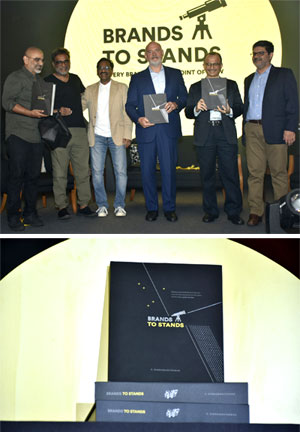
    MullenLowe Lintas Group has launched a book to showcase what it callsits purpose-led brand building philosophy – ‘Brands to Stands’. The book has been authored by S. Subramanyeswar (Subbu), Chief Strategy Officer – Asia Pacific and Head of Global Planning Council, MullenLowe Group


    The book has learnings from brands such as Tata Tea, Surf Excel, Havells, Axis Bank, Swiggy, Lifebuoy, Bajaj Avenger etc. It also features a prologue by film-maker and former Chairman & CCO of MullenLowe Lintas Group – R Balki, and an epilogue by Harish Bhat, Brand Custodian, Tata Sons.


    Commenting on the occasion, Amer Jaleel, Group CCO and Chairman, MullenLowe Lintas Group said: “Our work has been spoken of at various forums and awards separately because it’s always been brand-linked, client-linked. It deserved to be celebrated together because when you see just a fraction of what Lintas has produced over the years you can see the patterns of our thinking, the volume of our contribution to the world of marketing and the scale of our impact on the work being churned out today.”


    Added Virat Tandon, Group CEO, MullenLowe Lintas Group: “Our journey on Brands to Stands started much before the term brand purpose became popular. It is an approach that has helped provide a long-term distinctiveness to the brands and create respect and love for it. The book covers 25+ cases that have set a benchmark in the world of branding and marketing. These ideas have won the effectiveness awards at every level – India, Asia and the world. We have a robust strategy process to arrive at the brand purpose and point of view and the creative mastery to craft that into a narrative that is fresh and yet consistent over time.”


    Talking about ‘Brands to Stands, Subbu said, “Marketing will significantly benefit as brands take stands in a world that will no longer stand for a glut of commoditized products and services without any meaning. Our book ‘Brands to Stands’ floats an idea that inspires brands and businesses to embrace this fresh new wave of thinking by showcasing how some of India’s top brands have positively impacted the way society at large thinks and behaves. Each of the brand stories chronicled in the book captures a wealth of marketing wisdom, powerful insights and memorable anecdotes from their respective brand custodians as well as prominent industry experts. The book appeals equally to corporates, entrepreneurs, students and about anyone who wants to elevate the role of brands to ensure that they are in the vanguard of transforming society. This is not a book with an end, but one that prompts a new beginning.”


  • 2019 edition of Star Re.Imagine Awards announced

    By A Correspondent


    Star India has announced the second edition of the Star Re.Imagine Awards for the best advertising on its television network and Hotstar during IPL2019.


    The jury list is impressive: Dave Trott, who has won the D&AD President’s Award, London for Lifetime Achievement in Advertising; R Balki, film-maker, Rama Bijapurkar,  market strategy expert; Swati Bhattacharya – CCO, FCB India and Piyush Pandey, Ogilvy Worldwide creative boss.


    Speaking on the announcement, Gautam Thakar, CEO, Star Sports said: “Sports is a great unifier and VIVO IPL’s massive reach and engagement provide the perfect platform for every brand to reach their audience. We are excited to announce the 2nd edition of the Star Re.Imagine Awards to celebrate the creativity of the top marketers in the country.  We have an additional award category this year and have witnessed some amazing storytelling from brands so far. I am excited to welcome our world class jury and look forward to the results.”


  • Goafest, again!


    By A Correspondent


    It’s Goafest time. To the world outside, the advertising industry is a bundle of contradictions. Small in size, but loud in voice. Fiercely competitive, but always united. Well, almost.


    One arm of the world’s largest conglomerates WPP finds the Abby awards a no-no. That’s Ogilvy. In fact its supremo – Piyush Pandey – once said that the his team members saw no value in them, in fact they are strewn all over their cabins. Another arm of the same WPP is a fierce believer in the awards. In fact J Walter Thompson has been #1 over the last few years in the final tally of the creative awards. And before we go on and on here, we must add that GroupM, the media investments arm of WPP is not only an active participant in the Media Abby, but its CEO for South Asia – CVL Srinivas – is also an active member of the organising committee.


    Then there’s the MullenLowe Lintas Group. The diktat of its former chairman R Balki of not participating in the Abby is still followed, but in the past we’ve had integral parts of the same group participating actively. In fact two years back, Pickle Lintas even won the Grand Prix for its campaign for Dabur.


    There are some other agencies which don’t participate in the Abby. Some because their bosses don’t like creative awards in India, some because they don’t have enough good work to send which will hence put them twenty first in the pecking order. Even some hole-in-the-wall digital or out-of-home agency in the boondocks.


    Be that as it may, the 12th edition of Goafest, which starts today, is said to be the biggest ever held thus far. And as Organising Committee chair Ashish Bhasin told us, it’s a full house. Though we don’t have the final numbers of registered delegates as there are always some spot registrations and opt-outs at the last min.


    We asked MxMIndia columnist Sanjeev Kotnala for his list of favourite speakers, and this is, as he also wrote in this column on Wednesday, his list: Hemant Malik (ITC), Acharya Balkrishna ( Patanjali), Ishita Katyal (Youngest Ted speaker), Gaur Gopal Das (Spiritual Guru), Miss Malini Agarwal (the blogger), Geeta and Babita Pogat (Going to be crowd favourites), Eric Cruz (ECD AKQA), Claus Stangl (IG Creative Shop), Vivian Richards (Cricket), Juhi Kalia (Facebook), Laura Ries and Sanjay Dutt.


    We agree with most of the names. But Sanju baba? Well, Kotnala clarified to us, Baba comes last in the list of names which are in order of priority.


    The awards start in right earnest from Day 1 with the Media Awards, though the big night is the last with the key creative awards.


    Keep tracking the MxMIndia coverage of Goafest starting today. Enjoy


  • Balki and his undeniable legacy


    By Vikas Mehta


    The news came out of the blue but it was not surprising. Balki had decided to leave advertising and focus on Films.


    What Piyush has done to Ogilvy, Balki has done the same and more to Lowe Lintas. Lintas as it was known then, was big and had produced effective advertising that yielded result in the marketplace. It was not necessarily spectacular neither was it all memorable. In fact before Balki came on the scene, Lintas was known to be the Lever agency and its work was a result more of the Unilever culture than anything else.


    Balki almost singlehandedly changed that. I don’t know if his coming helped Unilever change its advertising culture or it was just a coincidence that Balki came at the same time when Unilever decided to reengineer its advertising but Balki was the driving force in Hindustan Unilever and thus Lintas moved into the realm of effective, insightful and memorable advertising.


    To me, both Balki and Piyush made two big contributions to Indian advertising. One, effective advertising or advertising that yields results need not be boring or formulaic. And the second was both gave an Indian idiom to advertising. So while Lintas had produced Liril and Cherry Charlie, two great advertising campaigns of the 1980s, the Lowe Lintas that Balki fashioned gave Indian advertising gems such as Surf Excel, Tata Tea, Idea, Havell, Lifebuoy, Pepsodent and many more.


    But the one area where I personally think Balki went further ahead was the area of creative focus.  At a time when advertising awards were becoming not only important but were also catching the fancy of the Indian marketing and communication community, when any self-respecting creative wanted global awards on his resume, Balki took the bold step of declaring that for Lintas the only awards would be the marketplace and consumer acceptance. He channelised creative energy to make memorable pieces of communication which delivered effective results.


    He did not worry about losing creative people who craved awards. Because he motivated and gave focus to his people that the best award is the marketplace award.


    And that is the biggest legacy he is leaving behind at Lintas. People who create communication which is effective, which does its job, which is rooted in real insights and which win the ultimate award. Acceptance by the consumer.


    Vikas Mehta is a communications veteran having worked with Lowe, JWT & Havas in India, Middle East, Far East & North Africa. He has worked on global, regional and local mandates across a spectrum of clients like Unilever, Hero, Philips, Sony, J&J, GSK, Bajaj Auto etc. Currently he is on his own discovering the true Bharat while becoming a student by teaching them at various management institutes.


  • Balki bids bye to advertising


    By A Correspondent


    In a move that is sure to surprise many in the industry, R Balakrishnan, better known as Balki, has decided to say goodbye to advertising after a three decade-long career in the industry. The move was announced earlier today, through an internal communication, to the employees of MullenLowe Lintas Group, India.


    Said Alex Leikikh, Global CEO – MullenLowe Group:  “Balki has been the architect of the stellar agency we have in India today. He leaves behind an operation that’s successful and future-ready, a leadership team that’s perhaps the strongest of any agency in India, and a culture that he shaped along the way while himself leading by example. While we will miss his infectiously passionate presence, we wish him even greater success as a film-maker.”


    Majority of Balki’s advertising years have been spent at the MullenLowe Lintas Group, India where he currently holds the role of Group Chairman. He joined the agency (then known as Lintas) in 1994, in its Bengaluru office.


    Speaking of his decision, Balki said, “We’ve been planning this for some time now. It’s been a long process of succession planning that concludes with my move. The agency is at its strongest today and I leave feeling satisfied, proud and excited. We have a fine leader in Joe and two world-class creative champions in Amer and Arun. The agency has given me more than 22 years’-worth in opportunities, growth, values and most of all, some friends-for-life.”


    Joseph George, Group CEO, MullenLowe Lintas Group, who has worked closely with Balki through all of the 22 years says, “It is impossible and even foolish to try and replace someone like Balki; so we planned the transition differently. As early as July 2015, we put in place, a management structure that would help us move forward as an organisation, while also maximizing the potential and aspirations of great individuals we have. Balki and I have tried to think this through every step of the way, and it’s reached a place where we feel the agency is ready for today, and tomorrow.”


    Balki started his career in Mudra, before moving on to Lintas, a place that he went on to make his home for over two decades. While with the agency, he’s been the brain behind several globally acclaimed campaigns and brand ideas. Under his leadership, MullenLowe Lintas Group has consistently retained its spot as one of India’s top agencies and a training ground for some of the best advertising minds of the industry.


    Talking further on the decision: “There is no bigger happiness than to see a thought actually work the way you had fantasised. Lowe was a thought am proud of.”


    We’ll miss you, Balki.


  • Kyoorius-ity over! In-book winners and Blue Elephant nominees announced

    By A Correspondent


    The Kyoorius Creative Awards jury session ended on May 7 but the ‘curiosity’ about some of the winners was cleared on May 17. Kyoorius, in association with D&AD(Design and Art Direction) has announced the in-book winners for the Kyoorius Creative Awards 2016. Out of 1863 entries submitted, 164 entries have been announced as in-book nominations that qualify for the Baby Elephant and the Blue and Black Elephants are selected from these nominations.


    The winners of the Blue and Black Elephants will be announced on the awards night which will be held on June 3. This year will be the third edition of the Kyoorius Creative Awards, which recognises talents from the advertising and digital industry, and this year they have introduced the media category as well. Kyoorius rewards all great work in the Indian visual communications sphere and hence does not have Gold, Silver & Bronze tier system – every great work will win a Blue Elephant and the Black Elephant goes to that outstanding work that has made a mark among the rest. The jury can decide to award multiple Blue Elephants in any category, and none in another based if entrees are not up to the mark.


    The full list of Advertising Awards In Book Winners can be found at: http://awards.kyoorius.com/2016/creative/in-book-winners#advertising


    The complete list of Digital Awards In Book Winners can be found at: http://awards.kyoorius.com/2016/creative/in-book-winners#digital


    The complete list of Media Awards In Book Winners can be found at: http://awards.kyoorius.com/2016/creative/in-book-winners#media


    Apart from agencies such as Ogilvy & Mather, DDB Mundra and others, this year has seen entries from corporates like Hindustan Uniliver, DainikBhaskar, Club FM to name a few. The Jury foremen of the three categories were: R Balki, Group Chairman, MullenLoweLintas Group (for Advertising awards), Ralph Barnett, National Creative Director, SapientNitro (for Digital awards) and Mike Florence, Head of Planning, PHD Media (for Media awards).


    The awards even will be held on Friday, June 3 at The Dome (SVP Stadium, NSCI).


  • What the Jury Foremen said


    The jury session of the Kyoorius Advertising, Digital and Media Awards happened last week in Mumbai. The D&AD-backed jury saw a mix of top international and Indian names in the business. Anuka Roy caught up with the Jury Foremen of the three categories about the process followed


    R. Balki, Group Chairman, Mullen Lowe Lintas Group

    Advertising Awards Jury Foreman


    On the judging process: It was an open jury and a very transparent process.


    About the entries this year: There are a few gems which are hidden under a lot of mediocre stuff. I think the percentage of good work is higher on the whole


    Whether the entries were at par with international  standards: There is no such thing  as an international standard. Advertising is not about international standards, it is about what is different, creative and relevant to our audience, and I do not think there is any one standard, either globally or locally. We produce work they cannot produce and vice versa because it is for two different kinds of audience. There is no International or Indian. There is just a standard for great advertising. What our country produces is different in thought, but it is phenomenal. And we should preserve our uniqueness.


    Ralph Barnett, National Creative Director, Sapient Nitro

    Digital Awards Jury Foreman


    On the judging process: The judging was always going to be tricky and complex. I think we wrestled hard with the categories, but at the end of the day, the cream rose to the top. The good work stood out.


    About the entries this year: There is a spectrum of entries, from stand-out work to the kind of expected work that you would see from around the world.


    Whether the entries were at par with international standards: I think, definitely. The best work coming out of India can hold its own against the best work from other parts of the world. Each is special in its own right because it celebrates the unique cultural attributes of Indian society. I also think some of them resonate at a global level as well because they deal with universal issues. Certainly, India has the calibre of creative talent to mix and match with some of the best in the world.


    Mike Florence, Head of Planning, PHD Media

    Media Awards Jury Foreman


    On the judging process: I really enjoyed the judging process, t is an open process and I think all judging should be that way. Actually, most judges always judge for the best work and what people think, what goes behind closed doors may not be the (right) case. It is good to have this (the judging process in Kyoorius) openness from the beginning. On a personal level, it is amazing to see work relating to the nuances of Indian people and culture. What it also means for me is that some of the advertising can also make the world a better place. There are certain problems that need to be fixed, like giving women a louder voice, which, campaigns like Ariel’s ‘Share the load’ help do.


    About the entries this year: They are of a really good quality. India’s got real talent out there. Some of the campaigns are great. I think, potentially, entries in future should think about the categories they are being placed in. I think we can get a bit tight on that. Overall, the quality was as good as at Cannes or anywhere else.


    Whether the entries were at par with international standards: Definitely. I think the ones which I believe were good would definitely stand on a global stage. In June, Cannes will also see some of this work.  Indeed, India is a contender on the world stage. The ‘Share the Load’ work is as good as any agency in the world can produce, and I do think it can clean up in Cannes. There is brilliant talent and loads of opportunity. A lot of the work can help make the world better, make India better and that means it has got the attention of the world because related marketing is what people strive for the most.


    This story first appeared in dna of brands on May 9, 2016


  • R Balki and Prasoon Joshi to be jury foremen at D&AD, Aggie, Anil Nair, Mohor Ray & Shanoo Bhatia also on jury

    By A Correspondent


    D&AD has announced its juries for the 54th annual professional awards. In keeping with tradition, the D&AD Awards will be judged by some of the international creative communities’ highest profile members, notes a communiqué. Prasoon Joshi and R Balki are Jury Foreman heading the juries of the Writing and Film Craft categories respectively. In addition, Agnello Dias, Chief Creative Officer, Founder, Taproot Dentsu, Anil Nail, CEO, Managing Partner, L&K Saatchi & Saatchi, Mohor Ray, Co-Founder, Designer, Codesign and Shanoo Bhatia, Founder Director, Eumo are also on the jury.


  • Yes, Lowe Lintas India is the #1 creative agency in the whole world!


    By A Correspondent


    We knew that Lowe Lintas is one of the foremost agencies in the country. That many of its works have bagged international laurels. But what we didn’t know is that it’s the No 1 creative agency in the world.


    That’s a huuuuuuuge accolade. Don’t believe it?


    Well, here’s the news:  Based on their performance in effectiveness and strategy competitions, WARC 100, an annual ranking of the world’s best marketing companies and campaigns, has announced Lowe Lintas India is the No. 1 creative agency in the world. The study focuses on marketing that makes a difference, driving business performance or changing consumer behaviour. This is the first time an agency from India has landed the top spot.


    The rankings are compiled based on the winners of 87 effectiveness and strategy awards from around the world. Unilever was named No 1 Advertiser of the Year, with two of their campaigns (both created by Lowe Lintas) making it to the Top 5.


    Lowe Lintas India accumulated 212.9 points while AMV BBDO UK took the second spot at 191 points and Colenso BBDO NZ that collected 147.6 points to finish third. This accolade is another addition to the strong run that the agency has had over the past few months. Recent successes of Lowe Lintas on global platforms include Ad Age International Agency of the Year, the American Jay Chiat Awards and WARC Asia, all of which were firsts for India.


    Joseph George

    Said Joseph George, CEO, Lowe Lintas + Partners: “We hold WARC in very high regard. This recognition is both extremely satisfying and spurring. We have had a terrific run on creative effectiveness this year across the globe; and all the accolades have further reinforced our belief in the type of work we want to do and believe in.”


    Campaigns created by Lowe Lintas India took two of the Top 5 spots on WARC100 as the World’s Best Campaigns. Kan Khajura Tesan, (created in collaboration with partners including PHD and Netcore), has been named the World’s Best Marketing campaign while ‘Help a child Reach 5’ for Lifebuoy was ranked 4th. Again, these are the only campaigns from India to feature in the World’s Top 10.


    Now will we see Prime Minister Narendra Modi making a call to Joseph George or R Balki to congratulate them for having earned laurels for the country? Or better still, hire the agency to promote its campaign in Bihar. Learnings from ‘Kan Khajura Tesan’ should come in handy 🙂


  • What Ticks for Indian Consumers


    Last year, when we carried the contents of our first Annual, the articles went on and on and on. So this year, we thought we’d give it a slip and just restrict the Annual to the print (and eventually archived in an e-edition). But given the treasure trove of content and knowledge, there have been several requests from our readers (and some of our guest writers) to publish these every day over the next month.


    Given that there are over a hundred articles in the second edition of the Annual, we will carry two or three articles every day and try and conclude our series by early September.


    The insights and views were broken down into the following strata and components of the average Indian household: Family, Women, Men, Young Adult/Teen, Kids.


    So, read on and with the first of our two writers: R Balki and Sam Balsara from the ‘Family Section’:


    The changing family dynamics


    By R Balki


    There are two parts to this change. While of course there are more and more independent nuclear families with one or two children, there is still a huge part of India that lives in joint families. The most interesting change is here, in the dynamics within the joint family. While two or more families still live together there is more and more focus by each individual family, within the joint structure, on its own needs. It is no longer one rule, one way of life for the whole group. There is an unsaid, unspoken understanding of the need for independent progress in a seemingly dependant framework.


    In the nuclear family, while the concern for children, their schooling, and aspirations for their higher education is still foremost in a couple’s life, there is an increasing focus on their individual futures too. It is no longer selfish to worry about ‘myself ‘ and ‘my’ future and ‘what I am going to be professionally’ while taking care of children. Of course, there still are some women who give up everything for their children’s sake or some men who put their careers on different tracks from what they like it to be for the sake of their children. But I think this sacrificial number is fast decreasing.


    Couples with no children are on the rise. They make a conscious decision not to have children and focus on themselves. There are more and more examples that demonstrate that a child is not a necessity for happiness.


    ‘Fragmentation is never a friend of advertisers, segmentation is’
     

    By Sam Balsara


    The consumerism story is likely to continue in India for a while. We have a one billion-plus population and there are several people who are continuously coming from the non-consumption segment into the consumption segment. Indeed there is plenty of headroom for consumption in India. Though there might be some disturbances, on the macro level, the consumption story of India is very strong.


    Even today, for instance, there are millions of people who are yet to enter the toothpaste market, they use dant manjan. These people will come in the toothpaste market… and that will happen irrespective of the growth rate. In the 1960s and ’70s we all thought that population was a major concern. However, we have now realized that it is actually a source of strength. What we need to focus on is to have an educated and employable population, which is the key concern area.


    From collective to individualistic society

    India is moving from being a collective society to an individualistic society. It is an outcome of westernization and urbanization. Everything is becoming very individual and one family-centric. It brings about its own opportunities for the marketer. The concept of a family soap that existed until recently probably is dying. You create products and you create advertising for almost each member of the family – the mother, the father, the grandmother, the grandfather, married son, child, teenager… It creates opportunities for marketers to further segment, target and appeal to each of the individual people.


    Socio-economic reasons for change

    Awareness is the biggest reason for change. People of every region are more aware of how life is led in the world outside. Examples open the mind. There’s a belief that there can be a better life and it is possible to experience it. Earlier women were always made to feel guilty if they were worried about their future. It was always about the children’s future and the man’s progress. Today women are clearly saying, ‘I am equal, I have my future too’. It is like a volcano. The years of suppression is making this change so powerful that it is the biggest driving force of our times.


    Rural and urban family

    It is difficult and dangerous to generalise families as rural and urban. Many urban people behave like Neanderthal families stuck in the past, while several families from villages or small towns think and behave like they are in some of the most developed countries. Be it environmental consciousness, be it entrepreneurship or just social thought process. There can no longer be a blind generalisation that if you are in a certain place or from a certain economic background this is how you will be.


    Again awareness, exposure to life outside the community, an increasing respect for the Individual in the smallest sections of society is the reason for this behaviour.


    From collective to individualistic society

    It is indeed a paradox. As we are talking of the emancipation of the individual, male, female or family there is a parallel push that is driving us back to togetherness. Bad governance, the state of our bureaucracy, the increasing corruption that is threatening to ruin our nation… All these threats are going to need collective solving and a spirit of togetherness like we have never seen after Independence. There are too many wrongs, too many fears, too much to lose. Funny. Just when we were beginning to enjoy our selfishness and individual progress after years, we have to, with far greater awareness, make some sacrifices and come together for survival. The small spurt of selfish behaviour will have to go back to collective consciousness, collective thinking and collective living. We can only be ok if we are all ok.


    Man’s role

    The male species is at last truly evolving. It has had to unlearn or re-learn a number of things. It is learning a different kind of sensitivity. The era of blind dominance of ‘I earn so I am the king of the family is gone’. Men are being forced to acknowledge and appreciate the role of the home-maker. In fact, with women double hatting, co-earning and managing homes, things are changing so rapidly that men are slowly getting prepared to be formally relegated to second place, way behind women. In the family and society. Of course, there are cases where this is not true, but they are all fast changing. Sometimes by force, sometimes by just awareness.


    Brands & families

    Today when a brand connects with one member of the family, other members of the family too get connected with it quickly. They communicate with each other far more. Children are more intelligent than parents in a lot of cases today. They are more technologically sound, aware and solve a lot of their parents’ technological problems. Today’s family is actually more like a group of friends.


    India’s consumerism story

    Yes, there are malls. Yes, there are more international and national brands than ever before. But this is just still a teaser of things to come. Indian consumerism has just begun.


    Increasing population a problem

    Population still is our biggest problem. We may have very cleverly converted what was our biggest problem into an asset as far as the world market is concerned. But it is still our biggest threat. Consumerism is only one small corner in the asset list, there are so many liabilities. Where is the infrastructure to support this kind of population? Everything is crumbling. Social and health issues abound. Economic disparity is growing dangerously. You can sense the turbulence and restlessness. India is the most polarised nation, where the rich are few but very, very rich and the poor are many. As the population increases further, this polarisation will only increase.


    We Indians have always been fantastic at leaping. We have leapt straight from no telephones in most houses to the mobile digital world. From illiteracy to the internet. Consumerism will also leap many phases because of the internet. From not even being aware of a thing called ‘marketing’ to almost an all knowing cynical attitude to every marketing push. Today consumers are far more intelligent about marketing and how things are marketed. Marketing can no longer be a ‘permissible con’. It needs to respect this evolving consumer.


    Future readiness of marketers

    Any marketer who believes in leading the consumer is future ready. Any communicator who believes in adding to a consumer’s life is future ready. Those that just follow the consumer are always behind. And will never be future ready. Consumers lose respect for brands that just look at their lives and borrow from it to momentarily connect with them. Consumers look up to brands that have shown them a new way. Always. These brands will always be future ready. As they are leading the consumer to a new future.


    On another dimension, to make an impact in media today is becoming increasingly expensive. To make an economically viable product that can be marketed to individual members of the family and to make it commercially viable is a challenge. Going forward as you get more targeted media, things hopefully will ease out.


    Changing family dynamics

    Man’s role has substantially changed from being an autocrat ruling the family with a heavy strict hand. The change is definitely more visible in urban areas. He has become more responsive to his family’s needs, their likes and dislikes. What they eat, what they wear, car they use, school children go to, holiday destinations have all become participative decisions where the entire family participates.


    I think children are becoming difficult to reach partly because of the advertisers own stringent guidelines based on their social responsibility. Many of the large advertisers impose restrictions on us not to directly reach children and try to influence them directly because that is considered socially irresponsible.


    Consumer expectations & marketer readiness

    Consumers are becoming more demanding, less tolerant, more finicky, more discerning, choosier; this is a continuum where everyone is moving up on the scale. Are the marketers ready for the consumers of tomorrow? I guess not. I don’t think we are ready for every change but obviously nobody is really ready for all change. Marketers do a lot of research on their products and in what consumers need but possibly not enough research is done on how the consumer is thinking and how his lifestyle and habits are changing.


    Having said that, marketers have realized that it is a folly to launch products ahead of their time. For example, some 10 years ago, many advertisers had made big splash about bath gel and it did seem it was a little ahead of its time then. I believe that from a marketing point of view and from economic viability and sustainability point of view, it is always better to be few years late than a few years early.


    Key challenges for traditional media

    The biggest challenge is the problem of plenty. There is just too much of media, too much fragmentation and media is not well segmented. That is a challenge. Fragmentation is never a friend of advertisers, segmentation is. Fragmentation makes impactful communication difficult.


    Social media has emerged strongly in India in the last few years. Marketers have been quick to jump to this bandwagon. I don’t think we have really been able to exploit the power of this medium though. Facebook is also becoming a little cautious, they don’t want to commercialise it too much and make their users unhappy. We should be able to figure out a better way for engaging with this community of millions of users that is readily available.


    Mobile as a medium of advertising

    Mobile would emerge as a strong advertising medium in years to come. It is a medium that is always on, and is personal. It can also be voice-based, breaking the illiteracy barrier. The price of smart phones is also coming down. It has a lot going for it except its small screen size.


    Theoretically, precise targeting should be possible but in actual practice it has remained restricted to targeting by time and by geography. According to me there are too many regulatory issues that prevent it from becoming a dream medium. Once these are taken care of, mobile advertising would definitely grow exponentially.


    Happiness quotient

    It is definitely true that happiness has become more elusive now. Despite so much of material wealth, the level of unhappiness seems to have gone up. However, this is nothing new or unexpected. It is again the consequence of westernisation, urbanisation and more prosperity.


    Possibly there is opportunity for marketers to capitalize on happiness as a product benefit in an abstract way and not in a material way. Instead of saying it makes your hair darker, or makes you taller or thinner or things like that, they can say buy my product and it will make you happy.


    – (As told to Ritu Midha)

    Tomorrow: Men – Rana Barua and Ashish Bhasin


  • Starry night for creatives


    By Shobhana Nair


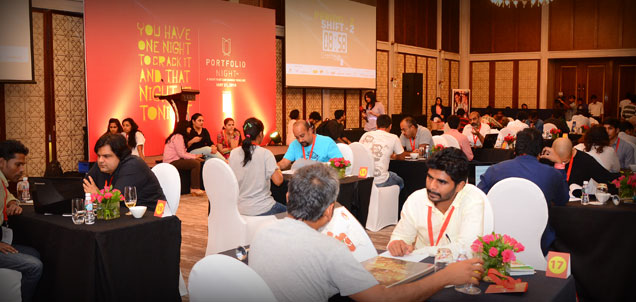
    Okay, so the chief host was missing. So deep is his commitment to projects he takes on, that R Balki, Chief Creative Officer and Chairman, Lowe Lintas and Partners stayed away from the starry Portfolio Night that his agency was hosting this year.


    Portfolio Night is a global event where, as the event’s website notes, aspiring young advertising copywriters, art directors and designers meet with several renowned advertising creative directors in a fast-paced evening of advice, networking and recruitment. “While the evening has been jokingly called “speed-dating for creatives”, it’s really much more than that. In the eleven years since its inception, Portfolio Night has grown to a global event, reaching creative hubs in every continent in an evening where the best of the present meets the best of the years to come.”


    In its 12th year, Portfolio Night brings together thousands of young minds on a single night at various top cities across the world. This year, Portfolio Night 12 was held in Mumbai’s Four Seasons Hotel, and Lowe Lintas was the host. Last year, Portfolio Night 11 was hosted in Mumbai and Delhi. While the Mumbai edition was hosted JWT, Leo Burnett got the act together in the capital. This year’s edition saw 13000 participants in what’s often also dubbed as one the world’s biggest “Job Mela”. The work is reviewed on the basis of geniality, creativity and execution.


    Apart from the obvious nervous energy in the crowd, the host had put together a fun video on the star judges and their predictable reactions after hearing a creative idea which evoked a great amount of laughter from the audience. Bobby Pawar, Chief Creative Officer, Publicis reacted to the video on him by saying, “I loved it. It’s hilarious and they had a great material to play with.”


    Talking about the quality of work expected at the Portfolio Night, advertising veteran and Executive Chairman and Creative Director South Asia, Ogilvy & Mather Piyush Pandey said, “It’s not about wrong. It’s about picking up little nuggets and encouraging them.” Amer Jaleel, National Creative Director, Lowe Lintas and Partners, who’s also the host, was seen in despair and wished he had this kind of platform when he had started out. “These 15 minutes are a big deal and it’s not about advertising but about an experience.”


    K S Chakravarty (Chax), National Creative Director, FCB Ulka, known as Chax was however not very lucky as the participants who he met were clueless about advertising in the first place. He explains, “You meet all kinds of people. It’s always luck of draw. Out of this entire lot, the chances are that only 5 participants will be really good and not necessary that I meet the brighter lot.”


    Arun Iyer, National Creative Director, Lowe Lintas and Partners shares that the team did miss R.Balki who was at that moment shooting for his movie but kept a close track on what’s happening. He further added, “It’s a fun evening. Of course, a responsibility but not a burden. Portfolio Night is a great platform for everyone and its getting evolved over the years.”


    “I feel like a celebrity,” exclaimed Deepanjali Singh, after being announced as All Star Nominee. Deepanjali was among those 75 participants who got a lifetime’s opportunity to present their portfolio in front of the biggies of the business.


    Bengaluru-based Mayank Bhayana was adjudged Portfolio Night – All Star from India. “I am still soaking in the news. It’s a terrific feeling indeed,” he said, adding: “And let’s not call it an award. It’s rather recognition that I can do a lot better than that.” The winner of Portfolio Night gets a chance to fly down to New York to take part in a week-long creative challenge on a specific brief.


    Hmmmm.


  • D&AD enters India with Kyoorius Ad Awards


    By A Correspondent


    Ridden by charges of plagiarism, scam ads and boycotts, the Creative Abby conducted by the Advertising Club now has another force to contend with: the D&AD-backed Kyoorius Advertising Awards.


    The awards gain respectability even as they are announced as they are backed by none other than D&AD. Kyoorius, a not-for-profit initiative by Transasia Fine Papers, has been organizing the Designyatra, a design conclave since 2006. Last year, it revived the design awards with a D&AD-supervised jury process (*See Disclosure).


    The alliance between Kyoorius and D&AD continues with the Advertising Awards that are scheduled to be held in late May 2014. The Call for Entry will start on March 20.


    “Ethically and with the highest standards – the Kyoorius Advertising Awards recognise, honour and award the most outstanding creative work in the Indian visual communications sphere,” notes a communiqué, adding: “The foremost creative awards for advertising and marketing communication in India have been conceptualized by Kyoorius in Association with D&AD. “Together Kyoorius and D&AD have created a truly principled and neutral platform by setting the highest standard in judging criteria. The Kyoorius Advertising Awards will be unlike any other advertising awards in India – and will have no winning tier structure of golds or silvers – only the best is awarded. The jury too will be a mix of Indian and international icons that have been selected by D&AD and Kyoorius together. And as the only format of its kind in India – all jury members will gather in India for the jury session – to review, discuss and elect the best of the best over three intensive days. All voting is private, never by a show of hands.”


    Rajesh Kejriwal

    Said Rajesh Kejriwal, Founder-CEO, Kyoorius: “The Blue Elephant aims to be the most aspired trophy to be won nationally and will enhance the winners credentials globally and the Black Elephant will be the epitome of achievement for any creative person. Kyoorius’ mission, vision and most critically – our passion has been to provide a platform for the communicators. Everything we do is fuelled by this passion.”


    Tim Lindsay, CEO of D&AD added, “D&AD are proud to be partnering with Kyooriuis in India. We share a lot of aims and values – the main one being to stimulate, enable and award creative excellence in advertising and design and to inspire and support the creative community particular in the area of creative education. D&AD is famous for the integrity and quality of its judging process and its jurors – qualities we will bring the same to the Kyoorius Advertising Awards as we advise and collaborate on categories, jury composition, judging and event management. Both organisations are neutral, and the awards will be decided entirely on merit against the three D&AD criteria; is it a great idea? Is it beautifully executed? Is it relevant to its context?”


    Tim Lindsay

    Meanwhile, although a meeting was held with various stakeholders last fortnight, no date has been announced for either the Goafest or the Abby awards at the time of writing this report. There are unconfirmed rumours that some leading creative agencies may stay away if some conditions are not addressed.


    *Disclosure: MxMIndia is a Media Partner of Kyoorius


    We will go the critic route rather than the popular route: Kejriwal


    By Ravi Balakrishnan


    R Balakrishnan

    For D&AD, it’s a chance to raise its profile in India. In an interview in December 2012, Tim Lindsay, its CEO was aware that the award had lost traction particularly with the younger lot. Indian entries have been on a decline. And so, this is the first time the D&AD is backing an award in a different country. Given Lindsay’s agenda for revival, it’s not likely to be the last. What nobody intends changing though is the notoriously tough - some would say almost frustrating - standards that the work is measured against. The D&AD is globally reckoned to be among the stingiest award bodies. It’s gunning for a similar exclusivity in India. “We will go the critic route rather than the popular route,” Mr Kejriwal admits. “I’d rather not have an award in a category than reward something that’s not up to scratch.” The awards will be run by the D&AD using its judging formats and backend. For the first time, Indian work will face an 18-member jury with a 60:40 split in favour of international judges. While subject to tweaking, the main categories include print/print craft, outdoor, film/film craft, radio, direct marketing and activation, integrated and art direction.


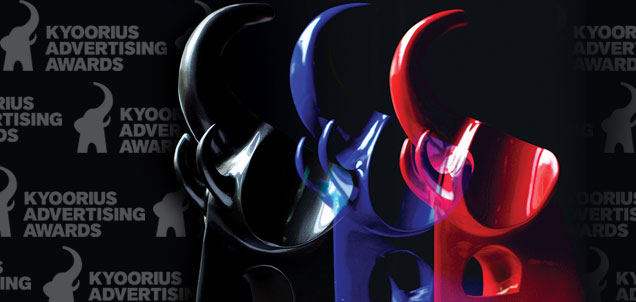
    More importantly for an industry where scam has become the filthiest four letter word in some circles, it will include D&AD’s stringent policies to whet entries. As well as additional ruses to throw off persistent scammers. Kyoorius is toying with the idea of showcasing the shortlisted work in galleries across Mumbai, Delhi or Bengaluru, which could help weed out scams. It’s also considering an online gallery. Elephants are standing in for the pencils, D&AD’s much sought after trophy. The best of show gets a black elephant, the rest of the winners get blue and students stand to bag a red. Such an enterprise doesn’t come cheap. Entries are to be priced between Rs 7,000 and Rs 10,000. As long as all the criteria are fulfilled with approvals in place, anyone from individuals to marketers and agencies can submit work.


    Rajesh Kejriwal is certain the entries won’t touch the numbers seen by the Abby, but believes more is not necessarily good. He says, “If quality means a lesser number, so be it. I’d be happy to get around 1,500 to 2,000.” In keeping with the mission of the D&AD which is involved in industry training and coaching sessions in the UK, Mr Kejriwal says money from the awards will be ploughed back into talent development programmes, seminars and workshops.


    The Kyoorius advertising awards are timed to grab an industry that’s at least for the moment, severely disillusioned with its longest running show, the Abby, as well as its festival Goafest. Mr Kejriwal believes, “There’s space for a popular award and a critic award. Every country needs a festival and if it has an award, so much the better. But what is the purpose? How do you make it relevant and content rich? How can it go beyond beaches and beer?”


    Josy Paul
    Sajan Raj Kurup

    Most creatives we spoke to are optimistic about the Kyoorius advertising awards. Josy Paul, chairman and creative chief BBDO India says, “Whether we will participate in Abby is still up for discussion. But I would like to enter an award from D&AD. They have evolved into a show that’s looking at substantial market changing work.” Adds Sajjan Raj Kurup, founder, Creativeland Asia, “I haven’t taken an anti awards stand but an anti not-so-reputed awards stand. As long as jury members are credible, it doesn’t matter where they are from. It’s better than mandatory judges from every agency even if they are not qualified.”


    Mr Balki whose disdain for awards is well known remains contrarian. Asked if he will participate, he says, “I am not enthusiastic about D&AD in London why would I be about it in India? It’s not the name or the institution. What are the judging criteria? If D&AD cracks this, it will be successful. But I’d first want to know what they’ve cracked. It could be the Tibetan advertising festival; if they figure this out first, we’d sign up.”


    Source:The Economic Times

    Copyright © 2014, Bennett, Coleman & Co. Ltd. All Rights Reserved

    Licensed to republish