Tag: Q&A

  • Raising the bar with HUL, baar-baar


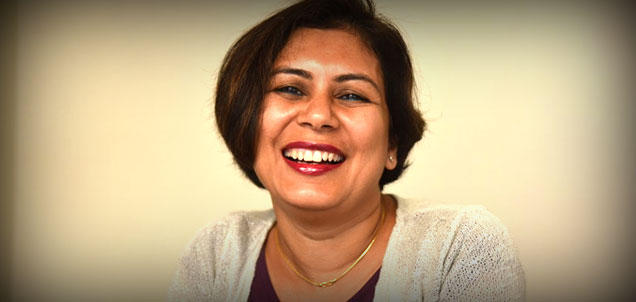
    PHD India has been on a roll ever since it kickstarted operations  in 2013. Some big and small metals in the awards circuit – including a Bronze at the recent Cannes Lions – have ensured that it keeps winning new clients. Jyoti Bansal, Managing Director, PHD India, speaks with Pradyuman Maheshwari about awards, the company’s association with Hindustan Unilever and about being digital-focused


    You have won [awards] for your work for HUL in the past, and again this year. The work that you do for HUL has been acknowledged both as work and reaffirms their continuing faith in PHD. Which of these is more important?

    Everything is inter-connected. Once the client trusts and partners with us, then the work happens, and then the awards happen. It is a two-way street; they have to believe in us and we have to have the ability to push ourselves to the best that we can do for them.


    Does HUL as client nurture advertising work, or does it just happen?

    It does not [just] happen (laughs). It happens with a lot of thinking and planning which obviously the outside world does not see. A lot of it has to do with the mindset, the scale and the fact that there is this belief that we can make it work. With us, the biggest factor has been that they push the bar and we push the bar, and that works. It is always a shifting thing. You reach there, and immediately you ask — what next?


    And, it happens baar-baar?

    Yes, it happens baar-baar which I think is great (smiles). That is how we have won awards so many times for them.


    It is an unfair question to ask given you have many clients, But what is that makes working with HUL different from the others?

    The scale is different. It’s not like we don’t do good work with other clients, but the scale at which things are done by and for Unilever are different. It is seen more, so it pushes [us] more. It’s not like another client would not get the same kind of input from us. But the scale pushes everything to a different level.


    By scale you mean the monies spent?

    By scale I mean the size of their operations in India. It is also about the scale of money spent but everything is not about the money. The money helps, but it also the faith that they put in their partners and the way they listen and agree to do things, makes a difference. They have not won awards only with us; they have won it with other agencies as well.


    Creativity and innovation are fine, but eventually people look at ROI…

    Nobody will put in the kind of money that is needed for things like this if it was not delivering results. Clients are not sitting there just to fund nice ideas. For both [the previous, award-winning campaign] Kan Khajura Tesan (KKT) and now this, there were well-defined success metrics put in place. If there is nothing by way of readily-available metrics, we try and see if we can customise results, which they did for KKT.


    You are obviously aware of the kind of spends HUL makes on other media, including digital. Do you think spends on digital by large FMCG companies is commensurate with the kind of digital activity happening in the country?

    A lot of it depends on the audience they are trying to reach out to. If you were to include mobile within digital, I would say no. The reach of mobile today is as much as television. But the usage of mobile as a medium has not reached a level where we spend that kind of money on it yet. It is an interactive medium but at the end of the day, a lot of control is in the hands of the user. With television, apart from switching the channel, you cannot do much to avoid the advertisement. With mobiles, or in the digital space, that is much easier. The control lies more with the consumer than with us.


    Do you think spends on digital are appropriate, or could they have been more?

    At an industry level, yes, we can definitely go higher. But there is wide variation by sector. It depends on who they are trying to talk, and what they are trying to achieve with the money they are spending. For Unilever, we do only digital, but we have a lot of clients for whom we do integrated work, and the principles are similar. If I was trying to design a campaign for an FMCG brand versus a travel hospitality brand, obviously I would do different things. They will never have the same kind of split across channels and platforms.


    Do you see mobile overtaking television at all?

    It is an interesting question. I would say it is a little simplistic in the way it is looking at where our world is going. I do not think anything ever replaces another completely in that sense. The form and the character of it changes and the way things are going, television, itself, will evolve. We actually coined this term called video audio text planning some three four years back that instead of doing television, print, radio, cinema, we will start looking at it as video, audio and text. Are we delivering an audio visual message or just a video or just an audio or text? I mean you get a lot of new on this (iPad) device you are holding. You still get the newspaper in your home. You time spent may have gone down. The important bit is the news not the paper and not the tab. So, that is all text.


    You are known for your digital expertise. What is your play on digital versus other media?

    We do not look at it as digital versus traditional. We look at what is right for the brand and the task at hand. We have done different things for different campaigns of the same client. We are actively trying to move away from this television versus print versus whatever, to ask if video is the format by which I am delivering my message, what are the best platforms for me to do it? Is it the TV, the mobile or desktop?


    Clients, unfortunately, are not looking at it with an Indian approach.

    I don’t agree. Clients get it when we talk to them about this. As an industry, we have not yet managed to understand that we are still relying on levels of assumptions and two different databases which give us our television and web viewership measurement. We are hoping that with BARC’s new web measurement, things will change. You will see a change in the structure and form of video advertising being deployed by advertisers. Eventually it will come to a common metric.


    Does it worry you that it will impact the way agencies are hired? For instance, someone like HUL may not look at a separate digital agency but at a combined thing instead.

    Right now, it is a hypothetical question. Eventually, each client will look at it differently. I do not think it worries me. The way I look at it is this: Why does everybody think that if there is a common agency, it has to be a television agency? For all I know, interactivity is only going to increase.


    What do you think of the traditional media agencies’ big brotherly attitude towards digital? The best creative talent in the country, for instance, does not work in digital.

    Anybody who continues to do that for very long, will have to change. What is the reason to exist for a creative or a media agency? It is to help clients reach their message to consumers, and consumers are seamless in their consumption of media. The way technology is going, I believe it will shape the way this industry will be over the next few years. A lot of fusion and merger of all of these are going to happen leading to a seamless storytelling across devices and screens.


    If you had to do a self- assessment, how would you say you have done?

    For a two-year-old agency, we have done pretty well. When we walk into a pitch room, people look at us with respect and other agencies worry about our pitch which, to me, is a good place to be in. We have been appreciated for our work, won clients and ticked all the boxes that denote success pretty quickly. The Cannes win was a defining moment for us. It reaffirmed every belief we had to set up an agency in India. Globally, PHD is all about creativity and innovation, but they are also about doing path-breaking work for clients. Clients have commented, at various forums, that PHD is one agency which has a very differentiated positioning among the media.


    You mentioned the Cannes win

    After that, we have gone on to win more clients and more awards. I think the other big milestone is how we continue to be at the edge of forward thinking. After the first win, everybody wondered what we would come up with next. We have proven that it was not just a flash in the pan and we can do good work consistently.


    PHD meant to be a digitally focused agency when it was set up, right?

    Not really. The digital focus came from the fact that, we are a younger agency in the network; we had the Unilever business to push digital positioning forward, and that we found that digital was where both our industry and consumers are evolving. It helped to be skewed towards digital. We are more digitally-skewed than other agencies, with an 80-20 kind of split.


    And this is in terms of revenues?

    Everything. The teams, the size, and the kind of work we do. Even though a lot of our clients are only digital, we have a fairly balanced mix of the so-called traditional and new-age digital work. Frankly, in our minds, we do not even see that much of a divide [between the two].


    Big Data is the buzzword in India today. Your comments?

    I don’t know whether to call Big Data — which is a much-used but misunderstood phrase – or just say data and technology, which is empowering creativity today. You will see a very different shape and form of our industry in 10 years from now. As PHD, we are betting on Artificial Intelligence changing how things work — and sooner than any of us think. Our hiring is also future-focused, in that sense.


    Where do you see PHD India a year from now?

    I think we will continue to be the agency that advertisers will choose when they really want to transform themselves, from a digital perspective. We have a good handle on what it takes to do that.


    This interview first appeared in dna of brands on July 18
     

  • ‘Achhe din’ are here again for adspends: Sam Balsara


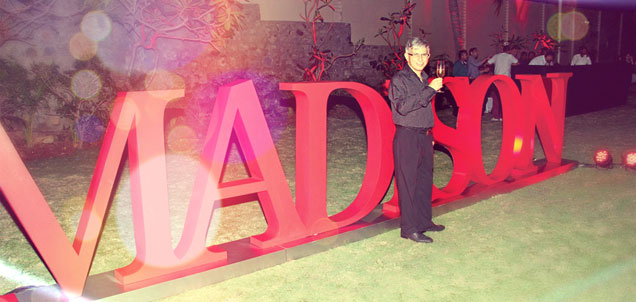
    Because it’s the sentiment that counts, Sam Balsara, Chairman and MD of Madison World, tells Labonita Ghosh soon after the presentation of the Pitch Madison Advertising Outlook 2015. The current mood of optimism in India Inc, he feels, will translate into greater adspends, based on the expectation of a strong tomorrow.


    Senior industry person Deepak Parekh recently said that the ‘achhe din’ haven’t really arrived for Indian business. Would you echo a similar sentiment with respect to adspends and advertisers in India?

    It’s very important to understand that advertising works on India Inc’s sentiments, because everybody knows that you have to advertise first before you can get results on the ground. The advertiser has to make an investment first in advertising. So what does he base his advertising decisions on? He bases it on sentiment. He understands the mood of the nation, the mood of India Inc, what is happening today and expected to happen tomorrow, and takes a decision – on how much to spend on advertising – based on this. Clearly, he is guided by his P/L. But whether or not he should increase his investment on advertising is dependent on sentiment. Beyond doubt today, sentiment is high. My understanding is perhaps Mr Parekh was referring to the high, bullish sentiment not yet translating into higher sales for brands. Fortunately, it has translated into higher market valuation. I’m no expert, but I guess like advertising, the stock market, too, works on sentiment. So it is the expectation of a strong tomorrow on which you are valued today. Otherwise why are companies like Flipkart and Snapdeal valued so high? They have nothing to show for, except what we can expect from them in the years to come.


    In the light of the fact that there is no Parliamentary election this year only sporting actions, would you justify your forecast as realistic?

    Our forecast is always realistic. We never put out an either optimistic or pessimistic figure. It is a realistic figure, and that is why you will see that although we consider ourselves bullish, our actual forecast in 9.6 per cent versus what we’ve achieved in 2014 which is 16.4 per cent.This is so because last year, almost 50% of the increment came on account of the Lok Sabha elections. That will not be the case this year. But there are several other reasons – the World Cup, the continued aggressive push by e-commerce, other social media and apps; the appearance of Phase III in radio by the end of the year; the launch of new channels; geo-targetting becoming possible by newer advertisers and newer brands emerging and such. It is because of all this that we expect the television market to grow by 10%, and print by 5%, on the back of increased government spending.


    Could you specifically comment on print growth, particularly with respect to magazines and regional papers?

    We are extremely bullish about regional papers. English newspapers have already taken a hit in terms of percentage contribution. In the last decade, the contribution of English newspapers was dominant. All other languages, put together,could not match up to it. Today this is no longer the case. Now Hindi is the single largest language segment in terms of spend, and English is trailing behind it. And this will be the case in 2015 as well.


    Magazines are a niche player, and I think increasingly, we are seeing a not very healthy trend in magazines in terms of growth. We think the future of magazines is in niche magazines rather than general-purpose publications. Magazines that are focused on specific areas, like cooking or golf or architecture, these have a sensible future. As an advertiser, if I am interested in particular products, I will look at only those magazines that relate to these. For instance, if I want to sell golf balls, I don’t have to advertise in India Today because that ad will be wasted since non-golfers also read the magazine. I should, instead, advertise in a golf magazine which will provide restricted, focussed circulation. That focus will be of immense value to the product-specific advertiser. That is why magazine advertising as a segment is so small.


    Does all the sound and fury of news television attract good spends?

    It does. News television goes to male audiences, who are otherwise difficult to catch. So news channels are a useful medium for advertisers who want to speak to men. We saw in the genre by spend, the largest is Hindi satellite TV, followed by Tamil satellite TV and news comes in third.


    Digital growth may be high, but in terms of real spends it’s still low. Is it just a lot of euphoria?

    By end of 2015, digital will account for 12%, but its growing at 30% (whereas print is growing at 5%). That’s why there is euphoria. But you can’t forget that while print is already at 40% plus, digital is simply growing from 10 to 12 %.


    This interview first appeared in dna of brands dated February 23, 2015


  • Meet the Pitchfork Partners

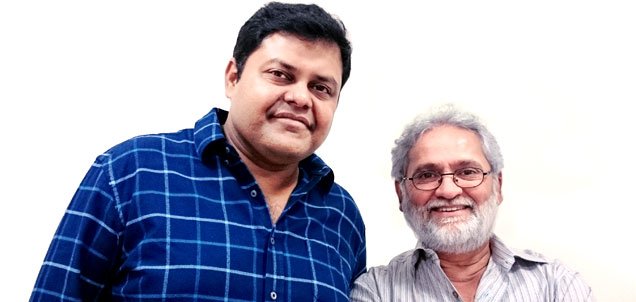
    Sunil Gautam (right) with Jaideep Shergill


    The announcement last November surprised many as Jaideep Shergill had a successful four-year run as CEO of the MSLGroup. He chose to leave the Pubicis Groupe to join former boss and mentor Sunil Gautam, the chartered accountant-turned-communications professional who founded Clear Advertising and PR and later Hanmer & Partners which eventually morphed into MSL India. SG, as he is known in the PR fraternity, was Chairman Emeritus of the MSLGroup. Effective January 1, Shergill and SG have set up Pitchfork Partners, a specialised consultancy which will handhold corporate and start-ups in their marketing service activities.  In an interview with Pradyuman Maheshwari, the duo share their vision and why firms like Pitchfork will thrive in the ecosystem.


    Fifteen years back, you chose Hanmer & Partners as the name of your agency. Now, Pitchfork Partners.  Sunil, what’s with you and your out-of-this-world names. Why Pitchfork?

    Jaideep Shergill (JS): Let me take this one. It’s what the devil uses. It’s his weapon of choice. We were looking for a mischievous, mysterious and magical name. Something that’s out of the ordinary. There are a lot of firms that do communication, creative, PR, digital, but all of them are very tactical and are not really putting their money where their mouth is. After running companies for many years, we’re fairly convinced there’s a vacuum out there. When we were thinking of a name, we wanted to think of something more irreverent. The devil stands for that. Pitchfork is his weapon of choice…


    So in what way does the name convey what you’re going to be doing?

    JS: Yes, it’s more than a name. The Trident, Pitchfork, is like the Trishul. In our scheme of things, there are three verticals.


    You were having a decent time, Sunil, near-retired, you could’ve invested here and there, played golf. Why get into an all-new activity with all the struggles?

    Sunil Gautam (SG): Yes, I was having a great time, but I want to have a better time. There’s lots to do, a lot of fun. I enjoy working, it’s my passion, it’s great to team up with Jaideep, we know each other for 18-odd years now.


    When did you decide to start Pitchfork? Is there an appetite for a business like this?

    SG: We’ve been talking about it for a couple of years but were in no hurry. With markets opening up, we feel the time is right. We hope there is an appetite for business like this. Our initial response has been very encouraging so far.


    Will you charge a retainer fee or…

    JS: Retainers and projects. Some long-term programmes where the client will work with us for six months or a year. If it’s a project, we’ll bill them as per our hours. We’ll have billable hours like a McKinsey. We’ll have hourly models.


    Will people agree to this? They agree to a McKinsey because they expect them to re-engineer their operations and offer high-end consultancy.

    JS: But we have had hourly systems in MSL historically anyway. We had a large number of clients who pay us a flat retainer fee. But even today, a large no. of clients also pay MSL by the hour. It’s not like that model doesn’t exist. It’s not new, but, yes, it’s not yet at a McKinsey level.


    Jaideep, you helmed MSL independently for four years and seemed to be on a high. So why give that all up?

    JS: Three or four reasons. Having been in the mainstream business for a long time, I’ve been through and seen a lot of change. The company we were a part of got acquired, we acquired other companies, I’ve seen the transition from traditional PR to modern communication. I honestly wanted to do something different. There was a wide space there. That’s what Sunil and I were looking at. It’s in three areas. Strategy consulting, because we want to move up the value chain, the second area is aggregation and disintermediary. We won’t work in the traditional PR alone. Given our wide-ranging experience in communications, we’ll be like a business or marketing or brand consultant to a company. That’s the wide space I saw.


    When you were with the MSL group, you had the opportunity to steer the company to do some of these things, right?

    JS: Yes, we did! 96% of our business was traditional. In the last four years, we moved it more significantly than any PR firm. Today 55% of MSL revenue is traditional and 45% is non-traditional. From 5% to 45% which comes from research and insight, creative, content, digital. It’s happening. Where Sunil and I see the gap is when we come in to the equation, we come in as people who can implement, execute stuff. The clients have decided what they want. We come in at a late stage, sometimes even after the ad agencies are brought in. We come in as the last mile. We want to change perceptions. We want to move up the value chain. We want to offer a service that can work directly with the top management, can be more strategic and can work with a complete backward and forward option. Literally from when the client is looking for a marketing director or a CMO or a Corp Comm Head, we want to come in even at that early stage, help the company through that evolution. That’s what we can’t do within a structured environment. You need to be out there on your own and at the end of the day our value is what he has and what I have. It’s two people bringing their collective wisdom, experience. We will give it a shot, this model hasn’t been tried before.


    Were you happy with the way traditional PR agencies have had to change course over the years?

    JS: They can certainly do better. They can do it faster. Speed is of the essence. When we’re together we’re more nimble because there’s just two of us. When you’re in a big institution, everything moves slowly. We want things to move fast.


    All going digital?

    JS: Of course! That’s the reality of life. If they don’t, they’ll die.


    You mentioned when an organisation is too big, you’re unable to do things. But the whole objective of setting up a new organisation would be to grow that big and do various things.

    SG: The whole idea is very few people who’ll be advising CxOs, the top levels, in terms of strategy. When it comes to implementation, may be we’ll outsource it. When you have to involve yourself at top levels to think strategy, you need to really give a lot of time. This is something you don’t want to delegate, which has been happening across agencies. We’ll be a very lean and mean set-up. At the peak, we may have not more than 10 people. Whoever worked with us will be a partner, will be handpicked, will deal with top level clients in terms of giving them strategic advice. We don’t want it to be large because we don’t want to implement things. We’ll get it done for clients, we’ll oversee it, under our advice and guidance.


    Wouldn’t that limit your scope in any way?

    SG: Not really, what we’re here to do is enjoy ourselves. Work closely with fewer clients but give a lot of quality time and thinking for them. Clients are willing to pay top dollar for this.


    Sunil, you’ve been part of the PR business since the time of the IPO boom. Unfortunately, clients do not use the services of PR consultants effectively unless there’s a crisis or a new development. They’re not really partners in their progress.

    SG: I don’ think PR agencies have really worked themselves to reach that level. That’s my opinion. I don’t think they’ve worked that hard to reach that level in terms of rubbing shoulders with CxOs to give that kind of advice. There are various reasons for that. But there are clients who are willing, who want, who recognise there is this gap and some of them are already talking to us.


    But isn’t all the PR advice they seek is getting the news out (or not out) the next day?

    JS: To begin with, we won’t just advise our clients on PR. That’s most important. We’ll be their communications and marketing advisors. It goes much beyond. It’s giving them a path on their communication needs. Advertising, digital, PR, events… whatever they need.


    Both of you known essentially as PR professionals. Do you think you can break that barrier and look at clients – blue chip clients – for their entire marketing services activities?

    JS: Absolutely! There’s no reason, why not? The walls have fallen any way. What’s the difference between the digital work an ad agency or a PR agency does? Everyone is doing everything. Even though we come from a more PR or communications background, there’s enough that we have to be able to guide somebody in the right direction. We’re not the people going to be sitting and writing the copy anyway. So, if a client has a creative requirement, we will find him the best creative talent.


    Tell us more about the start-up part of your business?

    JS: Yes, we will look at tech, digital, PR companies who’ve reached a strength of 20 to 30 people and they don’t know how to grow. Creative, digital companies now want to go to the next level. We’ll come in and guide them through the whole growth process, take them to the point where they can either get acquired or sell out or scale up and then we’ll buy into them early as early adoptors or seed fund kind of structuring. We don’t want to be private equity. We want to be mentors.


    If any of your MSL clients come in, would you entertain them?

    JS: We’d still want them to work with MSL. But if they are looking for something specific which we are doing, why not? You should also know we’re very transparent with Pubicis about what we’re doing. We also offer a complementary service which is also the reason why our relations with the group is as good as they are.


    So will Publicis be your first preference for your clients?

    JS: We’re more than happy to go with anyone. While we’re agnostic, we’ll look at Publicis as the first call. If we find a solution within, why go out? There are certain skillsets it may have not have like market research, for instance.


    Sunil, do you see the communications business headed this way with senior professionals like yourself setting up personalised consulting services?

    SG: I’m very confident the world will move that way. Clients today do not get time from senior guys who can think on their behalf.


    Do you have any targets on what you want to achieve in your business in the first year?

    JS: Not in terms of a number. As Sunil said, we’re in it to have some fun! The third pillar that we have will require us to give a lot of time for mentorship. We’ll be mentoring young professionals who want to grow. All that doesn’t have a revenue stream. There will be a long gestation period. As an example, if we’re advising a startup PR firm, we won’t actually get anything out of it for the next 5-10 years till it grows. We’re not setting business targets but goals we want to meet as individuals and getting to that self actualization place in life where we’re having fun, we’re working and are able to add some value to the people we work with.


    Would you at any point think of getting an investor on board? Maybe after 4-5 years?

    SG: It’s too early to say. This is just our first month.


    A shorter version of this appeared in dna of brands dated January 12


  • Zee TV will always stand for Ummeed


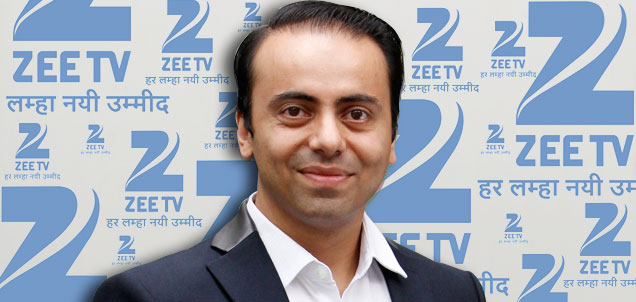
    If there’s one man in the broadcast sector who knows what works to generate a good, consistent score on the ratings roster, it’s the Pradeep Hejmadi, Business Head of Zee TV. Mr Hejmadi led the all-important S-Group at TAM, the audience measurement firm currently the sole player providing us TV viewership data.


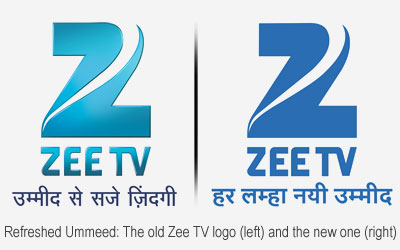
    Having joined the Zee Entertainment flagship channel as Business Head, Mr Hejmadi got onto the act of building a new brand identity and packaging for the channel along with his marketing head Sorbojeet Chatterjee and the rest of the team. On Sunday evening, at the annual ‘Zee Rishtey Awards’ show, Zee Entertainment Managing Director and CEO Punit Goenka unveiled an all-new brand packaging that resonates with the channel’s core ethos, while staying relevant to the changing palate of its loyal audiences. The Zee logo turned to a deeper more in-your-face shade of blue and the look-and-feel got vibrant and younger. From the proposition of ‘Ummeed se saje Zindagi’, the new tagline of the channel changed to: ‘Har Lamha Nayi Ummeed’.


    Readers of MxMIndia would’ve read the news of the branding on December 15. But, now let’s hear the story from Pradeep Hejmadi himself. Excerpts from an exclusive interview with Pradeep Hejmadi:


    Zee TV has been doing very well in the crop of Hindi general entertainment channels (GECs).  Of the various fictions that took off in 2014, Zee shows had the best launch ratings. So, as they say, if it ain’t broke, why fix it? Why this relaunch? And would you say this is a repositioning as well?

    Our successful fiction launches this year and the consistent growth of our fiction programming speaks of a very special relationship we have closely cultivated with our audiences – one that has only evolved and strengthened over the years. It has grown due to our ability, as a broadcaster, to innovate and keep pace with the changing times and expectations. What we’re going in for is a brand refresh exercise and not a relaunch. Zee TV’s core proposition of ‘Ummeed se saje Zindagi’ was about a celebration and vindication of a woman’s emerging beliefs and a reflection of her changing hopes, dreams and optimism. In that sense, Zee TV will always stand for ‘Ummeed’. It is the articulation that will change to reflect the changing times.


    Today, with India poised for distinct growth, there is a feeling of ‘a new hope, every moment’. So, Zee TV adds another layer to its core proposition, making it even more relevant to everyday life scenarios that its viewers are faced with. Zee TV’s new slogan ‘Har Lamha Nayi Ummeed’ captures the prevalent spirit amongst the people and our brand philosophy as also our content will reflect the same.


    Would this also mean a renewed content focus?

    Our core proposition isn’t changing. As I said earlier, Zee TV will always stand for ‘Ummeed’ and our content has been a reflection of  this universal life truth. The brand refresh exercise is aimed at arriving at a more ‘here and now’ rendition of our core proposition, making it more relatable in our day-to-day lives. Naturally, our content will mirror the same.


    Can you take us through the entire exercise? What were the findings on the earlier look-and-feel and the logo and what it is now?

    The brand refresh exercise has been about dialling up a few aspects of our brand identity – it always stood and will continue to stand for Ummeed. It’s just about taking it to the next level and making the packaging more vibrant, assertive and dynamic.


    In terms of ratings and revenues, are there any specific targets of this exercise?

    None.  If there is a currency for affection, we’re gunning for it!


    Did the entire mood of ‘achche din aane waale hain’  influence your line of ‘Ummeed’ ?

    No. ‘Acche Din …’ is a more recent campaign. Zee TV adopted ‘Ummeed’ as its core proposition way back in 2011.


    The problem with words like ‘hope’ is they build an expectation and if the hopes are belied and not met with, then there is disappointment. Is that something that you factored in or does this have no real bearing on the repositioning?

    Expectations are raised when promises are made. There’s absolutely nothing wrong with fuelling hope. That’s what makes the world go round.


    When Zee was launched way back in 1992, it had a simple, snappy line of ‘Yeh Hai Zee TV’. Do you think stuff like the tag line or the brand’s promise work with viewers, because a GEC is a GEC is a GEC after all?

    Contextually, it was perfectly right to have a slogan like ‘Yeh Hai Zee TV’ because we were pioneers in 1992, paving the way for satellite television in India. Now, over a period of time, where Zee, as a broadcaster, has etched a distinct brand identity in the minds of the audience, our current positioning is a reflection of the way our content is treated and the impact it has on our audience.


    A version of this appeared in dna of brands dated December 15, 2014