Tag: Punit Goenka

  • Rajesh Jejurikar quits Zee, to return to M&M

    By A Correspondent


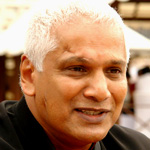
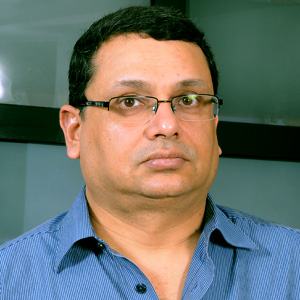
    Rajesh Jejurikar

    Zee Entertainment Enterprises Limited (ZEE) has announced that Rajesh Jejurikar, the company’s President has stepped down after a brief stint of 10 months, to explore new vistas. His role at ZEE, involved managing all the key verticals at Zee, except programming. Mr Jejurikar is reported to be returning to his former employer, Mahindra & Mahindra.


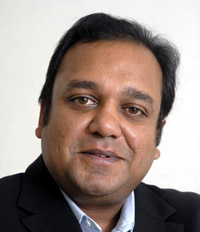
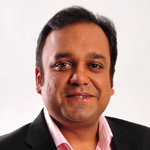
    Punit Goenka

    Punit Goenka, MD & CEO, Zee Entertainment Enterprises Limited said, “In a short stint at Zee, Rajesh has brought in newer business perspectives and has contributed to the process immensely, bringing in positive business impact to the organization. The entire Zee family wishes him all the success in his new endeavors.”


    Speaking on his tenure at Zee, Mr Jejurikar said, “The time spent at ZEE was extremely fruitful. I am thankful to ZEE and Punit for giving me an opportunity to explore and broaden my experience in the media & entertainment space. ZEE has all the fundamentals required to become a global media enterprise. As I part ways, and move back to the manufacturing sector, I wish ZEE all the success.”


    Mr Jejurikar’s last day with the company will be December 31. All verticals and department heads at Zee, will now report into the MD & CEO, Punit Goenka.


  • How M&E CEOs are embracing digital growth


    After years of uncertainty and caution in the digital world, CEOs are now more optimistic than ever about the digital future, notes leading consulting firm Ernst & Young. “This was the primary theme that emerged from our 2012 CEO study, in which 34 CEOs from leading global media and entertainment companies shared their views on how the industry will benefit from the digital future.The CEOs we interviewed represent leading global companies with combined annual revenues exceeding US $300 billion.”


    Five industry captains from India were among the 34 interviewed. These being: Messrs Ravi Dhariwal, CEO-Publishing, Bennett Coleman & Co Ltd; Sudhir Agarwal, MD, DB Corp; Sanjay Gupta, CEO and Wholetime Director, Jagran;  Tony D’Silva,  Group CEO, Sun Network (now with the Hindujas) and Punit Goenka, MD and CEO, Zee.


    Excerpts from the report:


    Four key actions from CEOs
     

    1. Focus on the customer.

    “The world’s greatest company will have the customer at the center.” “Having a direct relationship with the consumer will translate into new revenue stability and growth.” “Companies understanding and concentrating on the consumer’s need will do better than those that concentrate inwards.”


    2. Create differentiated content.

    “First, second and third things will be the creative success of our brands and studios.” “Being able to navigate the waters with compelling, cost-efficient movies that people have to see.” “Strong content delivered in exciting ways.”


    3. Deliver a seamless experience to the customer across all devices, platforms and geographies.

    “We are looking to be with the customer all day with tablet, iPhone(R), online and IPTV.” “Providing seamless delivery of all content on a global basis.”


    4. Recruit and retain the right people. They will be the ones who will drive success.

    “Digital reduces the number of levels of hierarchy, allowing the CEO to interfere in debates that are not necessarily his.”

    “Our company needs to become more horizontal and less vertical.” “I want my people and teams to (1) be well-grounded, (2) be competitive with a desire to win, and (3) take responsibility and be decisive.”


    Courtesy: Ernst & Young Media and Entertainment practice (http://www.ey.com/IN/en/Industries/Media-Entertainment)


    The 34 media and entertainment CEOs interviewed for Ernst & Young’s 2012 CEO study are optimistic about the opportunities in today’s digital world. They see digital as key to their revenue and margin growth. It is their present and their future. This contrasts with E&Y’s 2008 study, which showed that CEOs were more tentative about digital’s potential.


    However, every path has its risks. In addition to sharing their insights into the opportunities digital offers, CEOs also admit they face challenges.


    Getting the consumer to pay fair value and developing their “digital muscles” across the front, middle and backoffice continue to be key focus areas for media and entertainment companies.


    And yet, CEOs are meeting these challenges head-on and are regaining control of the reins of their future long-term growth. In today’s rapidly changing digital marketplace, CEOs remain undeterred about the role digital will play in their companies’ future


    Summary of key points

    CEOs are optimistic about digital. They are no longer tentative about digital. They see opportunities for growth in both revenues and margins.


    Connected technologies drive growth and create transformative digital ecosystems. This growth is being driven by connected technologies that are, in turn, creating transformative ecosystems.


    CEOs are thoughtful about where to invest. CEOs currently see new distribution methods and new types of content as the most attractive investments. CEOs see these investments as central to setting them apart from their competition.


    Exploiting digital opportunities comes with challenges. CEOs are working to make sure customers pay a fair price for content, and they are building the competencies in their back, middle and front office to maximize their advantage in a digital world.


    Digital drives double-digit growth

    Today, CEOs see digital as a core part of their business, as well as a key driver of growth. As one respondent commented: “everything we do is digital.”


    Definitions of what constitutes digital can vary by subsector and even by companies within a sub-sector. With this caveat, CEOs were asked what impact digital would have on their own company’s revenues and margins over the next three years. Sixty-four percent of study participants expect digital to drive revenue growth of 10% or more. Forty-eight percent of CEOs also expect margins to increase by 10% or more in the same time frame.


    This compares to the 2008 study, where CEOs were more focused on protecting their traditional business than pursuing digital opportunities. One respondent worried that “digital media may not be as economically attractive as old media.” Another suggested that “media is trading analog dollars for digital dimes.” For many, digital media was still viewed as a new frontier – a place only for gamblers willing to take a chance on the unknown.


    Intuitively, there is a prevailing belief that digital margins should be higher because media and entertainment companies no longer have the cost of physical distribution. In the short-term, investments required in infrastructure to enable digital will tend to drive margins lower. However, that is only in the short-term. Once companies have the required digital infrastructure in place, we expect their margins will rise.


    Tablets and smartphones are driving growth

    So what is driving this double-digit growth in digital revenue and this foundational shift in consumption? When CEOs were asked which technologies they see having the greatest impact on their individual sectors, 79% suggest tablets, 62% say smartphones. The impact these devices have on the consumer experience is obvious to each of us in our daily lives.


    These devices are supported by the technology that respondents see as having the third biggest impact on the media and entertainment industry in the next three years: cloud hosting services and digital lockers.


    When CEOs were last surveyed in 2008, consumer tablets were not even on the market, cloud computing was a niche product and smartphones were focused on email and texting as opposed to video and apps. Today, more digital content across more platforms and available on more devices has created new and significant monetization opportunities for media and entertainment companies.


    Conclusion

    CEOs have a clear vision of a digital world

    When CEOs survey the future, they see the opportunities that digital media presents. Whether it is B2C or B2B, the direct relationship that applications, ecosystems and technologies enable is fundamental to their vision. It is about the ability to drive an outstanding consumer experience by offering differentiated content on an array of platforms and devices, anytime, anywhere.


    Their success will depend on how quickly they can optimize their back, middle and front offices to overcome challenges they face – getting consumers to pay fair value, managing content and optimizing their supply chains.


    It will also depend on their people. It will depend on having the right people with the right skills to win in a fast-paced, ever-evolving digital landscape.


    Once a gambler’s enterprise, CEOs today see digital as necessary for future long-term growth. Undeterred by their challenges, CEOs are optimistic and they have greater confidence their companies can take full advantage of the opportunities that exist in today’s digital world.
     

  • Jaldi 5 with Ashok Kurien: Zee changed the Indian consumer forever!

    By Johnson Napier


    It was a dream that was waiting to become one big reality. When the rest of India was hooked on to the goings-on of the Gulf War in 1991 through relay from international news channels, a bunch of visionaries were contemplating launching a private channel that would do something similar in India. Thus was sown the seed of India’s first and private Hindi channel, Zee.


     

    Ashok Kurien, the man who ran Ambience Advertising which handled the ad business of Essel Group, recounts how a chance conversation took shape to create one of India’s earliest and most successful Hindi channels. Mr Kurien continues to be on the Board of Directors of Zee Entertainment.


    1. Do you recall how you reacted when Mr Subhash Chandra first came to you with the idea of launching Zee? From what we hear, it’s after your reassurance and active support that he got into it.)

    January 1991: Subhash, my client at Esselworld, and I were watching the Gulf War ‘Live’ on CNN. It was our early exposure to satellite TV in India.


    “Why can’t we do this here in India?” the conversation went.


    “What do you know about TV?” asked Subhash.


    “More than anyone else,” I replied, having spent many years on the ad agency side: Concepts and Pilot programmes, Sponsored programmes and FCT during the Doordarshan days…


    “Write me a business plan,” said Subhash.


    I did… and the rest is history.


    Of course, Subhash was way ahead of me, with advice and plans from some ex-Doordarshan people.


    The first 5 or 6 years, working hands-on to help Subhash build India’s first private TV station, was the most exciting chapter of my life.


    Zee changed the Indian entertainment scenario, and along with it changed the Indian consumer forever.


    2. Zee obviously had the advantage of being the first mover in the Hindi space, and later there were many others who entered the scene. What according to you is the reason Zee has been such a success story?

    Zee moved fast, was always the first, and stayed far ahead of everyone for over the first decade.


    Zee understood the emotions and tastes of the Indian consumer. It took a long time for the competition to figure it out… mainly by hiring Zee TV’s people.


    3. Other than being a director on the Board, are you active in advising the Zee management presently?

    No advice to Zee at all….. unless I am asked to.


    I have played a role in helping Dish TV grow to leadership over its first 3 or 4 years, and now helping to take the Zee group into new media with India.com.


    4. If there was one thing that Zee could have possibly have done differently in these 20 years, what would it be?

    Zee should have launched a Tamil/South channel 15 years ago. But it was my error of judgement and ill advice that prevented that. My one, big, unforgettable mistake!


    5. Zee, it’s said, mirrors Mr Subhash Chandra’s personality: dynamic, aggressive, a maverick, often restless, cost-conscious, risk-taker and a visionary. He’s been a friend for many years, would these descriptors be appropriate (for him and Zee). And how much would you attribute the success of Zee to Mr Chandra and in recent years, his family?

    Subhash’s personality is all this and more. He is fearless and will walk where angels fear to tread!


    But as a friend I have seen the warm, but very private, human side of him too. He has great inner strength, and this too is inbuilt in Zee’s DNA.


    Zee’s success was driven almost 100 percent by Subhash for many years, and only in the last decade or so did the professionals who joined Zee start contributing majorly.


    Punit has reinvented the ‘creative magic’ that Zee started with 20 years ago.


    But today, it’s certainly TEAM ZEE!!


  • Alok Agrawal replaces Barun Das as Zee News chief

    Alok Agrawal
    Alok Agrawal

    By A Correspondent


    Zee News Limited (ZNL) has announced that its CEO Barun Das has decided  to move on after a successful 5-year stint, and is being replaced by Alok Agrawal.


    Punit Goenka, Managing Director, Zee News Limited said, “Over the last five years Barun has contributed immensely to the growth of Zee News and taken the company to greater heights. We wish him the best for his future endeavour.”


    Speaking on Mr Agrawal’s appointment, Mr Goenka said, “We welcome Alok into the Zee News family. His rich experience in the media domain will help us take Zee News to the next level of growth.”


    Prior to joining Zee News Limited, Mr Agrawal worked with Cheil as Chief Operating Officer.


  • Zee launches first ever 24/7 Bangla movie channel

    By Meghna Sharma


    Zee Entertainment Enterprises Ltd is all set to strengthen its position in the regional space with the launch of a 24×7 Bengali movie channel called Zee Bangla Cinema on Sunday, September 23

     

    Speaking on the launch of the movie channel, Punit Goenka, MD & CEO, Zee Entertainment Enterprises Ltd. (ZEE) said, “With a strong Bengali audience in India and abroad, the Bangla film market has expanded exponentially. Zee Bangla Cinemas entry is to tap this growing potential. We are sure that ZEEs pioneering presence in the regional space would be further strengthened with the addition of this new movie channel.”


    Says Sujay Kutty, business head of the channel, “Bengali cinema is a celebration, The time is just right as Bangla cinema is going through a great patch and the movies that are being made or are available for audiences satiate all aspects of the Bengali life and their ever-changing lifestyles yet rooted to the cultural diaspora.”


    Sujay Kutty

    But is there room for a 24×7 movie channel? “There are a large number of Bengali general entertainment and other channels. However, the Bengali-speaking viewers are moving towards Hindi movie channels as they do not have a 24×7 platform where they can find a cinema in their language. The top two channels in the GEC space only run cinema on the weekends. So, there is opportunity for a Zee Bangla Cinema to come, own and dominate the space.”


    Kolkata-based media planners and media professionals too feel that it is the right time. “After the great old years of Satyajit Ray and Mrunal Sen, Bengali cinema went through a lull. However, things are changing for the good and now Bengali movies are not only being played on single screen but multiplexes too. There is a boom in the market and Im sure, people are going to glad to have a 24/7 movie channel,” feels Raj Datta, Senior General Manager, TME.


    “The channel has acquired rights of some of the great films and this will surely get them the eyeballs. And the network has already been able to create a hype around the launch. The city is filled with hoardings regarding the launch of the channel.” Mr Datta adds.


    The channel promises to offer a mixed bag of blockbusters from the golden era directors and the best masterpieces of Satyajit Ray, Mrinal Sen, Ritwick Ghatak, Tarun Mazumdar to the present movies of directors like Rituparno Ghosh, Raj Chakraborty and Anjan Dutta. With a highly youthful and engaging content, Zee Bangla Cinema will also be a ready source of trivia from film news to music releases to muhuraats, along with a mixed and exciting bag of blockbusters.


    The launch will be supported by a 360-degree campaign launch, creating a platform for the people of Bengal to celebrate Jibon Ekhon Superhit with Zee Bangla Cinema. The campaign includes radio, TV, print, digital & outdoor along with on-ground activation initiatives. “We have also used a unique approach wherein handpainted larger-than-life cut-outs of popular Bengali stars – from Uttam Kumar, Suchitra Sen/ Prosenjit/Jeet/Dev Koel are placed in prominent locales of the city to give the viewer a feel and taste of what the channel is set to create for them and an offering of having available with them an array of evergreen movies, urging people to go home and tune into the first ever 24×7 Bengali movie channel. The entire city will feel the presence of Zee Bangla Cinema through these innovative cut outs of their favorite stars,” explains Kutty.


    Will the excitement on the street work for the channel? “While the channel will get its audience, how they sustain it on weekdays is what is going to be interesting. The channel alone cannot sustain on movies. Therefore, the programming mix matters a lot here. So, well have to just wait and watch how it does overall,” says Datta.


    “Star Jalsa is the No 1 GEC followed by Zee. Therefore, what Star does next will be interesting to watch too.” adds a leading film critic with a leading daily.


    Clearly, the viewer will be the ultimate winner, and for now, its Advantage Zee Bangla.


  • Zee launches 2nd Arabic GEC – Zee Alwan

    By A Correspondent


    Zee Entertainment Enterprises Ltd announced the launch of its second Arabic channel, Zee Alwan, on September 12, 2012.


    Zee Alwan will have over 180 hours of original programming monthly with three Arabic series offered exclusively on the free-to-air channel. The programme roster also includes popular Indian serials that have been dubbed into Arabic, in addition to a range of lifestyle shows including cookery, yoga, and travel – all carefully structured to appeal to Arab audiences.


    On the launch of new channel, Punit Goenka, MD & CEO, Zee Entertainment Enterprises Ltd (ZEE) said, “As a part of our global strategy, Zee Alwan is a step towards strengthening our presence in the Middle East. After the success of Zee Aflam, this new channel will help us to further consolidate our share and enhance ZEE’s reach.”


    Mukund Cairae, CEO-Middle East, North Africa & Pakistan, said: “Zee Alwan has received overwhelming response from Arab audiences across the Gulf region, particularly in the UAE and Saudi Arabia following its soft launch. With the grand roll-0ut, we are further strengthening the programming of Zee Alwan, with a focus on providing original Arabic content. Zee Alwan’s niche of providing exclusive Arabic series – produced in the Gulf region as well as the dubbed Indian productions – sets a new trend in family television entertainment in the Middle East.”


    Mr Cairae added, “With Zee Alwan, we are also creating a new platform for talent collaboration between the Arab world and India. This will benefit the creative community in the region, and add to the historic cultural linkages that have existed between Arabia and India for over several centuries.”


    According to a Bengaluru-based media planner, Middle East is a mid-sized market and therefore Indian channels especially South Indian channels which have a huge market there see it as a good investment. “From Bollywood to Indian serials, people are want to watch popular shows and movies there. Therefore, so many Indian channels are available there. A launch of a few more channels with original content will only intensify the market.”


    Zee Alwan follows the launch of Zee Aflam, a dedicated 24×7 movie channel beaming Bollywood movies dubbed in Arabic. The two Arabic channels underline Zee’s long-term commitment to the Arab world and to leverage the growing popularity of Bollywood and Indian television content among Arab audiences.


    Zee Alwan’s line up of Arabic serials include the hugely popular Hindustani, the first Saudi Arabian musical and comedy with a prominent cast, making its first and exclusive free-to-air channel telecast. Other Arabic serials, also to be telecast exclusively on the channel, include the Khaleeji series Banaat Al Jameaa, depicting the story of life after high school and the advantages and disadvantages that young men and women endure at school and within their families; and the Syrian drama Banat Al Alilah, a tale of a guarded secret shared by an aunt and her niece.


    The popular Indian serials that have amassed millions in viewership, and have been dubbed in Arabic for Zee Alwan include: Malekat Jhansi, which narrates the tale of the courageous Rani Laxmi Bai, a name that stands for bravery and heroism; Alwa’ad, following the lives of three sisters from a hill resort who are brought together when their parents pass away; and Lalli, in which the protagonist discovers the positive side of life despite living in poverty.


    The array of lifestyle shows on Zee Alwan include celebrated Indian chef Sanjeev Kapoor’s Konooz Khanaa that highlights the finer delicacies in Indian cuisine;Yoga for You¸ a health and fitness show which introduces the ancient Indian practice of Yoga and the health benefits that one can attain by practising it regularly; and Full Circle, a travel show that takes viewers to the Far East and the Pacific, illustrating various lifestyles and cultures.


    All the programmes respect the sensitivities of Arab audiences, especially women. Zee Alwan also has several Arab female anchors to present the shows, provide recaps on earlier episodes, and present vignettes from upcoming episodes. The channel is transmitted from Dubai with an operational office in Saudi Arabia.


  • Broadcasters set to mix ideas & business @ITF

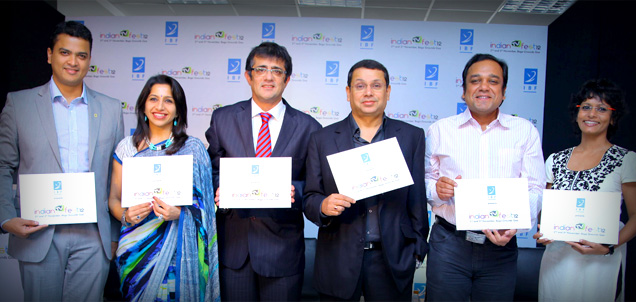
    Announcing the Indian Televsion Fest (from left to right): Keertan Adyanthaya, Monica Tata, Sunil Lulla, Uday Shankar, Punit Goenka and Lydia Buthello


    By Johnson Napier


    The god-like status that the medium of television commands in India today is indicative from the endless attention that gets showered on it from all and sundry. Whether for the advertisers who are willing to bend rules and swing  to their tunes or for the viewers who can take a liking to anything that’s thrown across at them (well, almost), the Indian broadcast industry is calling the shots in a manner that is pivotal to its growth.


    In fact, the popularity that it commands can be gauged from the growth that the medium has been throwing up in the past five years, which has been in the range of 12 per cent. This of course is backed by its ability to occupy a lion’s share of the ad pie and still remain a favourite medium for the advertisers.


    But while there are some obvious highs that ensue from the medium, the medium has been at the receiving end as well. Like the constant criticism it attracts for not being able to display a show of unity to voice common issues rather letting personal goals take precedence. Then there are also those who question the absence of a platform for the industry to come together and air and share views of common interest. But the last peeve may well be a thing of the past with the announcement of the Indian Television Fest 2012.


    The Indian Broadcasting Federation (IBF), led by president Uday Shankar of Star India and core festival committee members comprising Sunil Lulla of Times Television Network, Punit Goenka of ZEEL, Keertan Adyanthaya of NGC Networks, Monica Tata of Turner International India and Lydia Buthello of Star India announced the first-of-its-kind event for the industry. The two-day festival will be held at the Baga Grounds,Goa on November 2 and 3, 2012.


    The two-day fest would be a unique platform for the Indian and global broadcasting industry to network and exchange ideas through engaging panel discussions and master classes. Renowned names from India and across the globe are expected to participate in the mega event. And since it’s Goa, with the inviting beaches for company and some fun.


    Throwing open the idea to the gathering, Mr Shankar began by thanking his core team members, without whom the fest wouldn’t have been a reality. Explaining the thought process behind the exercise, Mr Shankar said: “The idea has been in the pipeline for almost a year now. We felt it was the right time to launch Indian Television Fest as the industry has grown big enough to manage an event of this scale. It basically stemmed from the need to create a platform where the entire broadcast industry could come together under a single roof – irrespective of the organisational and competitive background – so that there could be co-sharing and exchange of ideas and conversations on how the industry can take a big leap into the future.”


    According to him, what would make the event special would be its ability to get together honchos and industry persons from different verticals under television to come and be a part of the give-and-take. He affirmed: “Apart from some familiar and popular names the event will see the best in broadcasting brain trust from India and the world descend at the venue. The ultimate aim of ITF would be to service the larger Indian broadcasting community. It will also be driven with the dual need of being business-minded in its approach while at the same time having a social connect, as we believe the two are interlinked and cannot work in isolation from each other. All in all, we plan to make this event truly iconic in nature.”


    Giving a lowdown on the two-day event, Monica Tata of Turner India began by bringing to light some of the high points of the Indian broadcast industry. Providing a bird’s eye view of the current media scenario, she said: “India is the third largest market for media behind US and China. It has reported a growth of 12 per cent in the last five years which will continue to keep swelling. Further, the country boasts a reach figure of 500 million and is estimated to be worth Rs33,000 crore. This number is expected to triple to almost Rs100,000 crore by 2017. Needless to say there are tremendous opportunities that will enable the industry reach this figure in the coming few years.”


    Highlighting the tremendous opportunities that the Indian market presented for the future, Ms Tata said: “India has a penetration level of just 60 per cent leaving a lot to be achieved going forward. Further the C&S households are expected to grow to 88 per cent from the current 81 per cent. Also, the average time spent on television viewing is still low at 150 minutes compared to other countries that are almost double the number. And finally, with digitisation, DTH, HD taking off in a big way coupled with the unhindered growth of regional channels should see the industry enjoy prime status in the near future.”


    According to Ms Tata, some of the key themes scheduled at ITF include: best practices and masterclass that’ll be weaved around core areas of content, distribution, revenues, technology, etc; presence of visionary speakers like James Murdoch of International News Corporation, Andy Bird of Walt Disney, Hugh Johnson of Channel 4, Michael Lynton of Sony Corporation of America, Subhash Chandra of Zee & Essel Group, etc; debates and conversations; interaction with regulators and policy-makers; and finally encouraging cross-genre ideation.


    Presenting his viewpoint, Sunil Lulla of Times Television Network said: “There was no platform as yet in India where the issues and concerns of the Indian television industry were being raised and addressed. ITF will be a platform where one can learn, interact and demonstrate the road for the future. Three factors that’ll drive this event include the need for conversations, need for confidence to hold an event of this stature and need for commitment from the industry to take this industry from Rs33,000 crore to Rs100,000 crore by 2017.”


    On the key highlights to be expected at the event, Punit Goenka of ZEEL said: “We all know how New Media is going to be the platform of the future and we also know how regionalisation is going to take the industry further…and since regional has a lower base it is growing faster than the other genres. However, there are avenues that we need to discuss. Nobody has an answer as to how we will reach the Rs 100,000-crore mark but one has to start the process of thinking about it.” When asked if it would be a practically possible to reach the Rs100,000 crore mark in a short span of four years he said: “We have to talk about it and see how we get there. Nobody has an answer as to how we would get there. But unless you talk about it and bring it up in discussions how do we even make a beginning to reach there? I think the end goal is not important; it’s the journey which is going to be important.”


    When asked on the initial response that the event has managed to generate, Mr Lulla said: “Members from the broadcast industry have shown tremendous enthusiasm to the initiative, which can be seen from the initial buzz that is being created where registrations are concerned. As you know, we are a little late industry as we like to start things a little later. We hope the television industry supports us in a fashion by sending more members to attend the event. We have fantastic line-up of speakers from India and abroad; and of course, we would like the industry to stretch themselves a bit and sponsor many other themes and elements that we have lined up out there.”


    Mr Lulla added: “As you know, we are always a last-minute booking.com industry, so it’ll be a challenge to get a lot of people to attend the event. Also, there will be the challenge of generating advertising revenues so that we can stage the event successfully. But we are confident of putting up a successful event.”


    On the benefits that will accrue to IBF from the event, he said: “What IBF will particularly benefit from is take the ideas that come out and find out what will be the cornerstones for the industry going forward and what will become items of agenda. What people who come there to attend the event to take off is personal learning – so there will be ideas, new friends will be made…in all, it will be a mind-opening event, so to speak.”


  • BARC next announcement in 2-3 weeks: Punit Goenka

    By A Correspondent


    Even industry captains privately told MxMIndia that NDTV lawsuit against TAM and its principals would not have happened had all stakeholders shown urgency to get Broadcast Audience Research Council (BARC) off the ground, BARC chairman Punit Goenka told MxMIndia on the sidelines of the Indian Television Fest press conference that one can expect some announcements in next two or three weeks.


    A group of ’eminent experts’ has been spoken with to constitute the apex advisory committee and with each one’s concurrence in, an announcement will be made.


  • Bharat Ranga to be Chief Content & Creative officer at Zee, Nittin Keni to be Head-Production

    updated from the news flashed on Saturday, April 7.


    By A  Correspondent


    Zee Entertainment Enterprises Limited (ZEE) has announced significant senior-level changes in its leadership team.


    Mr Bharat Ranga, who headed international operations at the network, will now be head of content and will be designated as Chief Content & Creative Officer. Mr Nittin Keni, National Creative Director will now look after production initiatives responsible for setting up studios and will be re-designated as Head – Production.


    Both moves are significant. Mr Ranga has been an old and loyal Zee hand and has made a success of the international operations. Given the current standings of general entertainment channels, the flagship Zee GEC needs a sound mix of content strategy and business acumen which Mr Ranga can provide. On the other hand, Mr Keni, again a Zee old-timer who returned with some fanfare last year, has some quality experience on the production sphere. While Gadar: Ek Prem Katha which he produced for Zee was a superhit, there are other projects that he was associated with: Fareb (1996), Aisi Bhi Kya Jaldi Hai (1996), Spot Boy (also 1996) and the 1993 telefilm Phir Teri Kahani Yaad Aayee.


    More on Mr Ranga, courtesy the Zee corporate site: Mr Bharat Ranga has been Executive Director – International Operations based out of Mumbai. He has been with Zee since 1998. Prior to this, he was the Business Head for Zee Cinema, Premier, Action, Classic Cinema. And before that he was major media groups including The Times of India. A commerce graduate from the University of Rajasthan, Mr Ranga has done his MBA from the University of Ajmer and an Advanced Management Program from Wharton Business School.


    Photograph courtesy Zee corporate website


  • Zee aims to Ditto its DTH success story


    By Rishi Vora


    It is said that one who adapts as per the changing times is the one who succeeds in the long run. Recession or no recession – it doesn’t matter. If organisations continue to focus on what the market needs, success stories will continue to emerge and growth will eventually take precedence over many a hurdles.


    Adapting to the market and launching a relevant product in India’s broadcast sector is Zee Enterprises Ltd; the company that has been credited for making early inroads in the TV entertainment space in India and making it big internationally. It has now set an example in the New Media space with the launch of Ditto TV.


    Punit Goenka

    Ditto TV is India’s first Over-The-Top TV distribution platform offering live TV and on-demand content to end consumers on mobile phones, tablets, laptops, desktops, entertainment boxes and connected TVs.  The product has been brought out in the Indian market with the help of technology partner, Siemens.  “The offering fundamentally turns appointment viewing as a concept on its head,’ said Punit Goenka, Managing Director and Chief Executive Officer, ZEEL.


    On what it means to the group Mr Goenka said: “It adds a different dimension to business model. The idea was to bring cutting-edge wireless broadband digital services to customers across the world. Over the years, we have launched many industry firsts, but this is a launch that I’m excited about; I believe that Ditto TV will transform the way content is consumed and monetised.”


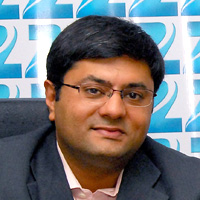
    Vishal Malhotra

    “For our channel partners- namely, for content owners, distributors, retail, OEMs and service providers, Ditto TV creates unique revenue generating opportunities,” explained Vishal Malhotra, Business Head – New Media, Zee Entertainment Enterprises, on what it means to its channel partners.


    Apart from India, the platform will be available in the UK, UAE, New Zealand and Australia. And United States will follow in the priority list, by end of this quarter.

    So yes, it’s an experiment by Zee, but as experts have pointed out, it’s a risk worth taking as consumption patterns of consumers are going through a sea change with the advent of digital technologies.


    Ditto TV will offer features such as adaptive streaming, elaborative programme guide, content recommendation engine and an interface which is integral to enhance the user experience. Moreover, it allows for complete customisation in terms of cost as well as content – where users are given an option to handpick a basket of channels as per their own personal preferences.  Price points start at Rs49, where the consumer gets access to three channels of his choice.


    Yogesh Radhakrishnan, a veteran in the field of TV distribution in India, said: “There are some issues like inadequate bandwidth; broadband connectivity is a pain, but having said that OTT is a technology for the future. For it to reach to the masses, it will take some time.”


    As for the broadcasters, Ditto TV comes in as an additional platform to showcase their channels on. And just as the thought crosses the mind, as to how many broadcasters will Zee be able to get on board, the news is that already 21 channels have agreed to use this platform.


    MSM Group, TV Today Network, BBC, and Zee are a few networks that will allow their channels to be available on the platform. A few important contracts yet to be signed which includes Reliance Broadcast, Star and Times Network. The company expects to offer a complete set of 50 channels shortly.


    The sense is that it is a matter of time before the rest of the industry embraces this new platform from Zee. As informed by Mr Goenka, monetisation via advertising can only happen once it reaches out to a critical mass – at least 5 per cent of the audience which consumes TV content on a daily basis. So there is still some time for advertisers to worry about this new delivery platform. But, that doesn’t make this venture of any less significance for Zee.


    Mr Goenka pointed out that a significant investment has gone into setting up Ditto TV and that he expects his new media division to contribute about 10 per cent to the group in terms of revenue in the next five years. Needless to say that Ditto TV is the first step in the bigger game to boost the company’s digital and new media play.


    On what this means to DTH and cable operators, Mr Radhakrishnan explained: “These are very, very early days. There is no doubt that OTT is the technology of future, but for now, it is just a beginning and not a threat to other distribution channels. Also, it is unlikely to replace the existing mode of distribution channels, as new media and technology comes as a welcome ‘value addition’ to the business.”


    So whether Ditto is able to script a ditto success story that of Dish TV – Zee’s DTH offering, is something to watch out for. For now it looks like a welcome initiative – both from the consumer and the trade point of view.


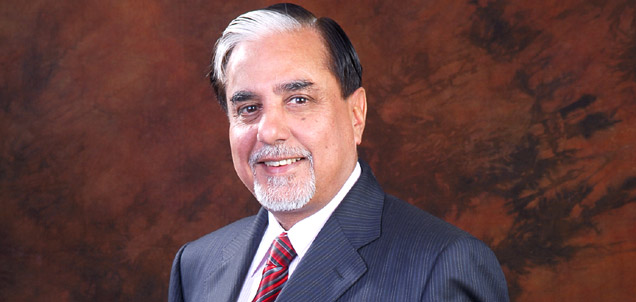
  • Happy Birthday, Mr Subhash Chandra!


    By Punit Goenka


    Although I was too young in 1992 when Zee TV started, our family was confident of him achieving success in the media and entertainment space.


    * I have been fortunate to work with him. His perseverance, never-give-up attitude, and complete commitment to his work have helped him achieve the status that he has today. It was his visionary abilities that enabled him to foresee opportunities much before others and launch pioneering ventures like India’s first Hindi satellite channel – Zee TV, India’s first Hindi News Channel – Zee News, India’s first direct-to-home company – Dish TV and many more.


    * Zee, under his leadership, has always remained grounded through its journey spanning two decades. Our ability to implement cost-control initiatives has helped us overcome the economic slowdown and achieve further operational efficiencies, which is why Zee has been able to deliver a shareholder value CAGR of over 30 percent since inception. Apart from this, the connect with our viewers and ability to innovate and create successful indigenous home grown formats have helped us sustain our leadership.


    * He has done a lot for all of us. We want to consolidate on the strong foundation he has created for Zee. We are working towards making Zee Entertainment Enterprises Limited one of the leading Media and Entertainment Company from the emerging markets.


    * By becoming the first Indian to be conferred with the prestigious Emmy Directorate Award 2011 recently, he has done the entire Indian M&E Industry proud.


    * His vision when he started was to take entertainment to the home of every Indian. In fact he was able to envision and understand the value chain of the entire TV broadcast business from content creation to content delivery – right upto the last mile. Now he wants to take Indian entertainment to the global audiences.


    Punit Goenka is Managing Director and CEO, Zee Entertainment Enterprises Limited


    As told to Johnson Napier

  • Uday Shankar re-elected IBF president

    By A Correspondent

    Star India CEO Mr Uday Shankar was re-elected president of the Indian Broadcasting Foundation at its annual general meeting in New Delhi yesterday.

    Until recently treasurer, Mr Sunil Lulla, CEO and MD of Times Television Network will be vice-president. Zee Entertainment Enterprises Ltd CEO Punit Goenka will be the new treasurer.


    Detailed report on MxMIndia tomorrow