Tag: Publicis Omnicom

  • IPG’s big bet on India


    By Shambhavi Anand


    IPG is coming off a bad year with a significant decline in net income. What are the reasons for this? How’s 2014 looking?

    We did not achieve our goals and the primary reason for that were problems in Europe. We took a restructuring charge of $61 million to rightsize our cost profile. We also had some new business wins and expenses, and cost to pitch for new businesses ahead of revenues. Some of our agencies were not performing well. We took care of that in the restructuring so those were the reasons we could not deliver the margin we were looking for. The restructuring charge should give rise to $40 million benefits in 2014 and growth in the range of 3%-4%. We expect to expand margin by at least a 100 basis points.


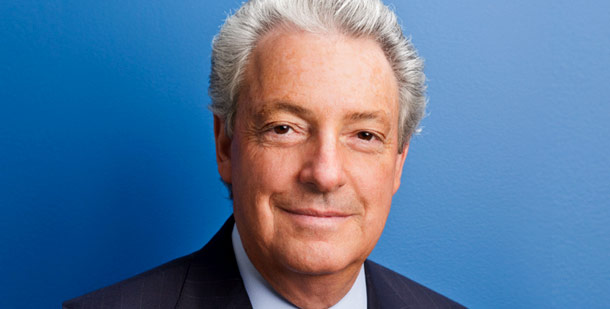
    Michael I. Roth


    Michael I. Roth is Chairman and CEO of Interpublic, one of the world’s largest organizations of advertising and marketing services companies.  Prior to serving in his current role, Mr Roth was a member of the company’s Board of Directors.


    Since assuming leadership of Interpublic in 2005, Mr Roth is credited with righting the company’s financial course and moved to make it an industry leader by defining new models that provide value to clients in a rapidly-changing media and marketing environment.


    Prior to his current role, he was Chairman and CEO of The MONY Group Inc., a financial services holding company that provides a wide range of protection, asset accumulation and retail brokerage products and services through its member companies.


    A certified public accountant, Roth holds an L.L.M. degree from New York University Law School and a J.D. from Boston University Law School. He is a 1967 graduate of the City College of New York.


    Given the Indian economy has been sluggish for a while, how has that changed or affected IPG’s hopes?

    The fact that we brought our board of directors here even though there is a slowdown indicates how important India is. Every market is going through a slowdown but the opportunities India offers are immense. We wanted to send a message to everyone that India is important to us. It is our second largest market and some of our best brands Lowe, FCB and McCann are continuing to grow.


    How do your clients feel about India as an investment destination?

    We invested in three acquisitions in India – Interactive Avenues, End to End Marketing Solutions and Corporate Voice. They show the confidence we have in the future. Macro economic conditions affect the environment in every economy. But with the kind of growth we have had, we can work through difficulties. Even in tough situations India has grown at 5%-6%, which is good. In the United States growth is around 2%-3%.


    What’s your evaluation of your Indian operations? Are you looking at any further acquisitions?

    We have done very well here. Including the acquisitions our growth is somewhere around 70%. We bring all the IPG offerings to the table here in India. We are always looking for acquisitions in various markets. We want to hear from our agencies on what’s substantial on the horizon. For us digital and activation seem to be the two most important areas of interest. That is one of the reasons we came here. But please don’t ask me to name names.


    Would you care to address the speculation that a merger between WPP and IPG is imminent?

    There used to be speculation about IPG and Publicis too. But there is no need to do a transaction like that. We have all the global offerings and disciplines to be competitive. We don’t need capital. The only reason we would do something like that is when somebody put a compelling price for shareholders on the table.


    But no one has done that so far. How do you believe the Publicis Omnicom merger will affect the industry?

    Whenever a transaction of this kind happens it will take a long time to be integrated. In this case, it is taking a long time even to happen, and in the meantime there will be disruption. We are seeing recruiting opportunities. There are disruptions in a number of their offerings and we hope to be a beneficiary of that. Obviously, there will be conflict potential, although the transaction has not taken place yet, so we haven’t seen a lot of it. We don’t view it as a threat. Everyone thinks that their media offering will be big. But it will be as big as WPP and we have proved to be very effective against them. Not being so big that we can’t be flexible and responsive to clients needs and provide the human touch. The answer is I don’t go home and worry about it.


    How has IPG Mediabrands which is competing in many markets where the other media agencies have a bit of a headstart doing?

    In 2013, Mediabrands was our best performing asset. So that is a pretty good indication that they are doing well. We don’t give specific figures on the profitability of our agencies but clearly both in India and on a worldwide basis they are leading us on growth, revenue and margin expansion.


    Source:The Economic Times

    Copyright © 2014, Bennett, Coleman & Co. Ltd. All Rights Reserved

    Licensed to republish


  • He came, he met, he made no announcements


    By A Correspondent


    I have had no meetings with Sam Balsara,” said Maurice Levy, Chairman and Chief Executive Officer, Publicis Groupe, quashing all speculation of his media services conglomerate acquiring Madison World, Balsara’s homegrown and successful advertising behemoth. “I have a lot of regard for the work he has done,” Mr Levy said on Mr Balsara.


    Mr Levy is in India after a gap of two years, a period in which various entities of his group have made many acquisitions. While confirming that he is looking at more investments in the market by way of buying existing entities, he did not reveal any specifics. “India is a strategic market for us. We want to invest here and investing,” he said.


    In India, the Publicis group has varied interests in creative and media buying and planning agencies, public relations and a variety of marketing services interests.


    The France-based transnational group had announced its merger with the US-based conglomerate Omnicom. The merger has been cleared by the Competition Commission of India and is now awaiting similar clearances from the European Union, China and Columbia, Mr Levy said. He indicated that the merger should happen around the second quarter of 2014 and made light of the comments of arch rival and WPP CEO Sir Martin Sorrell on the merger as “part of his job”.


    When asked whether the Publicis group was on course of its target of doubling revenues by end-2014, Mr Levy said that post the merger with Omnicom, it will be more than a doubling.


    Mr Lévy joined Publicis in 1971 in charge of IT and In 1975 was appointed President of Publicis Conseil and took responsibility for the international development of the group from the early 1980s, piloting a series of important acquisitions as well as the Groupe’s pioneering strategic focus on digital. Mr Lévy has been Chairman and CEO of the Publicis Groupe since 1987.


    Amazed by the time Sir Sorrell is spending discussing the Publicis-Omnicom merger: Maurice Levy

    The Pubicis Groupe Chairman and CEO on how his group is doing in India, its investments in digital, the merger with Omnicom and WPP chief Sir Martin Sorrell


    By Amit Bapna & Pritha Mitra Dasgupta


    French advertising major Publicis Groupe plans to make some major investments in India, including acquisitions, right after its merger with Omnicom to create the world’s largest communication conglomerate is complete mid next year, its chief executive Maurice Levy said. Currently in India to review the operations of Publicis entities, Levy said that India is not growing fast enough due to a host of reasons, including political and infrastructural. Edited excerpts of an interview:


    Publicis Groups started investing heavily in digital much before many others. Yet in India it has had a relatively slow growth story.

    The Indian market is not a digital market. If we look at the Publicis Groupe as a whole, our journey so far has been excellent. I am not saying we cannot do better. Our position in this market is hampered by the fact that we have not yet offered the full range of services and we still need to make more investments. We need to strengthen some of our agencies. We have to develop some integrated services and we need to continue to invest in digital and mobility. And we are doing this irrespective of the merger. So I think the merger and the fusion will be complete by the second quarter (of 2014) and right after that we will make some investments in India – both organic and some acquisitions – to complete the frame.


    You have said in an interview that “the other emerging markets, with the exception of India, seem to be in very good health. India has a specific problem”. What is that problem?

    It has a specific problem due to the fact that it is not growing fast enough. This has to do with some political issues. It has also to do with the fact that India does not have the infrastructure that this market deserves. India also needs to open the market to some of the sectors like banking and insurance. And we expect that India will take some measures, which will be extremely positive for the growth of India.


    When can we see the benefits accruing out of POG (Publicis Omnicom Groupe)?

    We have got most of the authorisation and the ones that are still awaited are for Columbia, China and European Union, which should be coming soon. Then there are the stockmarket regulators in the Netherlands and France. We believe we will be done with all the authorisations on the merger by the second quarter. Then we will call the AGM, the stockholders vote and we will come to a final agreement and complete it by latest June 2014, that is my estimate. Only after the merger happens will we be able to sit down and decide what we are going to do in specific markets, how we can have better presence, how we can help clients better, etc. The merger is seen from two standpoints: one at the corporate level, for which we have almost clear idea of what we are going to do, and the second at what we call the work streams: we today have 70 work streams working on specific issues.


    Sir Martin Sorrell (WPP CEO) has gone on record saying the POG structure is “clunky” and that “strategically and structurally it does not make any sense at all” because both companies have been going in opposite directions. How do you react to these critiques?

    I am amazed by the time Sir Sorrell is spending discussing the Publicis-Omnicom merger. If it is so clunky and terrible and does not make sense, he should rejoice because we are going to make a big mistake, which will be good for him. I don’t understand his spending 2-3 hours a day just speaking about Publicis, and during that time we take care of his clients.


    There have been rumours that you are visiting the Law & Kenneth office while in Mumbai and that Saatchi India and Law & Kenneth might come together.

    I can neither confirm nor deny anything. I cannot say anything about acquisitions. Praveen Kenneth is somebody I know since many years; he is an ex-colleague at Publicis and I’m very pleased to see the success he has enjoyed. He had asked me to invest in Law & Kenneth even in the early days.


    What are your plans for the recently announced Project Blue? Do you plan to bring it to India as well?

    Yes, we have plans for it. But we expect to make it work first in Europe and in the US also, to make sure it’s working well, see the results in two years’ time and then decide (how we’ll take it to other markets). It just shows that besides the merger and acquisitions, we are also investing in start-ups. And besides the media business, Project Blue will also have other services.


    Can we specifically talk about the performance of Starcom MediaVest and ZenithOptimedia in India?

    There are some aspects that went extremely well and on some we had some issues. We lost some accounts and it is part of life. There is a bump and it is important to acknowledge that. What is interesting in our life and in advertising is that you can never rest. Simply because we are in people’s business, client relationship can be shaky, people can leave, which can disturb the course of action of an agency. In the media business, in a market where size matters, we don’t have the size that we should have. That’s clear and we have to build the size. We are building it and it will take time.


    Source:The Economic Times

    Copyright © 2013, Bennett, Coleman & Co. Ltd. All Rights Reserved

    Licensed to republish
     

  • Life after the Publicis Omnicom deal


    By Delshad Irani, Shephali Bhatt & Amit Bapna


    We like to watch grown men in underpants tumble around, grab and take down each other in the “squared circle” as much as the next guy. But let’s not make this about Sirjee any more than the situation calls for, as tempting as that may be.


    Although it started over six months ago as “a joke” at cocktail hour between two advertising holding company bosses, we all know how it went down last week in the French capital.


    Even before the American and the Frenchman put pen to paper, the onslaught of expert opinion as well as the general, less intelligible variety had been unleashed online.


    Some called the merger a bold and brave move while others say it could possibly be a destabilising force in an already unstable industry. What concerns us, however, is a far more pressing issue.


    The implications of this union for the Indian advertising industry. Of course, there are other areas of concern – people, creative calibre and clients. To begin with, here’s a quick look at where they stood before POG, ie Publicis Omnicom Group.


    Publicis Groupe owns Leo Burnett, Publicis Capital, Publicis Ambience, BBH and Saatchi & Saatchi and in media Vivaki which includes SMG, ZenithOptimedia and Digitas. Meanwhile, Omnicom, a late entrant in this market, has done a fair job of catching up mainly due to its acquisition of Mudra Group to create DDB Mudra.


    The other agencies are BBDO and TBWA, and in media, Omnicom has OMD and DDB Mudra Max. The new allies may have taken the beaches of Normandy and have beaten Sir Martin Sorrell’s WPP to become the largest global advertising company.


    But this Franc and Yank combo still does not have enough firepower to propel past WPP in India, and in China, where Omnicom, a largely US-centric company, missed the early bus again.


    Publicis, on the other hand, has firmly rooted itself in the Chinese market, mostly via acquisitions in keeping with its aggressive strategy of developing digital expertise and skills across markets.


    When Lions Dance

    While the full effect of the merger will not be felt for a while – at least a year say industry pundits -there is no dodging the fact that it will have consequences for Indian operations. After all, India isn’t a strange and exotic outpost but a growing market with a fast expanding population of increasingly digitally savvy consumers.


    That kind of thing is hard to ignore, non? We spoke with clients and industry bosses across agencies, and holding companies, and here are the likely implications for India in a post POG world. (Also unlike the wholly French press meet where the announcement was first made, we are more accommodating.)


    Mon Ami or Bette Noir?

    The adwallahs believe the corner office is where all the POG action will take place. Although agency networks run independently of holding companies, they do not operate in isolation.


    WPP has veteran adman Ranjan Kapur in charge of watching over the mother ship’s assets as well as liabilities. He has even been known to step in as interim chief, as he did a while ago with the headless Bates.


    The question is who will be POG’s point-man or woman? Will it be a chosen one, two or three? Will the role largely be ceremonial – as is said to be the case with Kapur and his Omnicom contemporary Keki Dadiseth – or something far more substantial? It may well be the latter in a market where growth is still an imperative for POG.


    Some of the constituent agencies are not in the best of shape and there may even be some consolidation on the cards, say industry insiders. Besides there are still a few good men, women and agencies yet to be acquired, and a fair share of cash and glory to the person who takes the lead in swinging these deals.


    The gentlemen themselves are silent but industry wags everywhere are indulging in coffee (by day) and beer (by night) fuelled speculations on whether there is going to be a top dog at POG. And if there is, who is it going to be among DDB’s Madhukar Kamath, Publicis’s Nakul Chopra and Leo Burnett’s Arvind Sharma? People have their favourites among the trio and are spending a lot of time being dismissive of everyone else’s choices.


    As an adman puts it sardonically, “Why would an Arvind Sharma listen to pearls of wisdom from Nakul Chopra?” And “Never mind Nakul Chopra having a problem with Arvind Sharma becoming the POG country head, why would Madhukar Kamath allow such a thing?” Both Publicis and Omnicom have been run in a far more decentralized manner compared to WPP, says an advertising agency chief.


    But if we were the betting kind, we’d put our hard-earned cash on an old, experienced, hand – maybe even an external hire – to see this through. This game of thrones may begin tomorrow, next week, in 6 months or 12. However, another option presents itself: “if they behave like brothers and hunt like groups then they can pull out of the current morass and remove the tag of mid-sized agencies against them,” says one of our creative entrepreneurs. He however adds with the sardonic wisdom of a longtime witness to the industry’s numerous ego clashes, “This merger is more an efficiency thing than a merger of heart and soul. It is more a celebration of the account book than of creativity.”


    C’est Business As Usual or As Unusual?

    Yes, it will be business as usual, for now at the very least. On the media front, this merger will give POG agencies additional leverage. A new giant and worthy challenger to GroupM just might be good news for media houses. And paradoxically for GroupM too which a few ad men believe has been a little too complacent for its good of late.


    It may not be good news for India’s largest independent though – Madison Media. The jury is out on whether and how this will affect Madison and its future in a rapidly consolidating industry. Says a senior executive “Balsara does not care for networks and is a respected man. The Godrej family trusts him with their brands, so does the Cadbury team.”


    Besides, according to a leading WPP-owned agency’s top executive, media buying won’t get affected as much as speculators’ indicate, because media agency commission forms only 2.5% of a marketer’s budget.


    Yet another change, is that globally aligned clients will have a smorgasbord of agencies to pick from. Apple, for instance, is handled by TBWA globally but if TBWA India is too small to handle Apple, now they could go to say a Leo Burnett as well.


    The options within a group have increased. Keep your gloves on, practice parrying and watch out for that left hook. But perhaps the most significant change will be in the places you least expect, for instance, agency parking lots.


    The industry veterans we spoke with believe sooner than later rationalisation will happen. Or, as one agency chief puts it, referring to the garage of a Mumbai-based Publicis Groupe shop that’s been quite the object of envy, “Audis without the ‘audi’ence may be too tough an act to pull off for any longer.”


    Monsieur Client, Ca Va?

    Here’s a little story for all those eager to gauge client sentiment in the country. A client and an agency chief walk in to a bar. POG is all over the news.


    Client turns to agency chief and asks, “So what do you think it means?” Hardly surprised by the recent events in the global ad industry as M&As have become the norm across many sectors Indian clients don’t expect the merger to make a significant dent in client-agency relationships.


    The belief is that normally when clients pick agencies, they don’t choose basis groups ie “I want to go with WPP or Omnicom”. Clients pick the best in the domain, be it advertising, media or digital.


    When some of them happen to be part of the same network/group, it’s a plus. Clients respect frontline work irrespective of whether it comes from a large holding company or an independent.


    Frankly, dear reader, they don’t give a damn as long as they get their money’s worth. However, if client-agency divorces do happen, at a global level, it would spell good news for independent agencies.


    As more and more clients and marketers are valuing the small agency approach to advertising more than the big agency approach, what do you think happens when the big agency becomes bigger? At the end of the day, though, the parties most likely to benefit from this merger are French tutors.


    One might need to brush up language skills for Cannes is likely to be an even more French affair. On an even lighter note, POG agencies may have something to cheer about, if the French do indeed have their way and the 35-hour work week practice becomes a new network standard.


    Source:The Economic Times

    Copyright © 2013, Bennett, Coleman & Co. Ltd. All Rights Reserved

    Licensed to republish