Tag: Public Relations Consultants Association of India

  • PRCAI elects new Leadership Committee

    By Our Staff


    The Public Relations Consultants Association of India (PRCAI) has elected a new managing and executive committee at its annual general meeting held on May 12, 2023. Atul Sharma, CEO, Ruder Finn India and Head, Middle East, has been reelected as the President, who has been the president for the association since 2021. He will be supported by Kunal Kishore, Founder and Director, Value 360 Communications, who will be serving his second term as the Vice President, and Vineet Handa, Founder and CEO, Kaizzen PR elected as the new Secretary, part of the manging committee (MANCOM), working along with the PRCAI CEO, Deeptie Sethi. Starting this year, Executive Committee (EXCOM) positions have been constituted as part of restructuring the responsibilities, aligned to drive progress on specific identified areas through four National Chairs.


    The four elected EXCOM National Chairs include: 1. Nikhil Dey, Executive Director, Adfactor PR, will assume the role of National Chair Talent and Academia 2. Neha Mehrotra, Managing Director, Avian WE, will handle the charge of National Chair Growth and Standardization 3. Girish Balachandran, Founder, ON PURPOSE, will be responsible to take on National Chair Marketing and Communication 4. Santanu Gogoi, Founding Partner, First Partners Communications, will assume the role of National Chair Learning and Thought Leadership.


    The newly elected leadership team will serve a two-year term, commencing in May 2023 and concluding in May 2025 and work collaboratively with the PRCAI Secretariat and members. Their collective expertise and vision will guide PRCAI in promoting industry best practices, fostering collaboration among members, and advancing the field of public relations across India. Atul Sharma, President, PRCAI said, “It’s an honour to be re-elected as president for a second term. I am looking forward to working with Kunal Kishore and Vineet Handa and our new National Chairs. We will continue to set high professional standards, focus on ethics, and collaborate, co-create and celebrate with our member firms in their growth and prosperity. I am excited about the journey that lies ahead and the incredible possibilities that await us.” Deeptie Sethi, CEO, PRCAI commented on these appointments, “I would like to thank the outgoing leaders for their contributions and look forward to working with this terrific new leadership team, aiming to not only grow and serve our members better but also take on industry challenges to further the public relations industry.” The PRCAI elections witnessed an enthusiastic participation from a diverse pool of professionals, reflecting the industry’s commitment to democratic decision-making and collective progress.


  • PRCAI accredits 18 public relations professionals

    By Our Staff


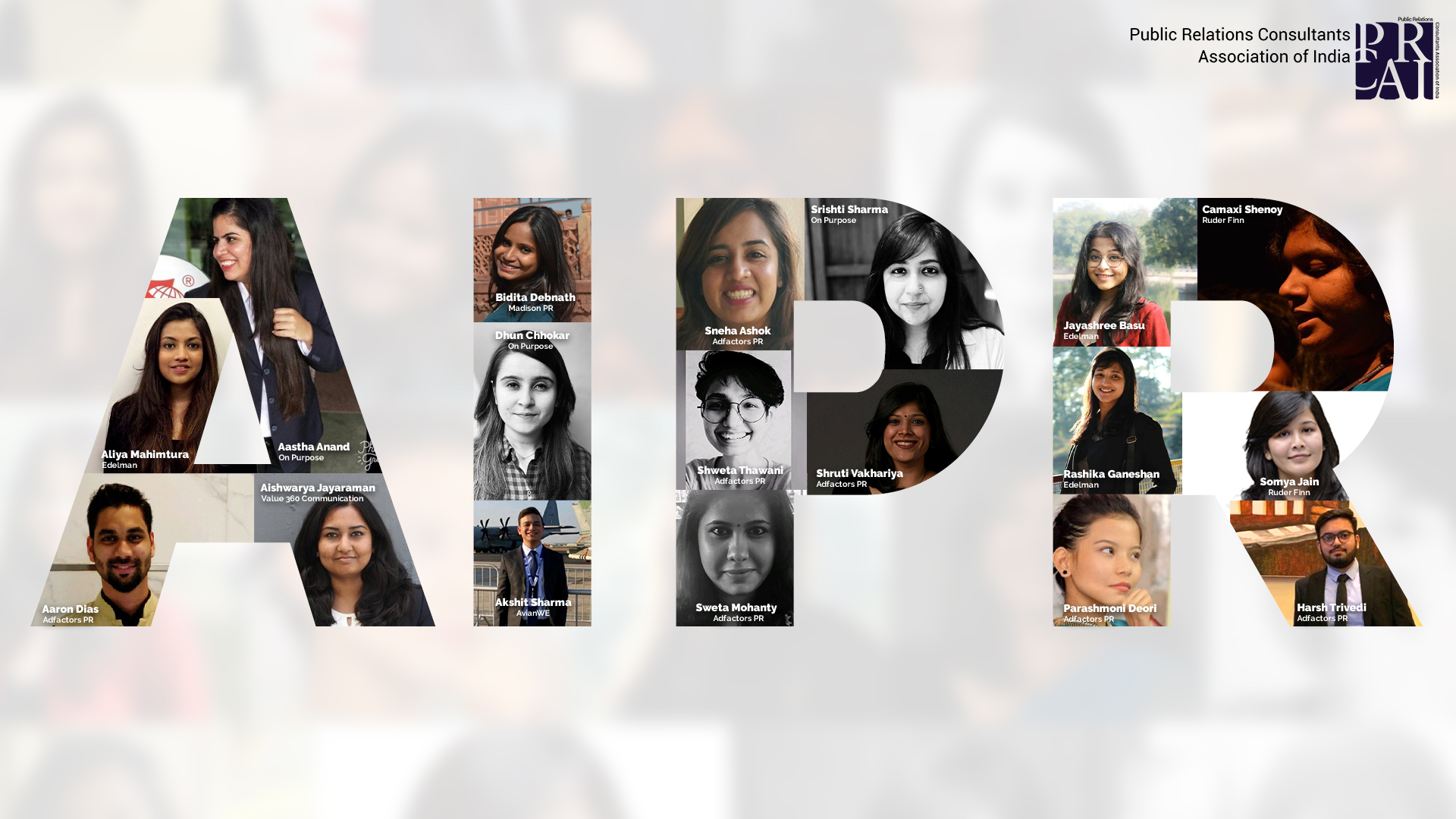
    The Public Relations Consultants Association of India (PRCAI) has announced results of India’s first Accreditation Programme in Indian Public Relations (AIPR) for public relations professionals – including young professionals and emerging leaders.

     

    Announcing the list of 18 public relations professionals who qualified for the first-ever batch of AIPR, PRCAI conferred each one of them with the prestigious AIPR pin. These young professionals will be the torchbearers of the industry as they strive to maintain strong professional and ethical standards, leading the industry.


    Said Atul Sharma, President, PRCAI: “At PRCAI, we celebrate, honour and work everyday to forward the vision of our industry – to be more professional, ethical and prosperous. AIPR is our endeavour in that direction, and this is just the beginning. I am very happy for our first batch of accredited professionals, who I am sure will help in this pursuit as they lead this industry into the future. Heartiest congratulations to each one of them. ”


    Added Deeptie Sethi, CEO, PRCAI: “The communications industry has an invaluable pool of subject matter experts who are incredible thinkers, strategists, planners, writers and are extremely committed to their profession. AIPR is a platform to recognize such talent and motivate them to continue to upskill to remain relevant in the evolving world of communications and aspire to be the best. PRCAI appreciates the efforts of seasoned veterans who formed the jury and believed in the program and its merits and are supportive mentors to help shape them as effective practitioners.”


  • PRCAI signs for Healthier World

    By Our Staff


    The Public Relations Consultants Association of India (PRCAI) has endorsed the International Declaration of Communications Professionals and Researchers for a Healthier, Viable, Better World, becoming the first signatory of the global declaration in India.


    Said Deeptie Sethie, CEO, PRCAI: “PRCAI is proud to join its voice to this worldwide solidarity that harnesses the power of our combined communication skills and knowledge around the ethical, transparent and trustworthy role of communication. PRCAI commits to use its expertise to help restore hope in our society and redefine our vision of a better future  − one that cares for nature and humanity.  We invite all public relations practitioners, agencies and our corporate peers to support the Declaration and share its values in their mission and all their activities”, The global impact of Covid-19 is seeing global priorities shift due to sanitary, social, economic, and financial upheaval, stressing just how fragile our world is. But in the midst of this chaos, new energy and creativity driven by interesting initiatives are sparking renewed mobilization around the world.”


  • PRCAI gets Deeptie Sethi as CEO

    By Our Staff


    Public Relations Consultants Association of India (PRCAI) has announced the appointment of Deeptie Sethi as CEO. This is the first time the association has appointed a CEO in its two-decade history.


    Said Atul Sharma, President, PRCAI shared: “At PRCAI, we believe in leadership that inspires, drives results and encourages our members and communities. We are happy to have Deeptie as the first CEO of PRCAI, as we look forward to expand our footprint, and scale PRCAI to newer heights. Moreover, as the role of public relations takes centerstage in all facets of business, we are excited to have an experienced communications professional like Deeptie to build the future roadmap for PRCAI.”


    Added Sethi on her appointment: “The scope and reach of public relations have seen exponential growth in the last few years. Today, effective communication is integral to every business. These are exciting times for the industry and I am honoured and thrilled to take up this opportunity to build, grow and serve our community. I am equally optimistic about the prospect and look forward to adding value for PRCAI members and the larger communication fraternity.”


    Well, we are sure Sethi will have her hands full. But first the objective would be do some PR for PRCAI. And help rid it of the perception that it’s a Delhi agencies’ club. Also, ensure it’s inclusive. Not just a club of PR agency folk. How about the next president being a corporate/marketing communications professional? Sethie should know what the view is. She has spent a lifetime in corp comm, many of which were at Ford, and we interacted with her around the time of the Ford Figo ad controversy.


    Also, the PRCAI should work towards having its members as well knit as those of the Advertising Club (the Mumbai-based one, not the Delhi Ad Club). Where despite the egos of the adfolk being 100x larger than that of PR professionals, they speak in one voice, whenever needed.


    Well, we think she needn’t go too far to start with. Perhaps speak with a certain Mr Dilip Cherian and ask him for his views. And then ask the big Bombay-based folk. Rajesh Chaturvedi, Madan Bahal, Sunil Gautam. Jaideep Shergill, Valerie Pinto… that list is not too long.


  • PRCA elects its new execom for 2020-22

    By A Correspondent


    The Public Relations Consultants Association of India (PRCAI) has announced its new executive committee for the period 2020-22.


    The elected members are:

    President, PRCAI : Atul Sharma, MD – Ruder Finn India

    Vice President, PRCAI :  Kunal Kishore Sinha, Co-founder- Value 360

    Secretary, PRCAI : Sunayna Malik, MD -India & Senior VP, APAC, Archetype

    The elected regional chapter chairpersons are:

    Chairperson North: Vineet Handa, Founder & CEO – Kaizzen PR Services

    Chairperson South :  Prasad Karat, Associate VP  -The PRactice

    Chairperson West :  Girish Huria, Executive VP – Avian WE

    Chairperson East :  Rakesh Ranjan, Founder & Director, Imagicaa Ventures

    Two of the positions, Secretary, PRCAI and Chairperson South were elected unopposed.


    On behalf of the newly appointed executive committee, President, PRCAI, Atul Sharma said: “We would like to thank each of the members for placing their trust and confidence in us.  We hope to continue with the momentum that PRCAI has built over the years, as we work towards bringing the PR fraternity closer.”


  • PR industry to double in 3 years: Full report


    Last week, the Public Relations Consultants Association of India presented a report on the industry based on a study it conducted. The industry expected to double in size by FY’20, will be worth over Rs 2,100 crore. The study conducted by Feedback Business Consulting interviewed some 42 PR companies. We present the study here. Read on…


  • PRCAI releases study on state of Indian PR industry

    By A Correspondent


    The Public Relations Consultants Association of India (PRCAI) released a comprehensive report on the PR industry titled ‘State of Indian Public Relations Industry: 2016’. According to the findings of the report, the industry more than doubled in size between FY’08 and FY’16 from Rs 490 crore to Rs 1120 crore. The report further states that the growth will substantially increase in the coming years and the industry will be worth Rs 2100 crore by FY’20, almost double its present size. Increased maturity in public relations has allowed the industry to become more integral to brand communications.


    The survey also reports that the Information and Communication Technology (ICT) sector is the biggest clientele for PR firms in the country. The sector accounted for over 20 per cent of the revenue generated by PR firms, closely followed by financial services and the FMCG sector which accounted for 12 per cent and 9 per cent of the revenue respectively. The PR industry, which grew by 19 per cent this year as compared to 13 per cent last year, is on a strong growth trajectory and is expected to play a more strategic role in delivering brand messages. More brands are waking up to the potential that PR has to offer and are moving towards it to deliver a unified message to all stakeholders.


    Commenting on the findings of the report, Nitin Mantri, President PRCAI and CEO, Avian Media said, “Storytelling will be key for brands going forward. Delivering content-driven integrated campaigns which can engage and captivate varied audiences will be crucial to the survival of brands in the near future. The sources of revenue in the industry have diversified beyond public relations and public affairs. New services such as digital and social media communications, along with crisis and CSR management, have enabled strong growth of the industry which is expected to double in size by 2020 and be worth over Rs 2100 crore. Constant innovation and smart adaptation to the changing landscape are indispensable for PR firms today. PR practitioners are also waking up to the huge potential, majority of which is still untapped, that lies in the fast growing rural markets. Despite limited retail access, consumer demand is booming in these markets, being fueled by mobile transactions.”


    Commenting on the findings of the report, Deepak H, Head (Emerging Sectors Business Unit) at Feedback Consulting said,“Owing to the growth in the PR industry, there has been a significant increase in the number of boutique firms, while consolidation is happening at the top of the pyramid. PR companies are positive about the future outlook of the industry and estimate a 15 – 16% year on year growth in the next 4 years. Start-ups, Sports & Entertainment are seen as emerging business segment, while the industry is largely driven by the Services & Manufacturing Segment.


    The biggest and common challenge in the industry is acquiring the right set of talent and retaining them. The talent gap is seen across the skill areas required in the PR industry. Research & Innovative lead individuals with marketing and business development ability are highly desired skills as indicated by companies during the survey.”


    While the core services – public relations and public affairs – continue to be biggest source of revenue for PR consultancies, together generating over 70 per cent of the total revenue, the rapid growth seen at the digital and social media front is indicative of the changing dynamics of the PR industry. Brands are also fortifying themselves against possible negative consumer sentiment in the future by investing more towards crisis and risk management and Corporate Social Responsibility (CSR) management.


    Clients today are slowly shifting towards a project based relationship with the firm over the retainer based model. While today 74 per cent of the total revenue comes from retainer businesses and 26 per cent from project businesses, this dynamic is expected to change in the near future. The increasingly competitive agency landscape and mushrooming of freelancers has increased the options for the brands.

  • Nitin Mantri appointed President of PRCAI

    By A Correspondent


    Nitin Mantri

    The Public Relations Consultants Association of India (PRCAI) has appointed Nitin Mantri, CEO and Managing Partner, Avian Media, as President till May 2016 when the term of the present Managing Committee ends. Mantri moves from Vice President to President of PRCAI.


    The decision was taken by the Managing Committee members after present incumbent Sharif D Rangnekar, CEO and Director of Integral PR, stepped down from the position of President.


    On being appointed President, Mantri said:  “Sharif (Rangnekar) in last three years has done some great work for the industry and I hope to continue the momentum. PRCAI is a fantastic organisation. I have enjoyed a long and fruitful association with it. In my role as President, I will continue to underline the importance of high professional standards, support communications professionals across the country and try to improve the public perception of public relations.”


    Mantri has been in the public relations industry for over 19 years. He has been one of the most visible proponents of a common code of conduct for the industry in India. To increase awareness about the profession at the grassroot level and stimulate the learning process, he regularly delivers lectures at prominent mass communication colleges in the country.


  • [PR] There’s nothing wrong in lobbying: Sharif Rangnekar

    Serving his second term as the President of PRCAI (Public Relations Consultants Association of India), Sharif Rangnekar, CEO & Director of Integral PR has over 20 years of experience in the fields of journalism, communication and publishing, having worked with organizations such as Penguin Books India, The Economic Times and The Pioneer. He attributes his knowledge and information gathering instincts to the experience he acquired working under senior journalists in the news business.


    In conversation with MxM India’s Shruti Pushkarna, Mr Rangnekar talks about his transition from a journalist to a communications professional, his views on lobbying and crisis management, on the negativity attached to public affairs, on the need for a united PR body and much more. Talking about social media, he felt that social media is just beginning to impact the PR business and there is a lot of unnecessary hype that is created around it. Excerpts:


    Q: Tell us a bit about your journey and work as the Director of Integral PR?

    A: The journey has been a little like the market, it’s had its ups and downs. One thing about PR is that if you stay connected with what’s happening around you, you constantly feel that you are learning something new. There’s always a newness attached to everything you do on a day to day basis because you are always dealing with the publics, you are always dealing with influencers such as the media, and the government.


    Q: Elaborate for us on the 360-degree approach of Integral PR and Focal Point Management.

    A: I think a lot of businesses we are seeing and a lot of change we are seeing is extremely new to India. What you are seeing today may already be old in the next two days, given the speed of technology and the impatience levels of a very young country. So in a scenario like that, your constant engagement with the different touch points that influence your business, makes focal point management – where we put the client in the centre and we look at all the constituencies around him that influence what he does, how he does it and how does he reach out to them ­- extremely important. So it’s a synchronized 360 degree approach where you are looking at government, communities, consumer groups, other pressure groups, chambers of commerce and the media. And we look at our communication outreach along all those parameters.


    Q: You have done extensive work in the area of public affairs management. How difficult you think it is for a communication professional to work in that area, given the systems in the country?

    A: I think there is a lot negativity attached to public affairs because people assume that public affairs is only government affairs but there is another element attached, which is advocacy. There is the other part of it where you are debating and discussing policy, you are discussing issues that are new to a nation. I don’t think public affairs is as difficult or as tedious as it is made out to be. I think there is a government out there, and there have been governments in the past who want to bring a certain amount of change, and in any democratic set-up there has to be a debate and there has to be a hearing of all the relevant voices. So in that sense, governments have made these efforts, things take longer than people would want them to but then that’s the nature of our democracy. I think problem arises when there isn’t transparency attached to the mandate that you are carrying out or if the benefits of a policy are limited to a very small group.


    Q: You started out as a journalist and moved into public relations later. How has the transition been for you?

    A: I have been pretty lucky in terms of the transition. I was part of a news and research firm when I moved out of mainstream journalism. My instinct for journalism hasn’t really changed, in the sense that my instinct for news and information hasn’t changed. I think that has helped me because I didn’t immediately take the first plunge into mainstream operational public relations but I had a period in between where I was consulting with Integral PR, so I got a better understanding of what a PR world does. And the training I had in journalism under some very senior journalists has helped me understand the importance of information and knowledge, which has become key to a lot of advice and counsel that one gives to a client.


    Q: Do you think PR can be more than mere press relations?

    A: It already is, and I think this impression of it being mere press relations comes from the press who only sees the PR agencies dishing out press releases or having press conferences or setting up one on one interviews. It’s the limited view that the media has of PR because that’s all they get to see, the rest of it is quite confidential. There is so much work that takes place in a PR agency, planning a brand, planning an advocacy drive, developing campaigns, doing marketing communications; there is so much of work that goes on behind the scenes including crisis communication. There is a lot more happening out there and I think if people need to know more about it, then the PR industry needs to talk a little bit more about it.


    Q: How critical do you think is crisis management to the communications business?

    A: I think it’s extremely critical. There are two parts of the business, one is building reputation and image, the other is protecting it. Crisis management is about protecting the image, it’s about protecting a business, its people, its operations, its investment. Crisis management is an extremely important part and, more so today, because there is a greater awareness level amongst the people, there are a lot of new issues out there. In a scenario like that, there is a lot of education that needs to take place.

    There are people being deprived of land, or people being moved out from places, there are people who are suddenly realizing that certain corporations may not be giving them what they are looking for, so they are taking to the streets and protesting, or going online and starting campaigns. So there are just so many situations that we are currently dealing with, and a lot of them are crisis related because it’s new to a business, it’s new to the external audience, it’s new to even the internal audience of an organization sometimes.

    So crisis management has become extremely important and if you are not aware, you don’t have that kind of experience, it’s going to be very difficult to give that kind of counsel or manage the situations for a client today.


    Q: How do you think social media is impacting the functioning of PR?

    A: I think social media is starting to impact and it’s not that it’s universally being adopted by the corporate world. I think what we need to understand is that social media at times is being drawn out of proportion in terms of its importance, because there is always an American influence there. That influence is coming from a society which is extremely wired up, a society which doesn’t engage that much with people. But we are dealing with India where there is so much of diversity, people behave differently, you still have very powerful mediums of communication which reach out to people whether it’s newspapers, or TV and more importantly, people still go out, people meet and people talk.

    So the need for the digital space is quite different and unique. Having said that, I think knowing what is happening out there, keeping your eyes on it is extremely important because still a large number of people are getting out there.


    Q: Coming back to Integral PR, what are the key areas of growth set for 2012?

    A: We are looking at advocacy, the digital space and definitely looking at the 360 degree approach, because we feel that there are more and more companies entering the Indian market or are going deep into the hinterland who will face different types of consumer groups, different types of consumption patterns, political environment, so a 360 approach is going to be extremely important for them when they want to do business in markets which they are pretty unfamiliar with.


    Q: What do you think of lobbying? Do you think past controversy has tainted the image of PR as an industry?

    A: There isn’t anything wrong in lobbying. It is used in a very negative sense and that might be because of the history that lobbying has had. Lobbying is influencing policy, today the media does it when they have debates, when they have knowledge platforms, when there are seminars and conferences held by chambers of commerce, that’s all forms of lobbying. Today a lot of corporate advertising that takes place is also part of lobbying.

    So I think there has to be a difference that people need to know and understand between fixing and influencing or creating a voice so that someone else can be heard on a policy. As far as the recent controversy is concerned, that did taint the image of the industry but I think the good thing of a lot of these kind of things that take place where the media is been bringing out issues about corruption and other related matters, is that it helps clean up the system.


    Q: What are your views on PR associations? Do you think a central body is critical in terms of representing the industry as a whole?

    A: It’s extremely important because the industry has to get together and address issues that the industry faces as a whole. This is not about business, it’s about industry at large. I think the association also needs to play a role in educating people, it has to play a role in giving a certain semblance of a structure to the industry, it has to play a role in benchmarking, so in that sense the association has to be there, to take these things out to the public, and also to reach out to the government because government is an active user of PR.


    Q: Advertising has a strong central body so it seems more united in that sense. But with PR where there are 3 to 4 bodies, it is not as united in that sense…what’s your view on that?

    A: I think there is only one PR industry association, it’s the PRCAI. You have another society which has to do with individuals working in the corporate sector, that’s more corporate communications, corporate affairs people, that’s very different from the consultancy business. So in that sense you do have two well-known bodies in this space. It does at times send out mixed messages but I think that’s why it’s important for the two to get together to not necessarily play as one but to have at least singular objectives out there. But I don’t think it’s creating a problem for the industry, just that at times people do get mixed up about who’s doing what but I don’t think that’s coming in the way of our objectives.


    Q: What are the critical areas that need attention in the PR industry today?

    A: I think benchmarking of standards of service, issues of integrity and most importantly it’s talent and the knowledge levels, I think those are two or three very key areas that most of our members are facing.


    Q: Where do you think ‘Brand India’ stands in today’s global scheme of things?

    A: Brand India is overstated. India growth story is not the China story where the government has taken the central role to bring change. Here change has come on through individual enterprises largely. So it’s not always been about public policy, and India the brand has suffered a bit over the last one year and half, assuming that there is a brand out there. There is this feeling that things don’t really move, there is a certain sense that you need a lot of patience and with other economies also crumbling at this point of time, people don’t necessarily have the same kind of patience, don’t have the same kind of funds, so in that sense the brand has suffered. But a fortunate thing that India has always had on its side is the fact that it’s a democracy, and that ultimately depending on how long you are willing to wait, things fall into place. People are beginning to understand that for a democracy like India which is extremely diverse, it requires that much more time for certain things to happen. So people are getting to know that and now they are making more informed decisions, more informed choices about doing business out here. So it’s a mixed situation right now, definitely the brand has taken a bit of a jolt in the last year and a half but that’s also because there have been no significant policy decisions for a long period of time.


    Q: Your word of advice for future PR managers…

    A: I think, just be informed. You have to love the joy of obtaining knowledge, being in the know and you have to be like a really good journalist. You need to have your information, you need to have more sources than one and you should have the ability to comprehend and express and you need to know tactfully how to manage people and work with people. Those are key to becoming a good PR executive, and more importantly, a good PR advisor.