By Shashidhar Nanjundaiah
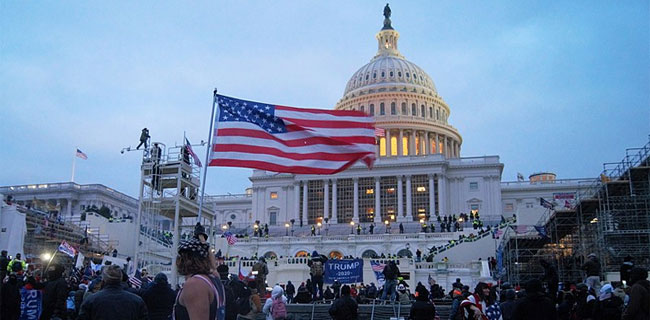
 There are new revelations in the storming of the Capitol building-variously termed attack, insurrection, siege, protest, or riot, depending on which side of the fence it’s coming from. In the latest development, a member of Proud Boys admitted to seditious conspiracy. In India, of course, the mention of sedition would hardly cause a flutter today. But in a country in whose legal system sedition is all but disused, it is a big deal. The Proud Boys is one such organization. A militia organisation, the Oath Keepers, who claim to uphold the Constitution, is standing trial. The guilty plea by Jeremy Joseph Burtino of North Carolina is significant because it is backlinked to Donal Trump, who allegedly used a dog-whistle method to signal the extreme-right (basically, White supremacist) organisation Proud Boys into action. It is now clear that Trump was in touch with the Proud Boys as he is stated to have told them to “stand back and stand by”, which seems like a tactical instruction. Trump and his aide Rudy Giuliani made speeches with underlying messages that may have been those triggers.
In politics, it has divided the Republicans as 147 out of 213 Republicans in the House of Representatives voted to dispute the electoral college results of the 2020 presidential election, thus joining the campaign that Trump may have won. As conspiracy theories go, a mere suggestion is enough to cause the cognitive dissonance of fear or indignation or hatred or rage. This theory seemed to cause such a confusion among firm believers of the GoP—including a large proportion in the Midwestern heartland where I live. This disagreement was at the root of the January 6 event, at least in the way it was narratively constructed.
For media literacy, the storming of the Capitol has been a defining moment that has further boosted efforts by several independent organizations seeking to bust fake news, strengthening legislative efforts to introduce media literacy at schools. Media consumption in the United States has never had it so tough. This year, which people may regard as a post-pandemic year, trust levels have fallen back more in alignment with the previous trends. Across the samples worldwide, only 42 percent trust news. The United States records the lowest trust, at 26 percent (also the lowest ever for the country). As many as 81 percent of respondents feared news websites will not use their data responsibly.
But the alarm for the news media is that not merely trust, but interest in news appears to have fallen across the world – a plunge from 63 percent last year to 52 percent this year. Let us bear in mind that this is notwithstanding the Russian invasion of Ukraine. So, presumably, the decline would have been steeper in the absence of that sustaining media event. Incidentally, a wide gap is seen in the levels of trust in news media between Democrat and Republican voters. Surely, the January 6 incident couldn’t have helped.
Either a diehard Republican in rural Illinois would be converted by the legal verdicts, or they may continue to trust Trump and discredit the interpretations by the legislative and legal systems. We teach media literacy here as though we know what’s going on. But to both an ardent Trump supporter or an ardent Democrat, the very foundation of institutional trust is in question. Someone I am acquainted with, a well-read practitioner, threw up her hands and said, “I don’t know anything anymore!” That might as well be the text of the next round of bumper stickers. The deepening social divide since the January 6 incident is indeed alarming—many people around me are worried at the trend they observe. In this trend, people have lost the ability to debate politics civilly and rationally without breaking into arguments and emotional outbursts. There is not much love going around.
We are now caught in a cusp between news and narrative. Those who find themselves awakened by Trump’s allegations about the 2020 election reject mainstream media narratives. News holds no promise, no hope. On the other hand, narrative holds promise and hope. From “making America great again” to asking people to trust the idea that he won in 2020, Trump has been at the forefront of generating promise, on which trust resides. This is the vast proportion that came out of the woodwork in 2016 presidential elections, a few of whom used spectacle on January 6, 2021, using phantasmagoric attire drawing full media attention. It was a lesson in how narrative drives news.
The wall of trust is crumbling. The narrative around January 6 has been the making of a new myth with deep structural foundations. We are not clear whether trust in news is being replaced with something else, or trust is no longer a factor in our consumption of content per se. And this is a media-nation whose fracture is bitter after Trump’s presidency. The divide is between the stunned and the awakened: Those that are stunned by the alleged goings-on of subterfuge and deception by the former President have tried to use coping mechanisms.
Shashidhar Nanjundaiah currently lives in Illinois in the United States and likes to comment on stuff. Period. When he isn’t, he teaches and researches media literacy. Views are personal, and any resemblance to truths around you are purely coincidental.